Elementary School Games
Discover all games tagged with Elementary School. Free to play — no download, no account.
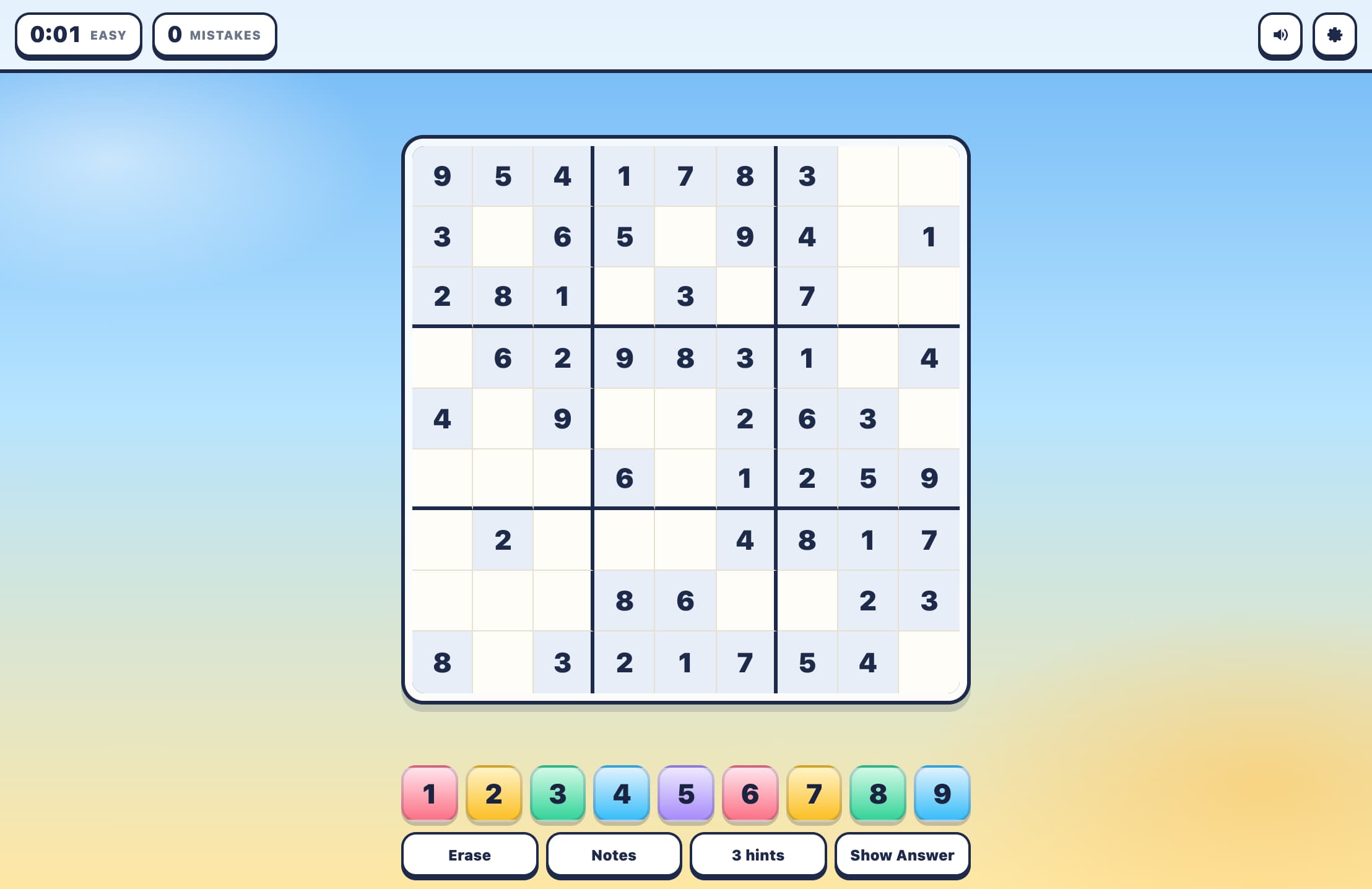
Sudoku
Classic 9×9 Sudoku with four difficulty levels — Easy, Medium, Hard, and Expert. Features a live timer, mistake counter, pencil notes, and 3 hints per puzzle. Beat your best time!
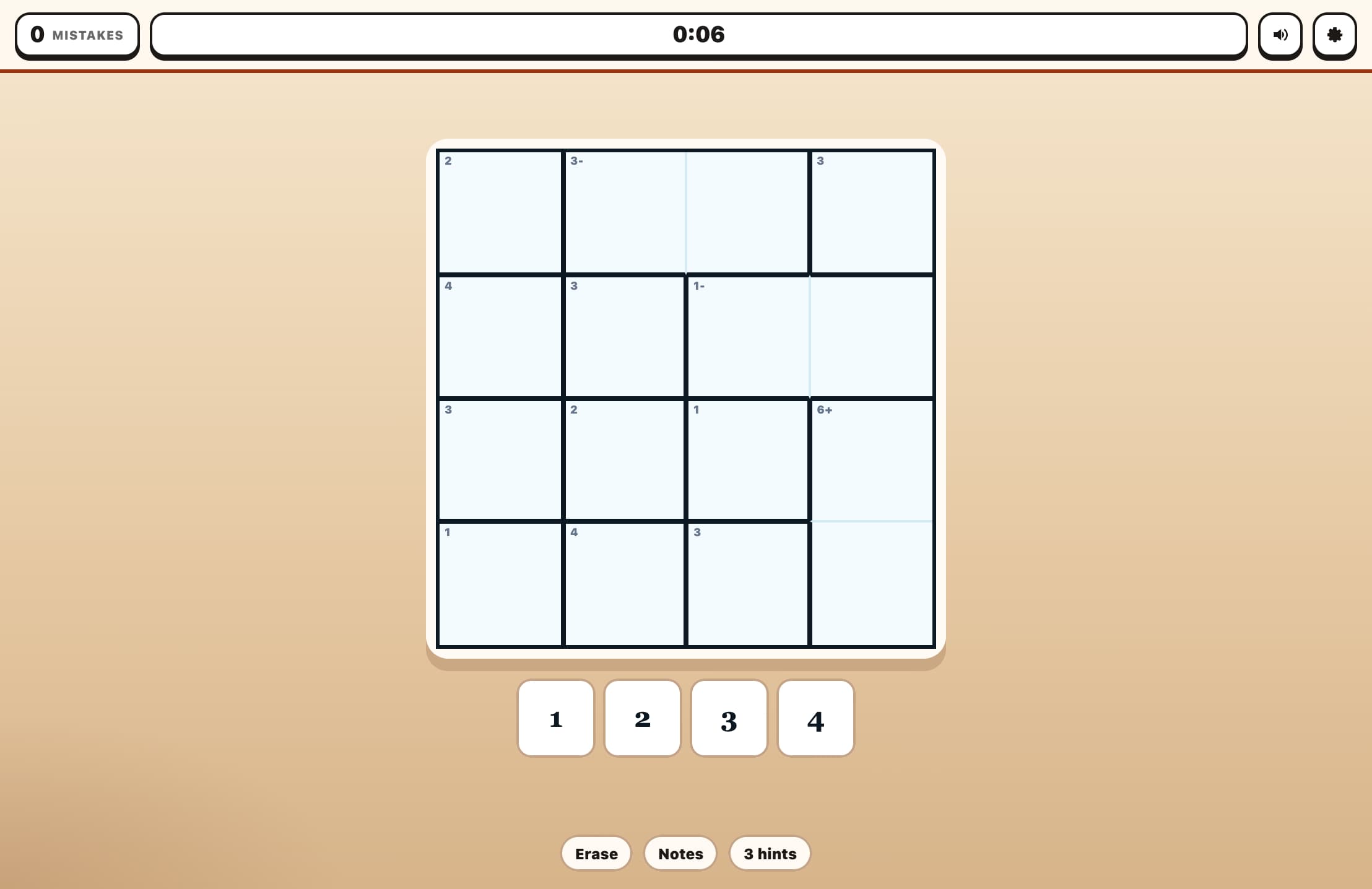
MathDoku
A KenKen-style arithmetic puzzle! Fill the grid with 1–N so every row and column contains each number exactly once. Each outlined cage must equal its target value using addition, subtraction, multiplication, or division. Choose from 4×4, 5×5, or 6×6 grids.
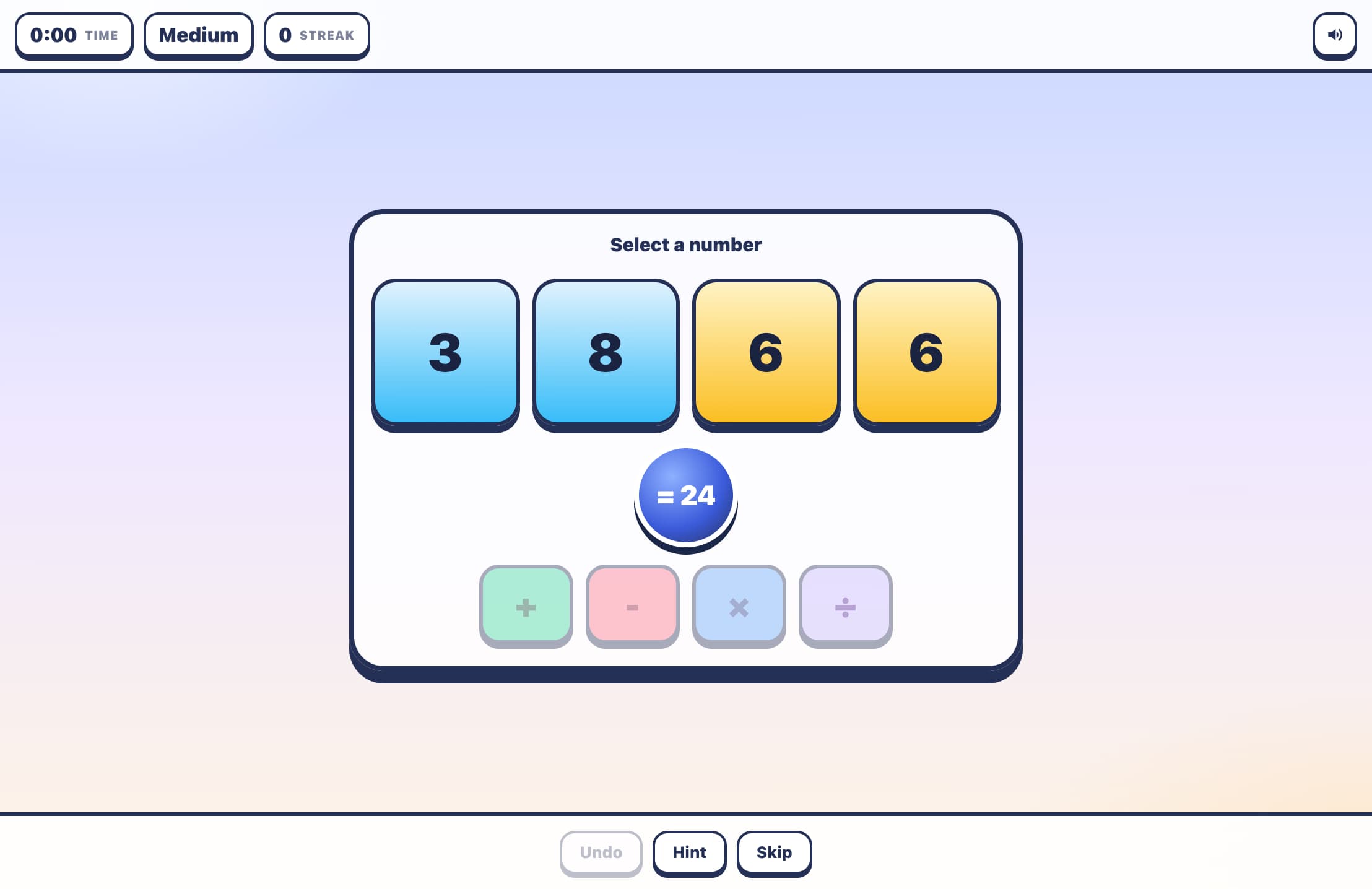
24 Game
Make exactly 24. You get 4 numbers and the operations +, −, ×, ÷. Use every number once. Pick Easy, Medium, or Hard, build a Streak, and beat your best Time.
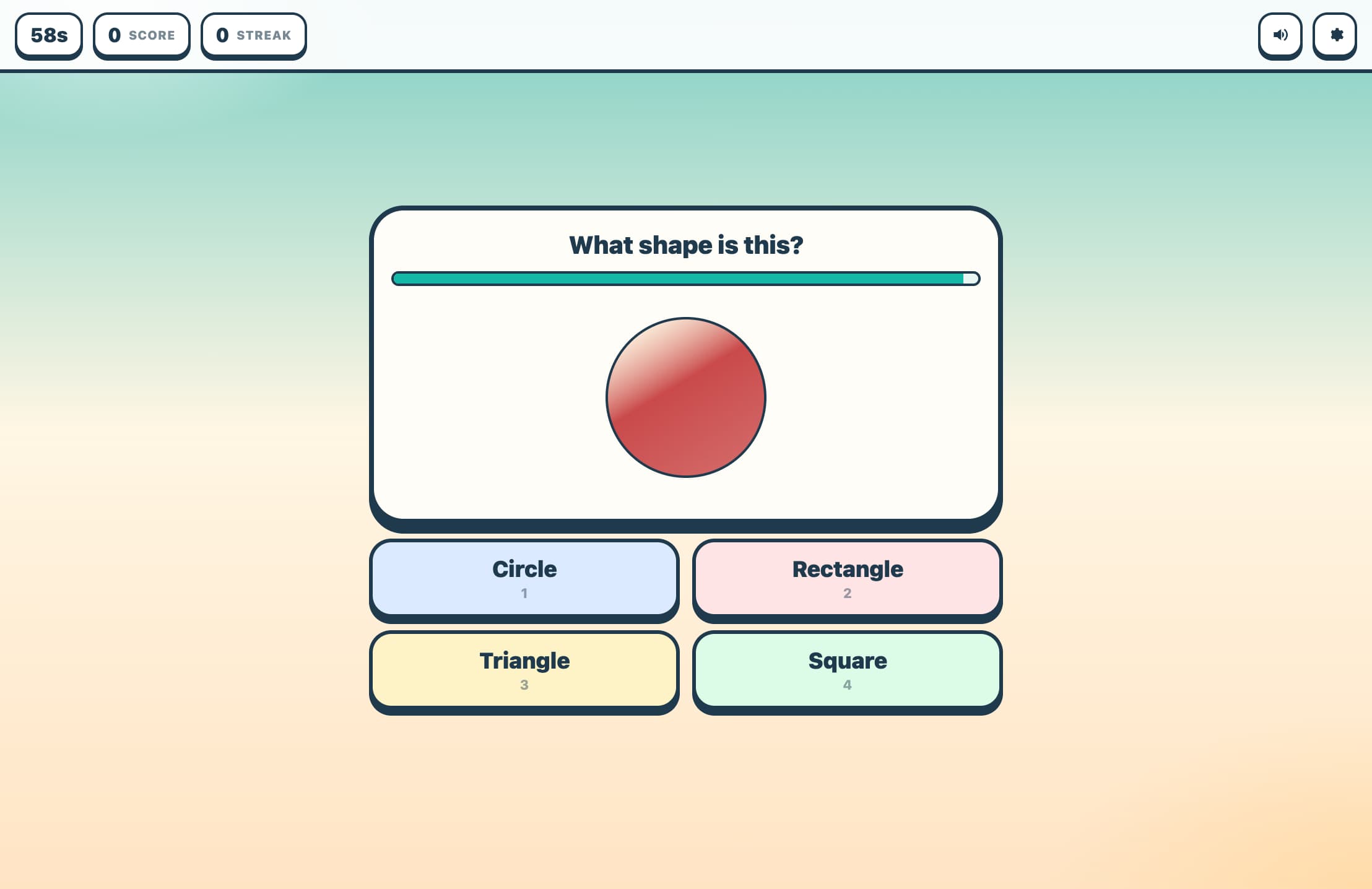
Identify Shapes by Sides & Corners
Identify 2D shapes like triangles, squares, pentagons, hexagons, and more by counting their sides and corners. Features colorful SVG shapes, multiple question types (name, sides count, corners count), and three difficulty levels.
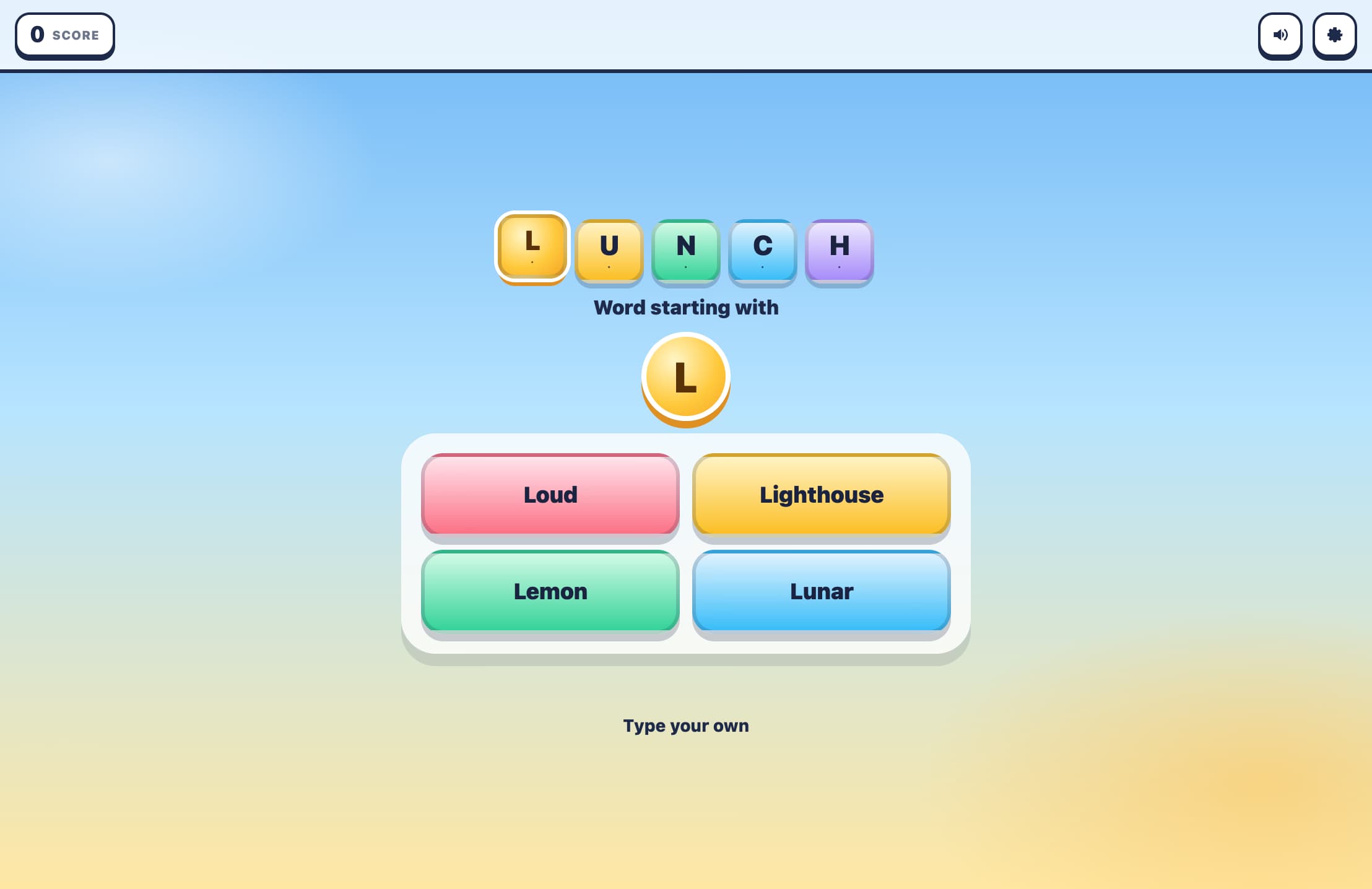
Build a Funny Backronym
Play Acronym Slam in the browser. A word lands on the board, then you slam a silly English slip onto each letter to invent a backronym. Party mode is untimed. Lightning races a 28-second clock. Compare your phrase with a built-in funny expansion and keep a best score.
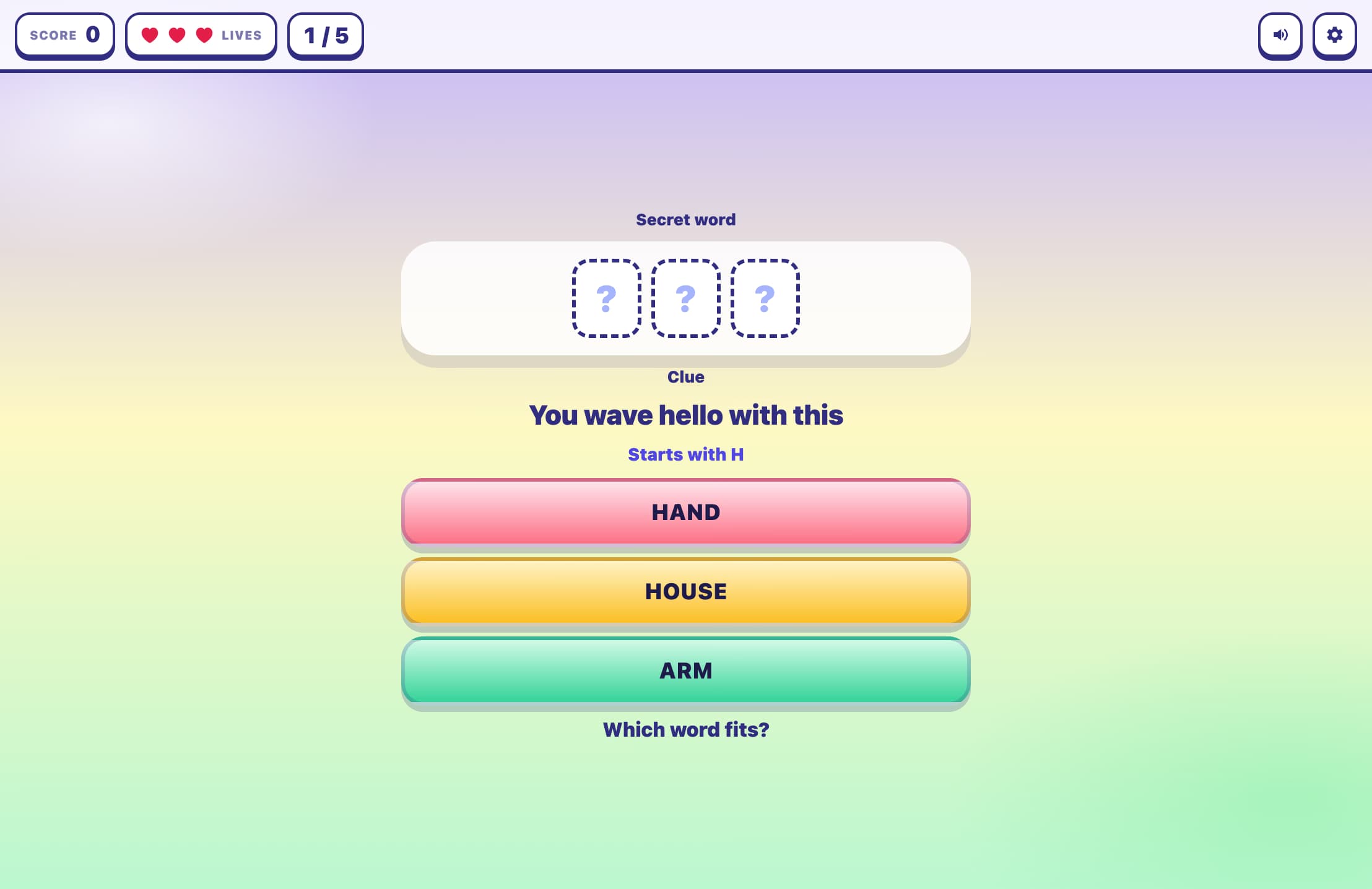
Tap Words to Reveal a Secret Word
Tap the word that matches the clue. First letters spell a secret word! Easy, Medium, or Hard, with Score, Lives, and a Best to beat.
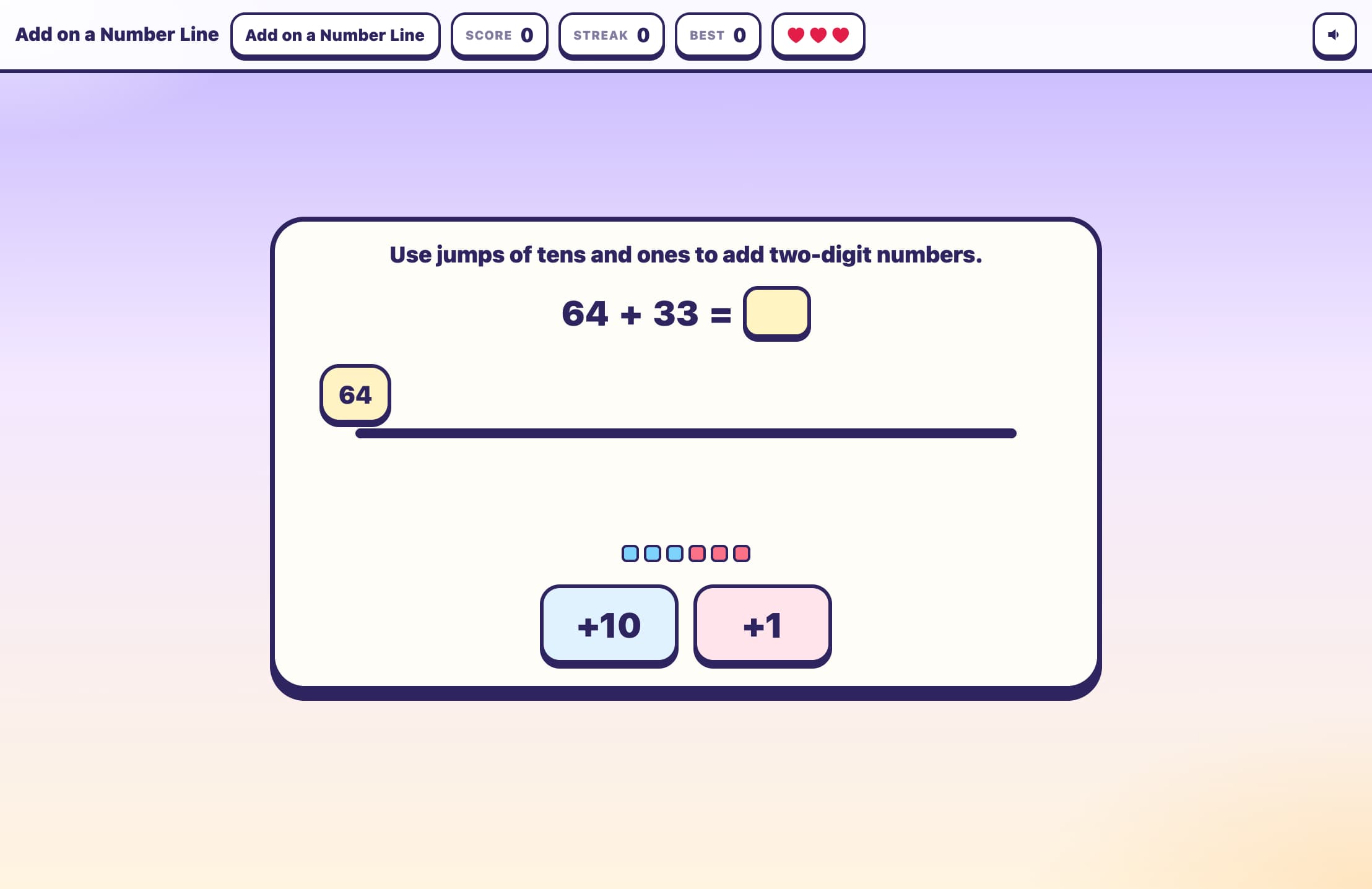
Use jumps of tens and ones to add two-digit numbers.
Add on a Number Line is the game. Use jumps of tens and ones to add two-digit numbers. Watch starts at 47. Tap +10, +10, +10, then +1 six times. 47 + 36 = 83. Then 25 + 42 = 67, 38 + 21 = 59, and 54 + 13 = 67. The +10 jumps come first. Then the +1 jumps. Try it. Then six scored landings. Score, Streak, and hearts start after Try it. Built for 2nd grade.
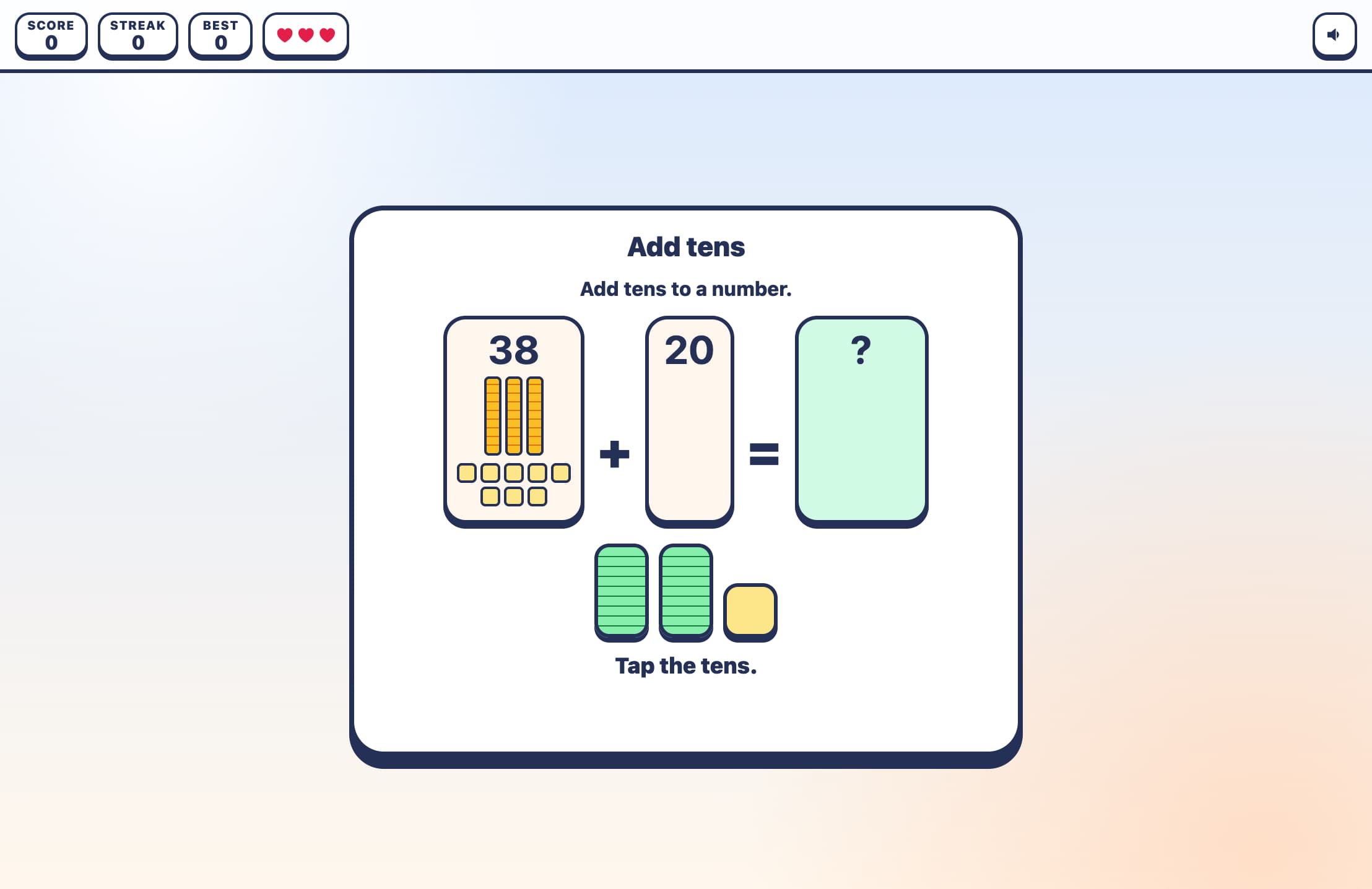
Add tens to a number.
Add tens shows a number as tens and ones, and 10, 20, 30, or 40 beside it. Add tens to a number. Tap the tens. Each green ten joins the number. The ones stay put. A little gold one is a miss. Built for 1st grade.
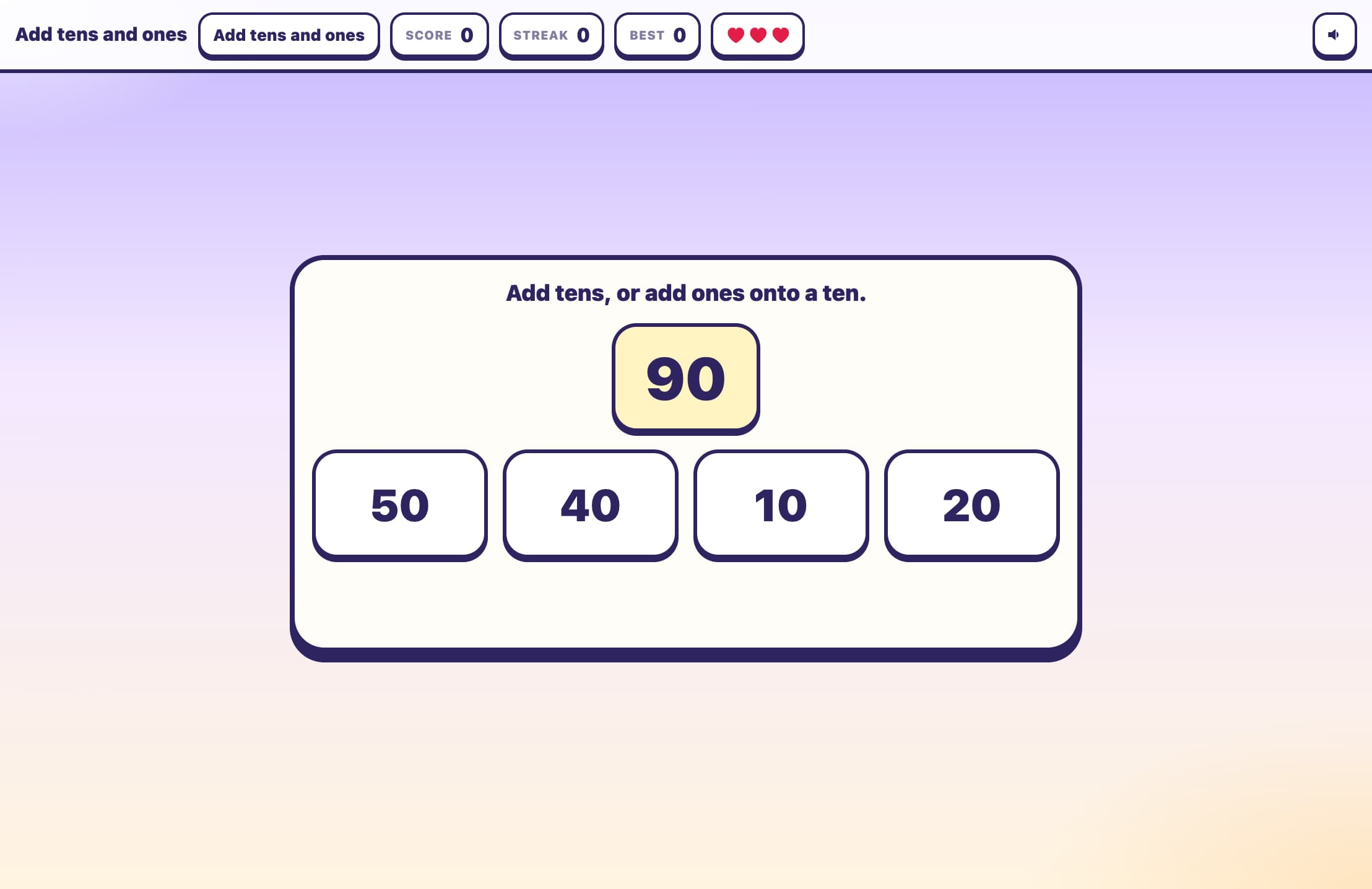
Add tens, or add ones onto a ten.
Add tens and ones is the game. Add tens, or add ones onto a ten. Watch shows 30 + 40 = 70, then 40 + 6 = 46, then 50 + 40 = 90, then 50 + 8 = 58. Click two number cards that make the target. Try it. Add tens, or add ones onto a ten. Then six scored points. Score, Streak, and hearts start after Try it. Built for 2nd grade.
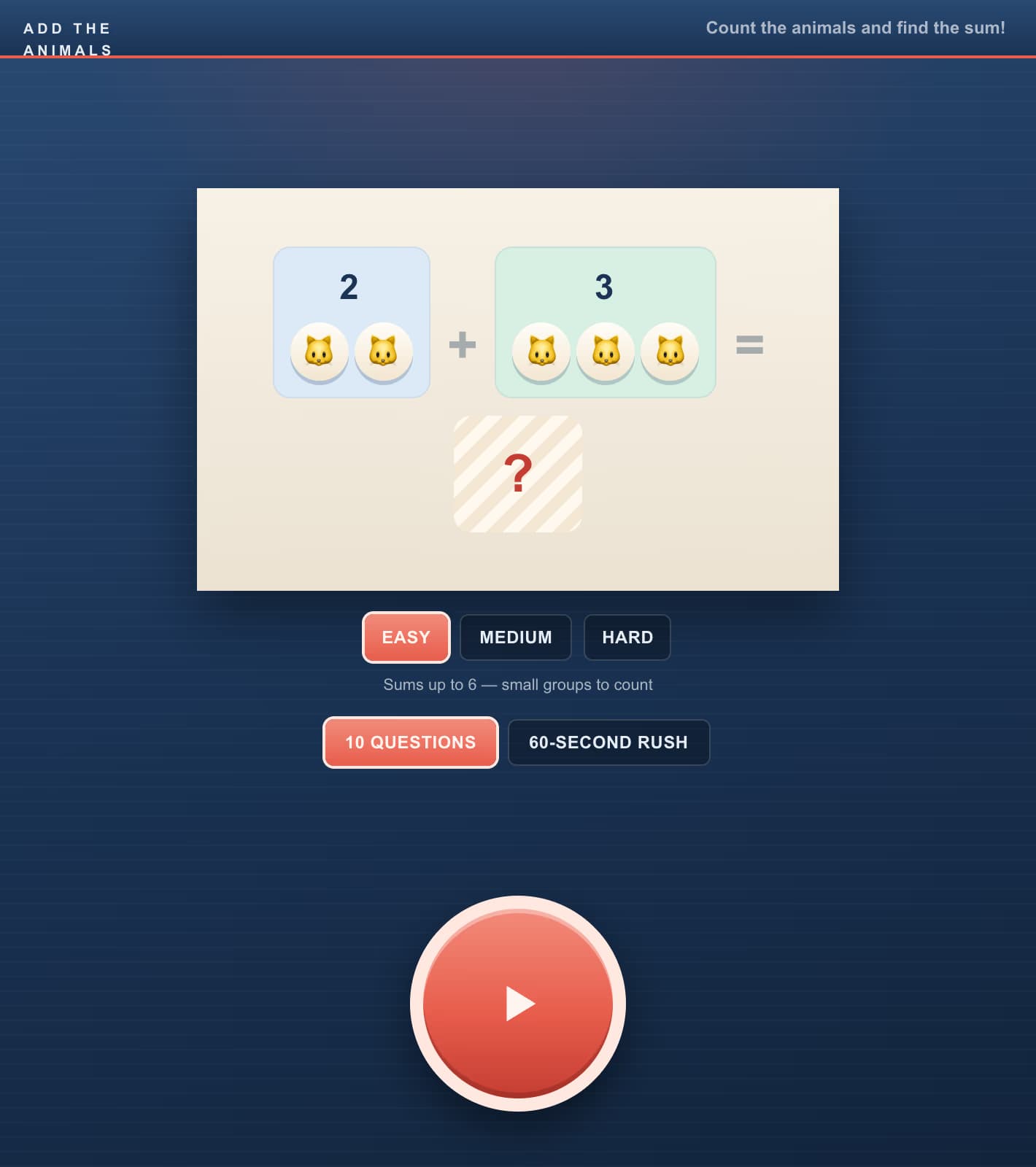
Count and Add Cute Animal Groups
2 cats + 3 cats = ? Count adorable animal emoji to solve addition problems up to 10. A visual and engaging way for young learners to practice adding numbers through counting.
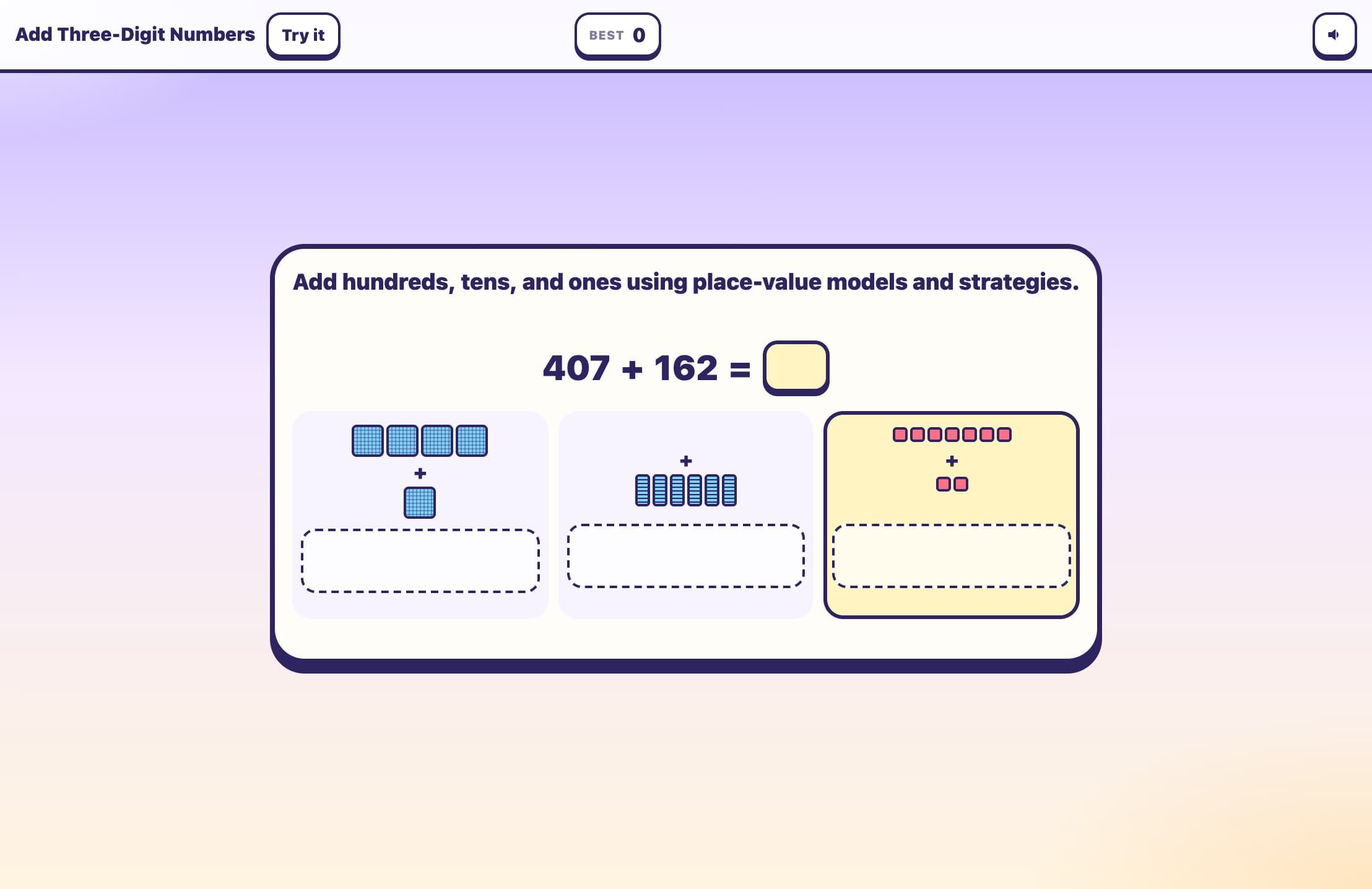
Add hundreds, tens, and ones using place-value models and strategies.
Add Three-Digit Numbers is the game. Add hundreds, tens, and ones using place-value models and strategies. Watch shows 234 + 125 = 359, then 407 + 162 = 569, then 158 + 267 = 425, then 346 + 185 = 531. Tap the ones, then the tens, then the hundreds. When a place makes 10 or more, tap the gold bundle so it moves to the next place. Try it. Add hundreds, tens, and ones using place-value models and strategies. Then six scored sums. Score, Streak, and hearts start after Try it. Built for 2nd grade.
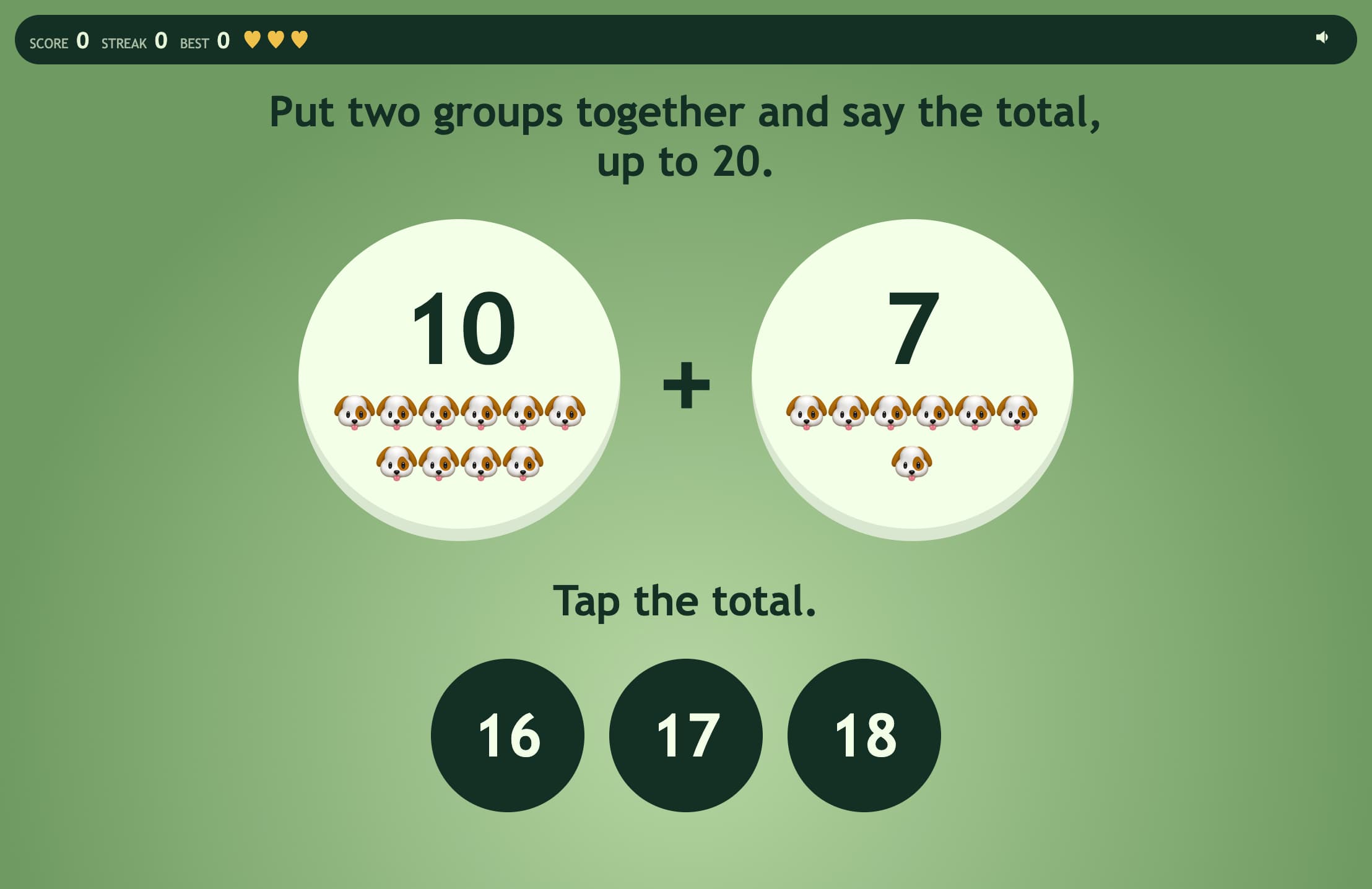
Put two groups together and say the total, up to 20
Two groups of puppies sit on the card, each with its number. Put two groups together and say the total, up to 20. Tap the total. A right tap turns green. A wrong tap turns rose. Built for 1st grade.
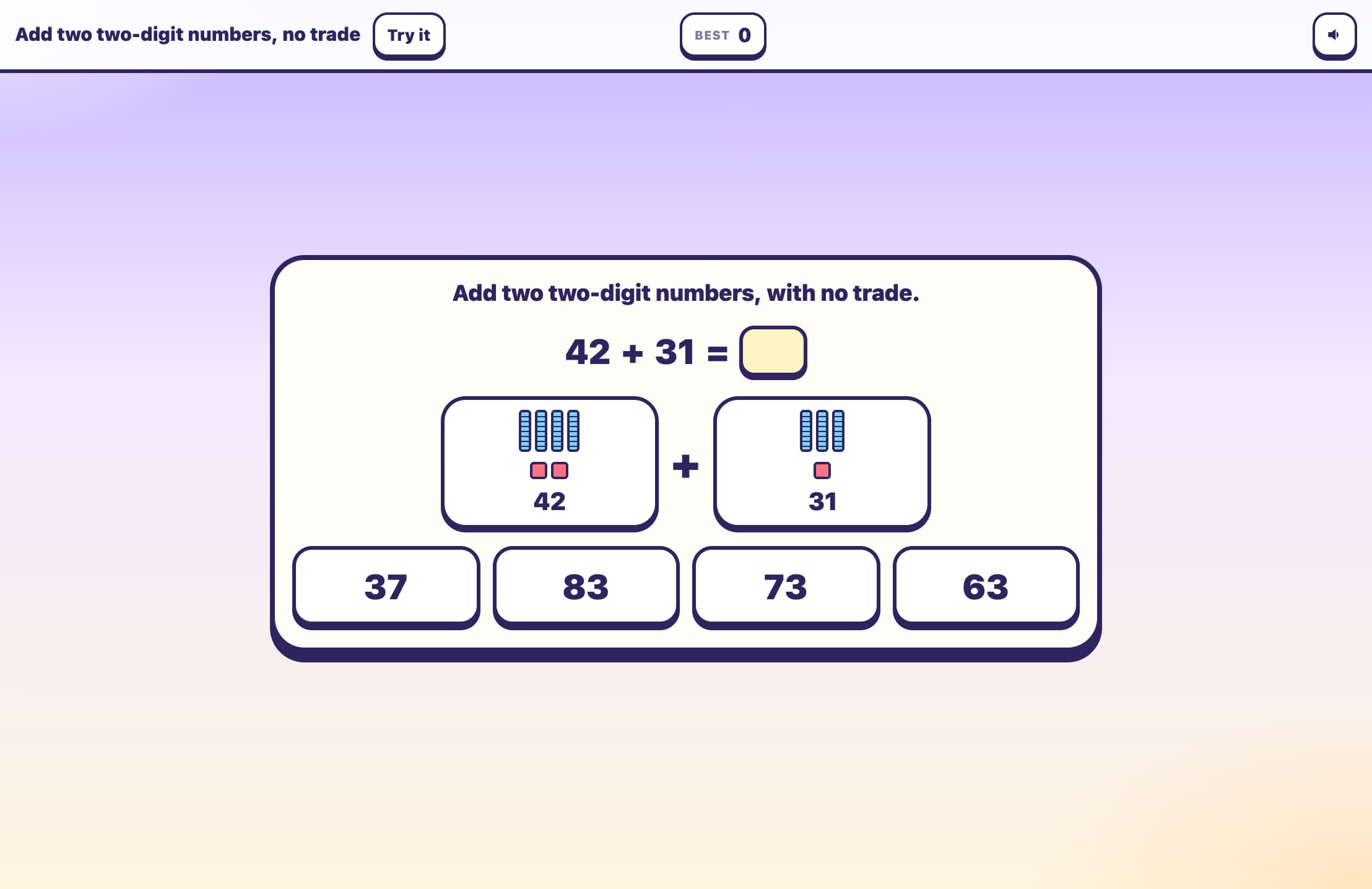
Add two two-digit numbers, with no trade.
Add two two-digit numbers, no trade is the game. Add two two-digit numbers, with no trade. Watch shows 34 + 25 = 59, then 42 + 31 = 73, then 51 + 26 = 77, then 60 + 18 = 78. Rods are the tens. Small squares are the ones. Each number sits under its blocks. Tap the total. The ones do not make another ten. Try it. Add two two-digit numbers, with no trade. Then six scored totals. Score, Streak, and hearts start after Try it. Built for 2nd grade.
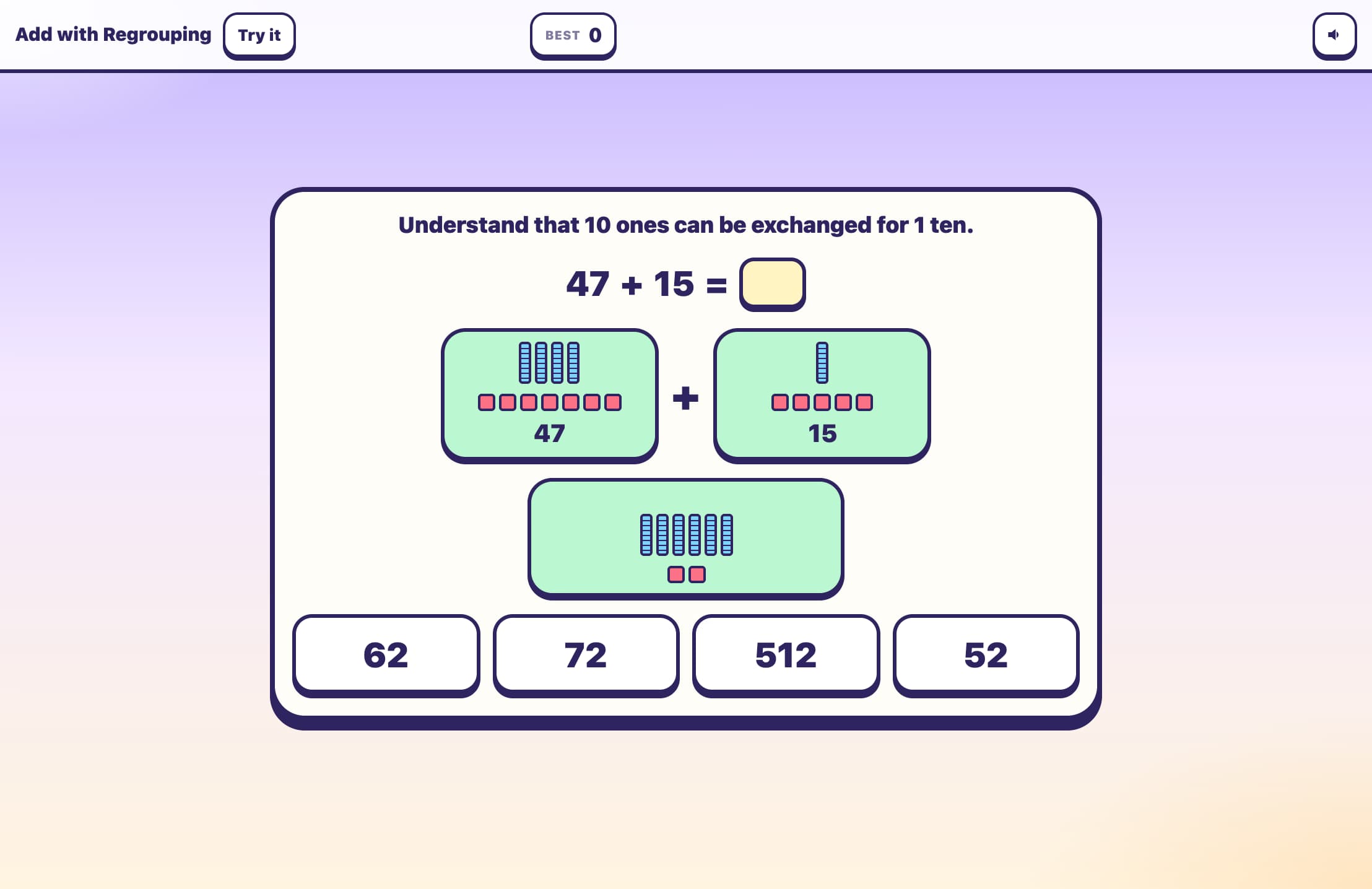
Understand that 10 ones can be exchanged for 1 ten.
Add with Regrouping is the game. Understand that 10 ones can be exchanged for 1 ten. Watch shows 28 + 17 = 45, then 36 + 28 = 64, then 47 + 15 = 62, then 19 + 26 = 45. Ten small ones become 1 ten. Then tap the total. Try it. Understand that 10 ones can be exchanged for 1 ten. Then six scored totals. Score, Streak, and hearts start after Try it. Built for 2nd grade.
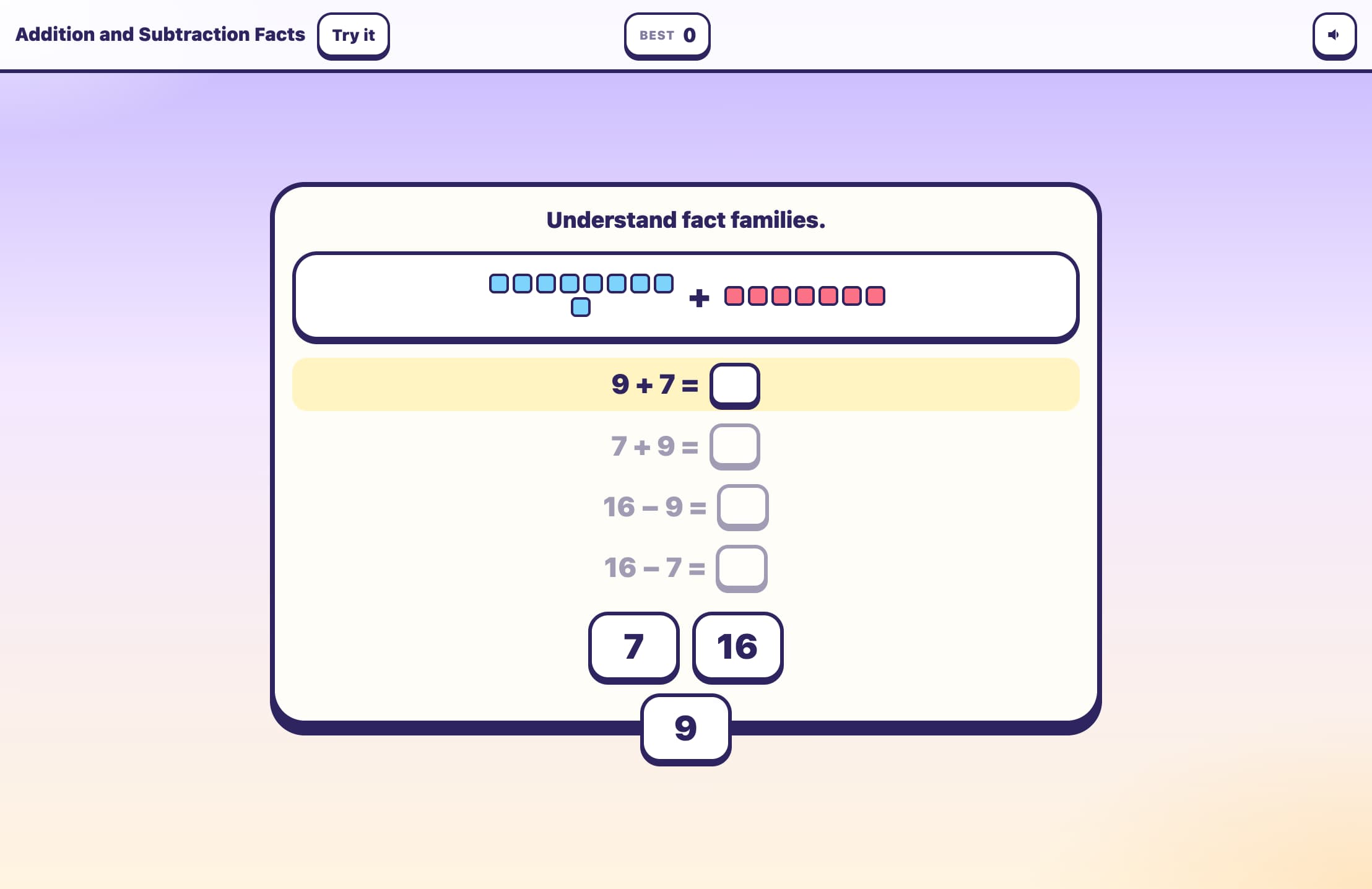
Understand fact families.
Addition and Subtraction Facts is the game. Understand fact families. Watch shows 8 + 5 = 13, 5 + 8 = 13, 13 − 8 = 5, and 13 − 5 = 8. Then 9 + 7 = 16, 6 + 8 = 14, and 4 + 9 = 13. The blocks join, then they split. Try it. Understand fact families. Then six scored families. Score, Streak, and hearts start after Try it. Built for 2nd grade.
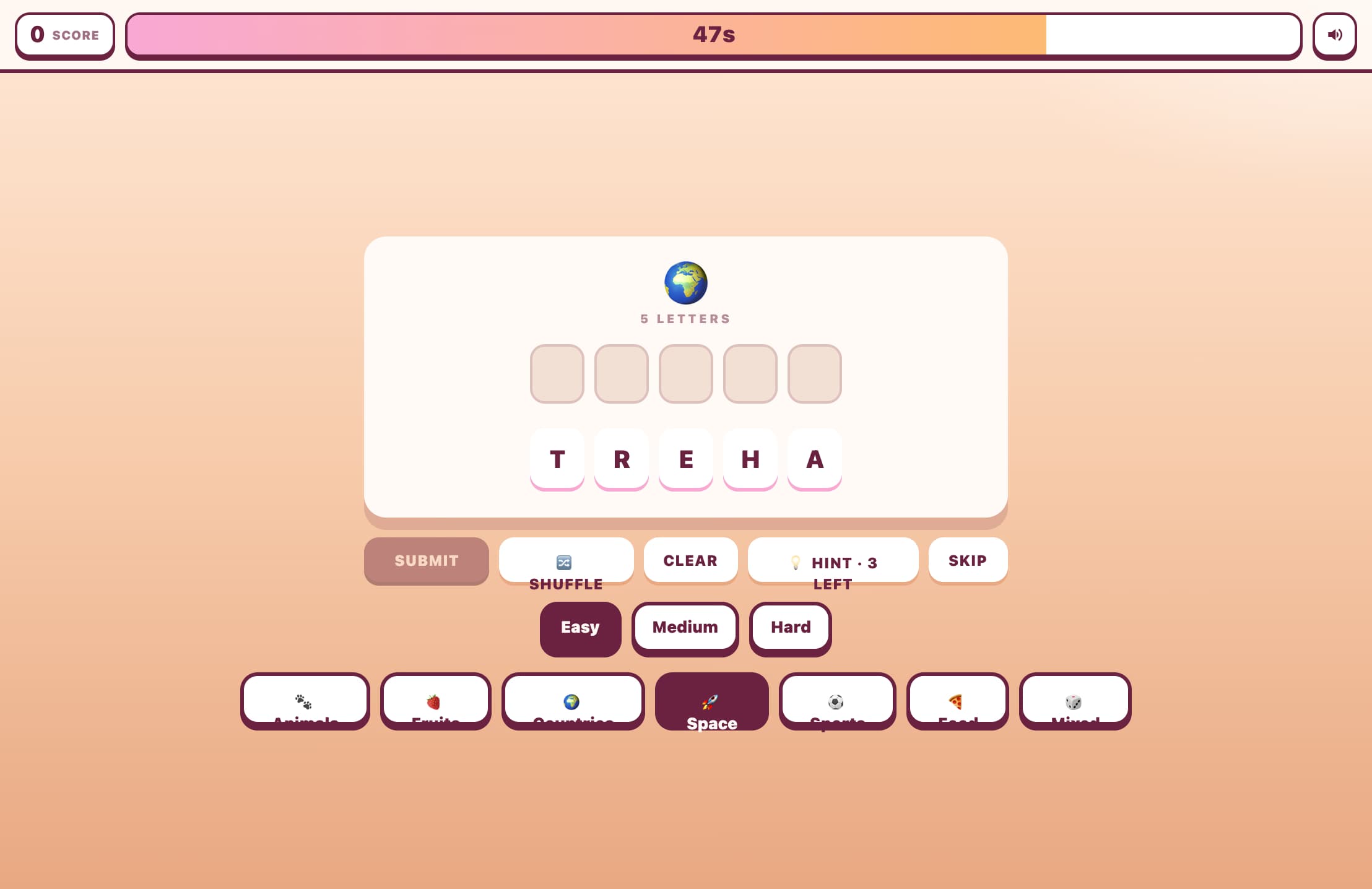
Unscramble Jumbled Letters
Unscramble jumbled letters to form the hidden word! Choose from 7 categories and 3 difficulty levels. Race against the timer, use hints, and build your streak in this fun anagram word game.
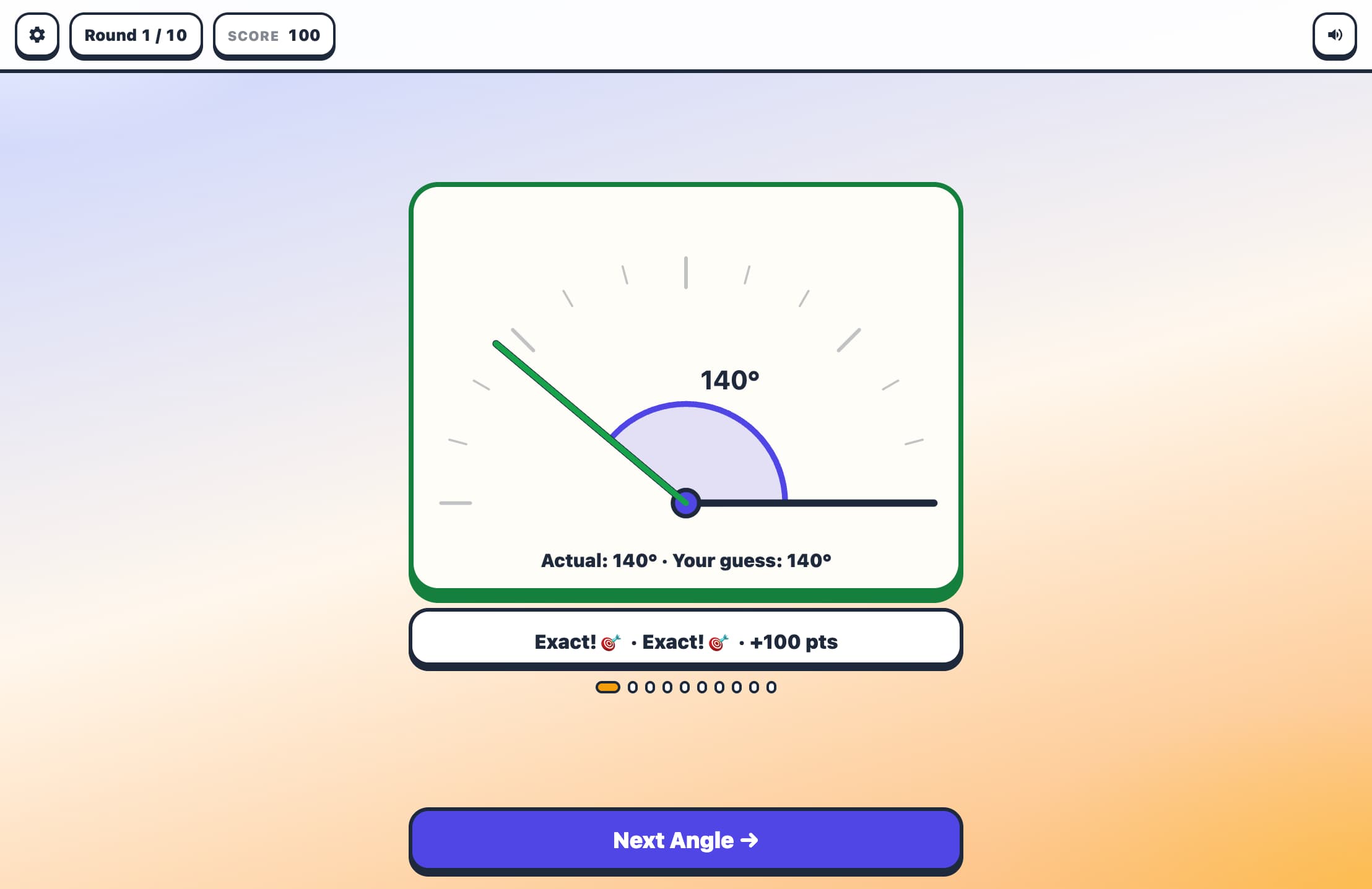
Guess Geometry Angles
Train your eye for geometry! An angle is drawn on screen using two rays from a common vertex. Estimate the angle in degrees, then lock in your answer. The closer your guess, the higher your score — within 2° earns a perfect bullseye!
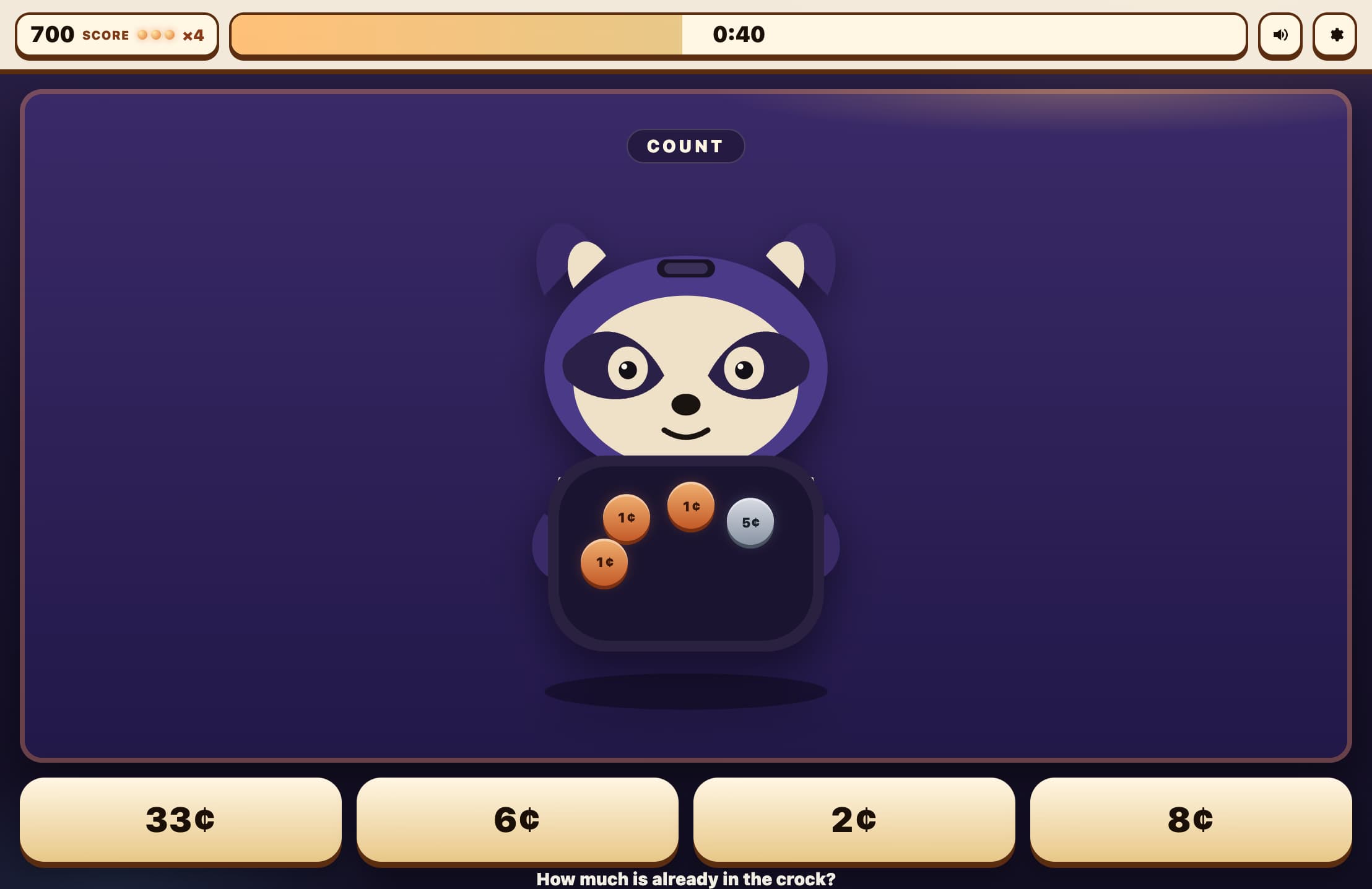
Count Coins Then Add to the Target
A copper-lit workshop and a plump ceramic raccoon crock. First count the pennies, nickels, dimes, and quarters already in the belly. Then tap coins from the walnut tray to reach a new total. Built for first through third graders practicing coin values and adding money.
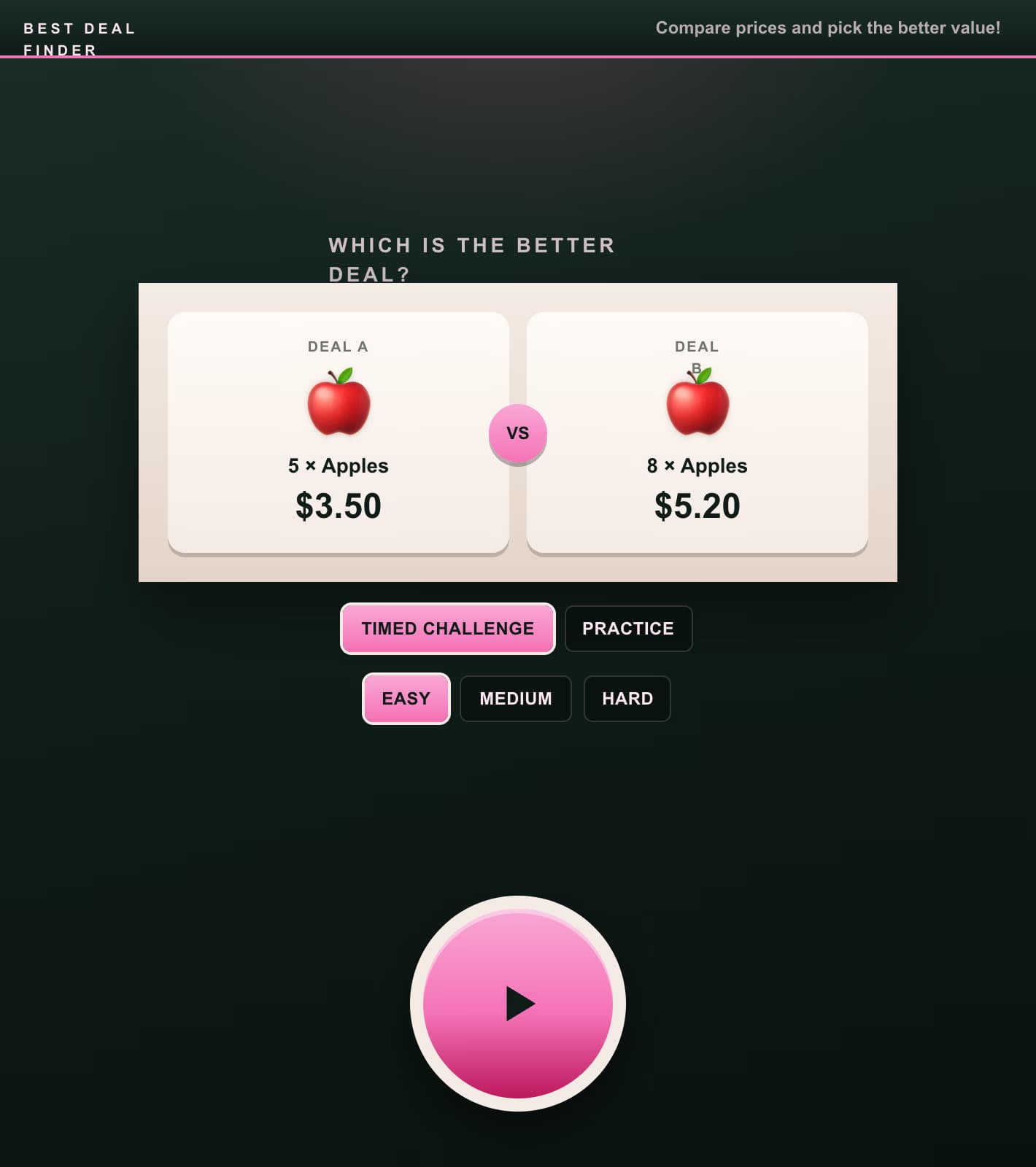
Compare Prices and Pick the Better Value
Compare two prices for the same item quantity and pick the better value. Introduces unit price thinking for grades 3–5. Practice finding the best deal by calculating price per item.
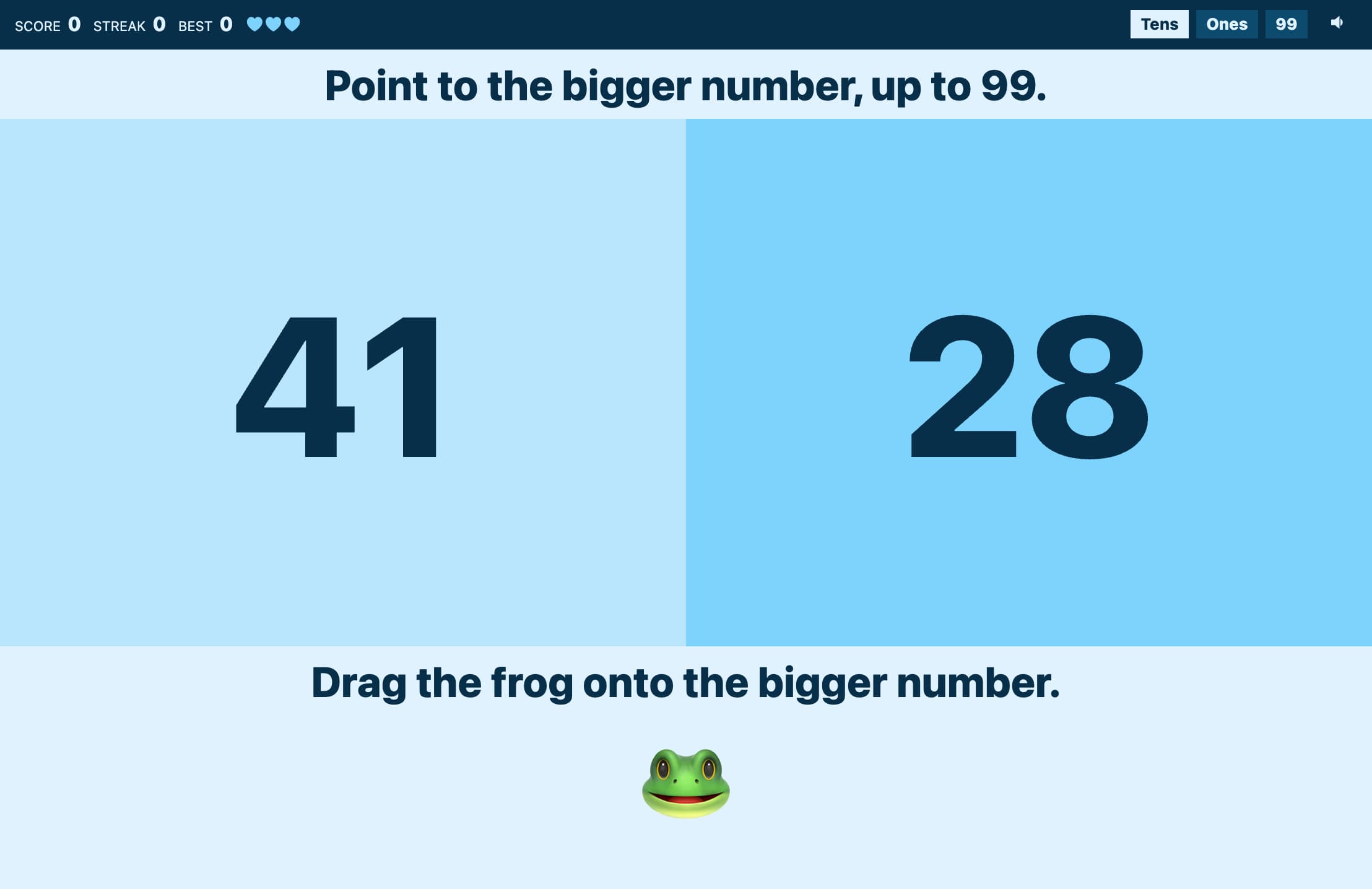
Point to the bigger number, up to 99
Two numbers sit on cards. Bigger number is the game. Point to the bigger number, up to 99. Drag the frog onto the bigger number. Tens. Point to the bigger number. Ones. Point to the bigger number. 99. Point to the bigger number, up to 99. A right drop turns green. A wrong drop turns rose. Built for 1st grade.
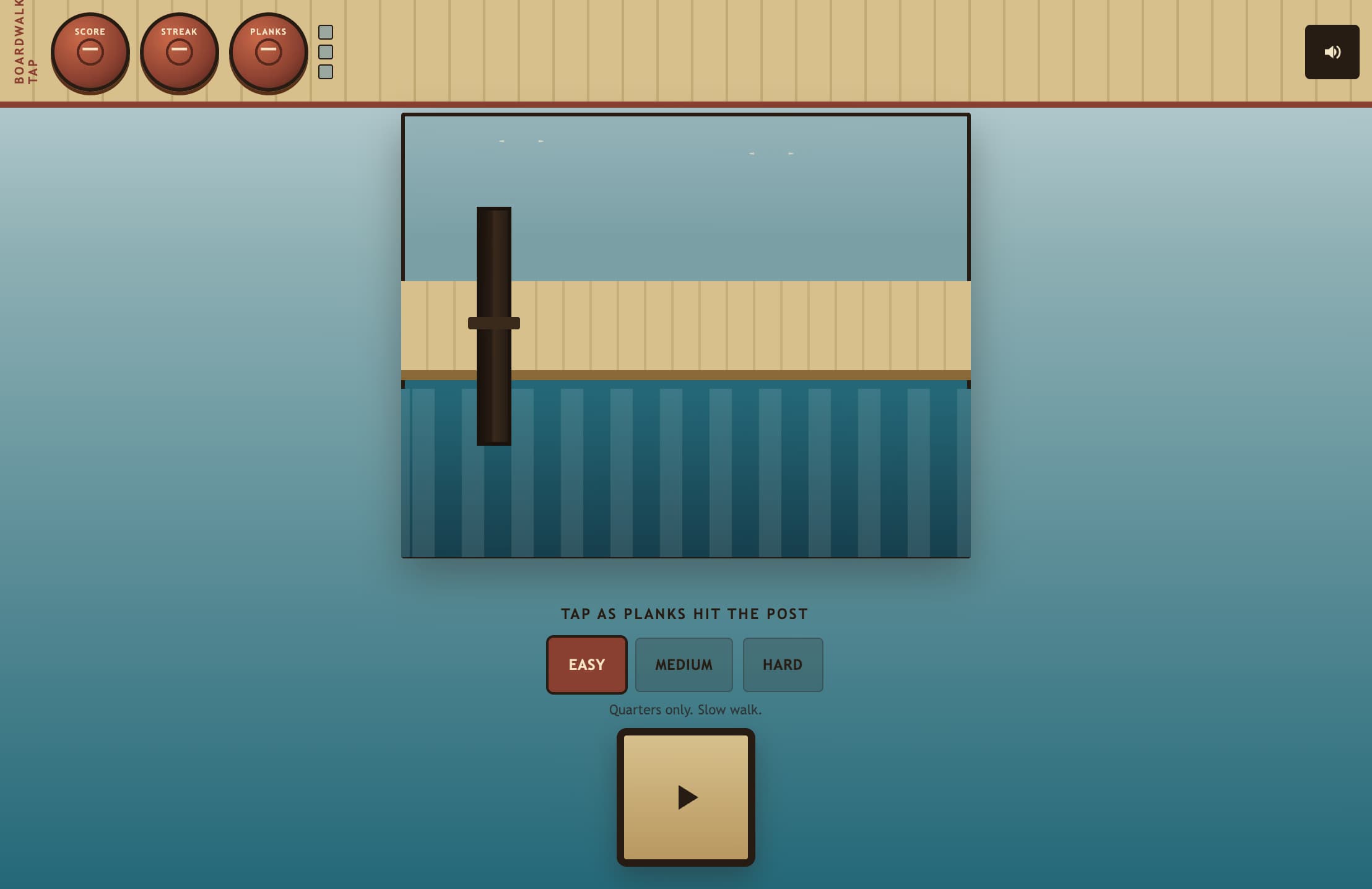
Pier Rhythm Timing
A sun-bleached pier. Planks slide toward a tar post. Tap once for a long quarter plank. Tap twice, quick, when two short eighths arrive. Timing is the skill. Twelve Planks finish the walk. Three splashes end it. Score and Streak grow with clean hits.
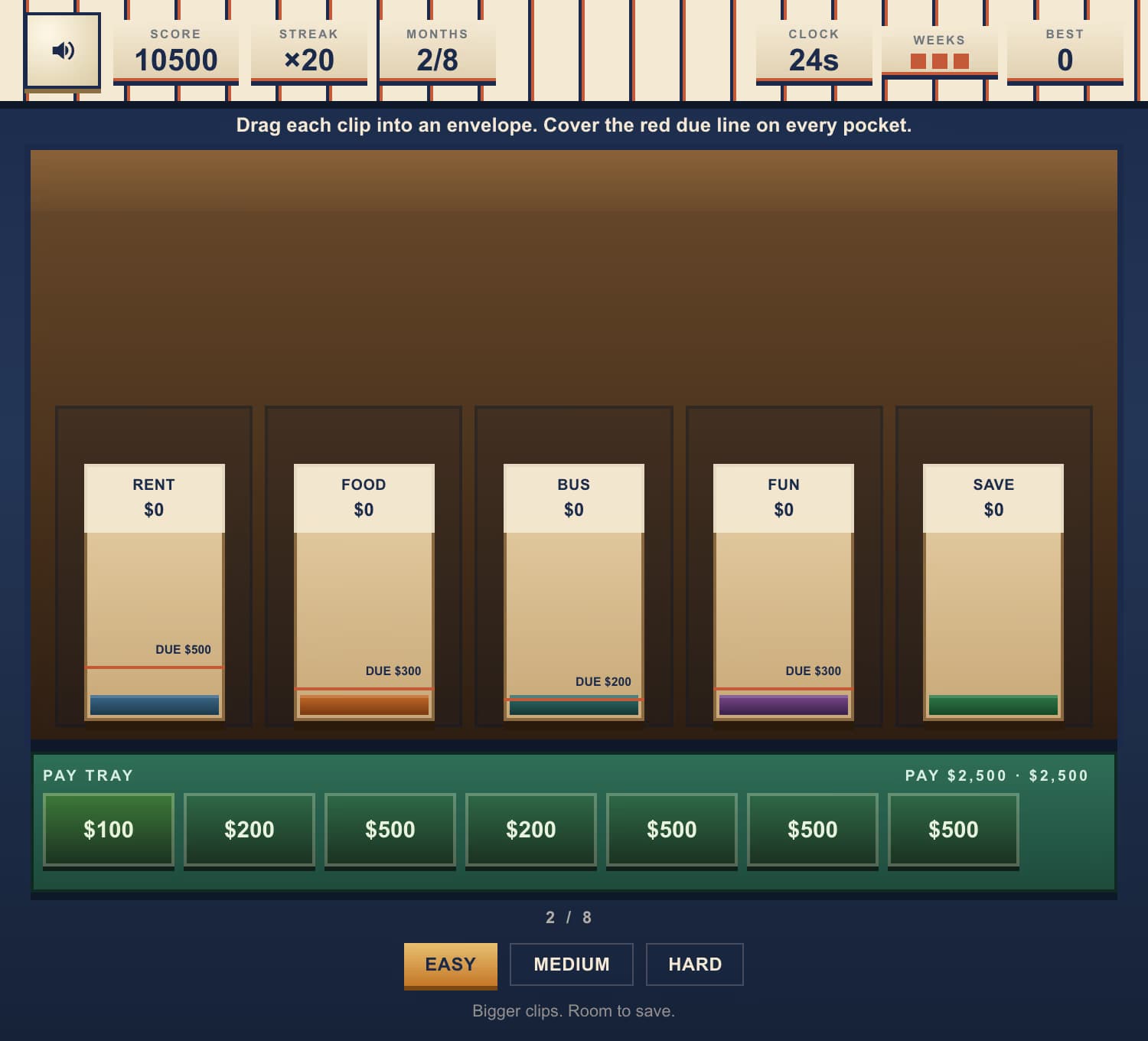
Stuff Payday Envelopes Before the Clock
A Saturday pay desk. Clips of cash land on a green blotter. Drag each clip into rent, food, bus, fun, or save. Cover the red due line on every envelope before the stamp clock hits zero. Built for money math: zero-based budgeting with moving bills, not plus and minus buttons.
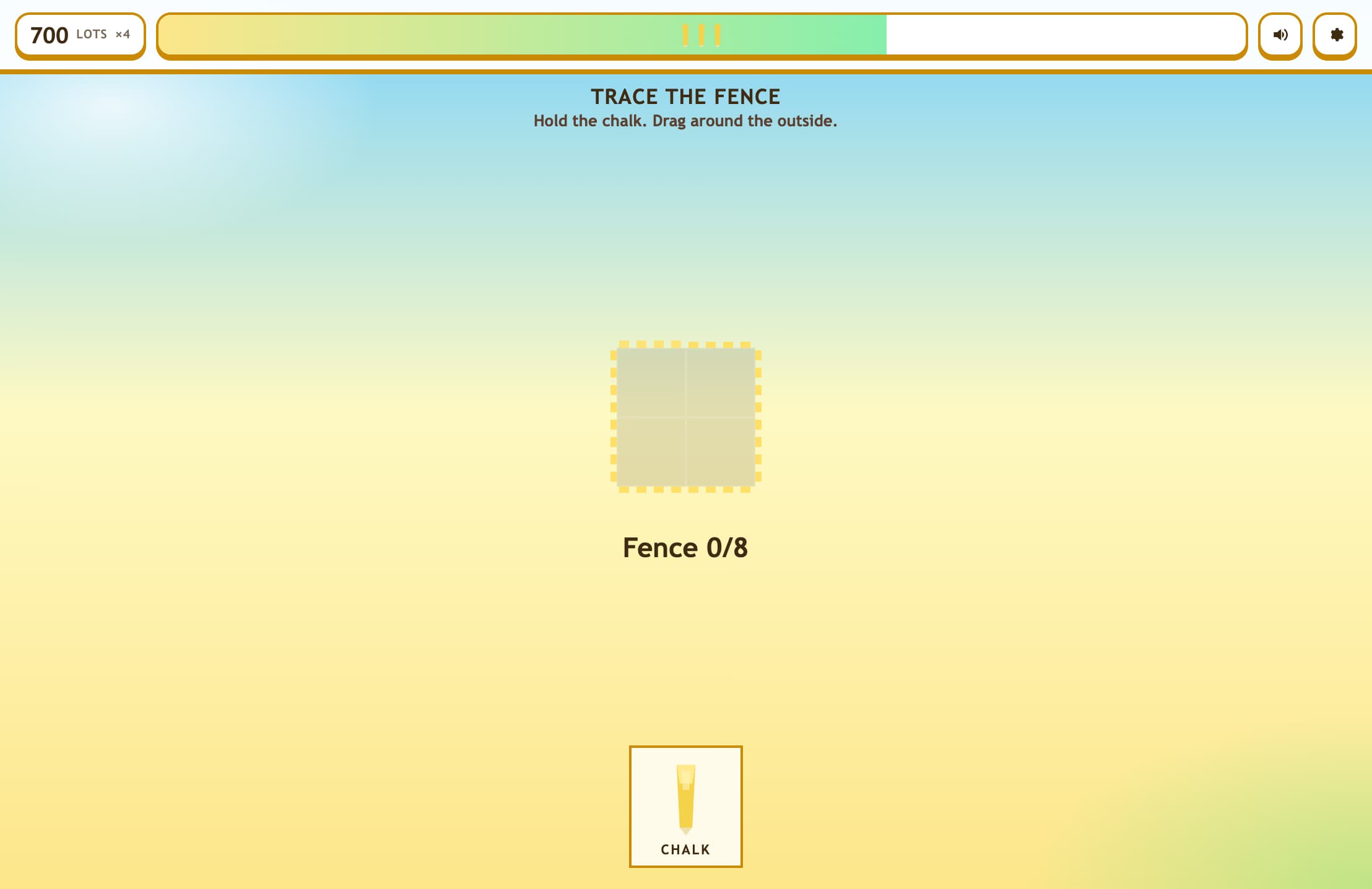
Perimeter and Area by Counting Squares
Draw on a driveway in Chalk Lot. Trace the fence to count the walk around a rectangle, or fill the squares to count how many unit squares fit inside. Third grade geometry: perimeter and area by counting, not by a hidden formula.
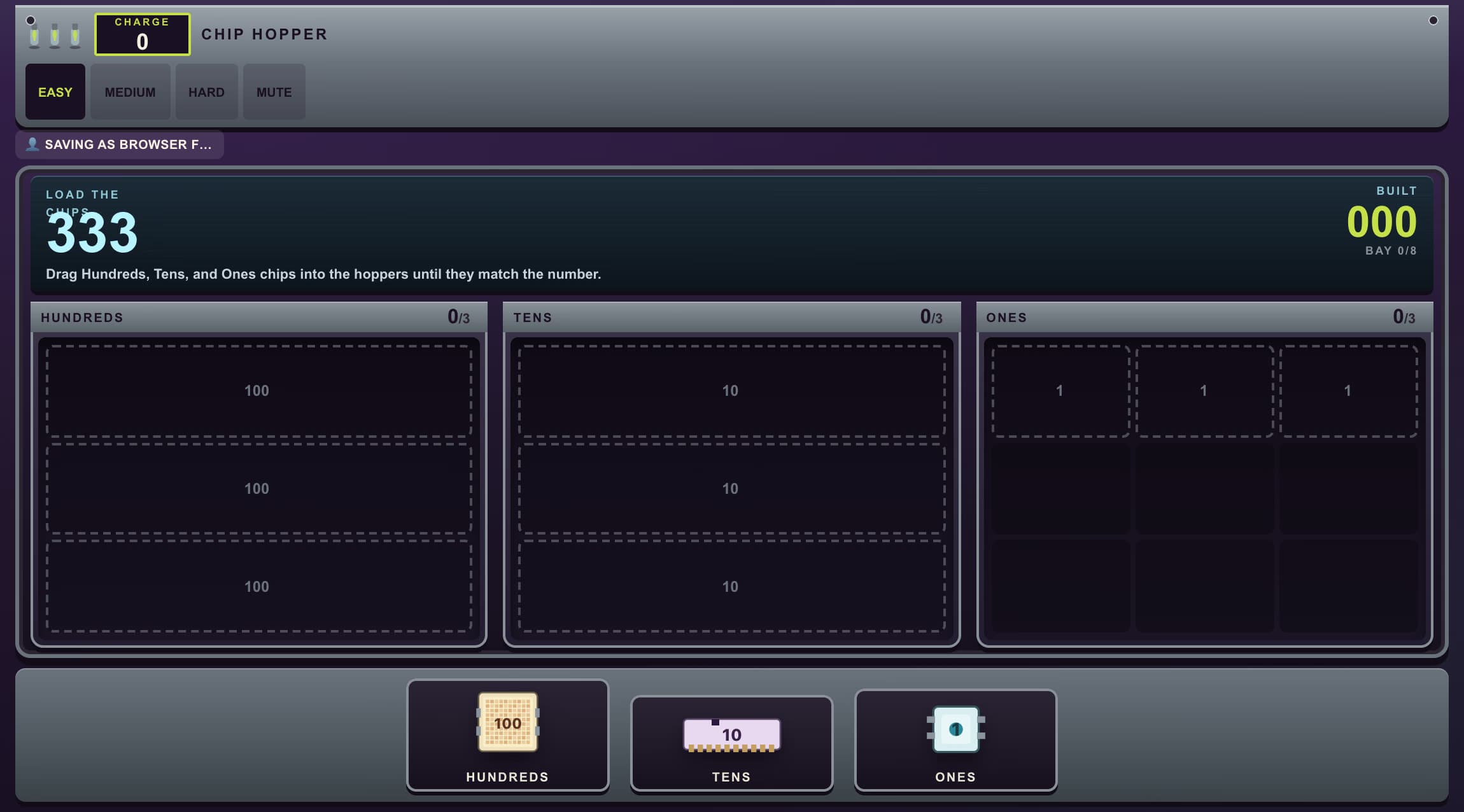
3-Digit Place Value Machine
Muggo's Chip Hopper is a broken three-digit place value machine. A CRT shows a number. Drag Hundreds, Tens, and Ones chips into the hoppers until they match the number. Second grade kids practice place value by loading visual blocks of hundreds, tens, and ones. Charge points grow with a streak.
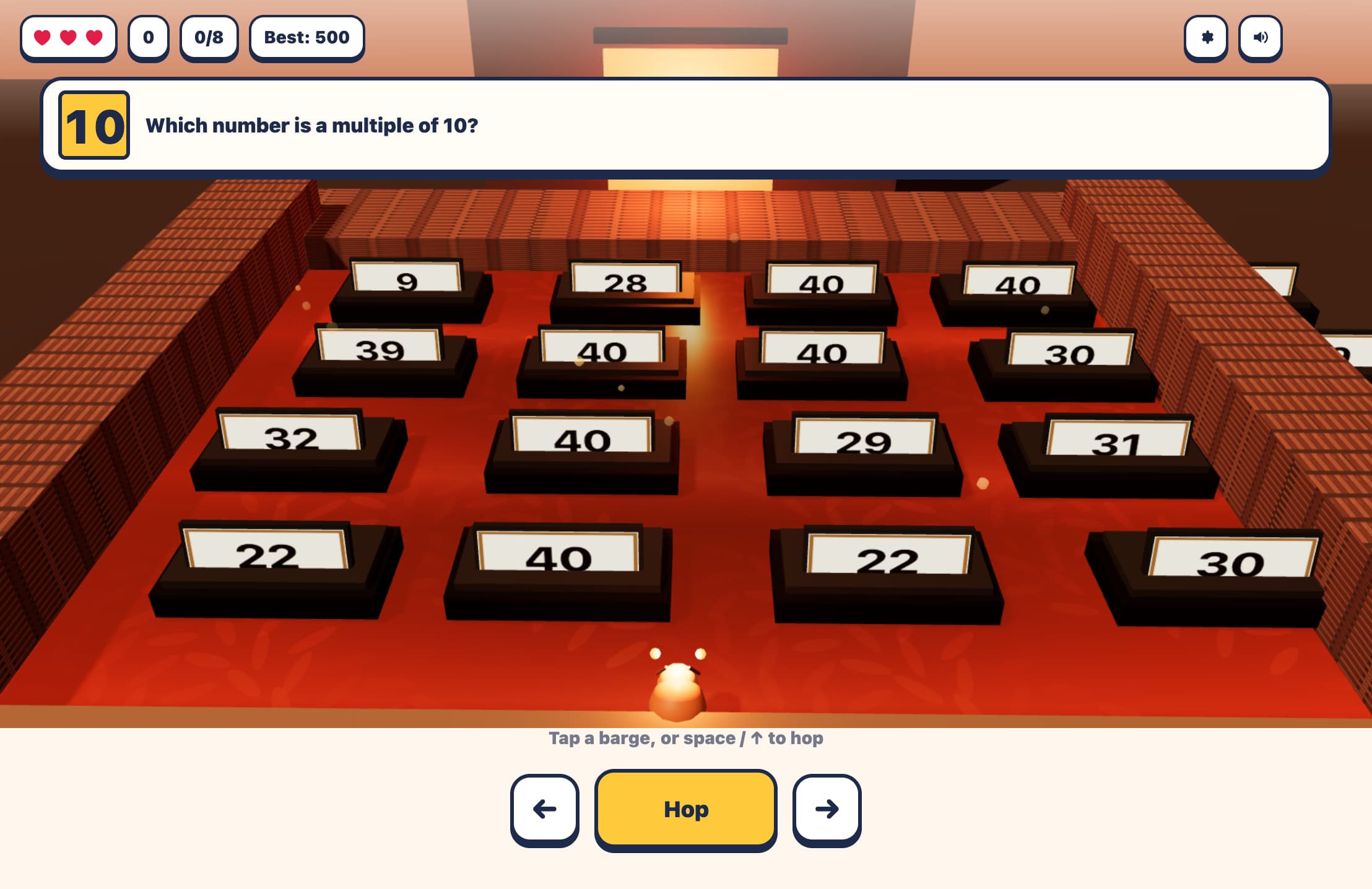
Find the Multiples Crossing
Hop a lantern beetle across an ash canal on moving iron barges. A sign asks which number is a multiple of 8—or 3, or 12. Land only on barges that match. A wrong number dumps you in the slag. Built for third- through fifth-grade multiples practice.
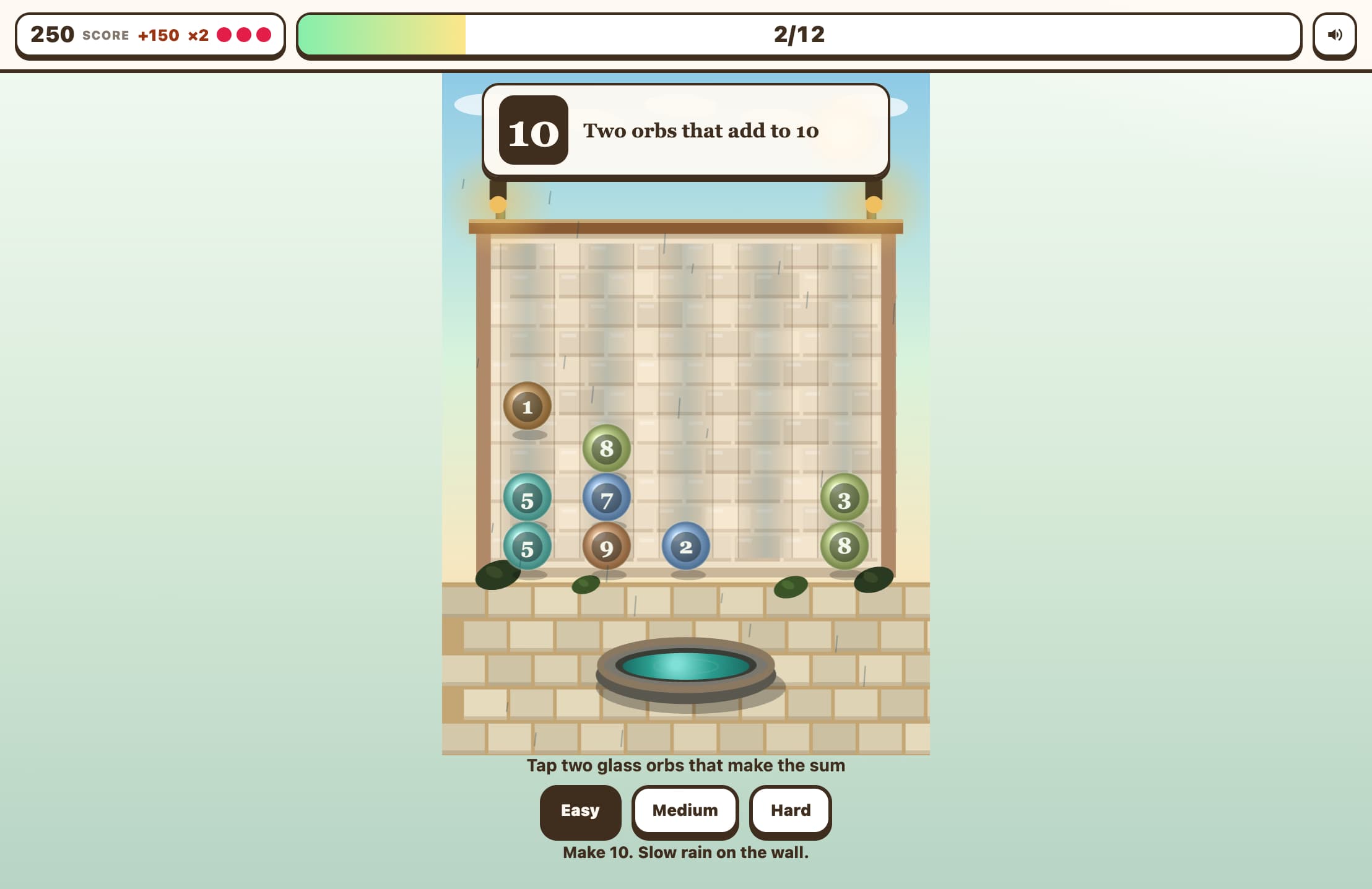
Addition Facts Glass Orb
A moonlit limestone courtyard. Numbered glass rain orbs slide down wet stone channels. Tap two that add to the sum on the well plaque. A match melts into the cistern. A miss cracks and resets the streak. If the wall fills, a life is lost. Built for first- and second-grade addition facts.
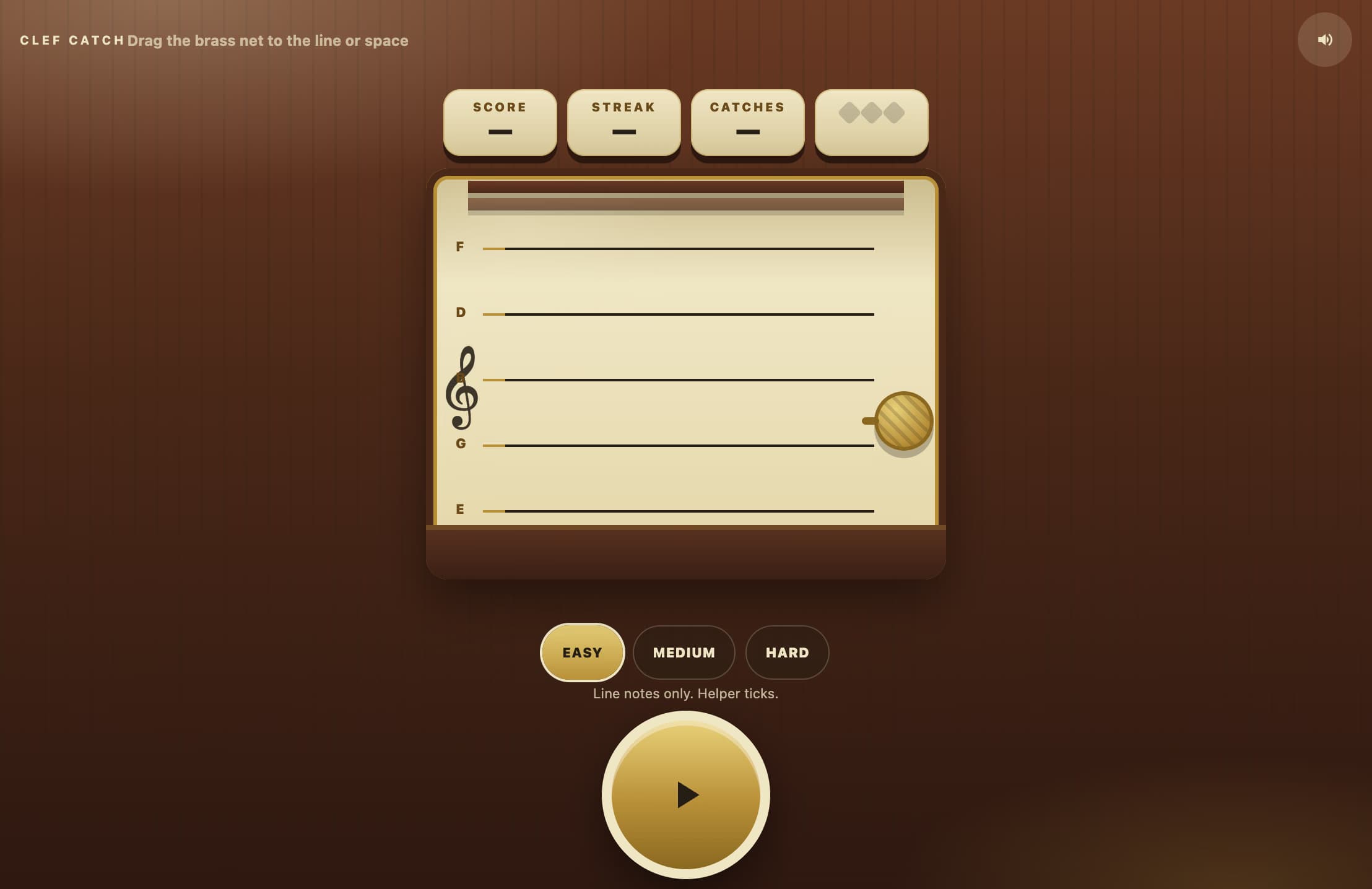
Treble Staff Note Catch
An attic music trunk. Note-heads fall toward the floor. Drag the brass net to the correct line or space on the treble staff and Catch before the note smudges ink. Easy is line notes with helper ticks. Medium adds spaces. Hard is faster with no ticks. Score, Streak, Catches, three lives, and a Best.
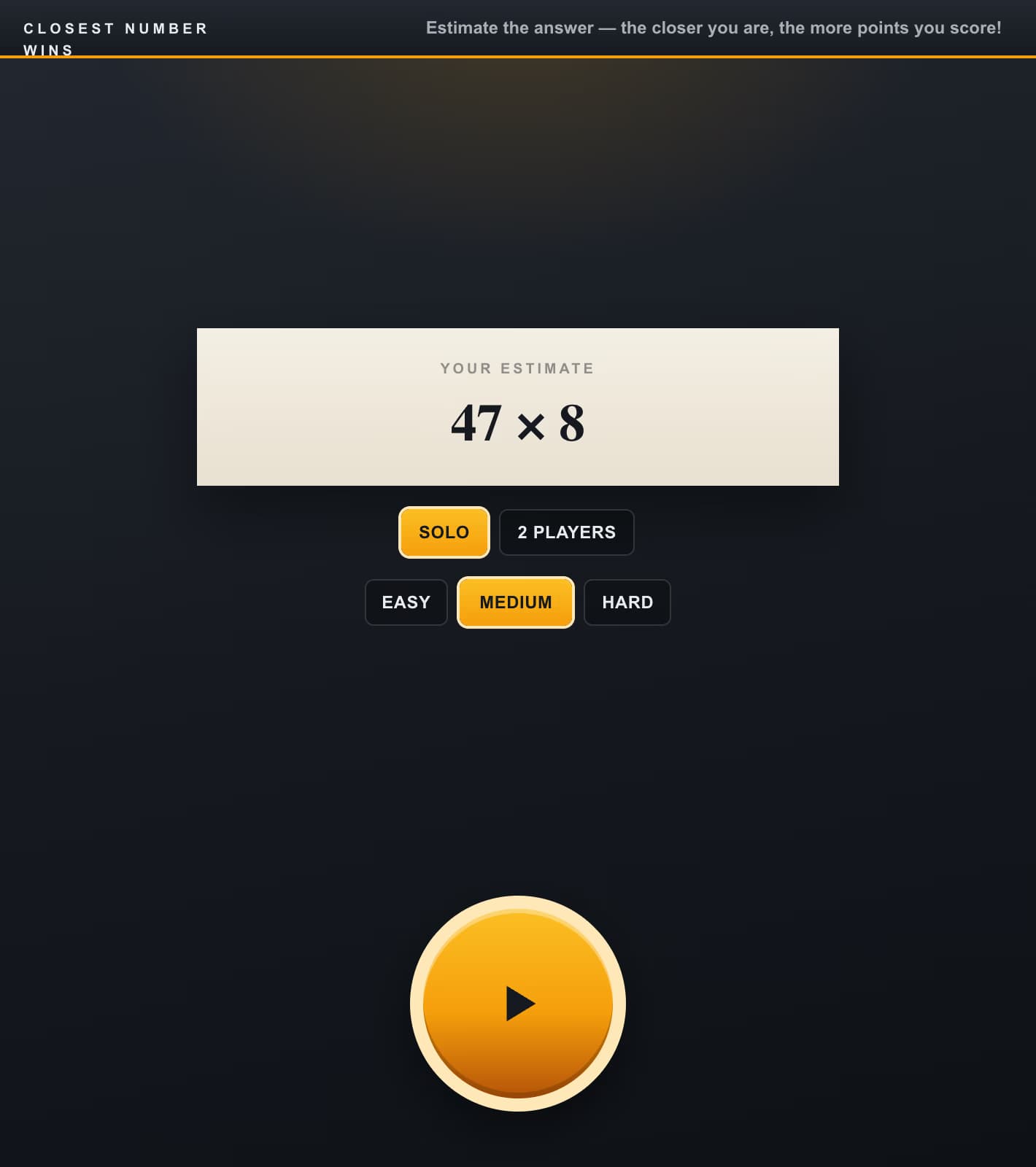
Math Estimation
Estimate the result of a math expression. The player with the closest guess scores the most points — great for multiplayer fun!
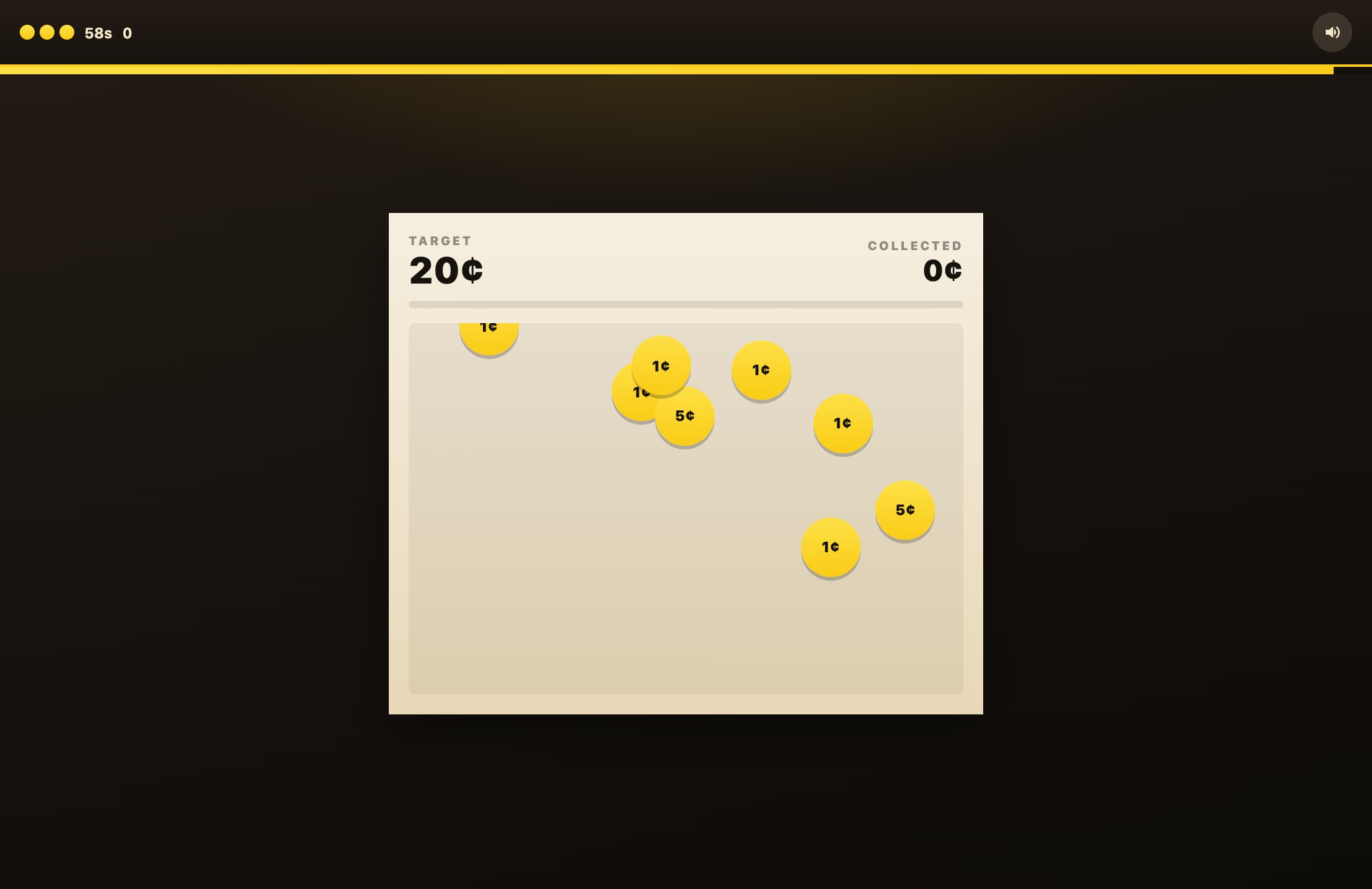
Click Falling Coins to Reach the Target Amount
Coins rain down from the top of the screen — click only the ones that add up to the target amount before time runs out. A fast-paced money math game that sharpens coin recognition and mental addition for all ages.
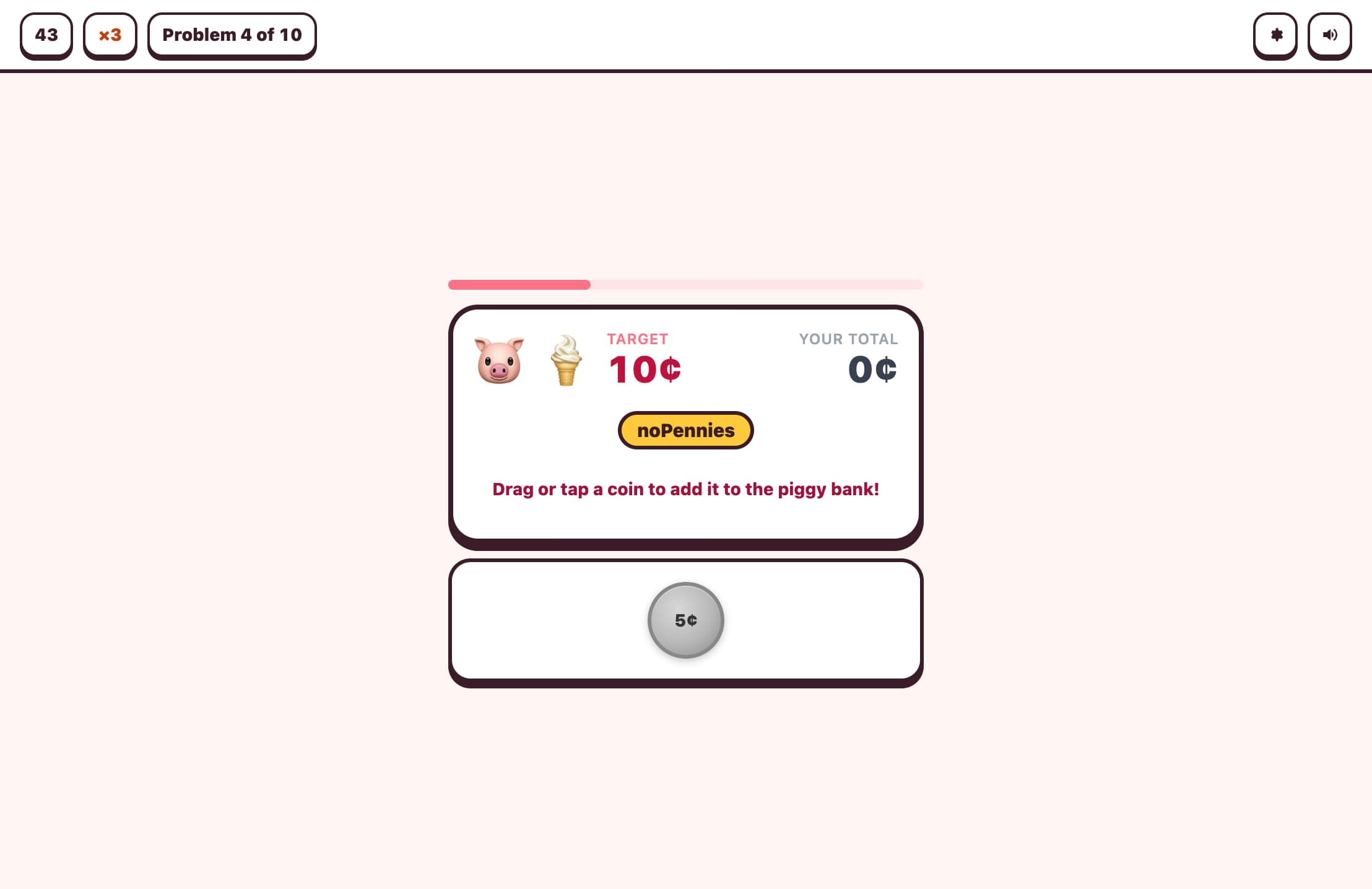
Drag Coins to Reach the Target Amount
Drag or tap pennies, nickels, dimes, and quarters into a piggy bank to make exact target amounts! Three difficulty levels introduce money concepts step by step — from 1–10¢ with just pennies and nickels, up to 50¢ with all four US coin types.
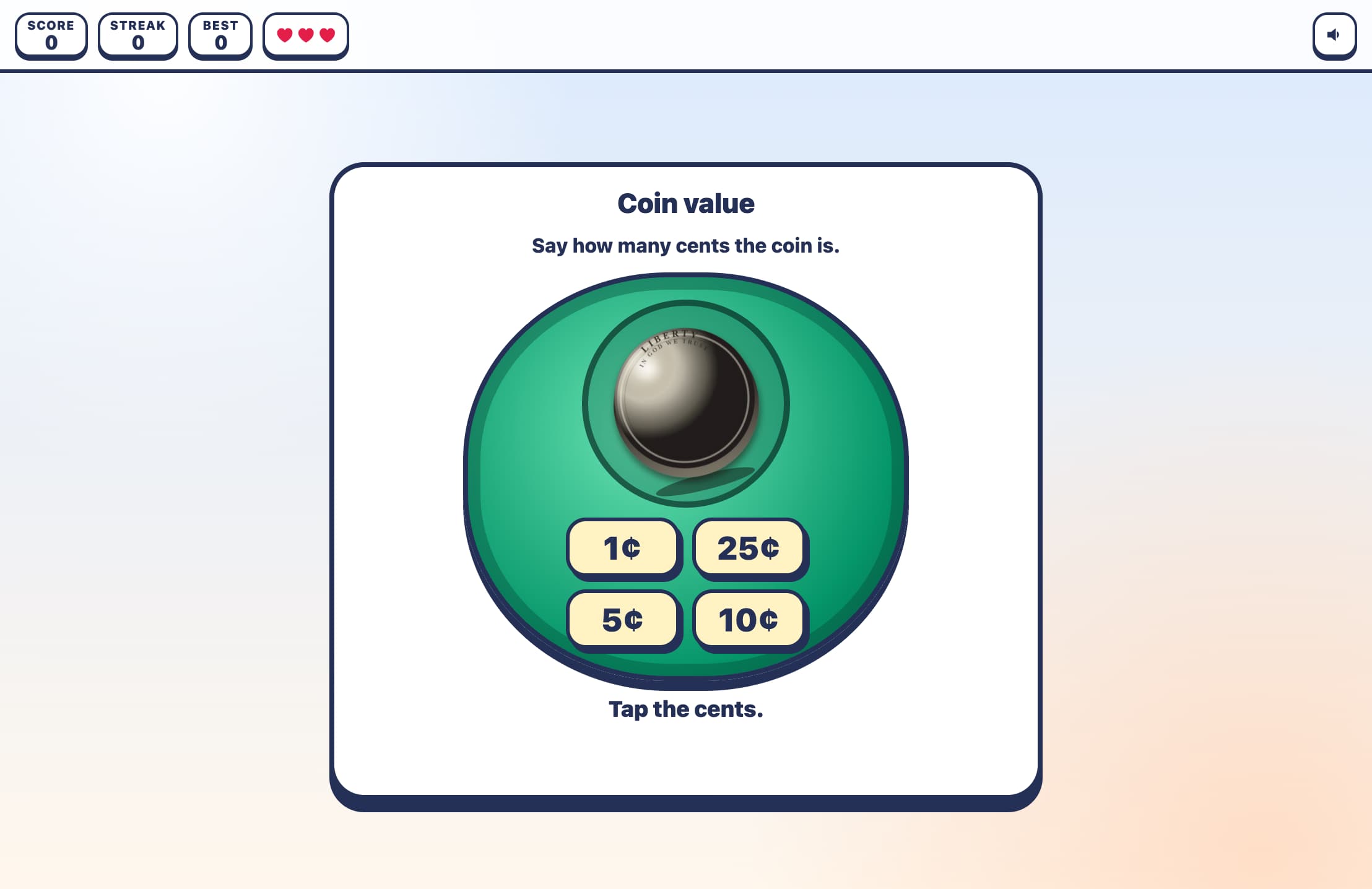
Say how many cents the coin is.
Coin value puts one coin on a green felt tray. Say how many cents the coin is. The penny is copper. The dime is the small silver coin. The nickel is the middle silver coin. The quarter is the big silver coin. Tap the cents. The tags say 1¢, 5¢, 10¢, and 25¢. The right tag turns green and moves onto the coin, and Score grows with the Streak. A wrong tag turns rose, clears the Streak, and costs a heart. Built for 1st grade.
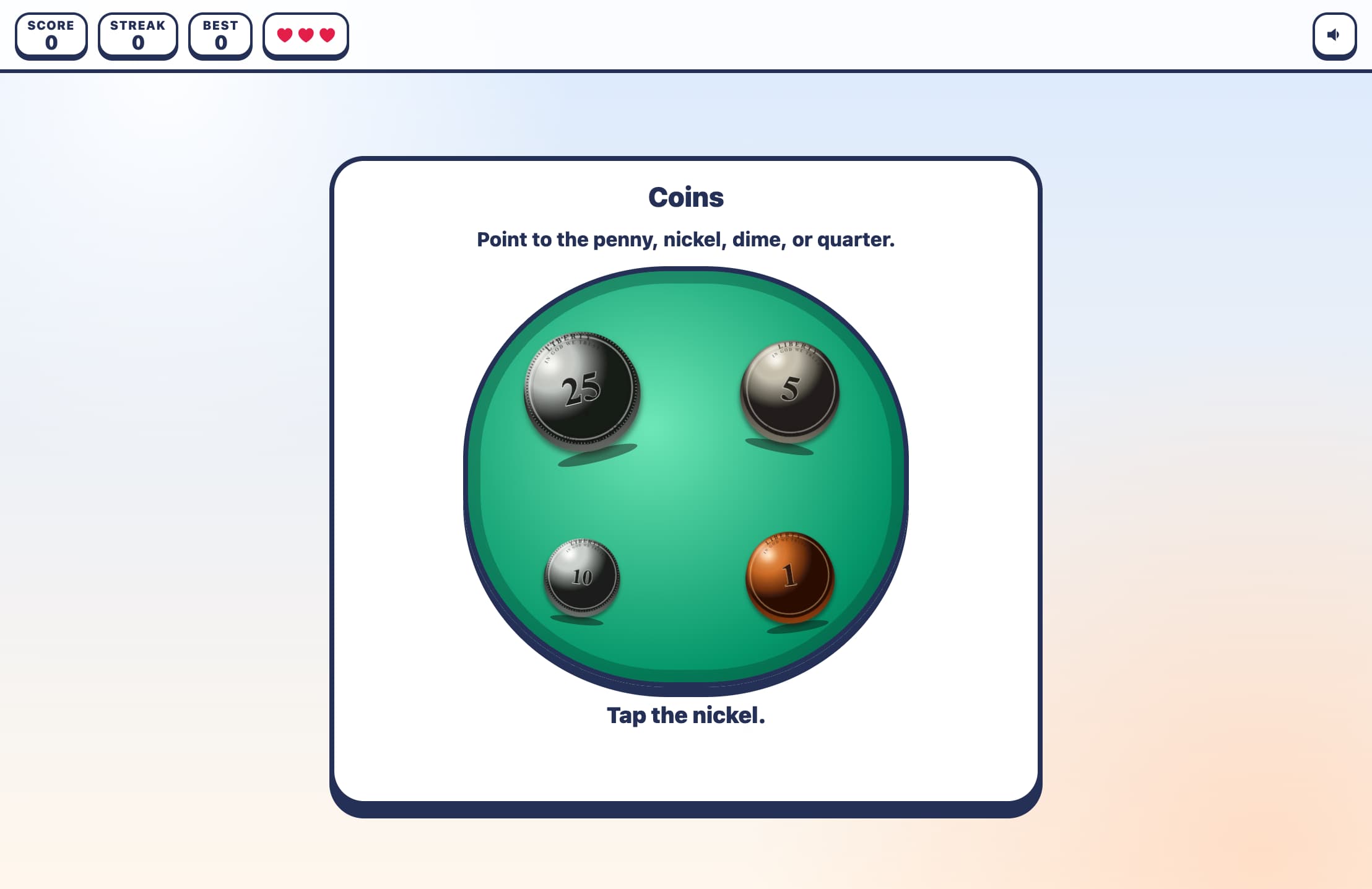
Point to the penny, nickel, dime, or quarter.
Coins puts four coins on a green felt tray. Point to the penny, nickel, dime, or quarter. Tap the penny, Tap the nickel, Tap the dime, or Tap the quarter. The right coin turns green and Score grows with the Streak. A wrong coin turns rose, clears the Streak, and costs a heart. Built for 1st grade.
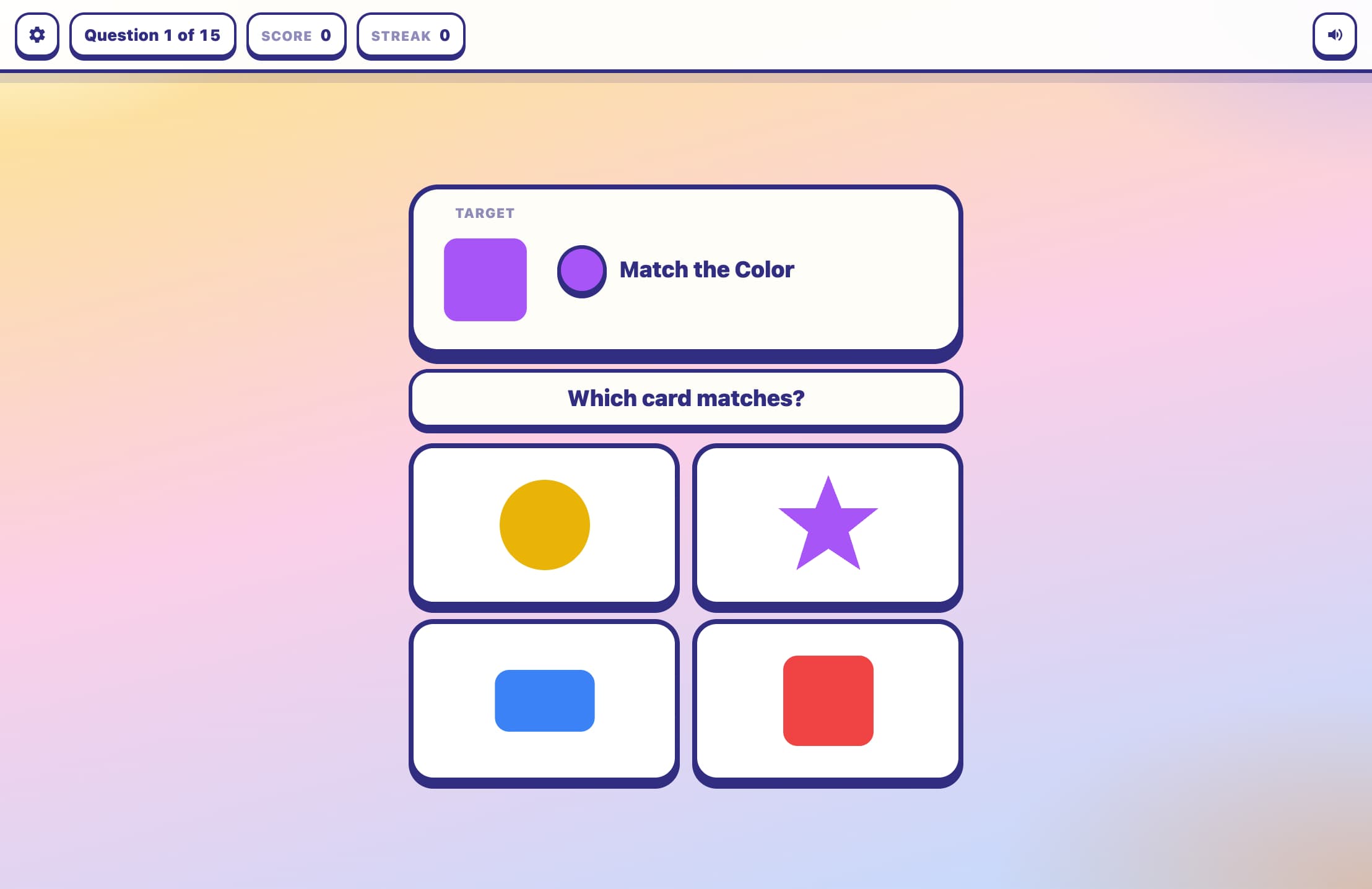
Classification and Sorting
A gentle introduction to classification and sorting! Match objects by color, shape, or both. Find the card that follows the rule — from easy single-attribute sorting to tricky two-attribute matching with near-miss distractors.
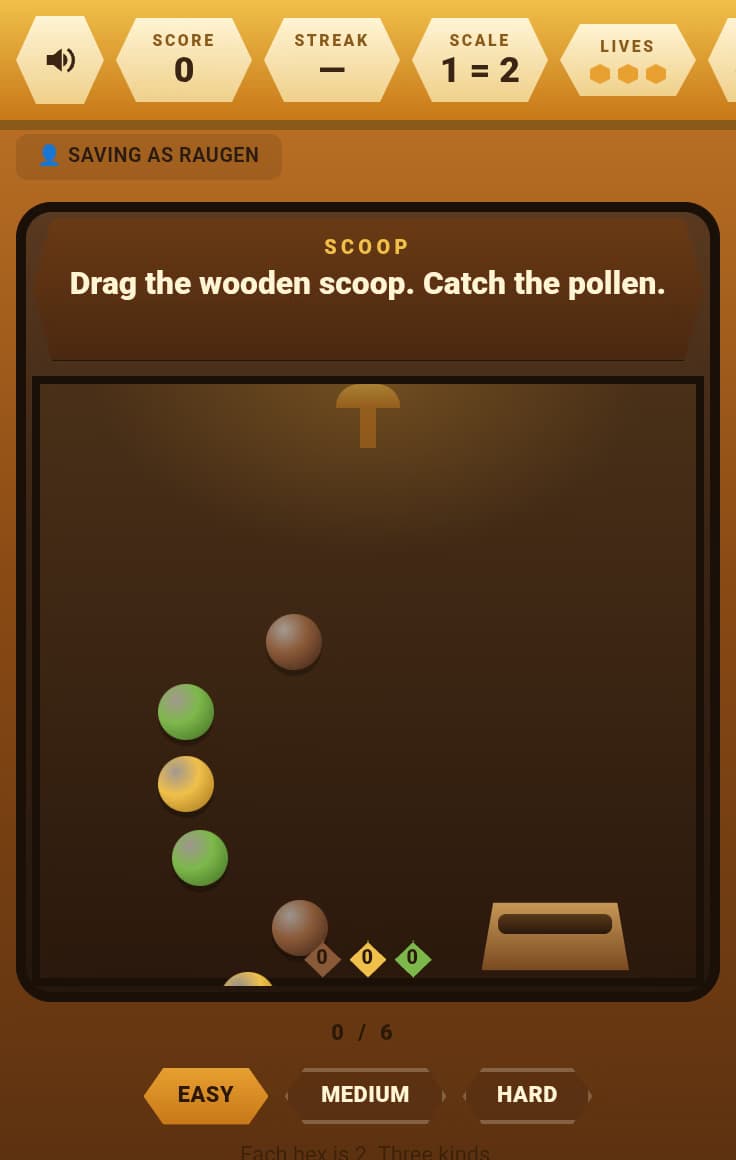
Scaled Bar Graphs
A warm beeswax loft. Pollen beads drift down from the comb. Scoop them with a wooden trough, then stamp a scaled honeycomb graph — each hex stands for 2, 5, or 10 beads. Built for third-grade scaled bar graphs.
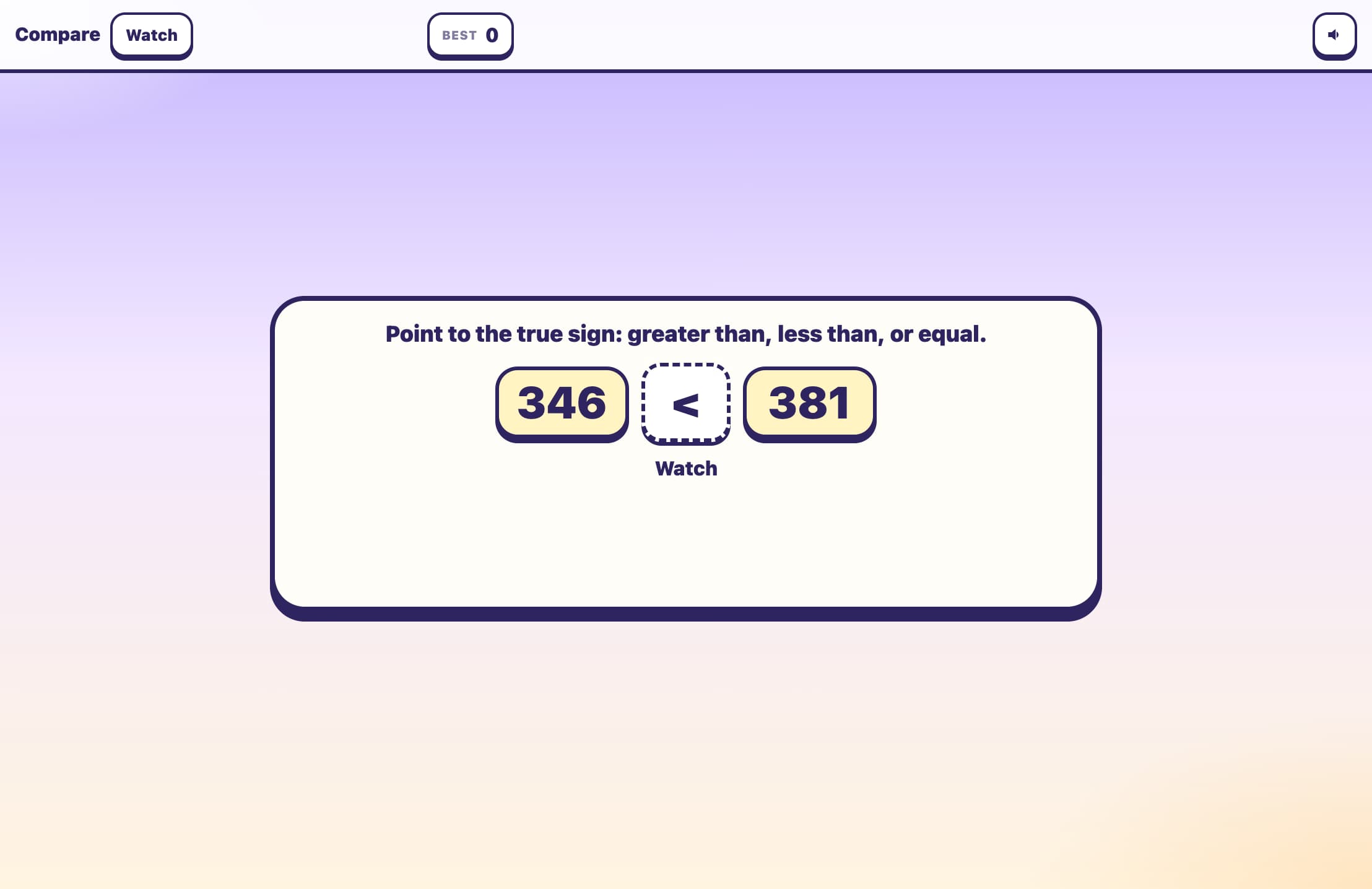
Point to the true sign: greater than, less than, or equal.
Compare is the game. Point to the true sign: greater than, less than, or equal. Watch shows 472 > 305, then 346 < 381, then 405 < 408, then 405 = 405. Hundreds come first. If the hundreds match, look at the tens. If the tens match, look at the ones. Try it. Drag the sign between the numbers. Then six scored pairs. Score, Streak, and hearts start after Try it. Built for 2nd grade.
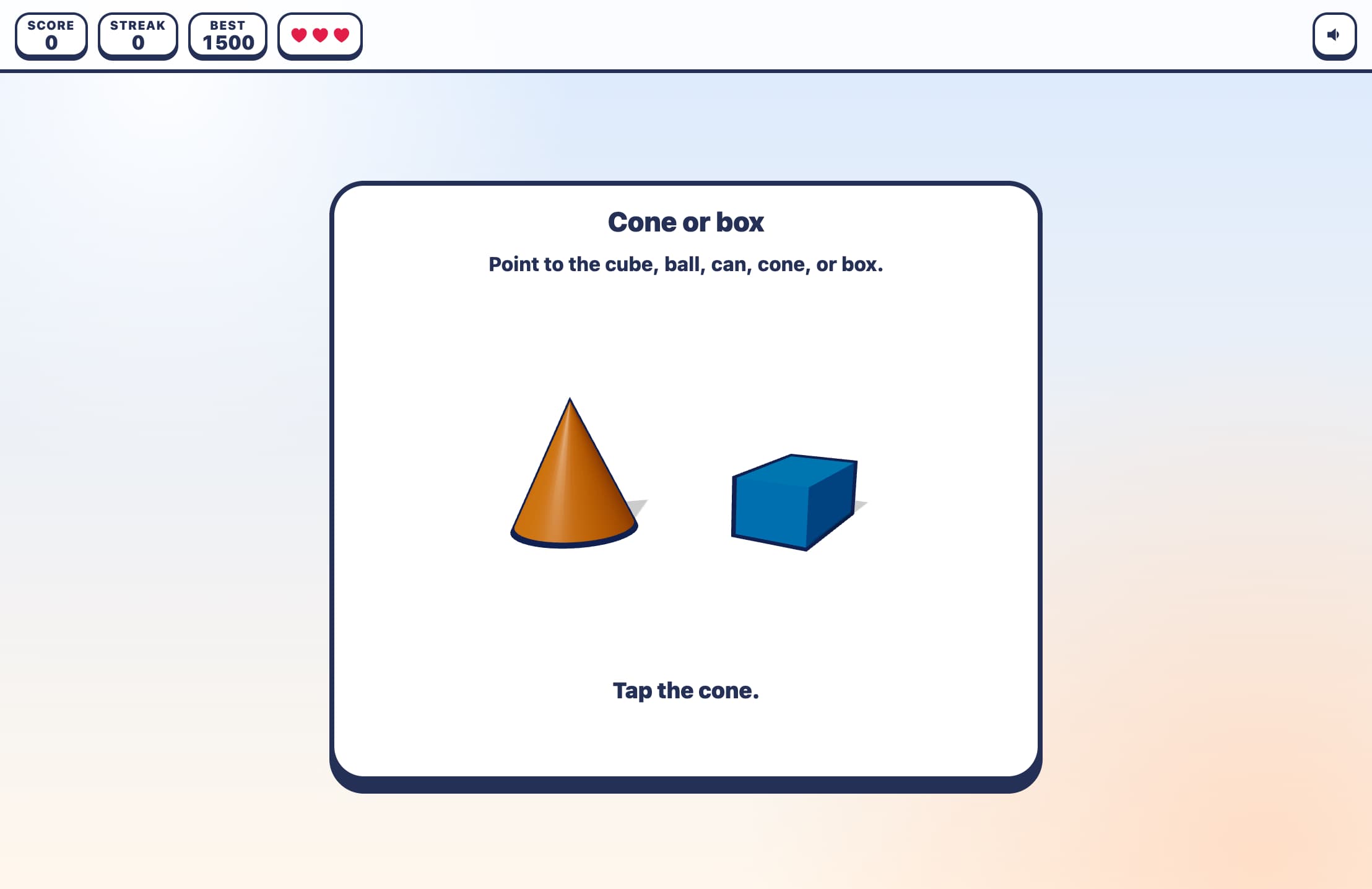
Point to the cube, ball, can, cone, or box.
Cone or box shows two 3D solids. They turn so you can see each side. Point to the cube, ball, can, cone, or box. Tap the cube. Tap the ball. Tap the can. Tap the cone. Tap the box. The right shape turns green and Score grows with the Streak. A wrong shape turns rose, clears the Streak, and costs a heart. Built for 1st grade.
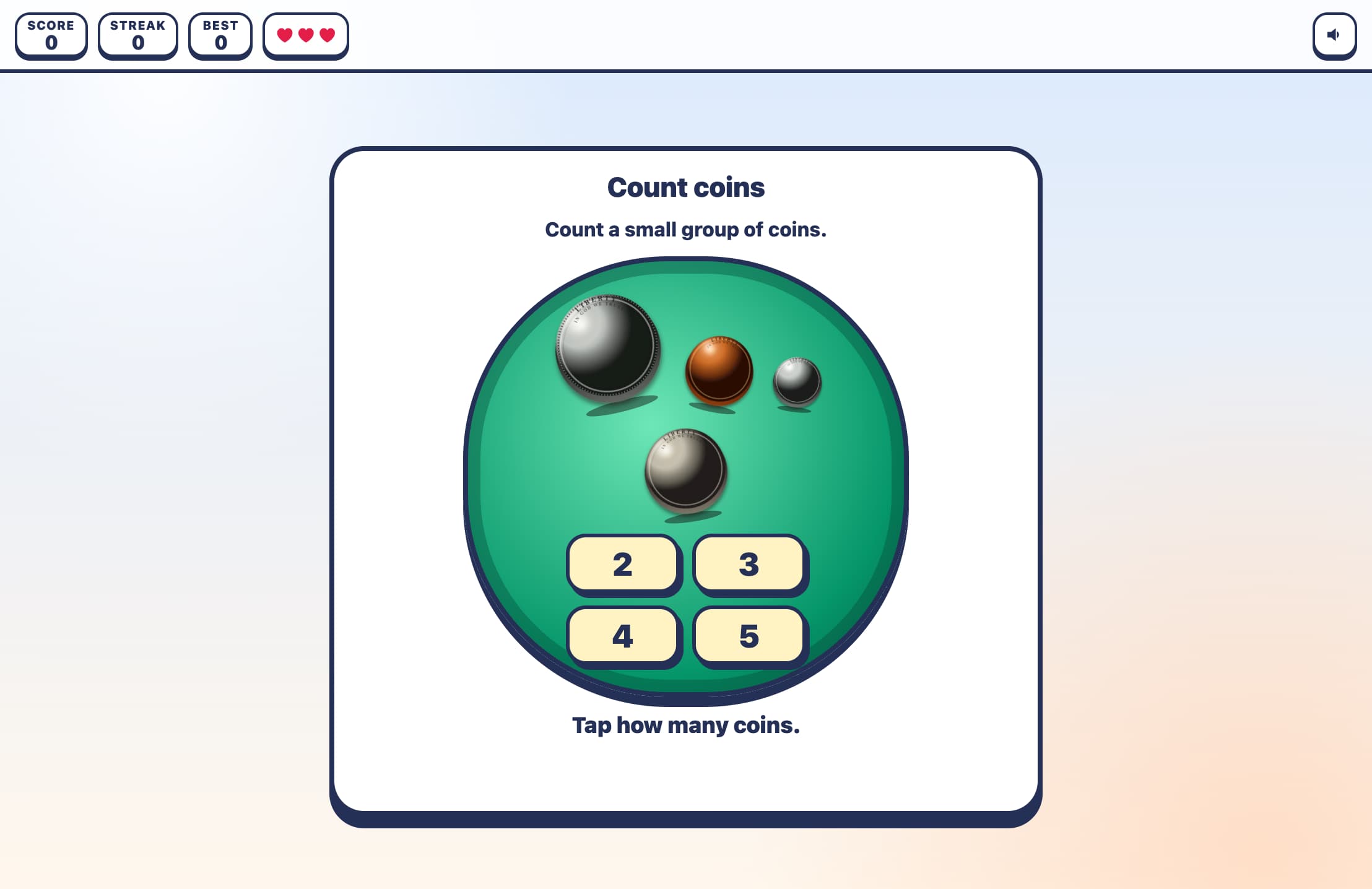
Count a small group of coins.
Count coins puts a small group of coins on a green felt tray. Count a small group of coins. The group has 2, 3, 4, or 5 coins. Tap how many coins. The tags say 2, 3, 4, and 5. The right tag turns green, each coin gets its count, and Score grows with the Streak. A wrong tag turns rose, clears the Streak, and costs a heart. Built for 1st grade.
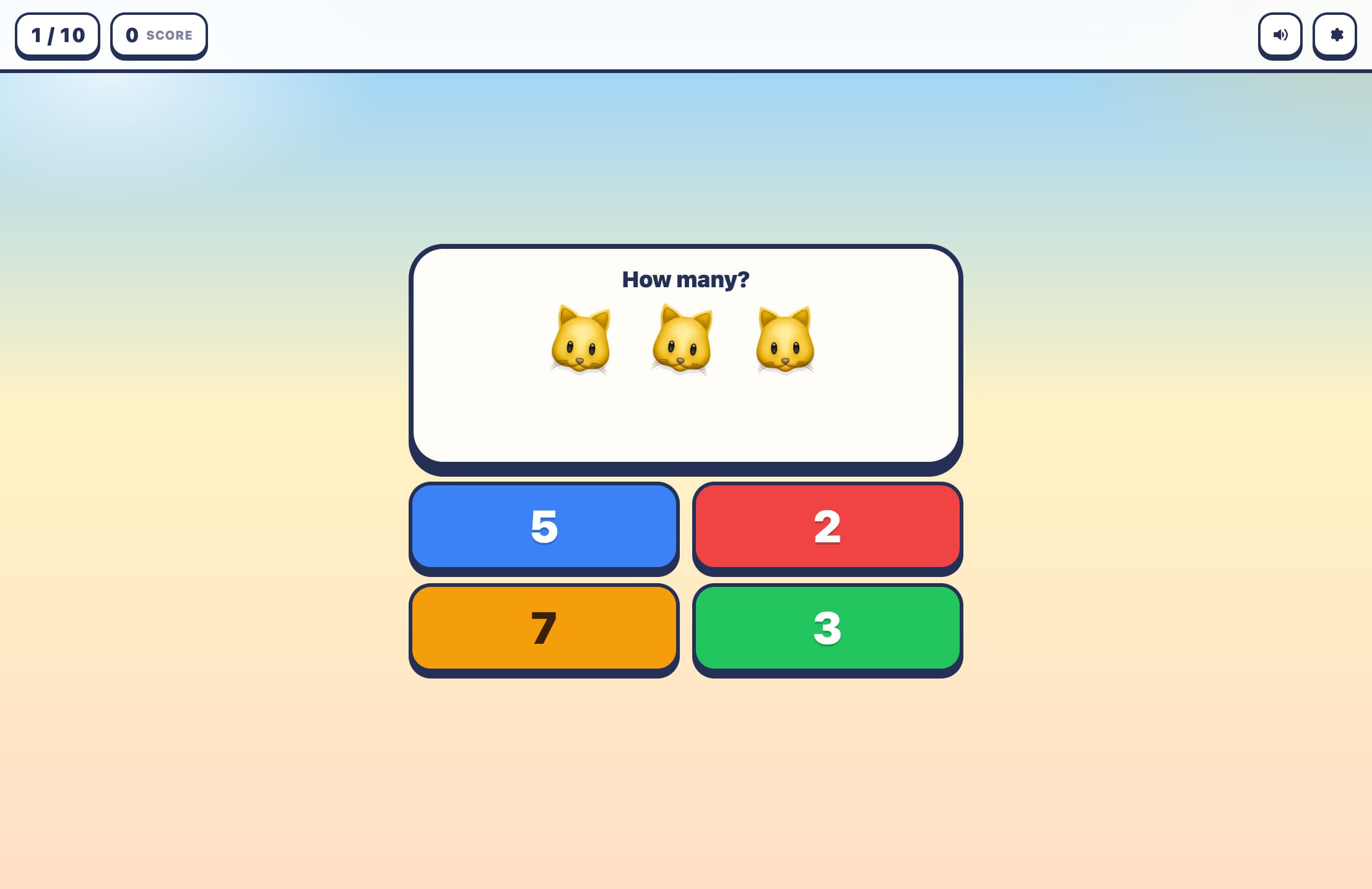
Kids Counting Game 1 to 20
A colorful counting game where you count cartoon emoji items and tap the right number. Perfect intro to counting 1–20 for young learners.
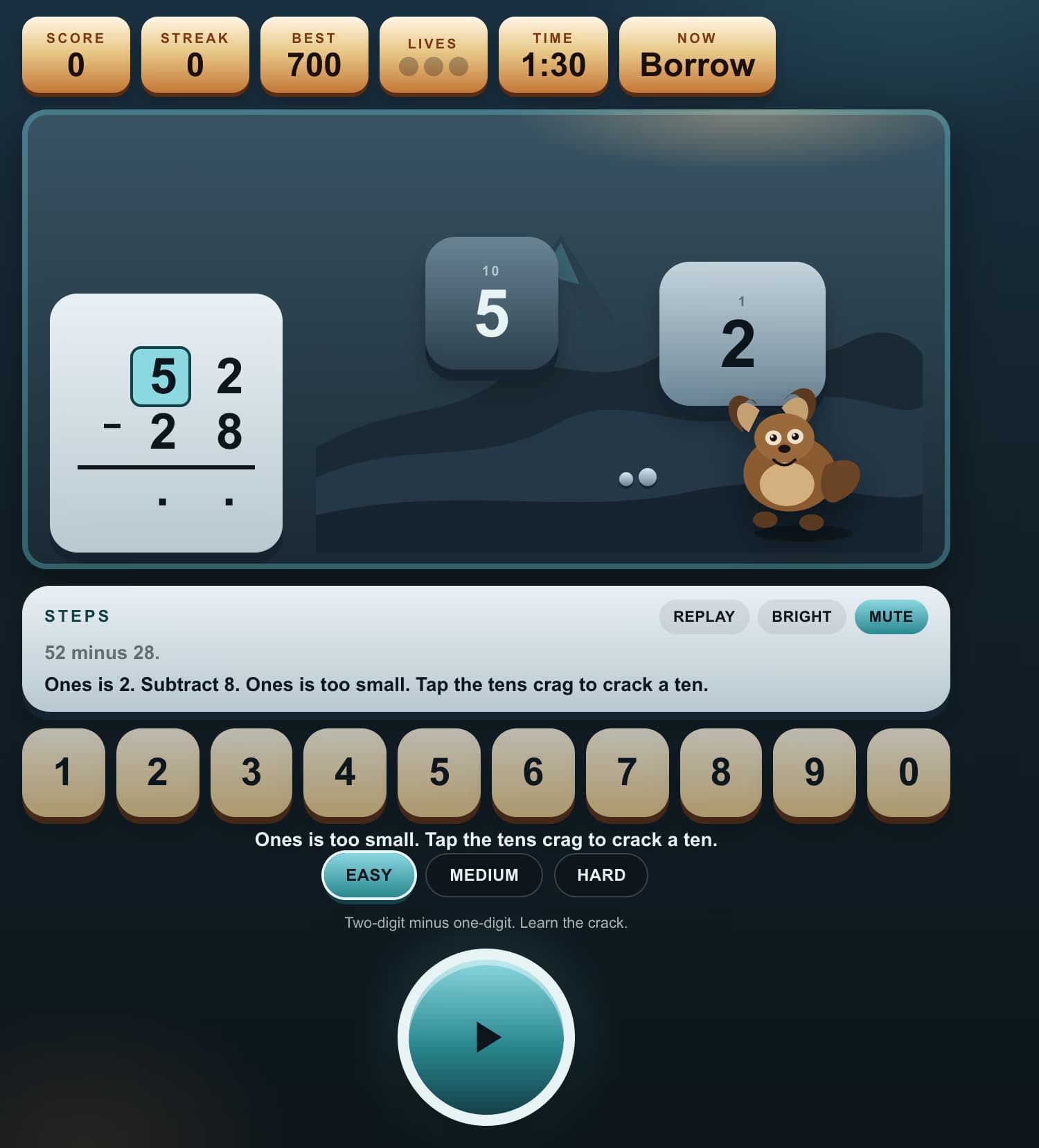
Two-Digit Subtraction with Regrouping
A dusk slate ridge, frost stones, and a bronze ibex. When the ones digit cannot take the subtraction, tap the tens crag to crack a ten. Ten pebbles tumble to the ones ledge. Then write the ones digit and the tens digit on the number pad. Built for third-grade two-digit subtraction with borrowing.
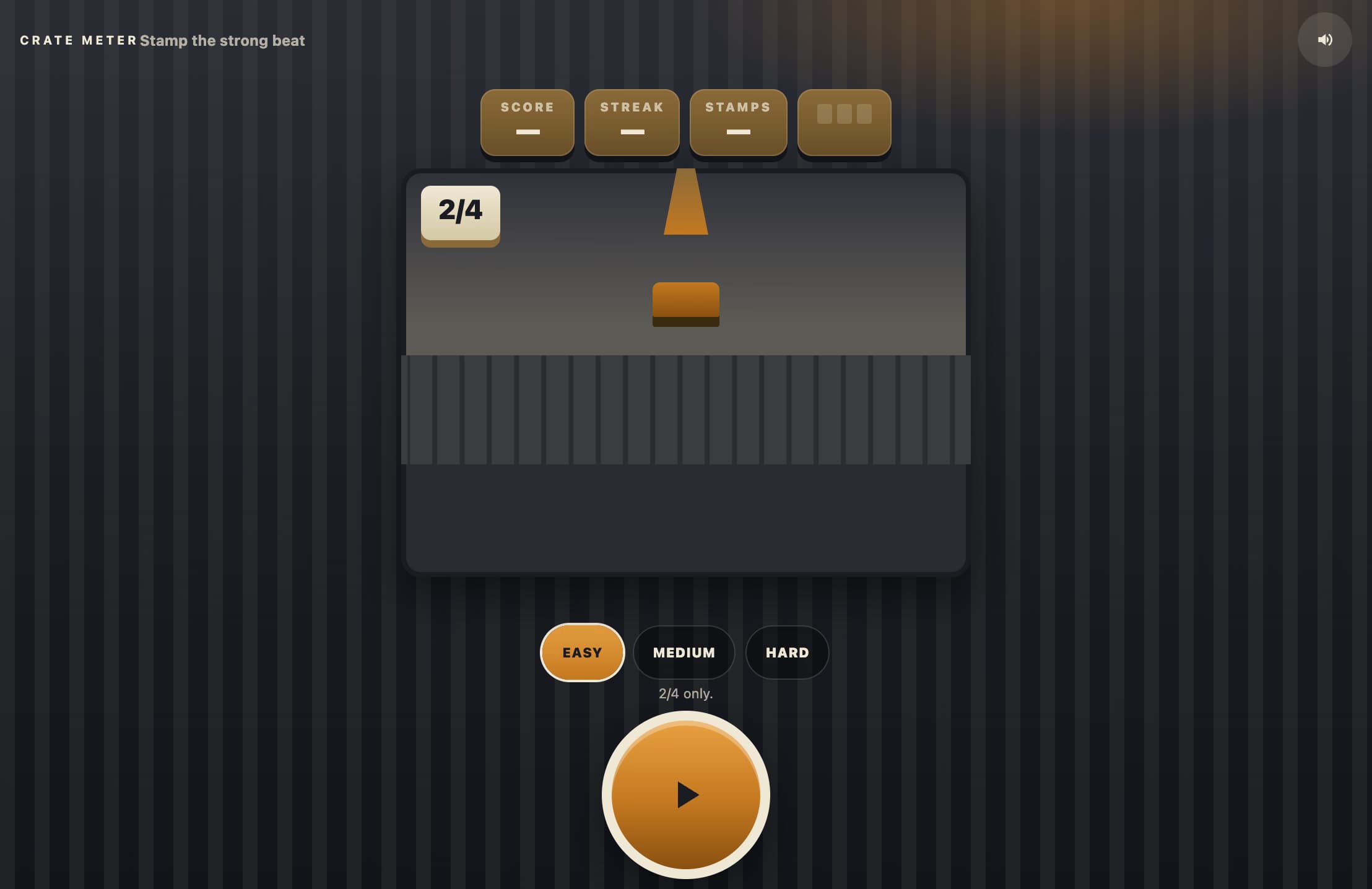
2/4 and 4/4 Downbeat Stamp
A warehouse night. Pine crates roll the belt. Stamp the strong beat — the downbeat shown on the hanging meter card — and leave weak beats alone. A wrong Stamp knocks the crate. Easy is 2/4 only. Medium is 4/4. Hard switches 2/4 and 4/4 mid-run. Score, Streak, Stamps, three lives, and a Best.
Greater Than Less Than
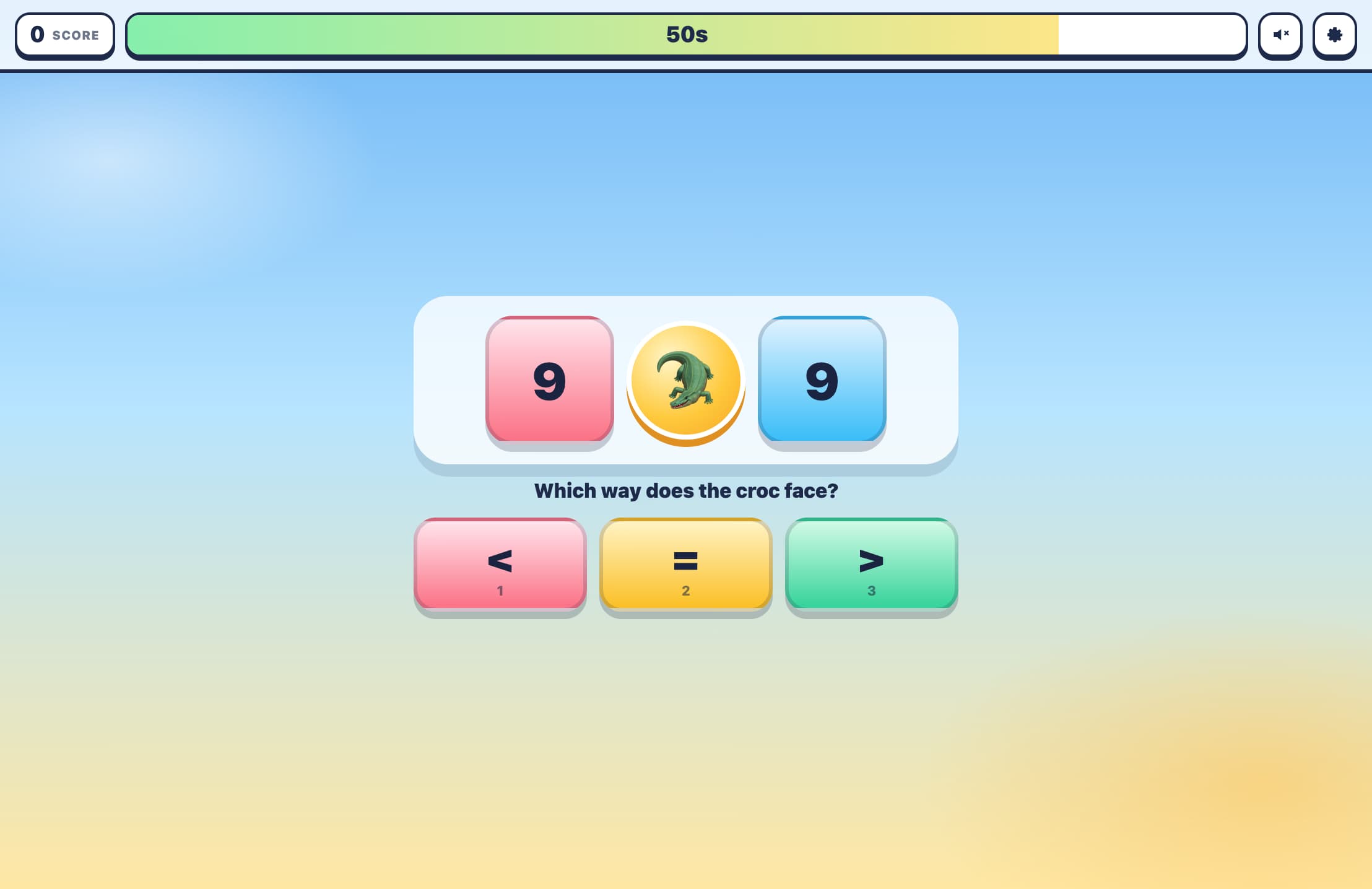
The hungry crocodile always eats the bigger number! Place the >, <, or = sign between two numbers up to 100. A fun animated crocodile turns to face the larger number after each answer.
Decode Secret Messages by Cracking the Cipher
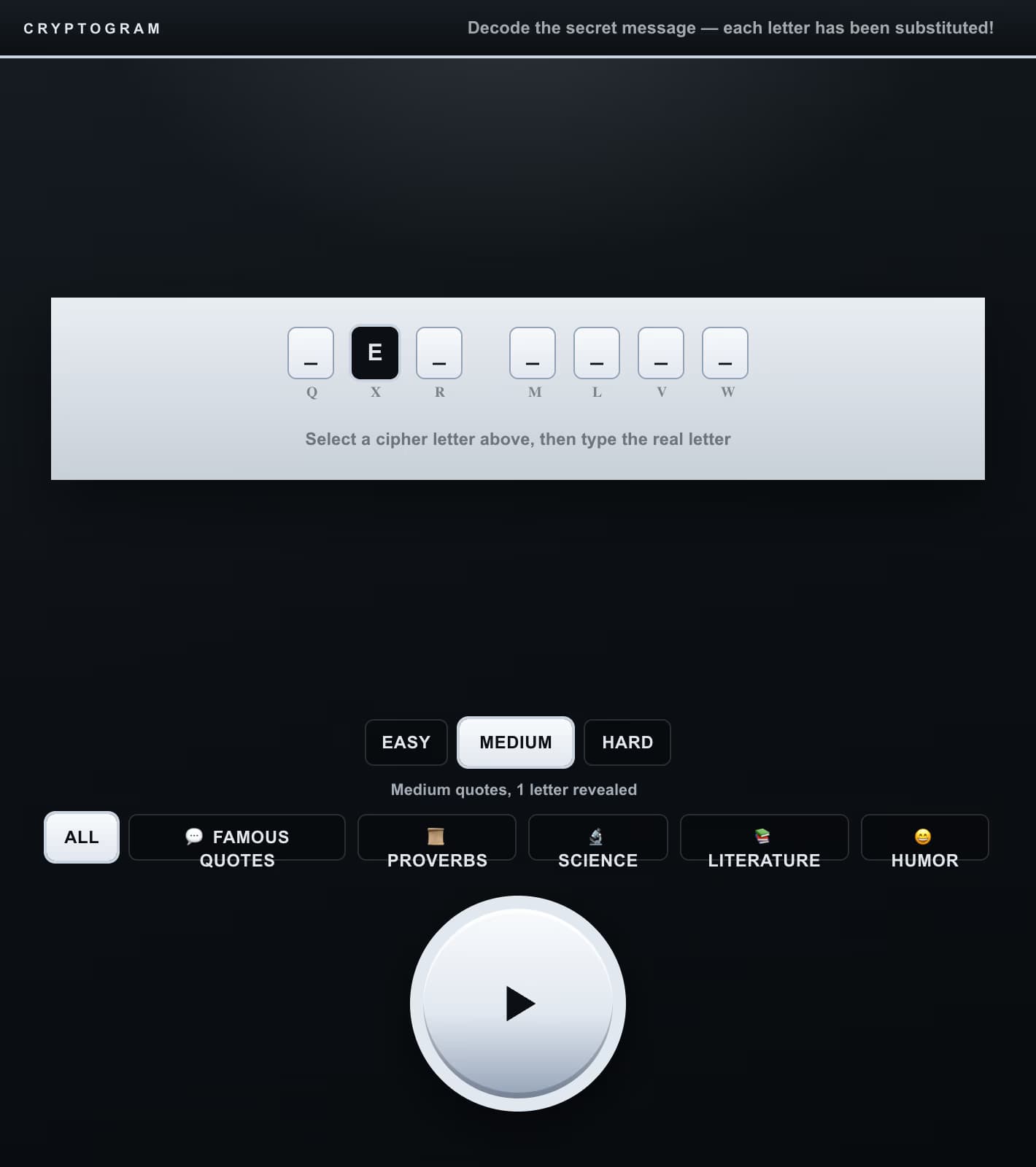
Solve cryptogram puzzles by decoding secret messages where each letter has been substituted with another. Features famous quotes, proverbs, science facts, and literary excerpts with three difficulty levels.
Flat or Solid
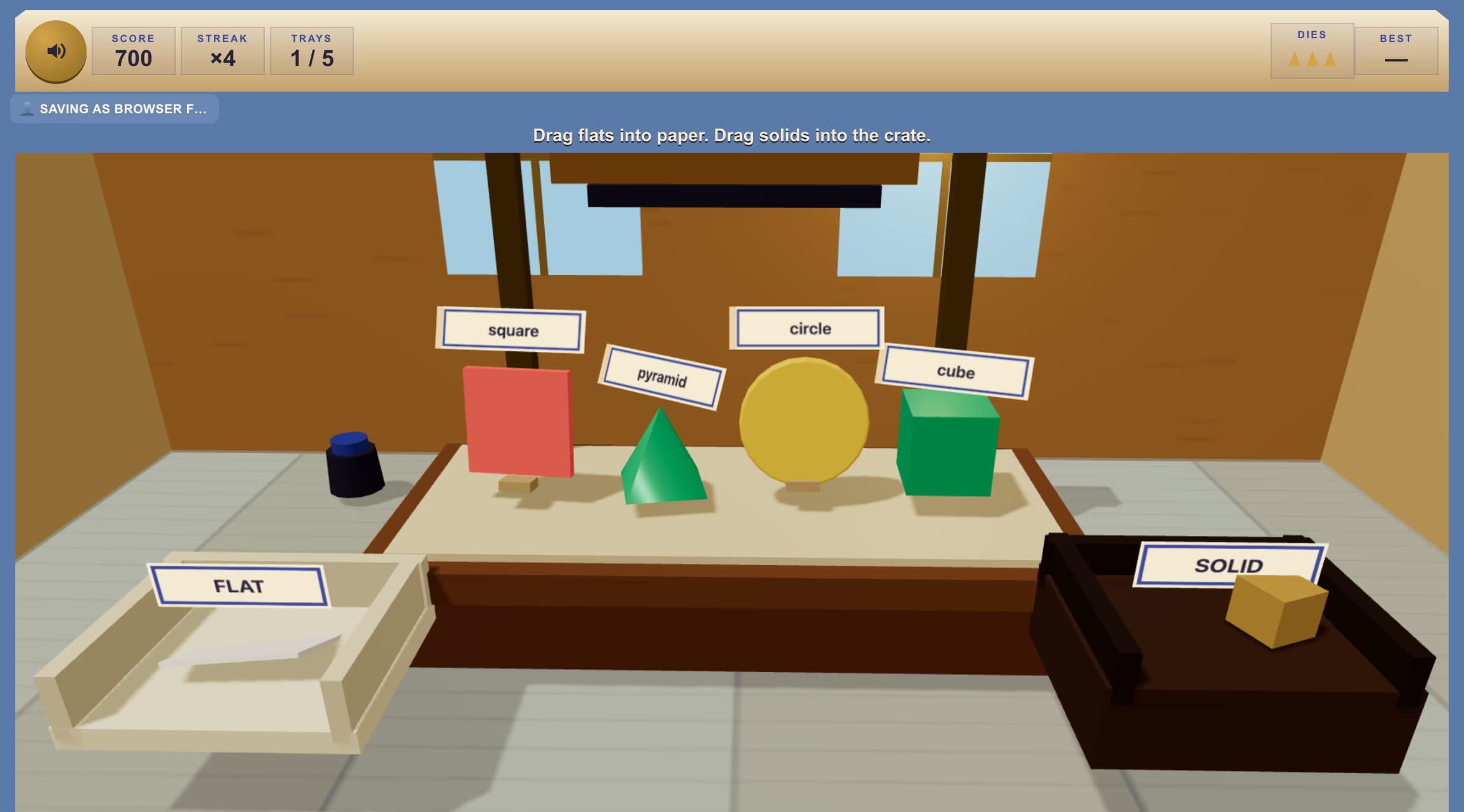
A kraft packing loft is waiting on the next tray. Drag paper-flat 2D shapes into the Flat bin and chunky 3D solids into the Solid crate. Kindergarten geometry practice: circles stay flat, cubes take up space. Clear five trays, keep three brass dies, and race the press on harder runs.
Pop Sight Words in Glass Floats
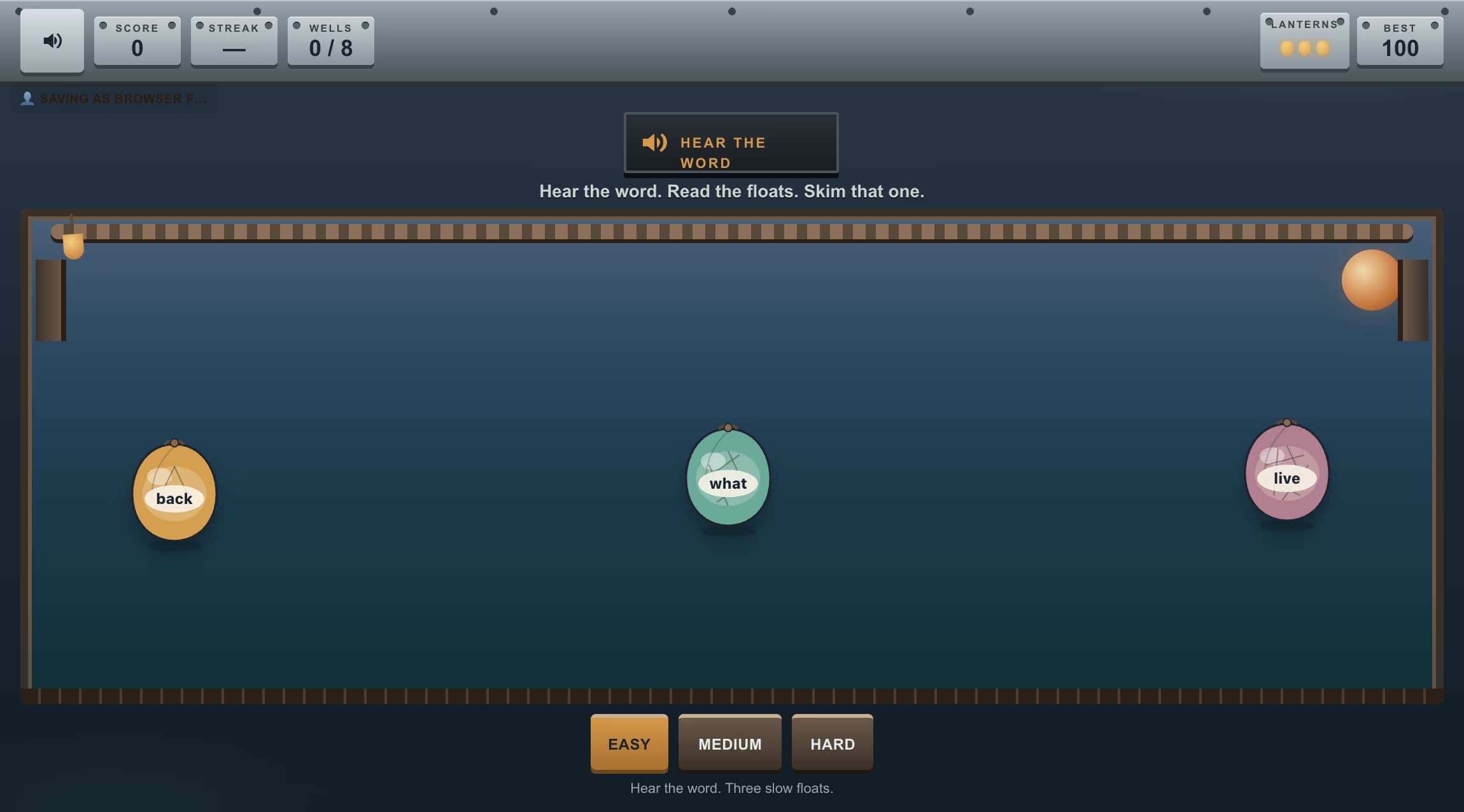
Glass fishing floats rise through a dusk harbor well. Each float carries a sight word. Hear the word, read the floats, and tap the one you recognize before it clangs the boom. Second-grade high-frequency words, with look-alikes like was and were on hard wells.
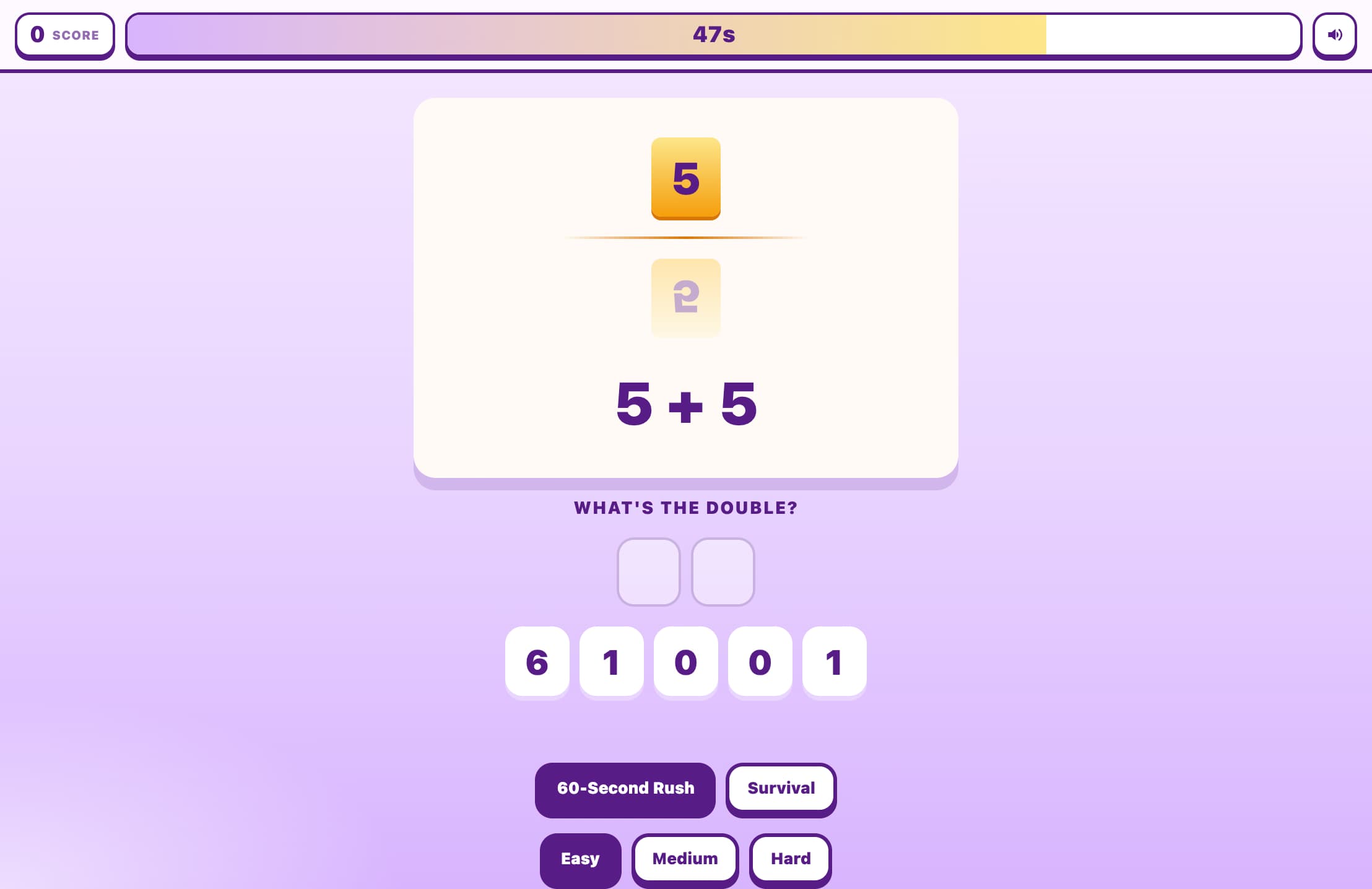
Doubles Facts
Practice doubles addition facts (1+1, 2+2, … 10+10) with a fun mirror/shadow visual theme. See the number and its reflection, then tap the correct double. Three difficulty levels including near-doubles.
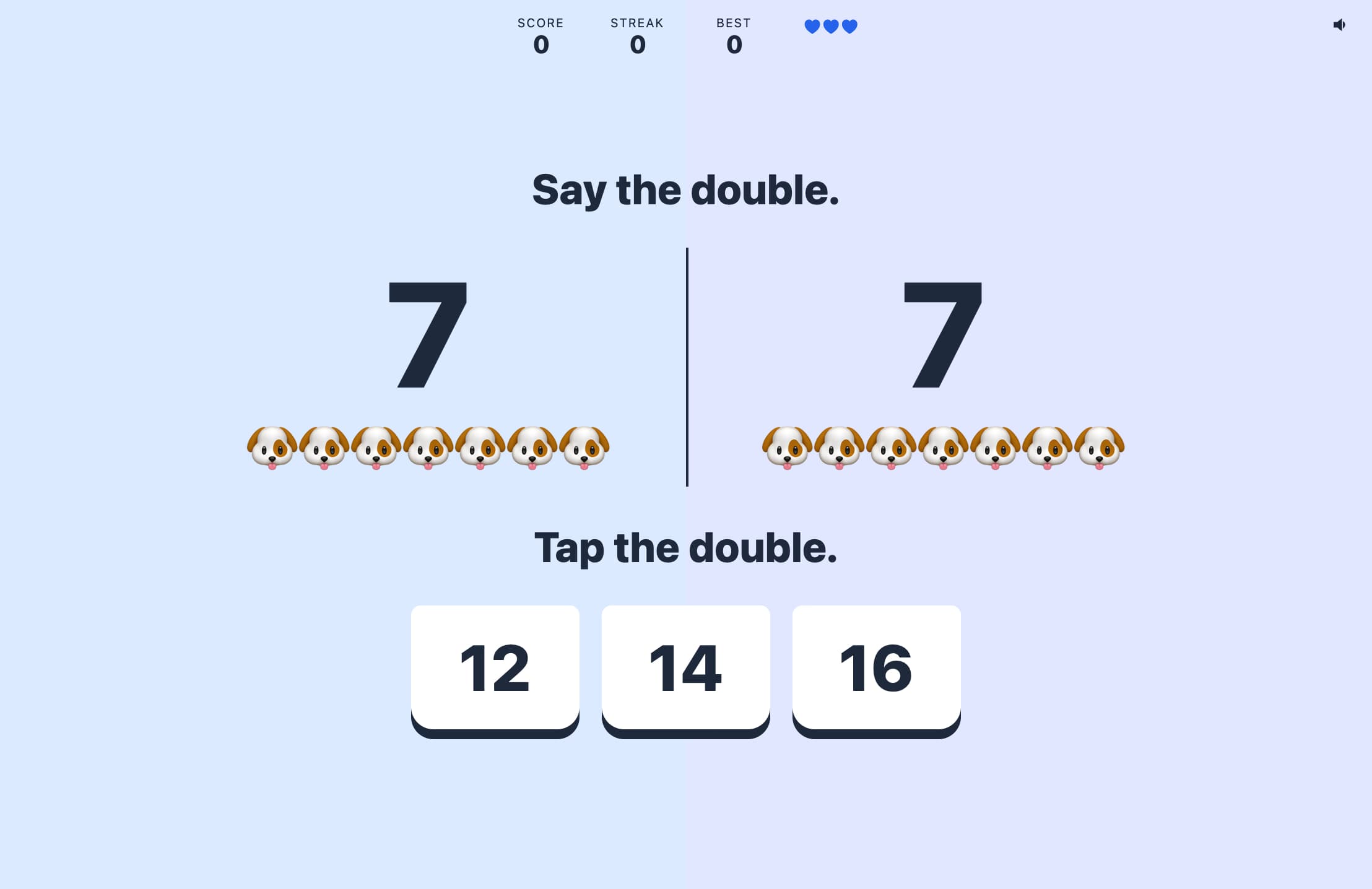
Say the double
Two groups of puppies are the same, and each group has its number. Say the double. Tap the double. A right tap turns green. A wrong tap turns rose. Built for 1st grade.
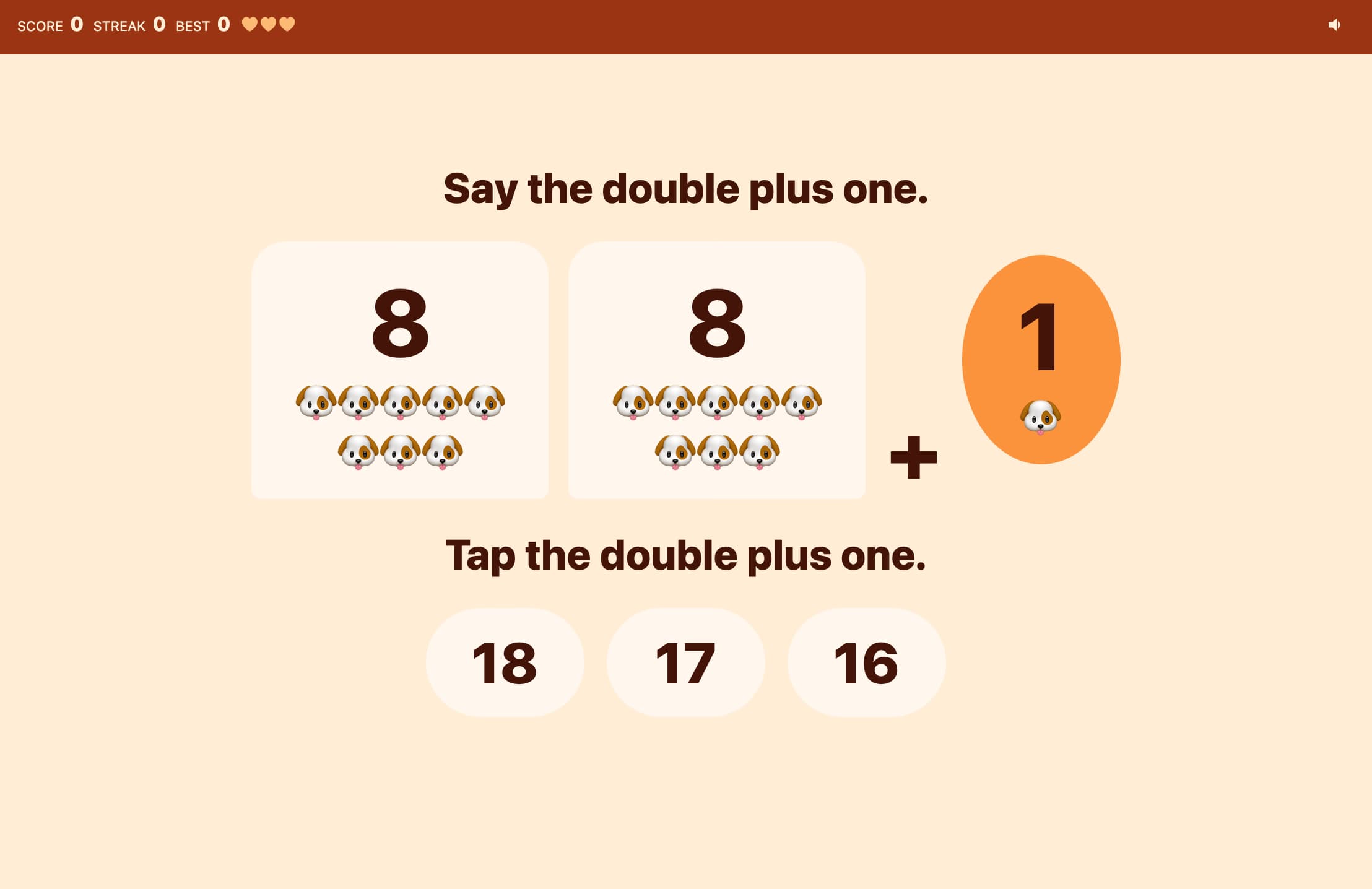
Say the double plus one
Two groups of puppies are the same, and each group has its number. One more puppy is labeled 1. Say the double plus one. Tap the double plus one. A right tap turns green. A wrong tap turns rose. Built for 1st grade.
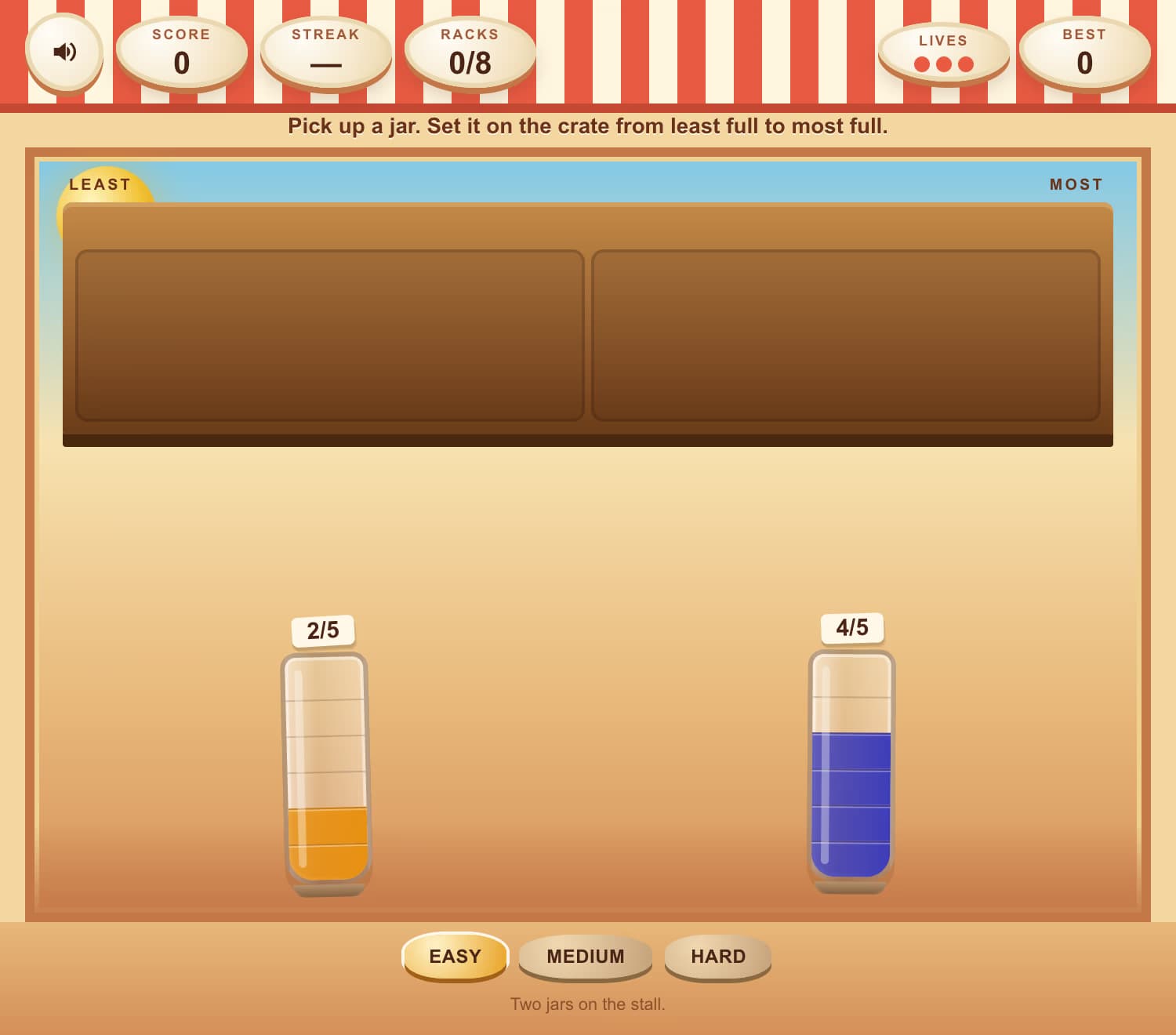
Order Fractions With Like Denominators
A sunlit dye stall, glass jars, and a wooden crate. Each jar is a strip model of a fraction with the same denominator. Pick a jar up and set it on the crate from least full to most full. Wrong seats slosh. Eight crates win a run. Built for fourth-grade ordering fractions.
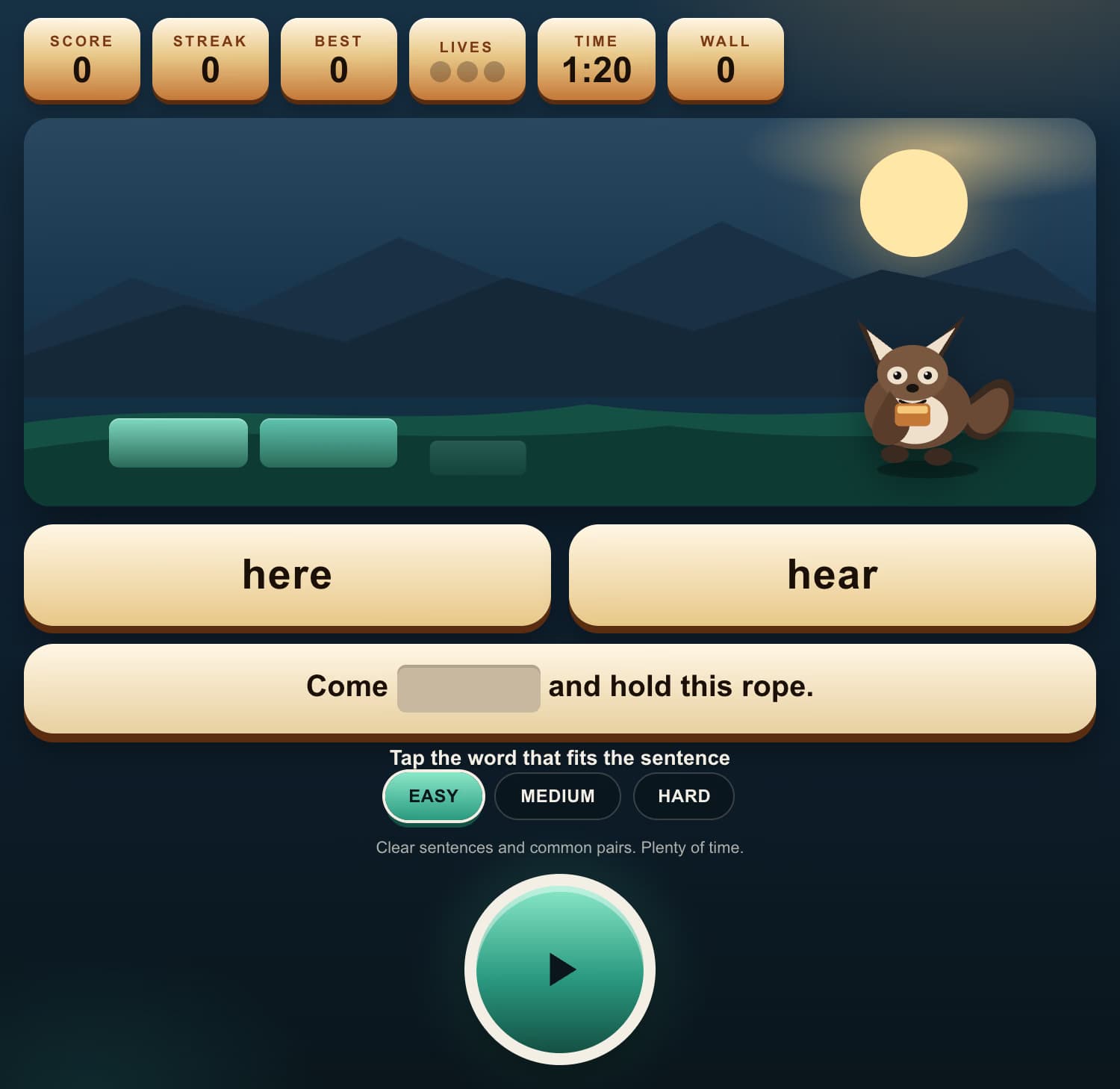
Homophone Sentence
A copper-lit quay, a brown otter mason, and a wall of sea-glass bricks. Read the sentence, tap the homophone that fits the blank, and the otter sets another brick. A miss shakes the dock and costs a life. Built for fourth and fifth graders practicing meet or meat, principal or principle, and other sound-alike pairs.
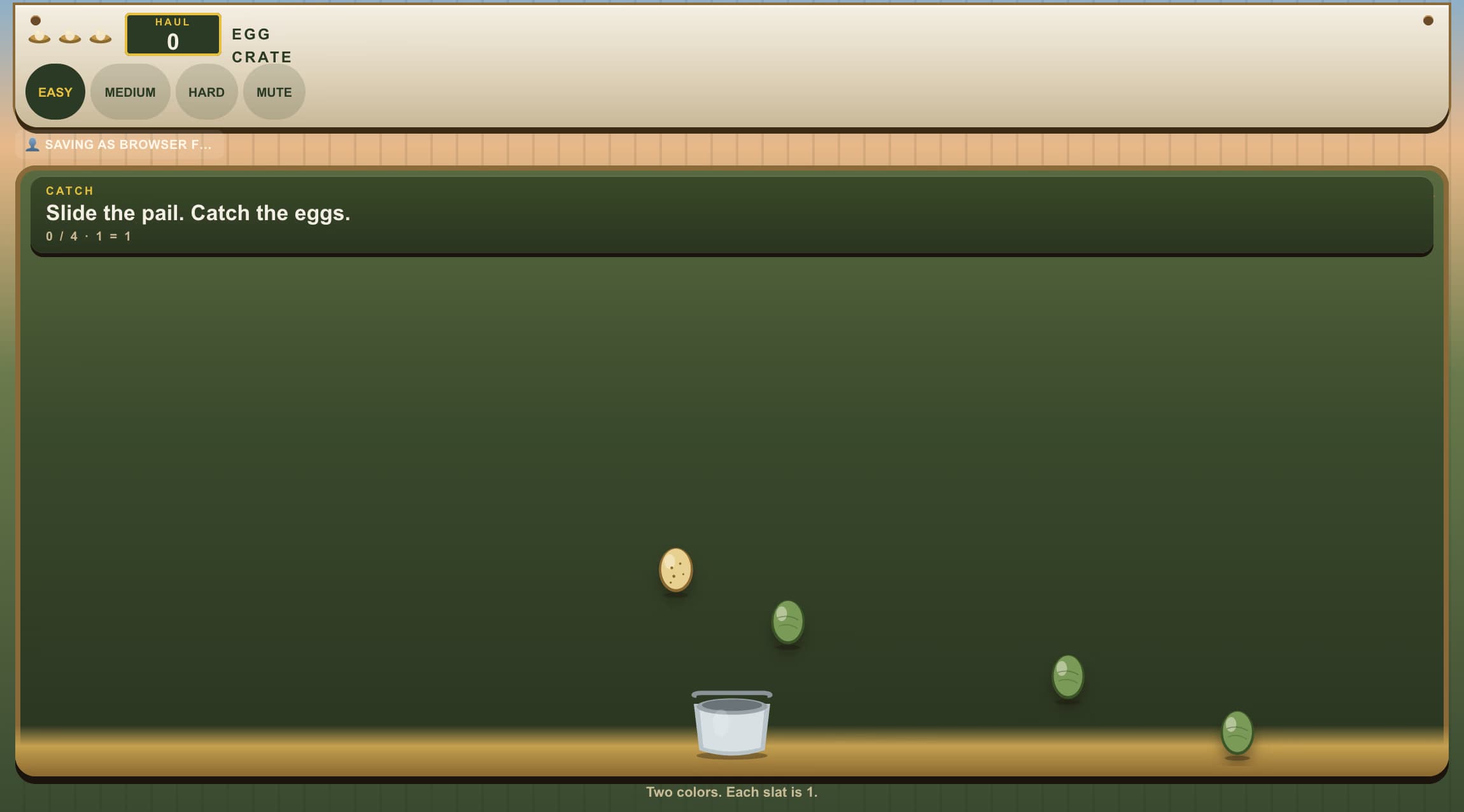
Catch, Sort, and Stack Bar Graphs
The hens are laying faster than the pail can swing. Slide the pail to Catch the eggs, Sort the eggs into color crates, then Stack the bars on a chalkboard graph. Third grade kids collect and organize data while they build a bar graph from a real clutch.
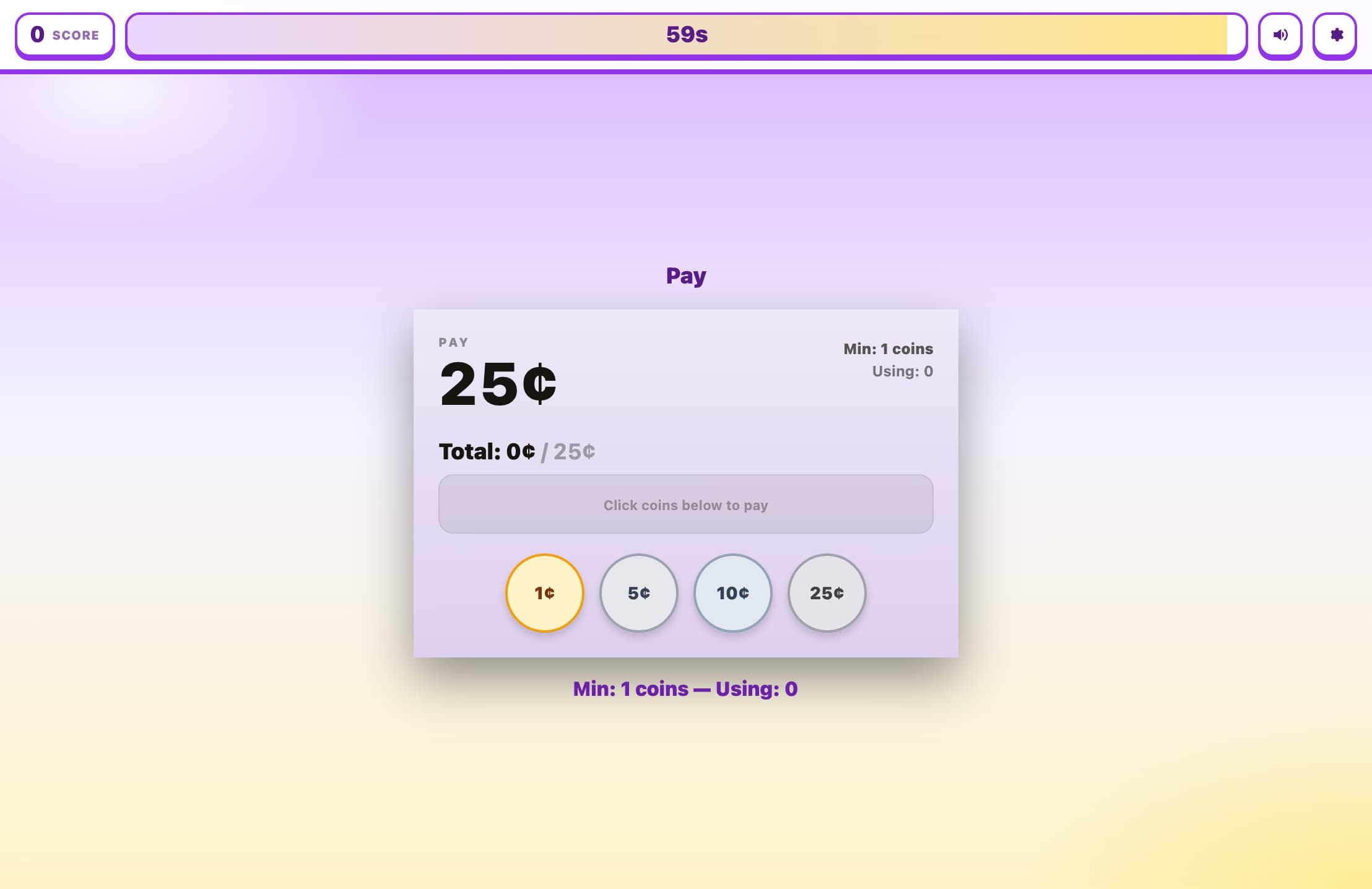
Pay with the Fewest Coins Possible
Pay for an item using the fewest coins possible. Teaches coin efficiency and combination strategies for amounts up to $5. A strategy-based money math game for all ages.
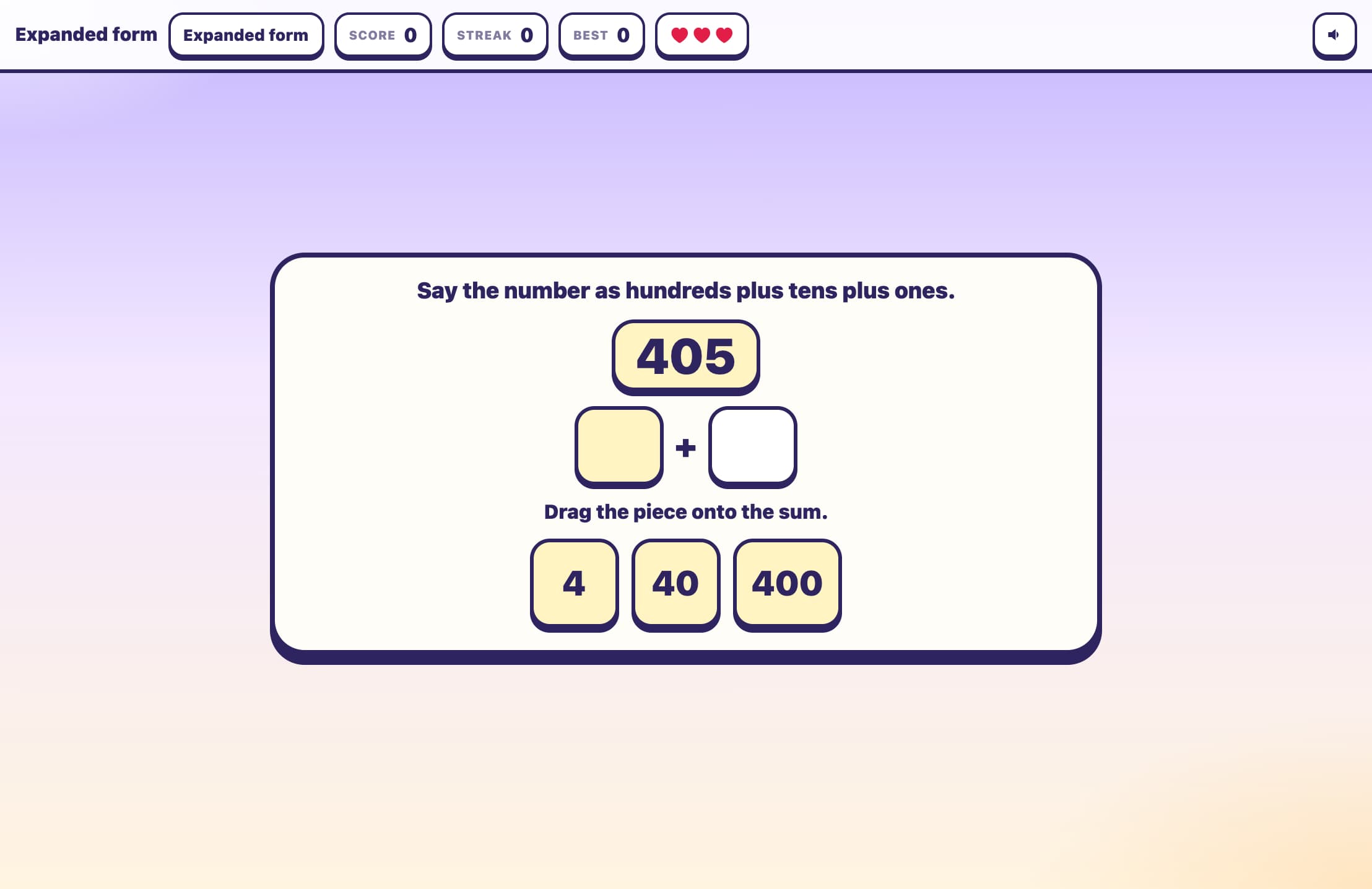
Say the number as hundreds plus tens plus ones.
Expanded form is the game. Say the number as hundreds plus tens plus ones. Watch builds 472 as 400 + 70 + 2, then 405 as 400 + 5, then 830 as 800 + 30. A zero place is left out. 405 has no tens piece. 830 has no ones piece. Try it. Drag the piece onto the sum. Then six scored numbers. Score, Streak, and hearts start after Try it. Built for 2nd grade.
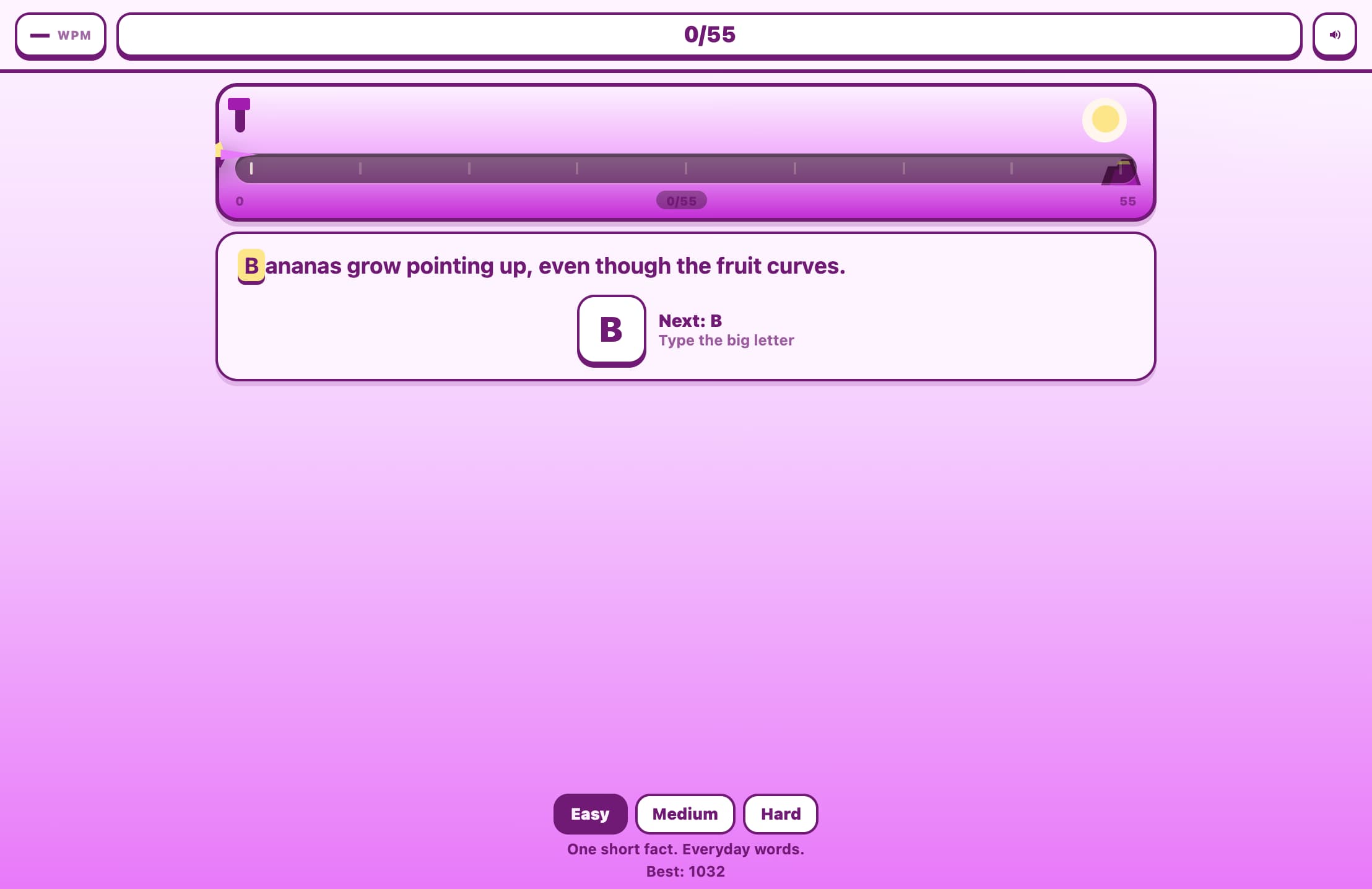
Type Fun-Fact Paragraphs for Accuracy
A dusk canyon, a rust glider, and a parchment of kid-friendly fun facts. Type the boxed letter. A clean key flies the glider toward the mesa. A slip flashes and holds you on that letter until you hit it. Finish the paragraph to land. Built for accuracy first, then speed.
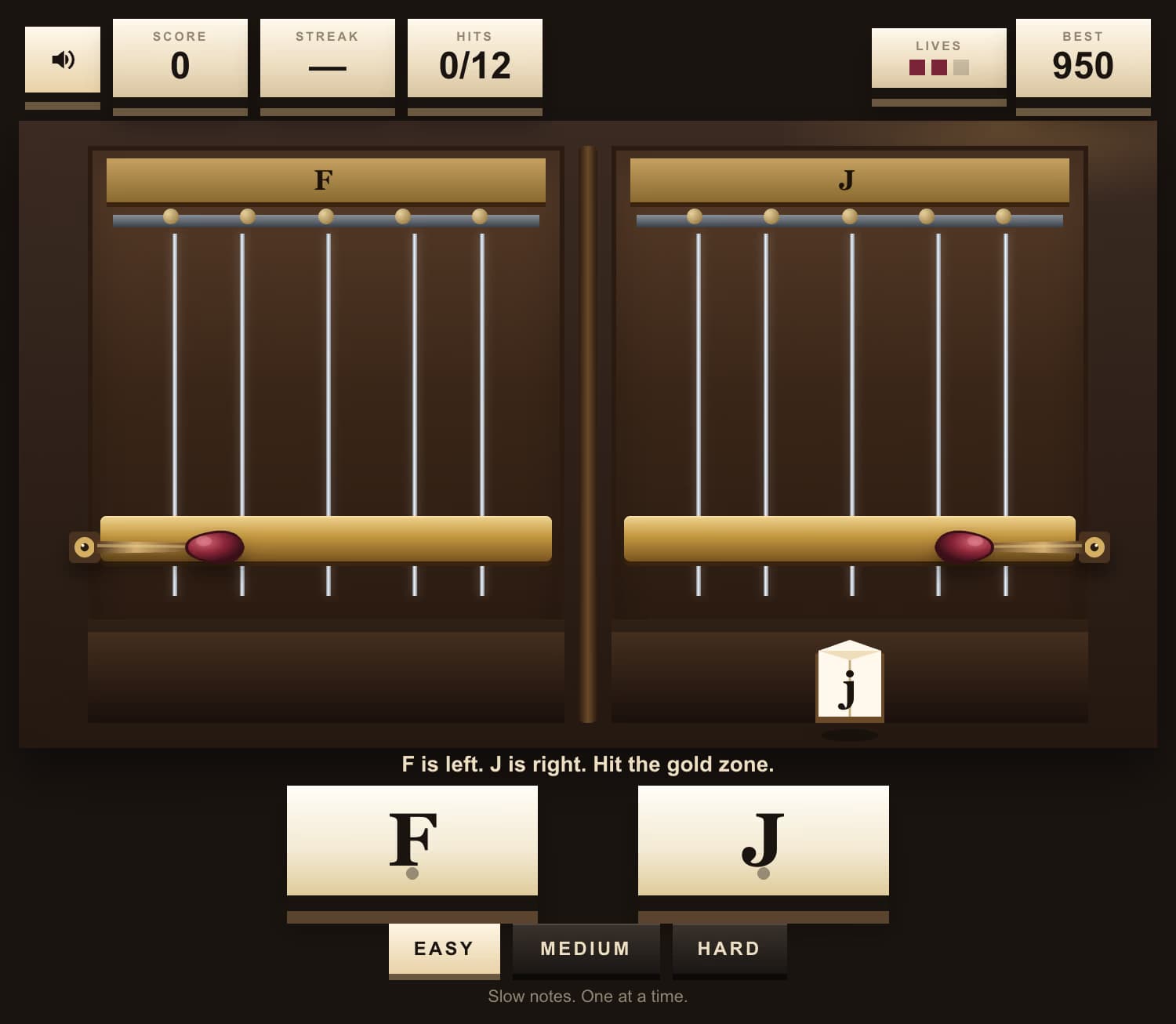
Home Row F and J Typing
Park your index fingers on F and J. Ivory note tiles slide down the piano strings. Strike the matching felt hammer when a tile enters the gold zone. Three lives, a streak bonus, and Easy / Medium / Hard for first-grade through fifth-grade home-row practice.
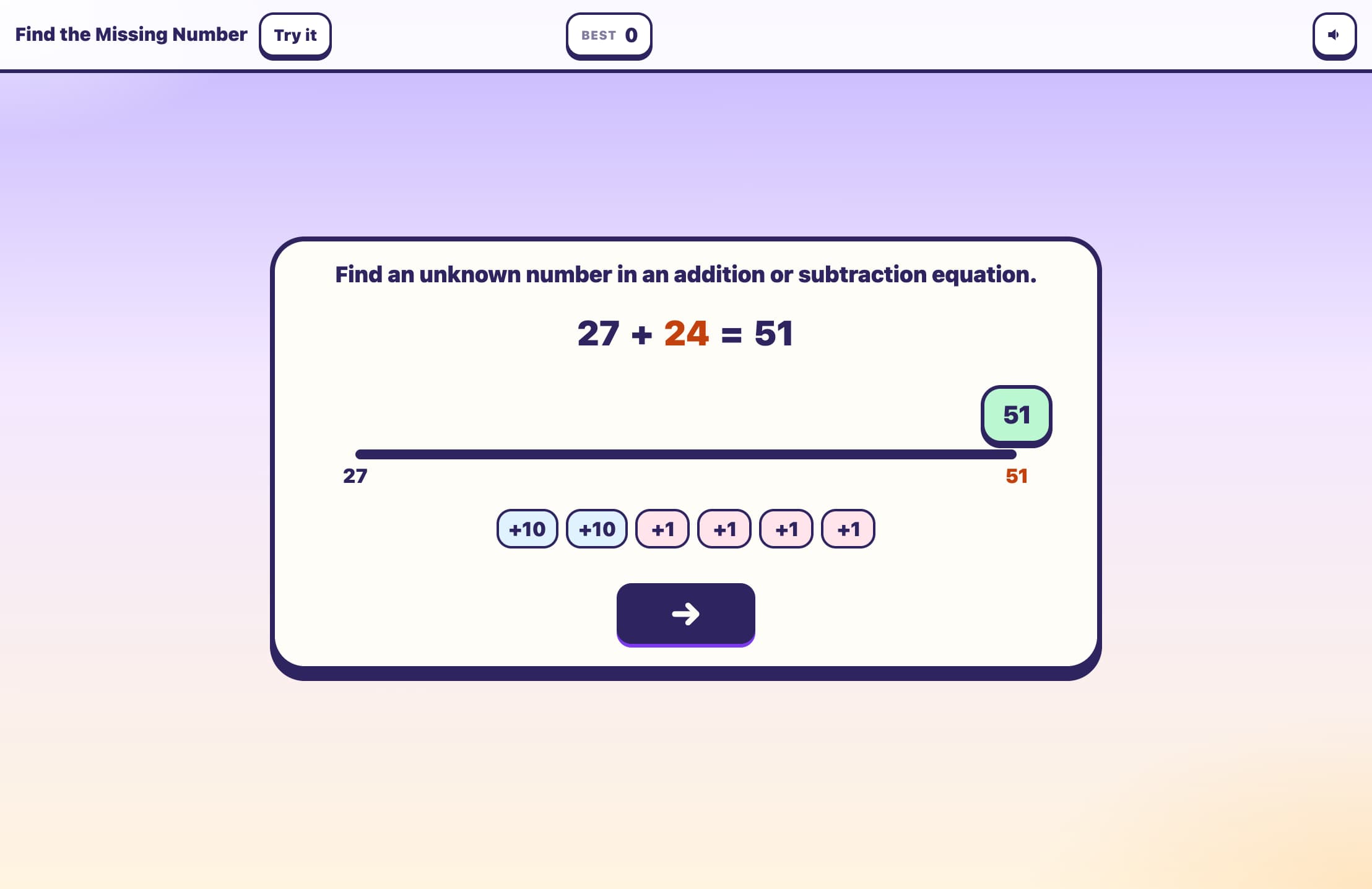
Find an unknown number in an addition or subtraction equation.
Find the Missing Number is the game. Find an unknown number in an addition or subtraction equation. Watch shows 27 + □ = 51, then 64 − □ = 30, then 35 + □ = 58, then 72 − □ = 41. The marker jumps by +10 and +1, or by −10 and −1, until it lands. The jumps are the missing number. Try it. Find an unknown number in an addition or subtraction equation. Then six scored equations. Score, Streak, and hearts start after Try it. Built for 2nd grade.
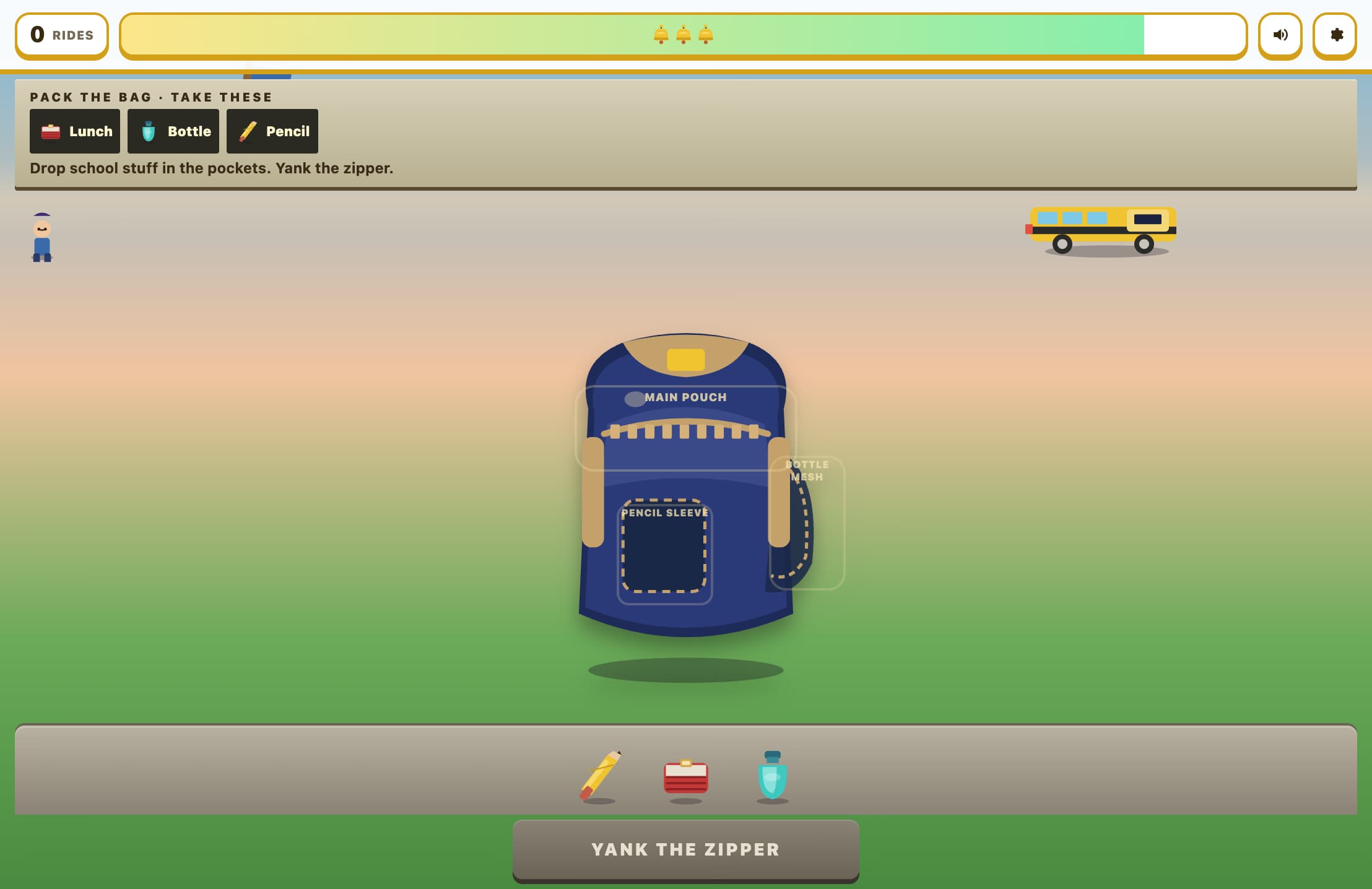
Pack the Bag Before the Bus
First Day of School starts on the curb at dawn. Pack the bag by dragging lunch, a bottle, and a pencil into the pockets, then Yank the zipper before the yellow bus rolls. A hit boards a Ride. A miss shakes the bag or lets the bus leave. Early-childhood practice for a morning school routine.
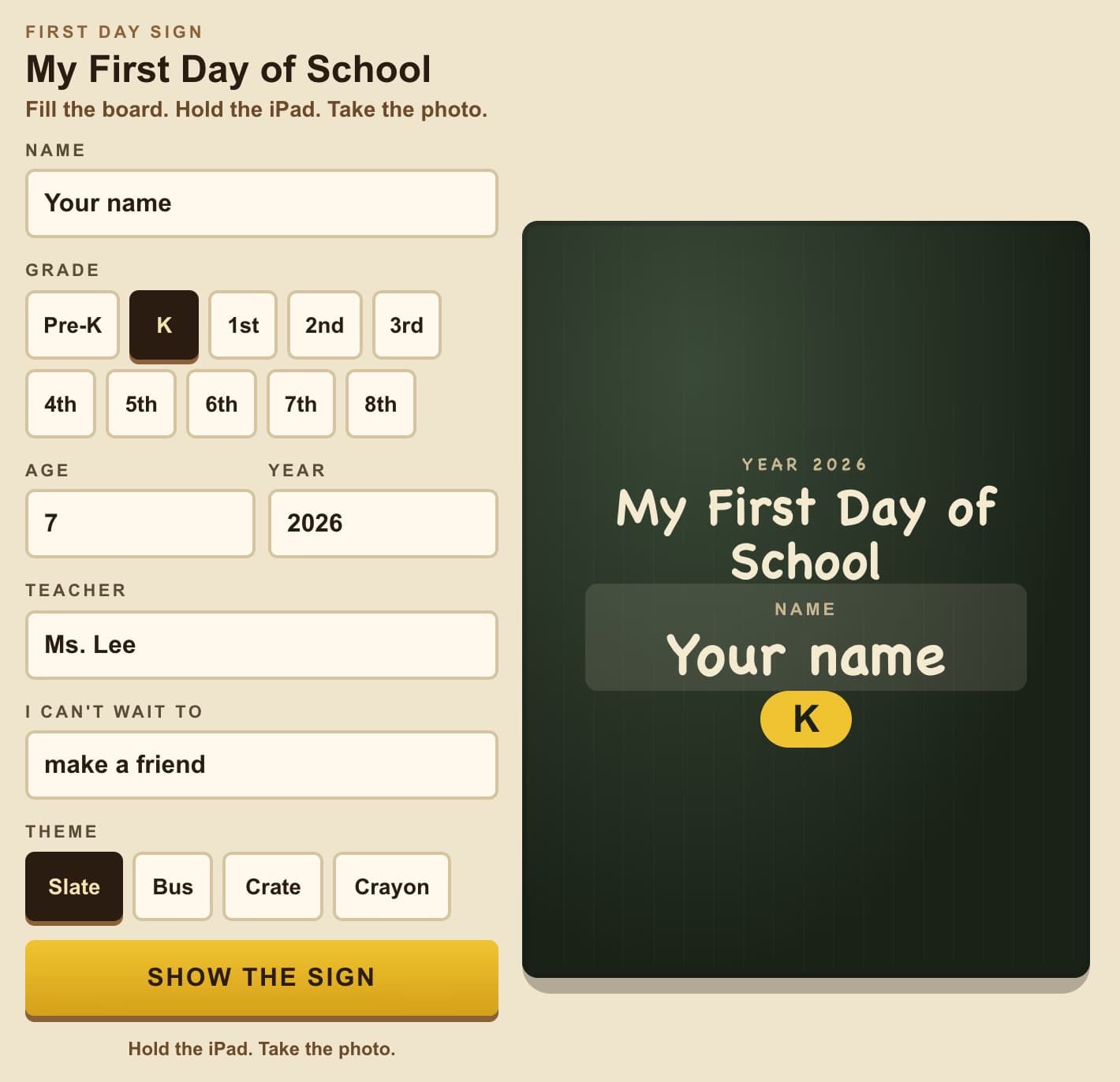
Hold the iPad for a First Day Photo
First Day Sign is a board kids hold on an iPad. Type a name, tap a grade, pick Slate, Bus, Crate, or Crayon, then Show the sign. The poster fills the screen so a parent can take the photo. Edit the sign to change a line and show it again.
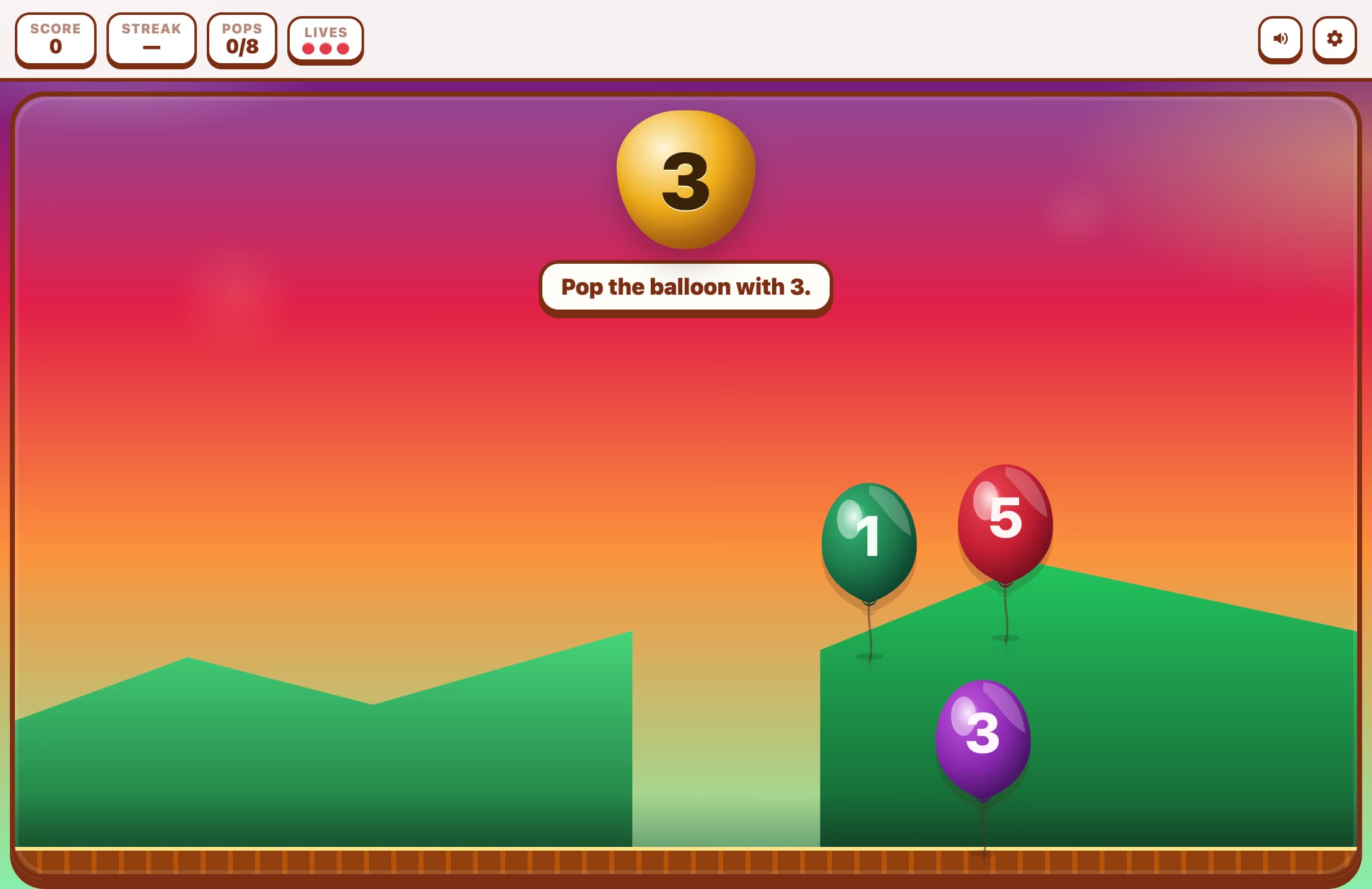
Pop Balloons Numbers 0-10
A dusk garden where glossy latex balloons rise on the warm air. Hear the call, watch the lift, and pop the balloon that shows the matching number before it floats away. Built for preschool and kindergarten number identification from 0 to 10.
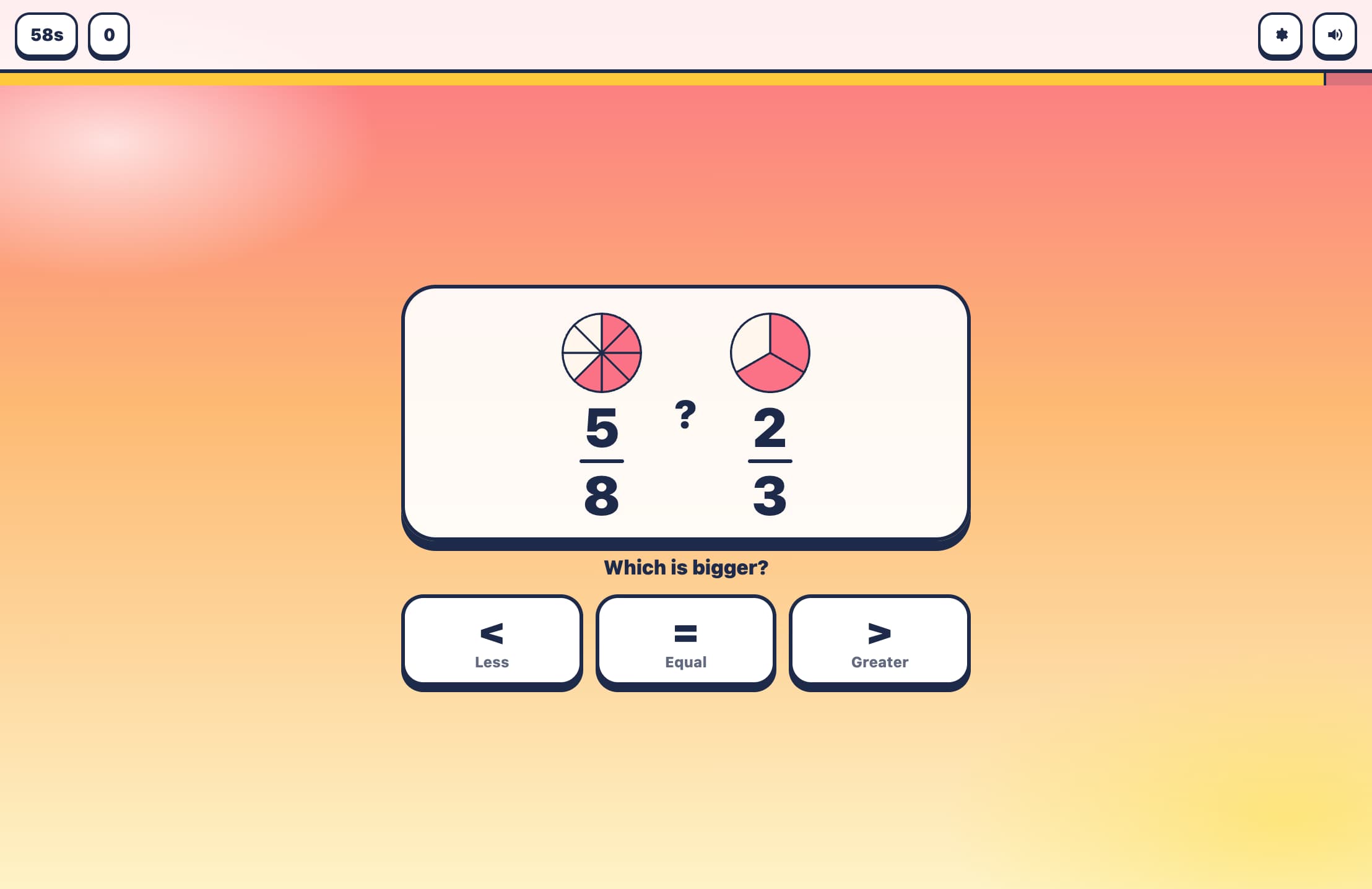
Compare and Sort Fractions
Compare or sort fractions in this fast-paced math challenge. Which fraction is bigger? Tap them in order smallest to largest — race the clock or survive on 3 lives!
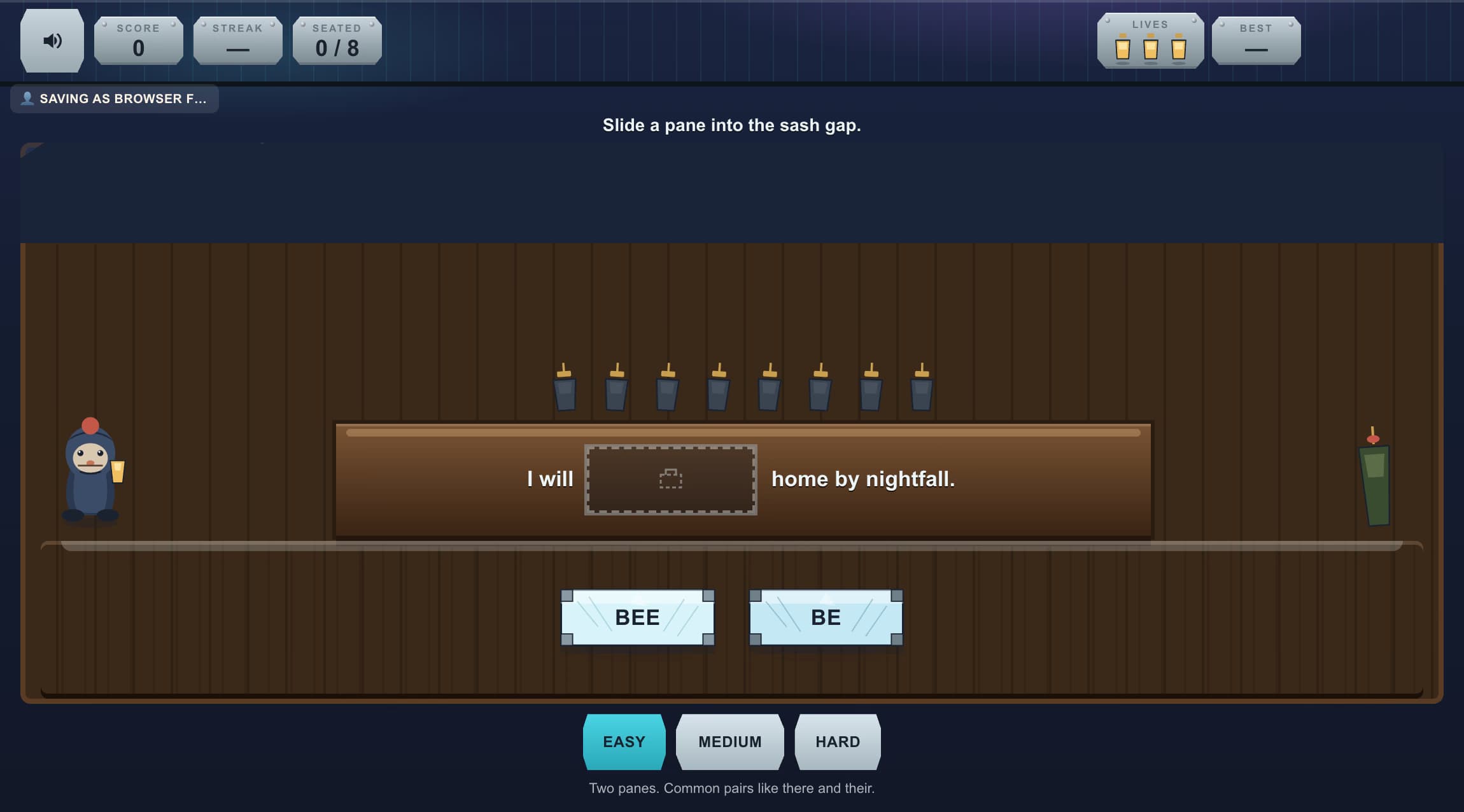
Build Sentences with Homophones
Night cabin, aurora over the pines. Floyd Snow waits at a timber sash with a sentence painted across the rail and a frost gap in the middle. Slide the right English homophone pane from the sill into the sash gap. A hit seats the pane and lights a rail lantern. A Cracked pane rattles the frame and breaks the Streak. Built for second-grade and third-grade vocabulary.
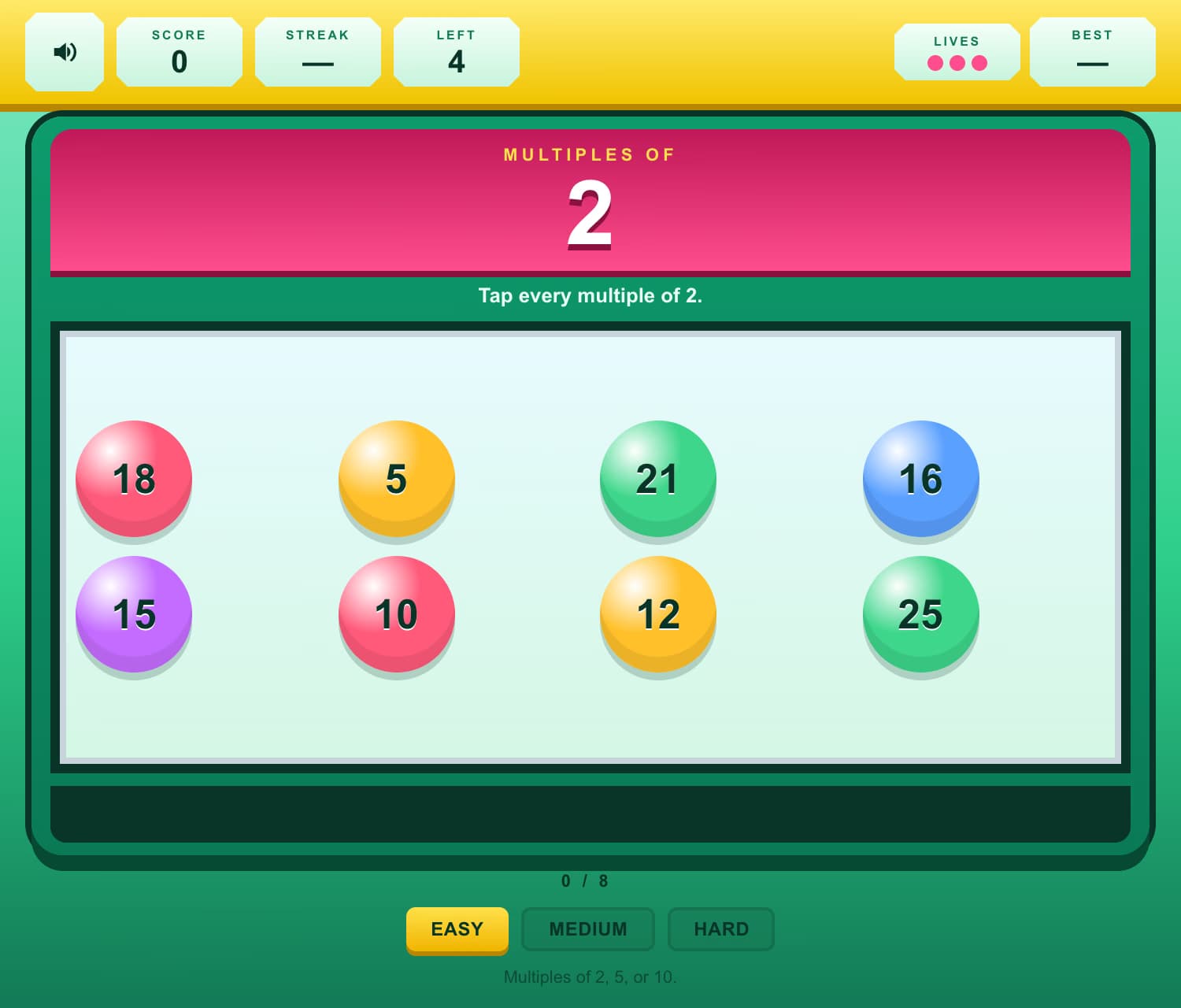
Claw Machine Multiples
A bright carnival claw machine packed with numbered gumballs. Drag the claw or tap a prize. Grab every ball that is a multiple of the factor on the marquee. A wrong prize costs a life. Built for fourth-grade multiples and skip-counting.
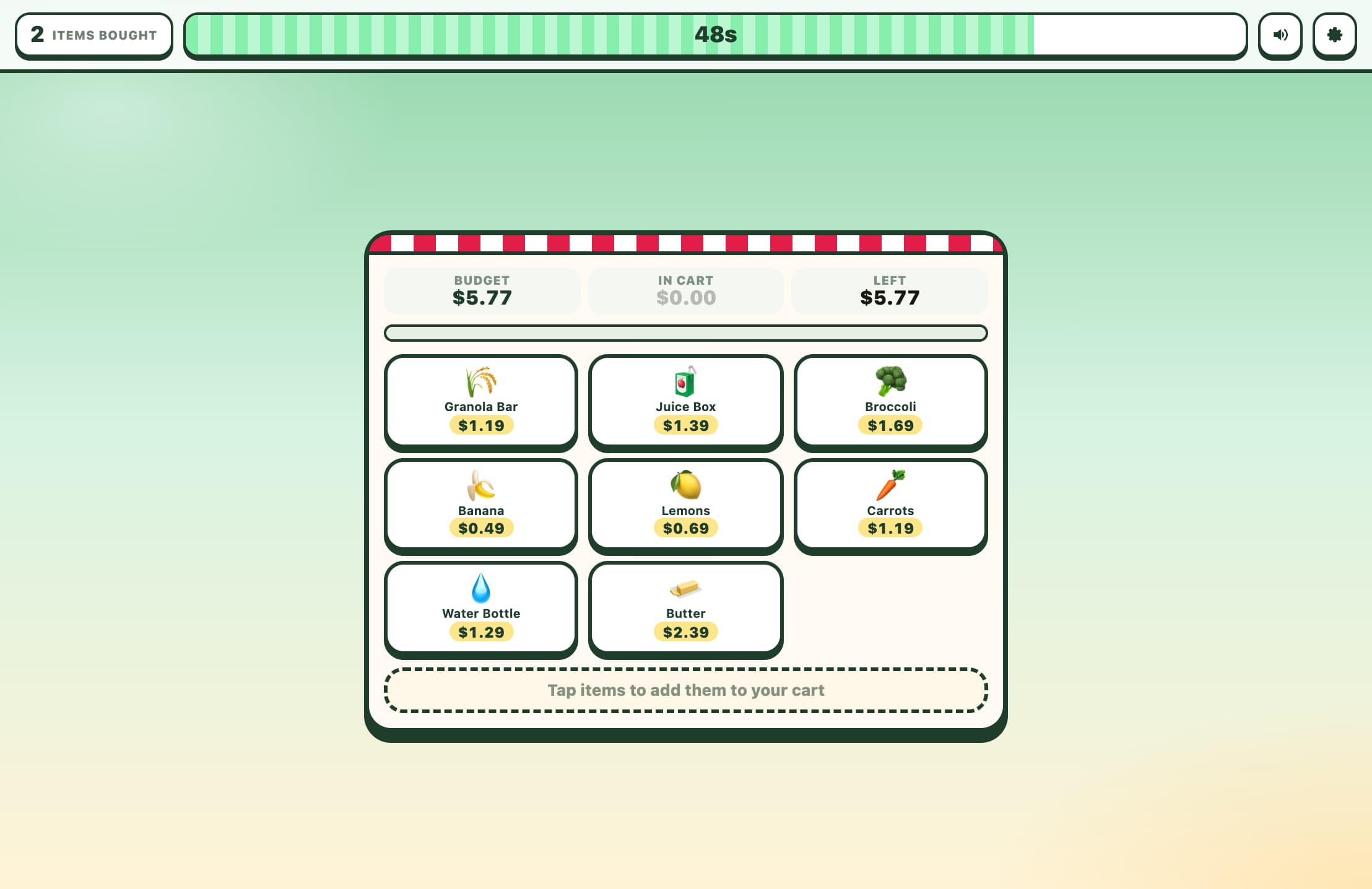
Fill Your Cart Without Going Over Budget
Fill a shopping cart with grocery items without going over a set budget. Encourages addition, estimation, and simple budgeting for grades 3–4. Practice real-world money skills in a fun supermarket setting.
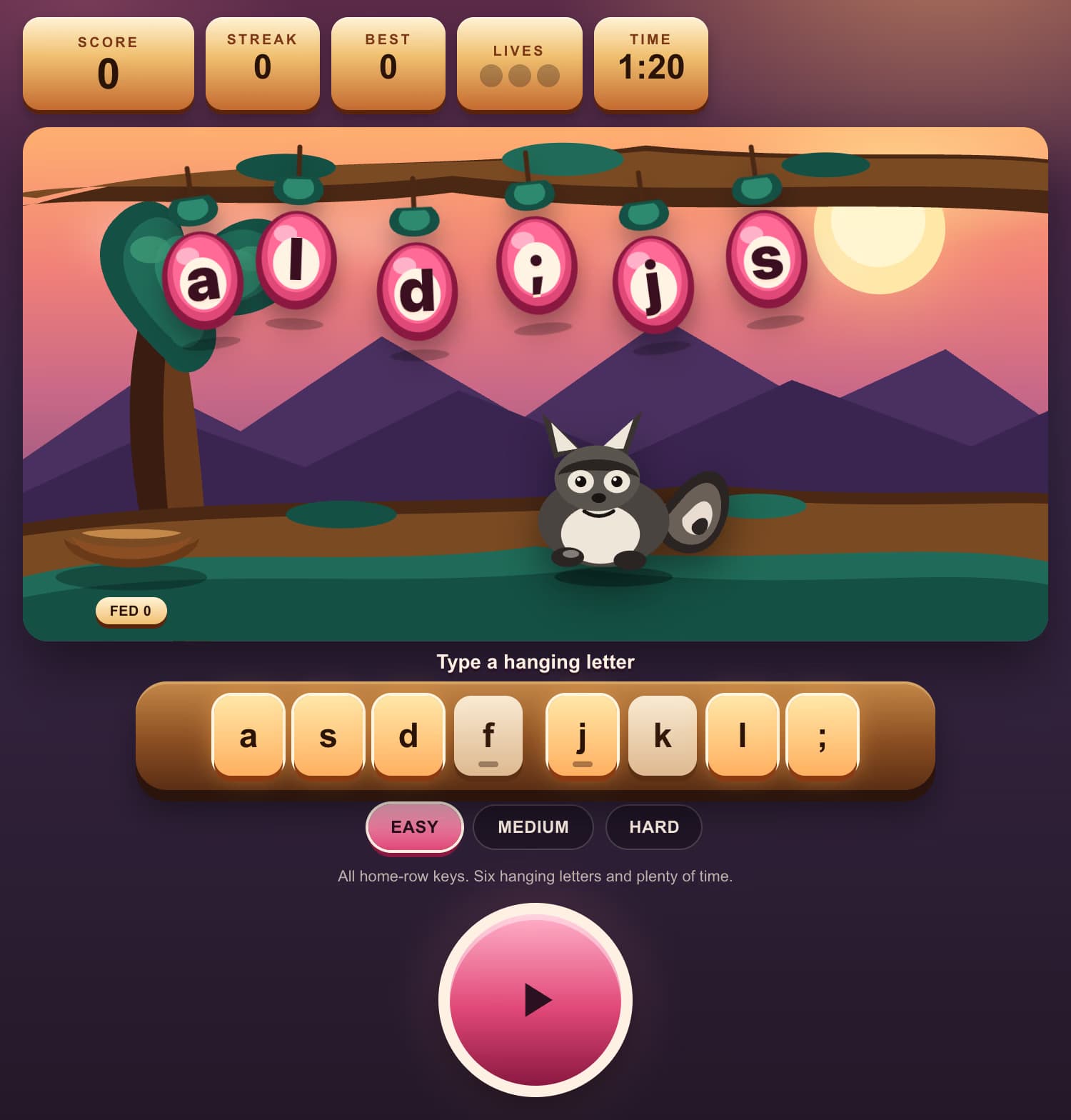
Home Row Typing
A sunset orchard, rose plums with home-row letters, and a raccoon on a mossy branch. Type any hanging key — A, S, D, F, J, K, L, or semicolon. A clean hit drops the plum and feeds the raccoon. A miss shakes the grove and breaks the streak. Built for first-through-fifth graders learning touch typing on the full home row.
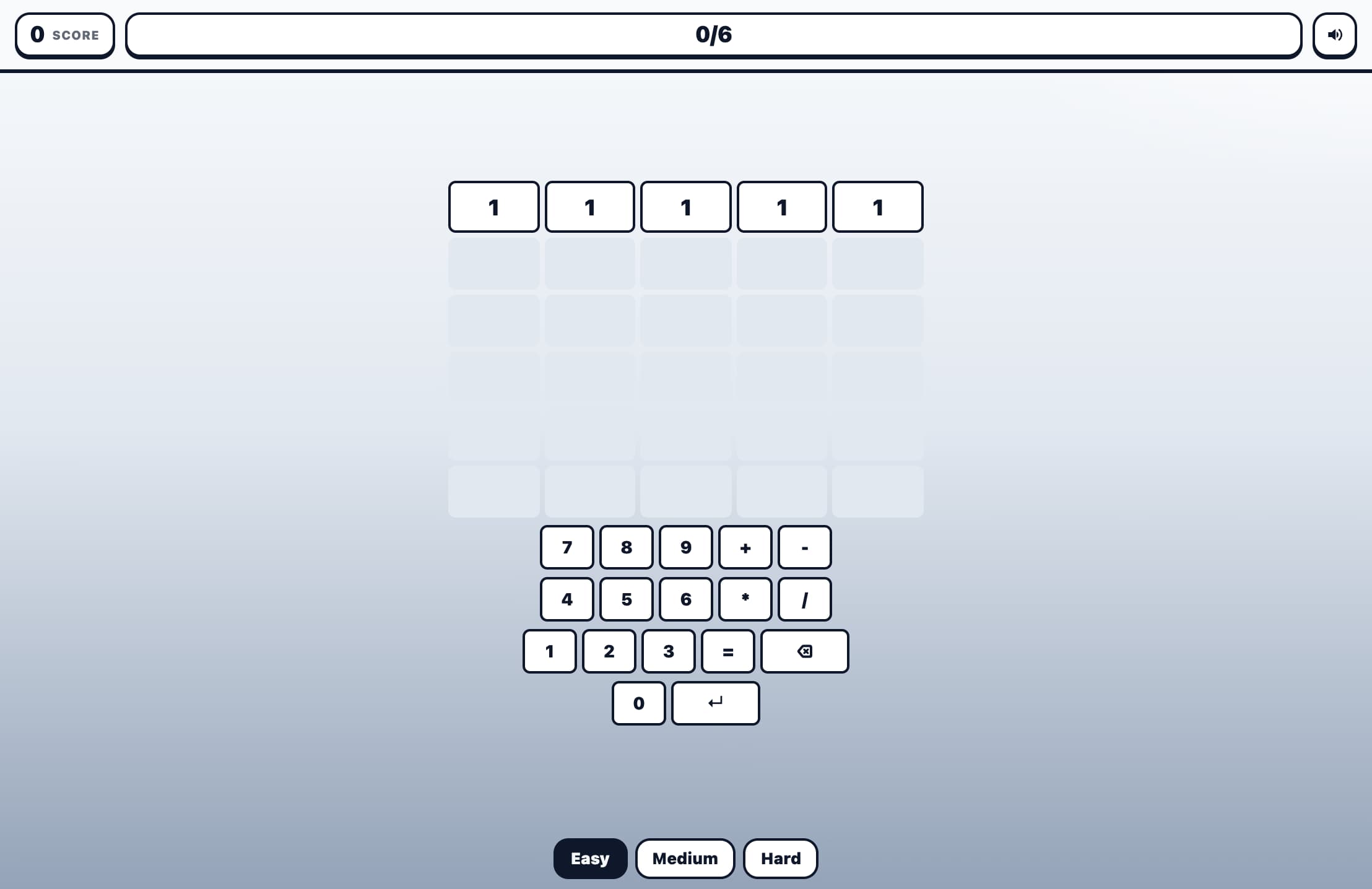
Wordle Math Puzzle Game (Nerdle)
Inspired by Nerdle — guess the hidden math equation one character at a time in 6 tries. Every guess must be a valid equation (left side evaluates to the right side). 🟩 Green means the right character in the right place, 🟪 Purple means right character but wrong place, ⬛ Gray means not in the equation at all.
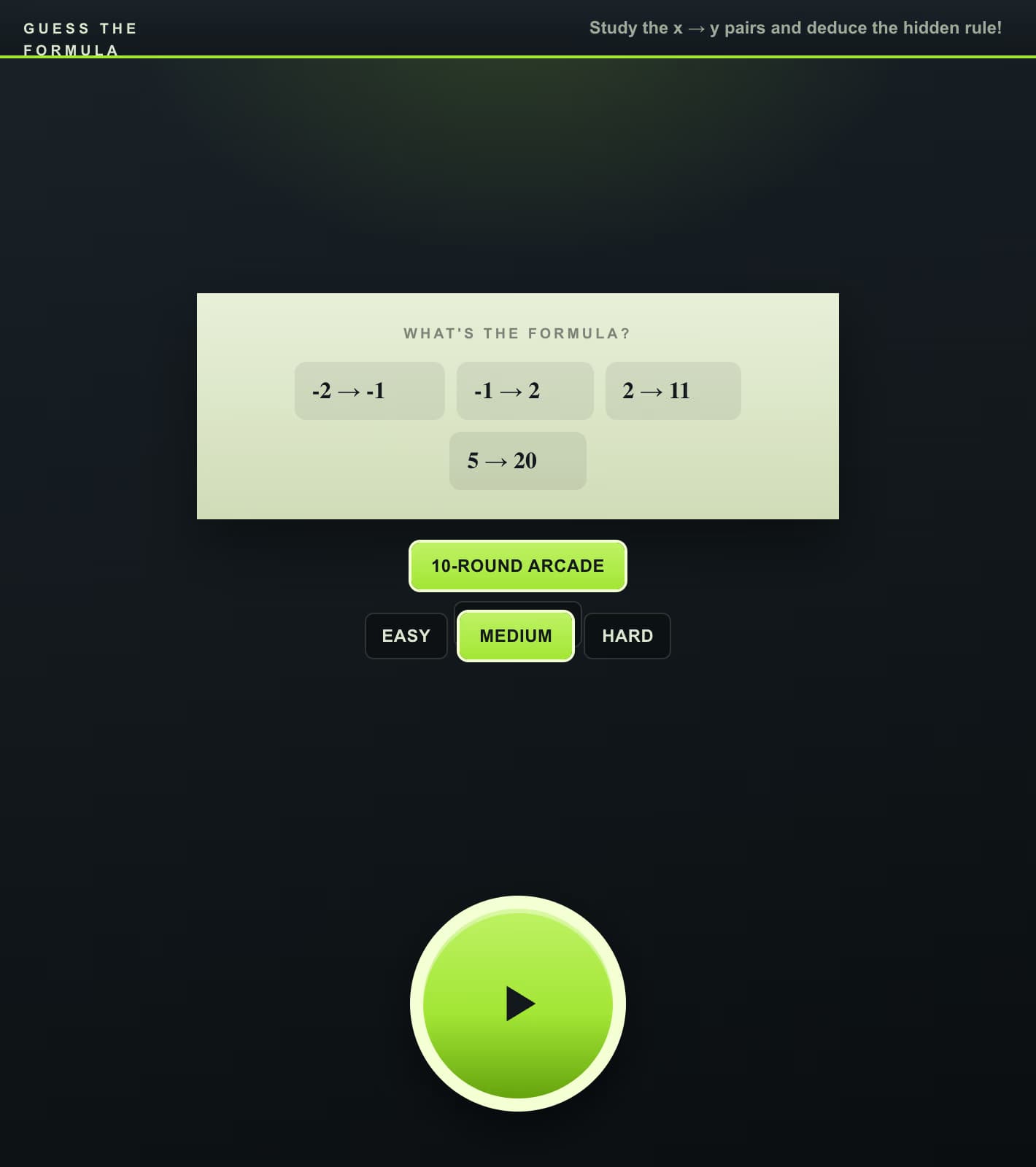
Math Function Deduction
You're shown a table of x → y pairs — your job is to identify which of four formulas generated the data. Study the numbers, spot the pattern (linear, quadratic, exponential, modulo?), and select the correct formula before time runs out. On Medium and Hard difficulties you can also 'probe' additional x values to gather more evidence.
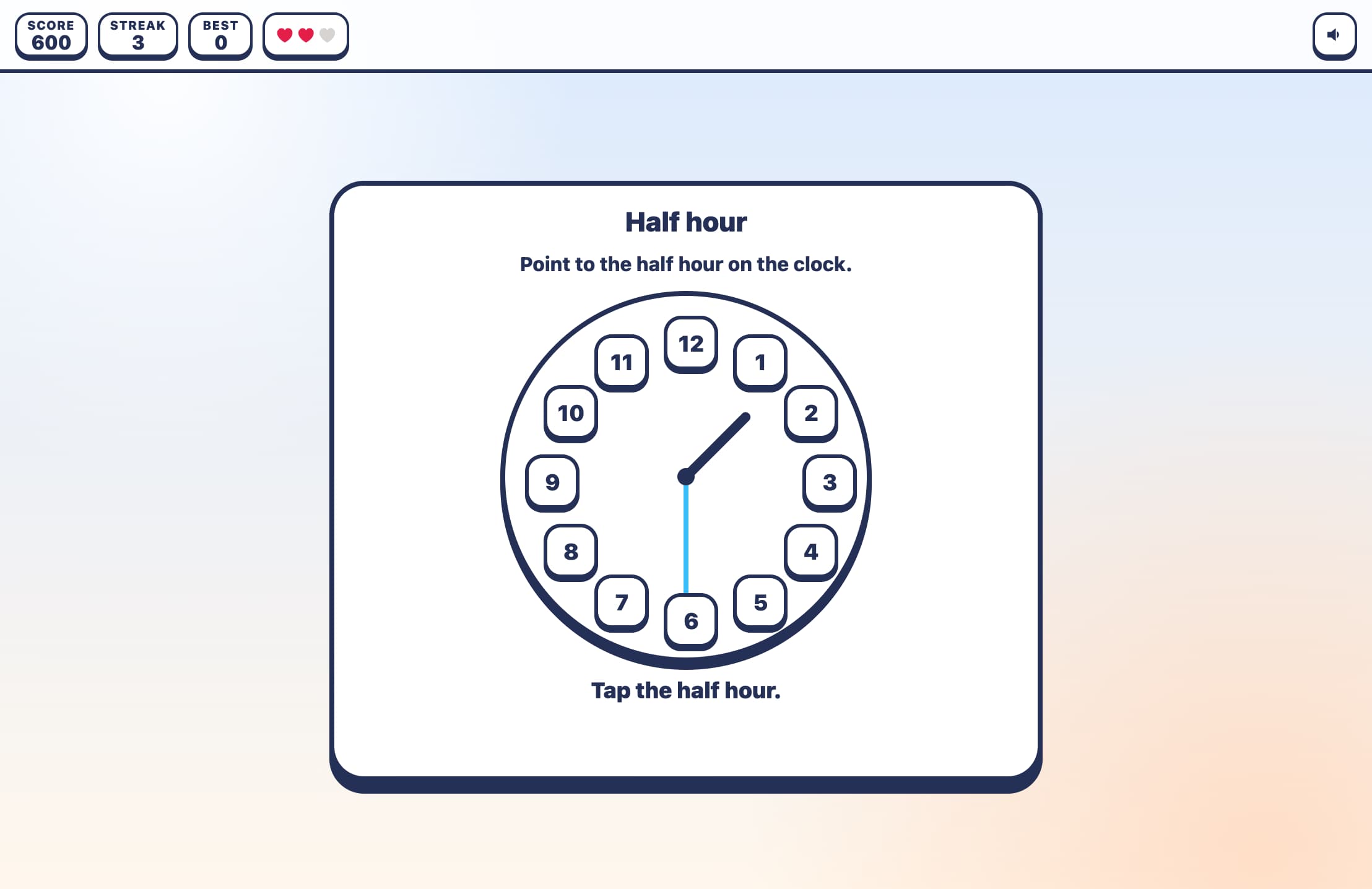
Point to the half hour on the clock.
Half hour shows a clock. The long hand sits on 6, and the short hand sits halfway to the next number. Point to the half hour on the clock. Tap the half hour. The right number turns green and Score grows with the Streak. A wrong number turns rose, clears the Streak, and costs a heart. Built for 1st grade.
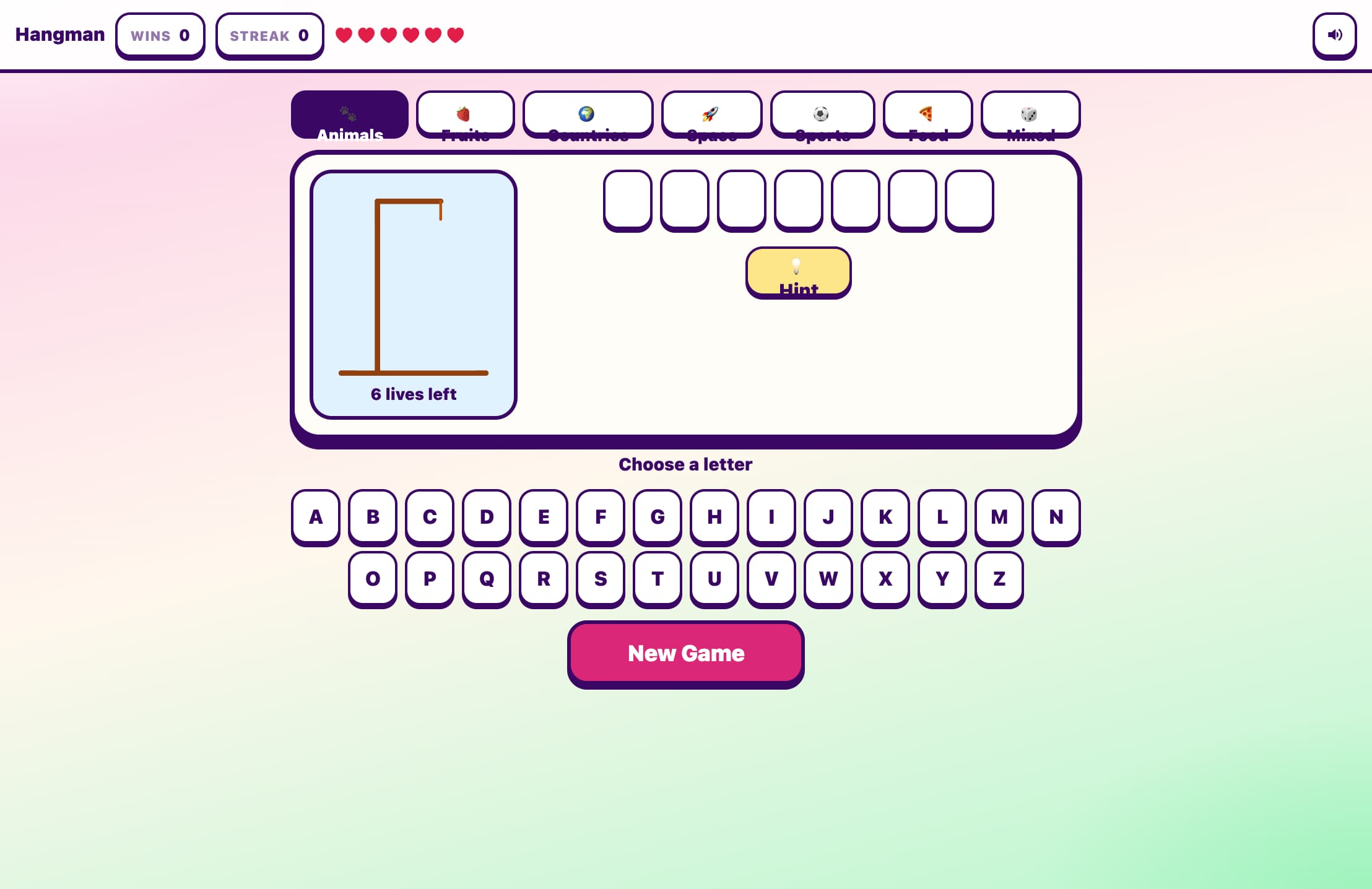
Classic Word Guessing
Play the classic Hangman word guessing game! Choose from 7 categories including animals, fruits, countries, space, sports, and food. Guess letters before the man is hanged — use a hint if you're stuck!
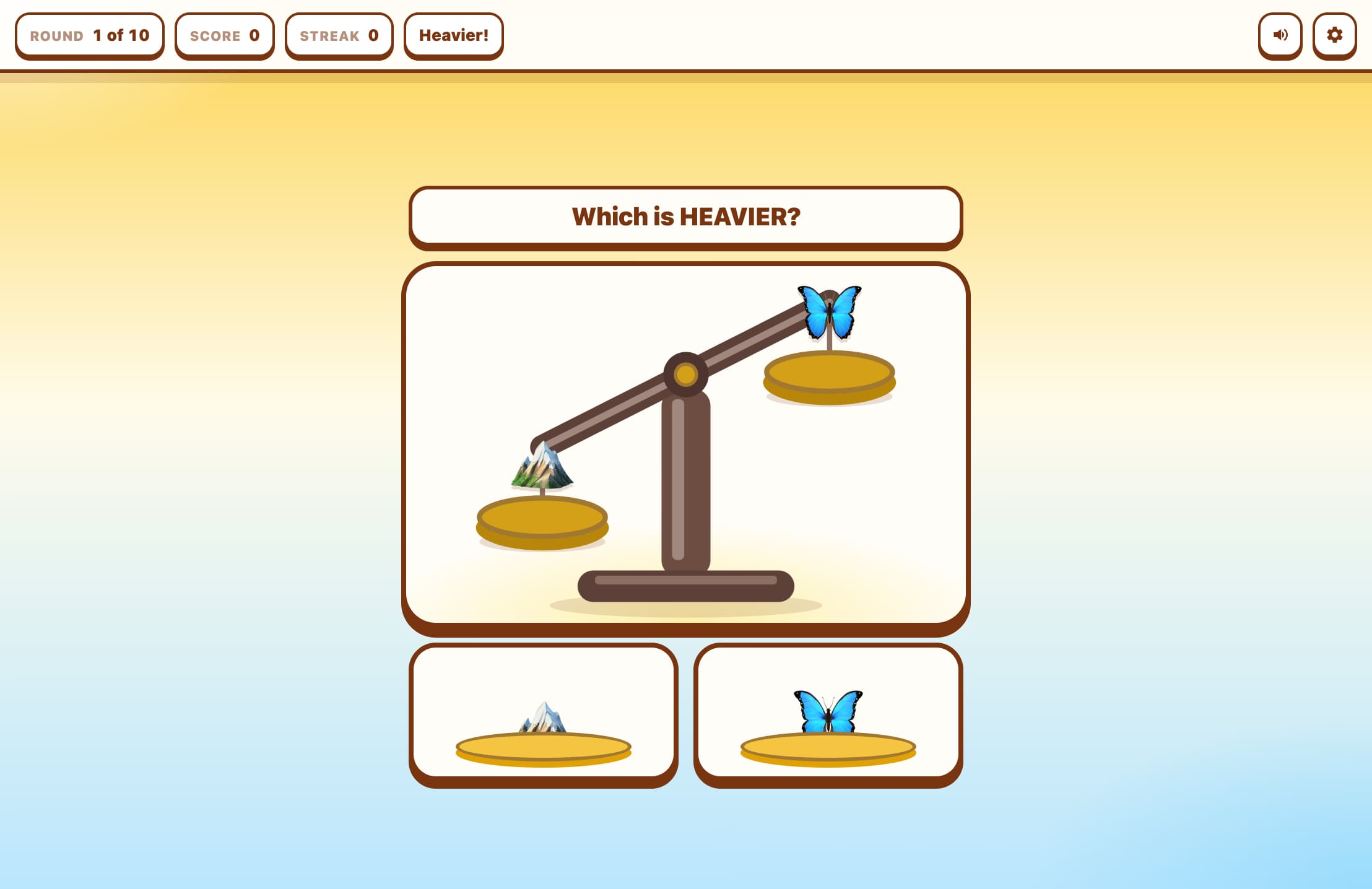
Balance Scale Measurement
Watch a balance scale tip and decide which side is heavier or lighter! A rock vs a feather, an elephant vs a butterfly — learn about weight and measurement concepts through an interactive animated scale.
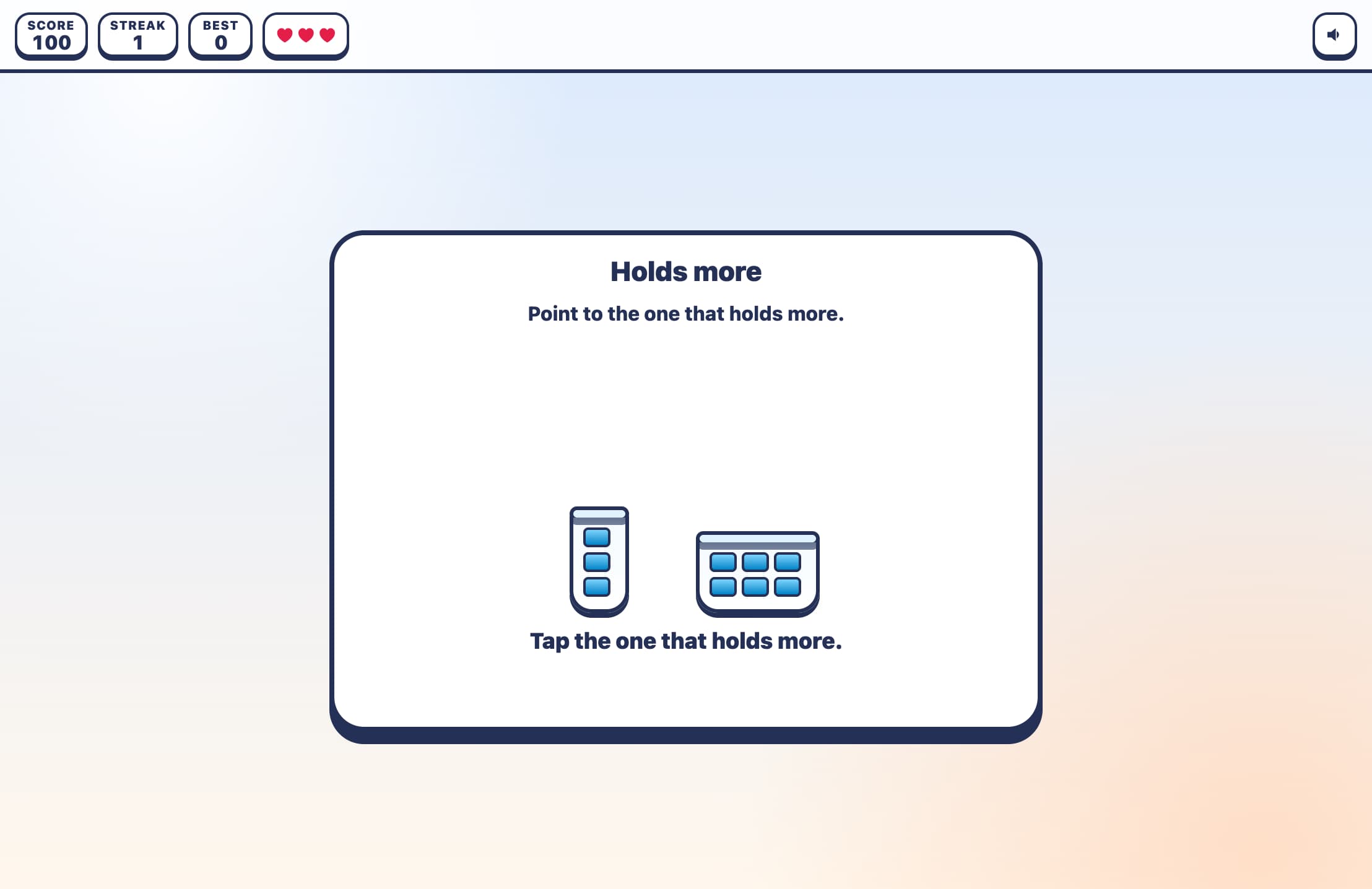
Point to the one that holds more.
Holds more shows two jars of water. Point to the one that holds more. The water squares are the same size, so a taller jar can hold less. Tap the one that holds more. The right jar turns green and Score grows with the Streak. A wrong jar spills, turns the card rose, clears the Streak, and costs a heart. Built for 1st grade.
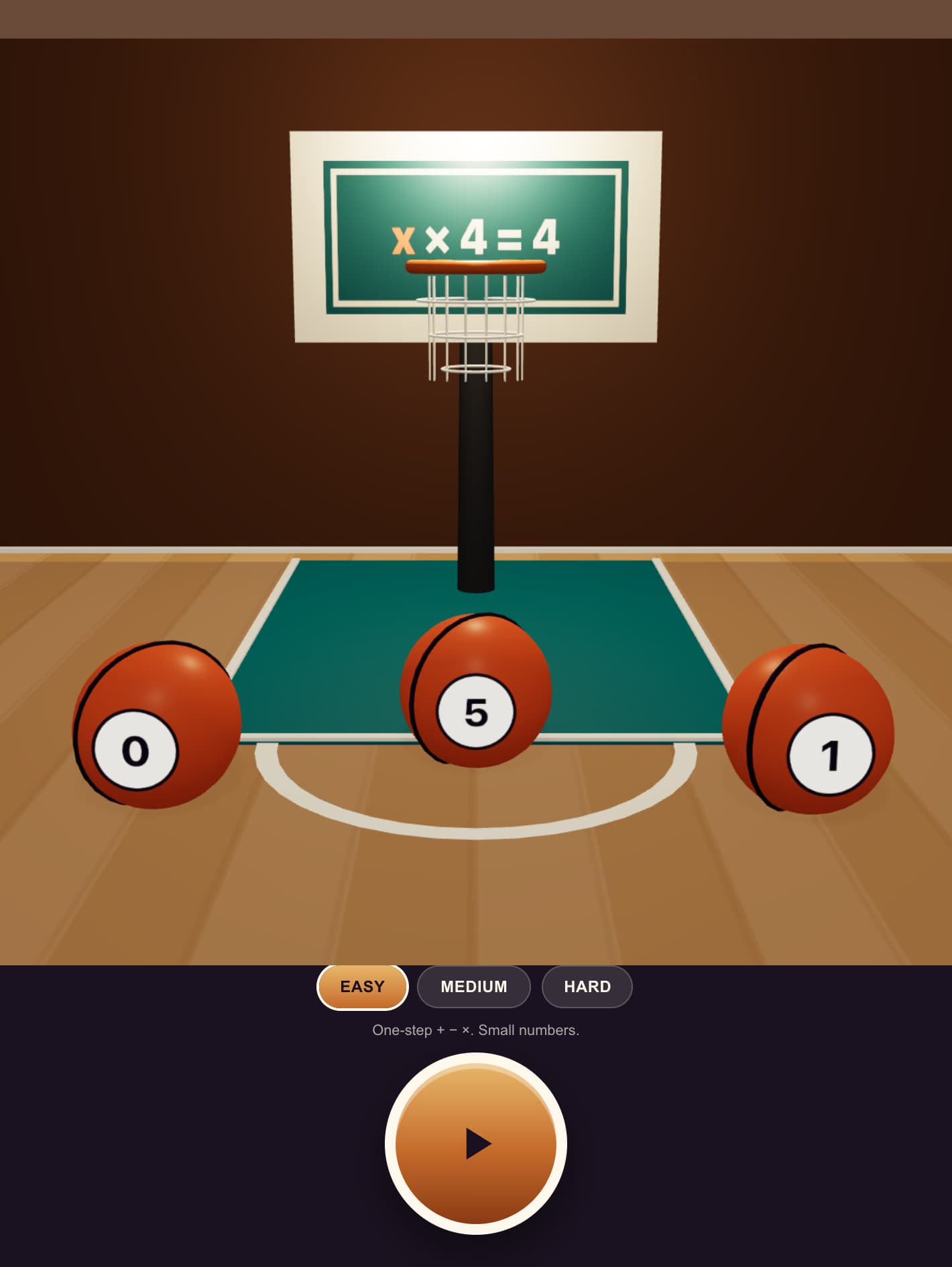
One-Step Equations Court
A dusk arena, a hoop, and numbered balls on the floor. An equation such as x × 4 = 12 sits above the court. Tap the ball that is x. A make flies to the rim. A miss clanks and costs a life. Three misses end the run. Built for fifth-grade one-step equations.
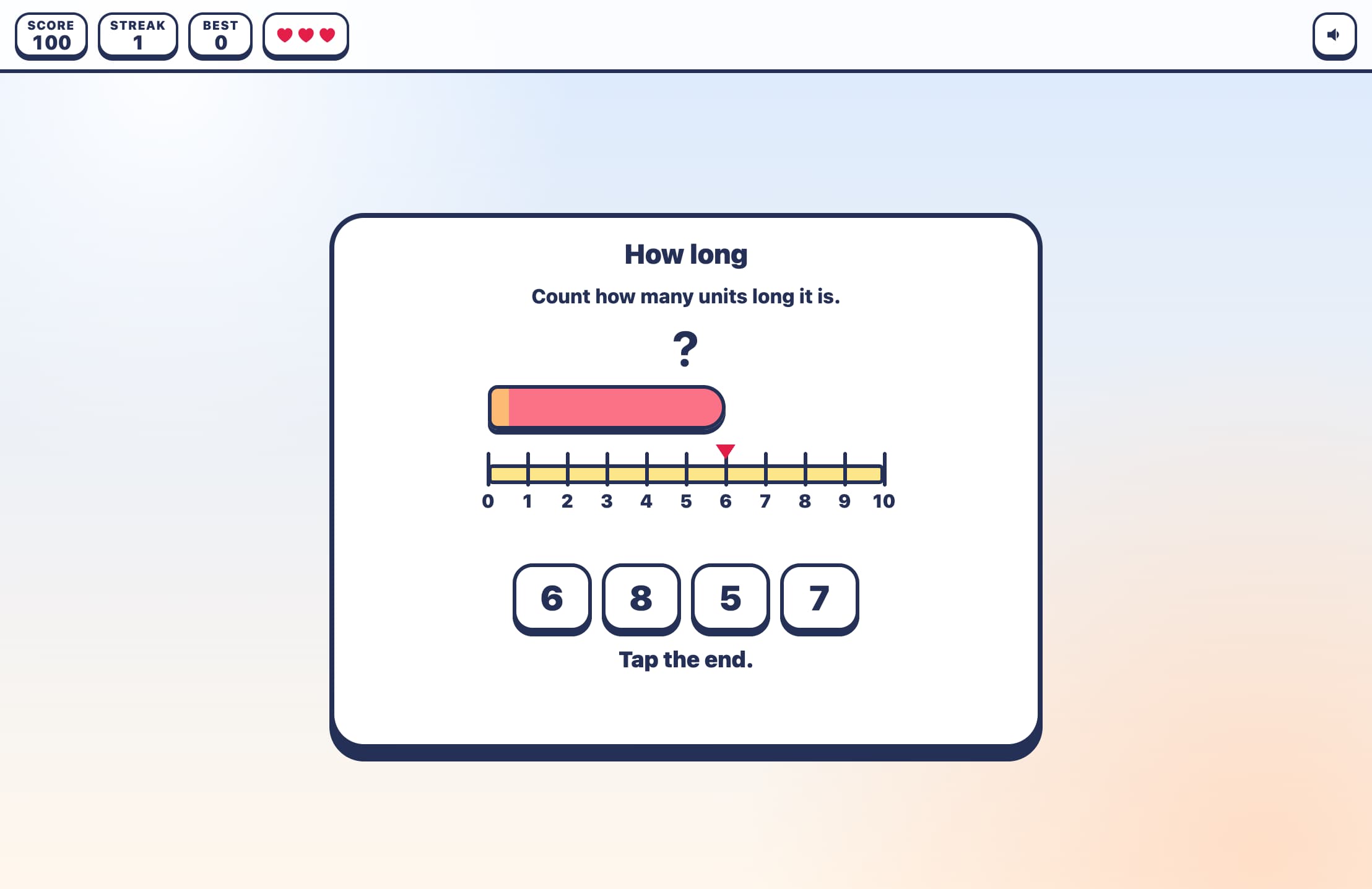
Count how many units long it is.
How long puts a crayon on a ruler. Count how many units long it is. Tap the end. The marker slides to that mark. A mark that is not the end turns the card rose, clears the Streak, and costs a heart. Built for 1st grade.
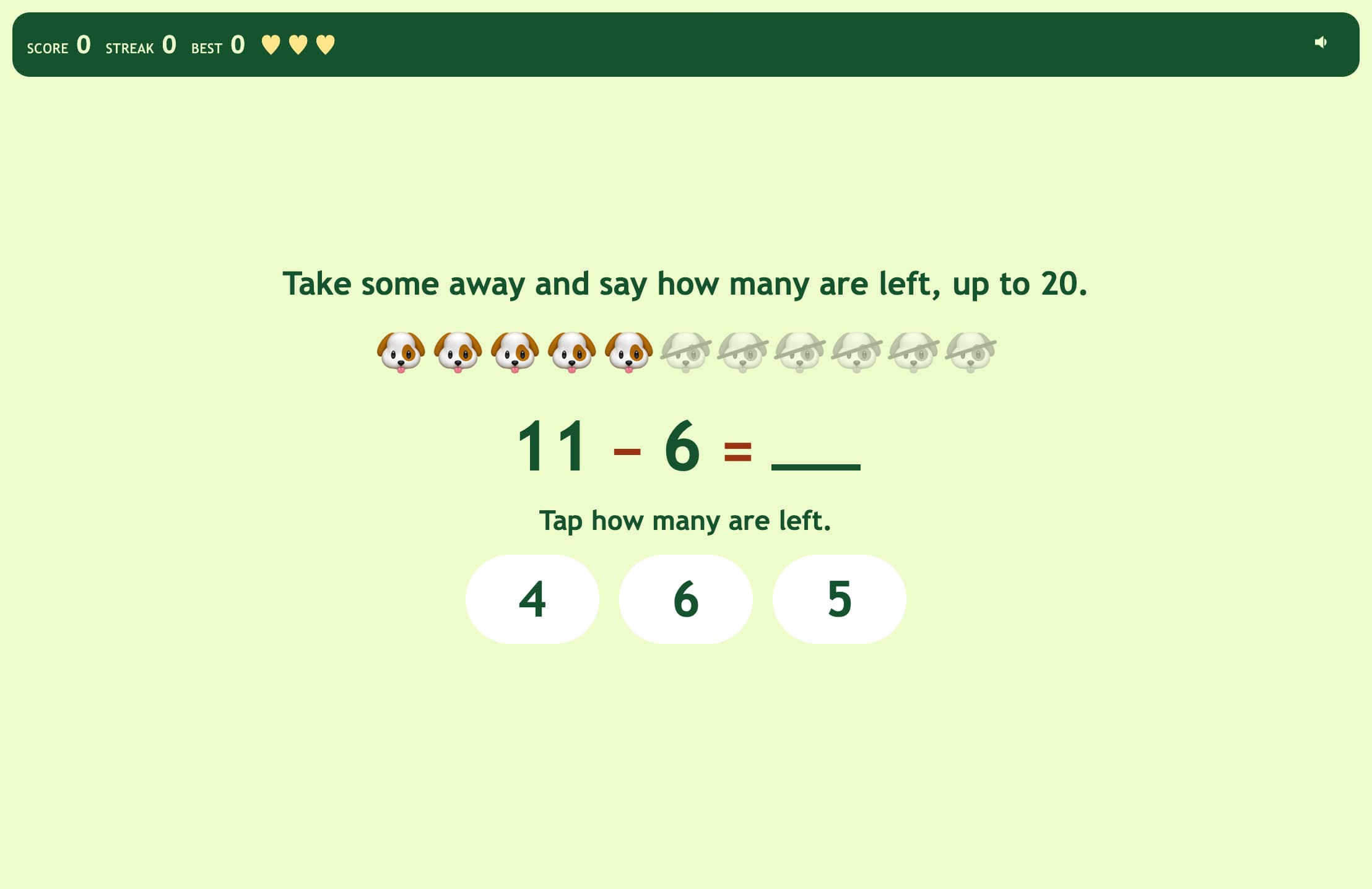
Take some away and say how many are left, up to 20
The card shows a subtraction, like 12 − 7. Both numbers are labeled. Take some away and say how many are left, up to 20. Tap how many are left. A right tap turns green. A wrong tap turns rose. Built for 1st grade.
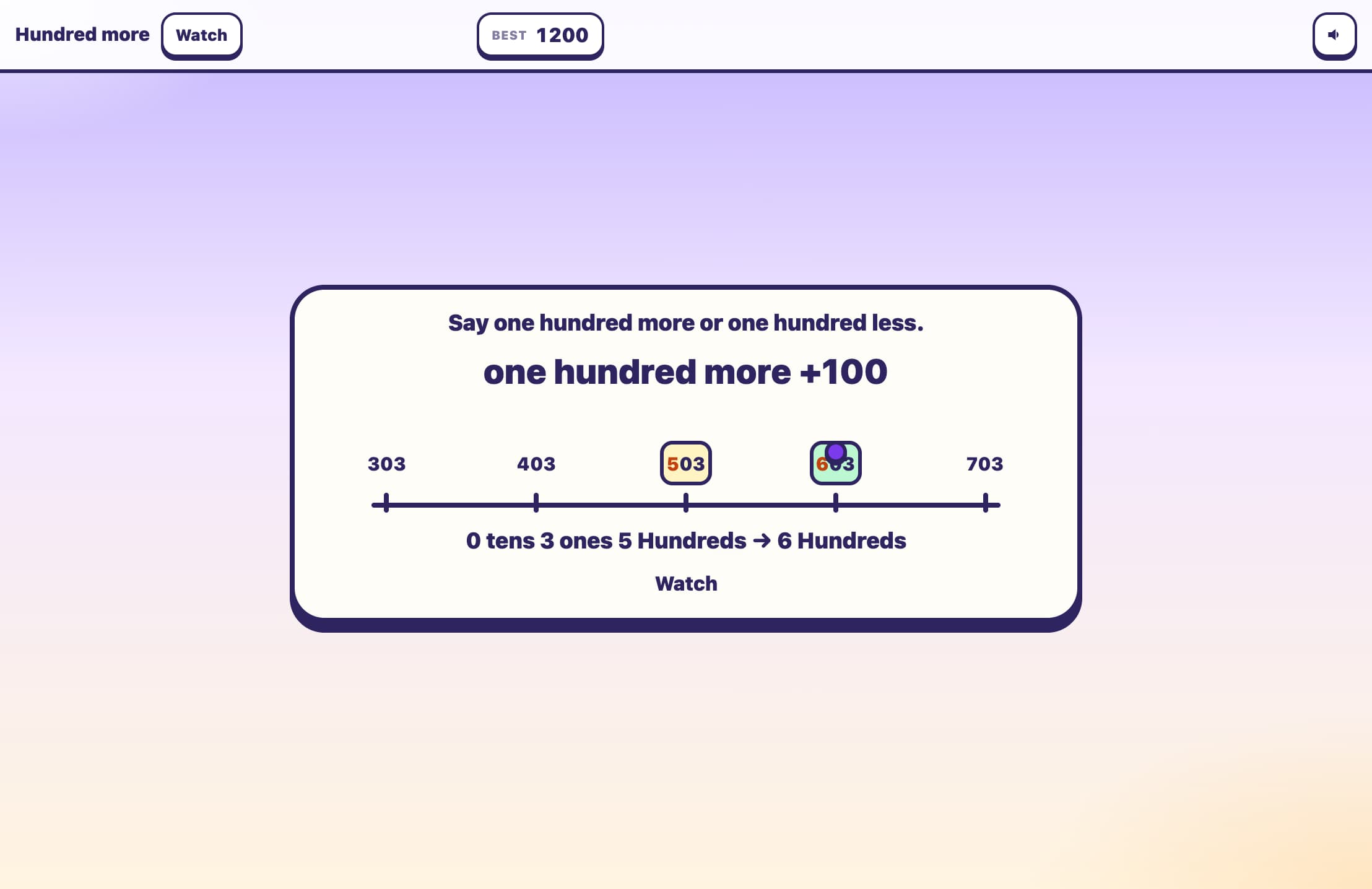
Say one hundred more or one hundred less.
Hundred more is the game. Say one hundred more or one hundred less. Watch shows 346, then 503, then 870, then 405 on a number line. The marker is already on the landing stop. Try it. Drag to one hundred more or one hundred less. Then six scored jumps. Score, Streak, and hearts start after Try it. Built for 2nd grade.
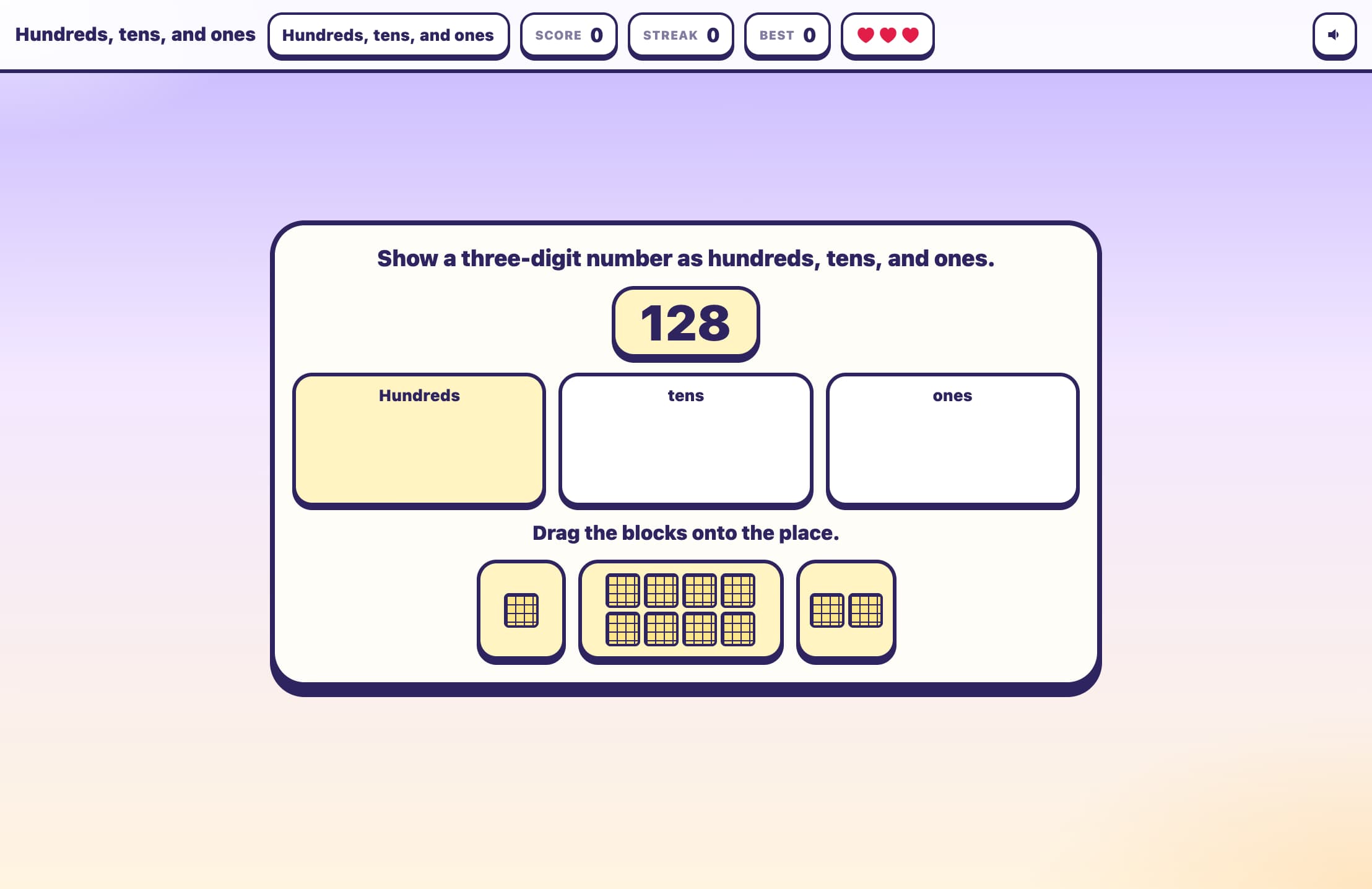
Show a three-digit number as hundreds, tens, and ones.
Hundreds, tens, and ones is the game. Show a three-digit number as hundreds, tens, and ones. Watch builds 346, then 503, then 870. 346 is 3 Hundreds, 4 tens, and 6 ones. 503 has 0 tens. 870 has 0 ones. Try it. Drag the blocks onto the place. Then six scored numbers. Score, Streak, and hearts start after Try it. Built for 2nd grade.
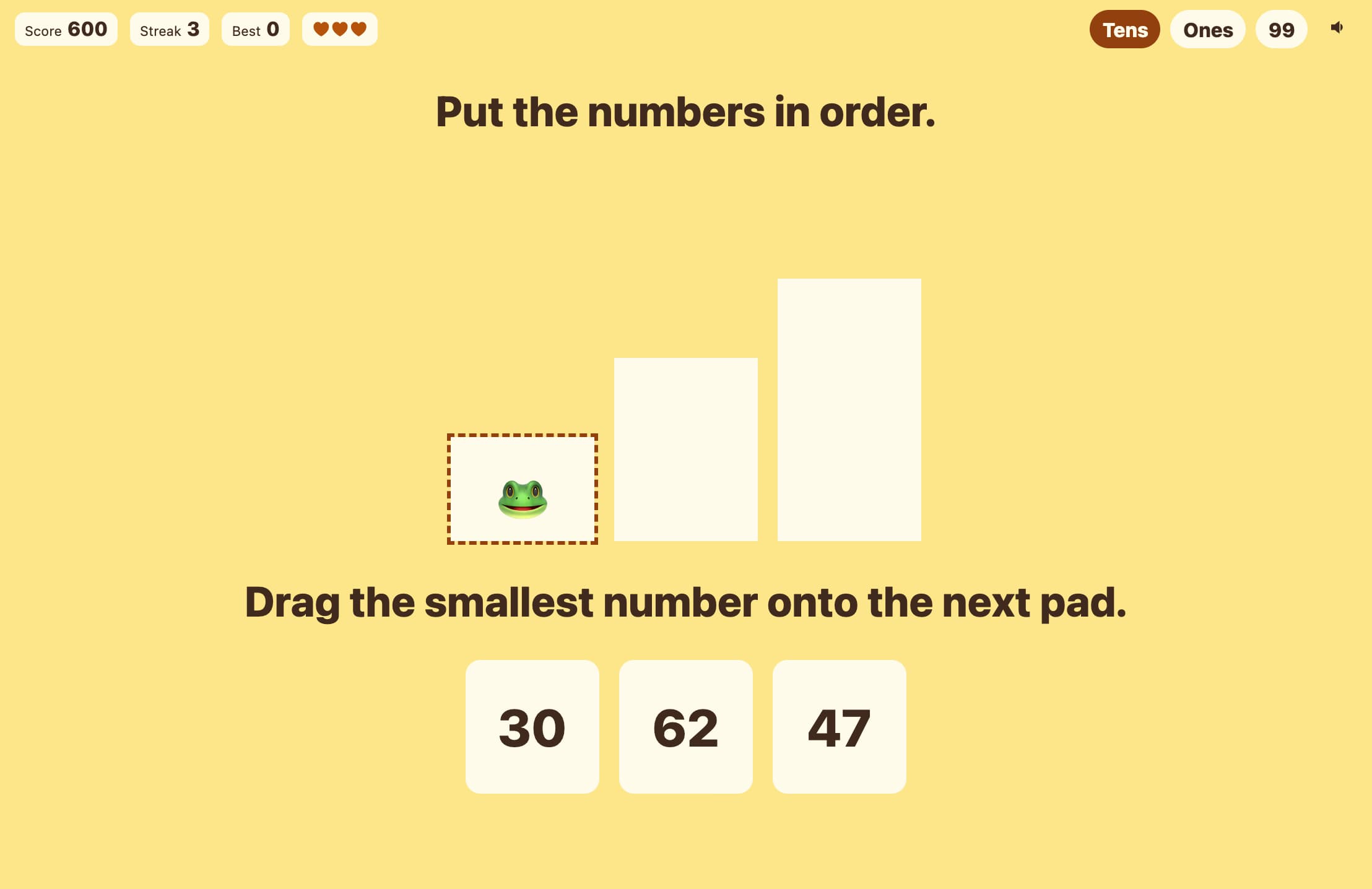
Put the numbers in order
Three numbers wait under the pads. In order is the game. Put the numbers in order. Drag the smallest number onto the next pad. Tens. Put the numbers in order. Ones. Put the numbers in order. 99. Put the numbers in order. A right drop turns green. A wrong drop turns rose. Built for 1st grade.
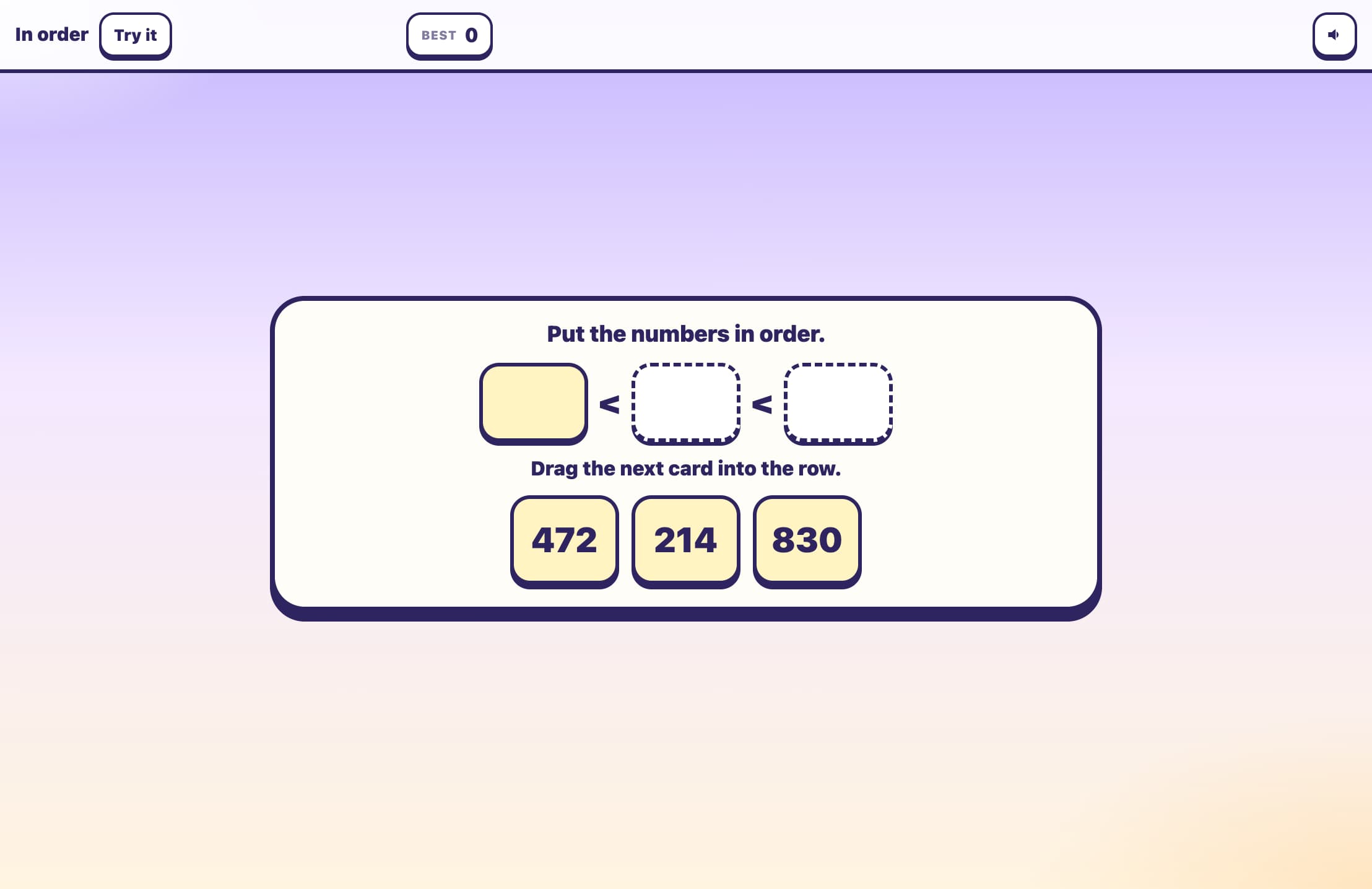
Put the numbers in order.
In order is the game. Put the numbers in order. Watch shows 214 < 472 < 830, then 830 > 472 > 214, then 305 < 346 < 381, then 405 < 408 < 560. < means smallest to largest. > means largest to smallest. 305, 346, and 381 share the hundreds. 405 and 408 share the tens. Try it. Drag the next card into the row. Then six scored rows. Score, Streak, and hearts start after Try it. Built for 2nd grade.
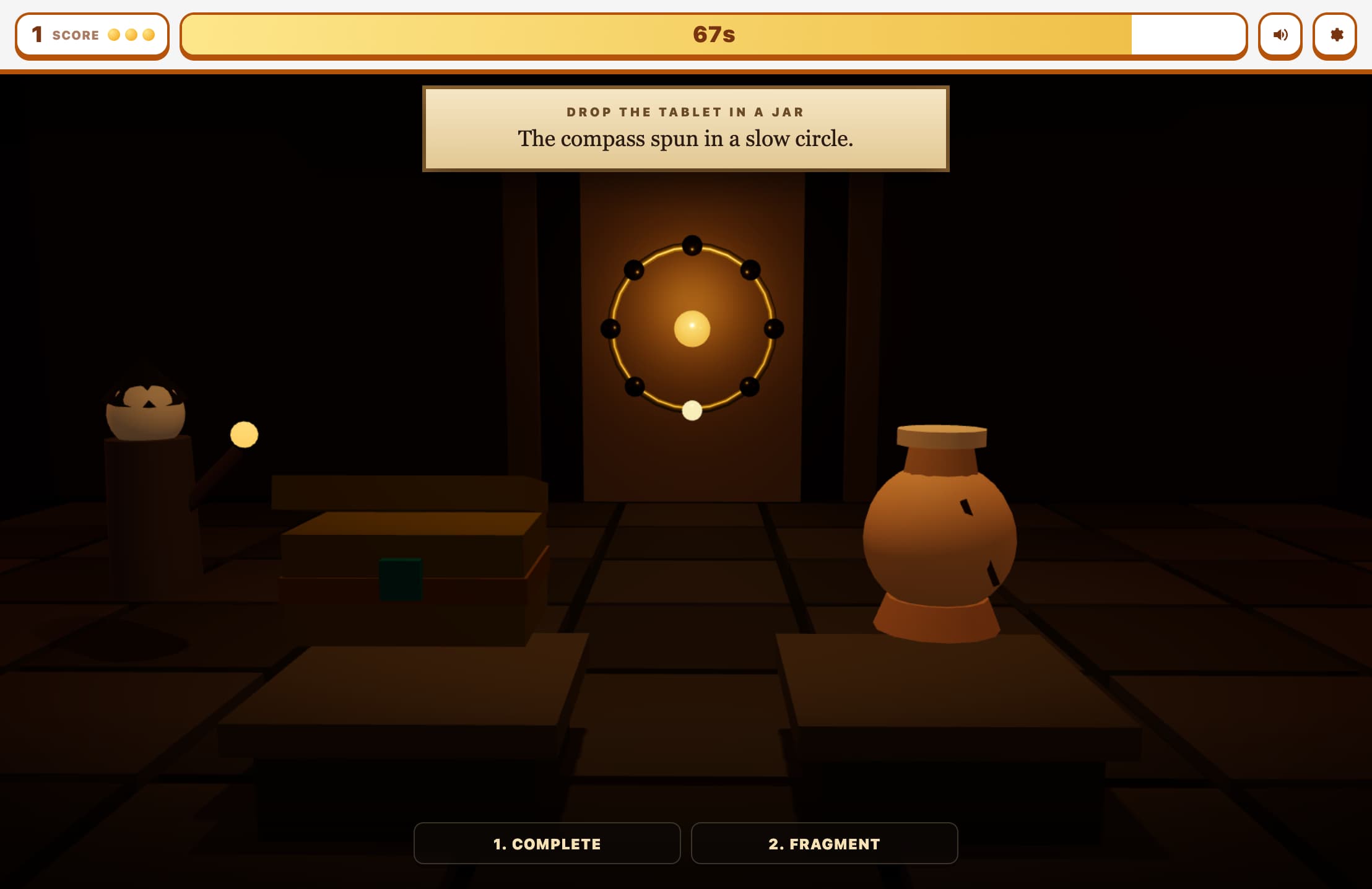
Complete Sentences vs Fragments
Step into a shadowy tomb and sort glowing inscriptions into complete sentences, fragments, and run-ons. On harder chambers, forge broken lines into real sentences. Built for fourth and fifth graders who already know the basics and want a tougher grammar quest.
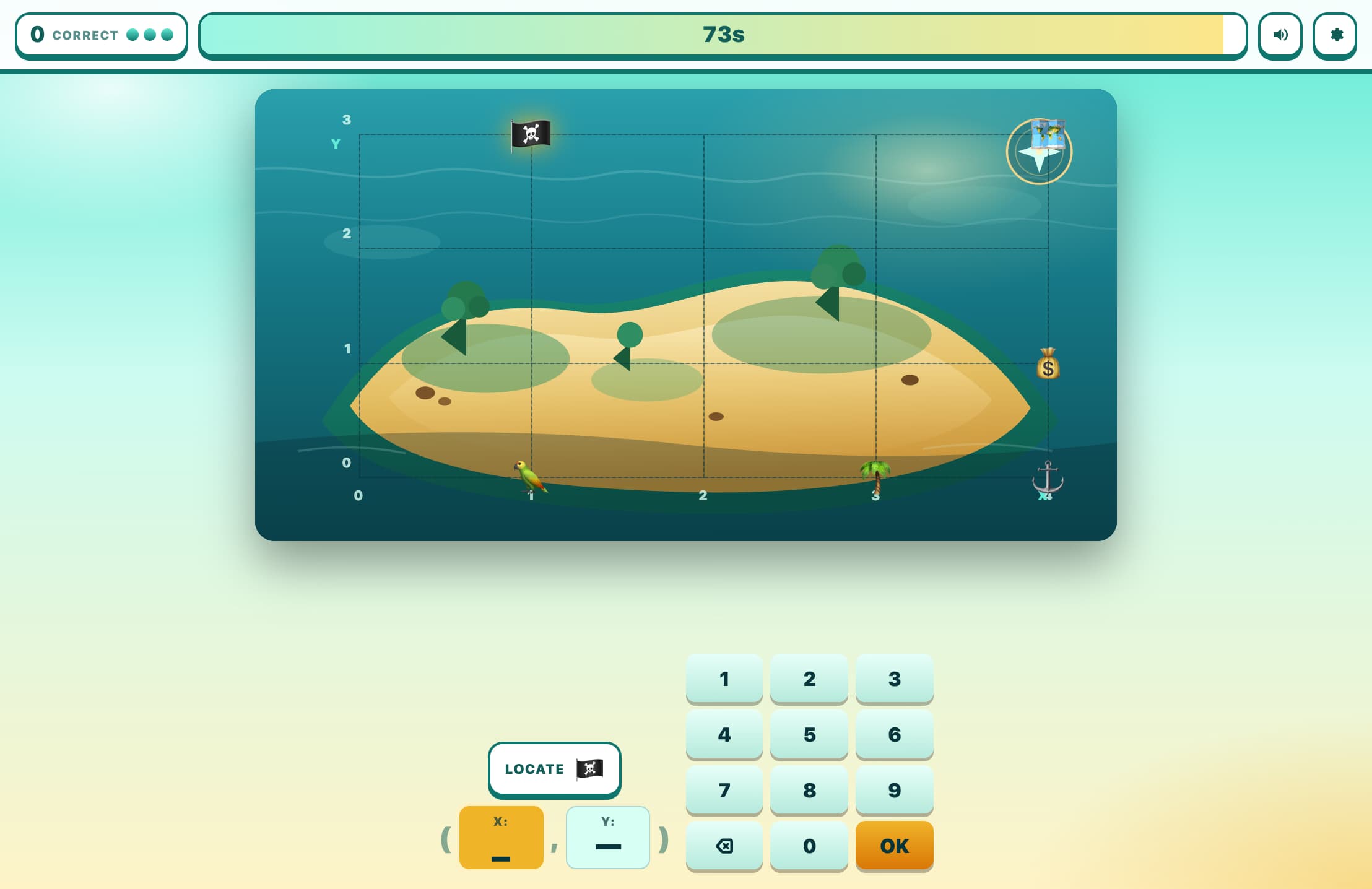
Graphing on a Coordinate Plane
Find each landmark on a first-quadrant treasure map and enter its X and Y. Kids plot pirates, chests, and palms on a dashed grid from the origin, building coordinate-plane fluency for fourth and fifth grade.
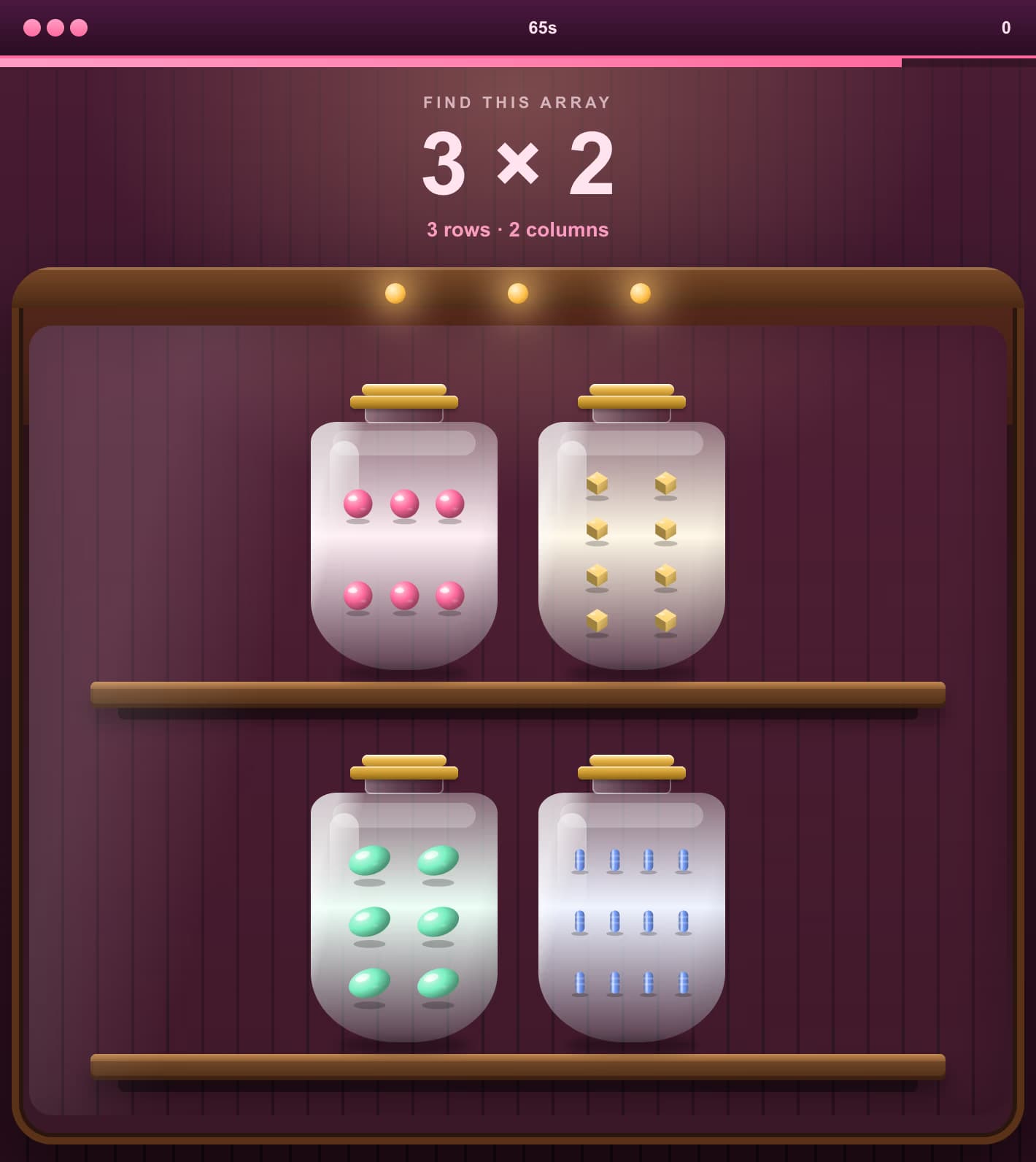
Multiplication Arrays
Find the jar whose candy is stacked in the matching array. Third graders count rows and columns to match facts like 3 × 4, building the picture of one-digit multiplication instead of only memorizing products.
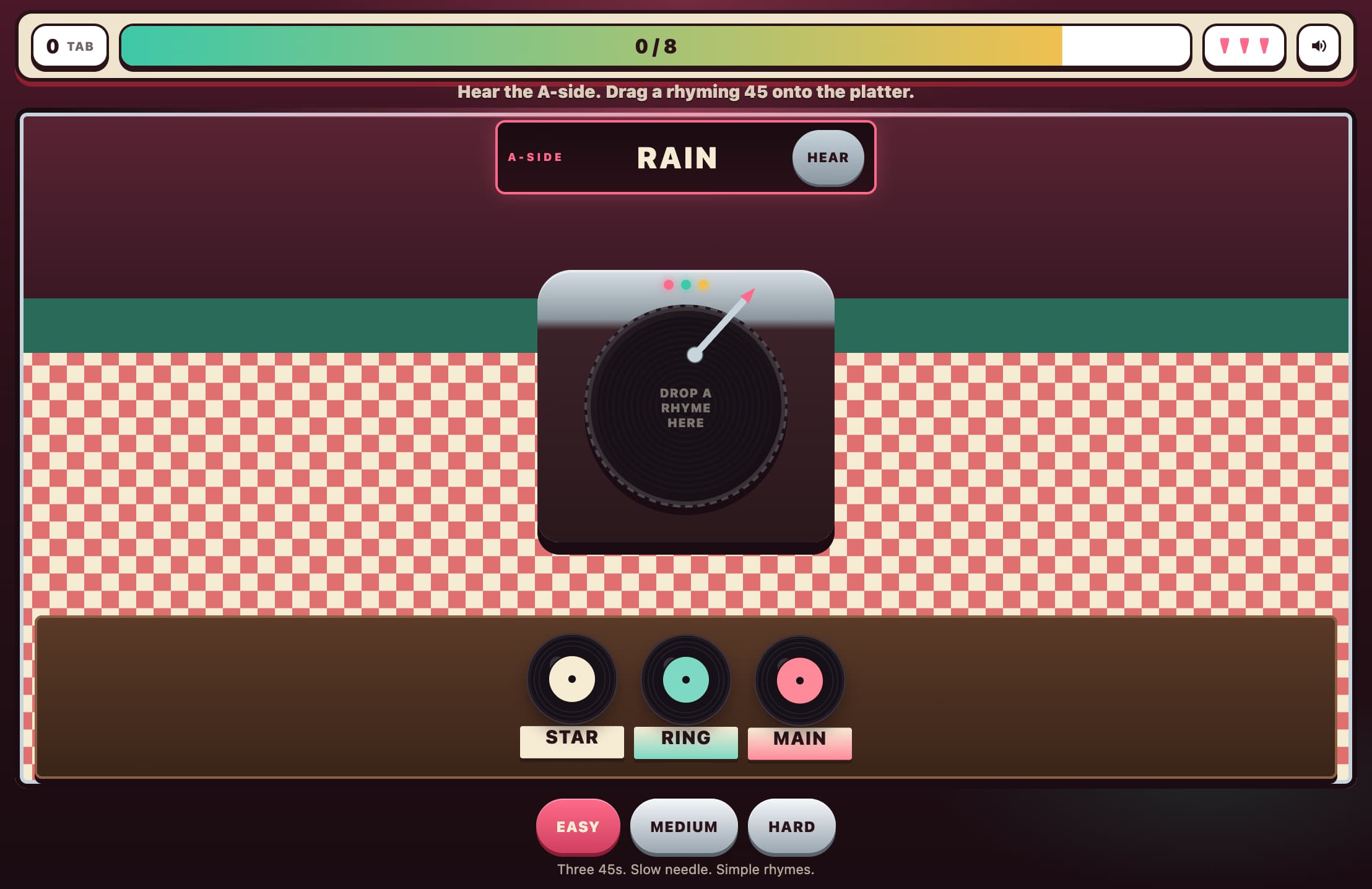
Drop Records That Rhyme
A diner jukebox is playing an A-side. Hear the English word, then drag a 45 from the crate onto the spinning platter before the needle reaches the label. Only a true rhyme cues the next song. Three difficulties, eight sides to win, and three needle lives.
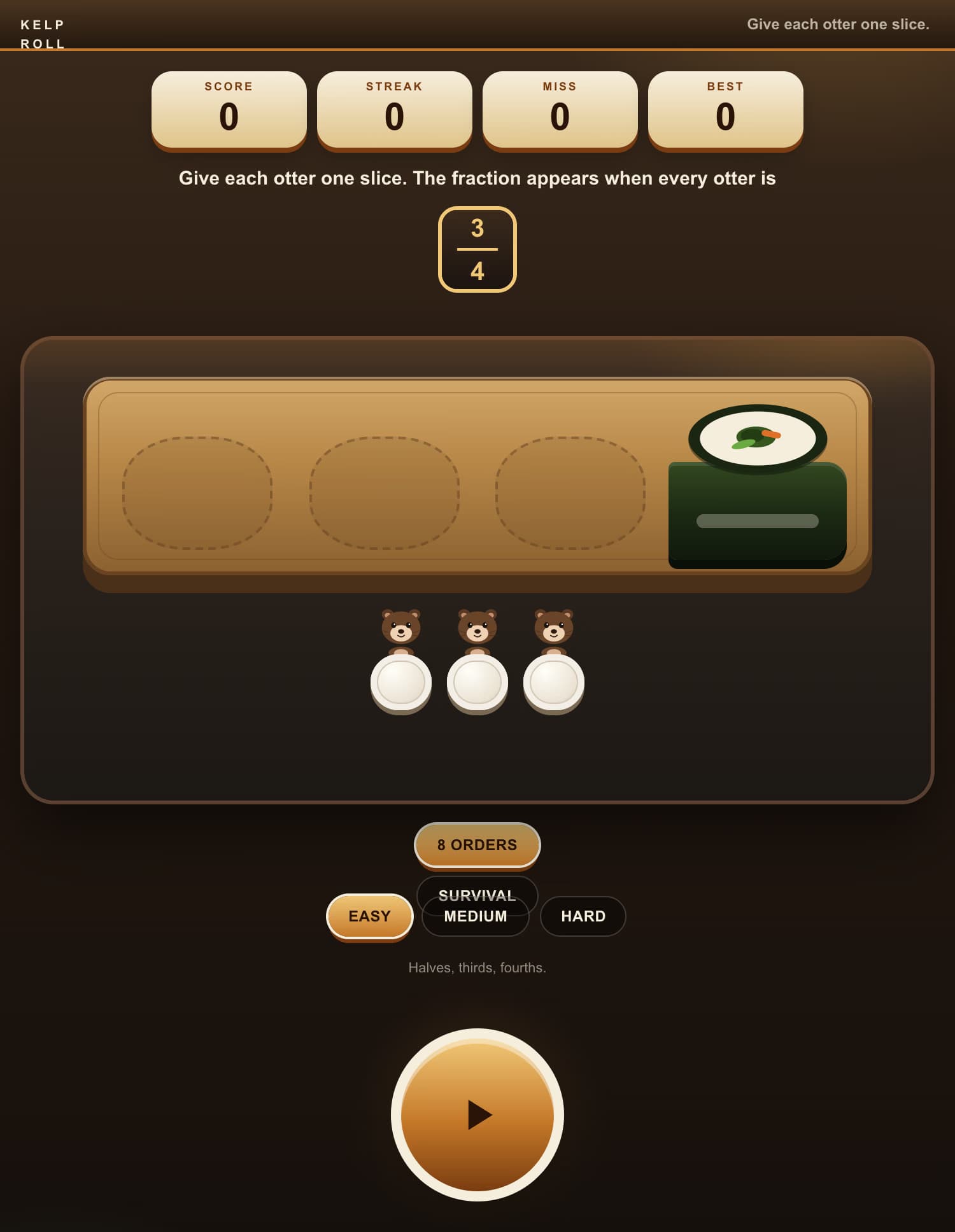
Serve Equal Shares and Name the Fraction
A tide kitchen, a kelp roll cut into equal rings, and hungry otters with empty plates. Tap one ring for each guest. When every plate is full, the fraction of the roll you served lights up. Built for third-grade equal parts.
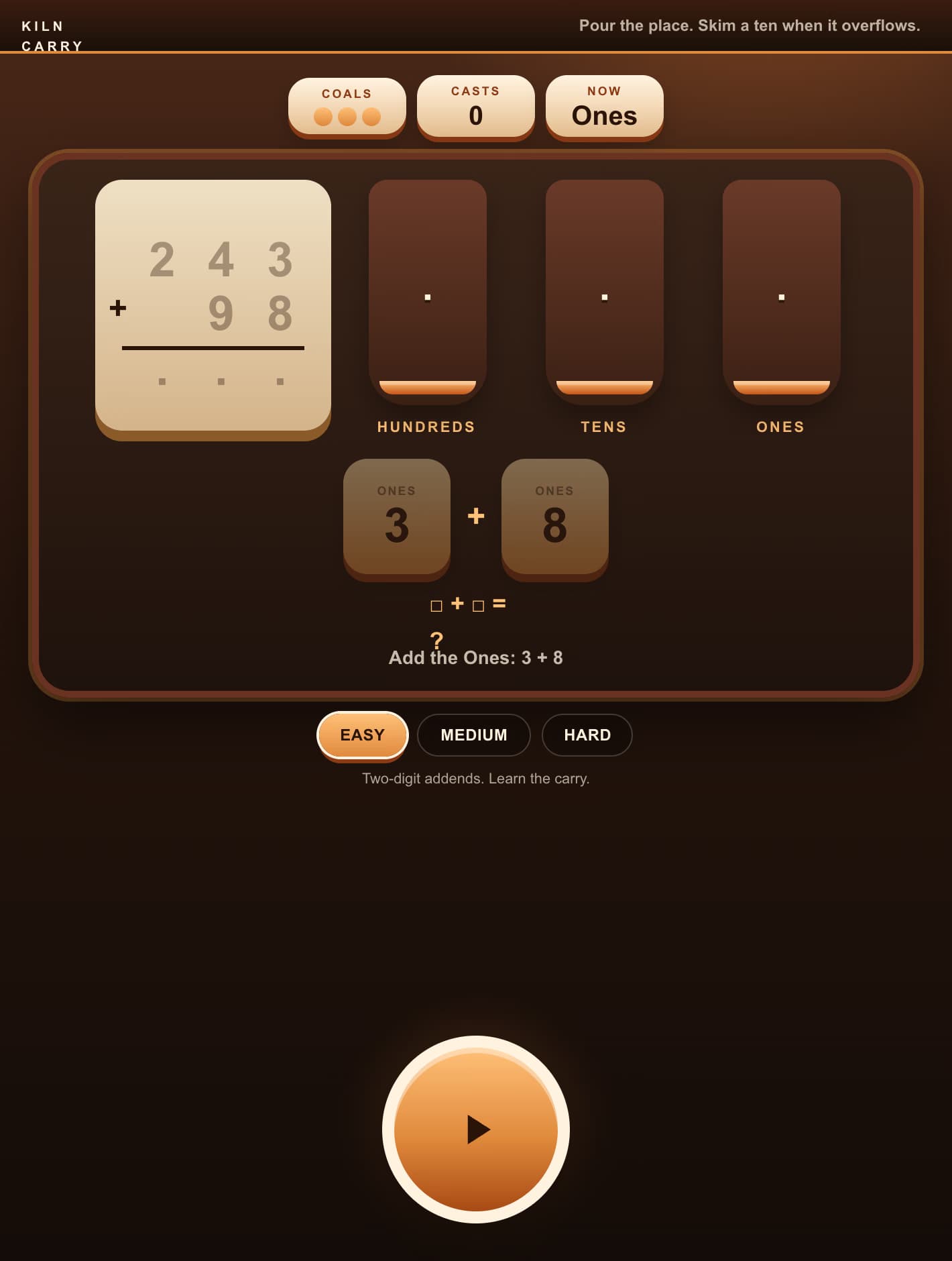
Two- and Three-Digit Addition
A soot forge, three clay kilns, and a slate of two- or three-digit addition. Pour both place digits into the current kiln. If the melt hits ten or more, skim a ten to the next kiln. If it stays under ten, stamp the digit. Work ones, then tens, then hundreds. Built for third-grade multi-digit addition.
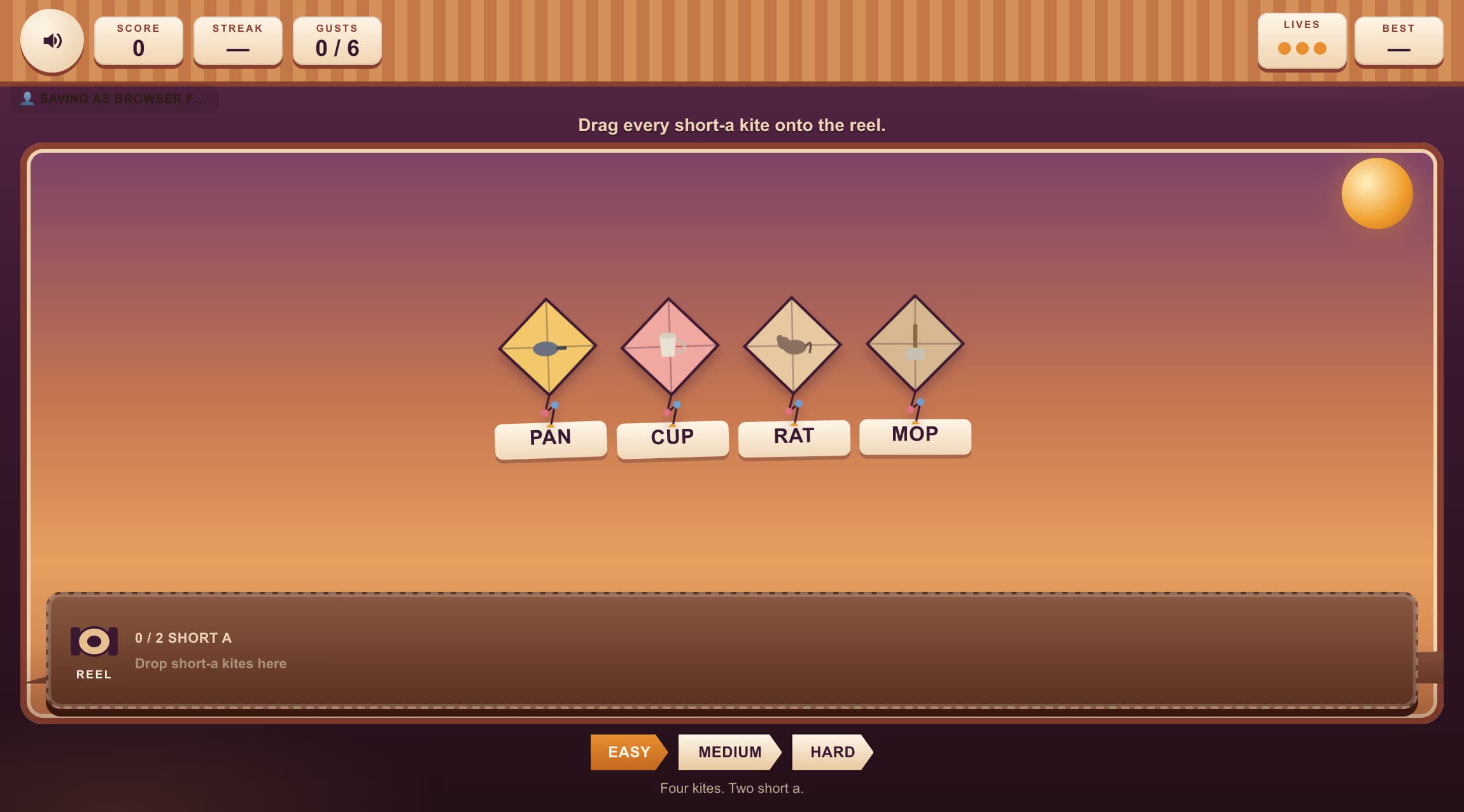
Catch Short A CVC Words
Paper kites drift over a dusk mesa. Each kite shows a picture and a CVC word. Reel every short-a kite onto the spool. Leave the rest in the wind. Six gusts win.
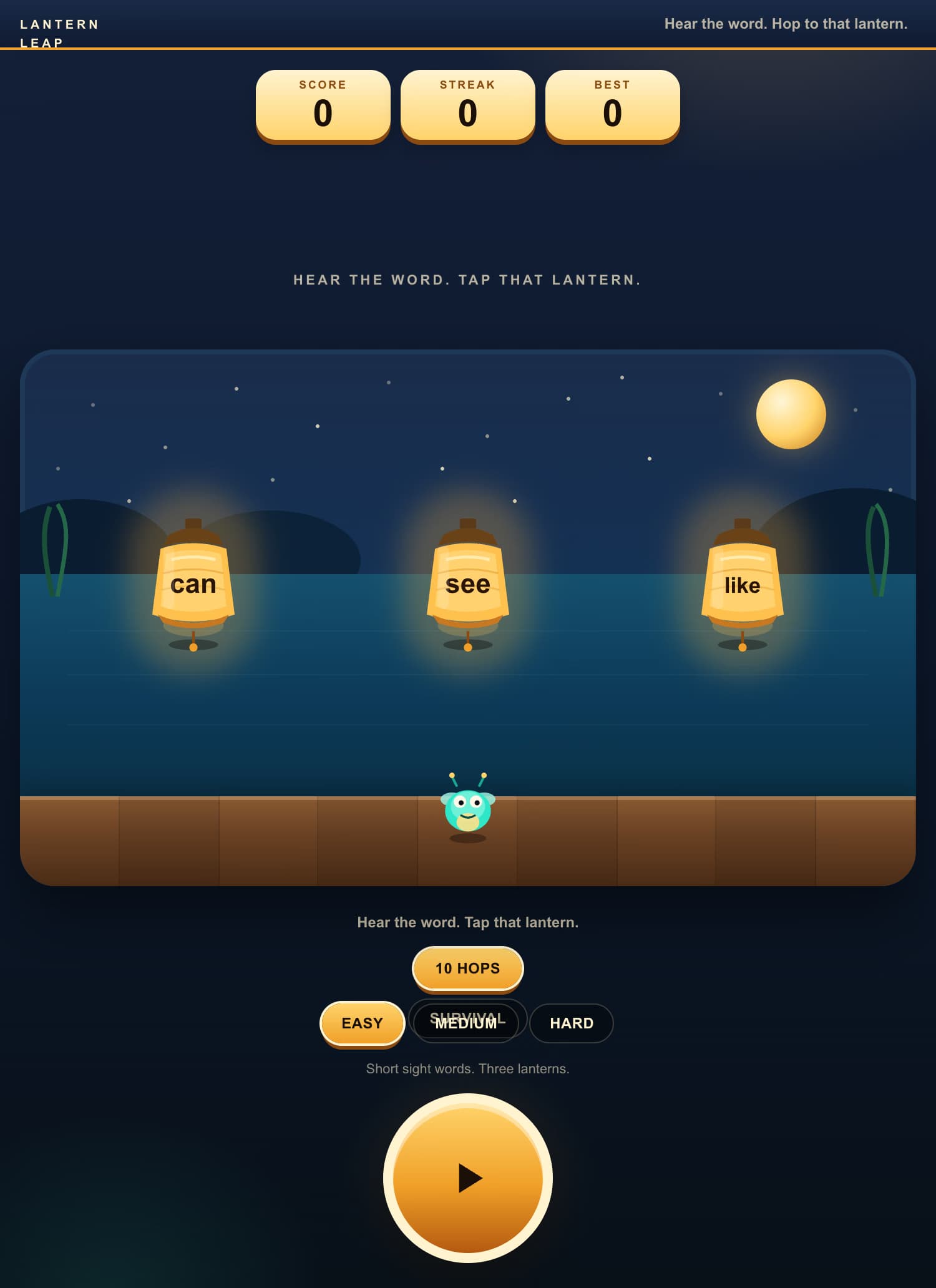
Hear Sight Words and Hop to Match
A night canal, amber paper lanterns, and a glowing firefly on the dock. A voice reads a sight word. Tap the lantern that matches. The firefly hops to that light. A clean hop scores. A miss slips into the water. Built for kindergarten and first-grade high-frequency words.
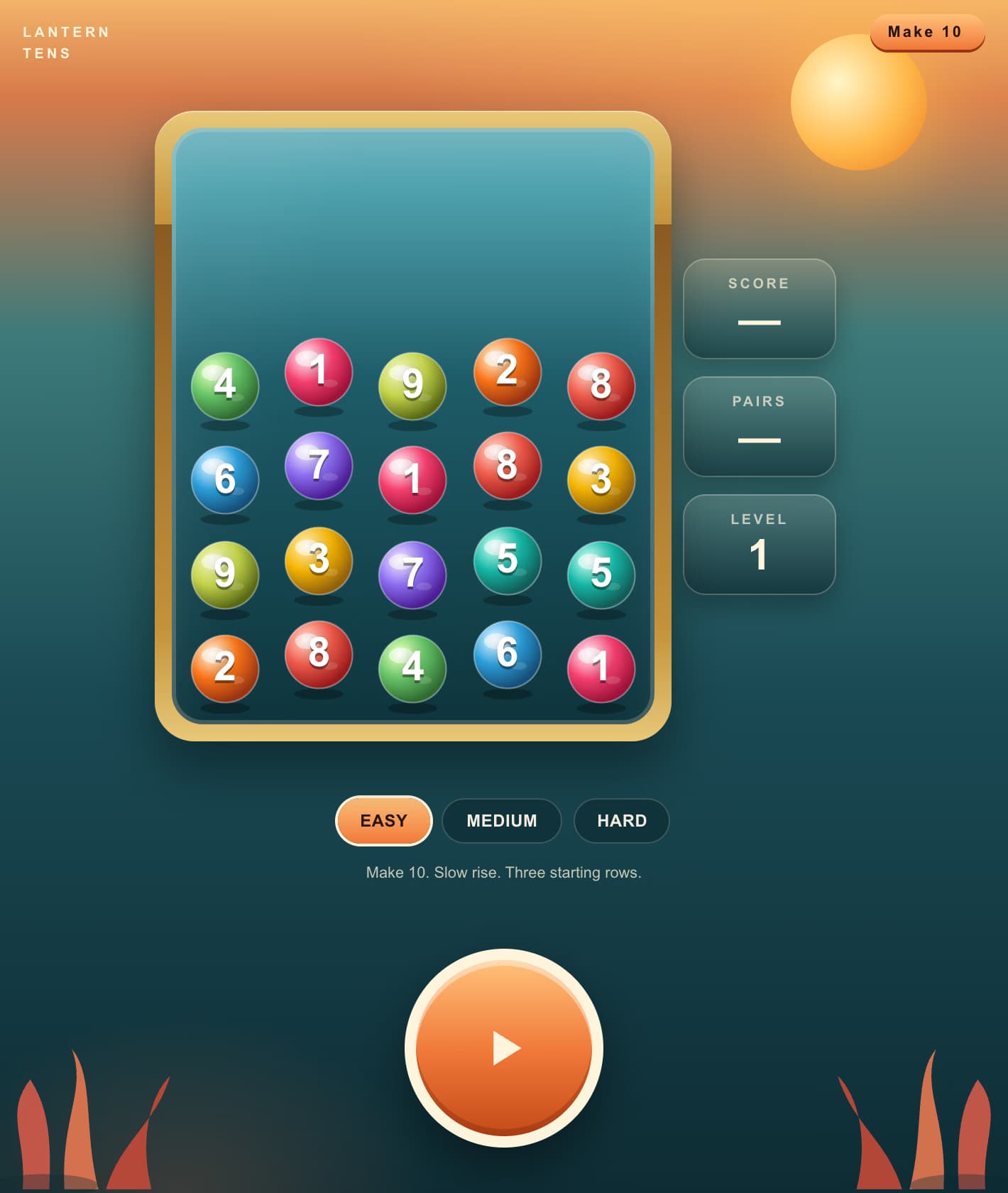
Addition to 10 Bubble
Tap two glowing lanterns whose numbers add to 10. They pop, the well settles, and a new row rises from below. Clear pairs fast before the lanterns overflow. Levels speed up the rise so addition facts have to stay automatic.
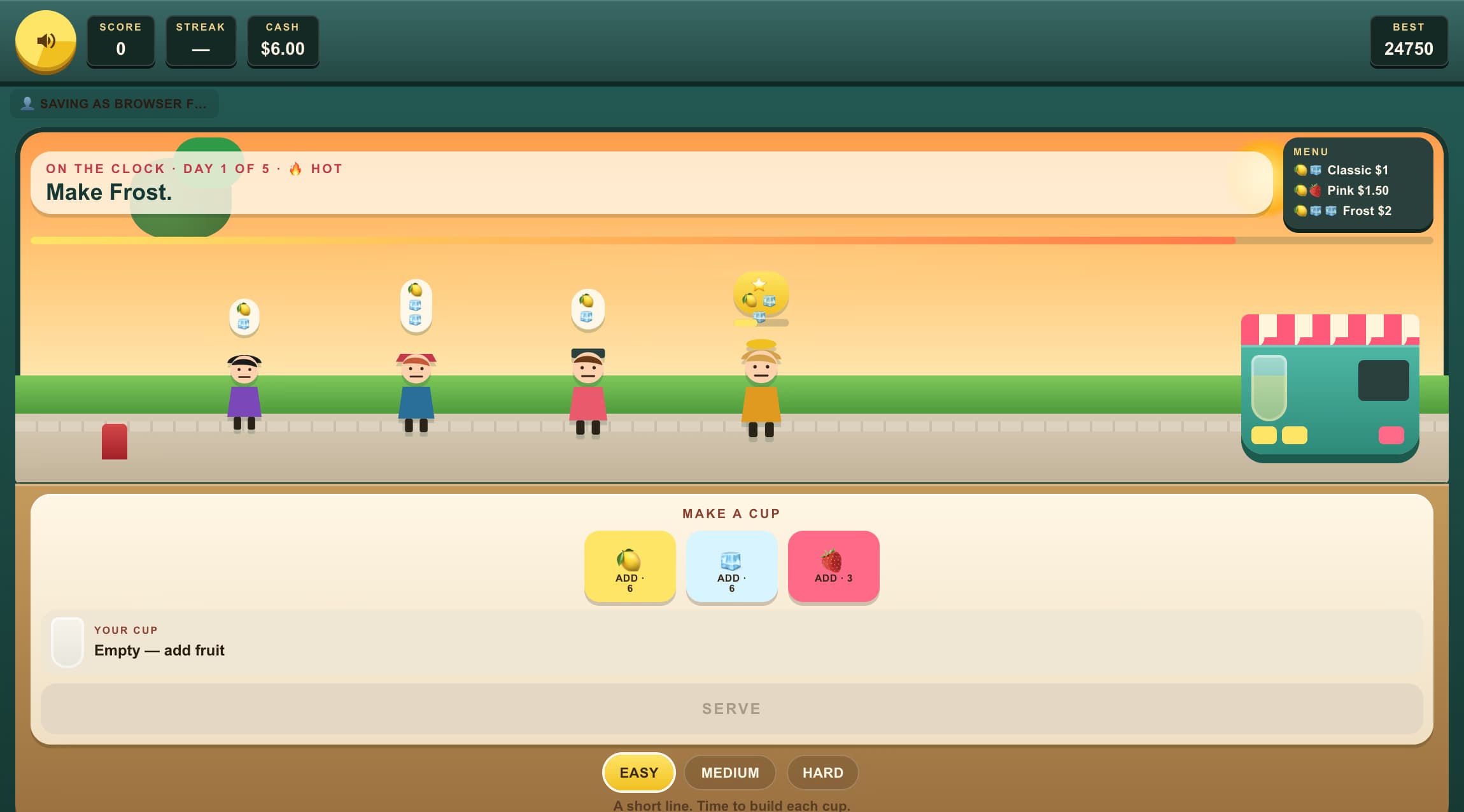
Sell by Day, Shop by Night
Run a sidewalk lemonade cart with a real day-and-night loop. By day, mix Classic, Pink, or Frost and serve the line before they walk. After dark the stand closes — spend cash on fruit and read tomorrow's weather before you open again.
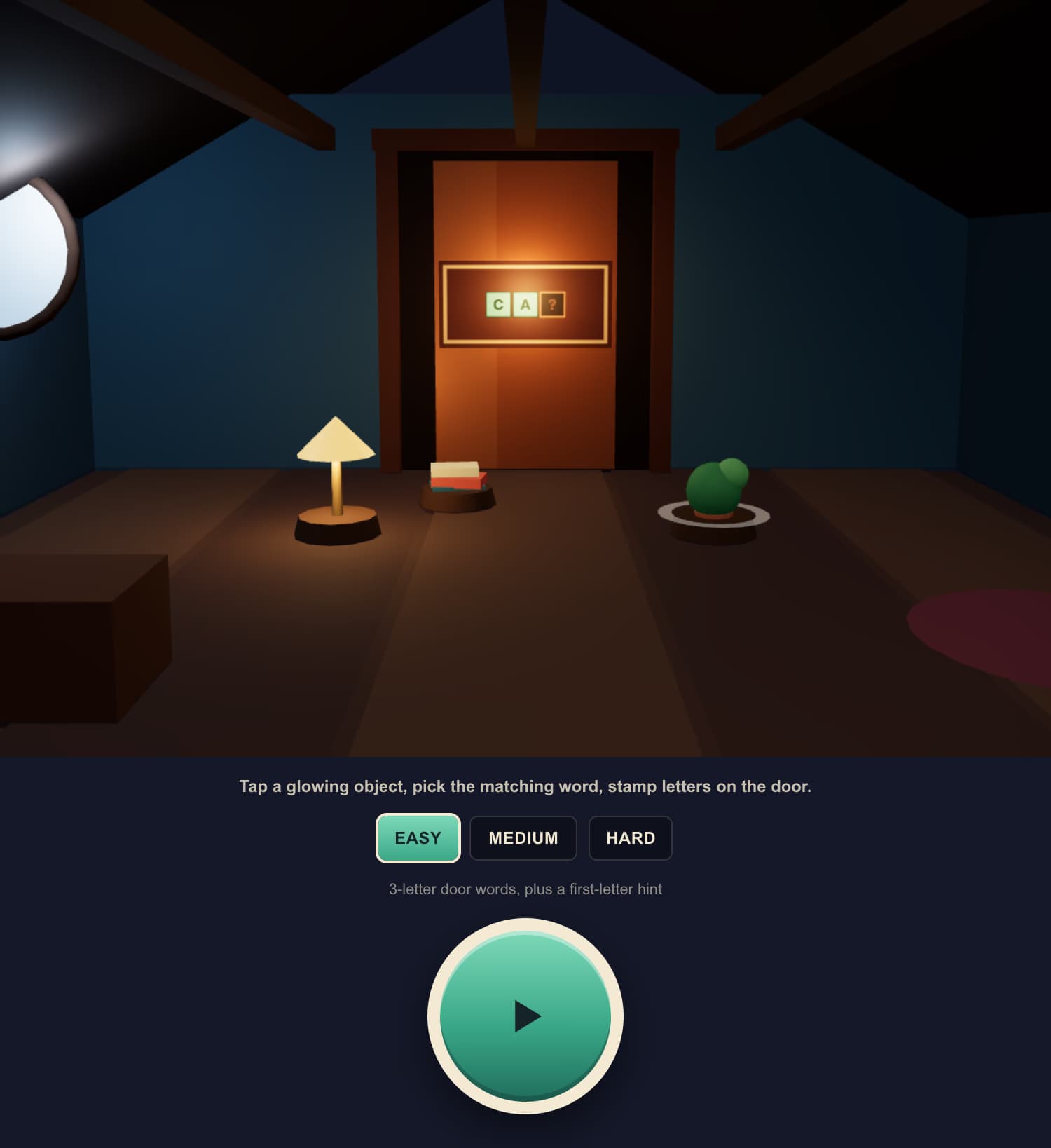
3D Acrostic Escape Room
You are locked in a moonlit attic. Tap glowing objects around the loft, pick the word that matches each clue, and stamp first letters onto the copper door. When the secret word is complete the door swings open and you escape to the next loft.
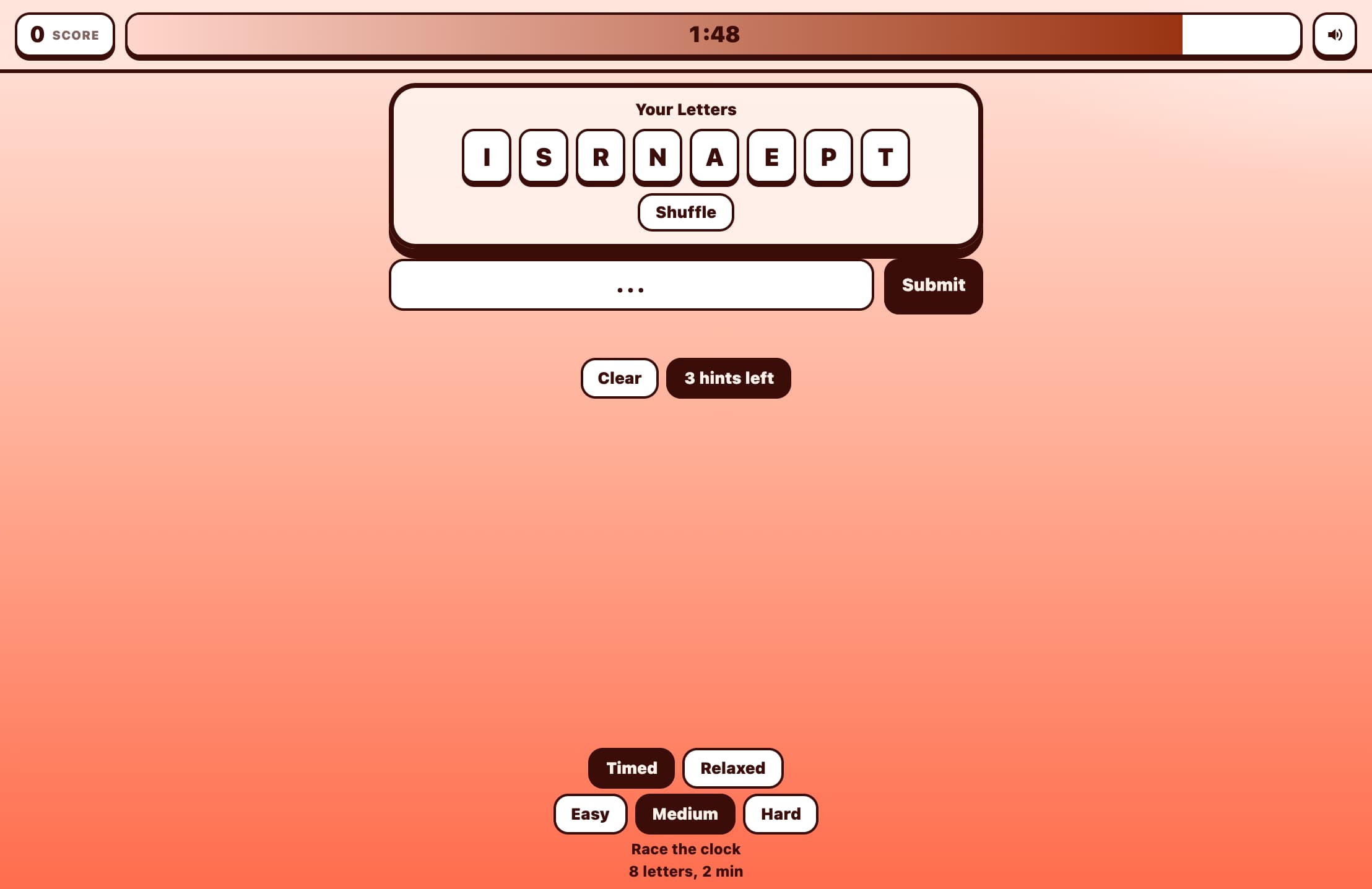
Find Words from Random Letters
Dive into Letter Soup! You get a bowl of random letters and must find as many valid English words as possible. Play timed or relaxed mode across three difficulty levels.
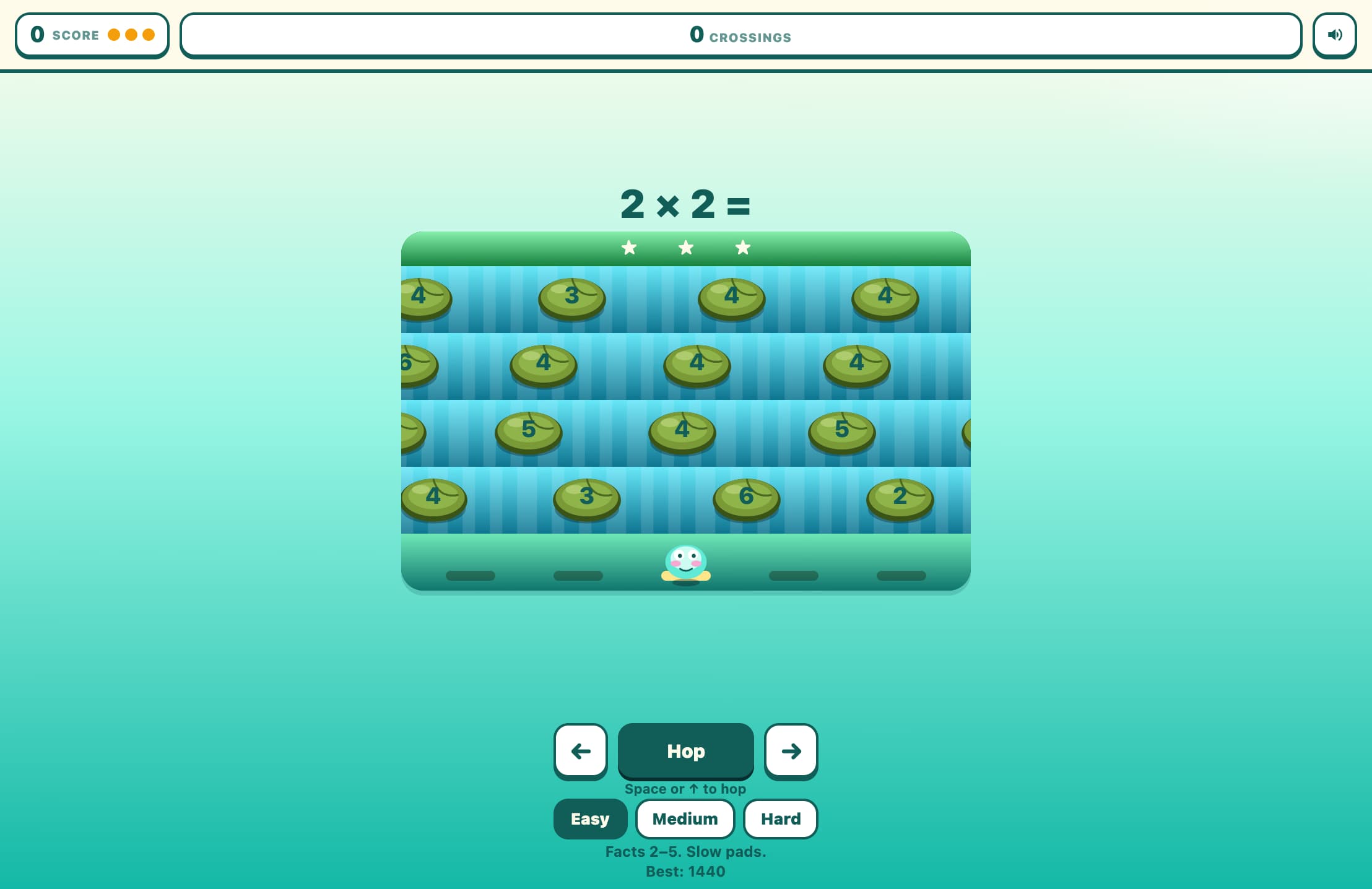
Multiplication Facts Crossing
Hop Pip the toad across a dusk marsh. A fact such as 5 × 3 sits above the water. Leap only onto lily pads that show the product. Pads drift, so you time the jump. Space or the hop button moves forward; arrows step sideways. Three lives. Facts get faster after each crossing.
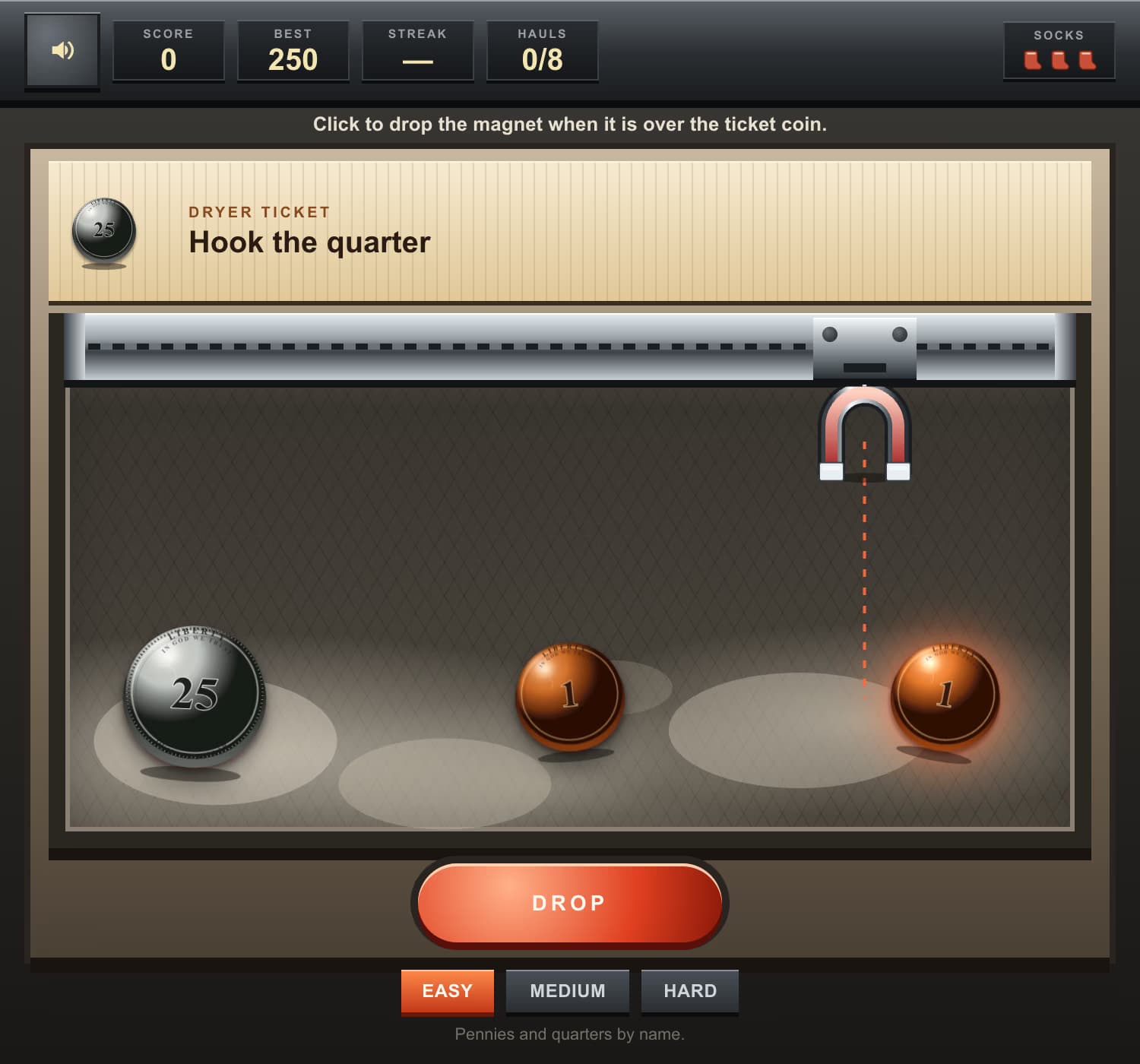
Time the Magnet and Catch the Ticket Coin
A laundromat lint drawer packed with pennies, nickels, dimes, and quarters. The dryer ticket names a coin, a value, or the most or least. A magnet swings over the drawer. Tap when it hangs over the right coin and it drops. Built for first- and second-grade coin ID — a timed drop, not a tap on a labeled picture.
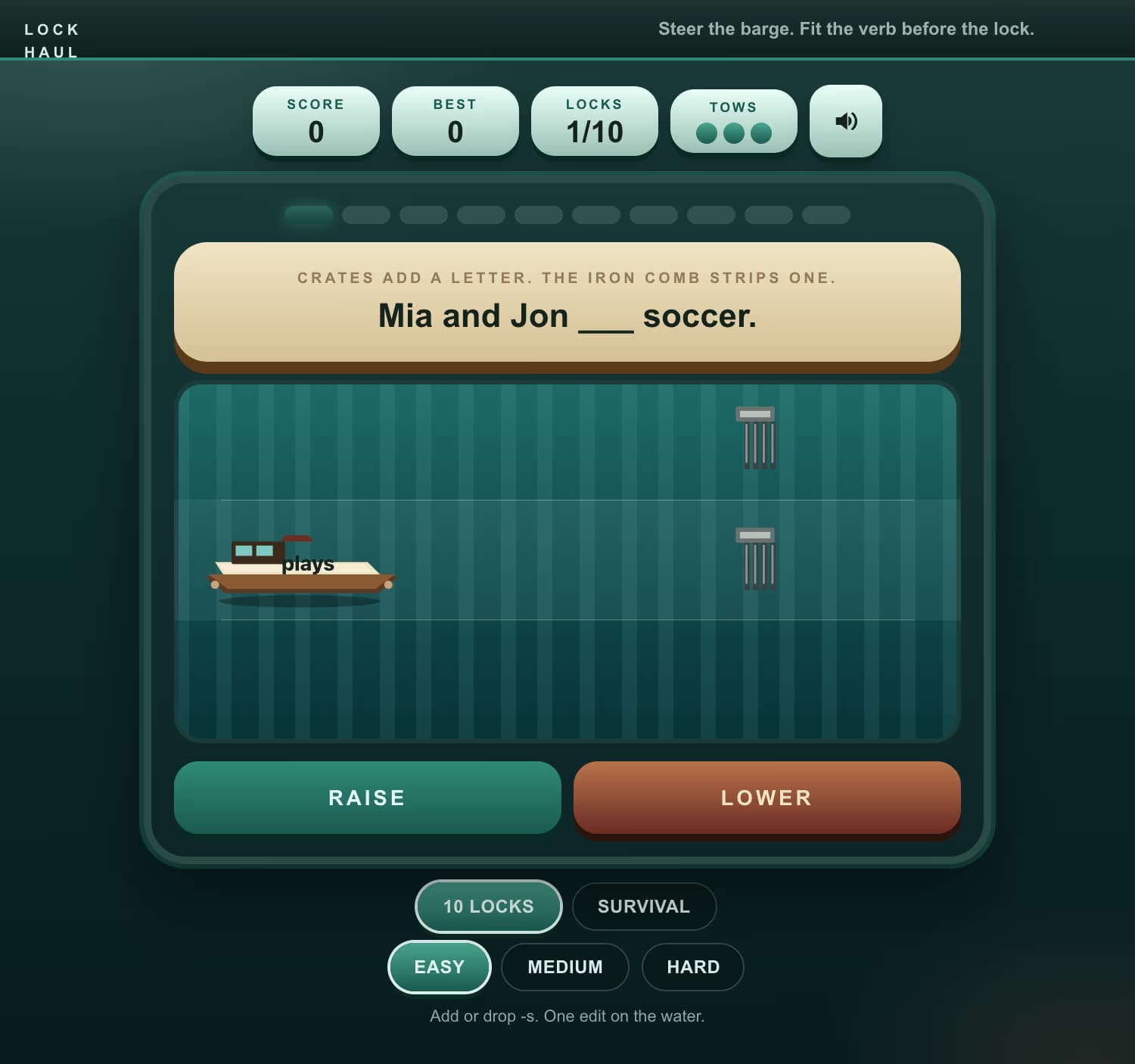
Fit the Verb Before the Canal Gate
A dawn canal lock, a wooden barge, and a verb painted on the canvas. Read the English sentence. Steer into letter crates to add letters, or graze the iron comb to strip one, until the verb agrees. A true form opens the lock. A mismatch slams the gates.
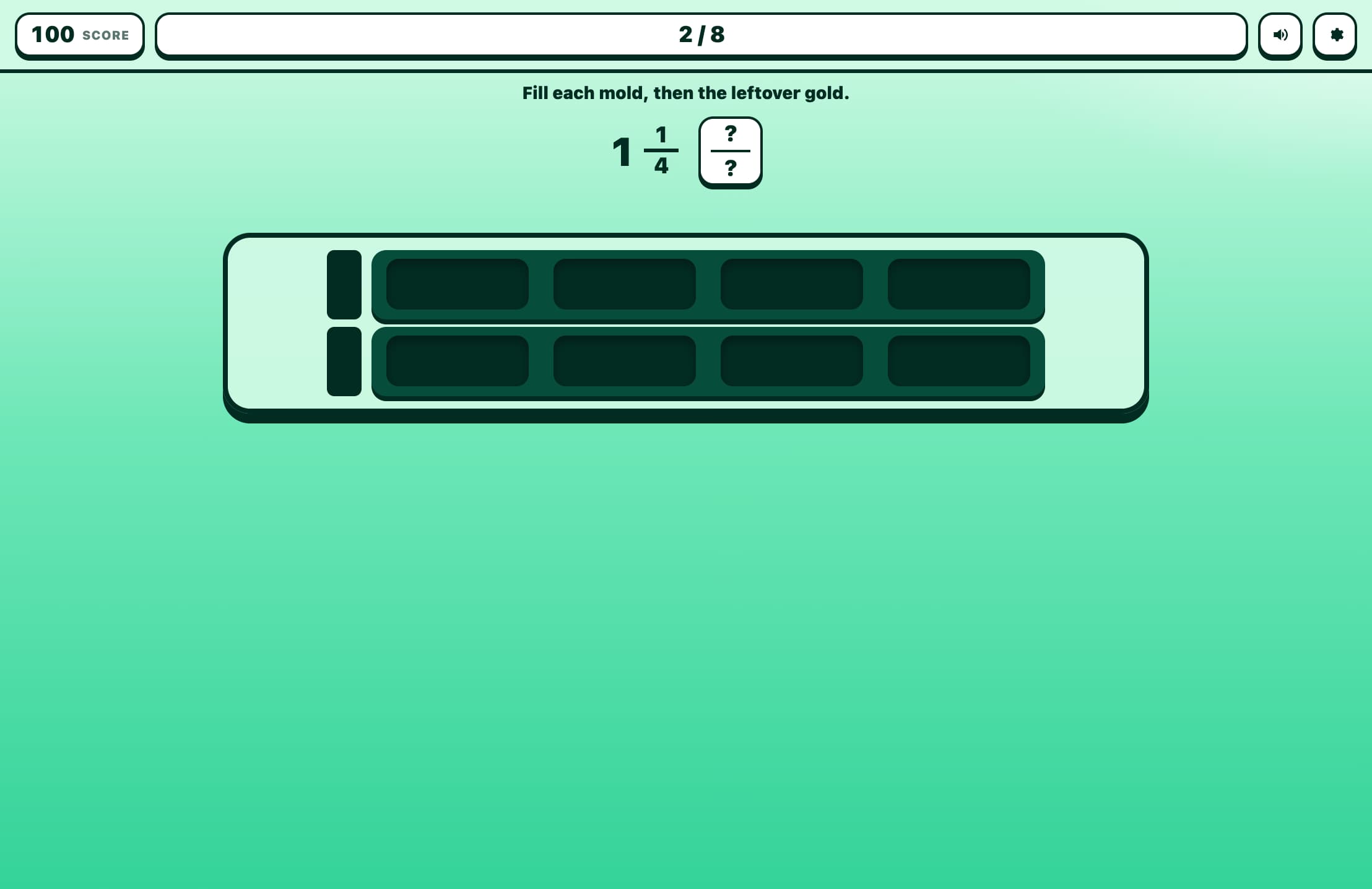
Convert a Mixed Number to an Improper Fraction
A mine workbench, iron molds, and gold ingots. Each mold is one whole cut into equal chunks. Pour the whole molds, then the leftover gold. When the haul matches the mix, the improper fraction lights up. Built for fourth-grade mixed numbers.
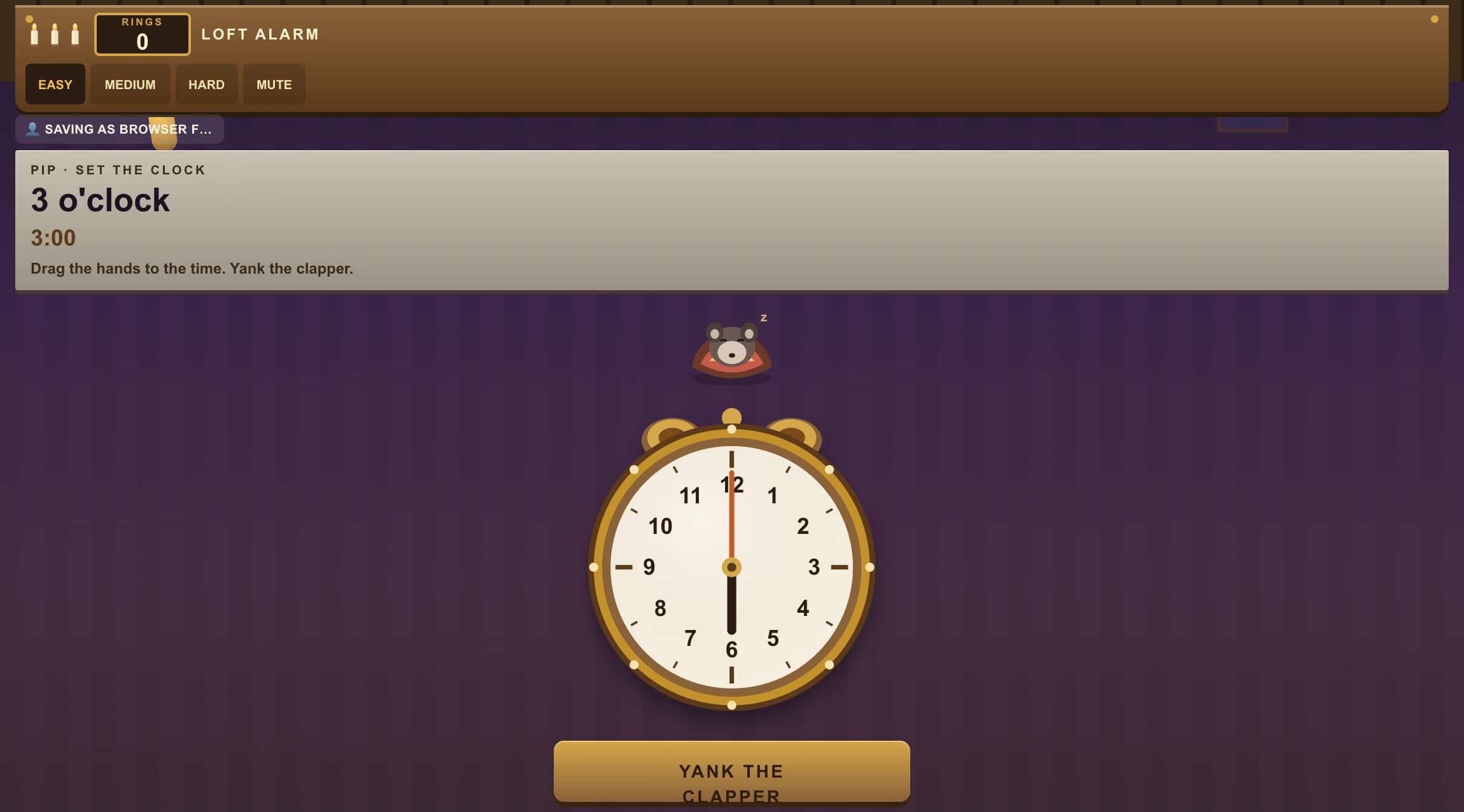
Set the Clock to Fifteen Minutes
Help Pip wake up in Loft Alarm. Listen for the time on the tin plaque, drag the hour and minute hands on the brass alarm clock, then Yank the clapper. A hit rings the bells and sits Pip up. Second-grade practice telling time to fifteen minutes on an analog clock.
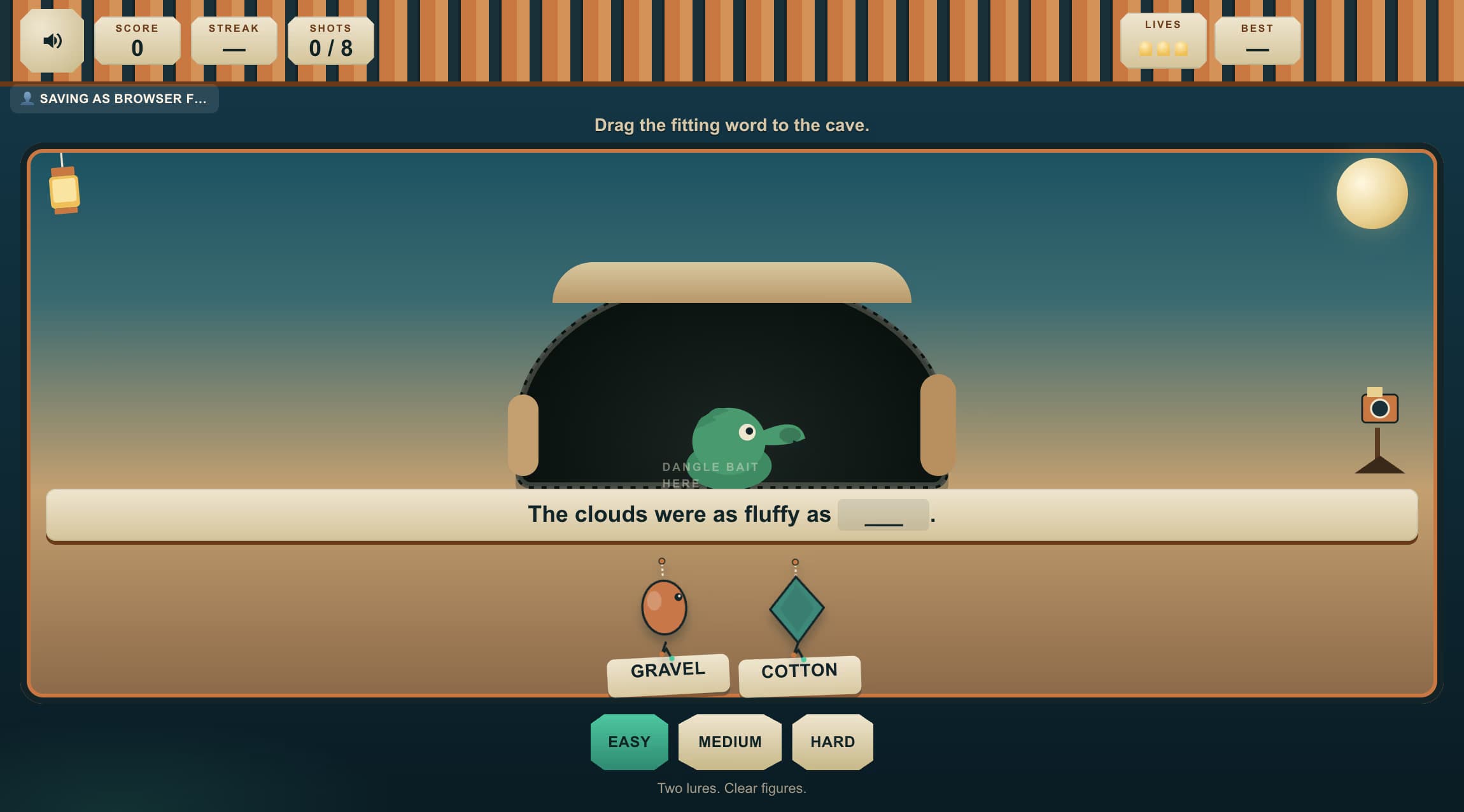
Figurative Language in Sentences
A limestone den at dusk. Wooden bait hangs from the camp rail, each lure stamped with a word. Read the English line, then dangle the fitting word at the cave so the dino peeks and the copper camera can Snap. Eight Shots win. Fifth-grade figurative language: metaphor, simile, and idiom in a sentence.
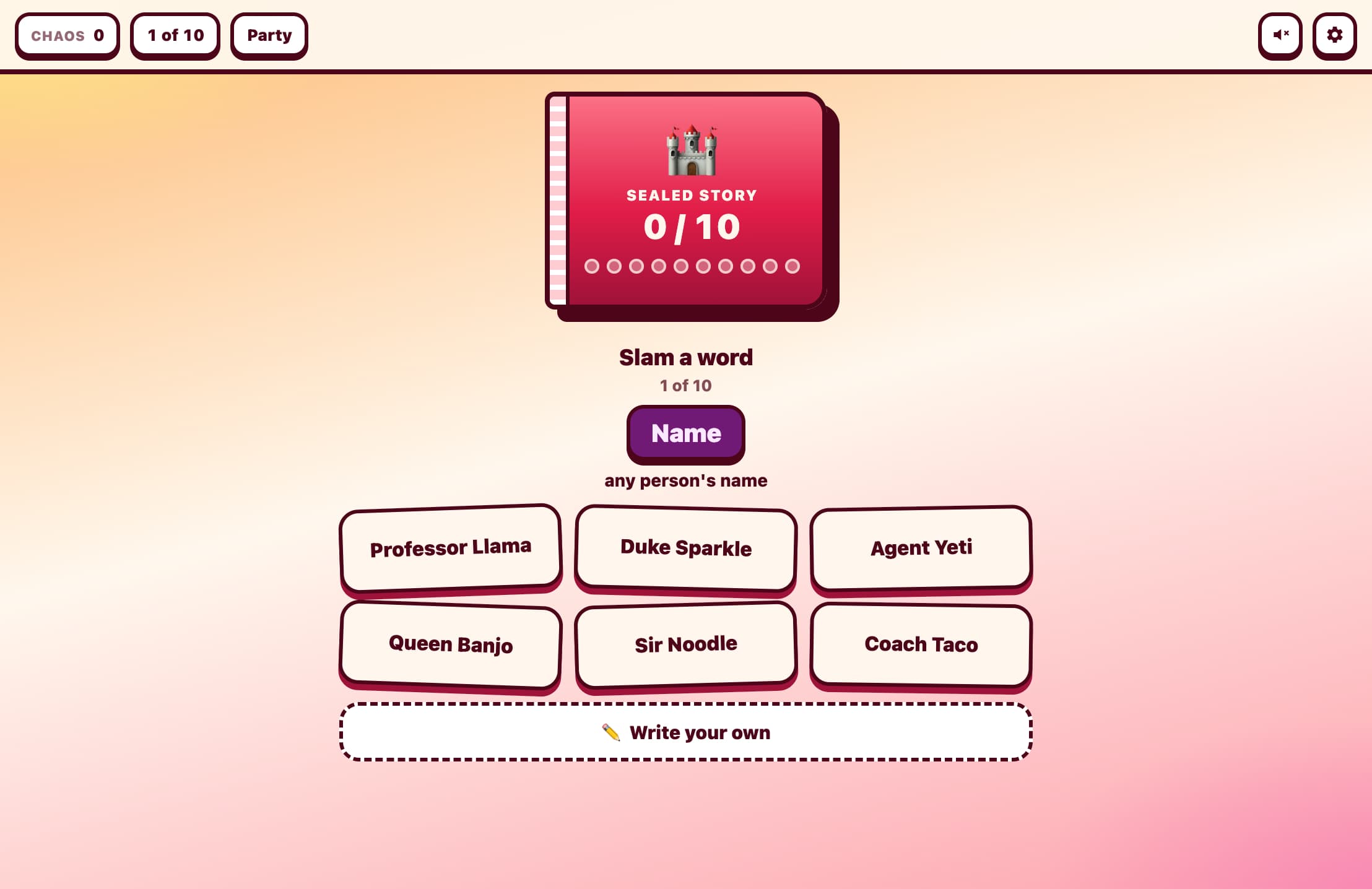
Funny Fill-in-the-Blank Story
Play Mad Libs as a real word-slam game. The story stays sealed while you tap silly slips for nouns, verbs, and adjectives. Crack the book open to hear the chaos — Party mode or a 50-second Speed Slam.
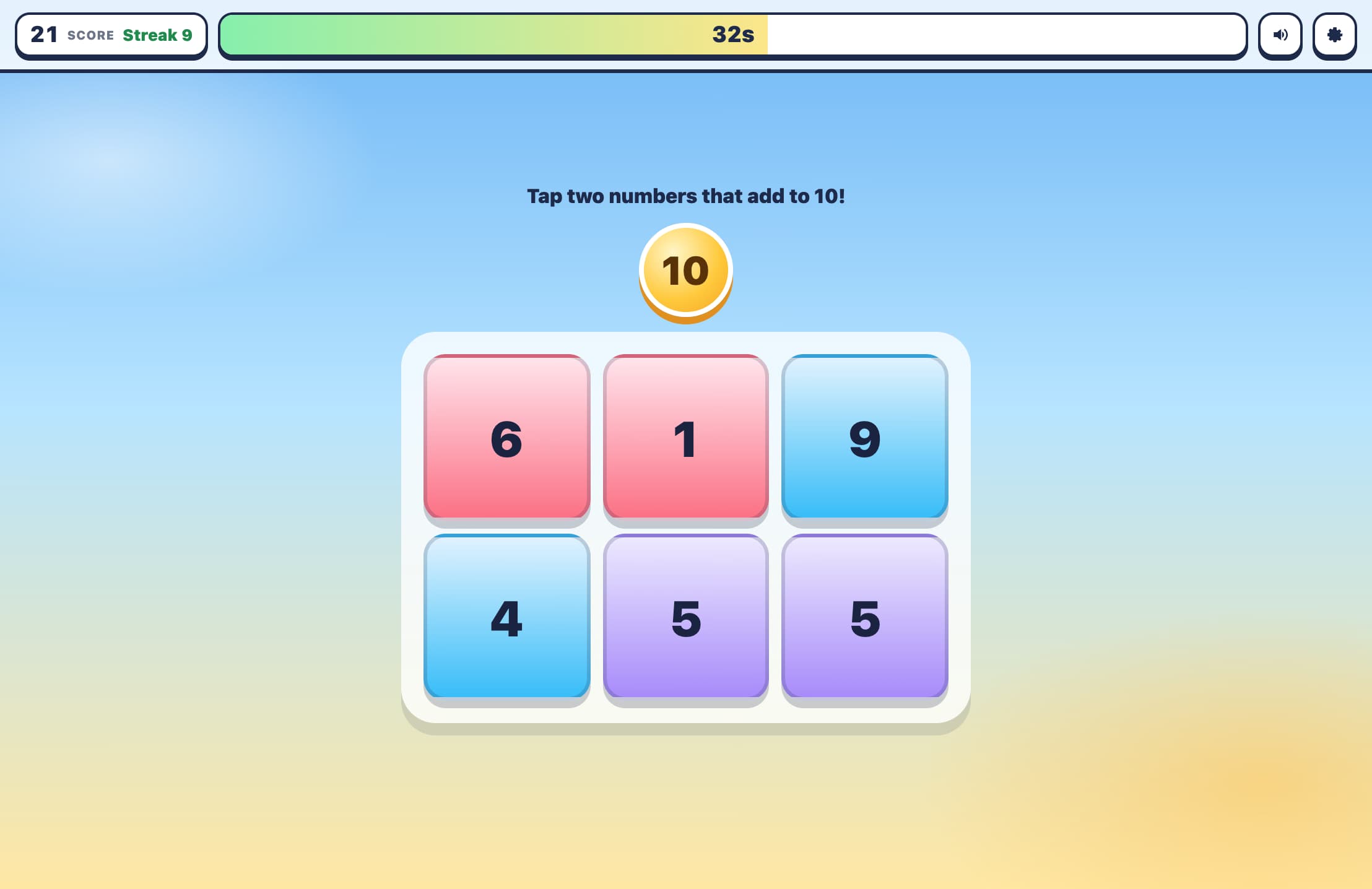
Pair Numbers That Add to 10
Tap number tiles to form pairs that sum to 10. Clear the board as fast as you can! Builds instant recall of addition facts. Three difficulty levels: bonds to 10, 20, or 50.
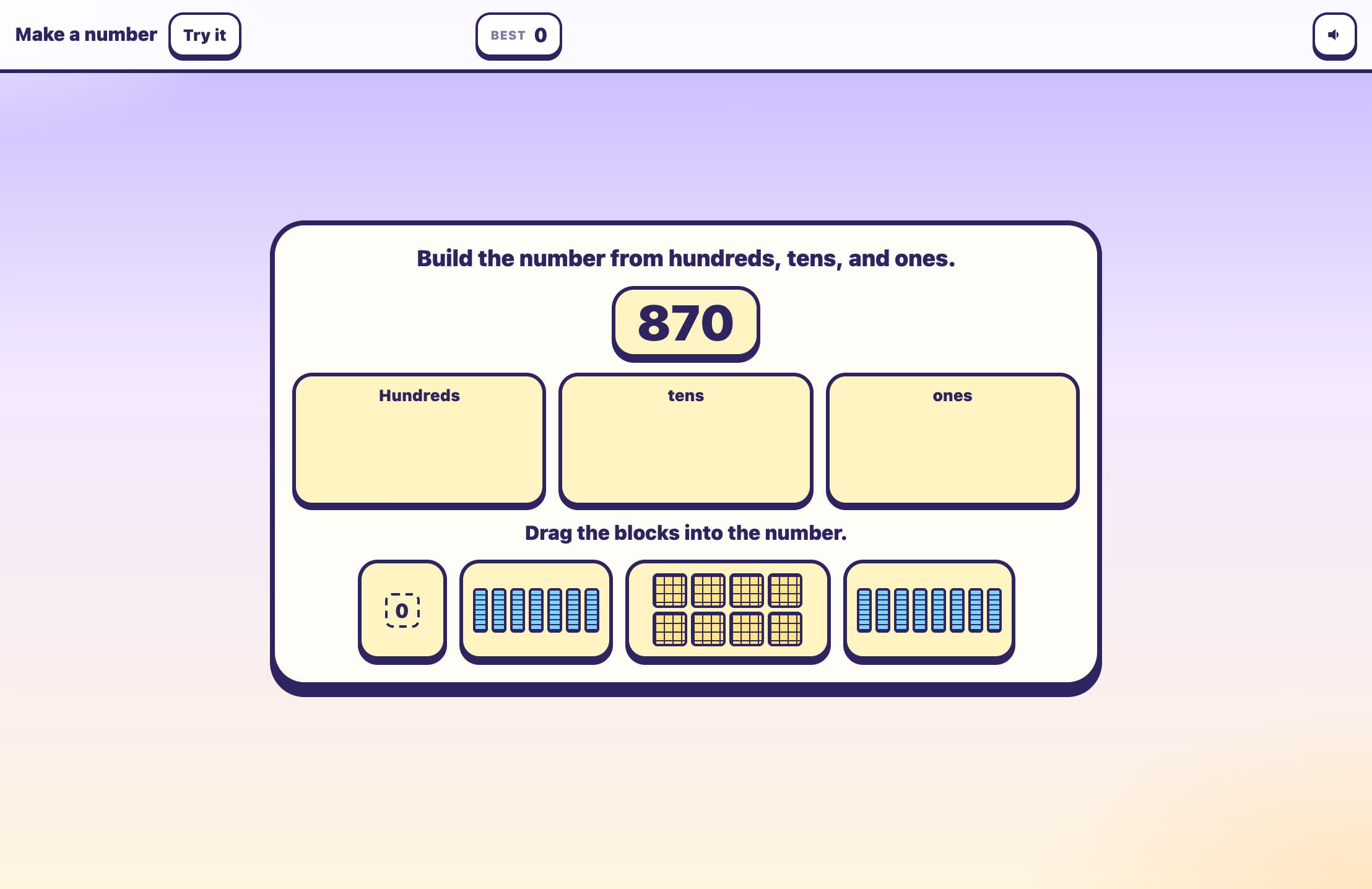
Build the number from hundreds, tens, and ones.
Make a number is the game. Build the number from hundreds, tens, and ones. Watch shows 346, then 503 with 0 tens, then 870 with 0 ones, then 405 with 0 tens. Try it. Drag the blocks into the number. Then six scored numbers. Score, Streak, and hearts start after Try it. Built for 2nd grade.
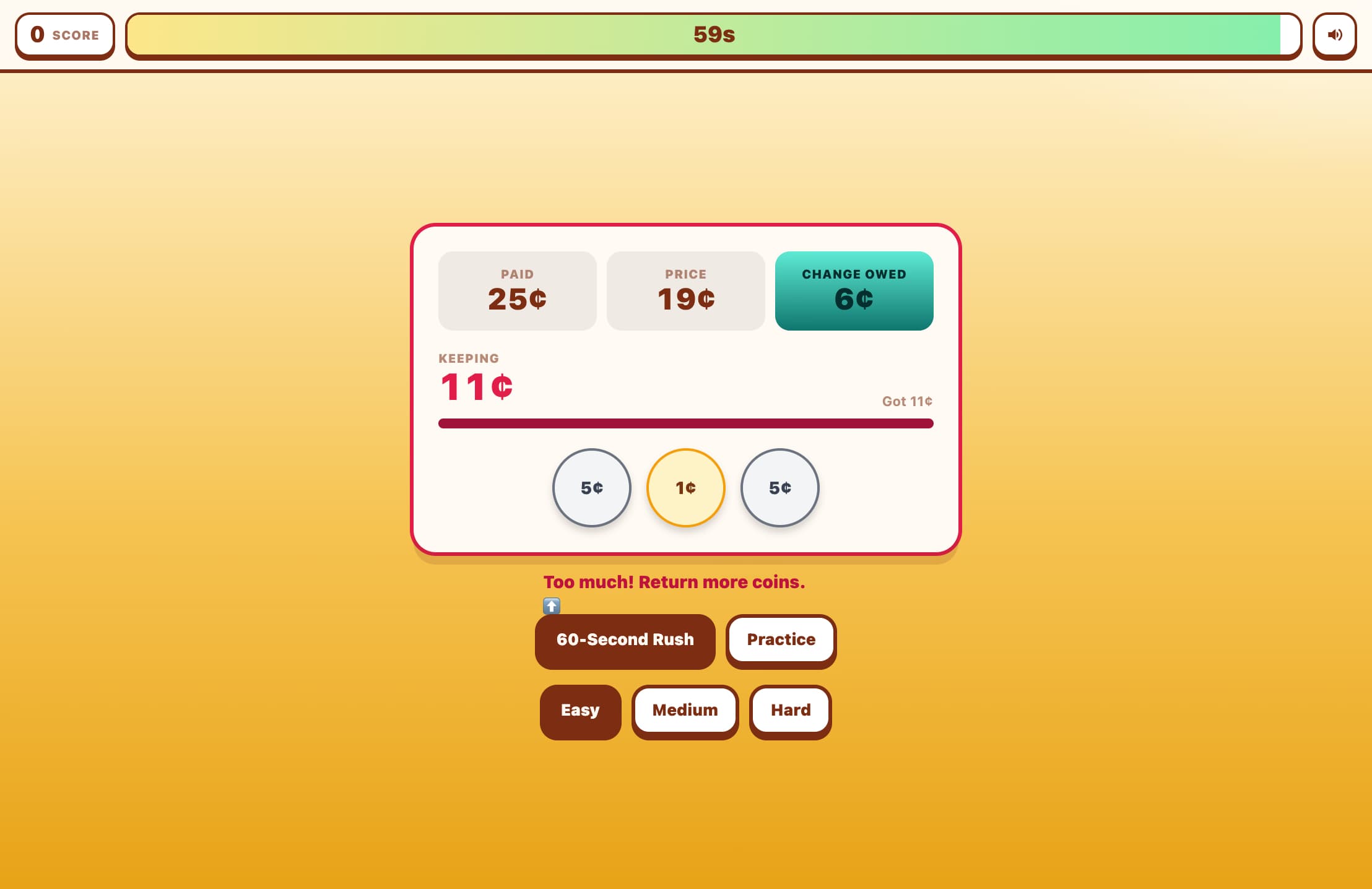
Return the Correct Coins
A cashier gives too much money — tap the extra coins to return the correct change. Amounts stay under $1, perfect for 1st and 2nd graders learning to make change.
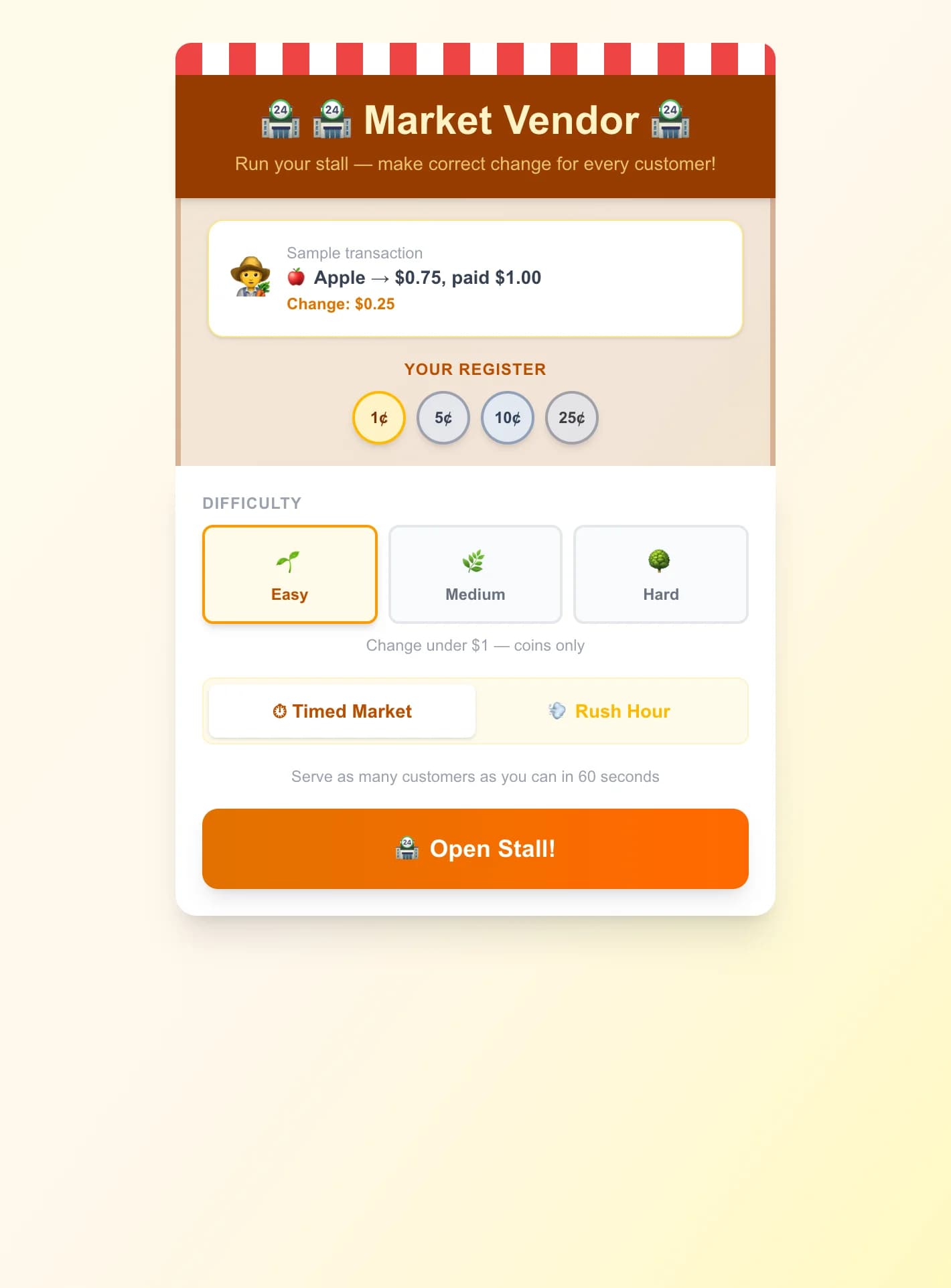
Give Correct Change to Customers at Your Stall
Run a market stall — customers hand you bills and you give back the correct change. Escalating difficulty from simple coin change to multi-bill transactions. A fast-paced, real-world money skills game.
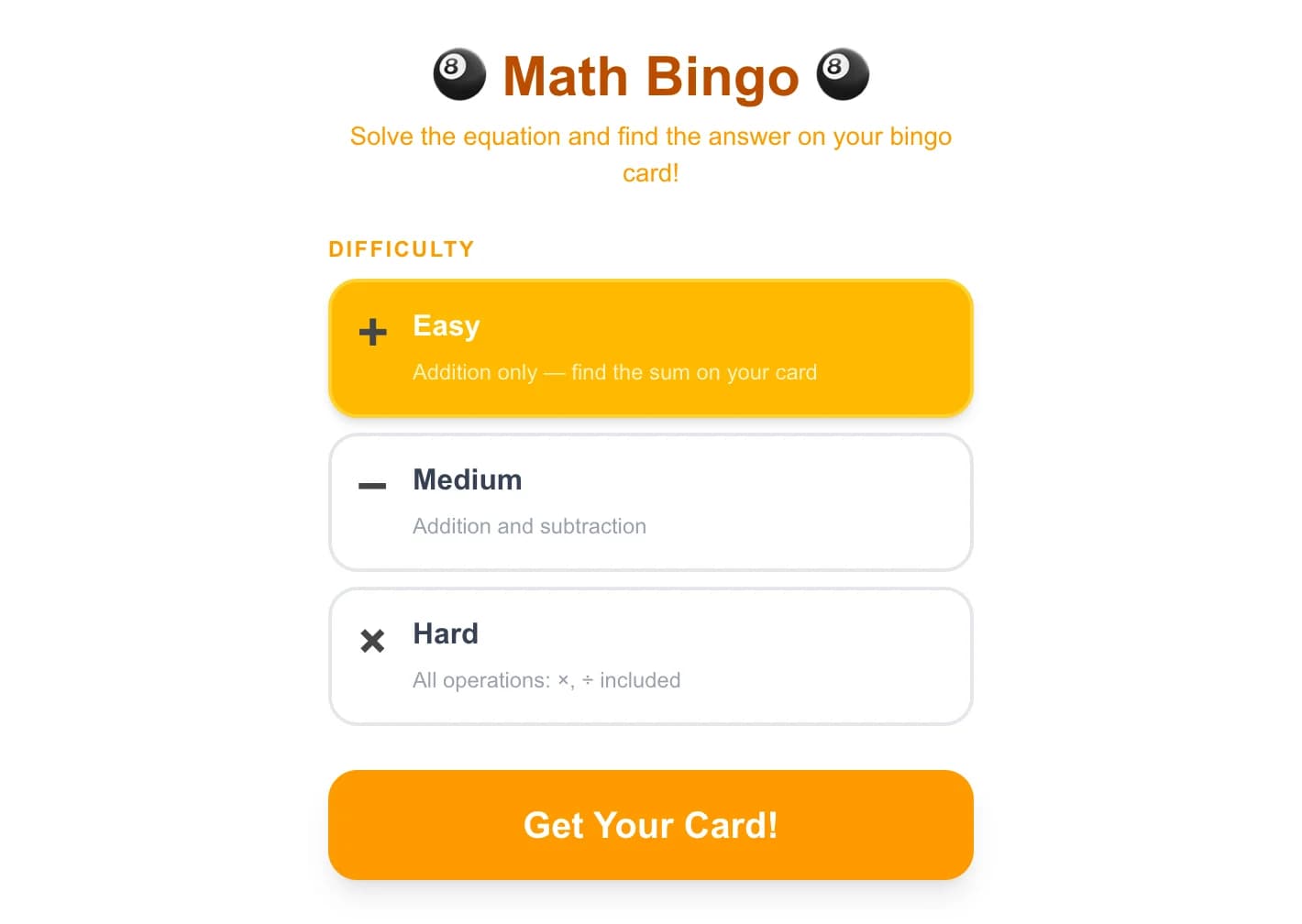
Solve Equations to Mark Your Bingo Card
A classic bingo card filled with numbers 1–24 — but instead of hearing a number called, kids solve a math equation and find the answer on their card! Three difficulty levels take players from simple addition sums up through mixed subtraction and on to multiplication and division. First to complete a row, column, or diagonal wins BINGO!
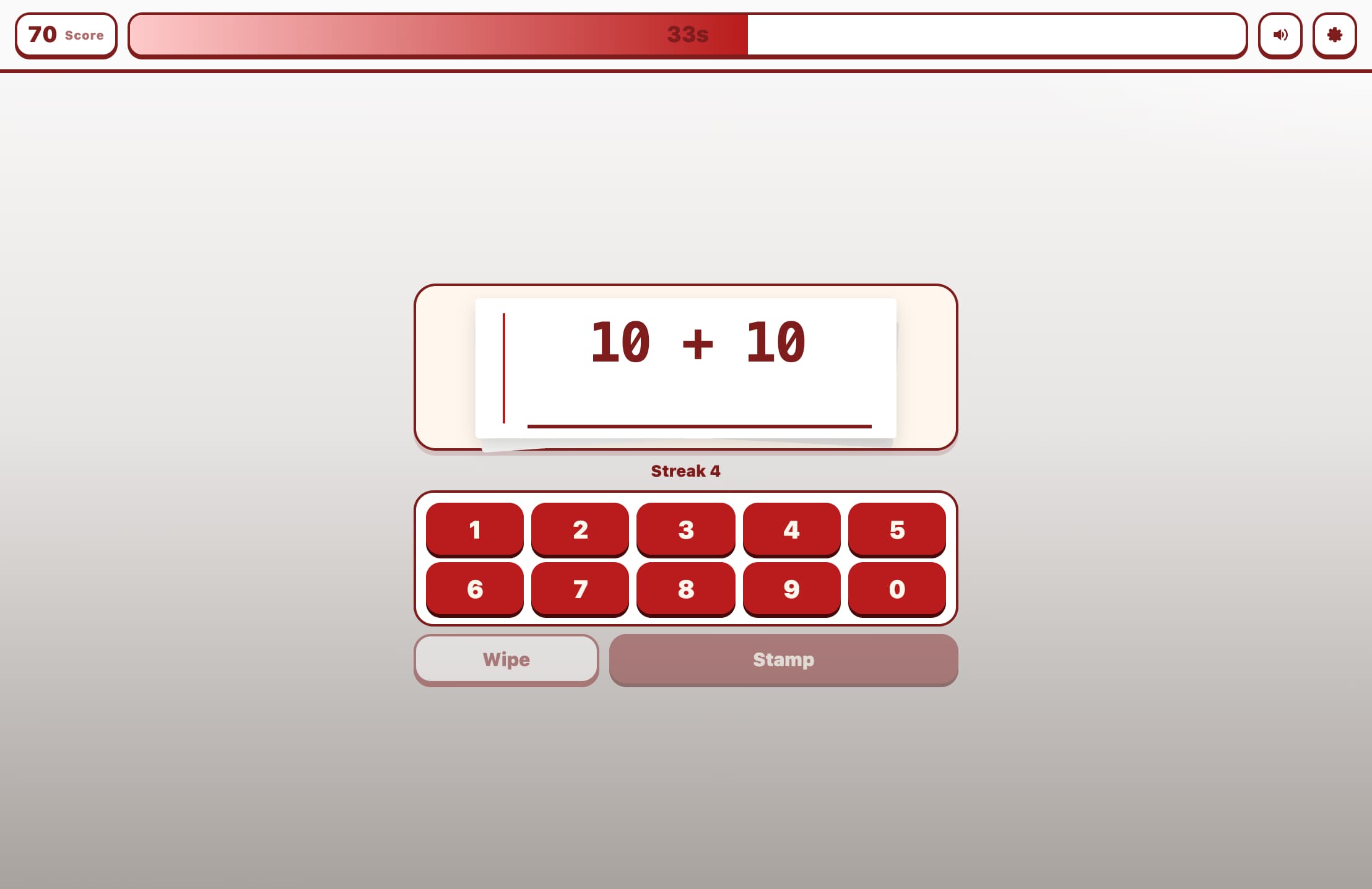
Stamp the Answer Math
Drag a stamp onto the card and press Stamp before the minute ends. Practice Addition (+), Subtraction (−), Multiplication (×), and Division (÷) on Easy, Medium, or Hard, and build a Streak to raise your Score.
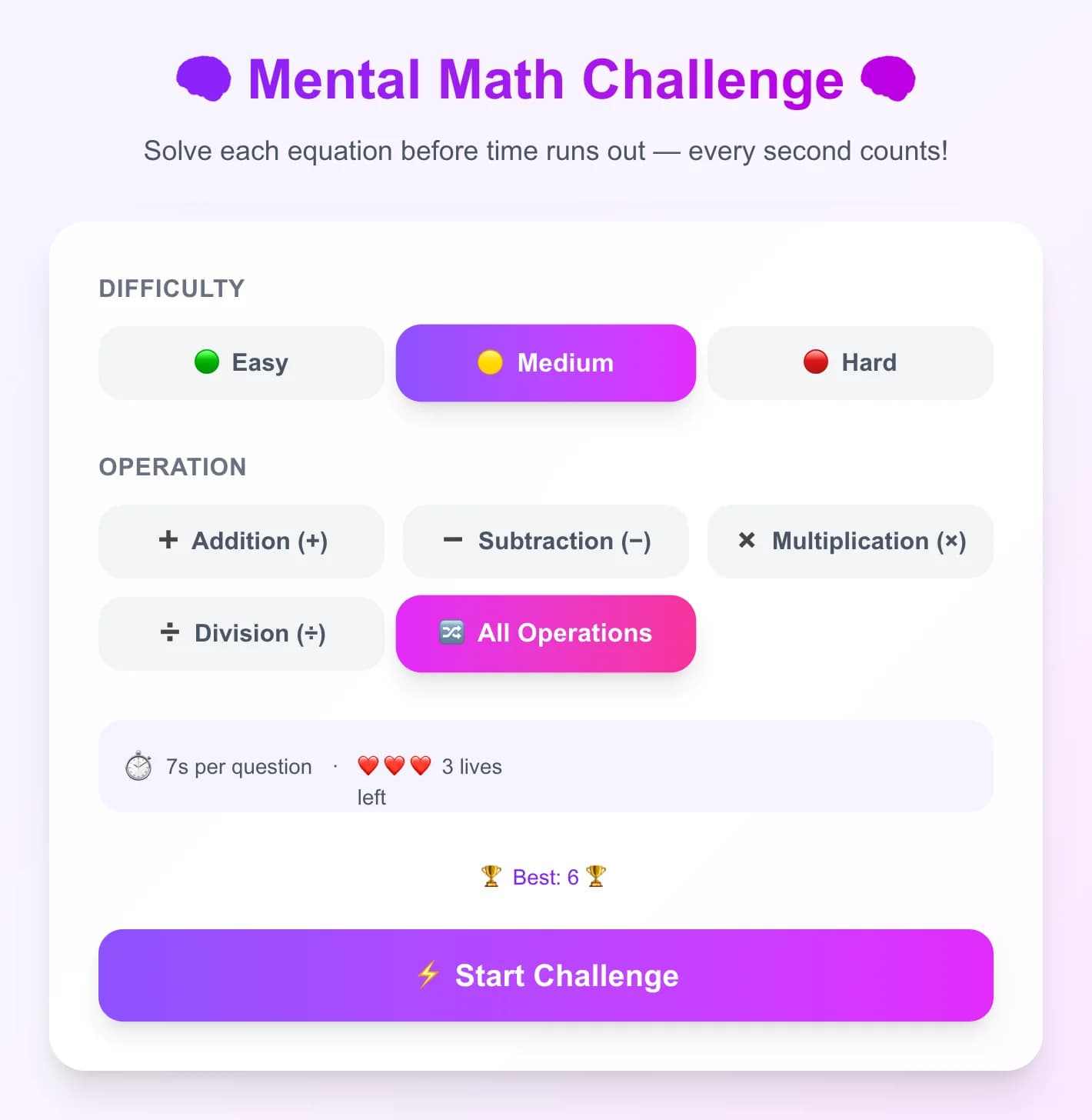
Rapid-Fire Math Game with High Scores
A rapid-fire math game where you solve equations before a per-question countdown expires. Choose difficulty and operations, survive on 3 lives, and chase your personal high score — saved locally so you can always beat it.
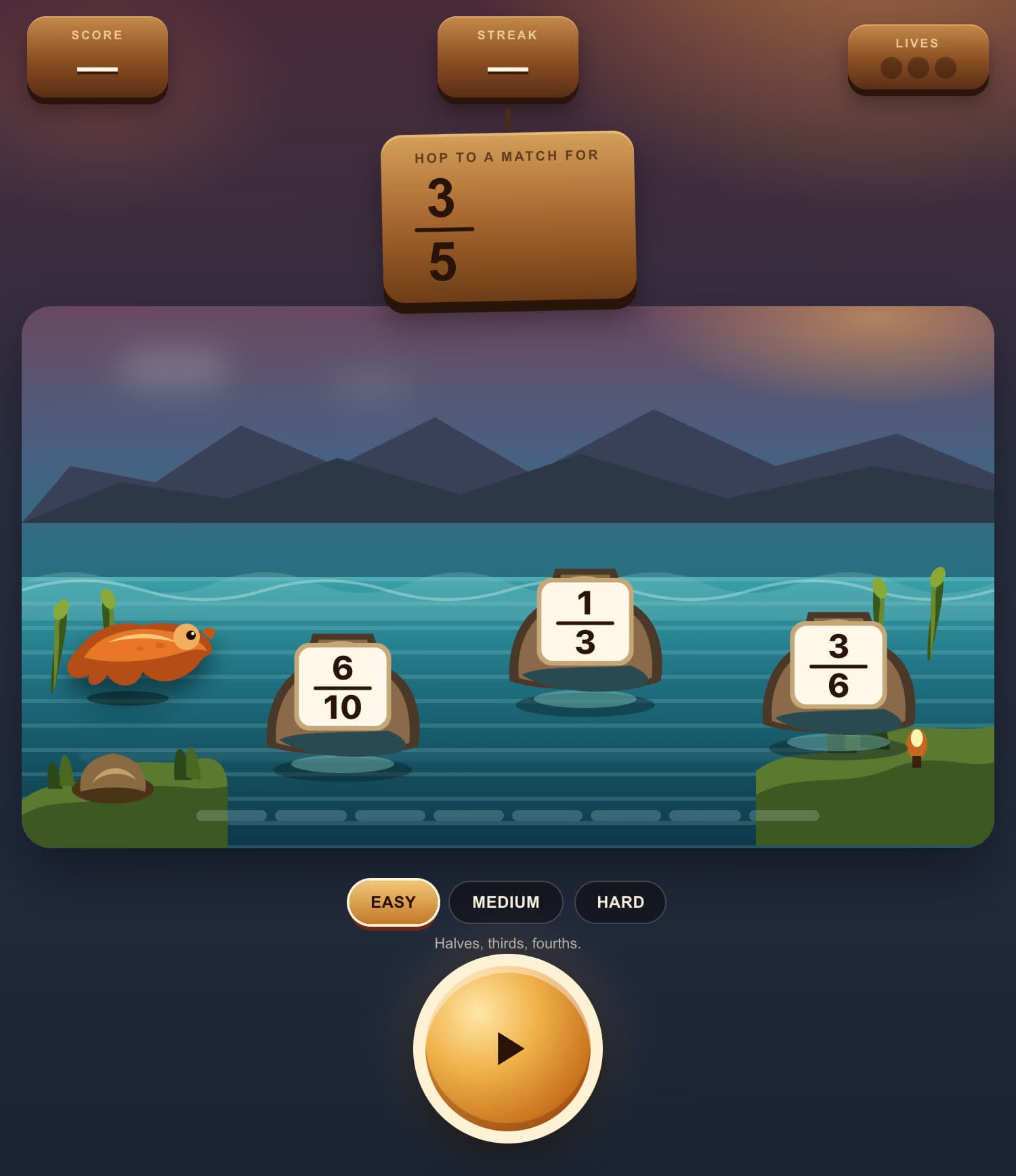
Equivalent Fractions Jumping
Help a copper gecko hop across a twilight canyon. A fraction such as 1/2 sits on the prompt plaque. Jump only onto sandstone pillars that show an equivalent, like 2/4 or 3/6. Space, Hop, or a tap on a stone sends the gecko. A miss drops into the wash and costs a life. Eight safe hops reach the lantern camp.
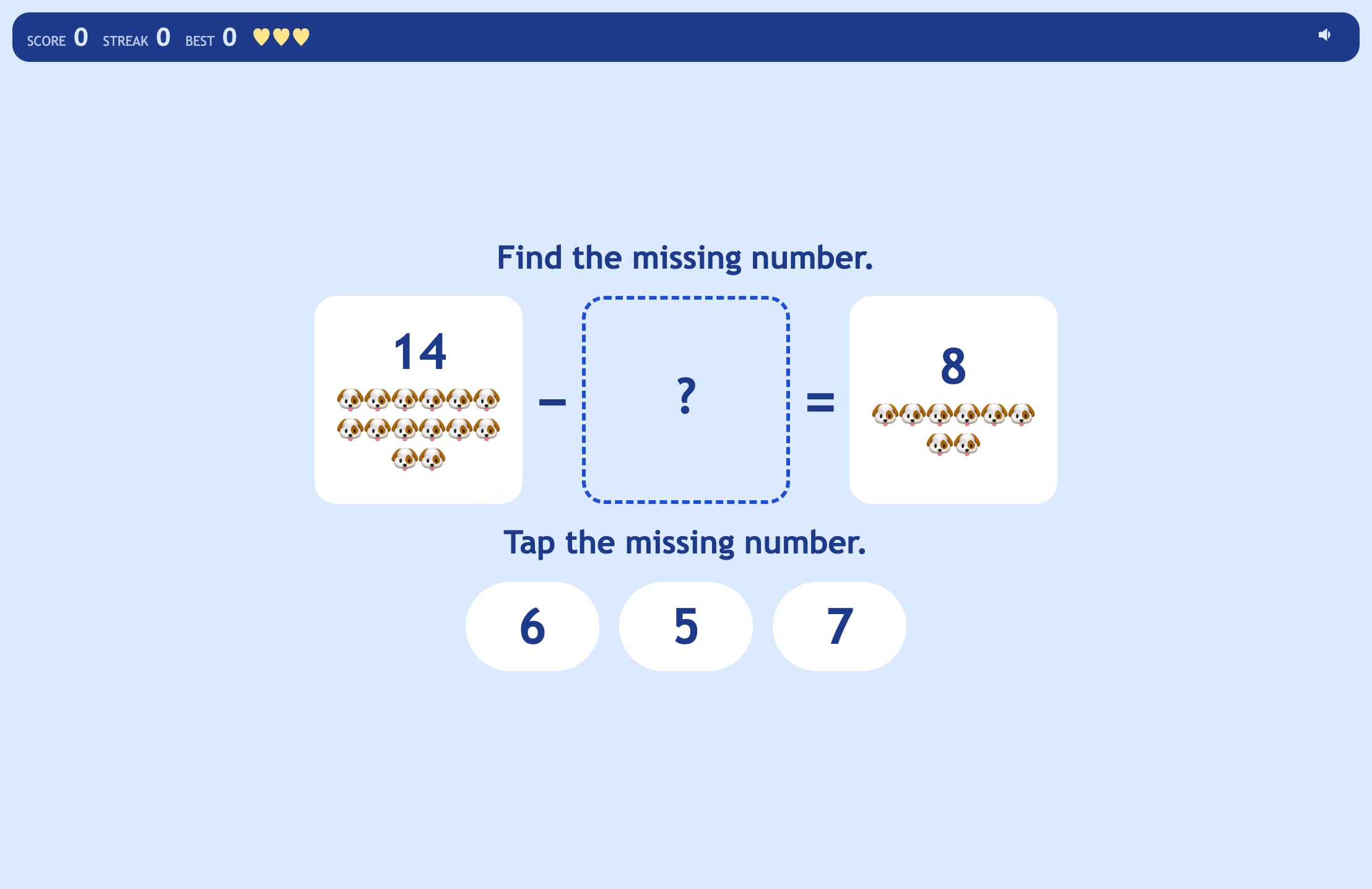
Find the missing number
An equation has a blank. The other numbers are filled in. Find the missing number. Tap the missing number. A right tap turns green. A wrong tap turns rose. Built for 1st grade.
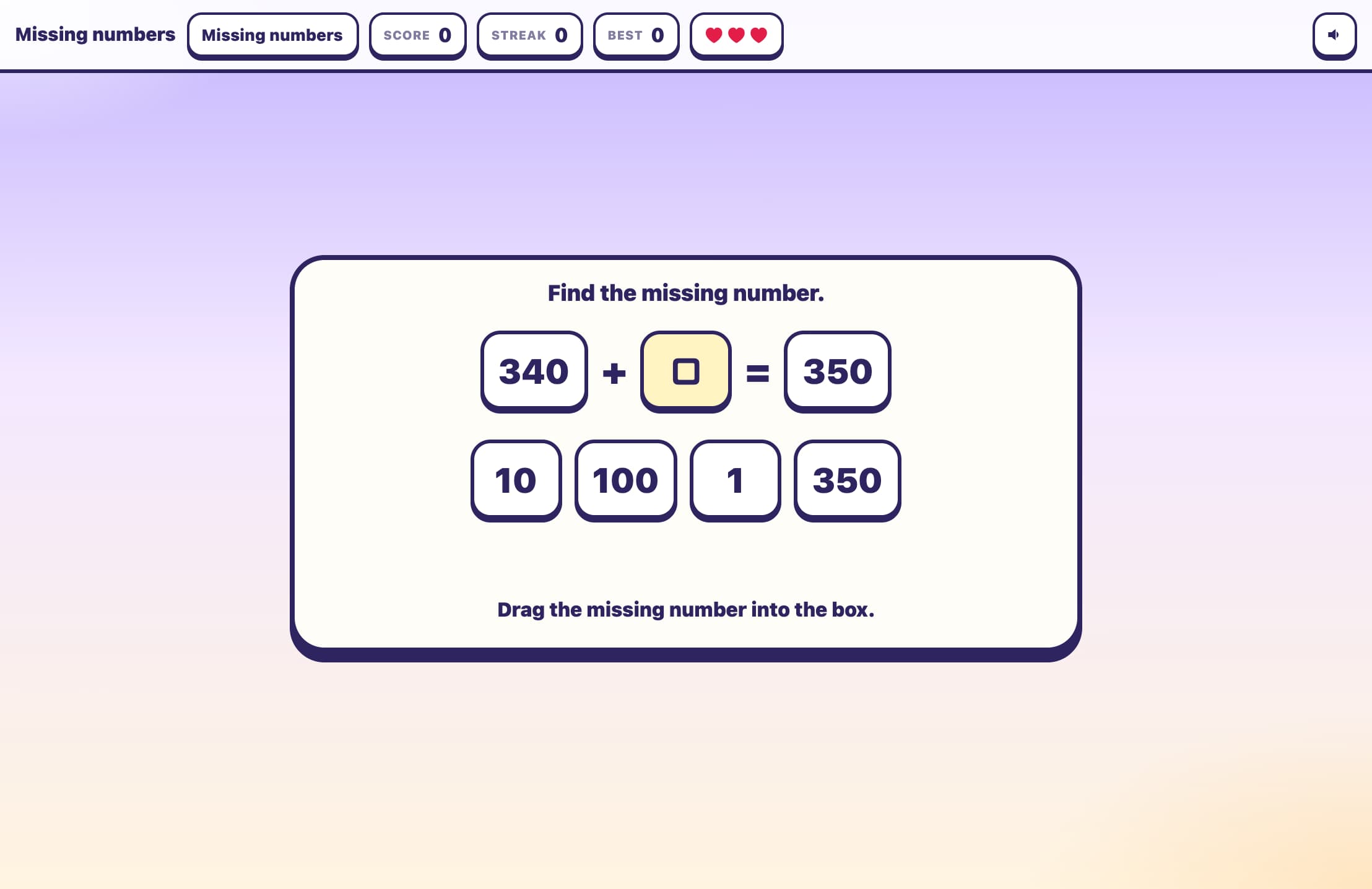
Find the missing number.
Missing numbers is the game. Find the missing number. Watch shows 340 + □ = 350, then 870 − □ = 860, then 503 + □ = 603, then 340, □, 360, 370. The missing number is already in the box. Try it. Drag the missing number into the box. Then six scored boxes. Score, Streak, and hearts start after Try it. Built for 2nd grade.
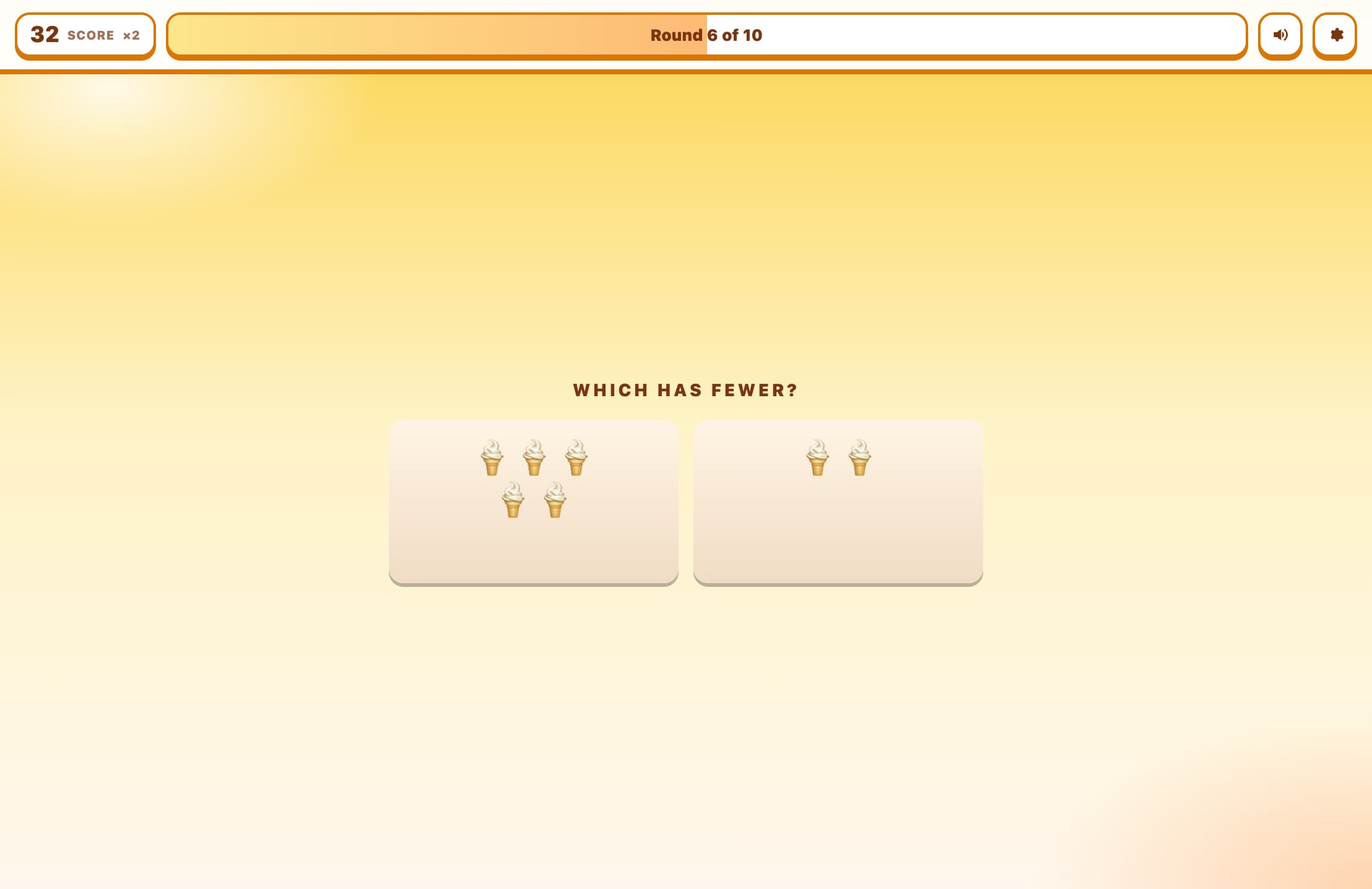
Compare Two Groups and Build Number Sense
Two groups of objects appear side by side — tap the one with more (or fewer)! A quick, visual way to build number sense and comparison skills for young learners.
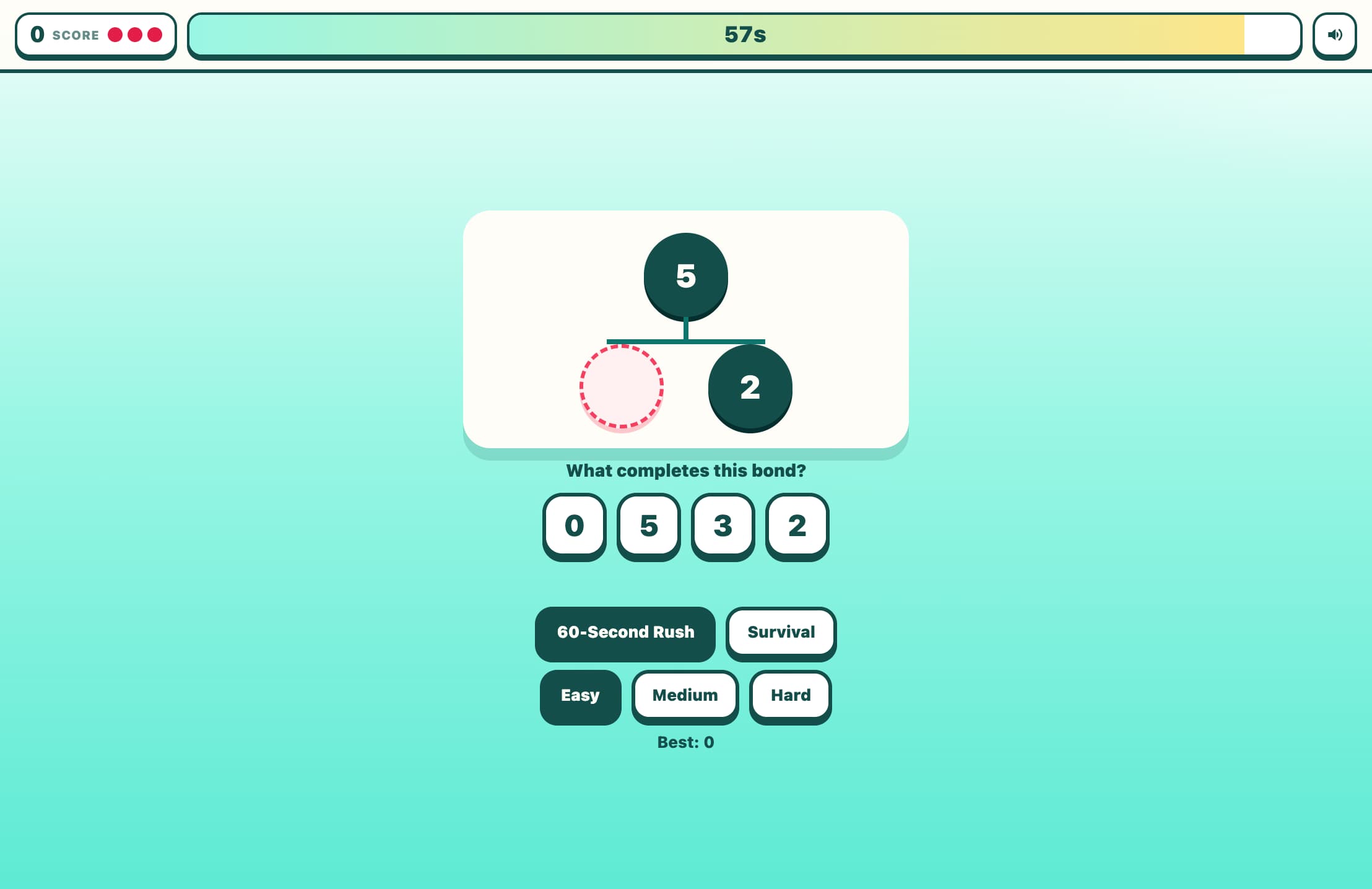
Fill the Missing Part
Complete number bonds by finding the missing part — 7 = 3 + ?. Visual circles and connecting lines show the whole and its parts. Race the clock in 60-second mode or survive on 3 lives. Easy, medium, and hard levels.
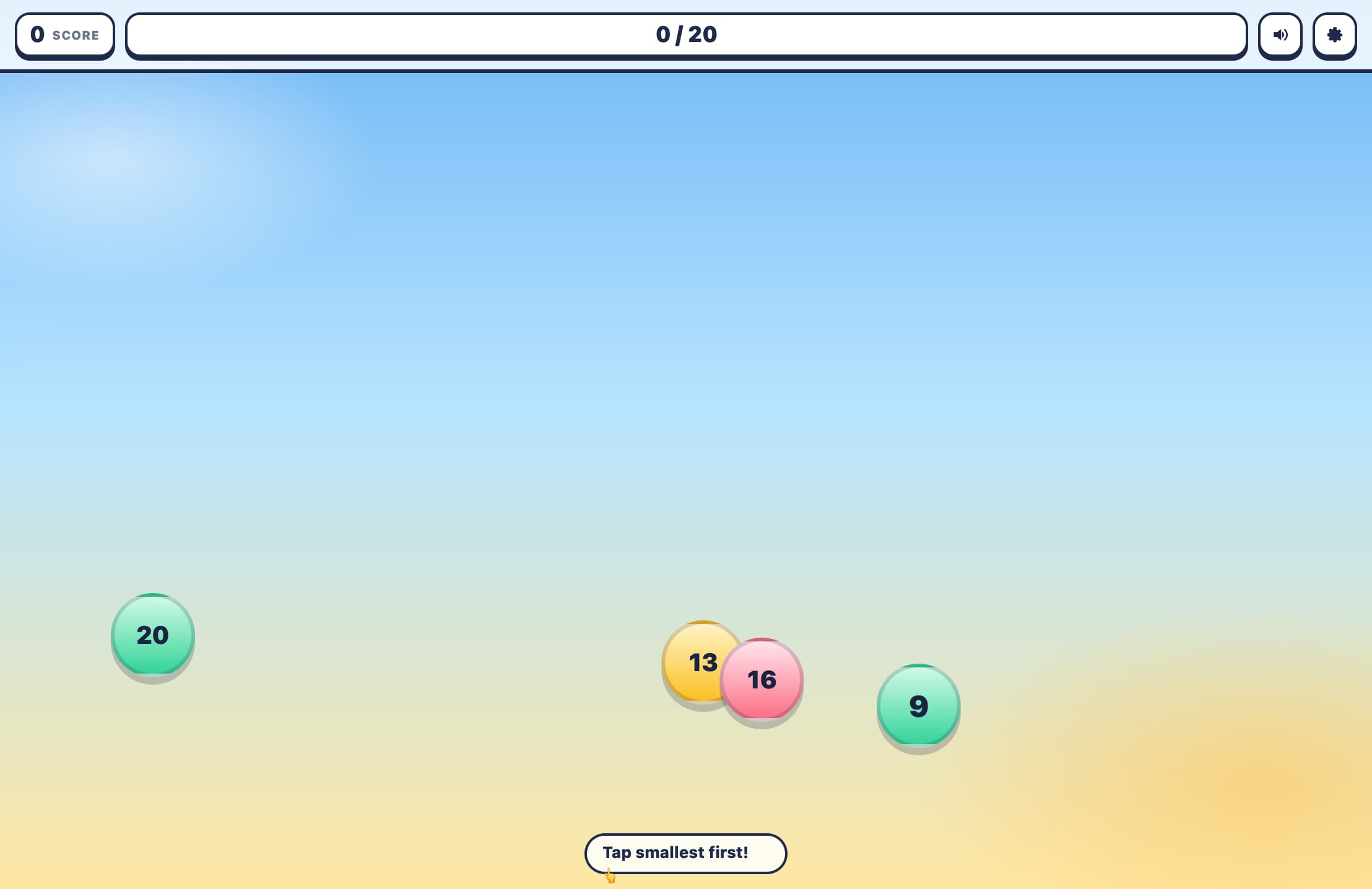
Ascending Order Sorting
Colorful numbered bubbles float upward — tap them in ascending order (smallest to largest) before they escape off the top of the screen. Miss one and lose a life!
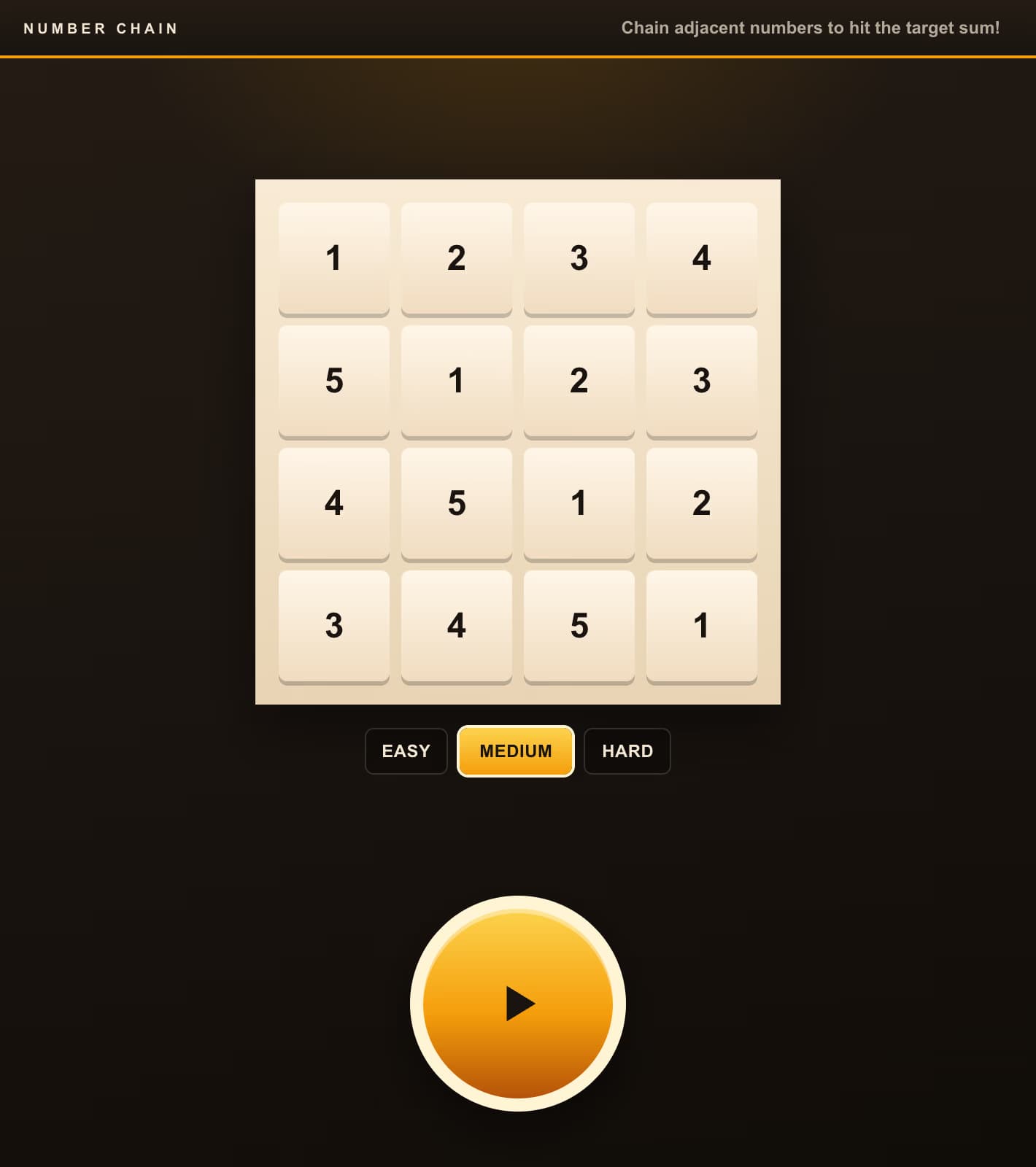
Math Path Puzzle Game | Connect Numbers to Reach Target Sum
A math puzzle game inspired by word ladder: trace a path through a 4×4 number grid, chaining adjacent cells until their sum exactly matches the target. 10 levels, 3 lives, and a high score to chase — every chain is a new puzzle.
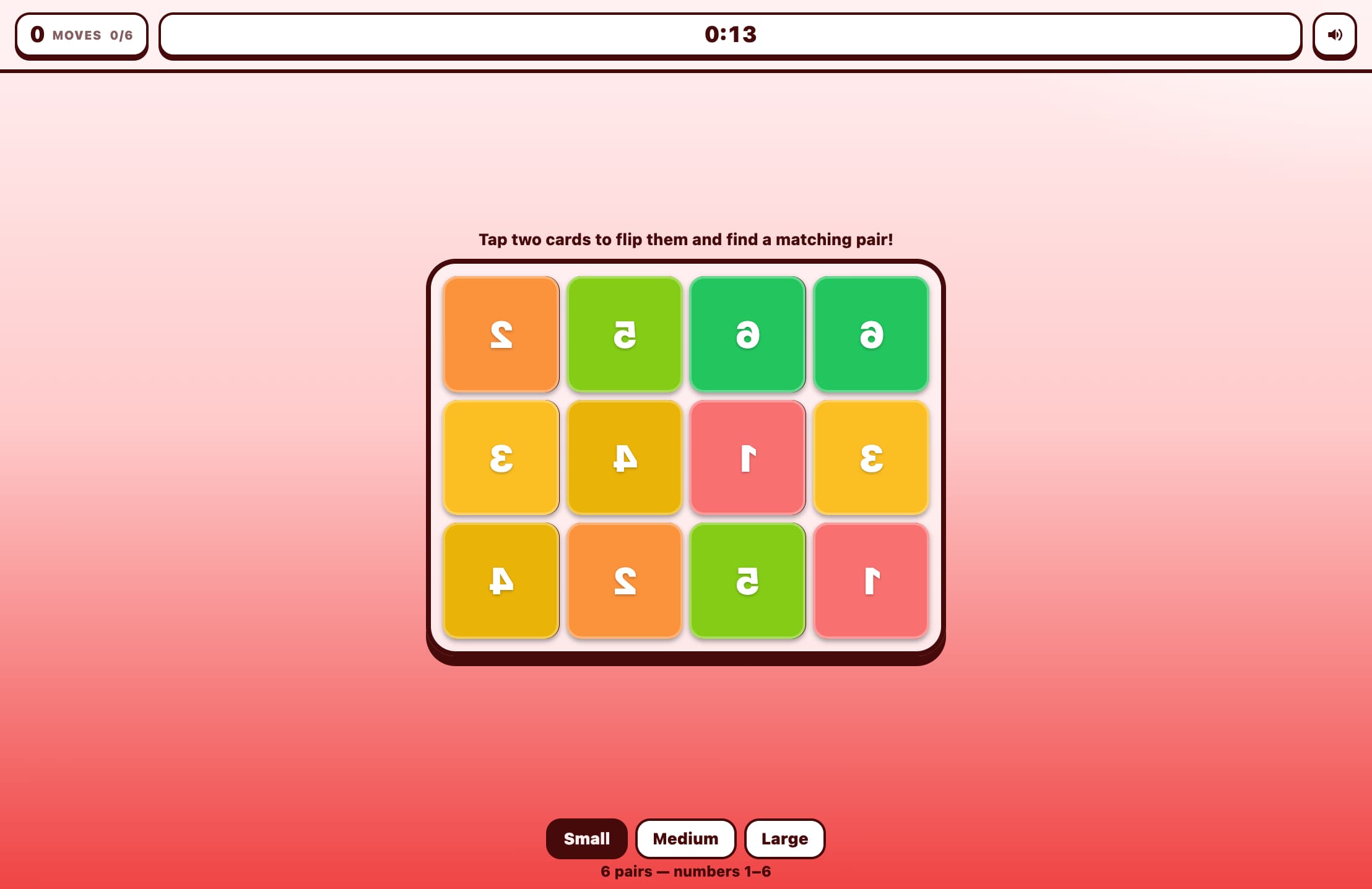
Classic Concentration Game with Numbers 1–20
Flip cards to find matching number pairs in this classic memory/concentration game! Three grid sizes — 6, 10, or 20 pairs — let young learners practice number recognition while exercising visual memory and concentration.
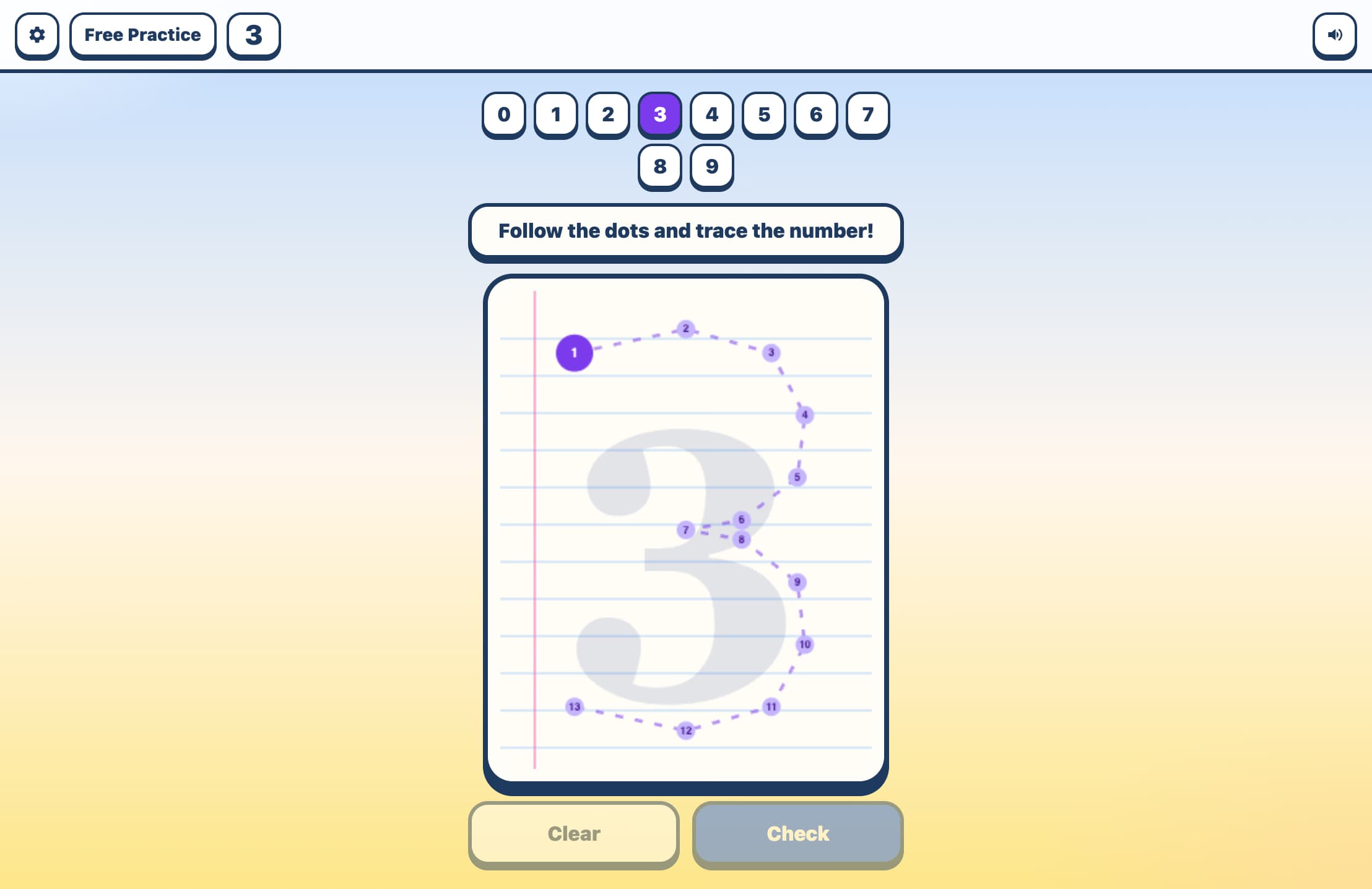
Practice Writing Digits 0-9
Trace the shape of digits 0–9 with your finger or mouse. Follow numbered guide dots, draw over the faint digit outline, then check your accuracy. Free Practice and 10-digit Challenge modes.
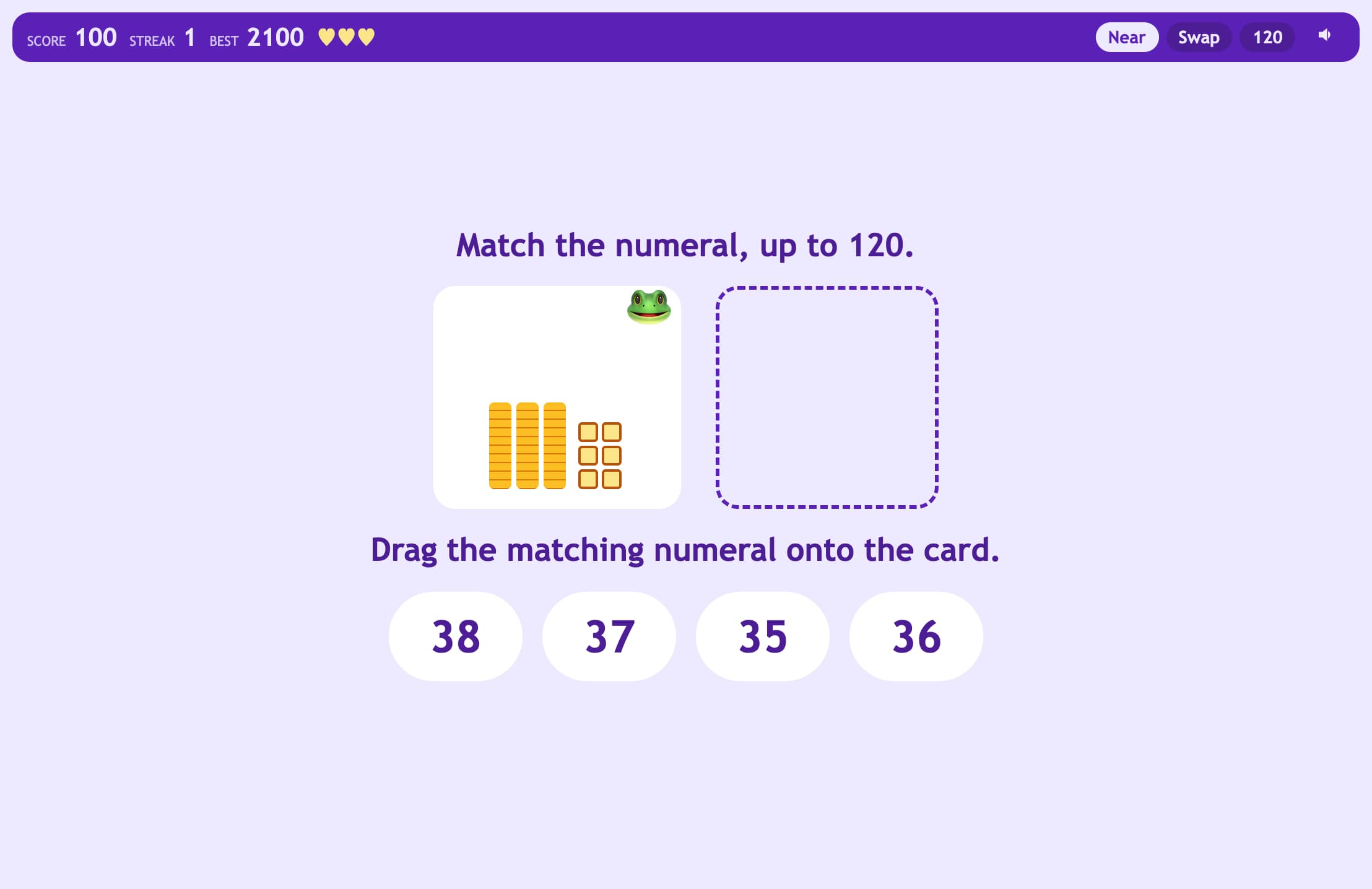
Match the numeral, up to 120
A numeral sits on a card. Numerals to 120 is the game. Match the numeral, up to 120. Drag the matching numeral onto the card. Near. Match the numeral. Swap. Match the numeral with its digits turned around. 120. Match the numeral, up to 120. A right drop turns green. A wrong drop turns rose. Built for 1st grade.
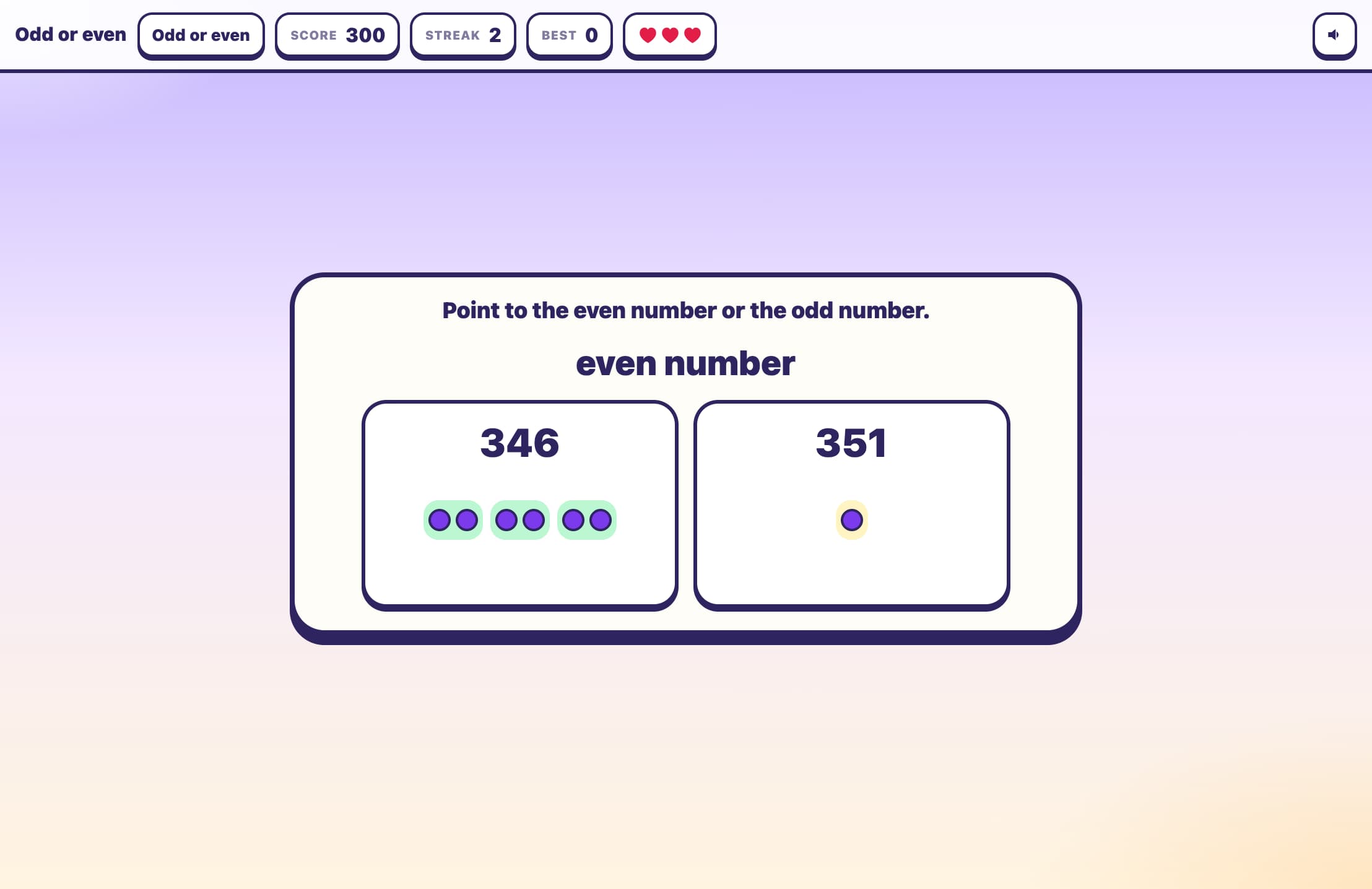
Point to the even number or the odd number.
Odd or even is the game. Point to the even number or the odd number. Watch shows 4 and 5, then 8 and 7, then 346 and 351, then 405 and 870. Pairs sit under each number. One left over means the odd number. Try it. Point to the even number or the odd number. Then six scored points. Score, Streak, and hearts start after Try it. Built for 2nd grade.
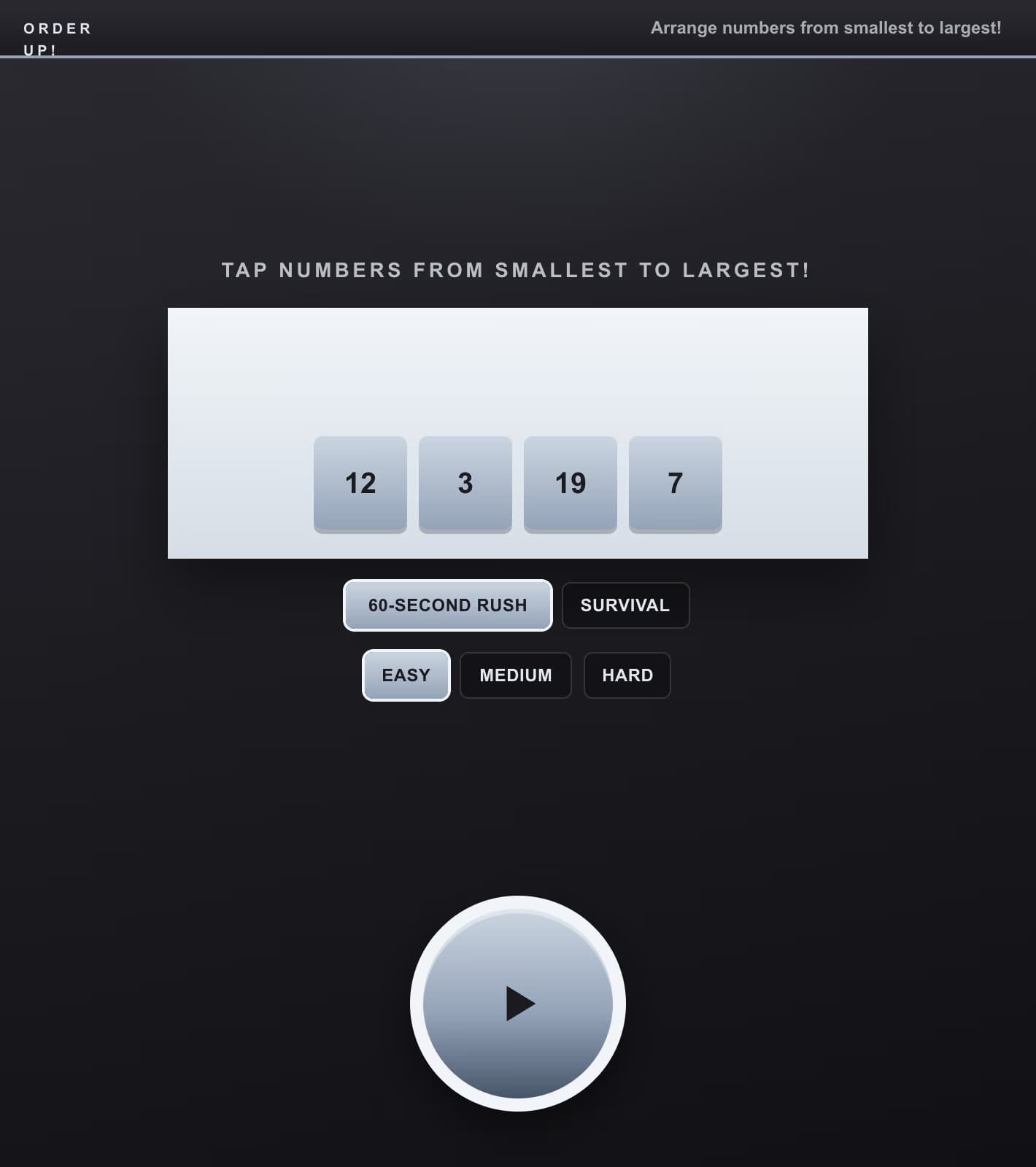
Number Sorting
Arrange a shuffled set of numbers from smallest to largest by tapping them in the correct order. Race against time or play in survival mode with three difficulty levels covering numbers 1–100.
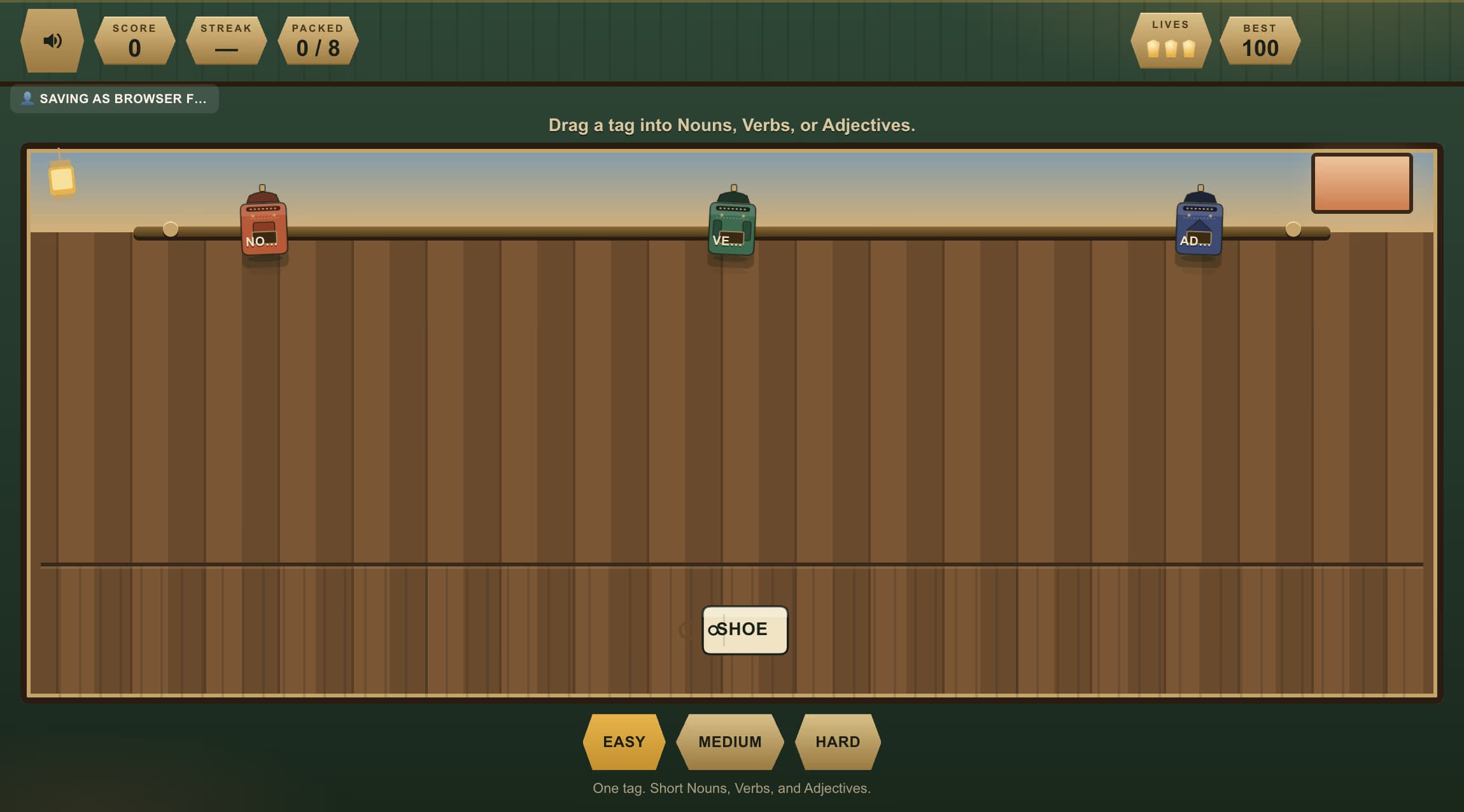
Sort Nouns, Verbs, and Adjectives
A pine trailhead hut at dawn. Three canvas trail packs hang from a brass peg rail: Nouns, Verbs, and Adjectives. Drag each English word tag from the slat bench and zip it into the right pack. A hit bounces the pack. A miss shakes it and breaks the Streak. Built for first-grade and second-grade parts of speech.
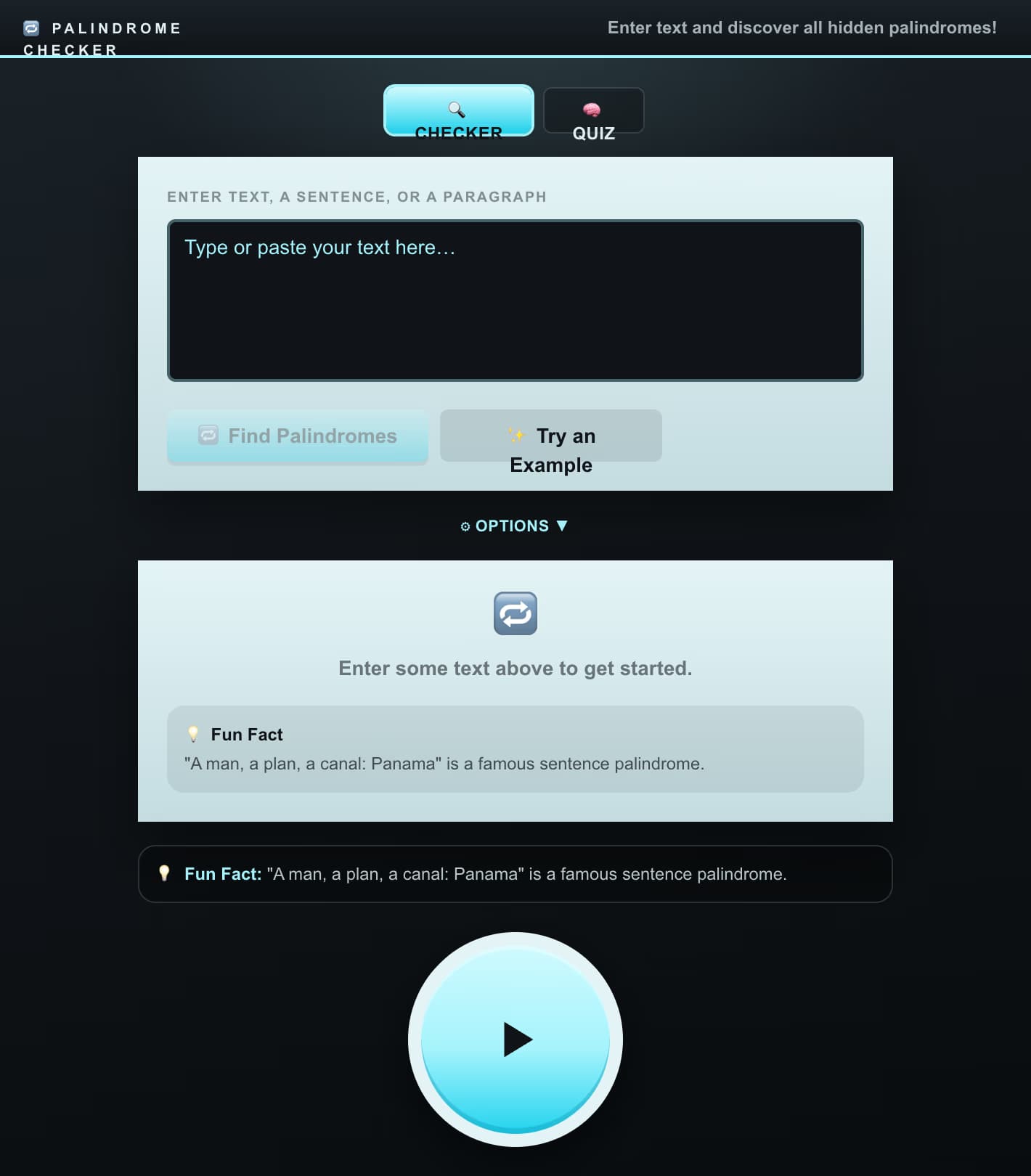
Find All Hidden Palindromes in Text
Enter any text and instantly find all palindromes hidden within it — individual words, multi-word phrases, numbers, and substrings. Also features a fun Quiz mode to test your palindrome knowledge!
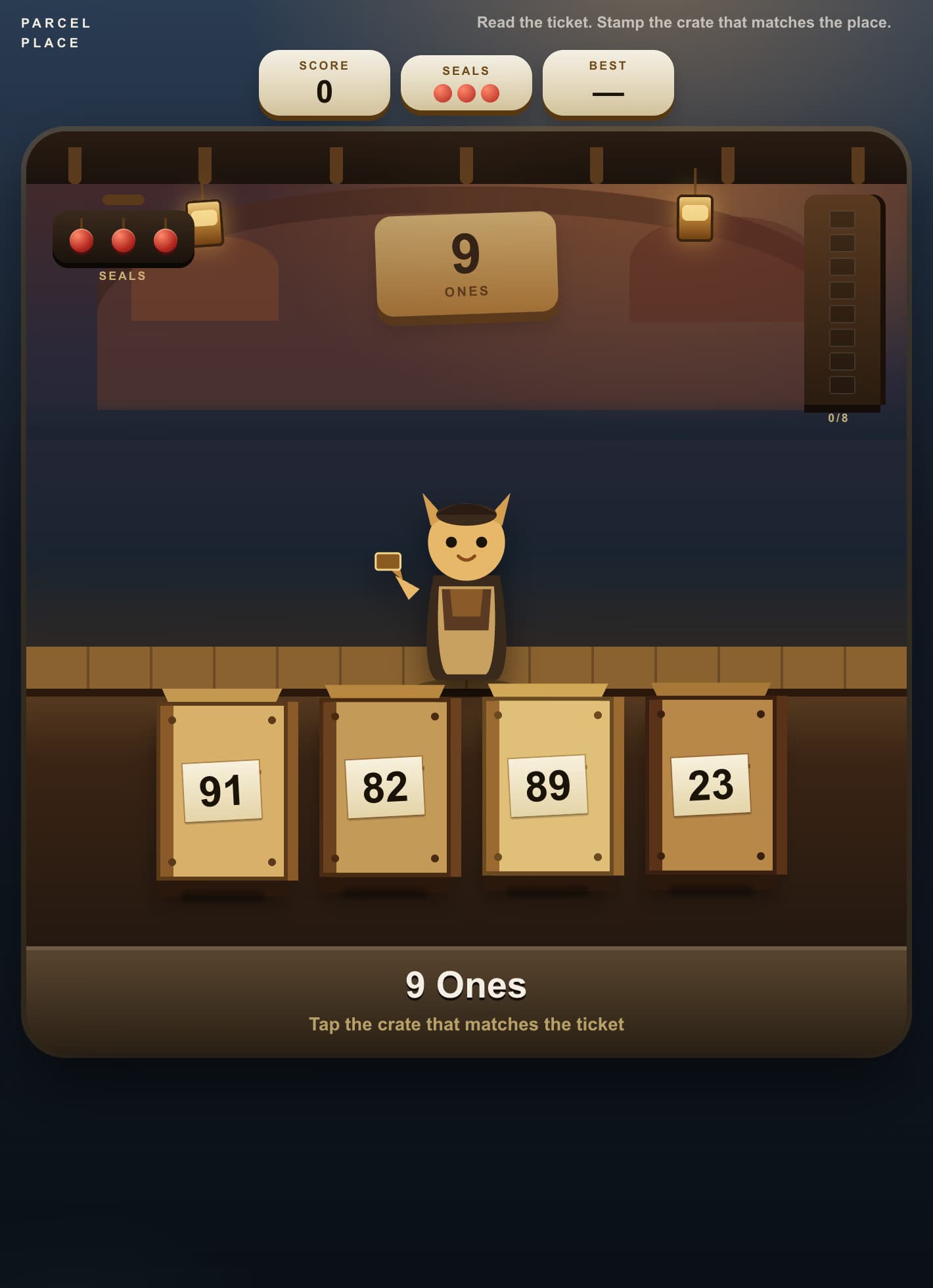
Place Value to the Hundreds
A dusk depot, brass-tagged crates, and a ticket that names a place. Four parcels sit on the bench. Tap the number that has the given ones, tens, or hundreds. A hit stamps the order. A miss costs a wax seal. Built for second-grade place value through the hundreds place.
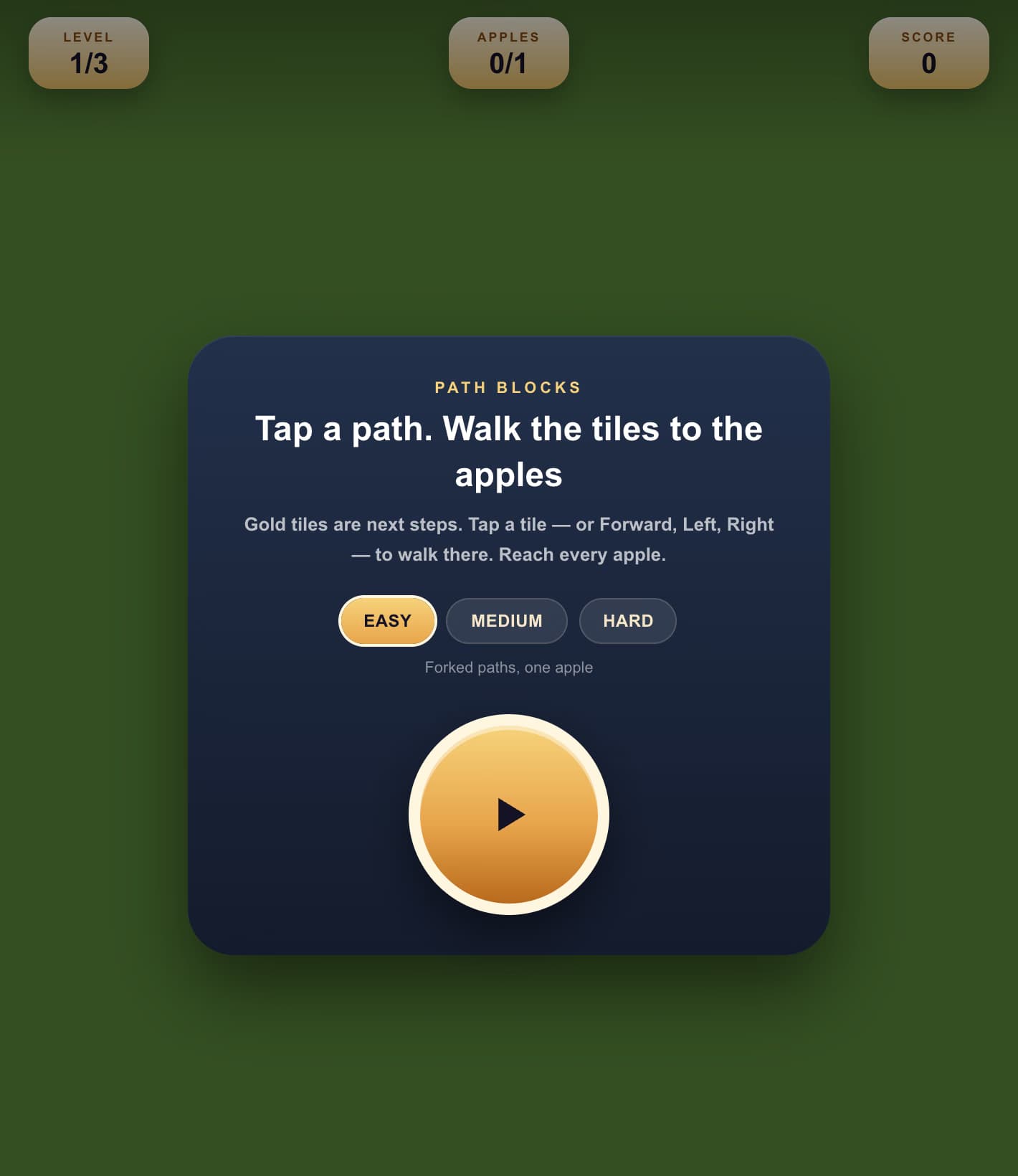
Coding Sequence
Build a short program with Forward, Turn Left, and Turn Right blocks, then run it so a beetle walks an isometric path and picks up every apple. Kids practice sequencing without typing code.
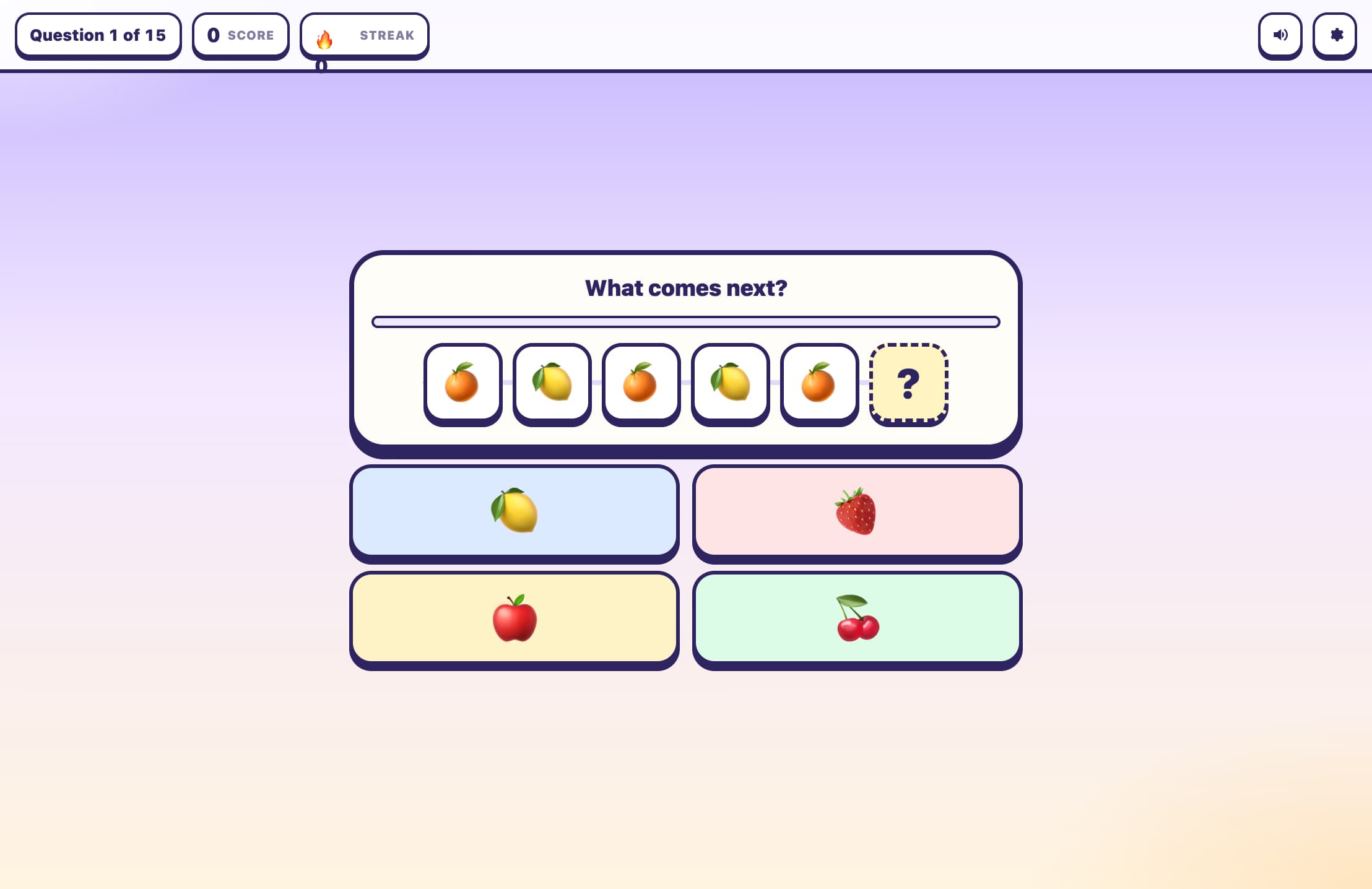
Complete the Repeating Pattern
What comes next? Complete repeating patterns made of emoji like 🔴🔵🔴🔵__? Choose from 4 options. From simple AB patterns to complex ABCD sequences — great for early math, logical reasoning, and pre-algebra thinking!
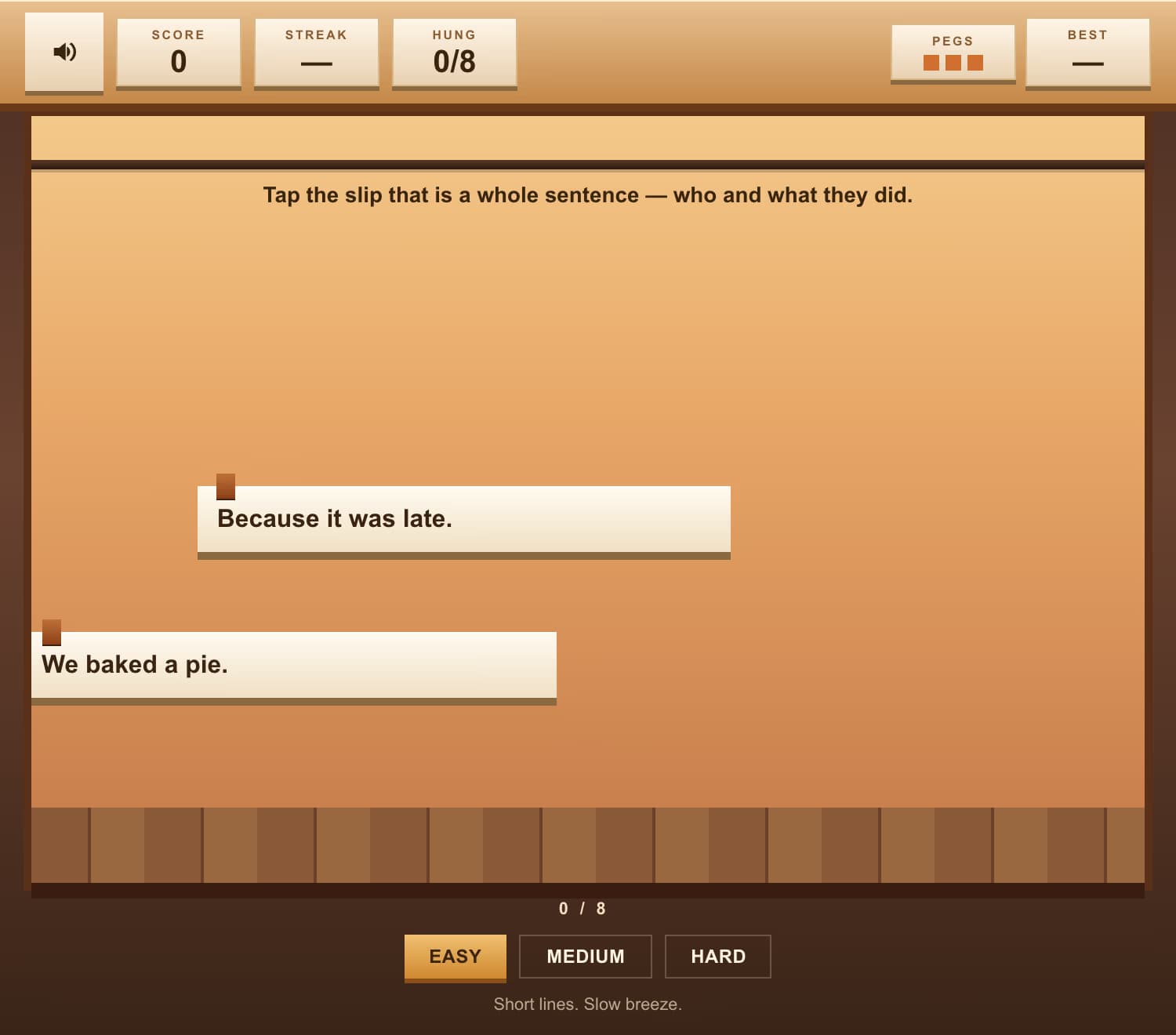
Complete Sentence vs Fragment
A morning packing loft. Paper slips blow across a pine clothesline. Peg the slip that is a complete sentence — someone and what they did. Fragments tear off. Built for second-grade grammar: subjects, predicates, and fragments.
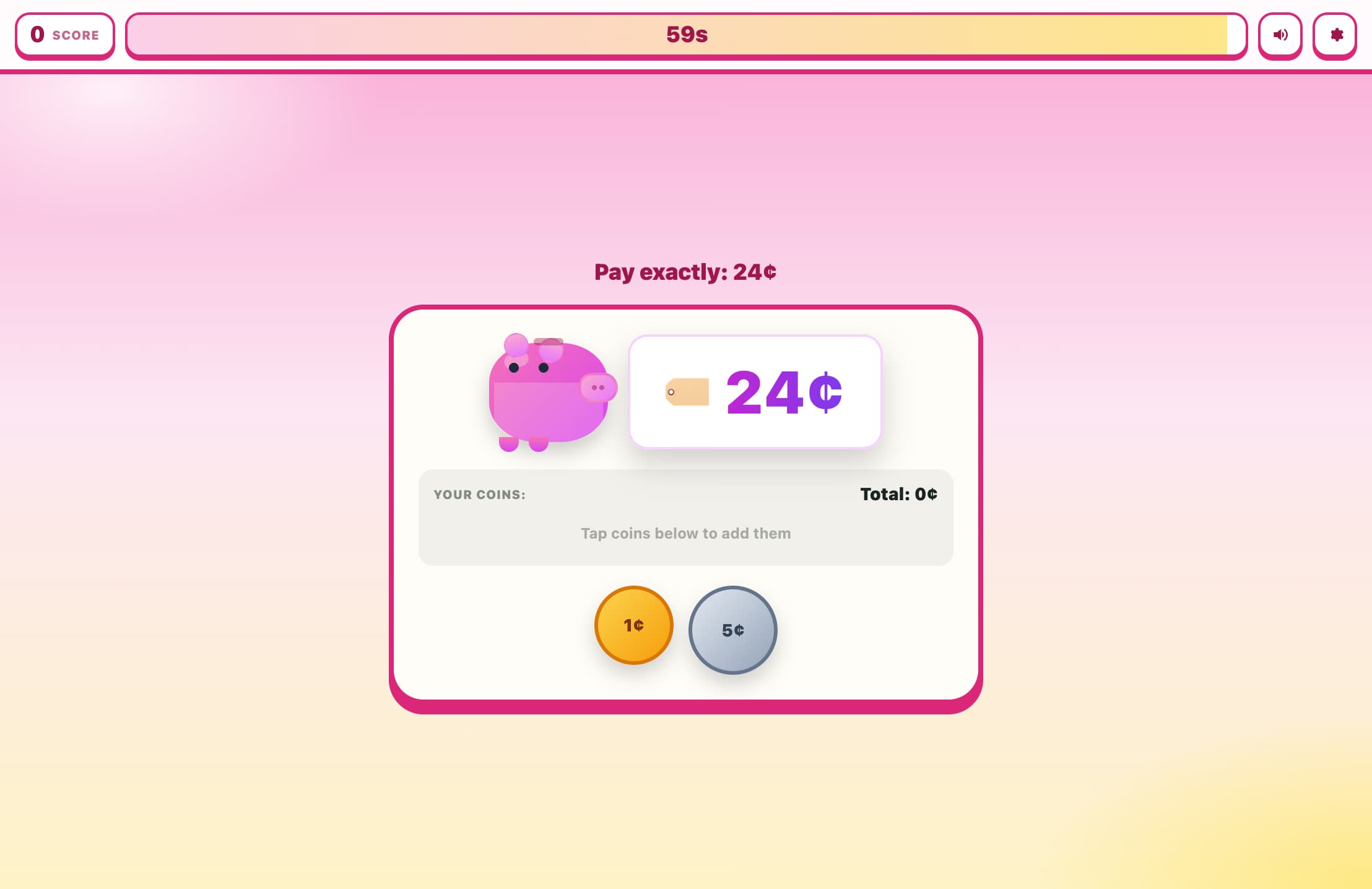
Coin Counting & Making Change
A price tag shows a small amount — tap the exact coins (pennies, nickels, dimes, quarters) to pay for it. Builds coin recognition, counting, and making-change skills with amounts up to $1.00.
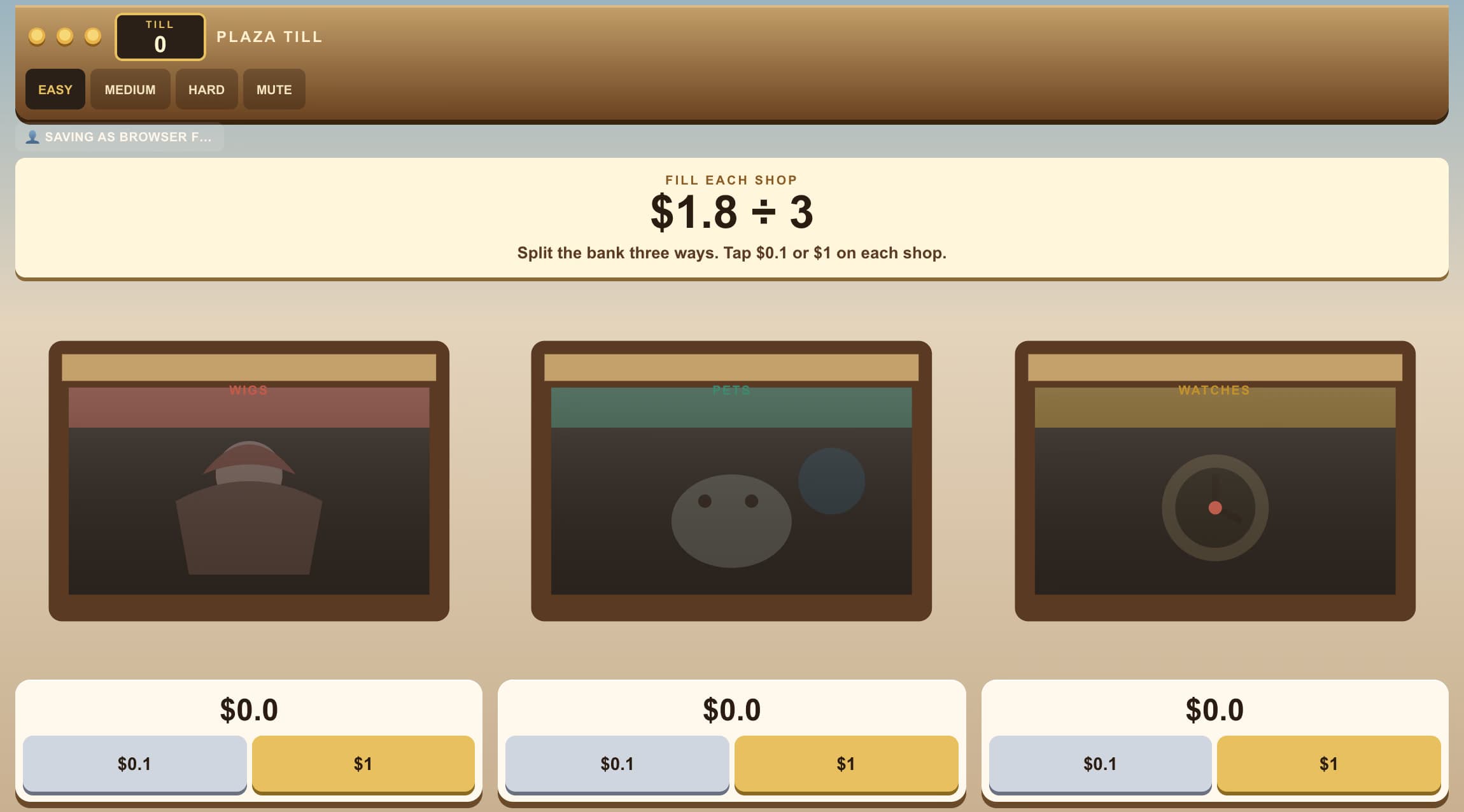
Shopping Decimal Division to the Tenths Place
Shop the night plaza in Plaza Till. A leather Bank shows a total to split three ways among Wigs, Pets, and Watches. Pick $1 or $0.1, then pour equal shares into each till to the tenth. Fifth-grade decimal division with Till points for a clean floor.
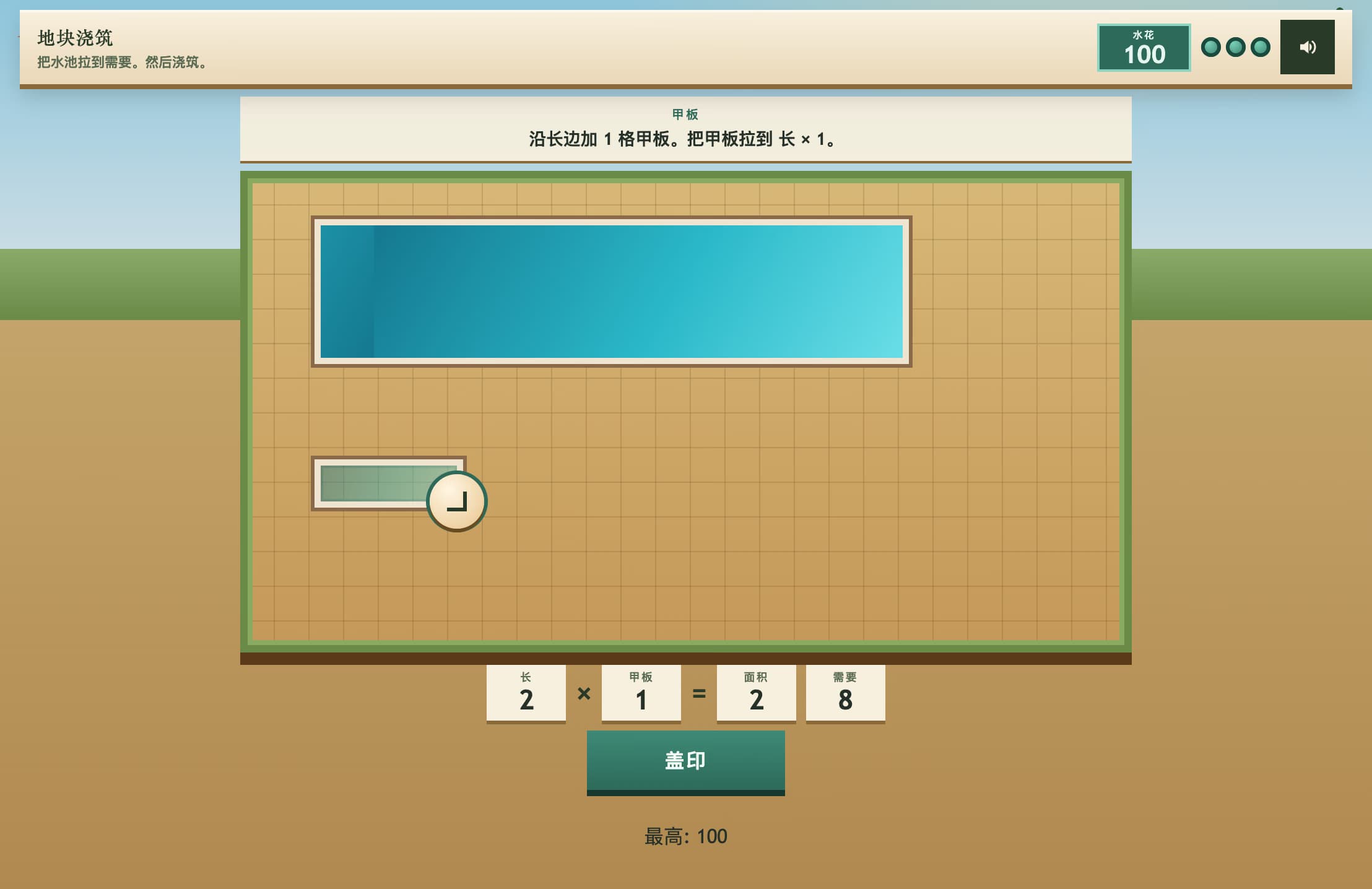
Area Models and Multiplication Word Problems
Architects on the ready. Stretch the basin on a backyard lot until Length × Width equals Need, then Pour. Follow-up word problems ask kids to Stamp a Deck, Stamp a Spa, or Split the patio and Pour each patch. Fifth grade multiplication and area, with Splashes that grow on a streak.
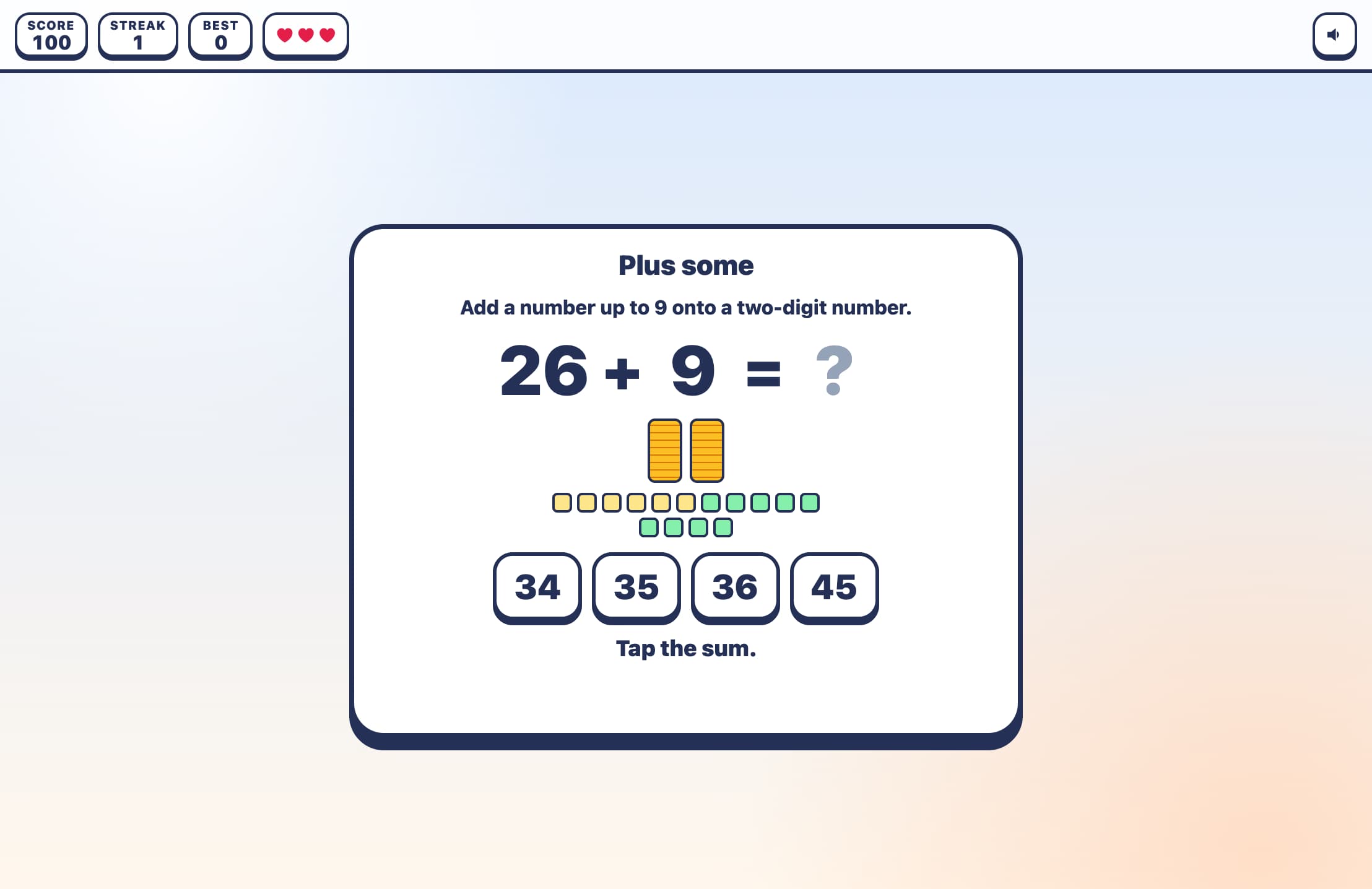
Add a number up to 9 onto a two-digit number.
Plus some shows a two-digit number plus a number up to 9. Add a number up to 9 onto a two-digit number. The tens and ones sit under the sentence. Tap the sum. The right number fills the blank. A wrong number turns the card rose, clears the Streak, and costs a heart. Built for 1st grade.
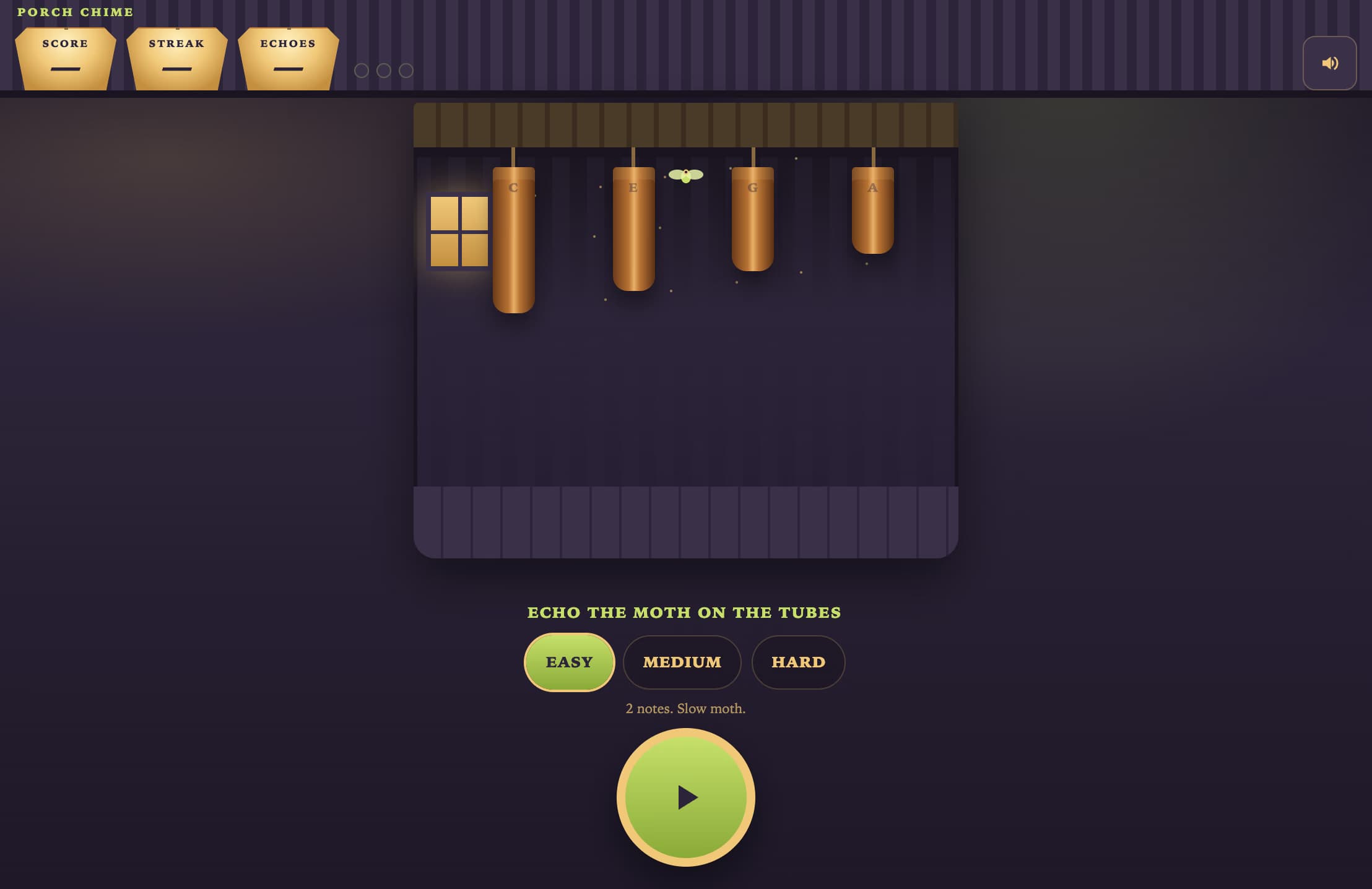
Evening Melody Echo
An evening porch. A moth taps copper tubes in a short tune. Listen, then Tap the tubes in the same order. Four pentatonic tubes hang over clapboard: C, E, G, and A. Eight Echoes win. Three moth drops end the run. Score and Streak climb with each clean echo.
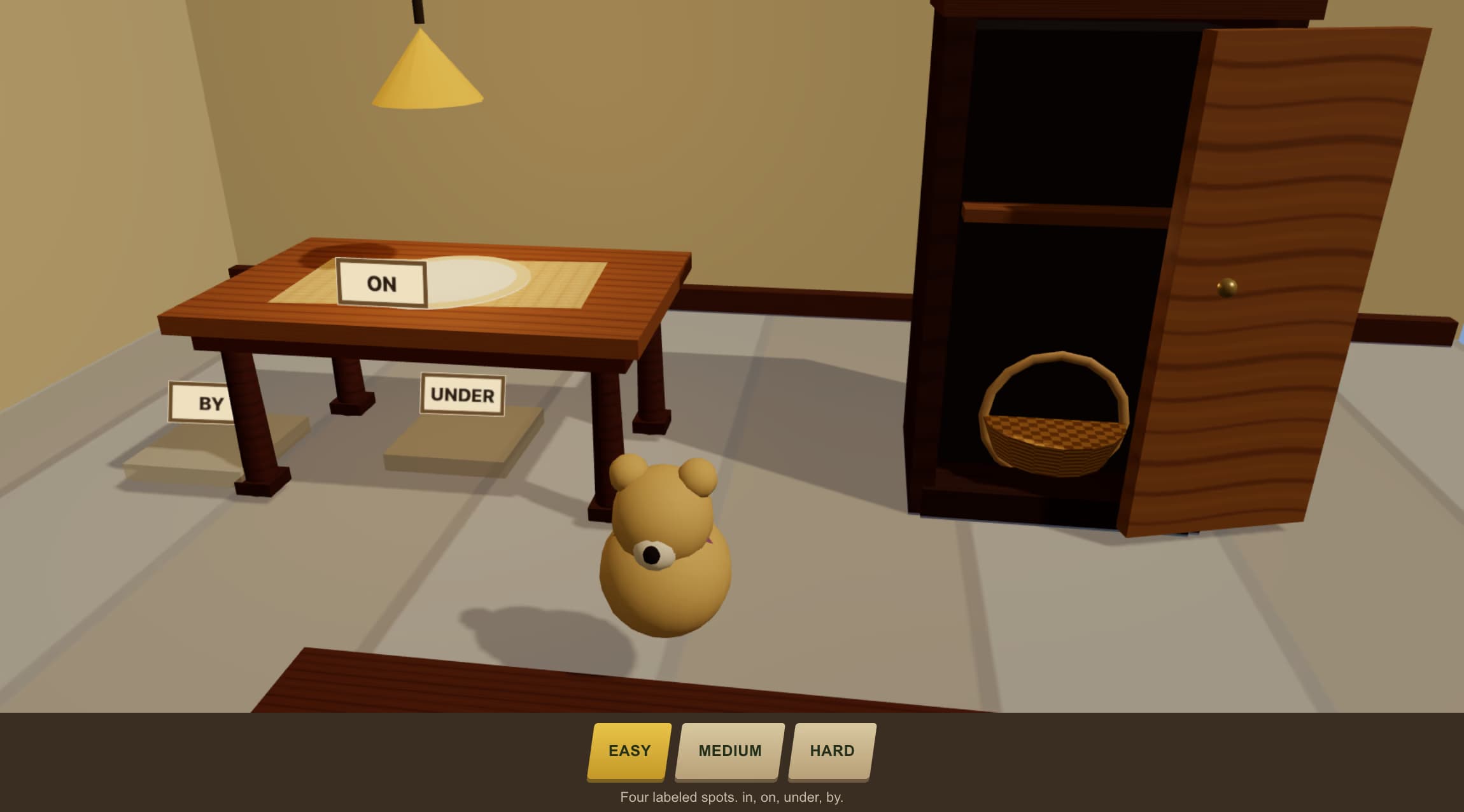
Place Bears With Positional Words
A late-afternoon screened porch holds wicker crates and a plush cub. Read a kindergarten position word — in, on, under, by — then drag the cub to that spot. Harder seats add above, behind, between, and look-alikes like under and beneath. Prepositions become places you can put a bear.
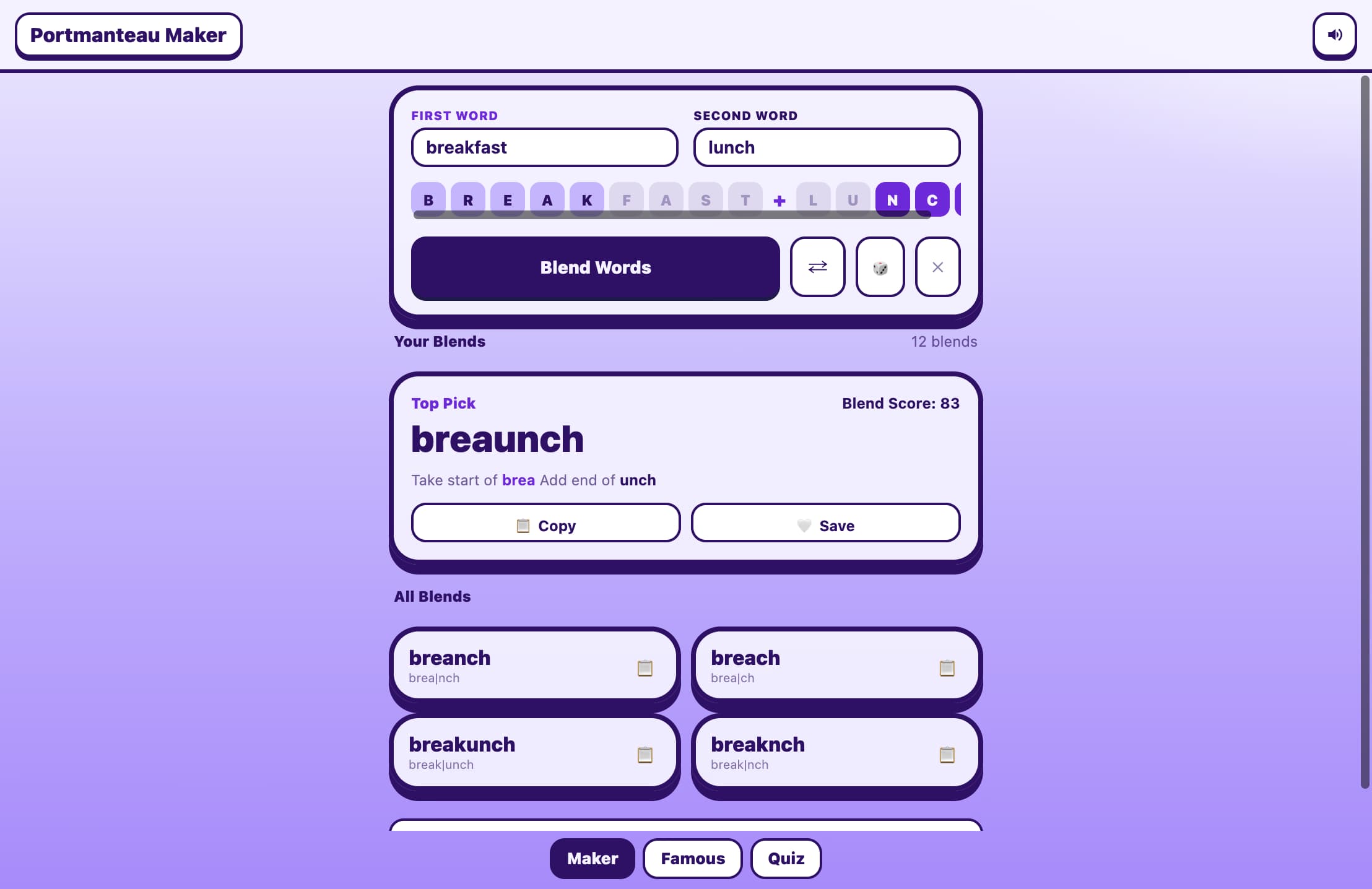
Blend Two Words Into One
Enter any two words and instantly generate creative portmanteau blends. Explore 30+ famous portmanteaus, test your knowledge in quiz mode, and save your favorite inventions!
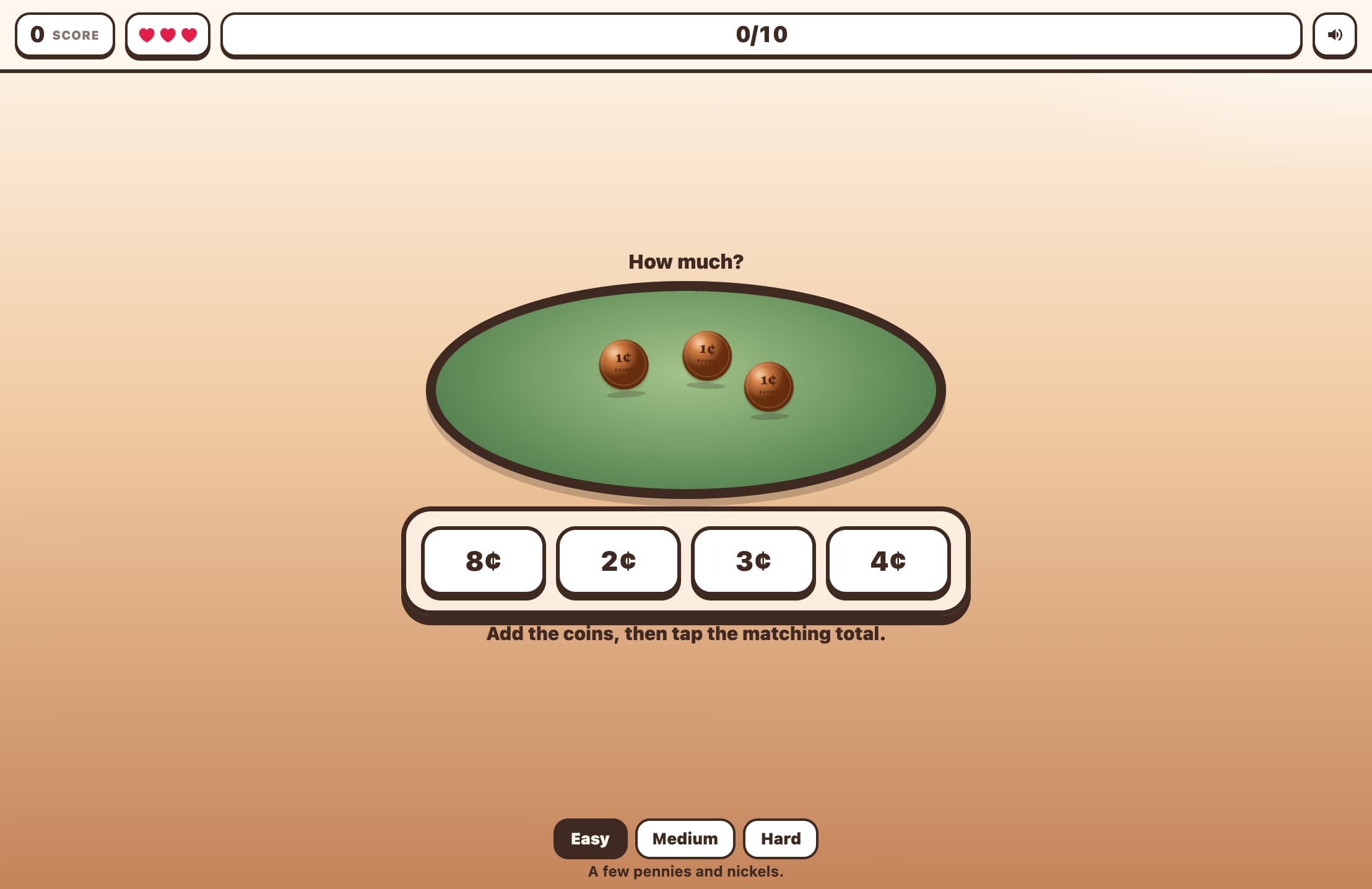
Count Coins and Tap the Total
Count a small pile of U.S. pennies, nickels, dimes, and quarters, then tap the matching total. A lobby to pick Easy, Medium, or Hard. Three lives, a streak bonus, and ten rounds to win. Built for first through third grade money math.
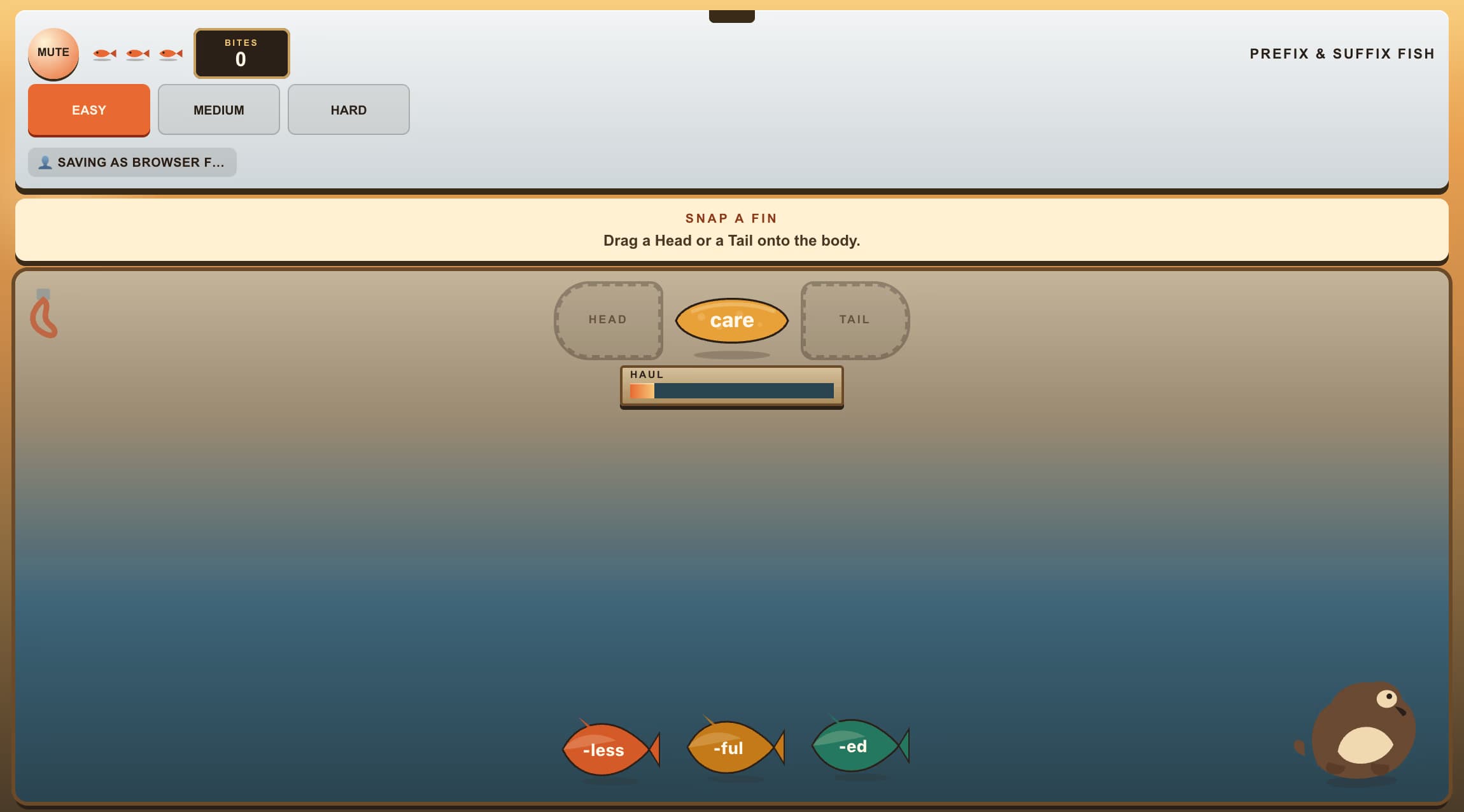
Second Grade Word Parts
Feed Roly at the hatchery in Prefix & Suffix Fish. A wooden tray holds a root such as teach or power. Drag a Head or a Tail from the raceway and Snap a fin onto the body. Second graders build prefixes and suffixes while Bites stack and the Haul gauge fills.
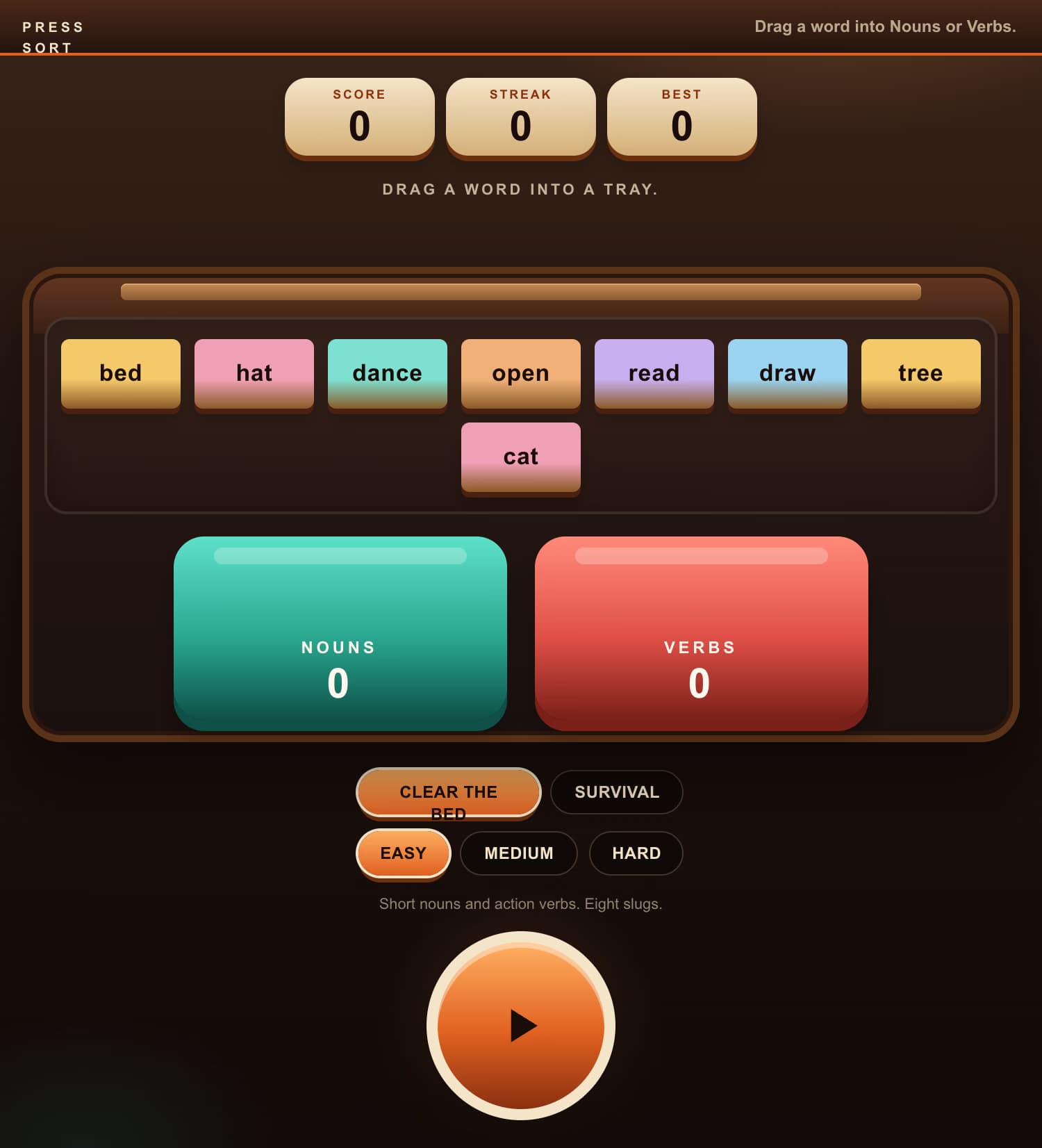
Sort Nouns and Verbs at the Letterpress
A copper letterpress, ink-stained trays, and a bed of English word slugs. Tap a word, then drop it in Nouns or Verbs. A clean sort scores. A miss shakes the slug and breaks the streak. Built for second-grade parts of speech.
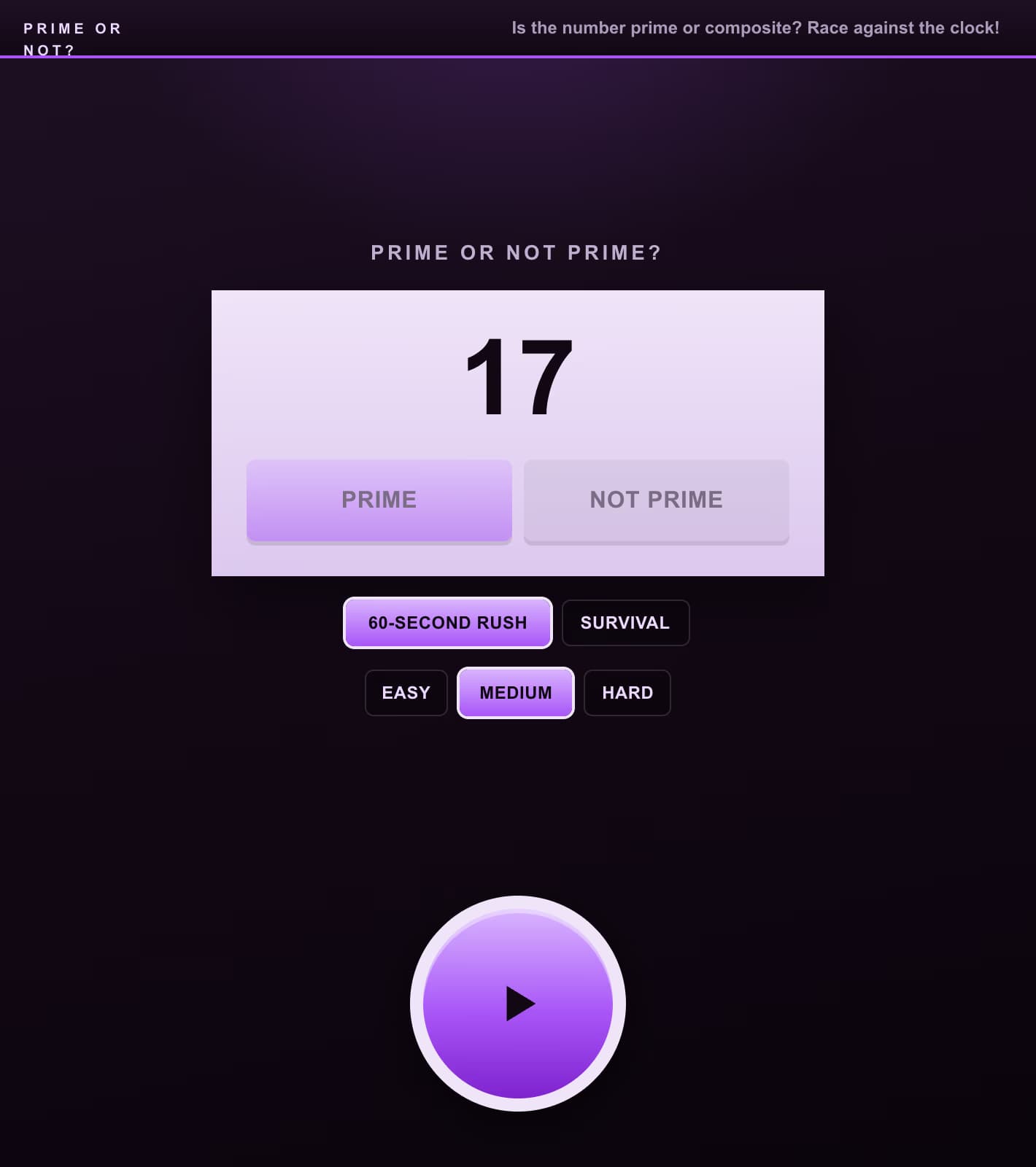
Prime Number Classification
A fast-paced number classification game. Is the number prime or composite? Race against the clock and beat your streak!
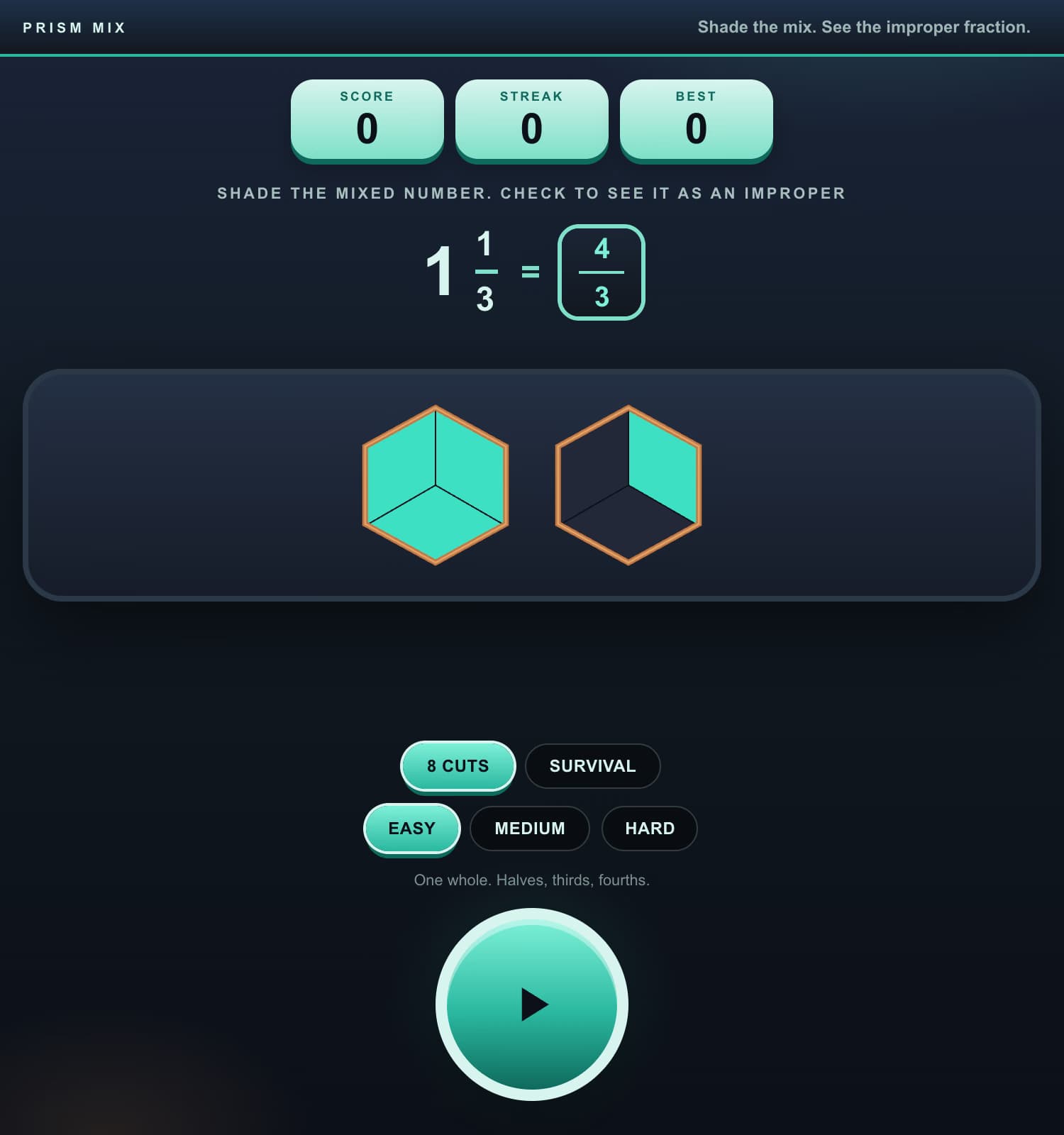
Convert Mixed Numbers to Improper Fractions
A dusk glass studio, copper frames, and hexagonal prisms. Shade facets to match a mixed number like 1 1/6. Then type the improper fraction on the workbench pad. A clean shade and a clean write both score. Built for fourth-grade mixed numbers.
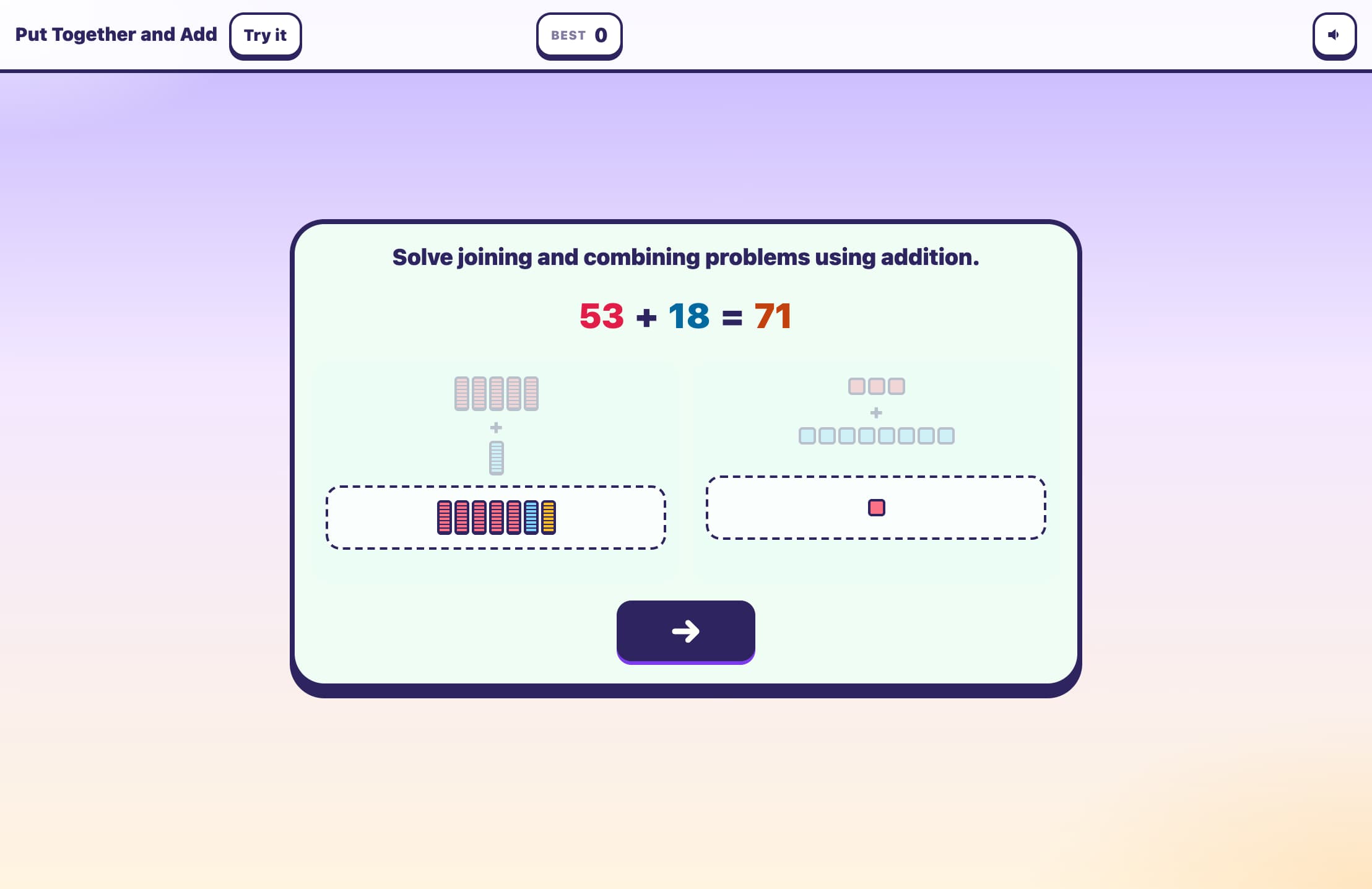
Solve joining and combining problems using addition.
Put Together and Add is the game. Solve joining and combining problems using addition. Watch shows 28 red blocks and 16 blue blocks, 28 + 16 = 44, then 35 + 22 = 57, then 47 + 26 = 73, then 53 + 18 = 71. Tap the ones so the red squares and blue squares join. When they make 10 or more, tap the gold rod so it moves into the tens. Then tap the tens. Try it. Solve joining and combining problems using addition. Then six scored totals. Score, Streak, and hearts start after Try it. Built for 2nd grade.
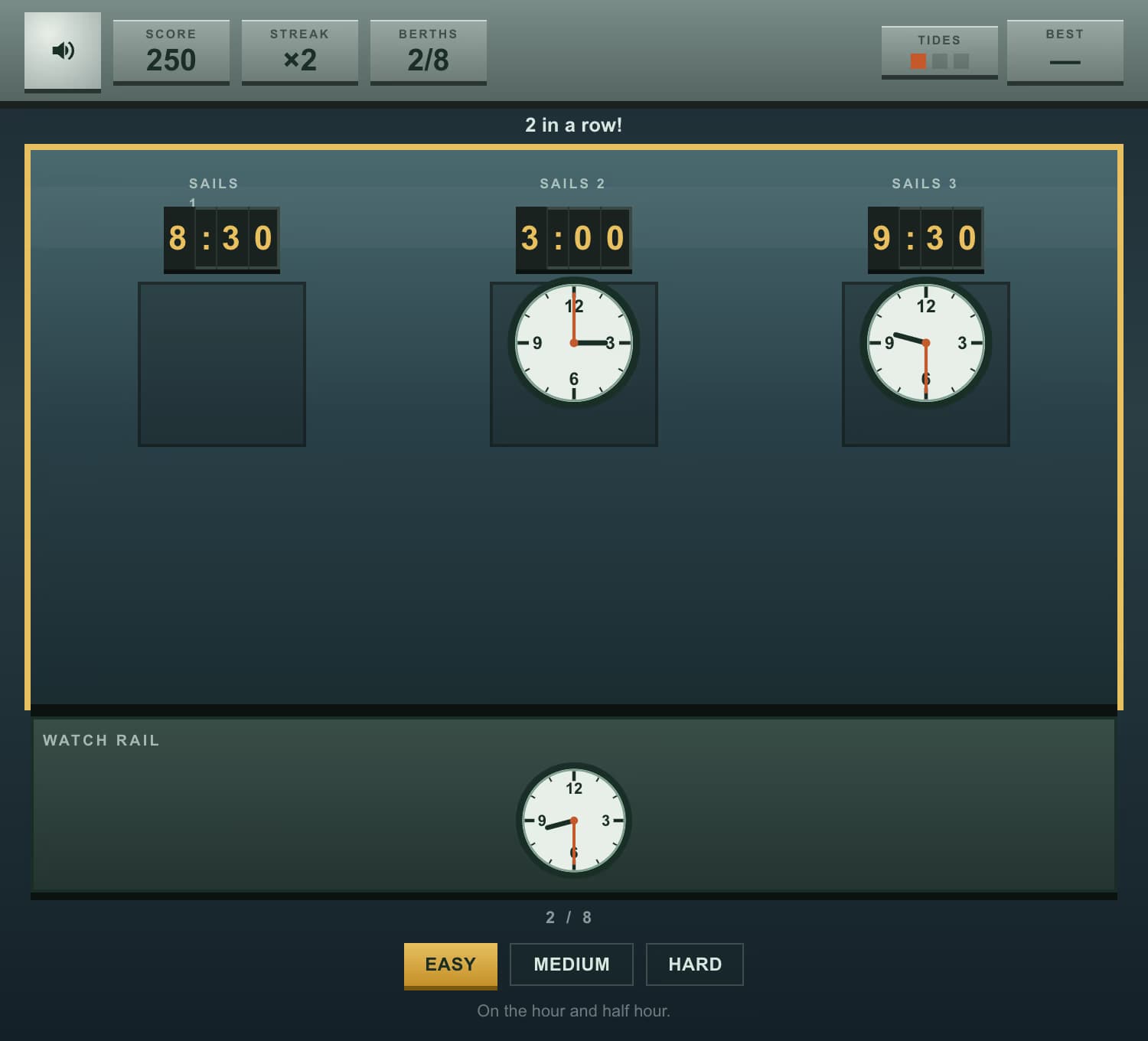
Match Analog Faces to Digital Ferry Times
A dusk watch-house on the quay. Amber flip times show when each berth sails. Enamel watches hang on the rail. Drag the face that shows that time into the cubby. Built for second-grade telling time to five minutes — analog hands to digital time, not a multiple-choice strip.
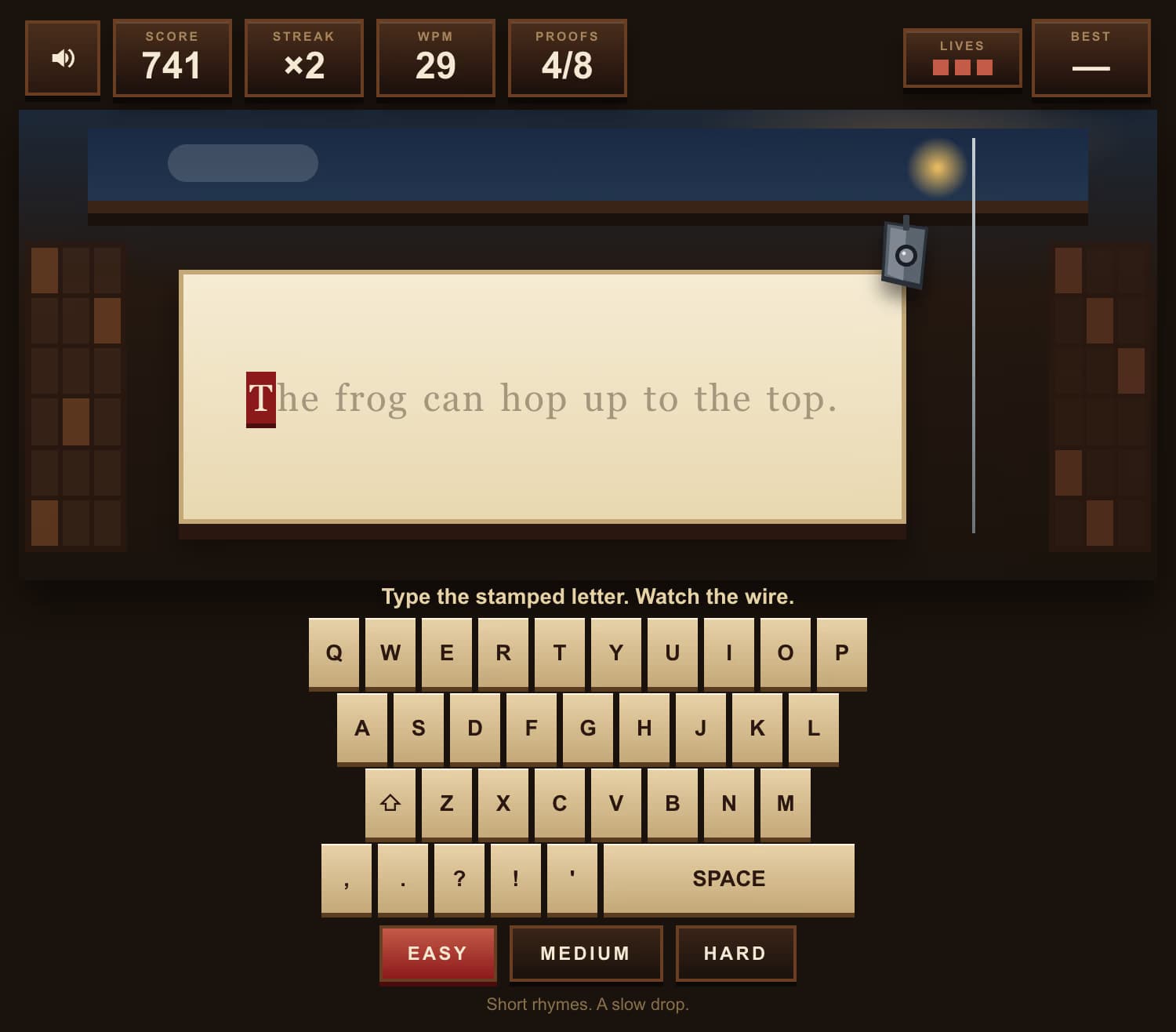
Sentence Typing Speed
A night letterpress shop. Rhyming couplets sit on a cream proof. Type each stamped letter before the iron quoin slides down the guide wire and slams the chase. Live WPM, a streak bonus, and Easy / Medium / Hard for second-grade through fifth-grade sentence typing.
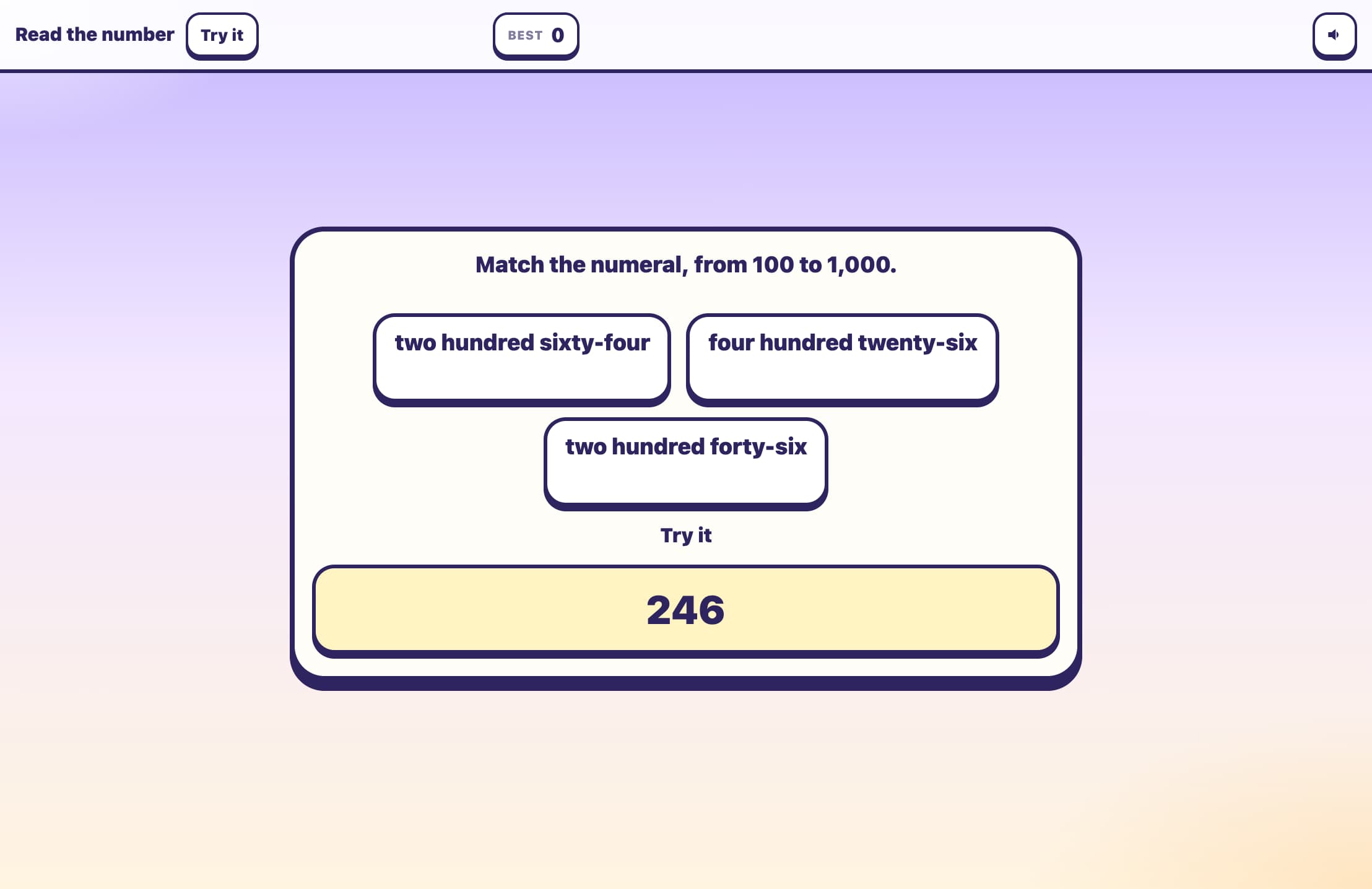
Match the numeral, from 100 to 1,000
Read the number is the game. Match the numeral, from 100 to 1,000. Watch shows 246, then 503, then 870, each numeral beside its written name. Try it. Drag the card onto the match. 246 is the numeral card. 503 is the written name. 870 is the numeral card again. Then six scored cards. A zero in the tens place, as in 503, and a zero in the ones place, as in 870, still have a written name. Score, Streak, and hearts start after Try it. Built for 2nd grade.
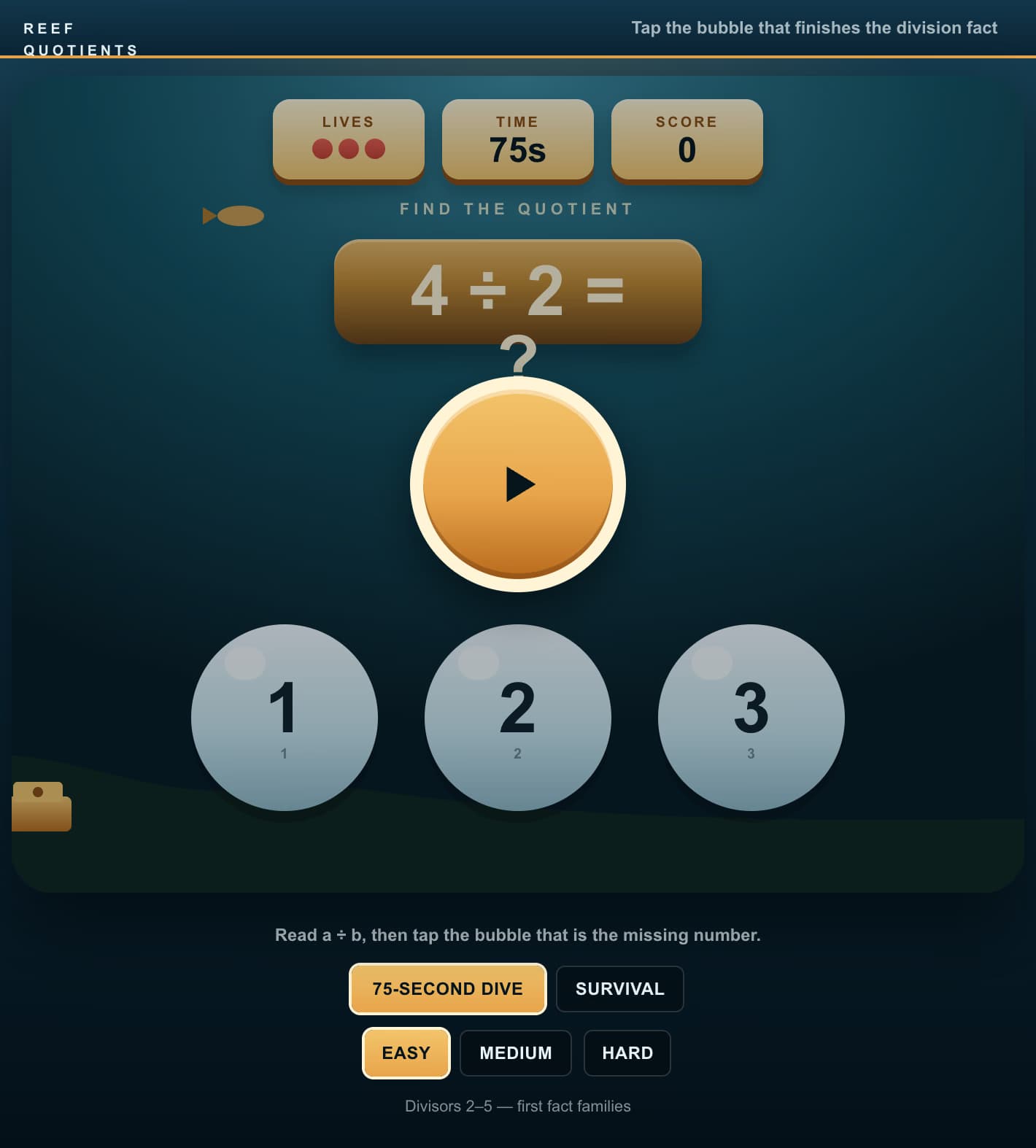
Division Facts
Read a division fact and tap the bubble that holds the quotient. Fourth graders build fact fluency with one-digit divisors by choosing among three answers on a reef dive, not by typing.
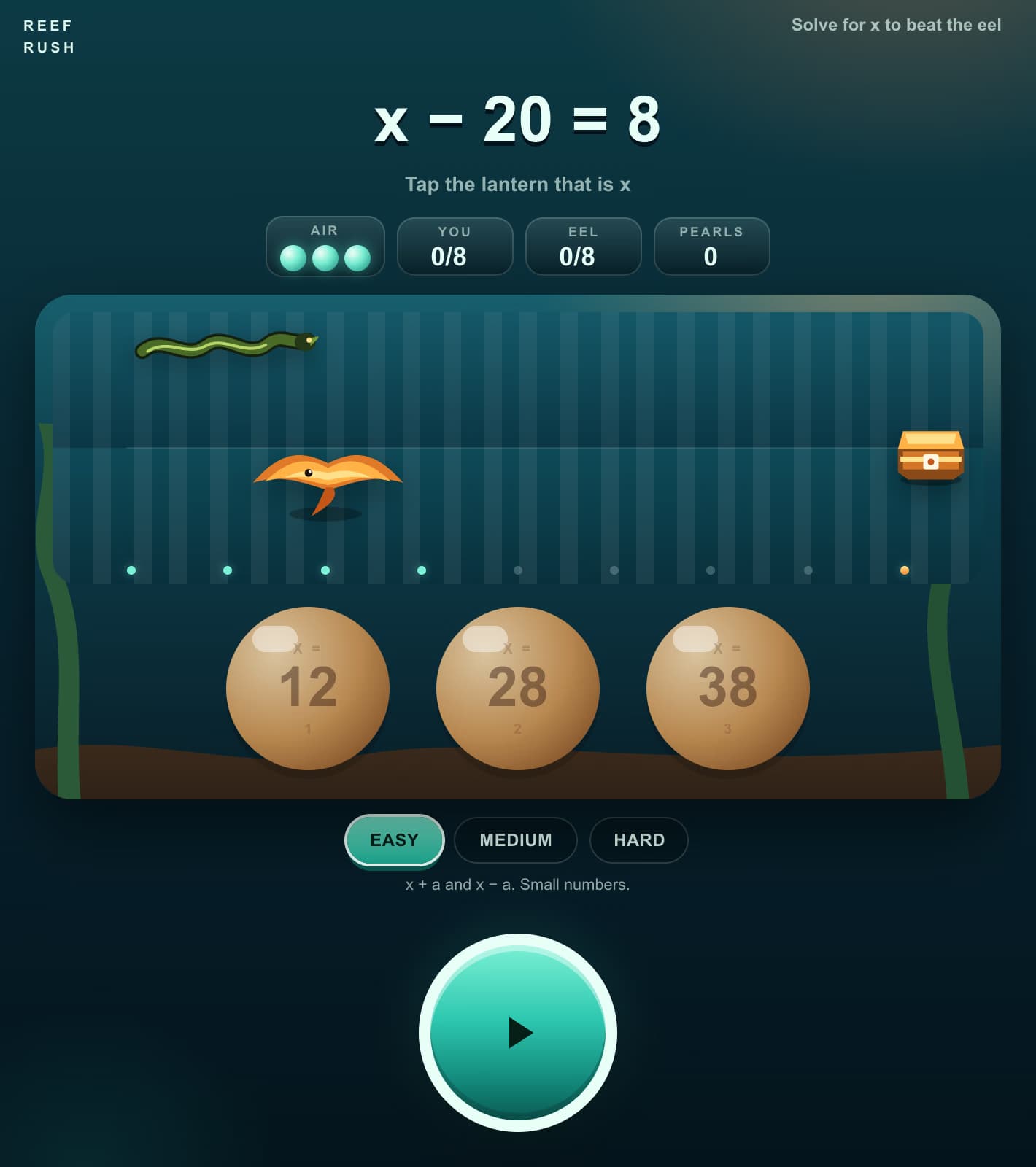
One-Step Addition and Subtraction Equations Race
A dusk lagoon, a mango manta, and an ink eel racing for a copper pearl chest. A one-step equation such as x − 20 = 8 sits under the channel. Tap the lantern that is x. A correct stroke surges you forward. A miss lets the eel close in and costs a tank of air. First to the chest wins.
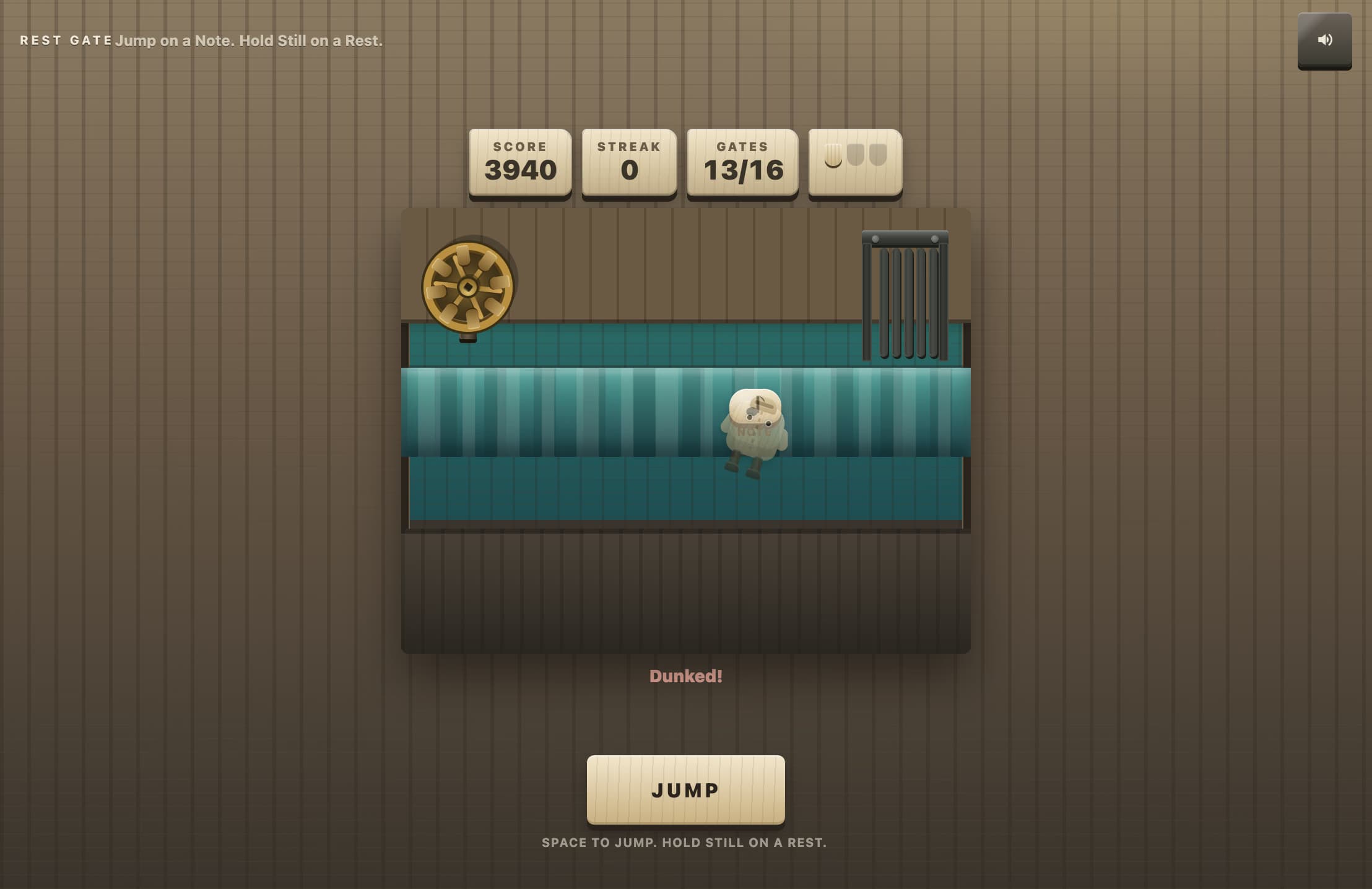
Note and Rest Rhythm Mill
A creek mill. A hopper walks the mill race. Jump on a Note as it sounds. Hold Still on a Rest so the iron gate stays open. Jumping a Rest slams the gate and dunks you in the creek. Easy uses obvious long rests. Medium mixes quarter notes with quarter rests. Hard uses eighth notes and rests, faster. Score, Streak, Gates, three lives, and a Best.
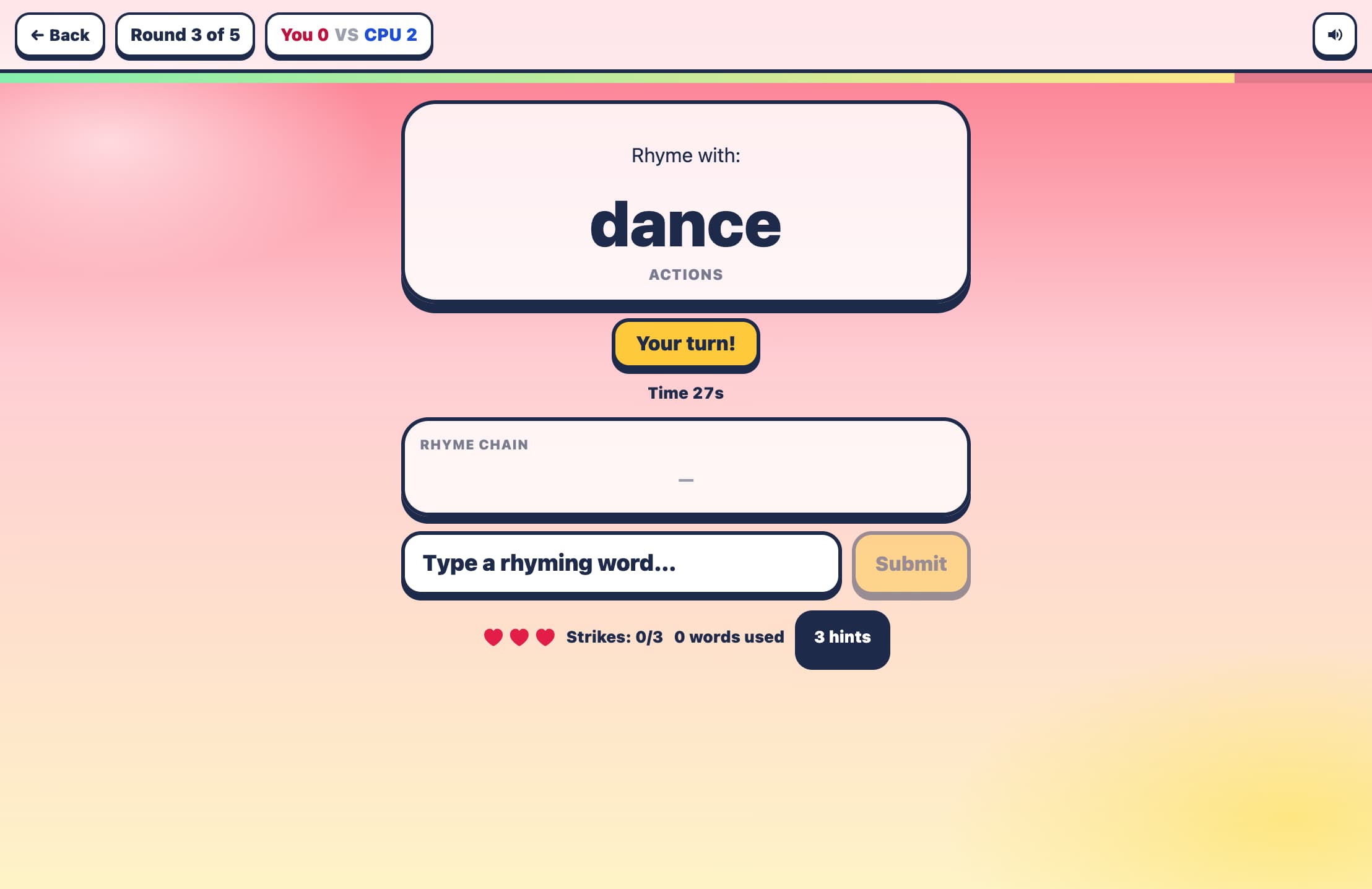
Rhyme Battle
Challenge the CPU in a fast-paced rhyme battle! Take turns saying words that rhyme with the seed word. Miss one and your opponent wins the round. Last player standing wins the battle!
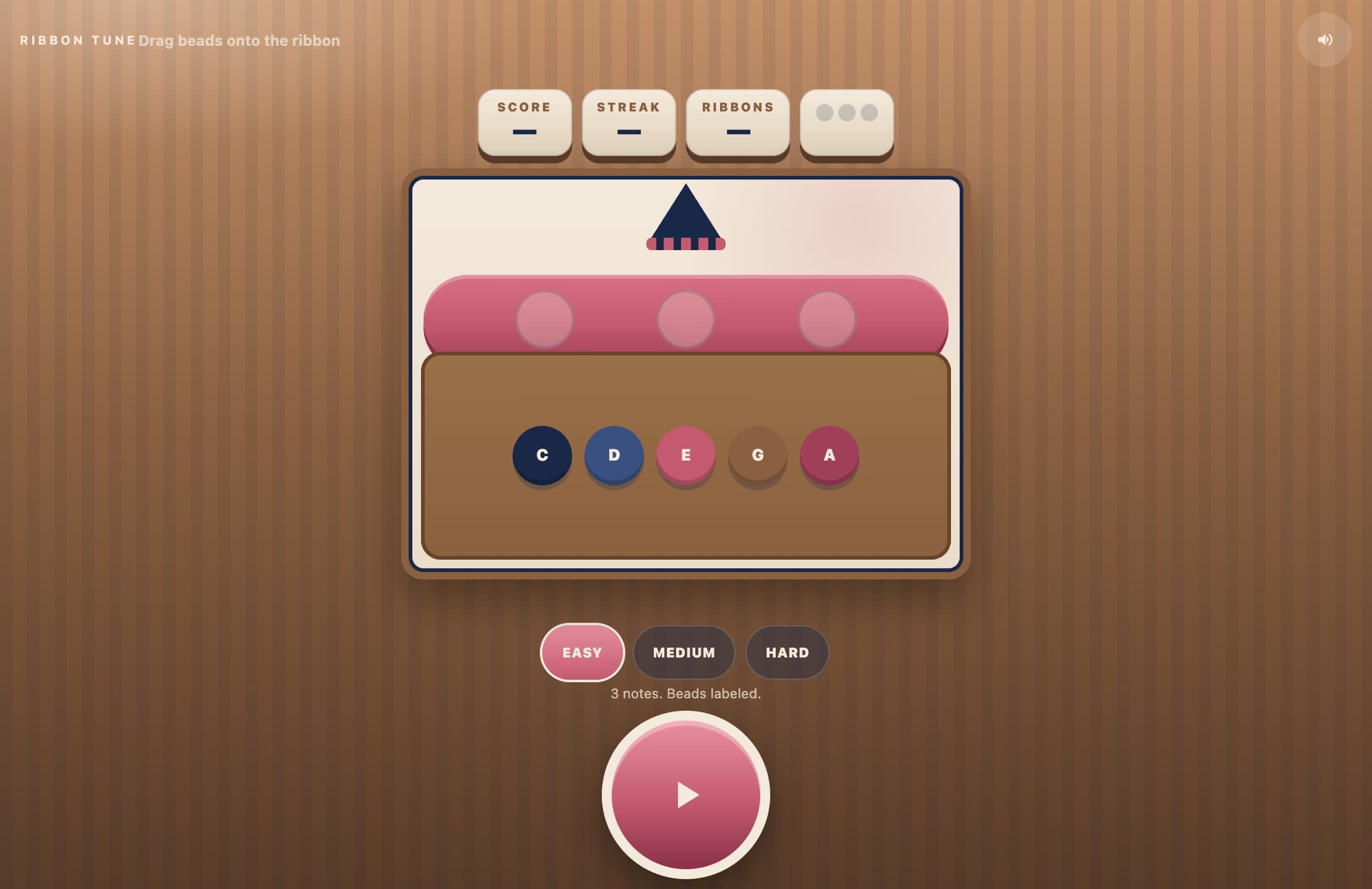
Pentatonic Melody Bead
A sewing loft. A humming kite plays a short pentatonic phrase. Drag beads onto the satin ribbon in order, then press Play ribbon to hear your phrase next to the kite. A match scores. A snarl costs a life. Easy is 3 labeled beads. Medium is 4 unlabeled. Hard is 5, faster. Score, Streak, Ribbons, three lives, and a Best.
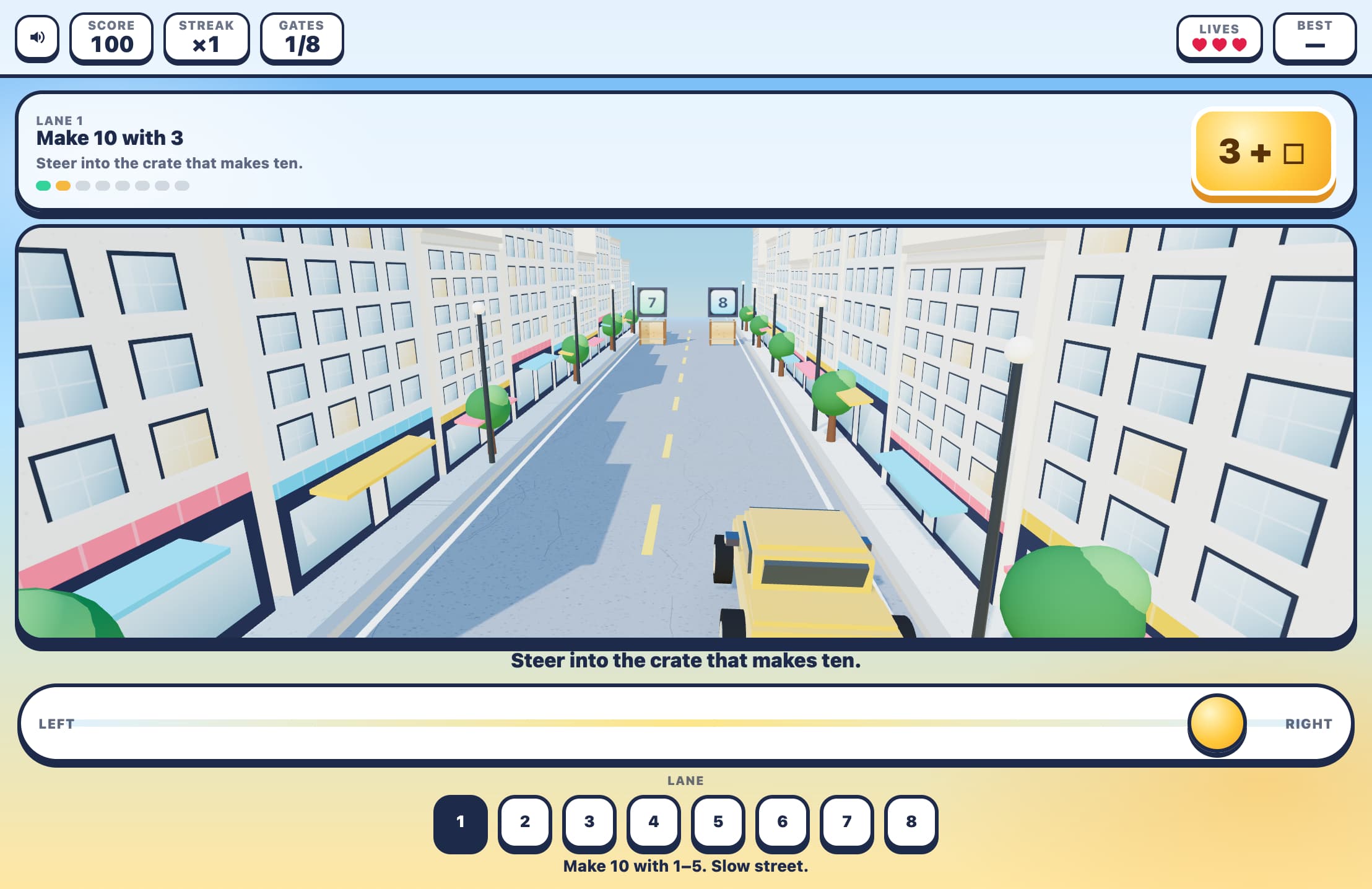
3D Making Ten Addition
A night icehouse aisle. Steer a copper sled toward frost crates and blast the number that makes ten. Easy is bonds to 10. Medium and Hard use addition within 20: make ten first, then add the leftover. Three lives, a streak bonus, and a live score.
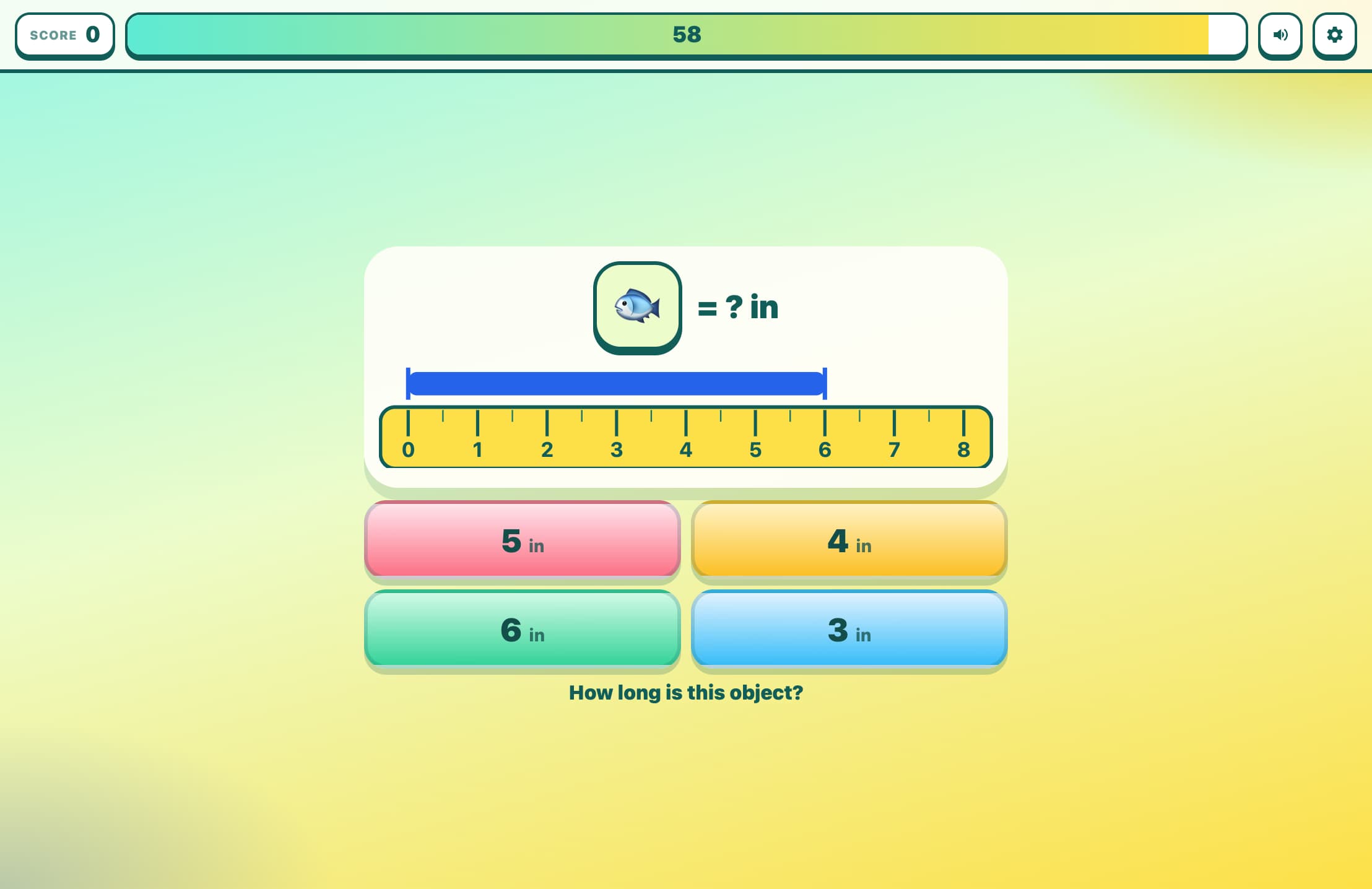
Measure Objects on an On-Screen Ruler
How long is this object? A blue bar sits on the ruler. Pick the length in in or cm. 60-Second Rush or Survival, on Easy, Medium, or Hard.
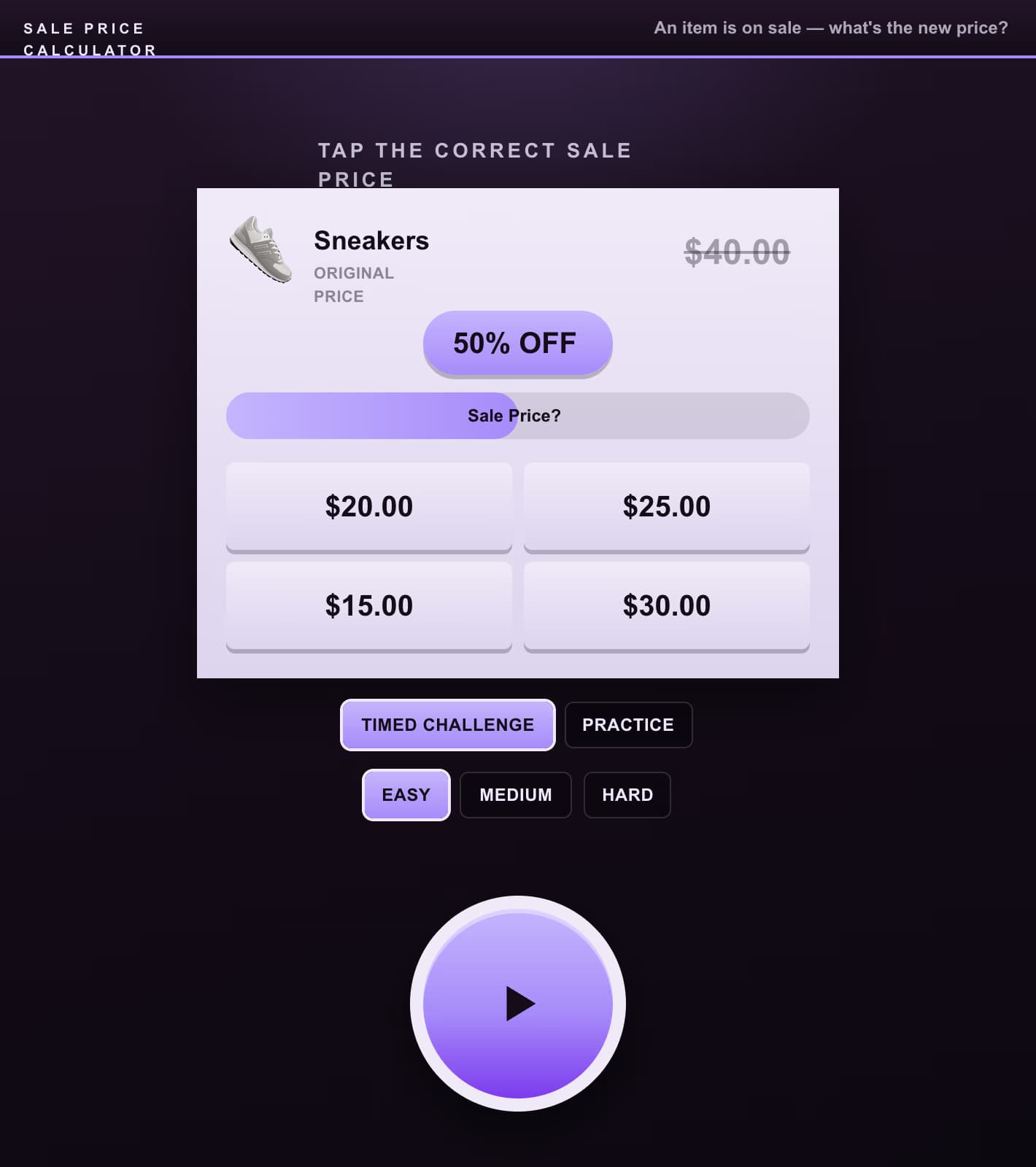
Calculate Discounts and Find the New Price
An item is X% off — what is the new price? See the discount visually and calculate the sale price. Covers 10%, 25%, 50%, and 75% off for grades 3–5.
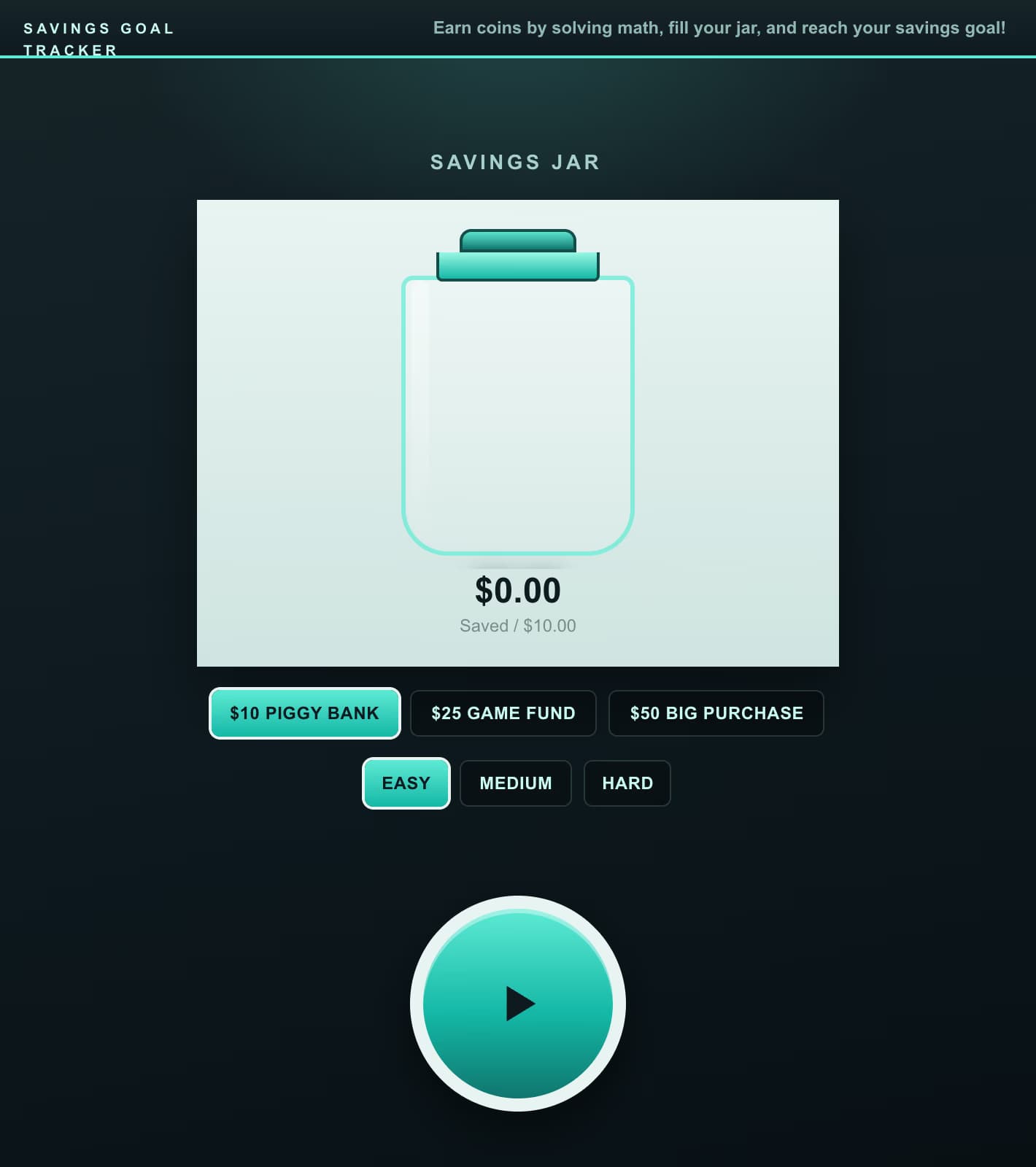
Earn Money by Solving Math & Fill Your Jar
Set a savings target, earn money by answering math questions, and watch a visual jar fill up toward your goal. Teaches delayed gratification and saving habits.
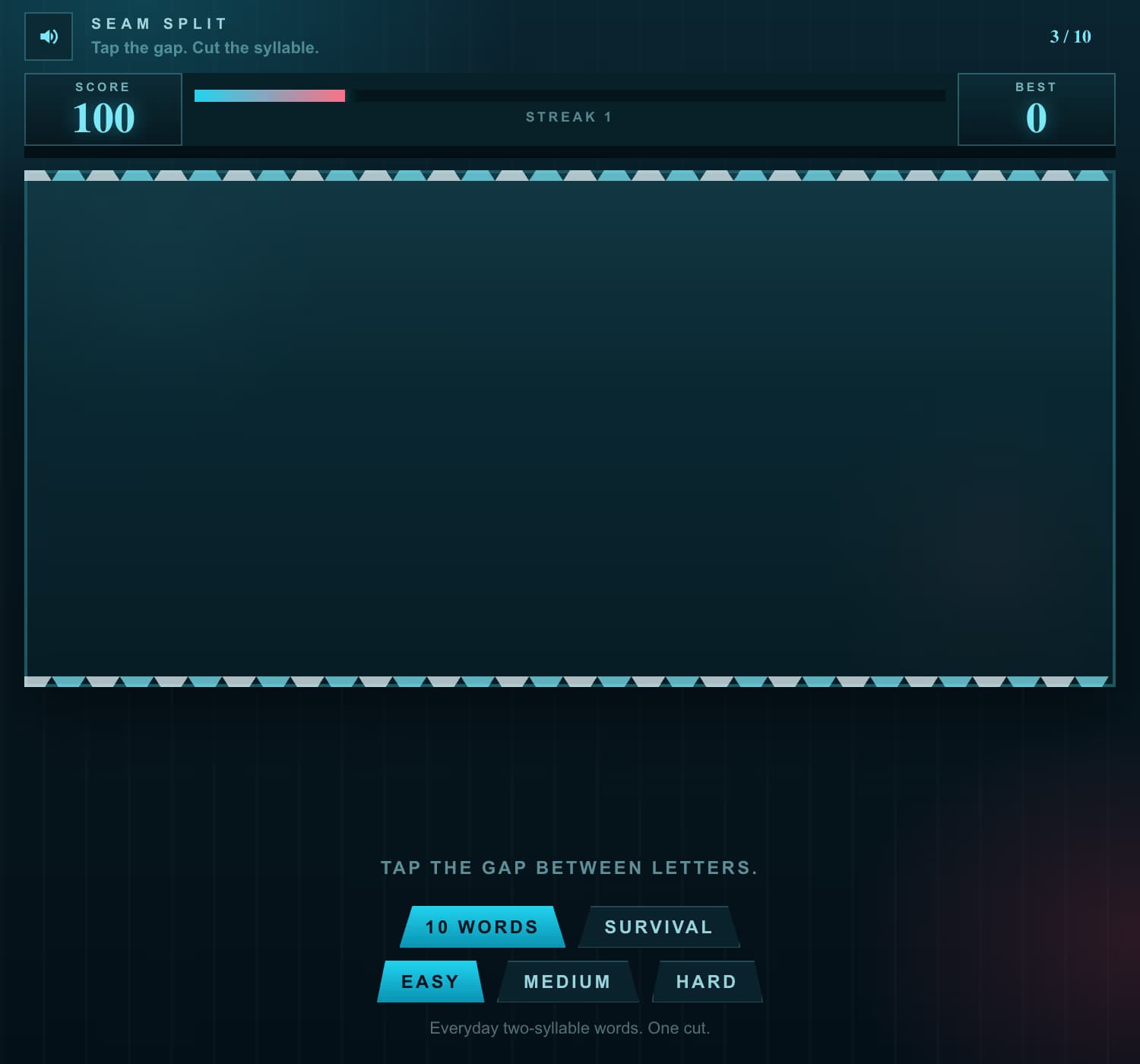
Cut English Words into Syllables
An ochre quarry, brass seams, and a carved English word on a stone tablet. Tap the gap between letters to cut a syllable. A true seam locks. A miss sparks and costs a life. Built for two- and three-syllable words, including r-controlled vowels.
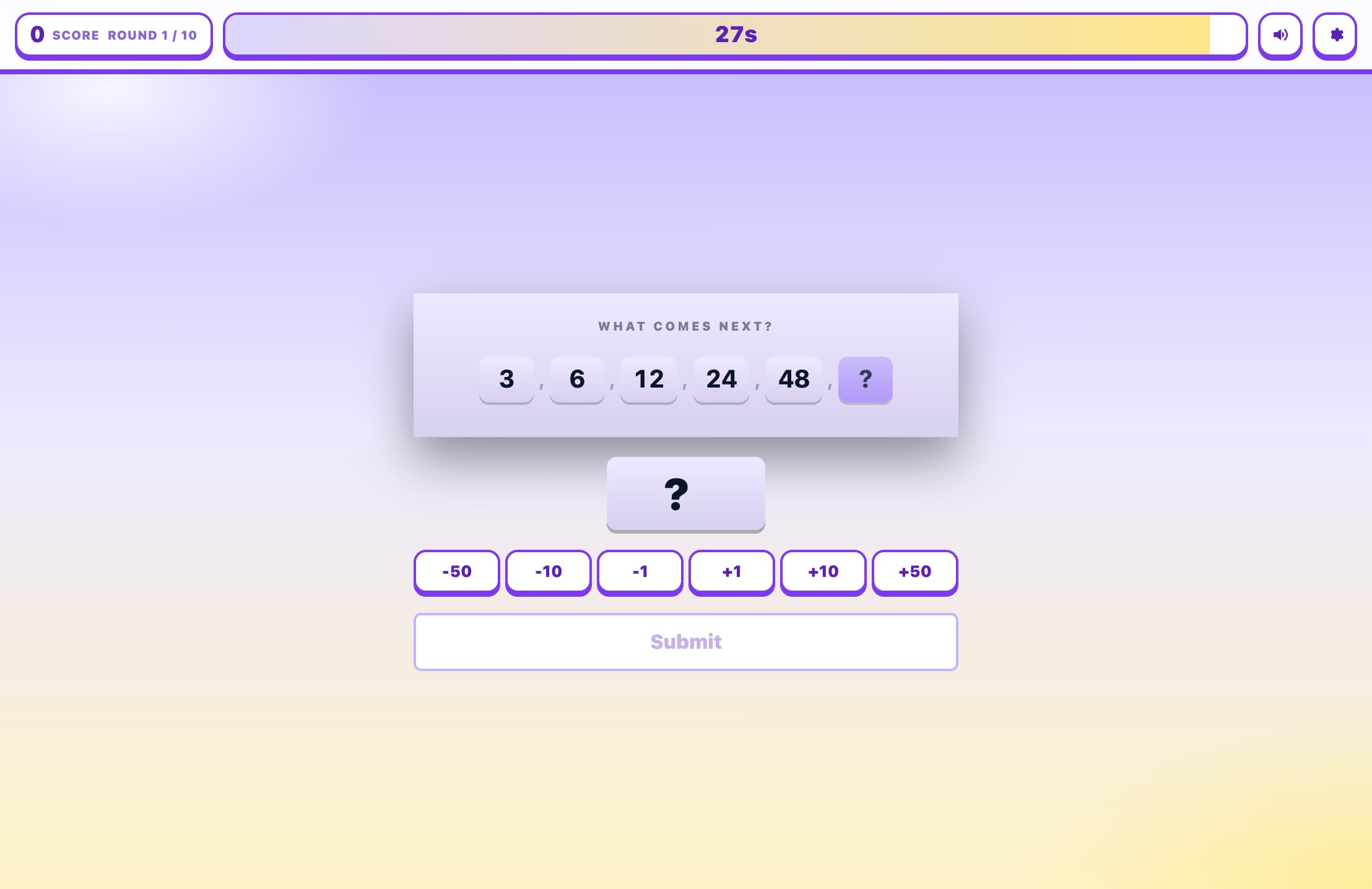
Fibonacci, Primes & Number Patterns
Spot the pattern and fill in the missing number! Each round shows a well-known mathematical sequence with the next term hidden. Identify whether it's Fibonacci, prime numbers, perfect squares, factorials, or one of nine other sequence types — then type your answer before the countdown runs out.
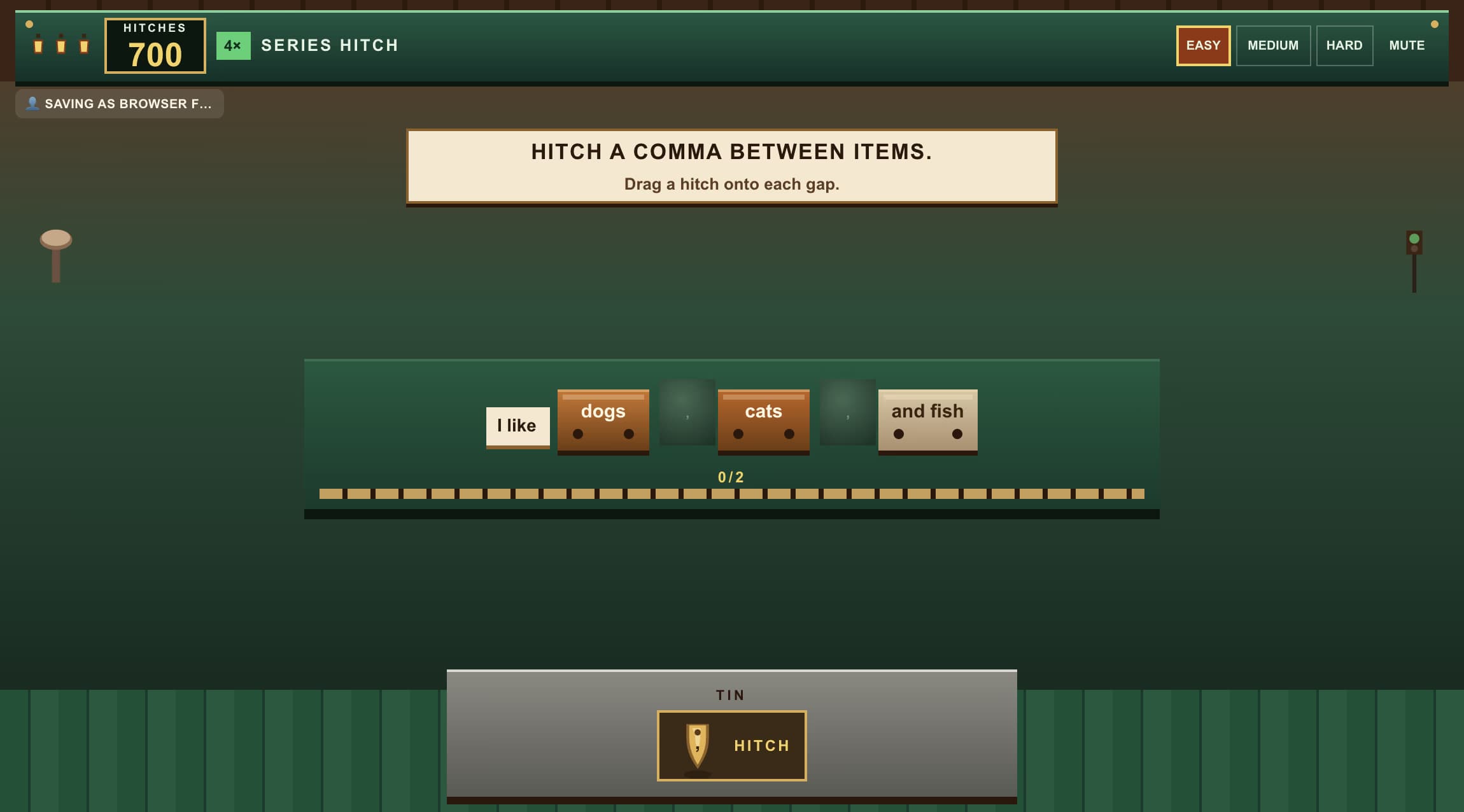
Using Commas in a Series
Using commas in a series is the skill. In Series Hitch, English word cars sit on a felt yard. Drag a Hitch from the Tin into each gap. Easy and Medium want a comma between every item. Hard adds a decoy after and. Built for second through fourth grade grammar — a coupler you pin, not a quiz card.
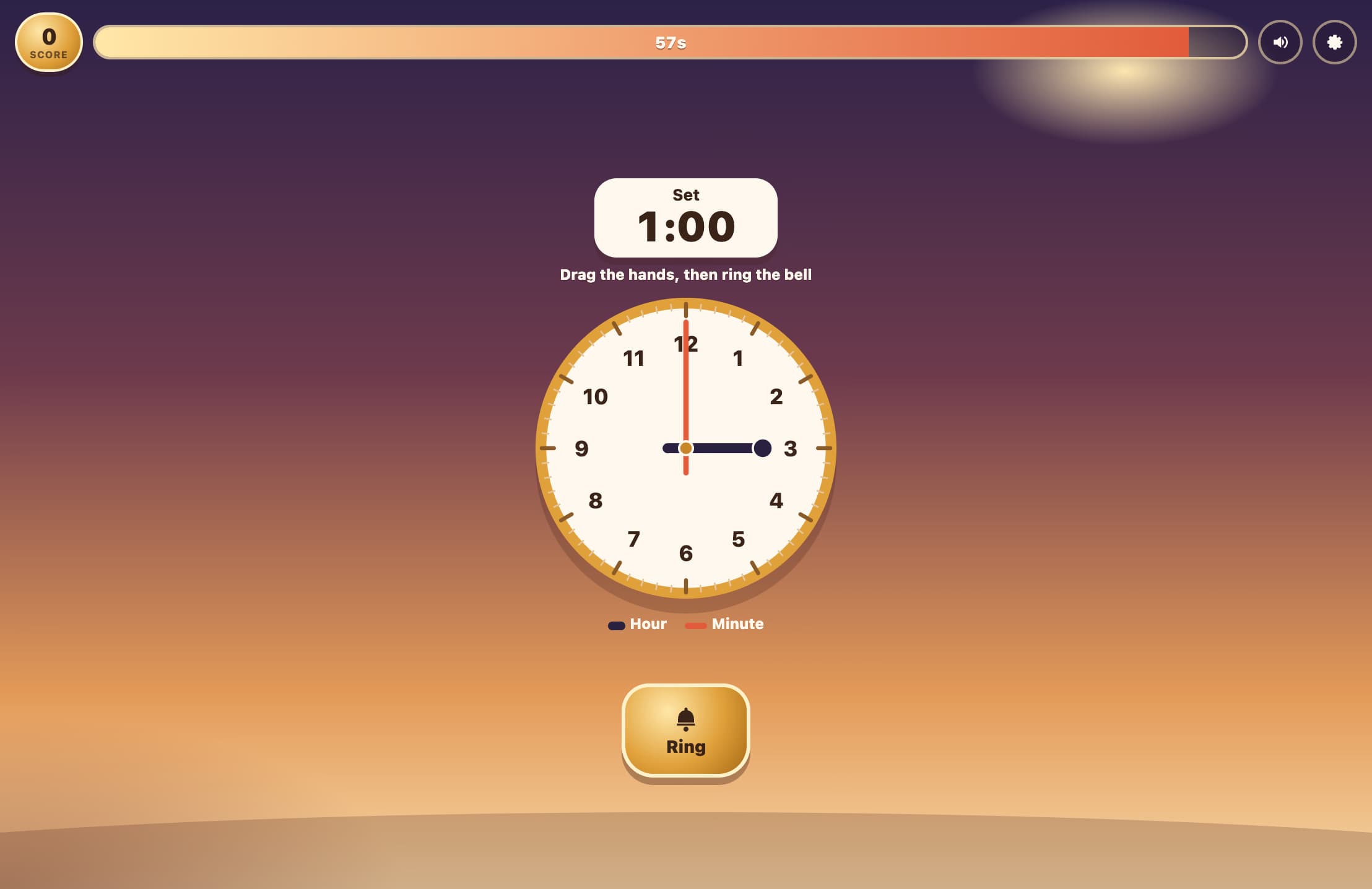
Drag the Hands and Tell Time
Drag the hour hand and minute hand so the clock shows the time, then ring the bell. Easy is whole hours, Medium adds half hours, and Hard uses every five minutes. Play a 60-Second Rush or Survival with three lives.
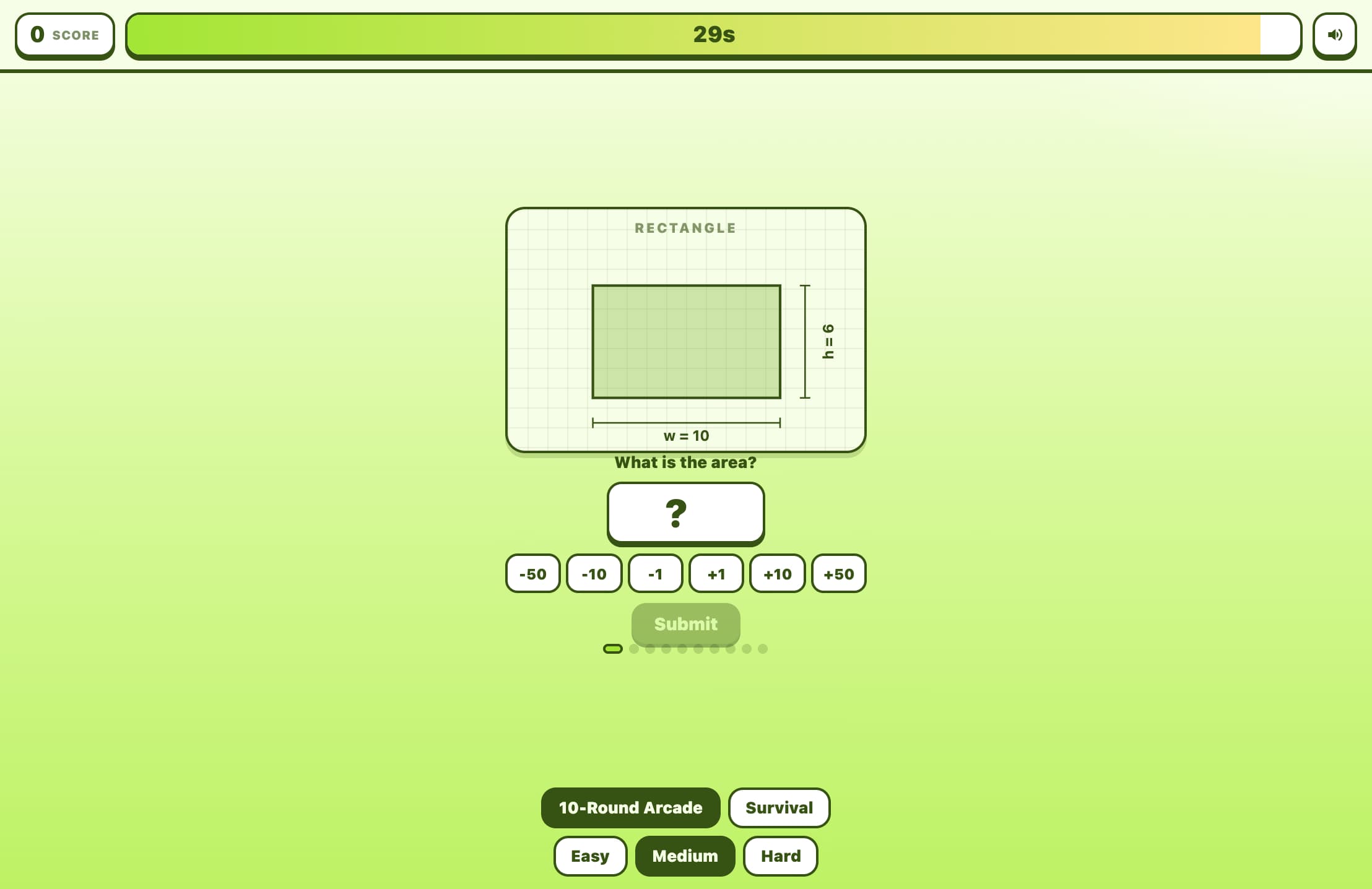
Geometry Area Formula
Put your geometry skills to the test! A shape is drawn on screen with labeled dimensions. Calculate the area using the right formula, then enter your answer before the countdown hits zero. Correct answers earn bonus points for speed.
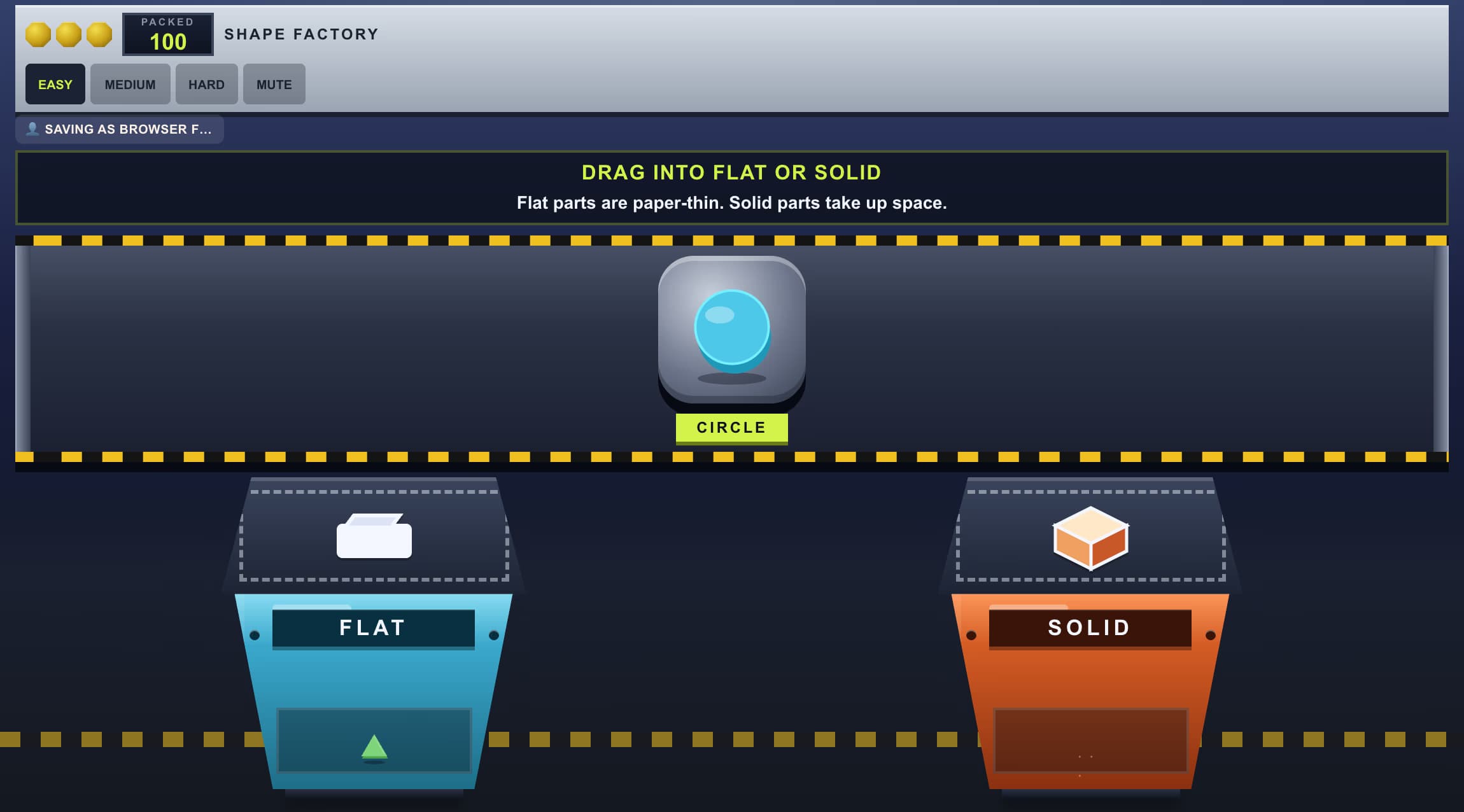
Sort Flat and Solid Shapes on the Packing Line
Help the night packing line in Shape Factory. Drag each part into Flat or Solid: circles, squares, and triangles are paper-thin, while cubes, cylinders, and pyramids take up space. Kindergarten geometry practice that feels like a real factory run.
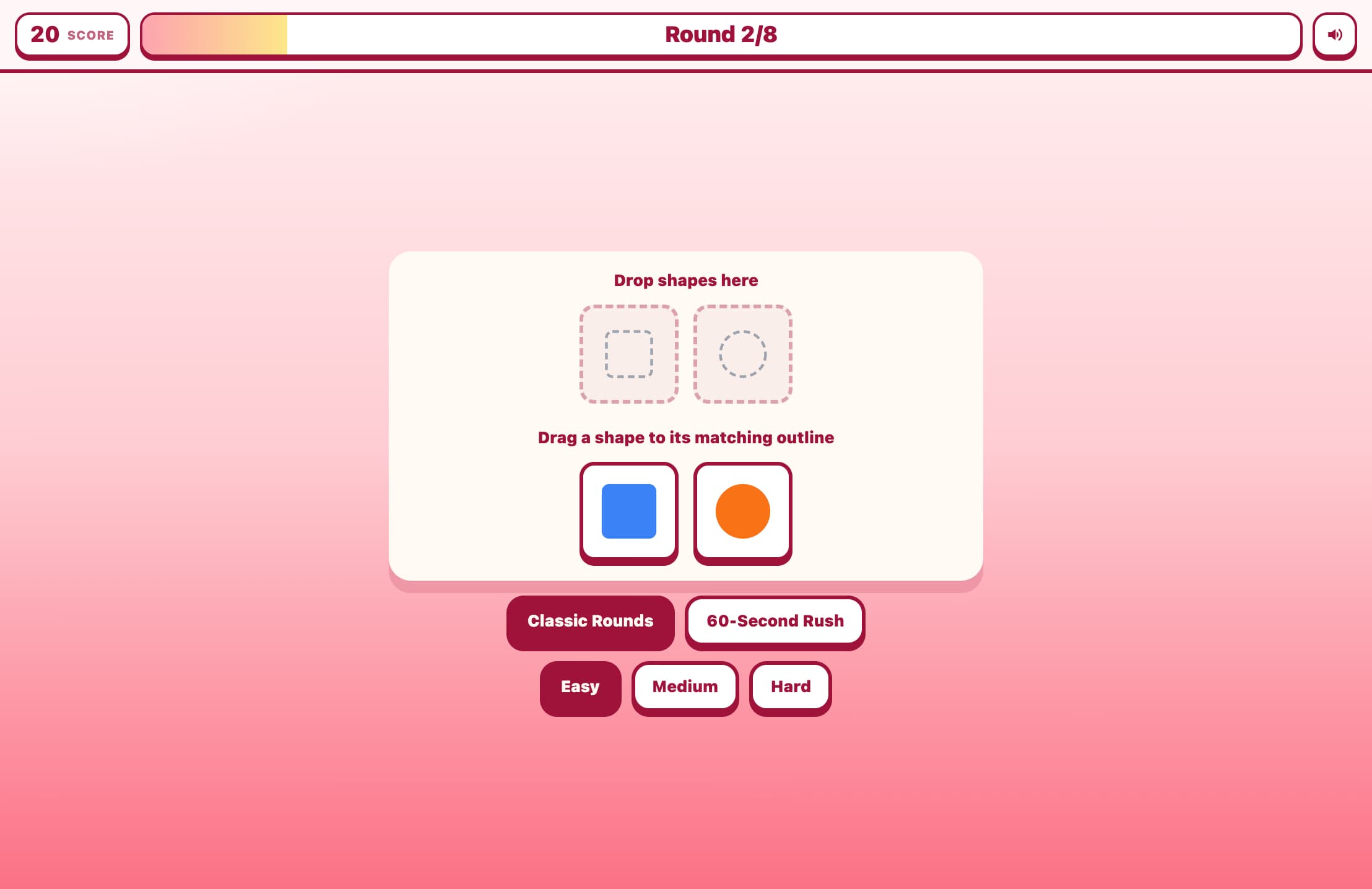
Drag and Drop Shapes Into Matching Slots
Drag circles, squares, triangles, and rectangles into their matching outline slots in this fun shape-sorting game. Race the clock or sort shapes across 8 classic rounds — great for early geometry and shape recognition!
Scoop Fair Equal-Part Shells
Six shells sit in a tide pool. Scoop every shell whose pieces are the same size. Leave the crooked ones. Eight waves win.
Subject-Verb Agreement on the Mesa
Dusk on a sandstone mesa. A brass view camera waits on the crate, and a dino holds a pose in the canyon set. Read the English sentence on the slate. Slide the verb plate that agrees with the subject into the camera back. A hit seats the plate, the shutter snaps, and a polaroid drops into the album. A Flash popped rattles the bellows and burns a bulb. Built for third-grade subject-verb agreement.
Wisp Gaff
A tin weather shed at copper sunset. Wool wisps drift over the roof, each stamped with an English sight word. Slide the copper gaff and hook the matching wisp on the Slate. A hit blooms a Halo. A miss is a Rain dump on the shed. Eight Wisps clear the sky. Kindergarten and first-grade sight words.
Smash Proper Nouns on Hanging Signs
Words hang on a night-market line. Tap the proper noun to smash it into a capital. A name flips gold and pops points. A common noun shakes and breaks the streak. Built for third-grade capitalization.
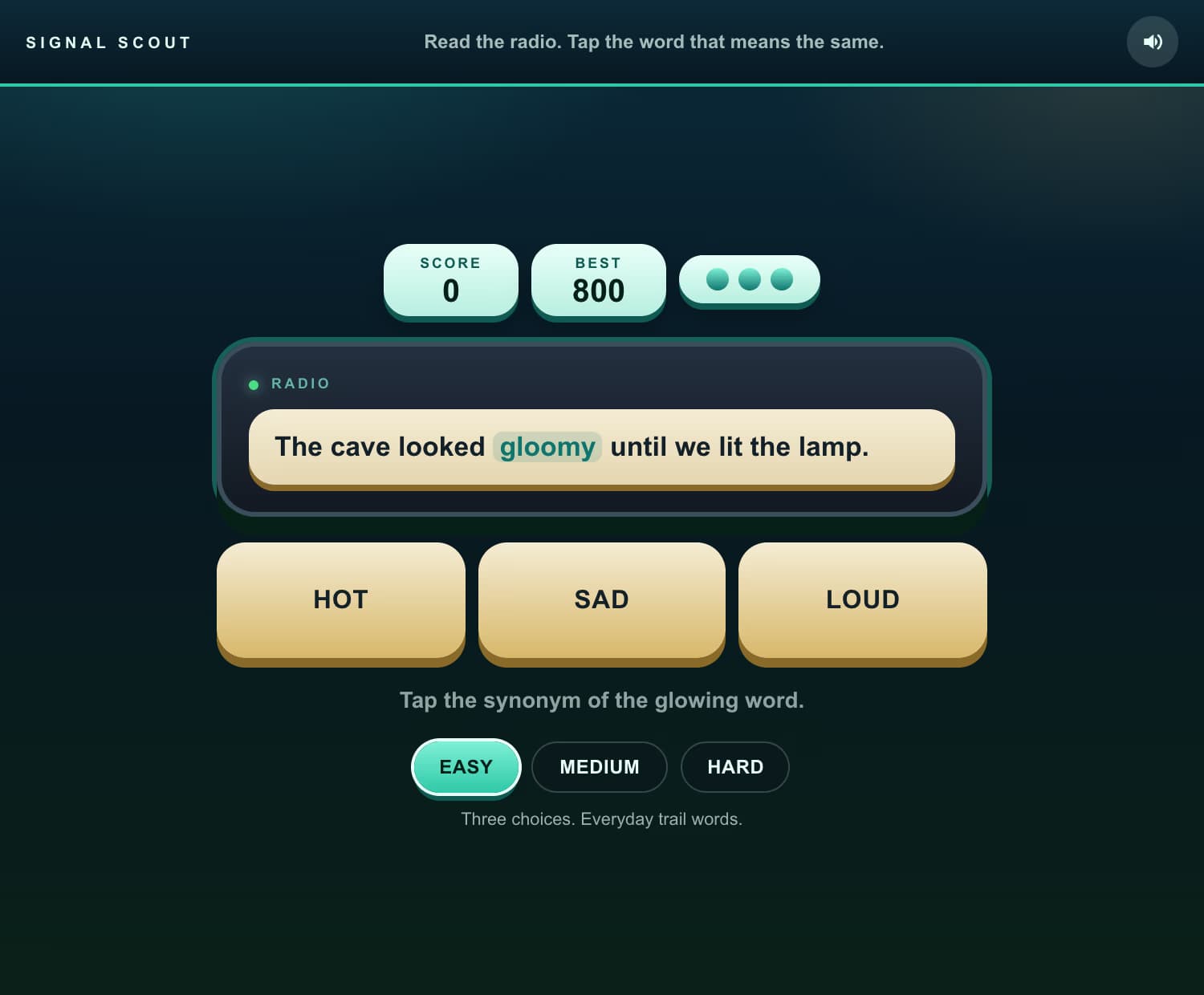
Context Clues Vocabulary
Read a short radio message with one glowing word, then tap the synonym. Three lives, a score streak, and Easy / Medium / Hard. Built for elementary vocabulary: context clues and synonyms.
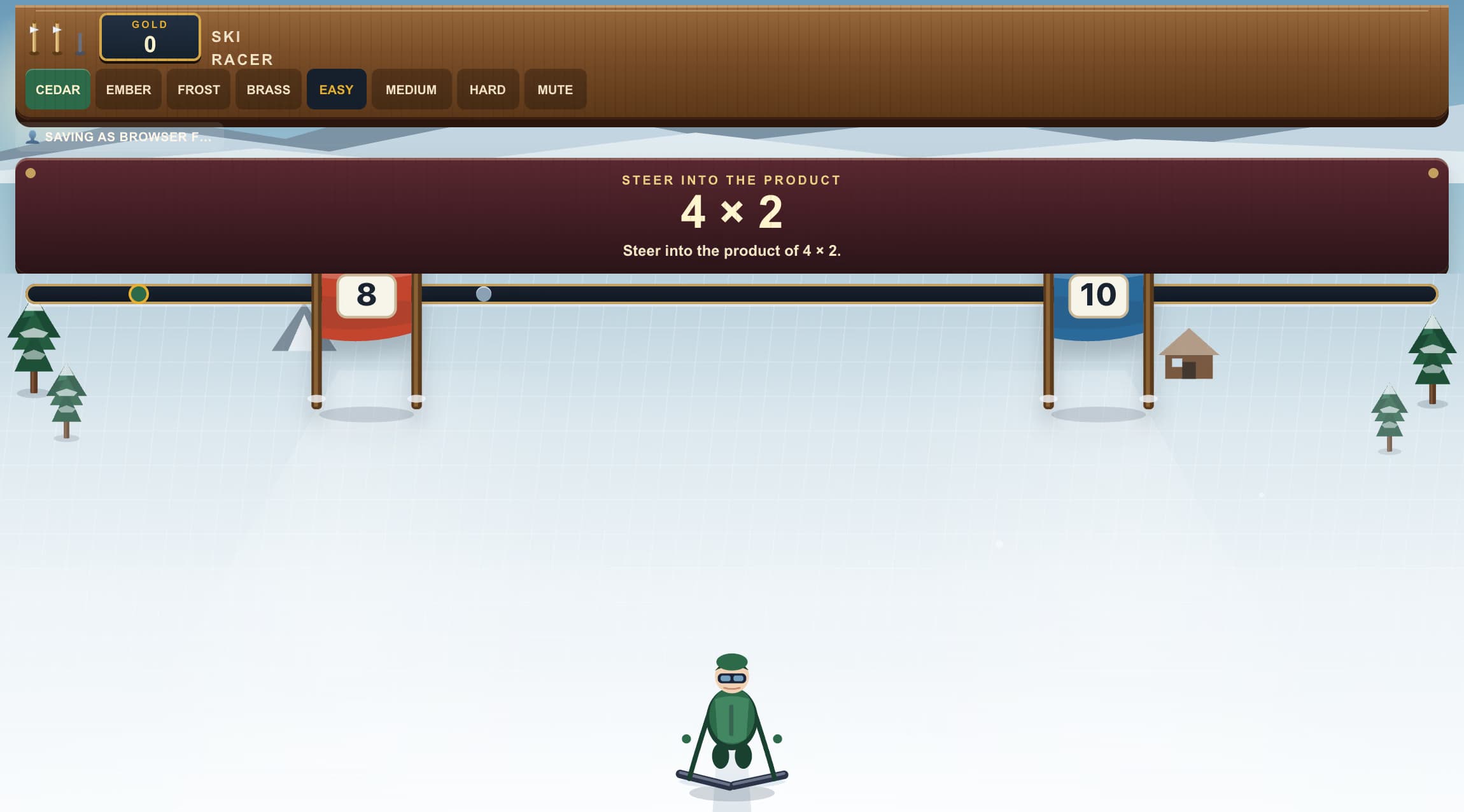
Multiply by 4 and Steer into the Product
Race the alpine slope in Ski Racer. A trail sign shows 4 times a number. Drag your skier — Cedar, Ember, Frost, or Brass — and steer into the product on the falling slalom gate. Third-grade multiply-by-4 facts, with Gold points for every clean gate.
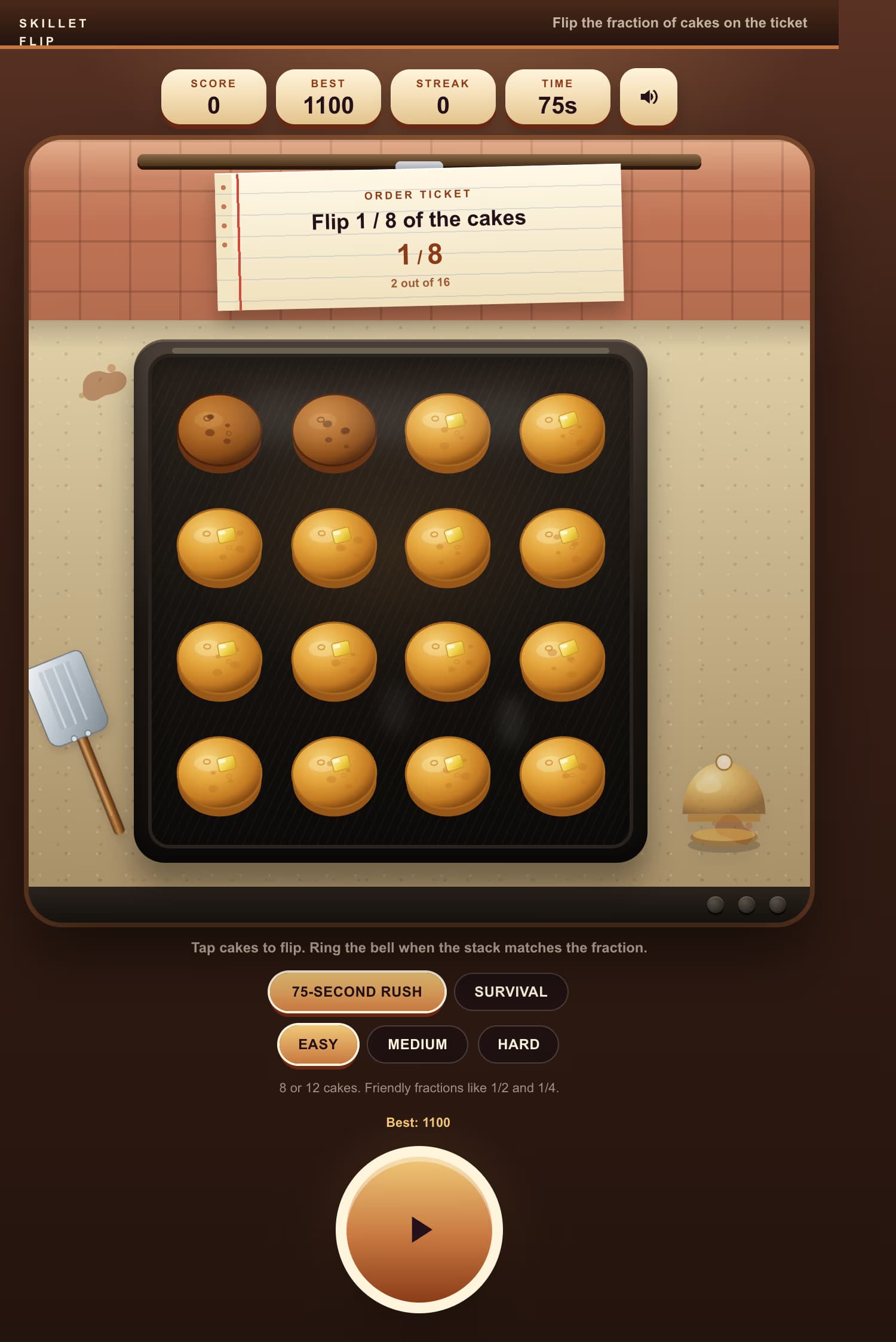
Fractions of a Set
Flip the right number of cakes so the skillet matches a fraction of the whole set. Fourth and fifth graders tap cakes, then ring the bell when 3/8 of 16 or 2/5 of 20 is on the stack. Fast rounds make parts of a set feel like a short-order rush instead of a worksheet.
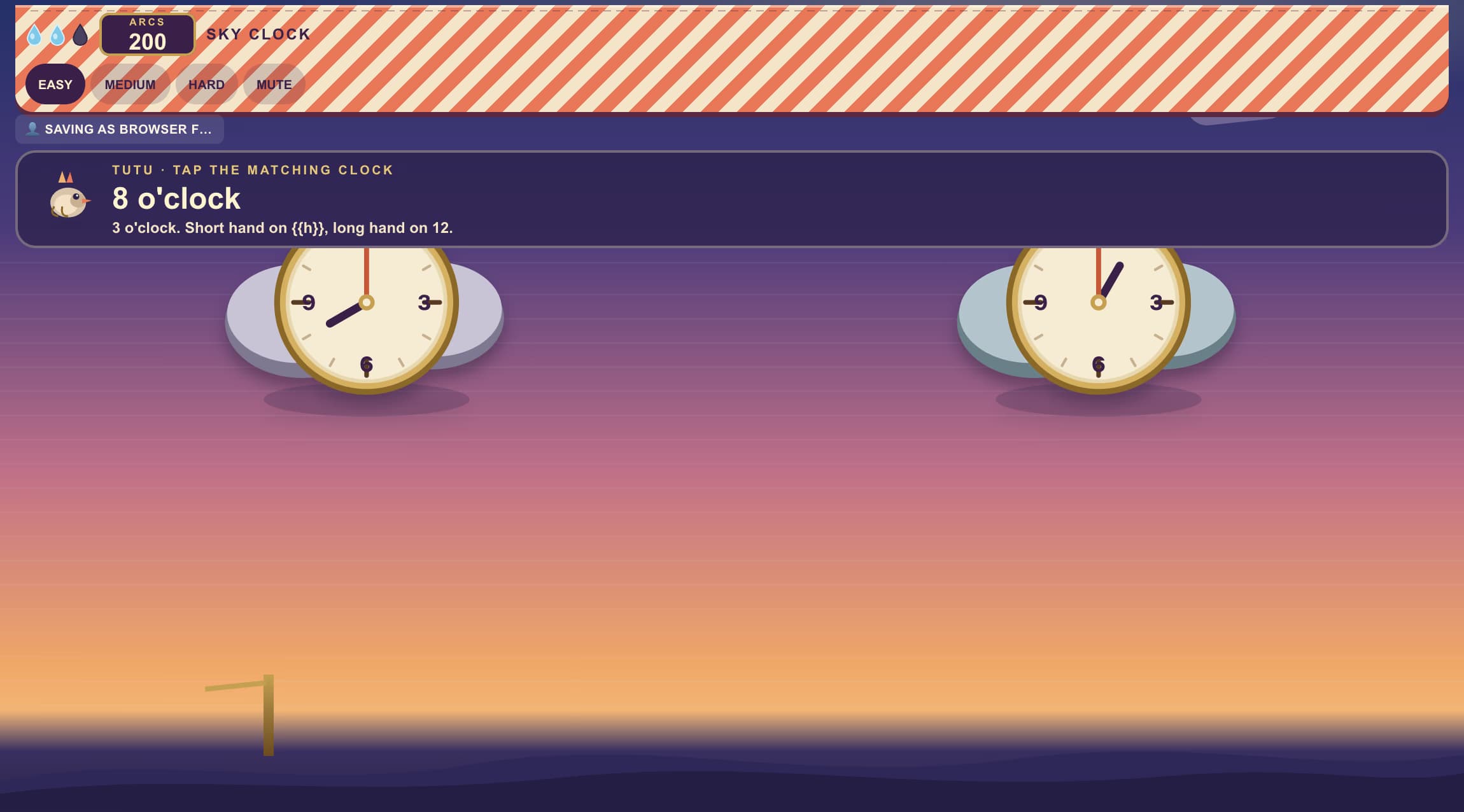
Telling Time in the Sky to the Hour and Half Hour
Help Tutu turn rain clouds into rainbows in Sky Clock. Listen for the time, scan the falling clouds, and tap the matching clock. First-grade practice telling time to the hour and half hour, with analog clocks that bloom into rainbows when you catch the right one.
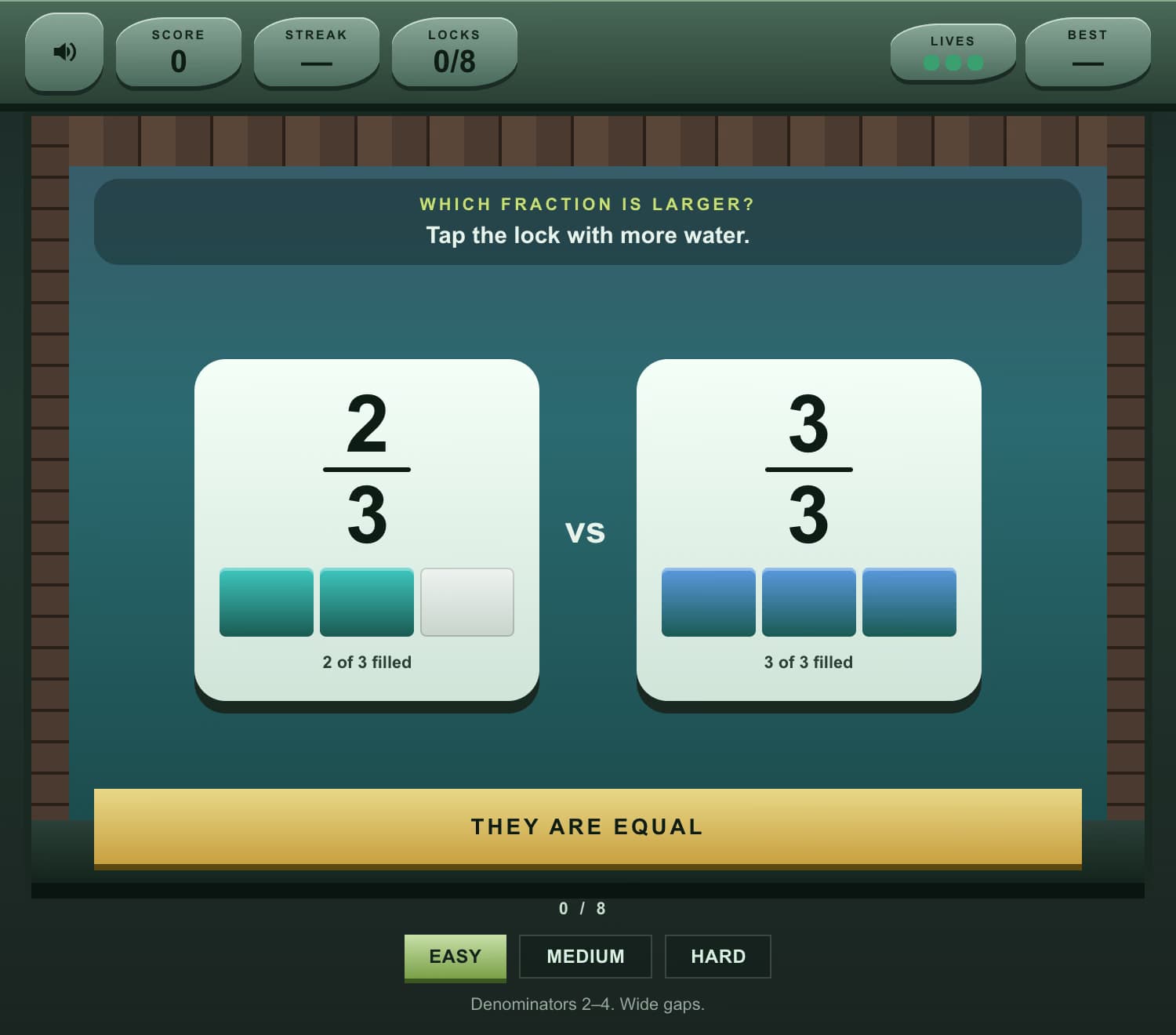
Compare Fractions with Like Denominators
A dusk lock house on a canal. Two chambers share the same number of marks — the denominator. The water fill is the numerator. Yank the brass tiller toward the fuller lock, or leave it in the middle when the fills match. Built for third- and fourth-grade fraction comparison.
do re mi Stepping Stone
A greenhouse. Stepping stones labeled do re mi sit in the moss. A short pentatonic phrase plays. Hop the stones in order. A hit lights the stone and a seedling pops. A miss slips into the moss. Easy is 3 notes with a helper glow. Medium is 4 with no glow. Hard is 5, faster. Score, Streak, Steps, three lives, and a Best. do re mi stay as practice words.
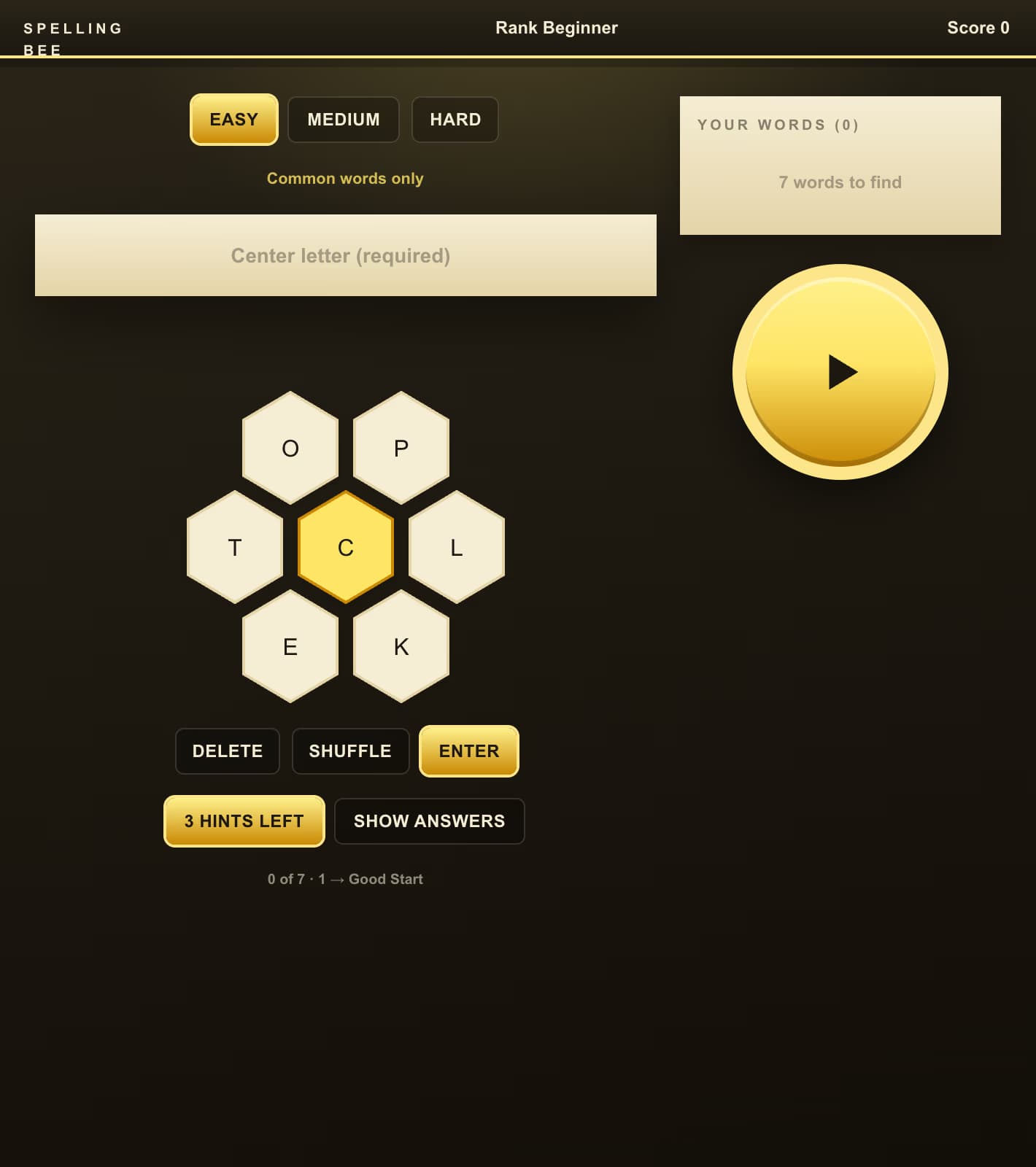
Spelling Bee
Find as many words as you can using 7 letters — every word must include the center letter! Features a honeycomb letter grid, pangram detection, a 10-tier ranking system, hints, and multiple difficulty levels.
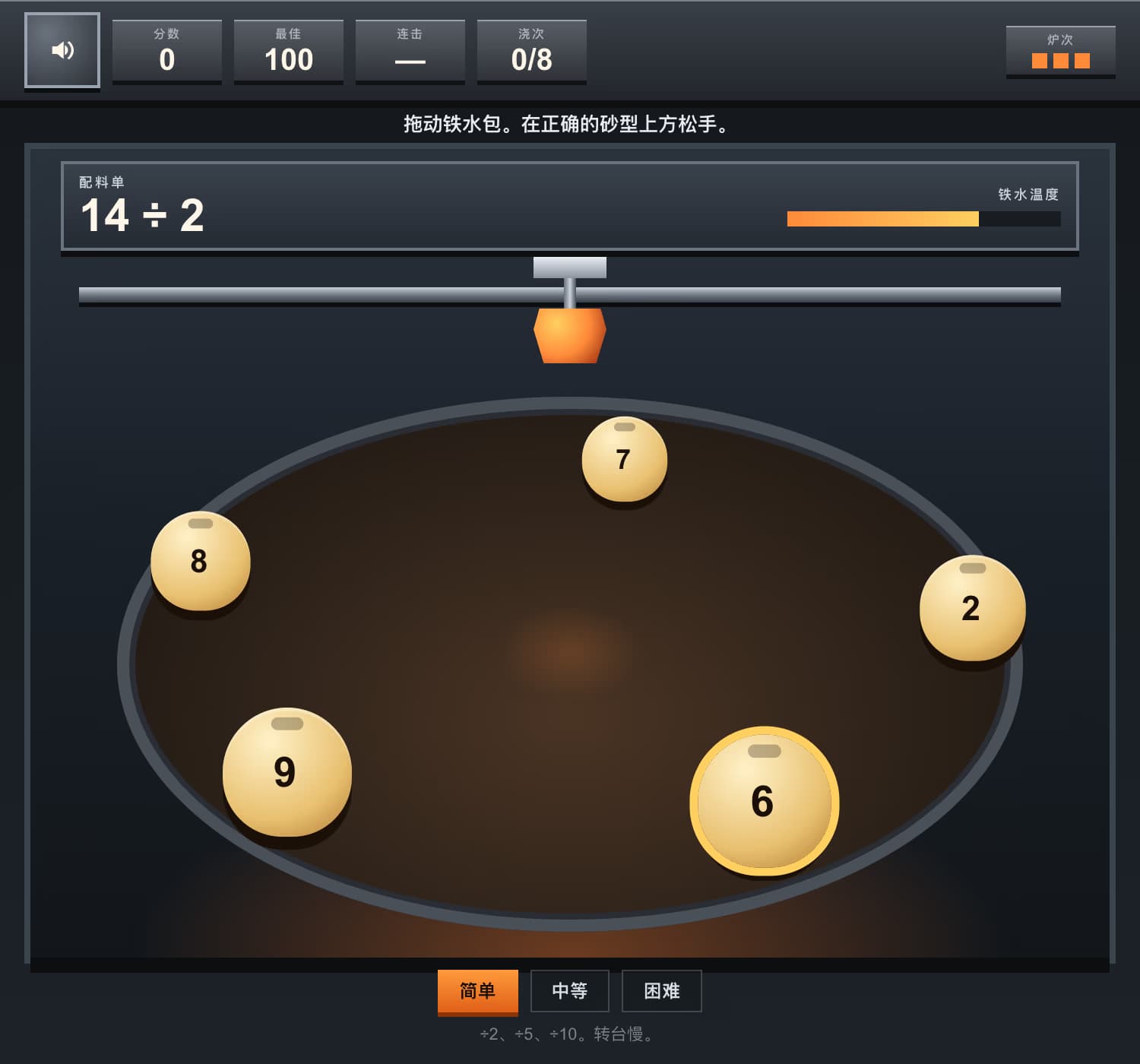
Division Facts Foundry Pour
A night sand floor. A slate shows a division fact. Sand molds spin on a turntable. Drag the ladle and dump the melt into the mold that is the quotient before the heat dies. Built for third- and fourth-grade division fact fluency — one-digit divisors, moving gates, no multiple-choice strip.
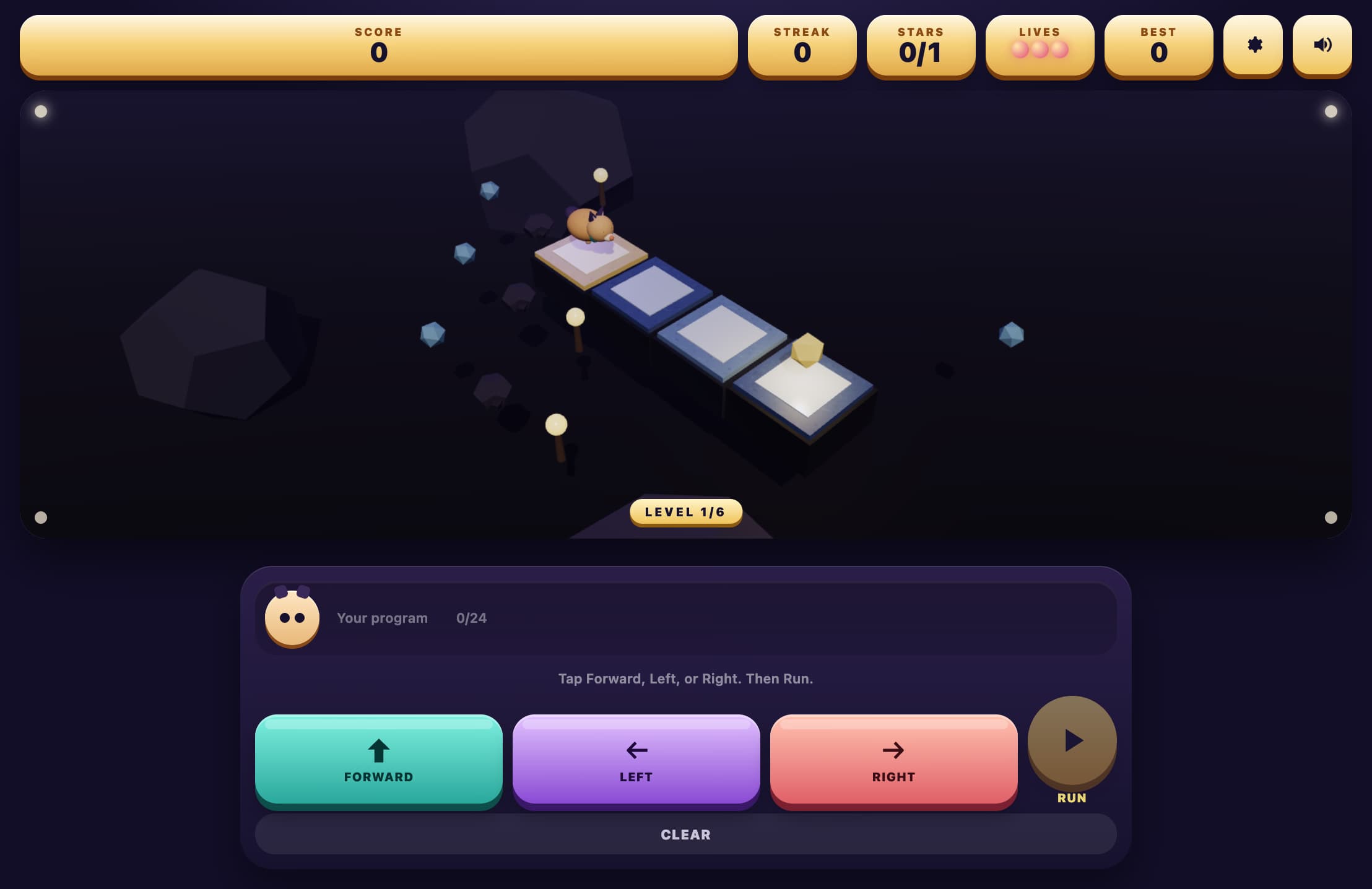
Block Coding
Line up Forward, Turn Left, and Turn Right blocks, then run the program so a fox walks a floating 3D path and gathers every star. Turns happen in place. Kids practice sequencing and facing without typing code.
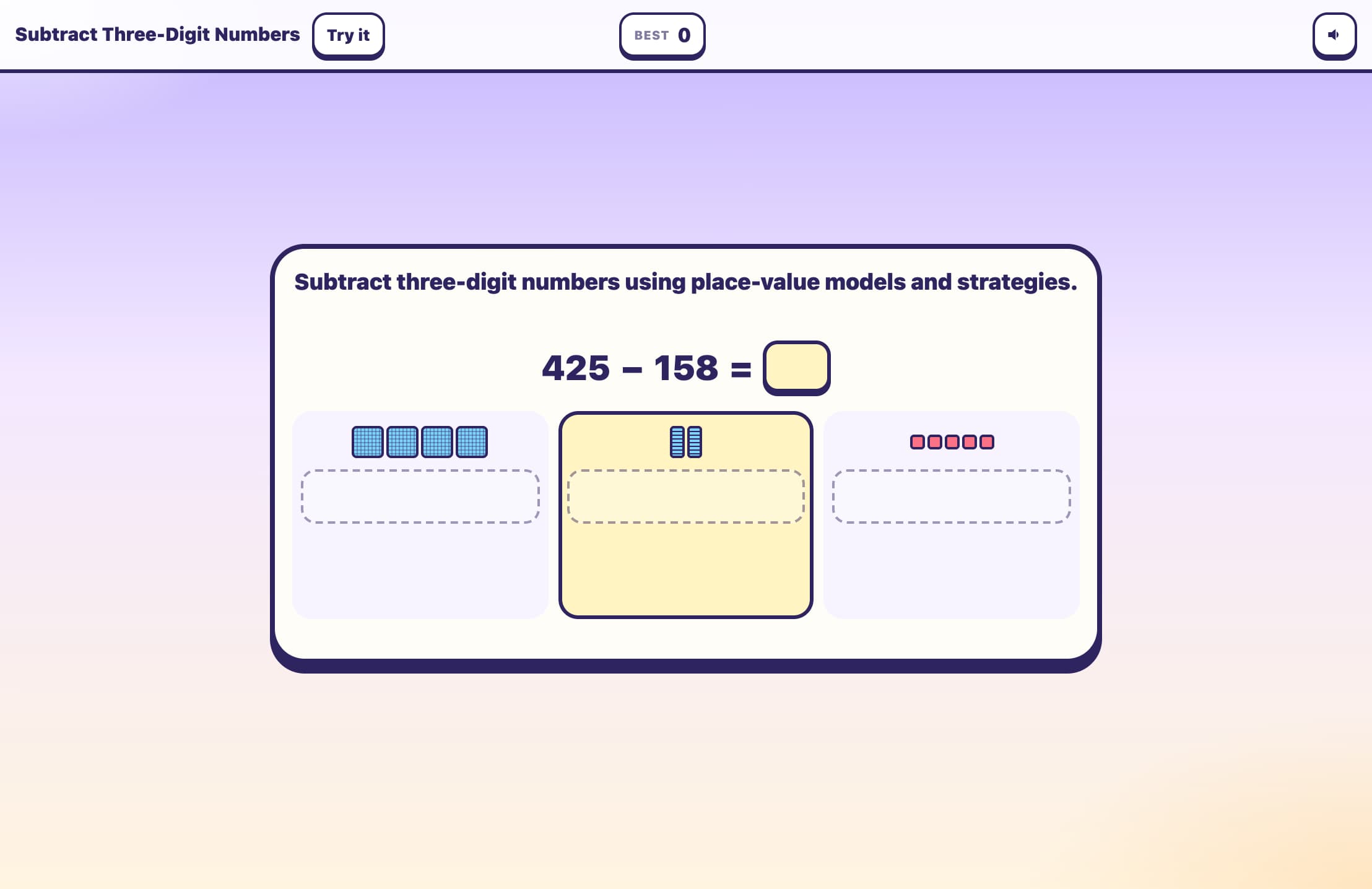
Subtract three-digit numbers using place-value models and strategies.
Subtract Three-Digit Numbers is the game. Subtract three-digit numbers using place-value models and strategies. Watch shows 359 − 125 = 234, then 569 − 162 = 407, then 425 − 158 = 267, then 531 − 185 = 346. Tap the ones, then the tens, then the hundreds. When a place does not have enough, tap the next place first. A ten breaks into 10 ones. A hundred breaks into 10 tens. Try it. Subtract three-digit numbers using place-value models and strategies. Then six scored differences. Score, Streak, and hearts start after Try it. Built for 2nd grade.
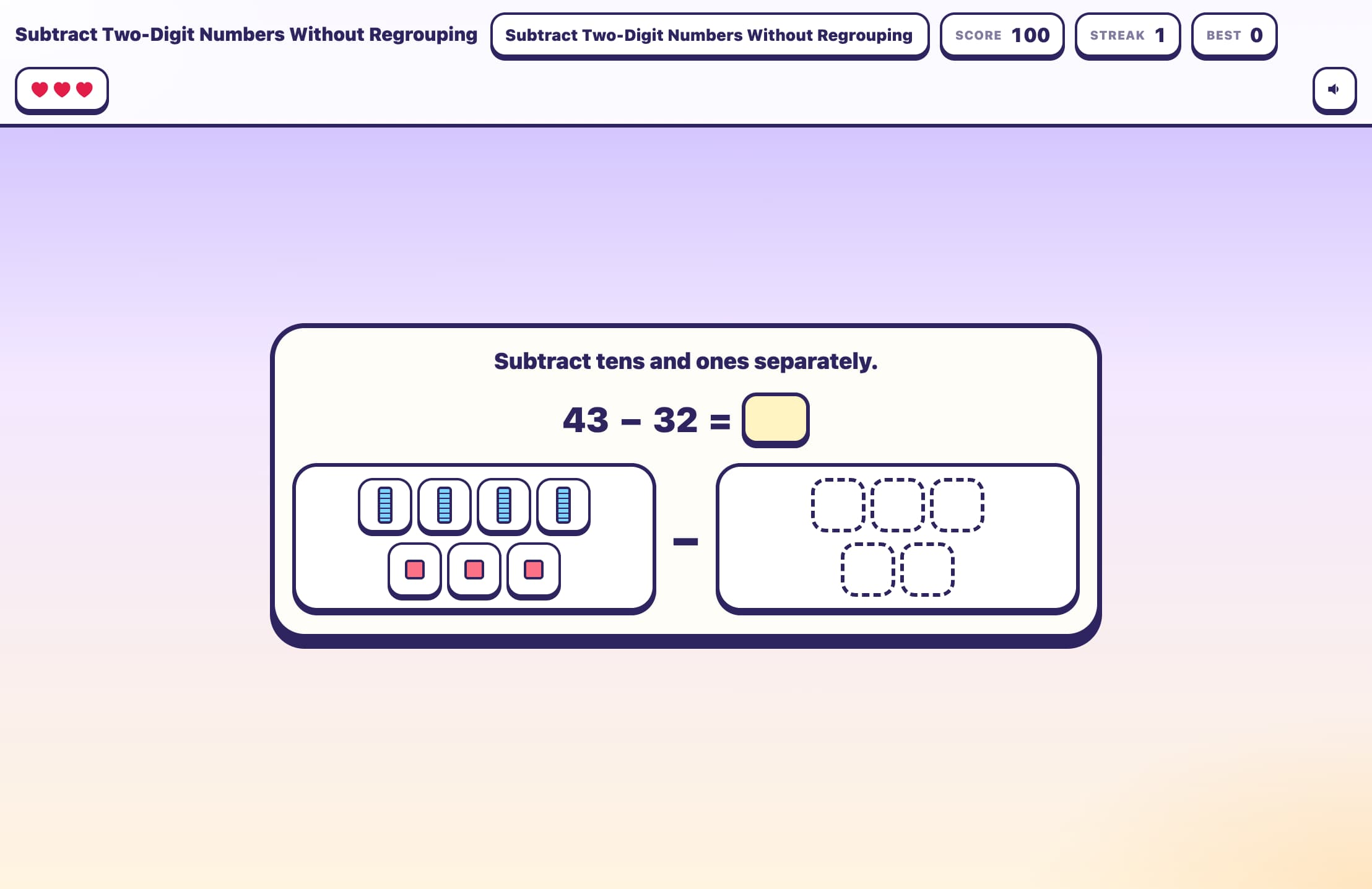
Subtract tens and ones separately.
Subtract Two-Digit Numbers Without Regrouping is the game. Subtract tens and ones separately. Watch shows 58 − 23 = 35, then 46 − 12 = 34, then 67 − 31 = 36, then 79 − 45 = 34. Tap the tens you take away. Tap the ones you take away. What remains is the answer. Try it. Subtract tens and ones separately. Then six scored answers. Score, Streak, and hearts start after Try it. Built for 2nd grade.
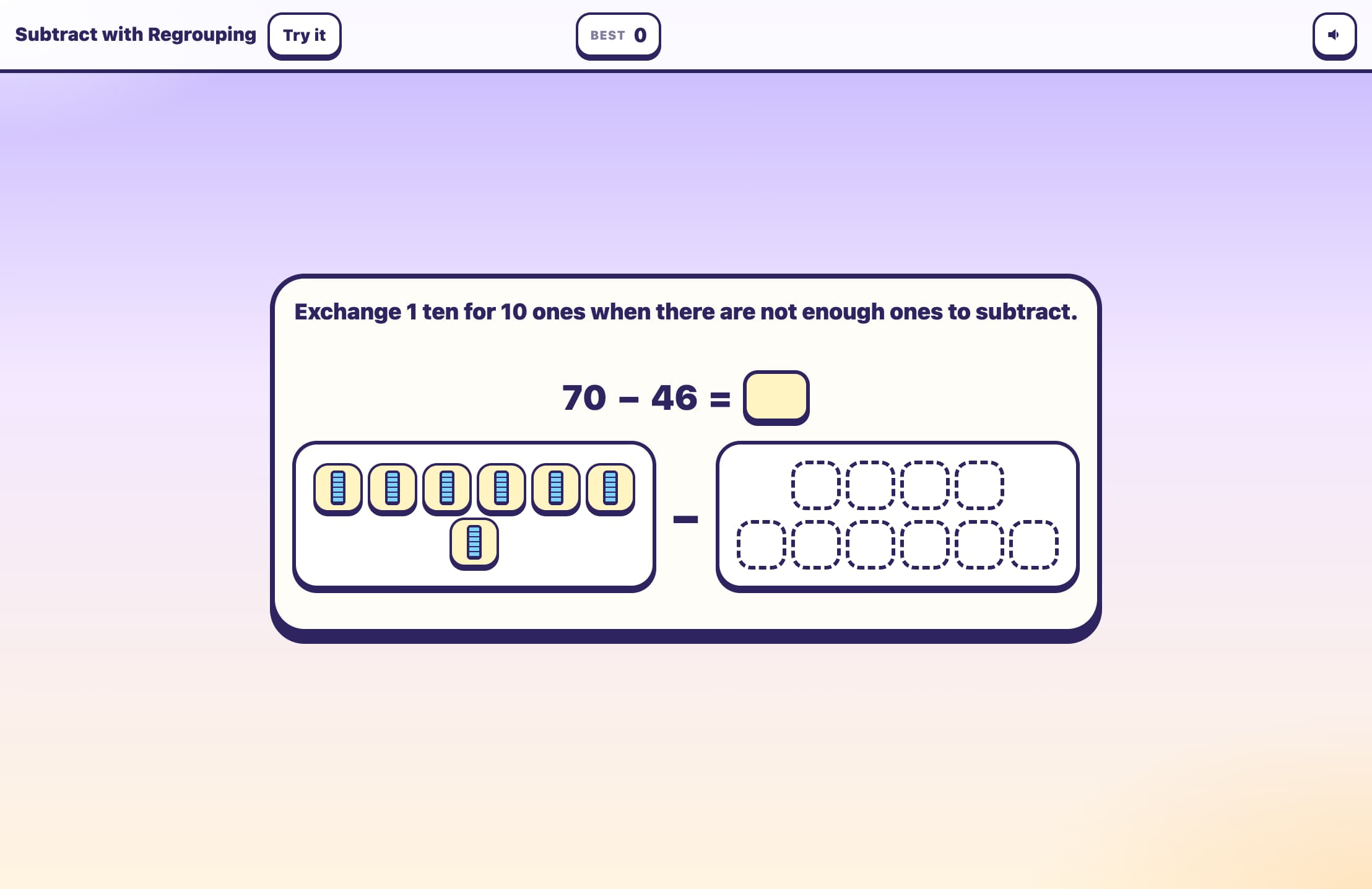
Exchange 1 ten for 10 ones when there are not enough ones to subtract.
Subtract with Regrouping is the game. Exchange 1 ten for 10 ones when there are not enough ones to subtract. Watch shows 42 − 17 = 25, then 53 − 28 = 25, then 61 − 34 = 27, then 70 − 46 = 24. A ten breaks into 10 ones. Then the tens and the ones you take away leave. What remains is the answer. Try it. Exchange 1 ten for 10 ones when there are not enough ones to subtract. Then six scored answers. Score, Streak, and hearts start after Try it. Built for 2nd grade.
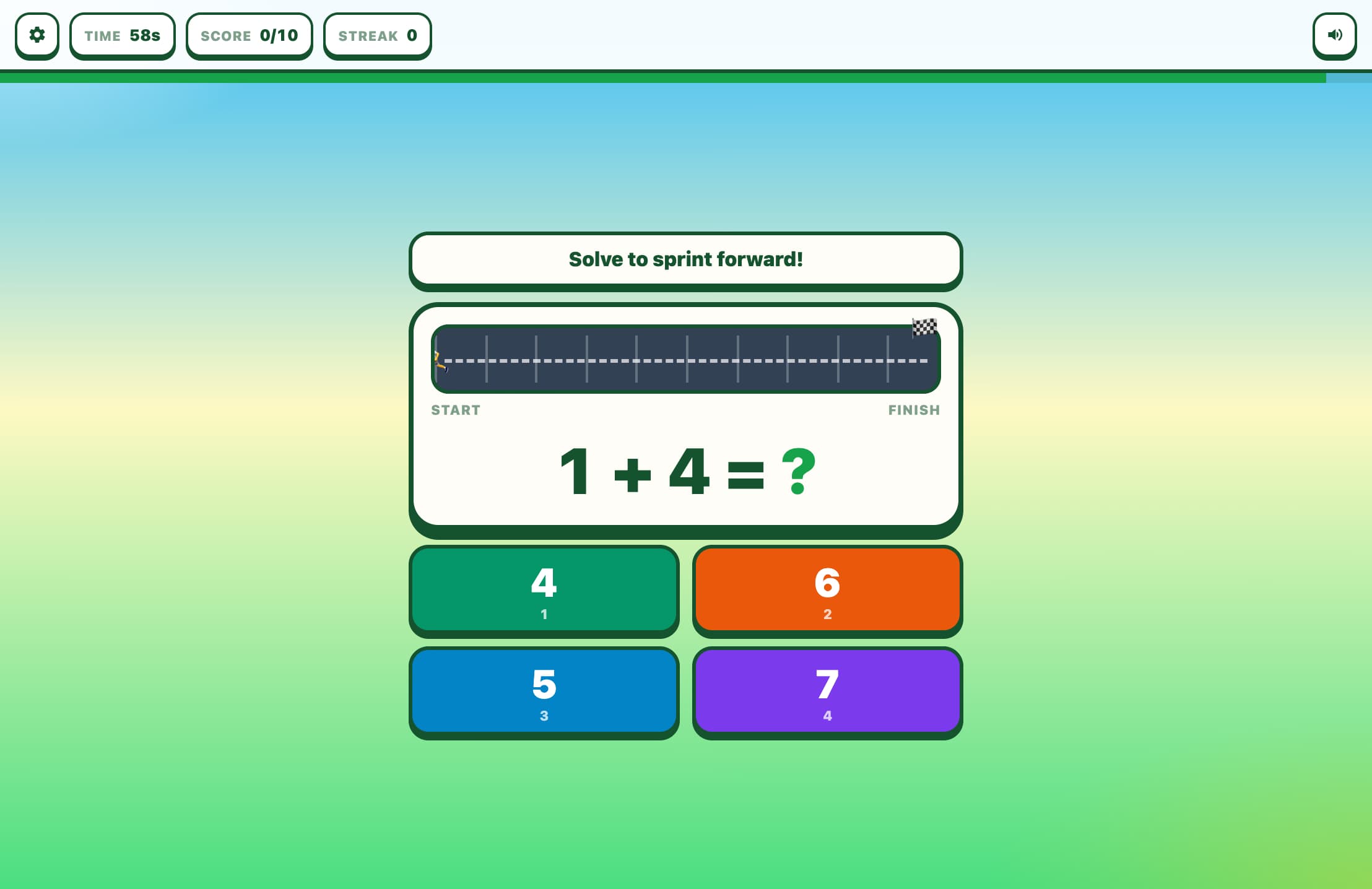
Race to the Finish Line Math
Answer addition and subtraction facts to move a runner along a track. Each correct answer sprints forward one step — race to the finish line before time runs out or you lose all lives.
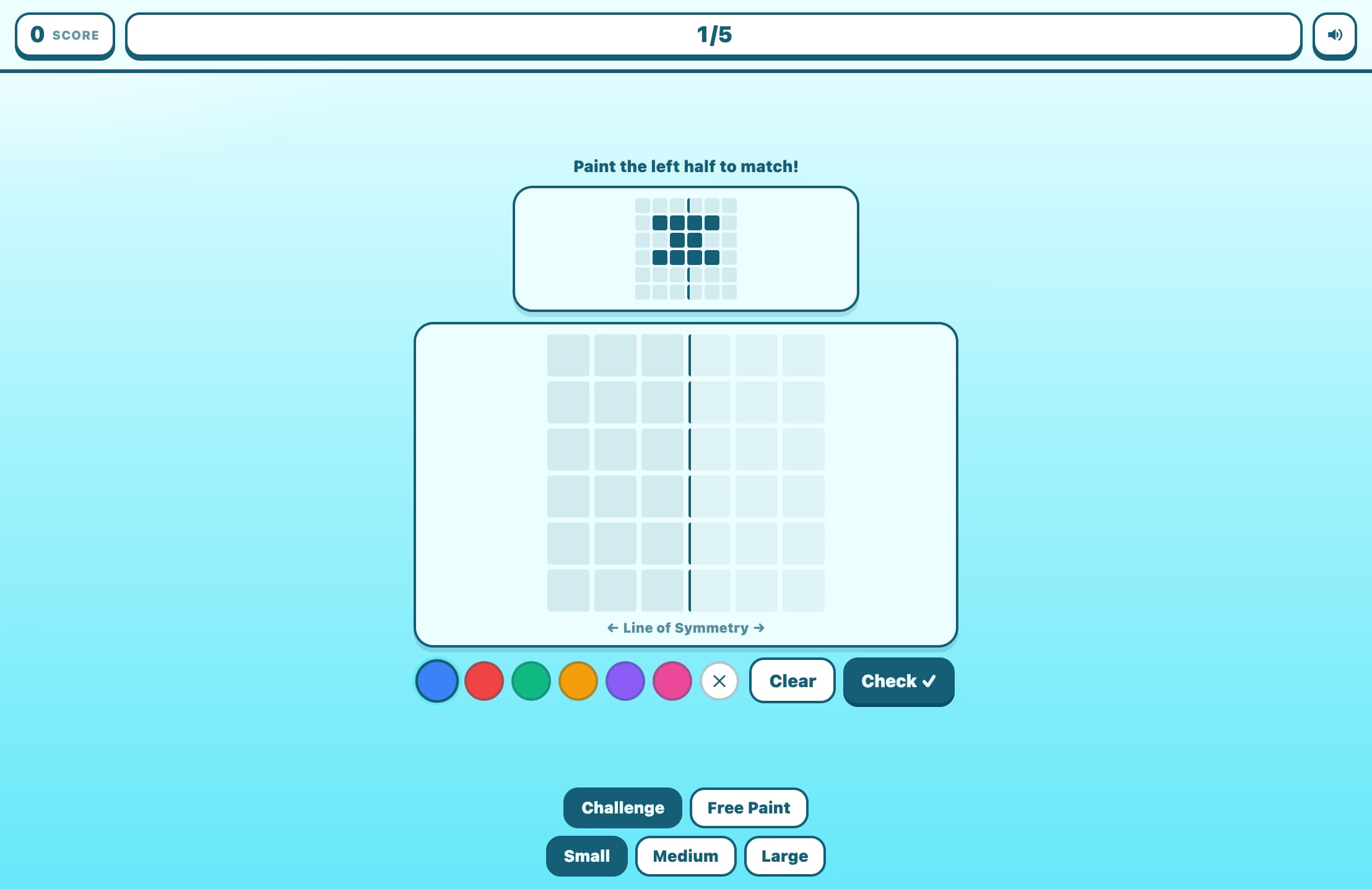
Mirror Drawing & Lines of Symmetry
Paint one half of a grid and watch the mirror reflection appear automatically on the other side. In challenge mode, match target patterns to score points. Teaches lines of symmetry, reflection, and spatial reasoning.
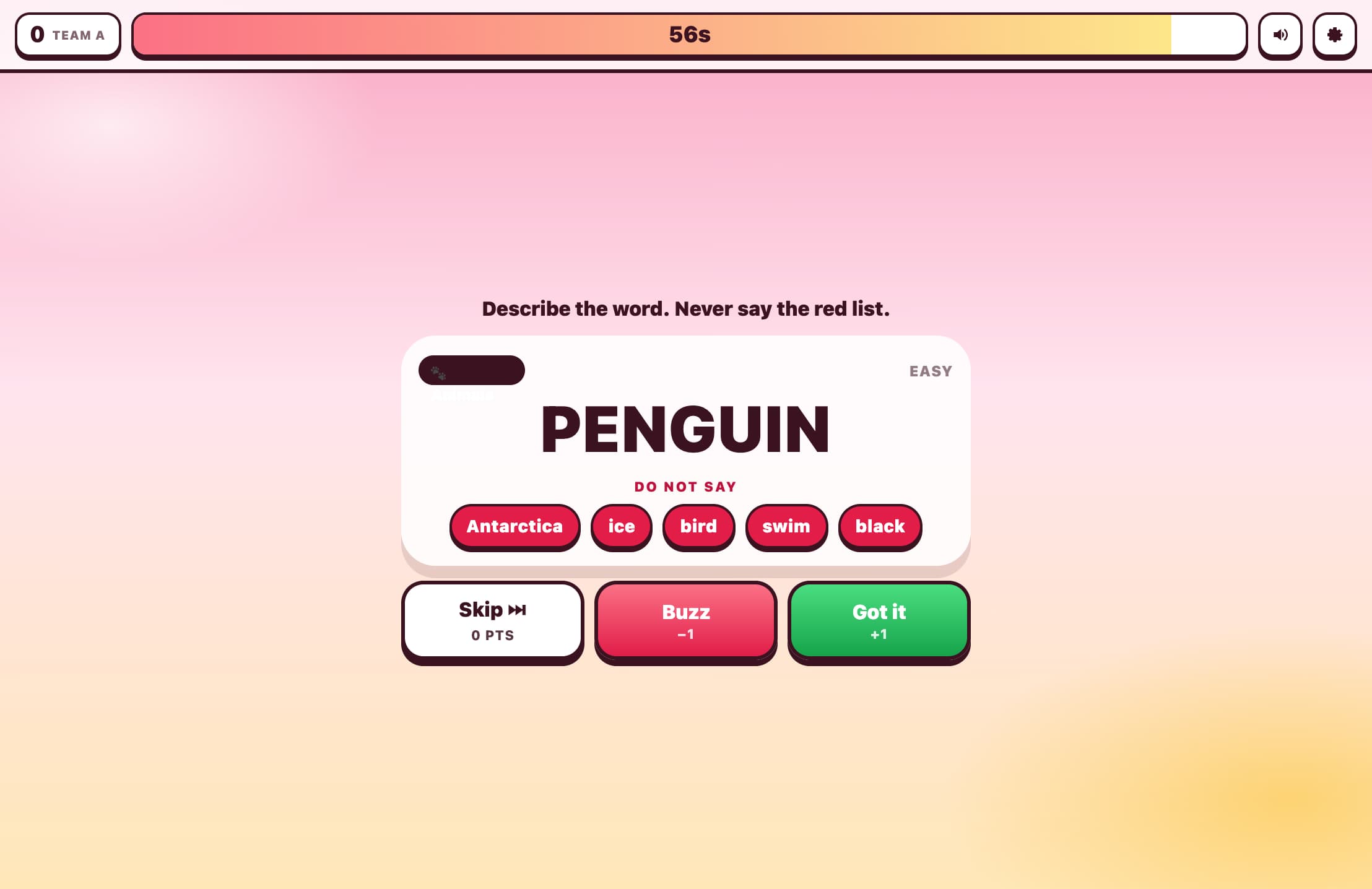
Describe the Word Without the Forbidden List
Describe the word. Never say the red list. The card shows a target and five words under DO NOT SAY. Tap Got it, Buzz, or Skip ⏭. Party — 60s or Lightning — 30s, then Team A and Team B pass the phone.
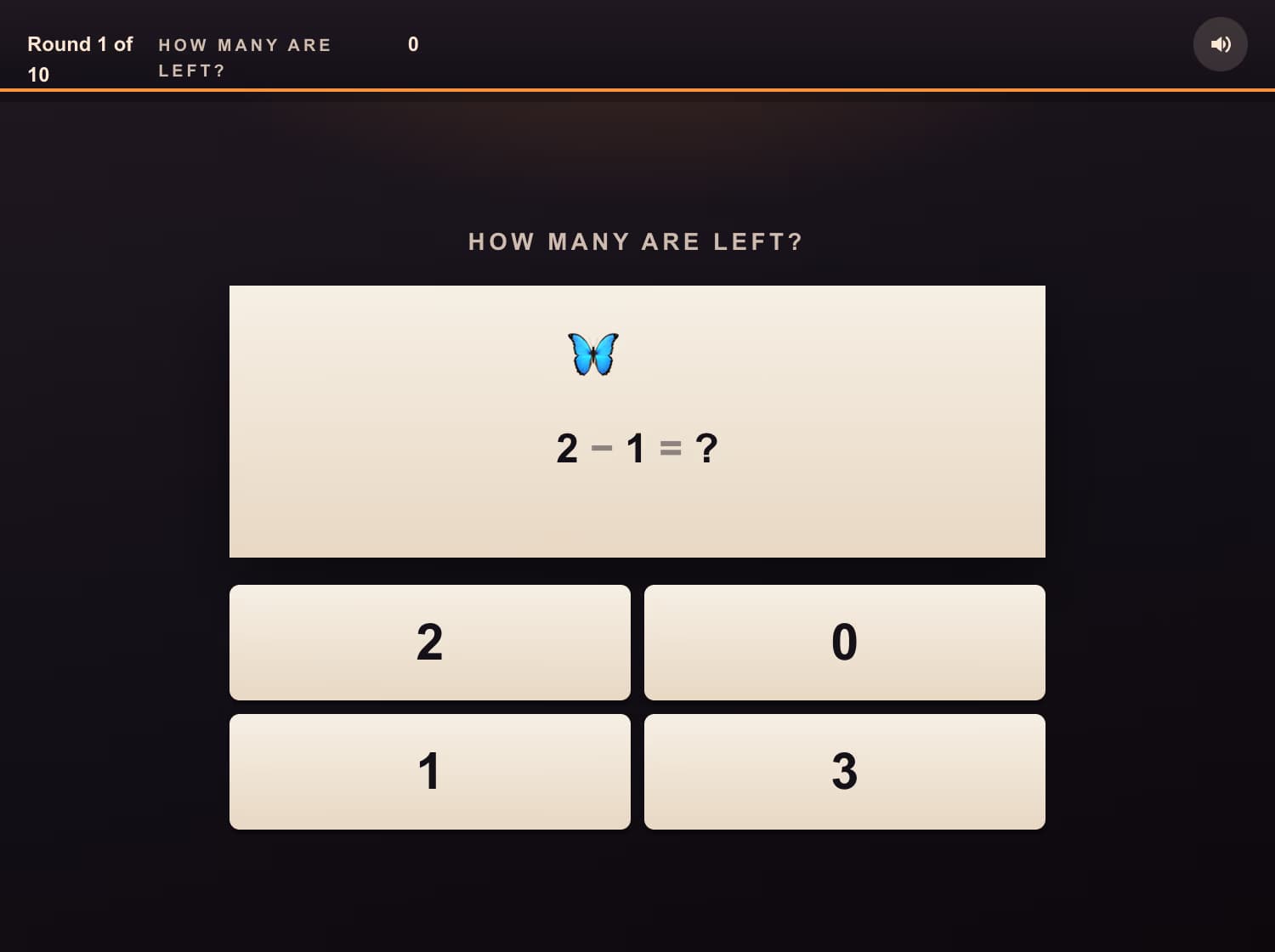
Visual Subtraction with Disappearing Objects
Watch objects disappear with animation and figure out how many are left! 5 cookies, eat 2 — how many remain? A visual, animated approach to learning subtraction for young children.
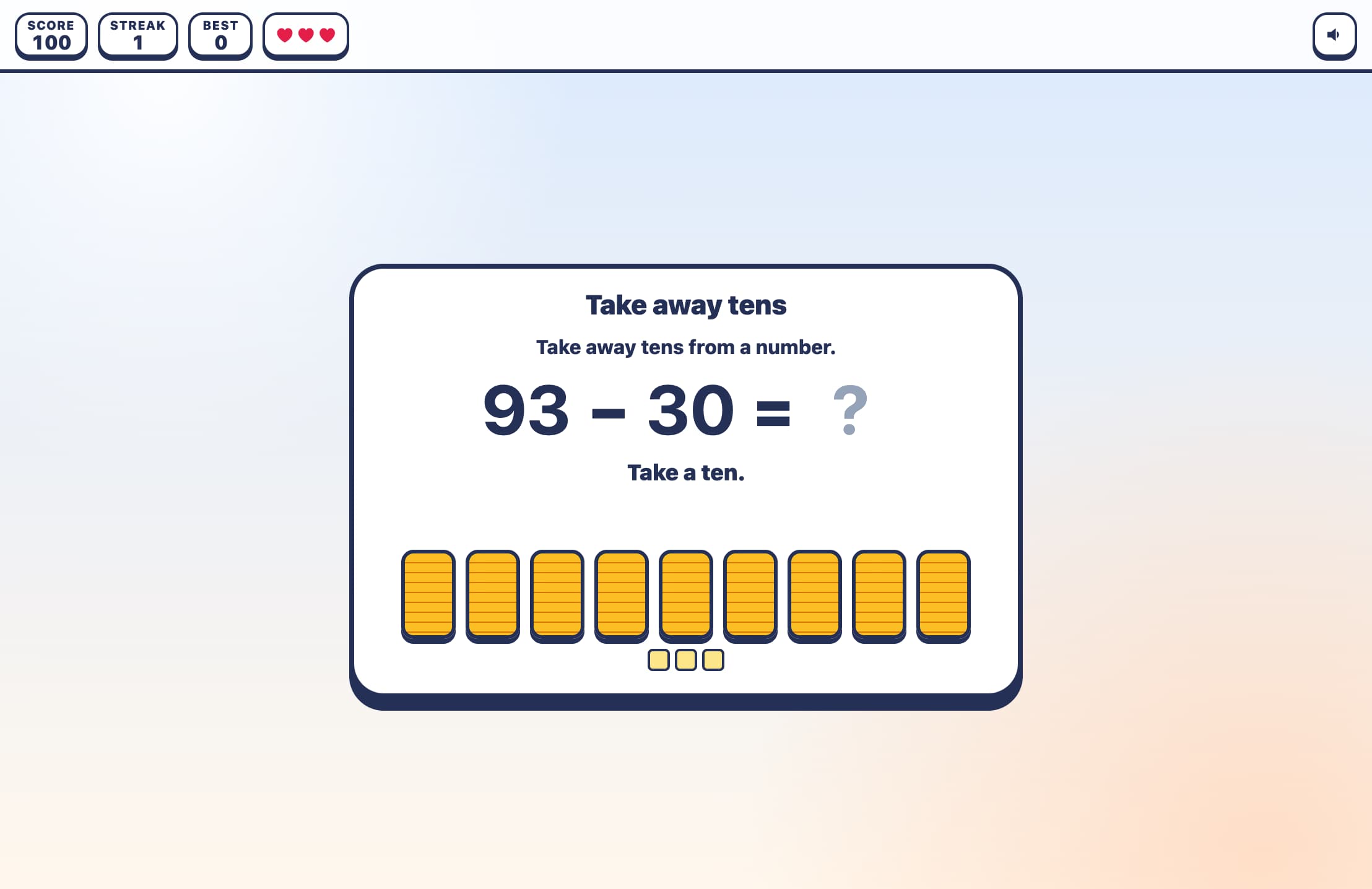
Take away tens from a number.
Take away tens shows a number as tens and ones, and 10, 20, 30, or 40 to take away. Take away tens from a number. Take a ten. Each ten you take leaves the number. The other ones stay. Taking the little gold one is a miss. Built for 1st grade.
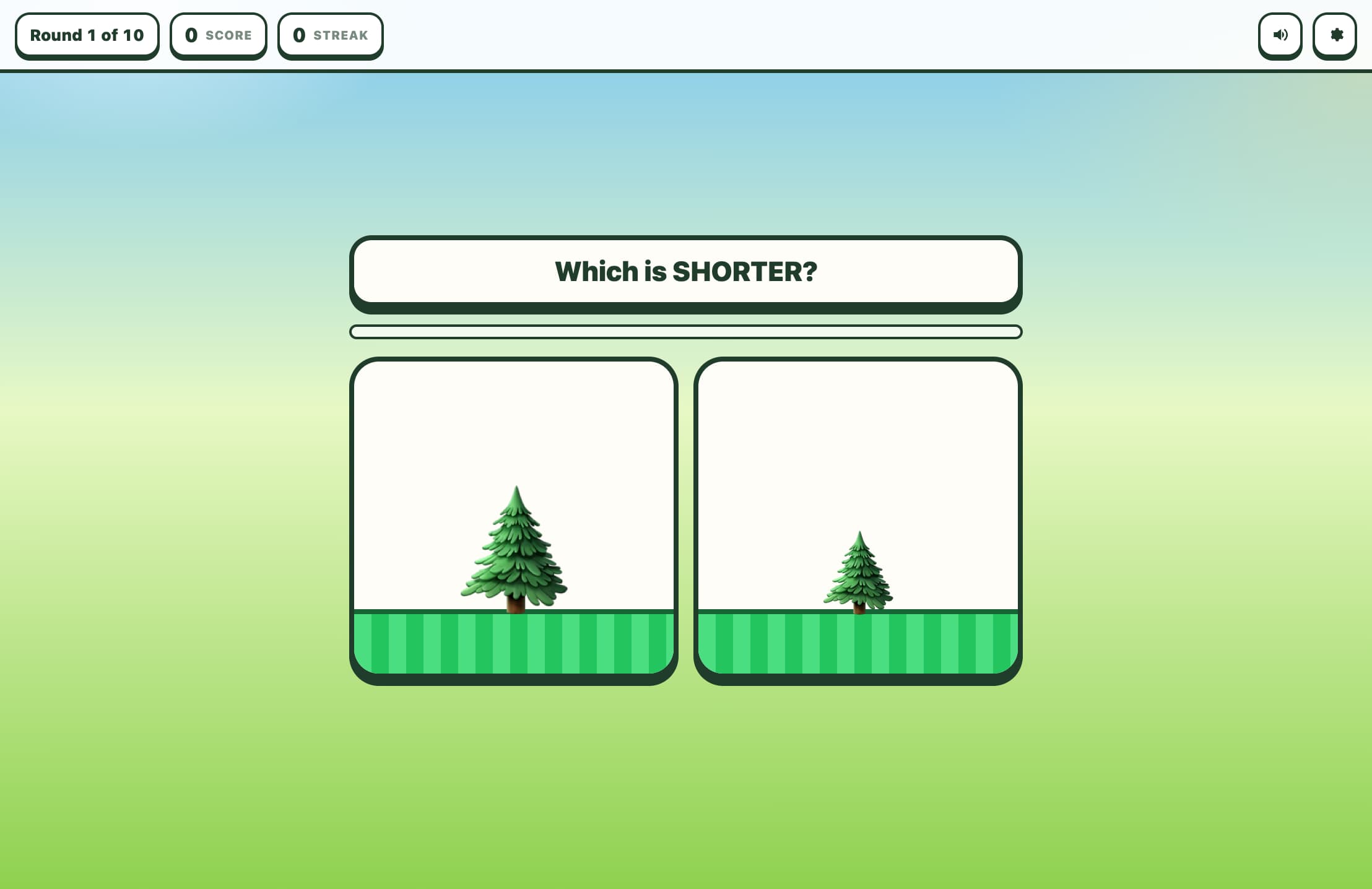
Compare Sizes and Build Measurement Concepts
Two illustrated objects appear at different sizes — tap the taller, shorter, bigger, or smaller one! A fun visual game that teaches measurement vocabulary and size comparison for young learners.
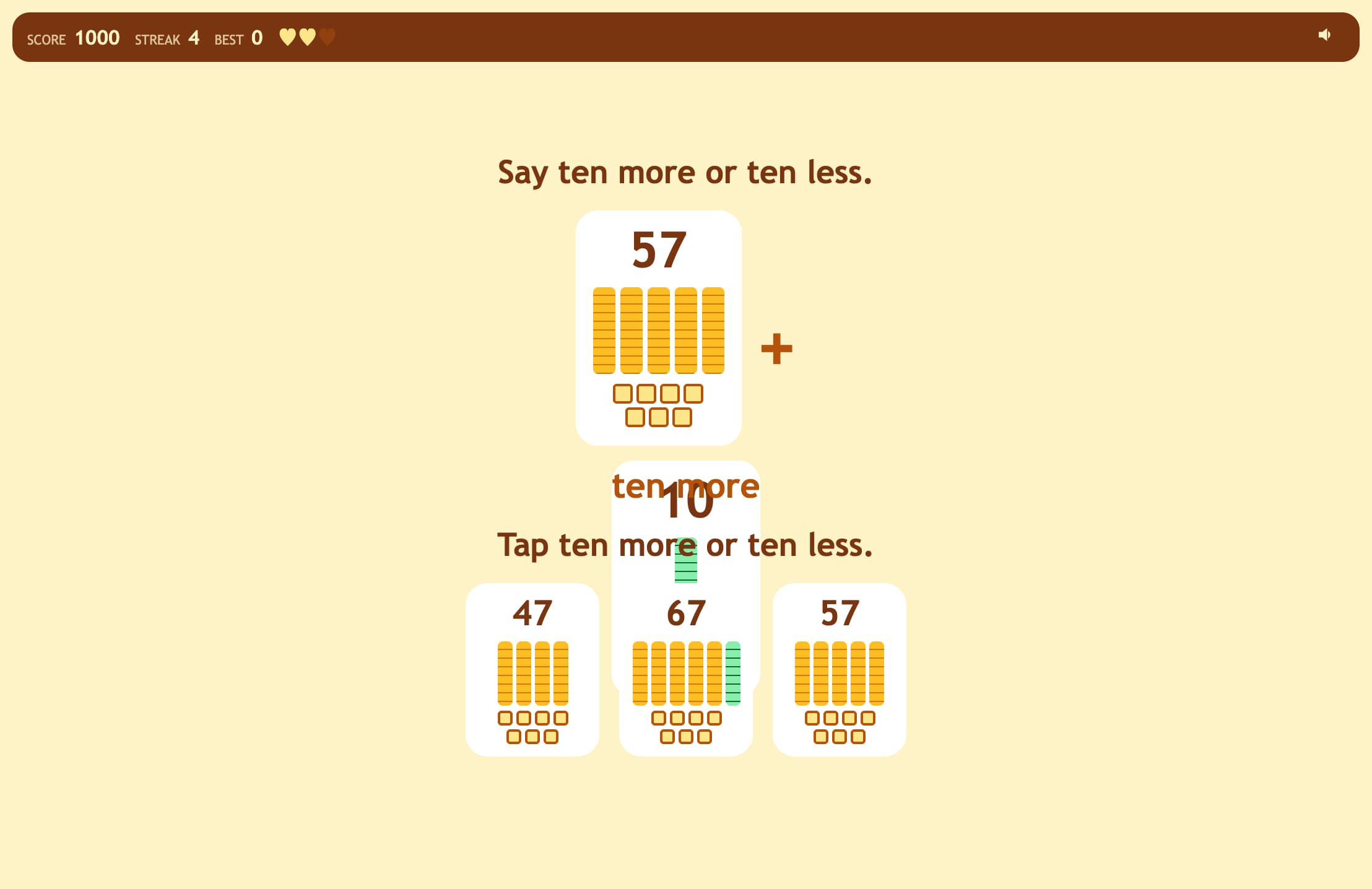
Say ten more or ten less
A two-digit number is on the card, and 10 is labeled beside it. The card says ten more or ten less. Say ten more or ten less. Tap ten more or ten less. A right tap turns green. A wrong tap turns rose. Built for 1st grade.
Say ten more or ten less.
Ten more is the game. Say ten more or ten less. Watch shows 346, then 390, then 503, then 870 on a number grid. The marker is already on the landing square. Try it. Drag to ten more or ten less. Then six scored moves. Score, Streak, and hearts start after Try it. Built for 2nd grade.
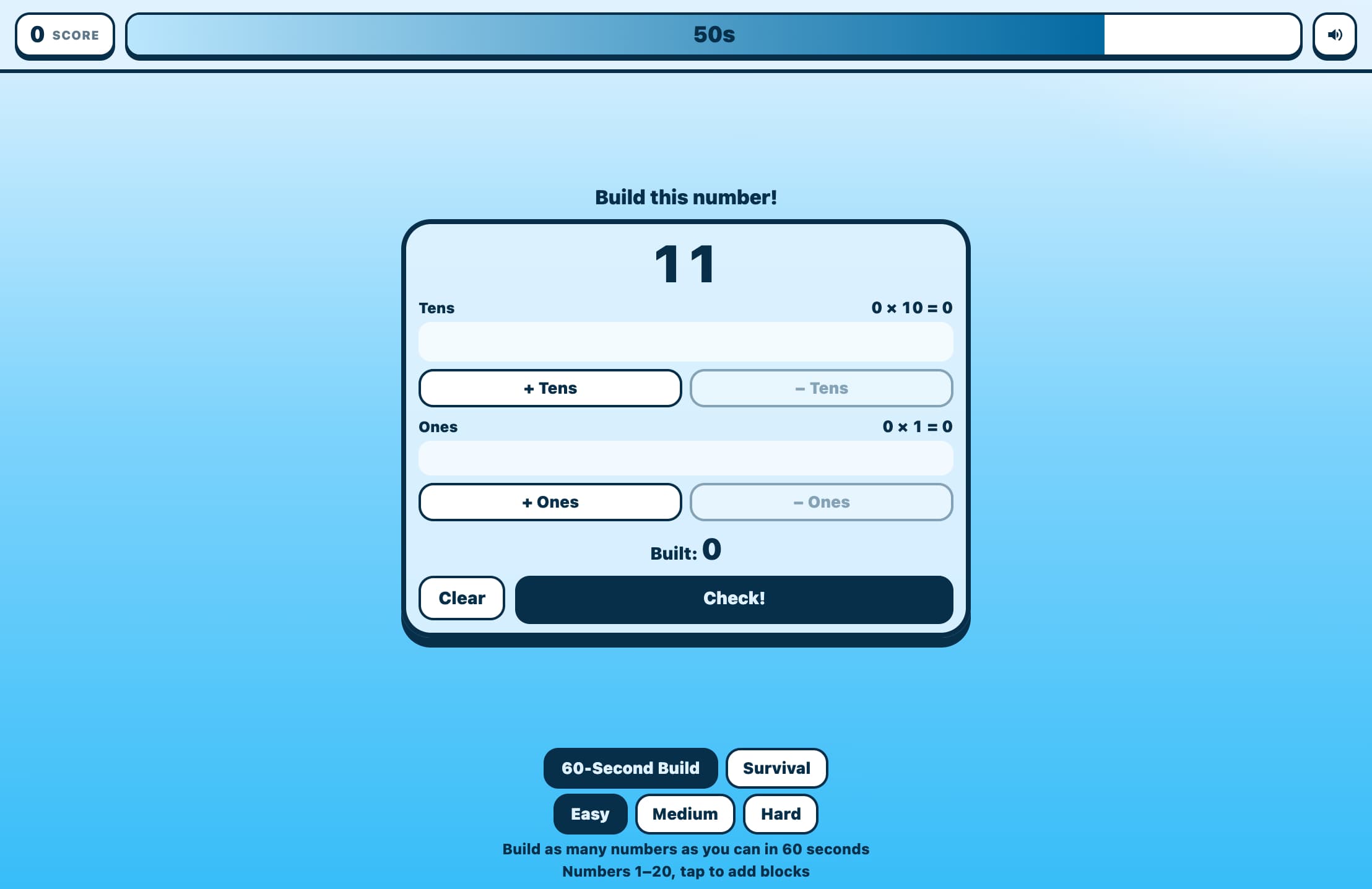
Base Ten Blocks Place Value
Build numbers using base-ten blocks! Tap to add tens (orange) and ones (blue) blocks to match a target number. Visual stacking reinforces place value understanding for numbers up to 99.
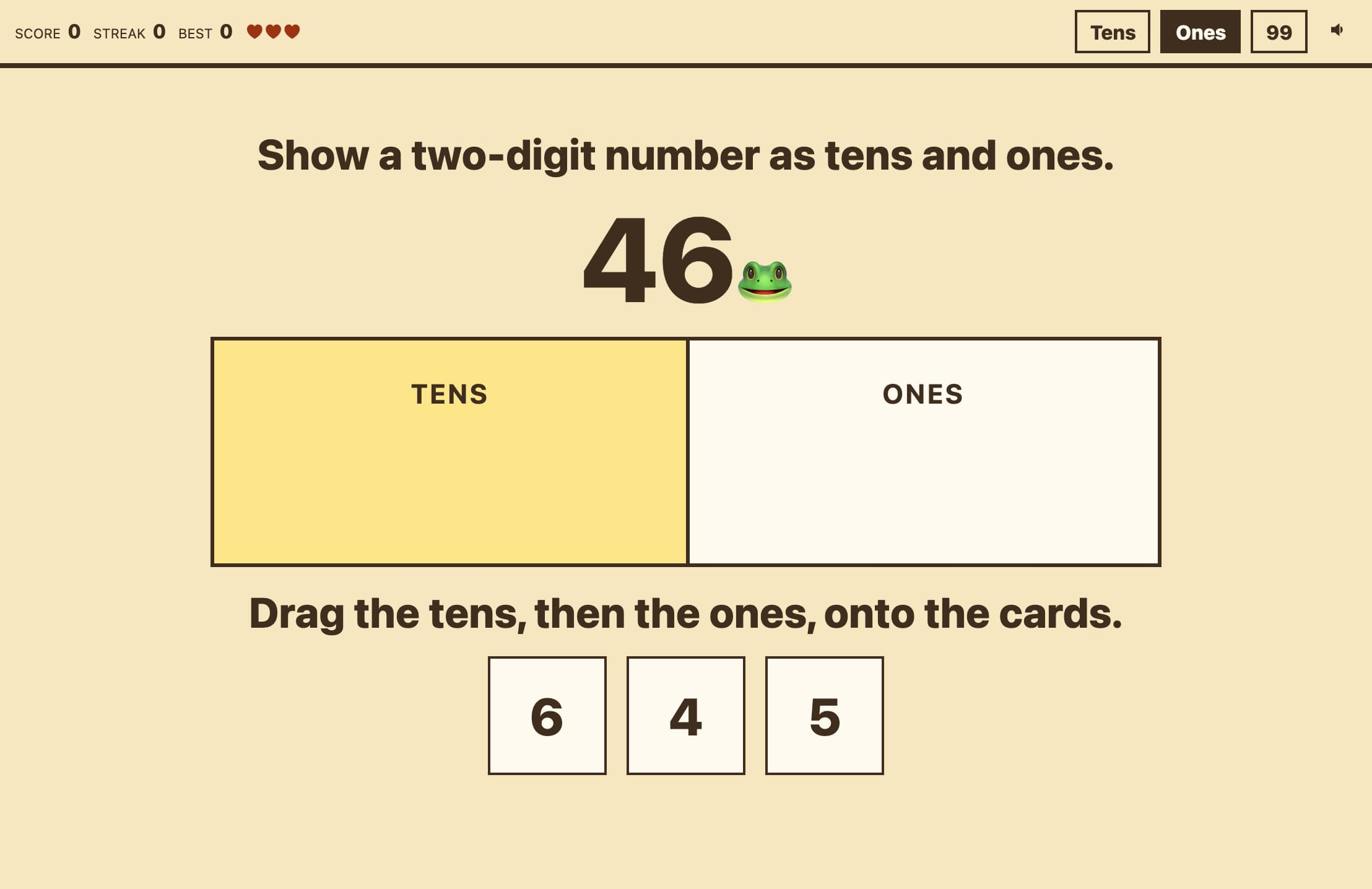
Show a two-digit number as tens and ones
A two-digit number sits on the board. Tens and ones is the game. Show a two-digit number as tens and ones. Drag the tens, then the ones, onto the cards. Tens. Show the tens and the ones. Ones. Show the tens and the ones. 99. Show a two-digit number as tens and ones. A right drop turns green. A wrong drop turns rose. Built for 1st grade.
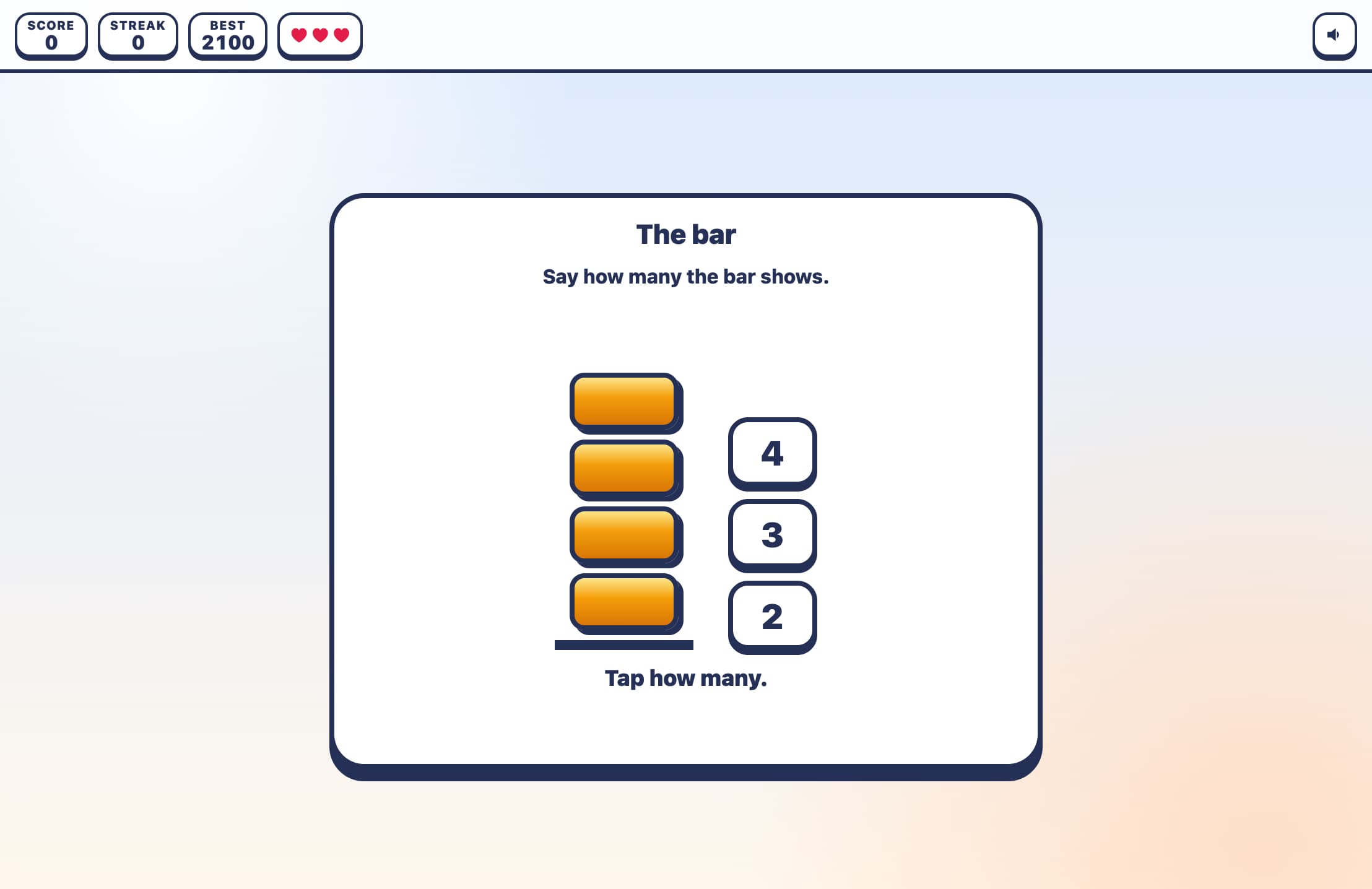
Say how many the bar shows.
The bar is a stack of blocks on the floor. Say how many the bar shows. Tap how many. The right number turns green and Score grows with the Streak. A wrong number turns rose, clears the Streak, and costs a heart. Built for 1st grade.
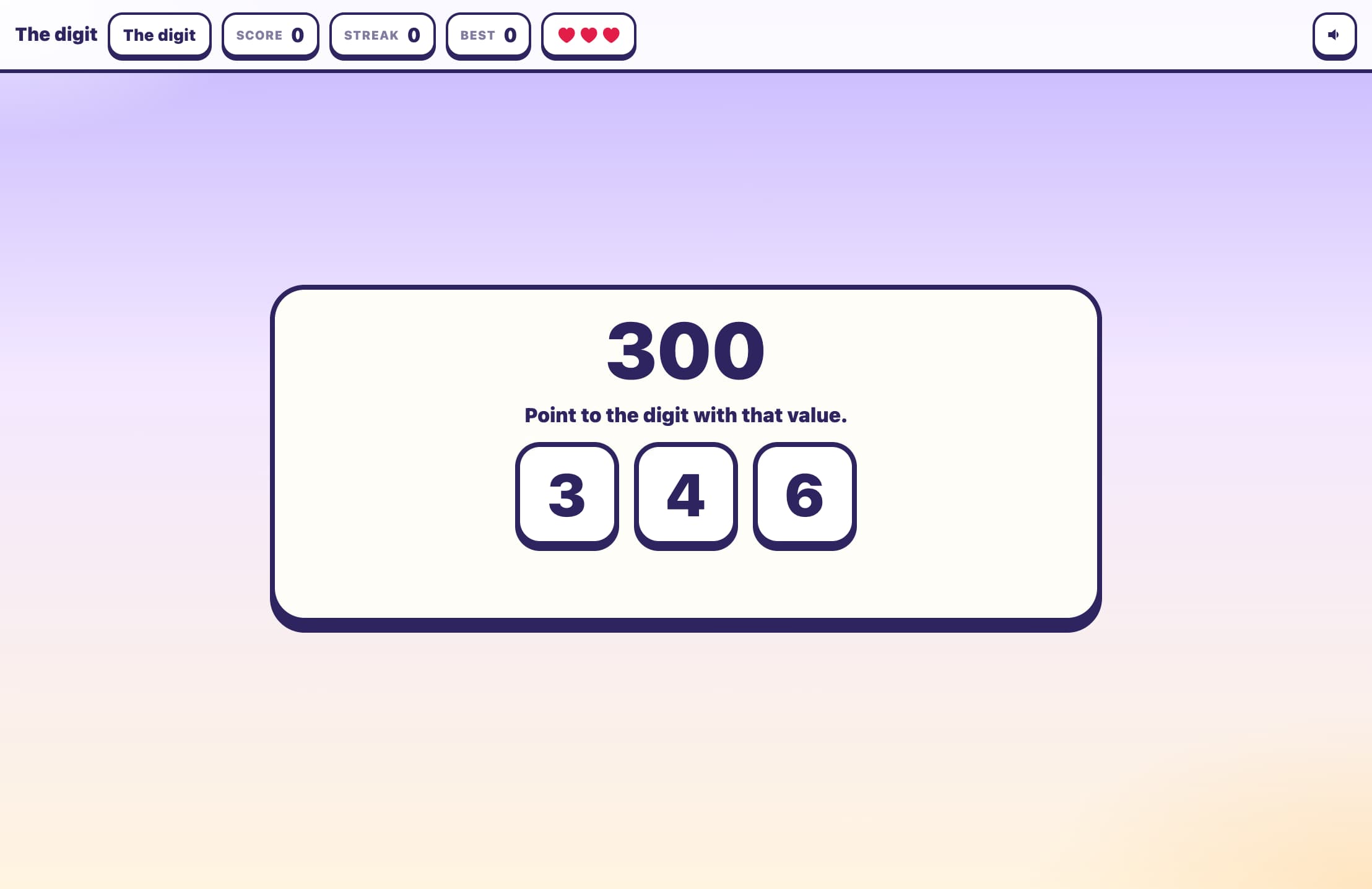
Point to the digit with that value.
The digit is the game. Point to the digit with that value. Watch shows 572 with the 7 worth 70, then 346 with the 3 worth 300, then 486 with the 6 worth 6, then 640 with the 4 worth 40. Try it. Point to the digit with that value. Then six scored numbers. Score, Streak, and hearts start after Try it. Built for 2nd grade.
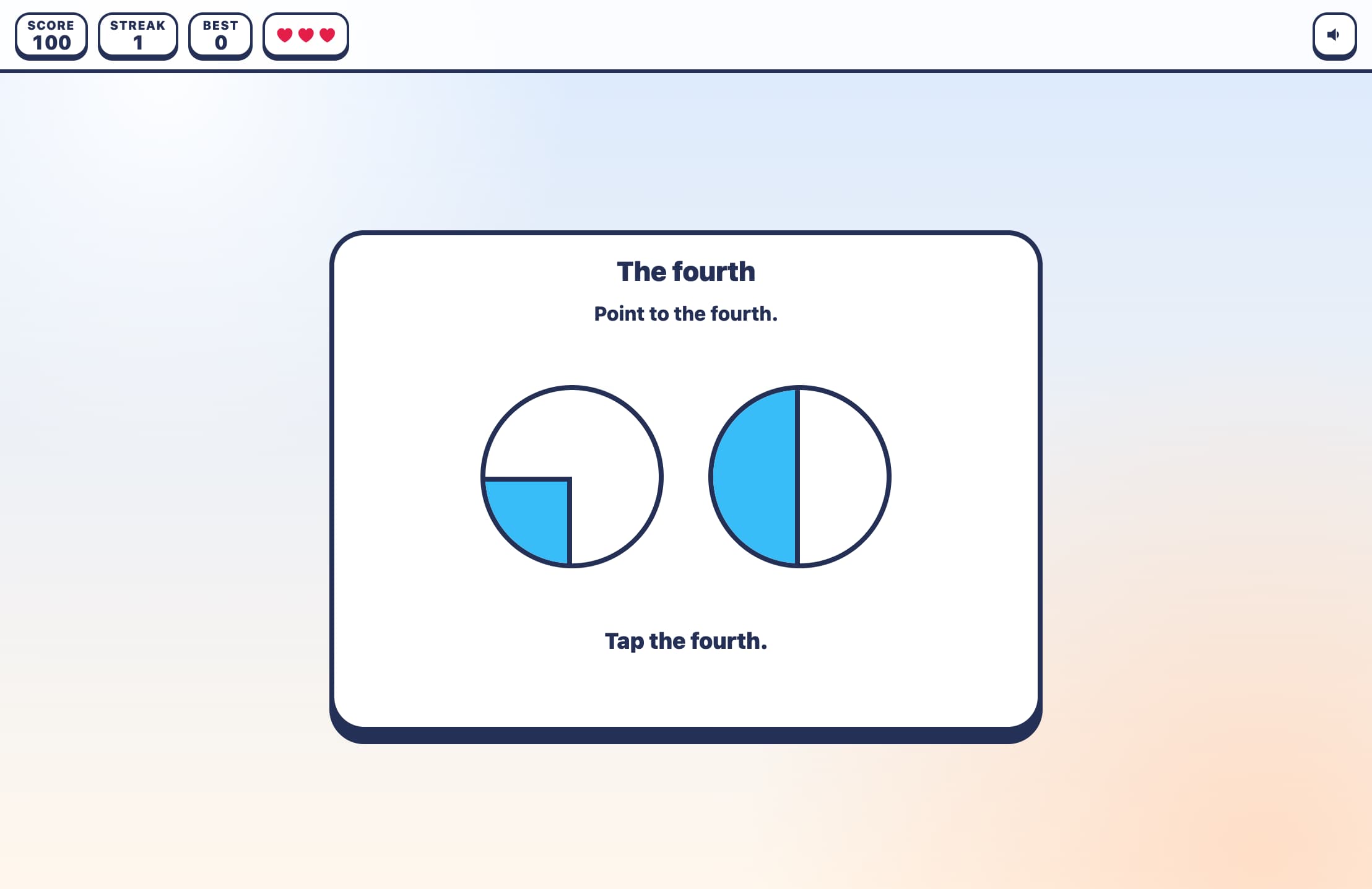
Point to the fourth.
The fourth shows two shapes. One blue part is a fourth. The other blue part is bigger. Point to the fourth. Tap the fourth. The right shape turns green and Score grows with the Streak. A wrong shape turns rose, clears the Streak, and costs a heart. Built for 1st grade.
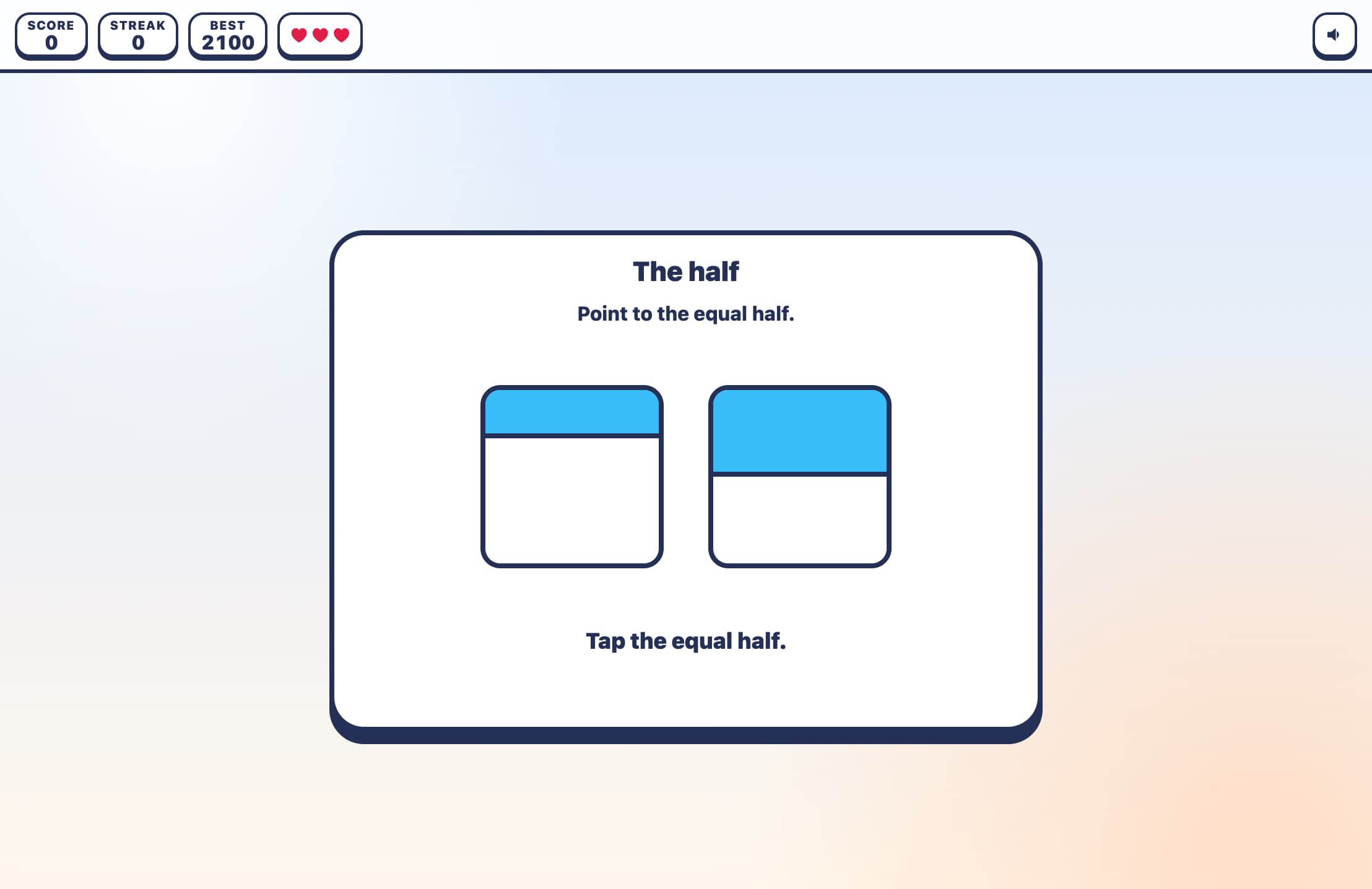
Point to the equal half.
The half shows two shapes. One blue part is an equal half. The other blue part is smaller. Point to the equal half. Tap the equal half. The right shape turns green and Score grows with the Streak. A wrong shape turns rose, clears the Streak, and costs a heart. Built for 1st grade.
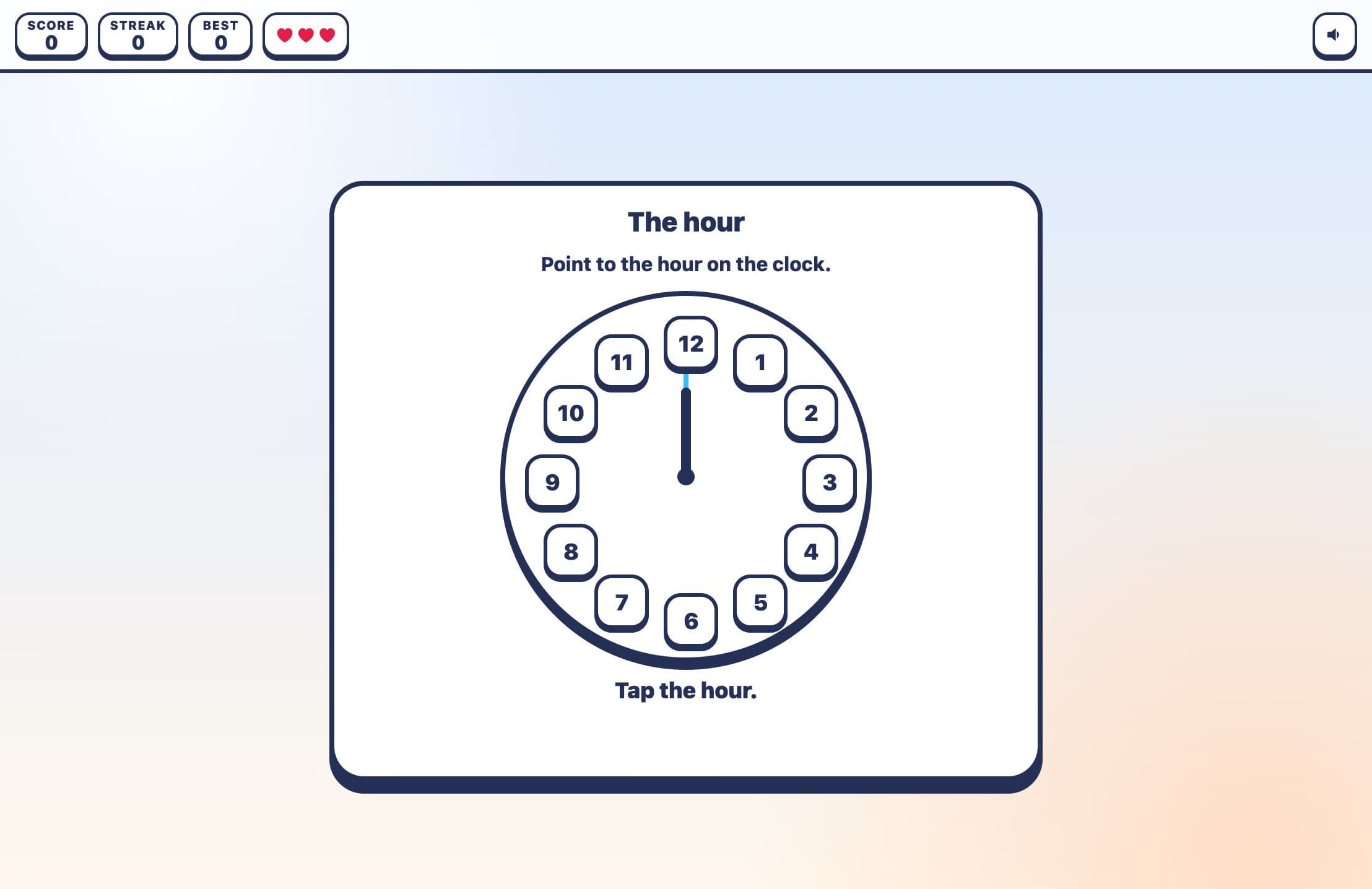
Point to the hour on the clock.
The hour shows a clock. The short hand sits on a number, and the long hand sits on 12. Point to the hour on the clock. Tap the hour. The right number turns green and Score grows with the Streak. A wrong number turns rose, clears the Streak, and costs a heart. Built for 1st grade.
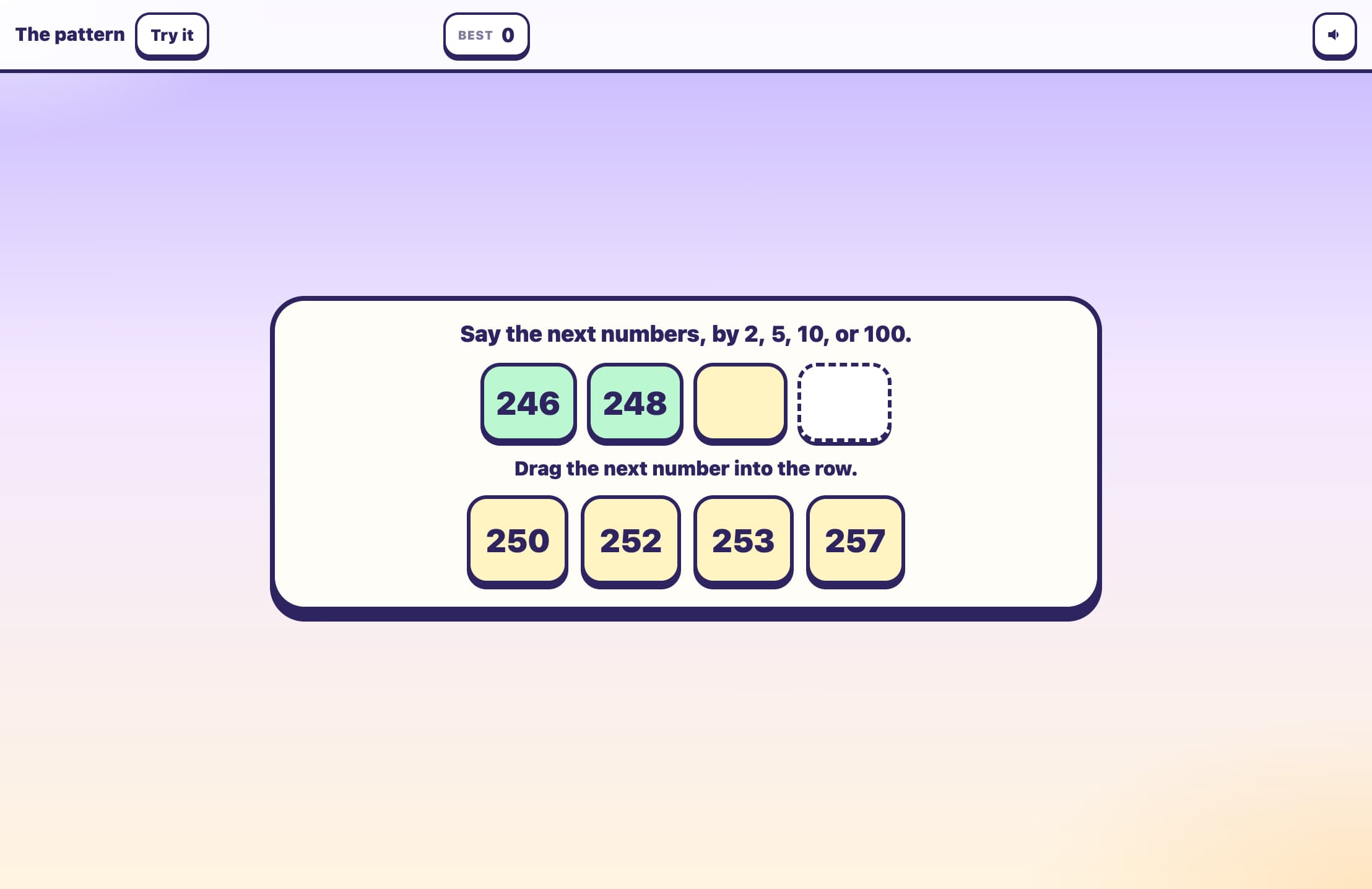
Say the next numbers, by 2, 5, 10, or 100.
The pattern is the game. Say the next numbers, by 2, 5, 10, or 100. Watch shows 246 +2 248 +2 250 +2 252, then 115 +5 120 +5 125 +5 130, then 125 +10 135 +10 145 +10 155, then 214 +100 314 +100 414 +100 514. Try it. Drag the next number into the row. Then six scored rows. Score, Streak, and hearts start after Try it. Built for 2nd grade.
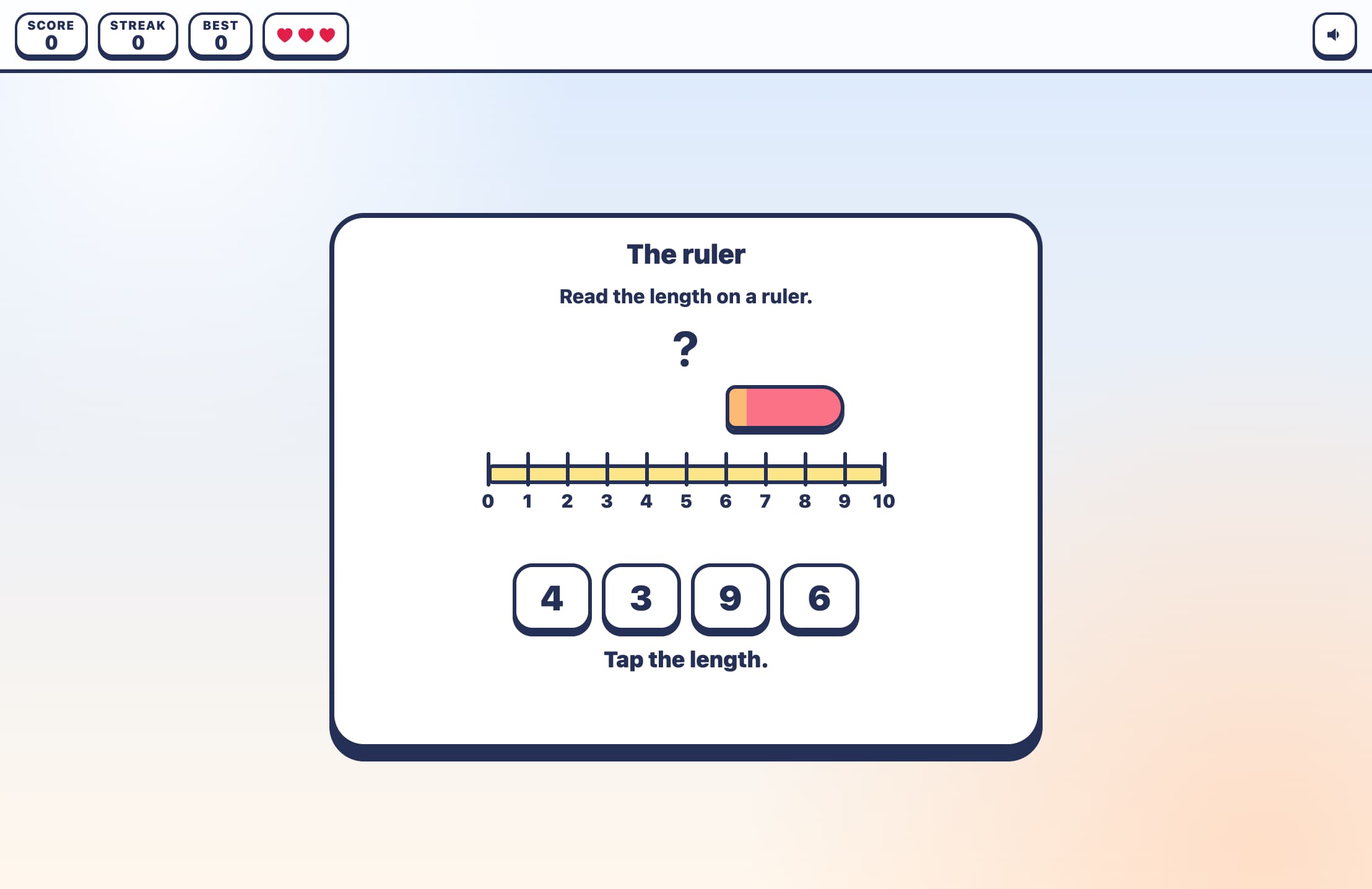
Read the length on a ruler.
The ruler shows a crayon between two marks. Read the length on a ruler. The length is the units from the first mark to the second. Tap the length. The right number fills the blank. A wrong number turns the card rose, clears the Streak, and costs a heart. Built for 1st grade.
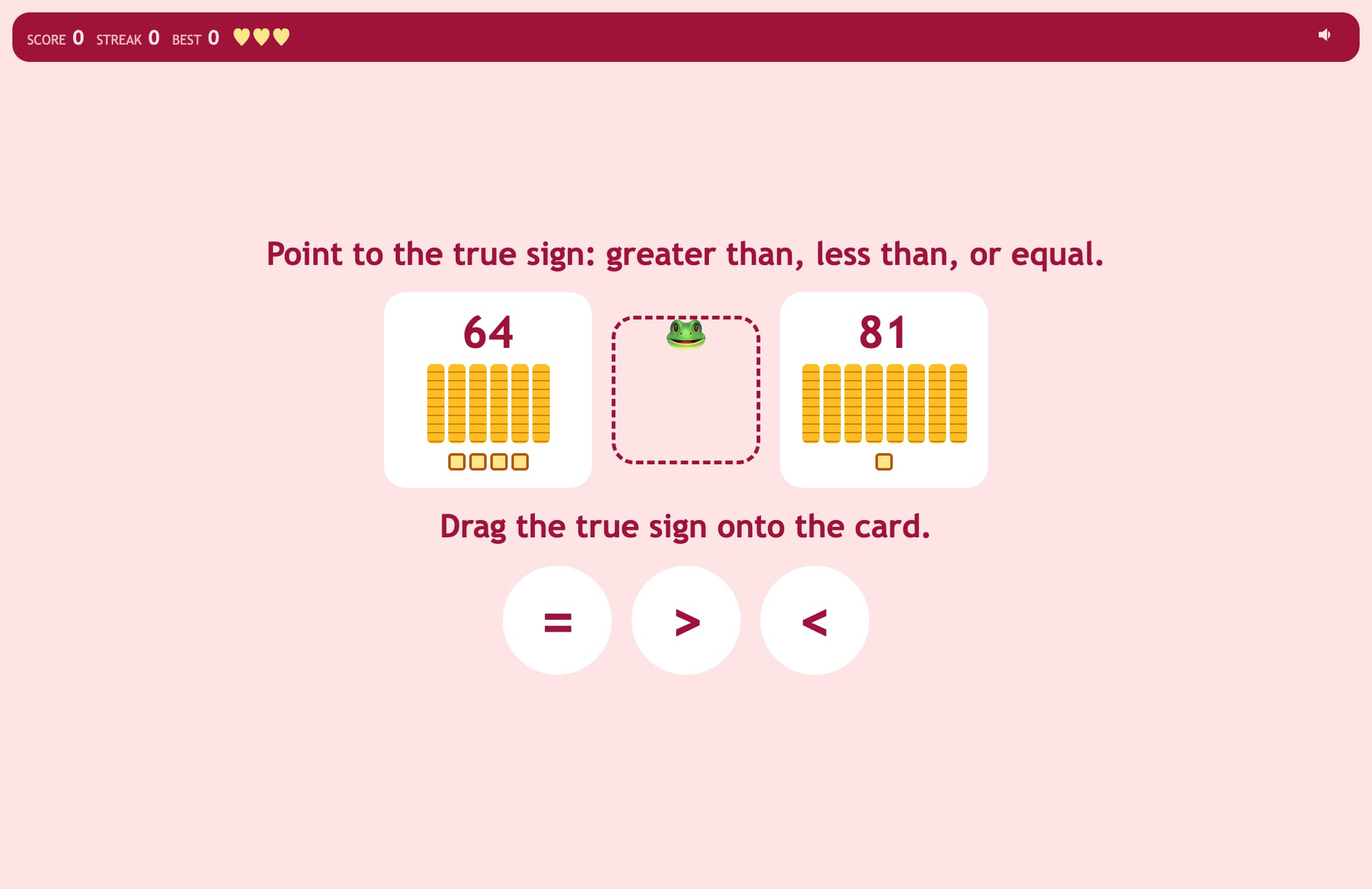
Point to the true sign: greater than, less than, or equal
Two numbers sit on cards with a gap between them. The sign is the game. Point to the true sign: greater than, less than, or equal. Drag the true sign onto the card. Each Start mixes greater than, less than, and equal. A right drop turns green. A wrong drop turns rose. Built for 1st grade.
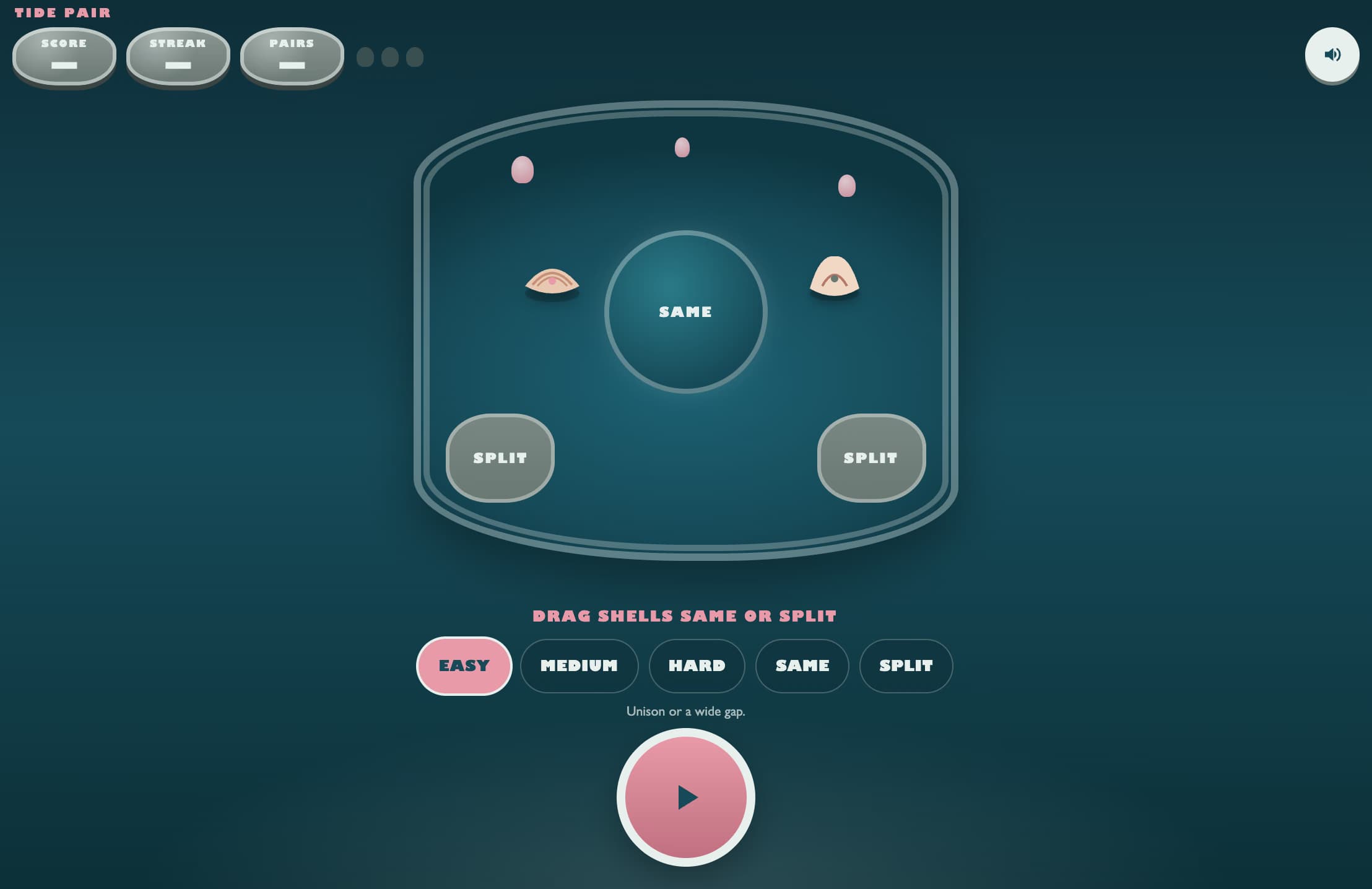
Pitch Same or Split
Tide pools. Two shells drift and play pitches. Drag them together into Same if they match. Drag them apart onto Split rocks if they differ. Ten Pairs finish the tide. Three wave slaps end it. Score and Streak climb with each clean sort.
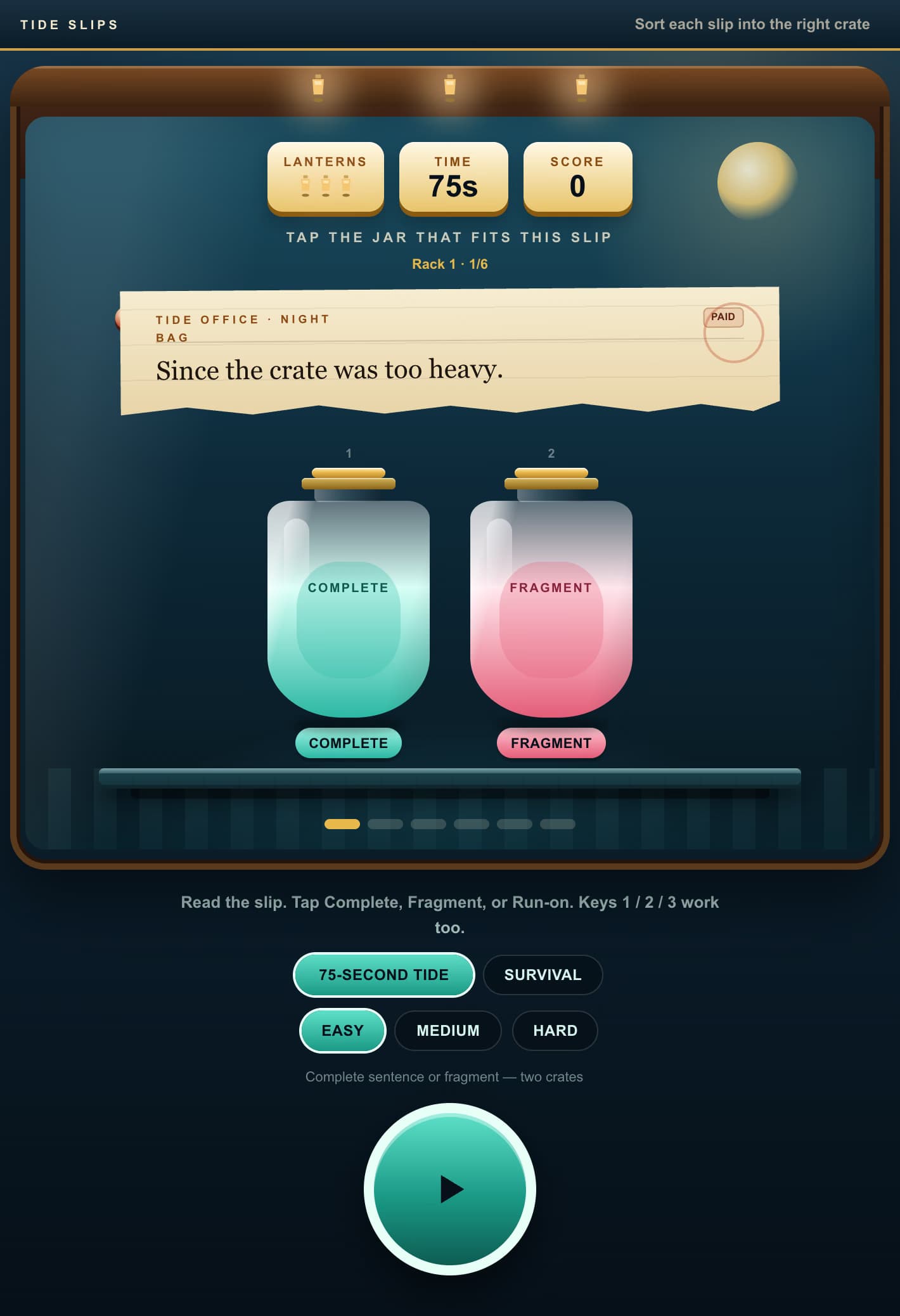
Complete Sentences, Fragments, and Run-ons
A night harbor full of telegram slips. Drag each slip into Complete, Fragment, or Run-on crates, then press Done. Built for fourth and fifth graders who are sorting sentence types, not filling in a worksheet.
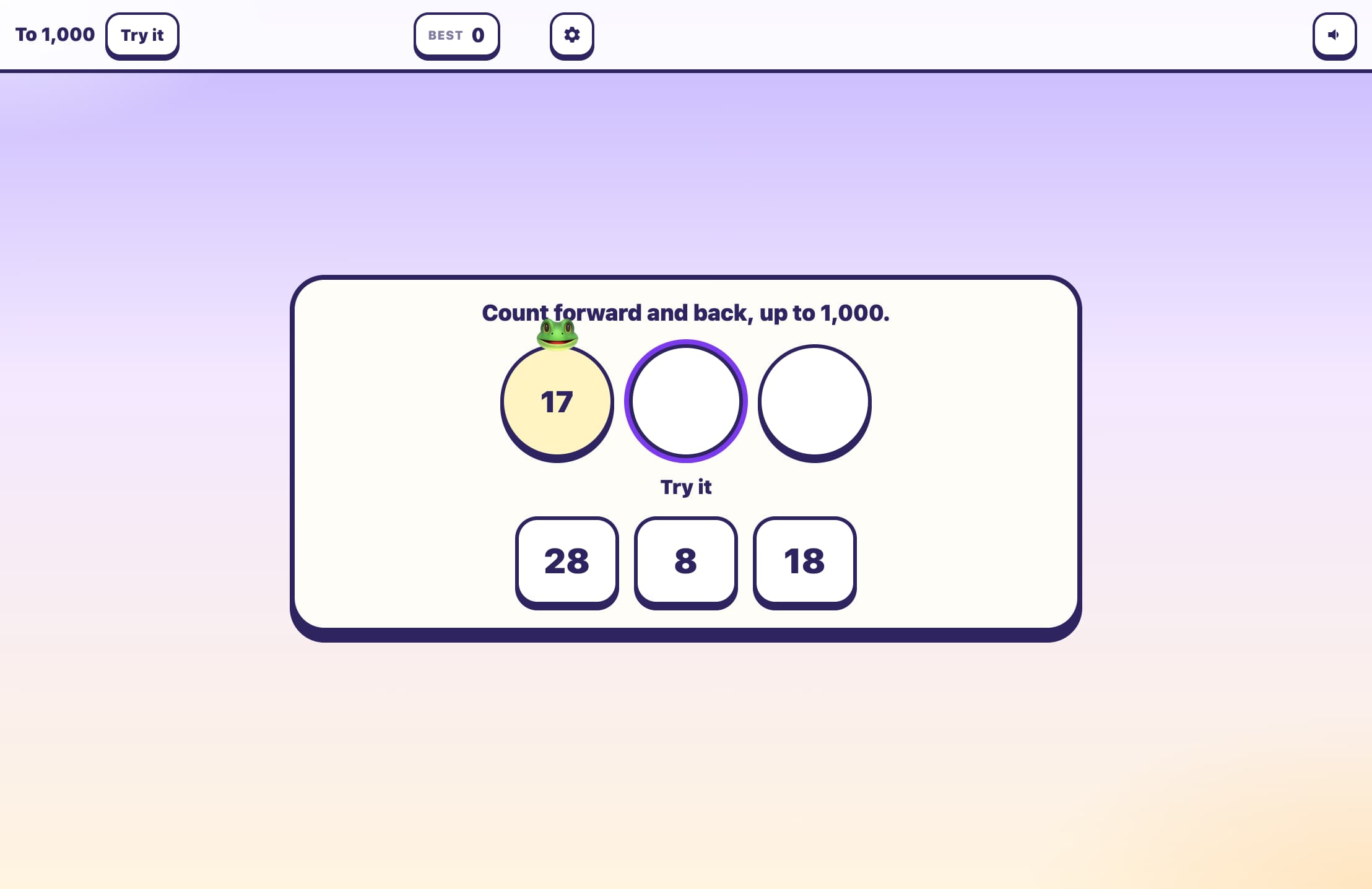
Count forward and back, up to 1,000
A frog sits on a number stone. To 1,000 is the game. Count forward and back, up to 1,000. Watch the count cross a hundred. Try it on the next stone. Then drag the number onto the stone. Forward. Count forward, up to 1,000. Back. Count back, up to 1,000. Across. Count forward and back, up to 1,000. A right drop hops the frog. Score, Streak, and hearts start after Try it. Built for 2nd grade.
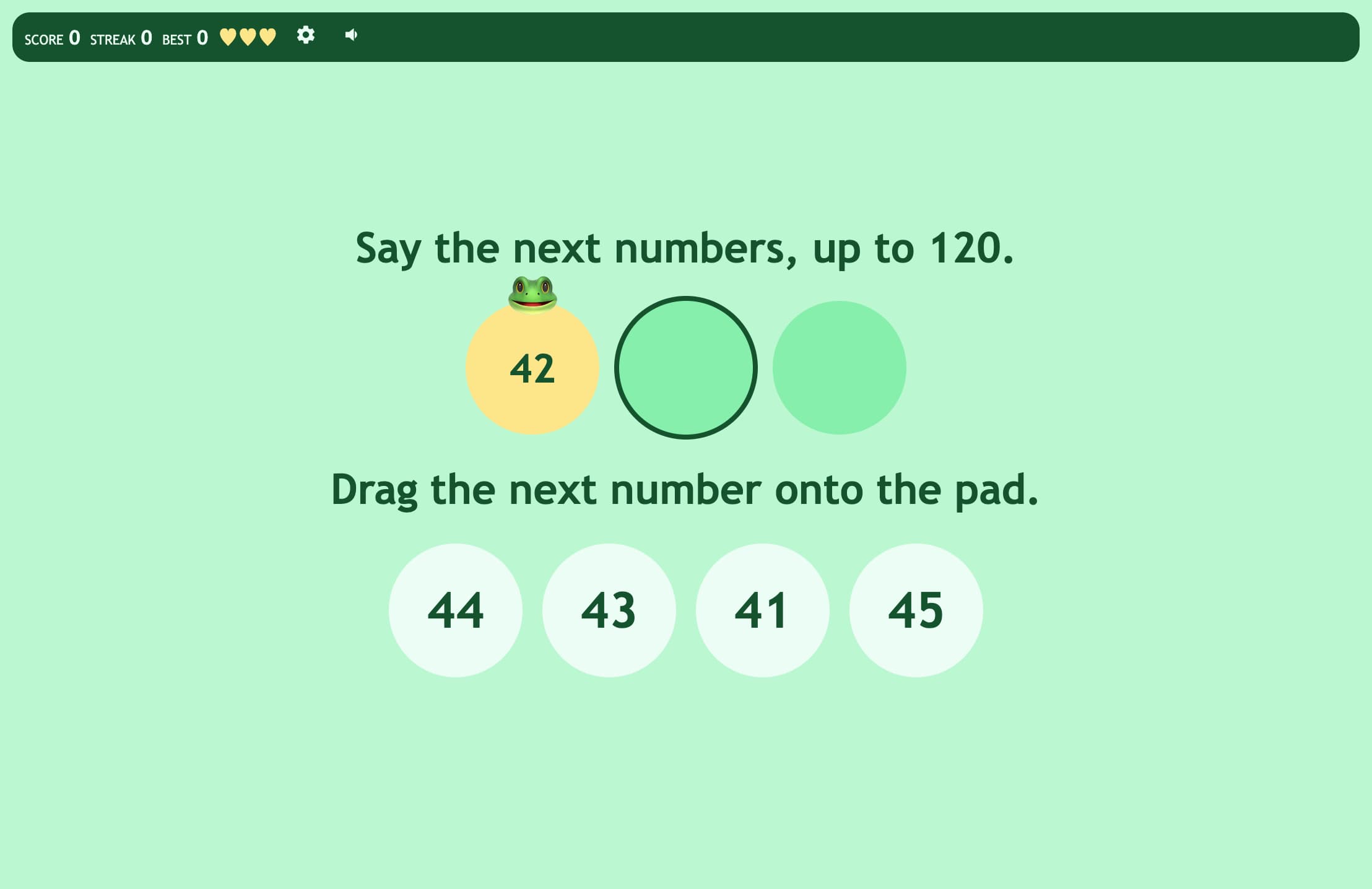
Say the next numbers, up to 120
A frog sits on a start number. To 120 is the game. Say the next numbers, up to 120. Drag the next number onto the pad. Two. Say the next two numbers. Ten. Say the next numbers across a ten. 120. Say the next numbers, up to 120. A right drop hops the frog. A wrong drop turns rose. The path goes up to 120. Built for 1st grade.
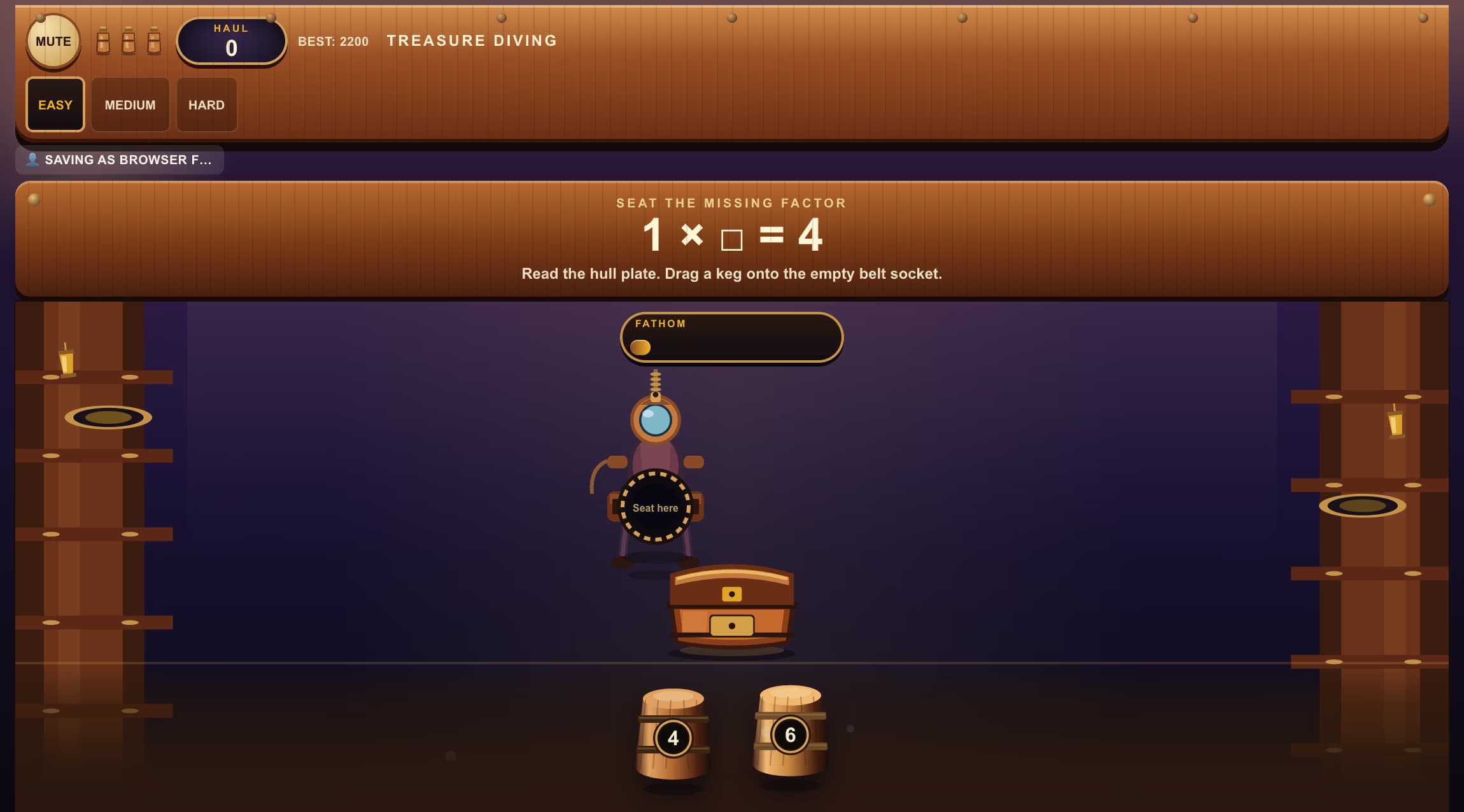
Multiplication Facts and Missing Factors
Dive a copper wreck in Treasure Diving. A hull plate shows a times fact with a gap — a missing factor or the product. Drag a numbered keg onto the empty belt socket. Seat the missing factor and the diver drops a fathom toward the chest. Third-grade multiplication fact fluency, with Haul points for every seated keg.
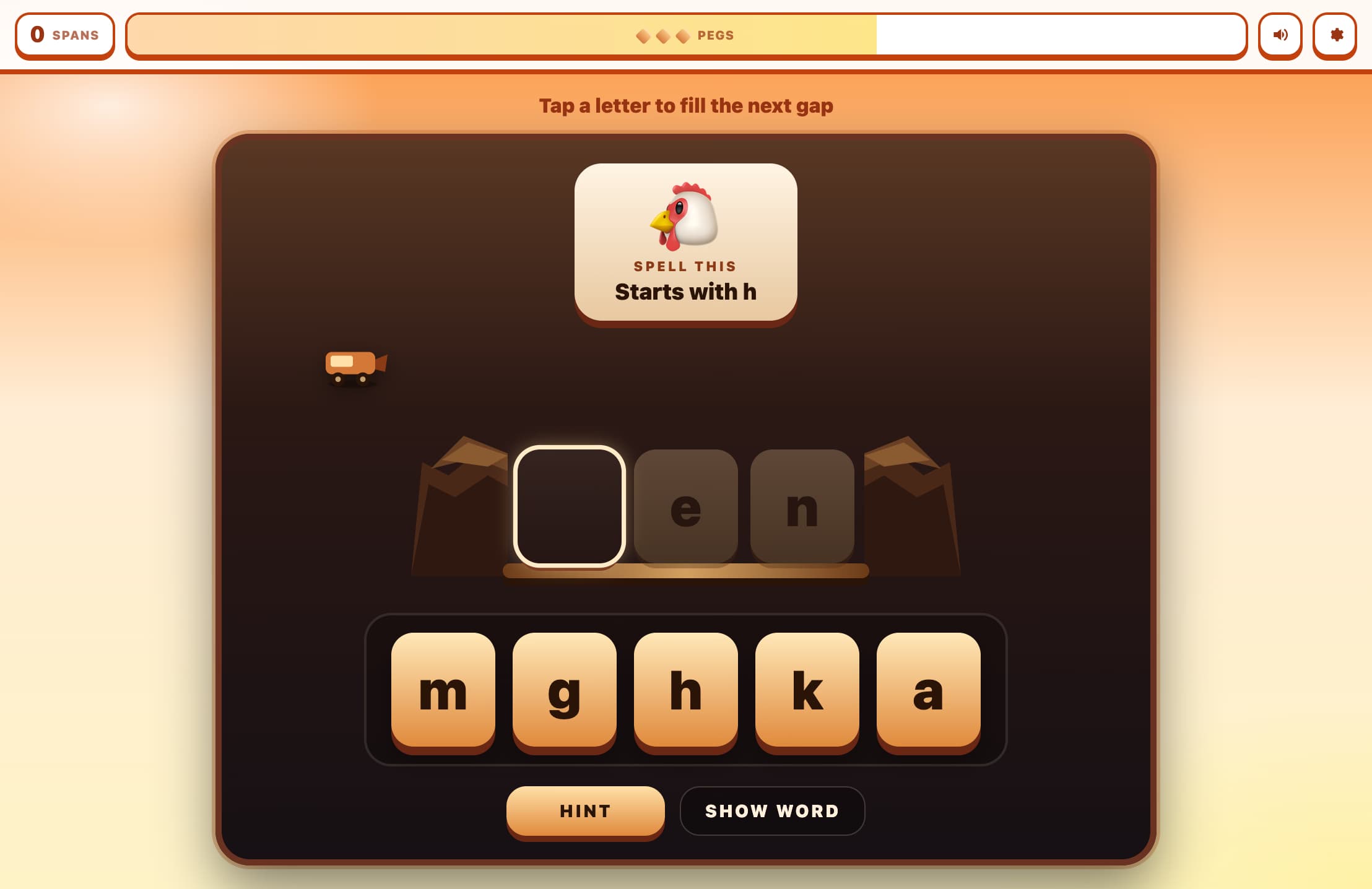
Spell Blend Words to Span the Ravine
A dusk ravine, copper timber beams, and a letter tray. A picture names the word. Some beams already hold a letter. Tap a tile, then tap an empty beam to seat it. Fill every gap. The right spelling locks the trestle and the cart rolls across. A wrong spelling costs a peg. Built for kindergarten and first-grade blends.
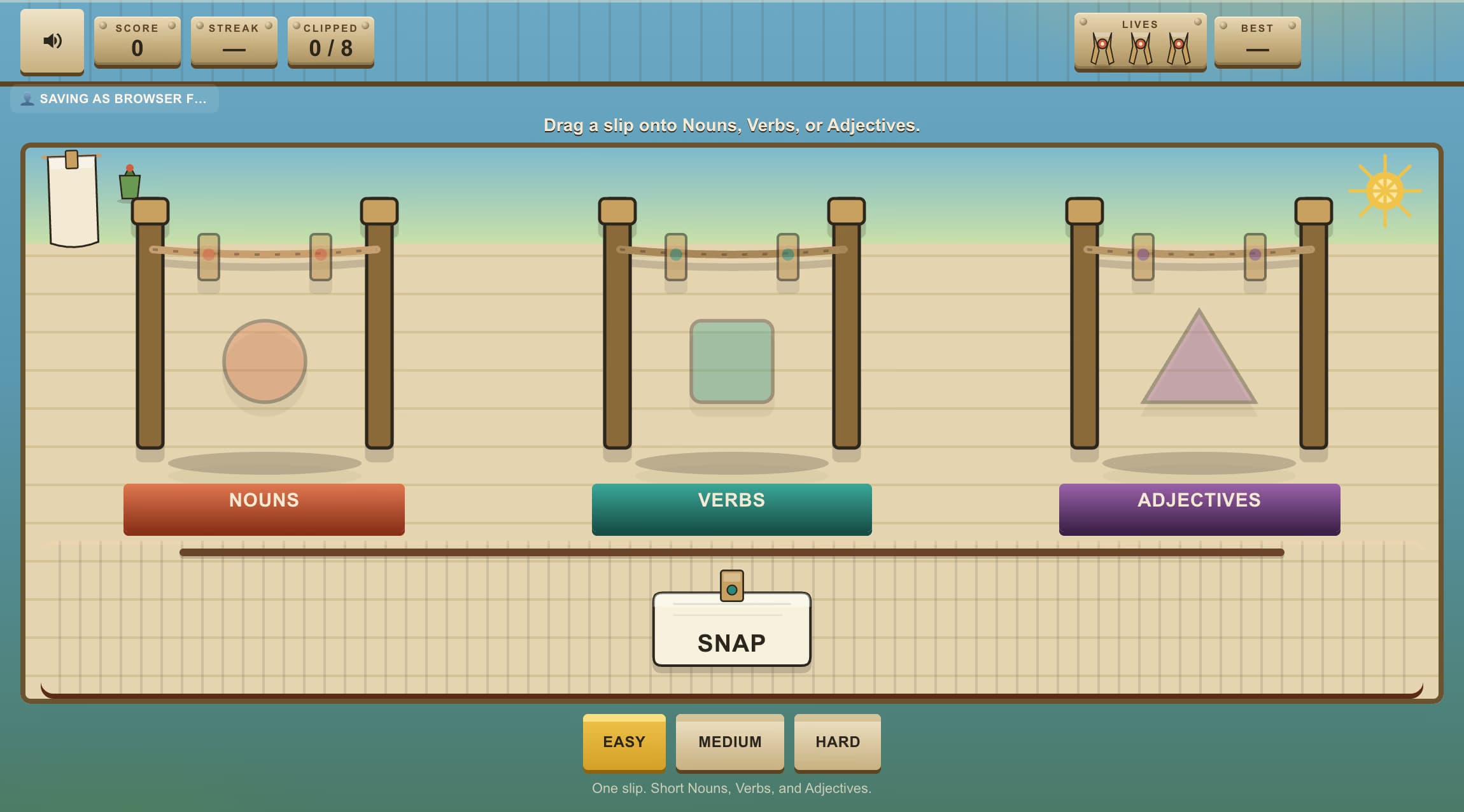
Sort Nouns, Verbs, and Adjectives
A backyard clothesline at noon. Three twine lines wait on fence posts: Nouns, Verbs, and Adjectives. Drag each English word slip from the laundry basket and clip it onto the right line. A hit snaps the pin. A miss twangs the line and breaks the Streak. Built for first-grade and second-grade parts of speech.
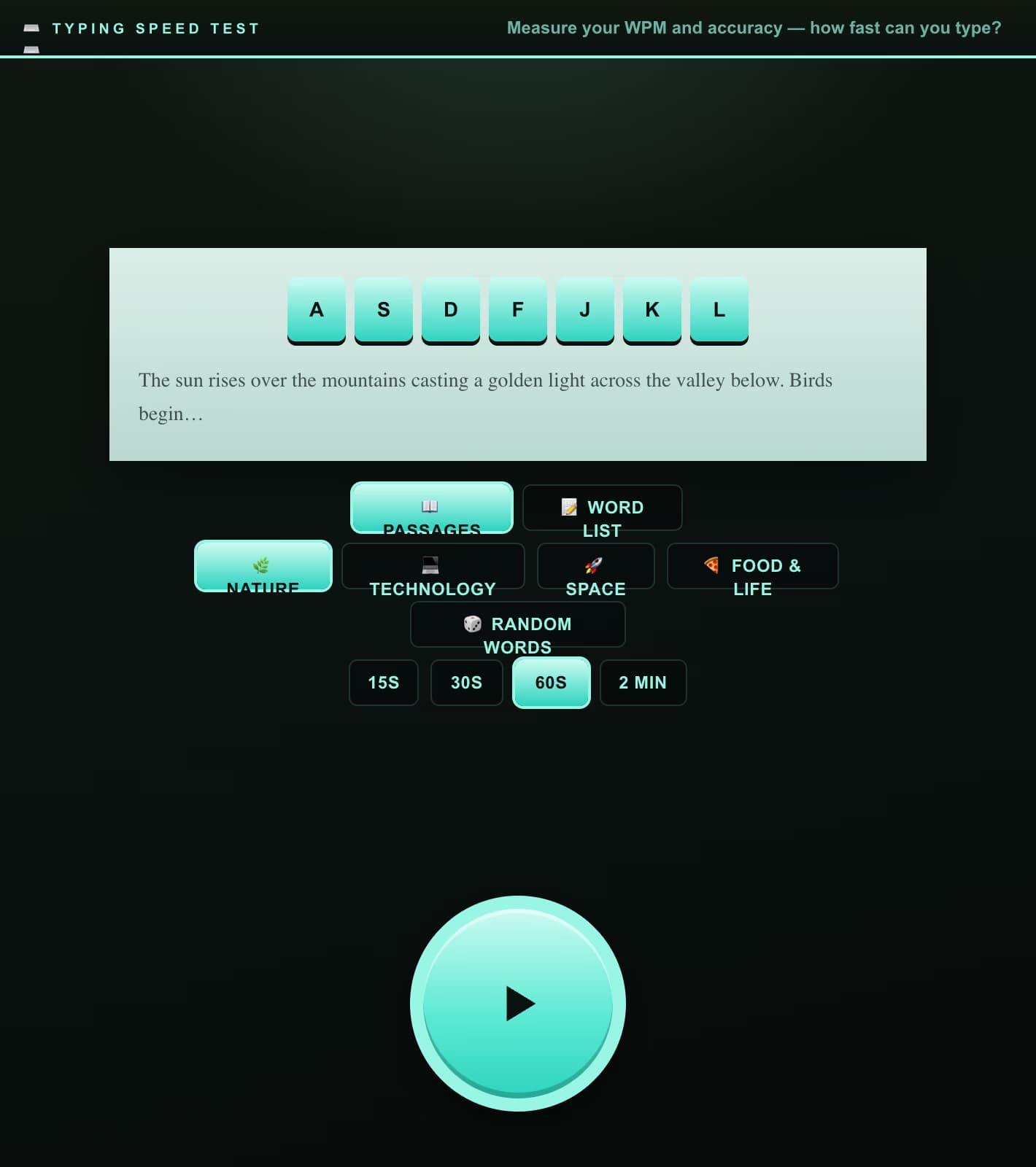
Measure Your WPM and Accuracy
Measure your typing speed in words per minute (WPM) and accuracy. Choose between fun passages or random word lists, pick a theme, and set your timer from 15 seconds to 2 minutes. Track your personal best!
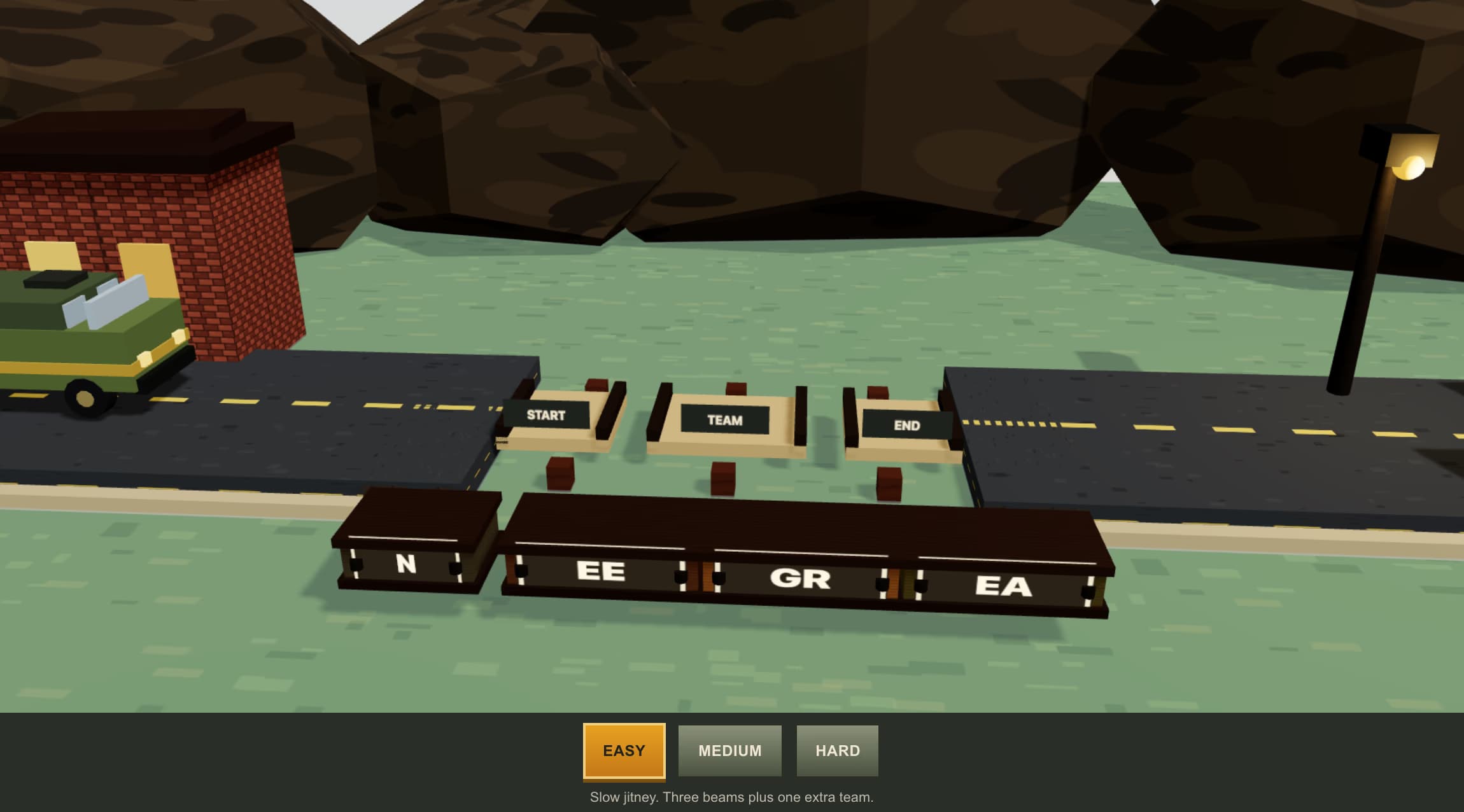
Build the Span Before the Jitney
An olive jitney rolls toward a rail cut. Hear a second-grade word, then drag onset, vowel-team, and ending beams onto the open span. Lock the right pattern — ai or ay, ea or ee — before the bus reaches the gap. Hard stops use homophones, so the clue picks sea or see.
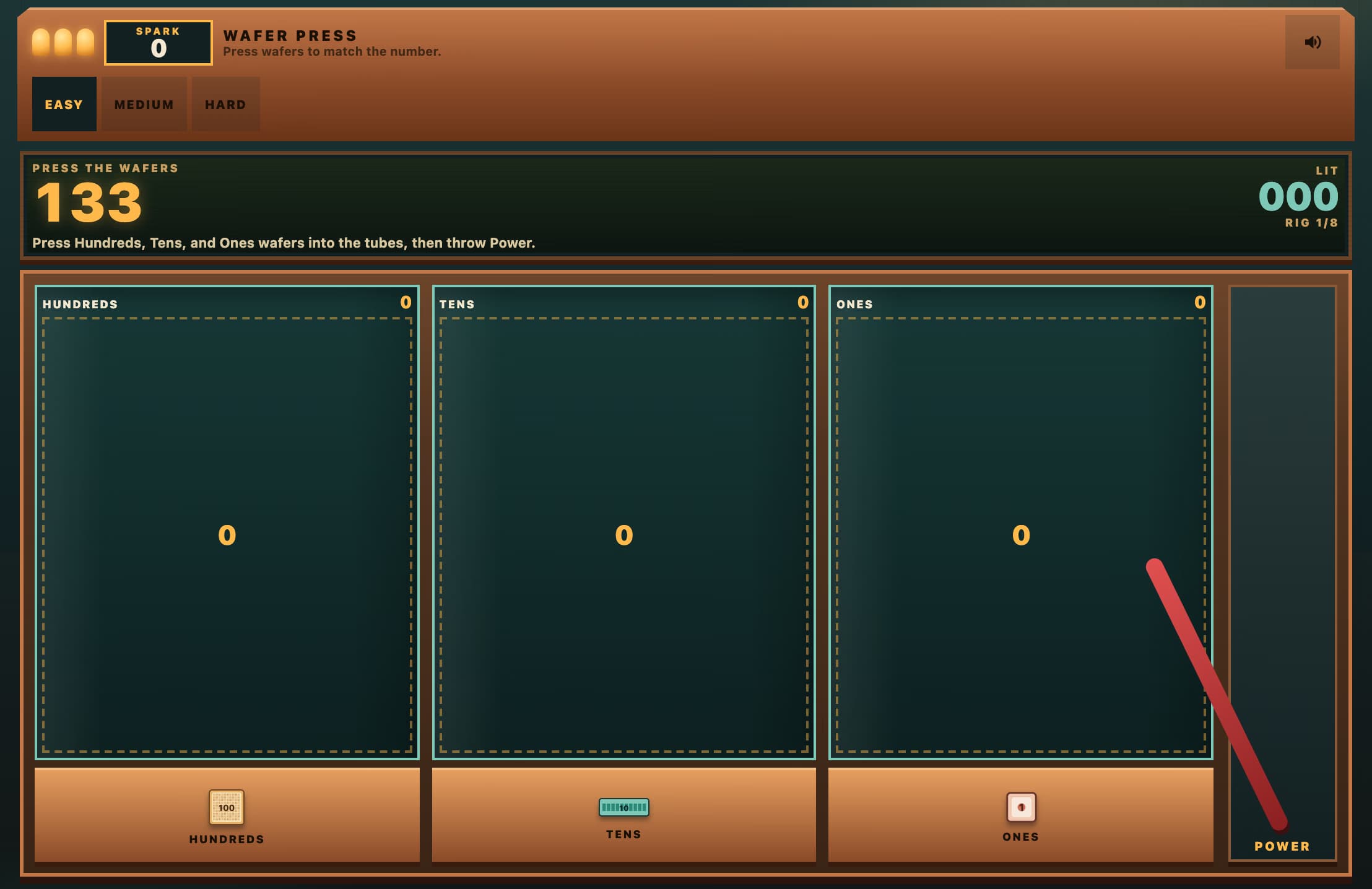
3-Digit Place Value Machine
The three-digit place value machine is broken. A CRT shows a number. Press Hundreds, Tens, and Ones wafers into the tubes, then throw Power so Lit matches. Second grade kids practice place value by building a visual three-digit number. Spark points grow with a streak.
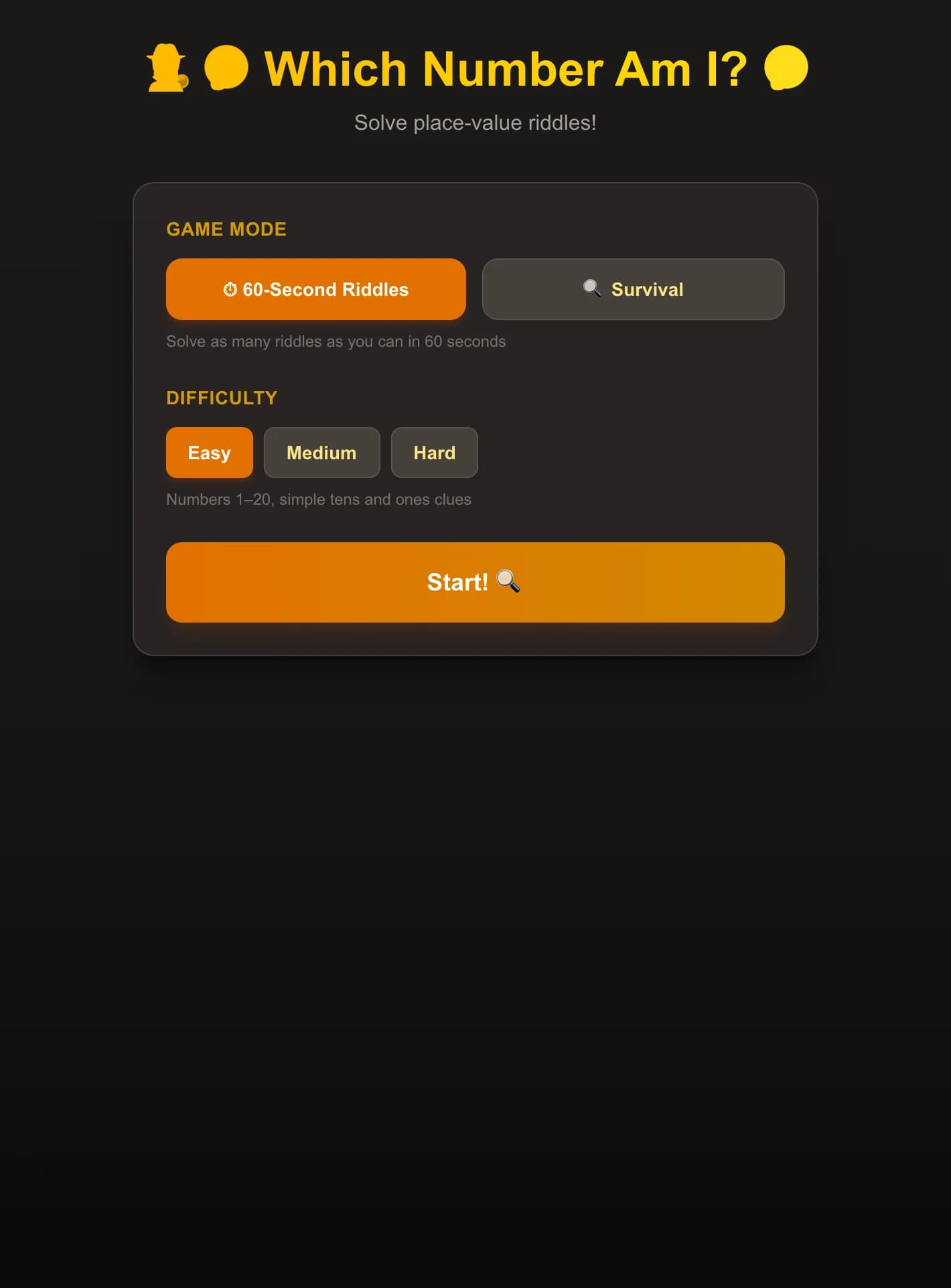
Place Value Riddles
Solve riddles like 'I have 3 tens and 5 ones — what number am I?' A visual place-value chart reveals the answer. Multiple clue styles from simple to tricky, with 3 difficulty levels.
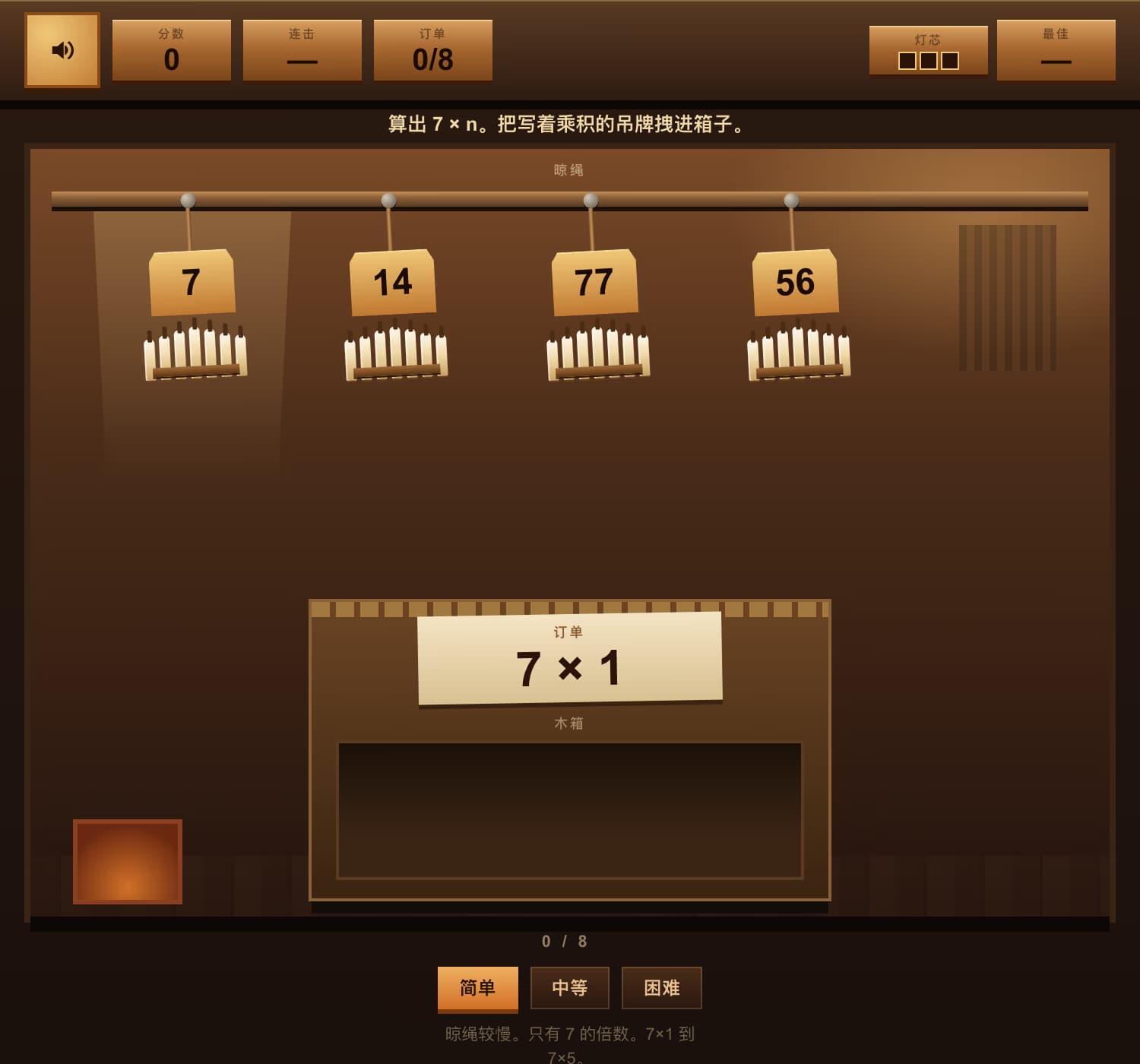
Stack Sevens to Fill the Candle Order
A tallow loft with a packing crate and twine-tied sevens. The slip shows 7 times a number. Drag each seven-candle bundle into the crate until the stack matches the product. Overfill dumps the order. Built for third-grade sevens fluency — equal groups you can stack, not a bubble to tap.
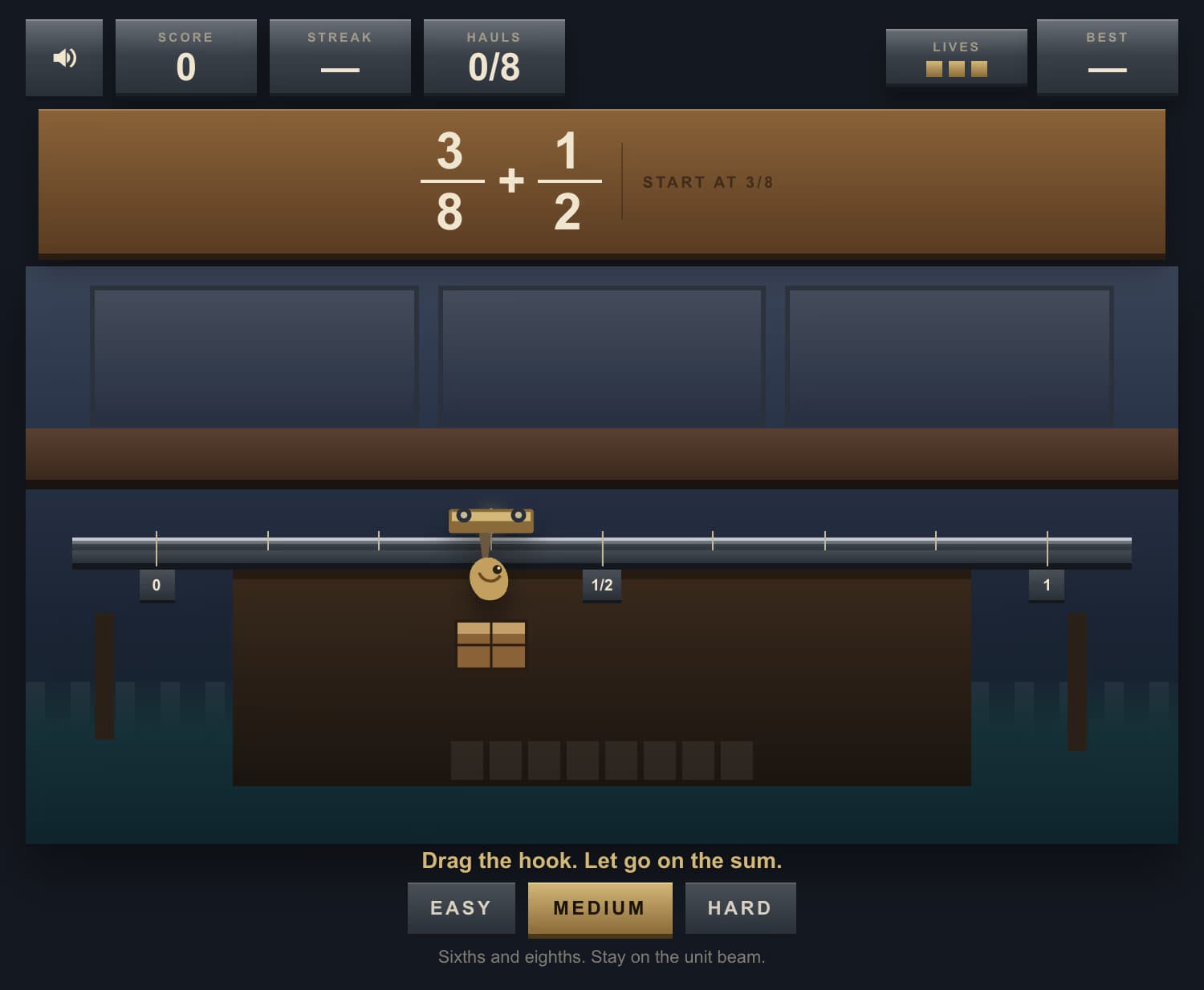
Add Fractions on a Number Line
Drag a brass cargo hook along a harbor loft beam to add fractions on a number line. Start on the first addend, haul the distance of the second, and let go on the sum. Three lives, a streak bonus, and Easy / Medium / Hard.
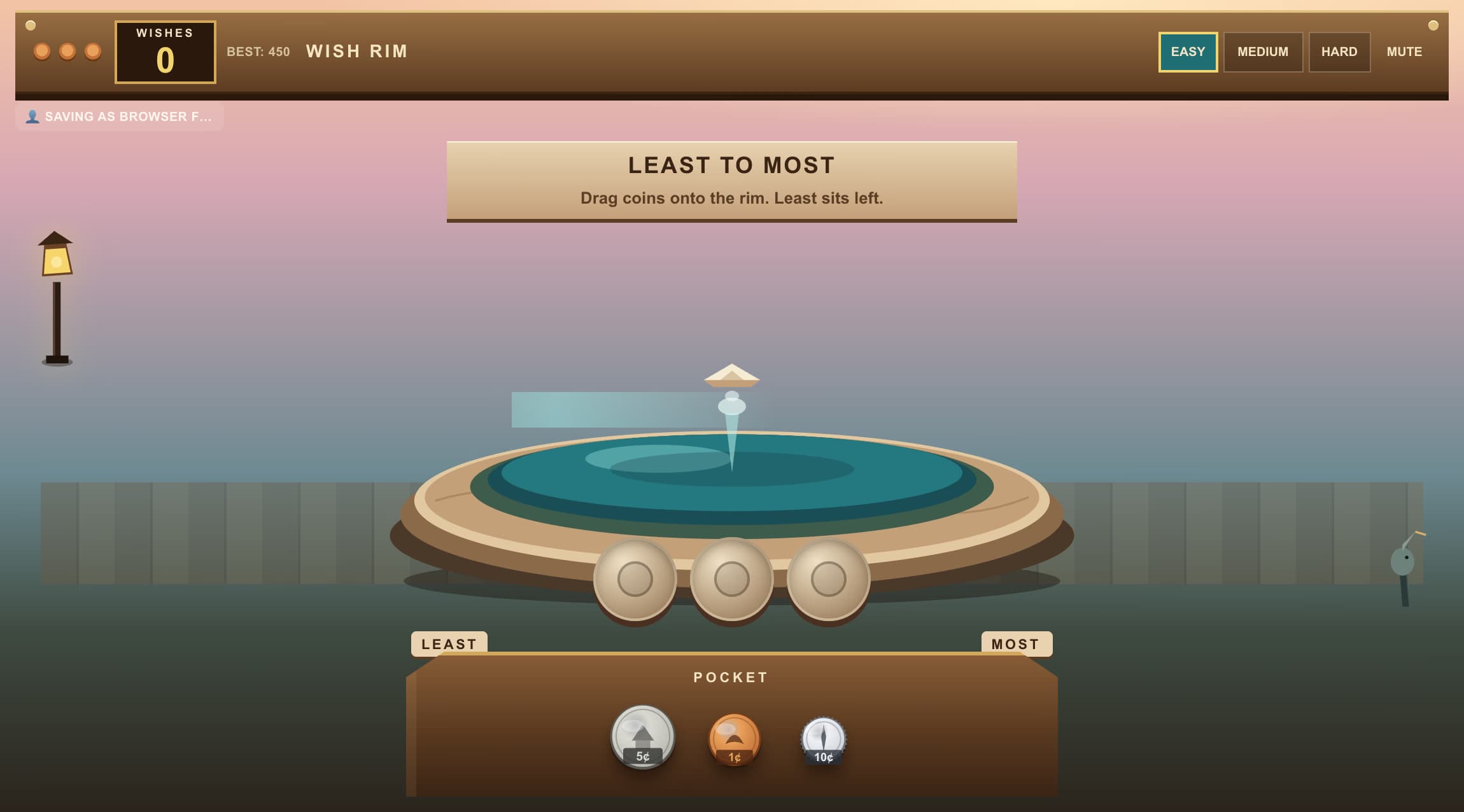
Ordering Coins By Value
Penny, nickel, dime, quarter! Kids drag coins from the Pocket onto the Wish Rim and line them Least to most — or Most to least on Hard. A dusk fountain, not a quiz card. Built for first- and second-grade money math so children grasp real-life coin values.
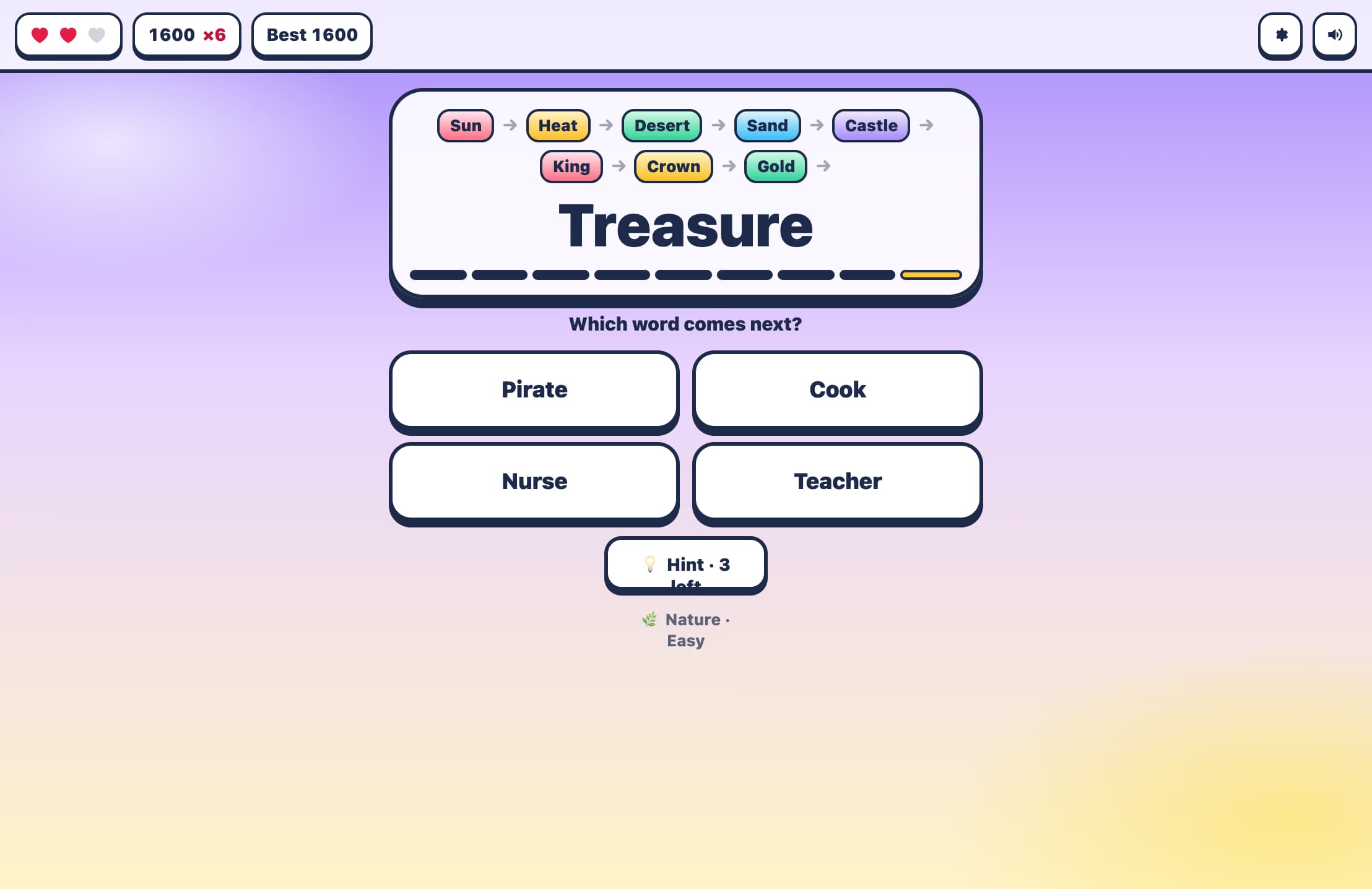
Follow the Chain of Connected Words
Follow a chain of word associations by choosing the next connected word from multiple options. Each correct answer extends the chain, builds your combo, and reveals surprising conceptual links between everyday words.
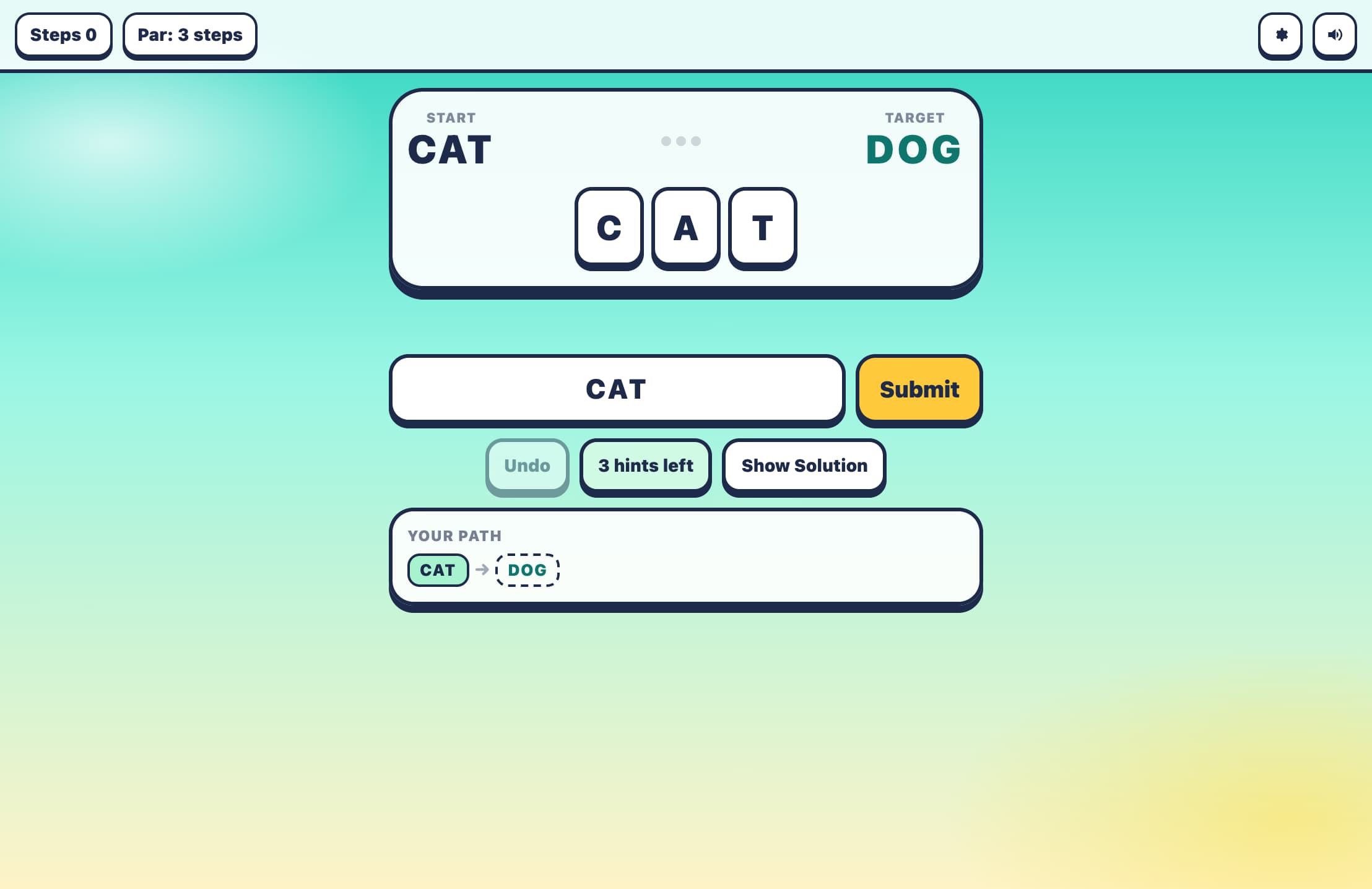
Transform Words One Letter at a Time
Play the classic word ladder puzzle! Change one letter at a time to transform a start word into a target word. Choose from 3, 4, or 5-letter challenges across multiple categories.
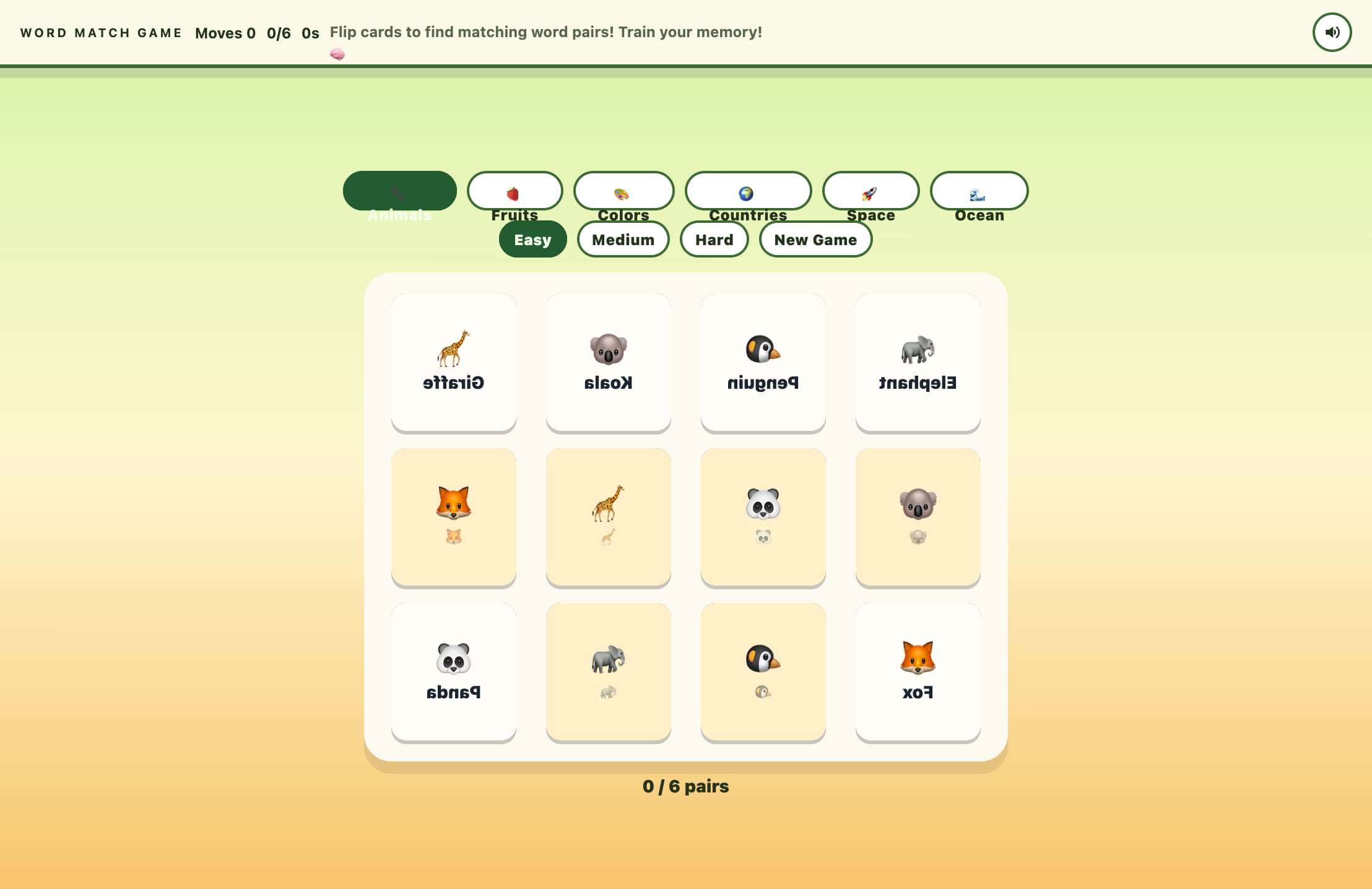
Fun Memory Card Matching
Flip cards to find matching word and emoji pairs! Choose from animals, fruits, colors, countries, space, and ocean themes. Train your memory with easy, medium, and hard difficulty levels.
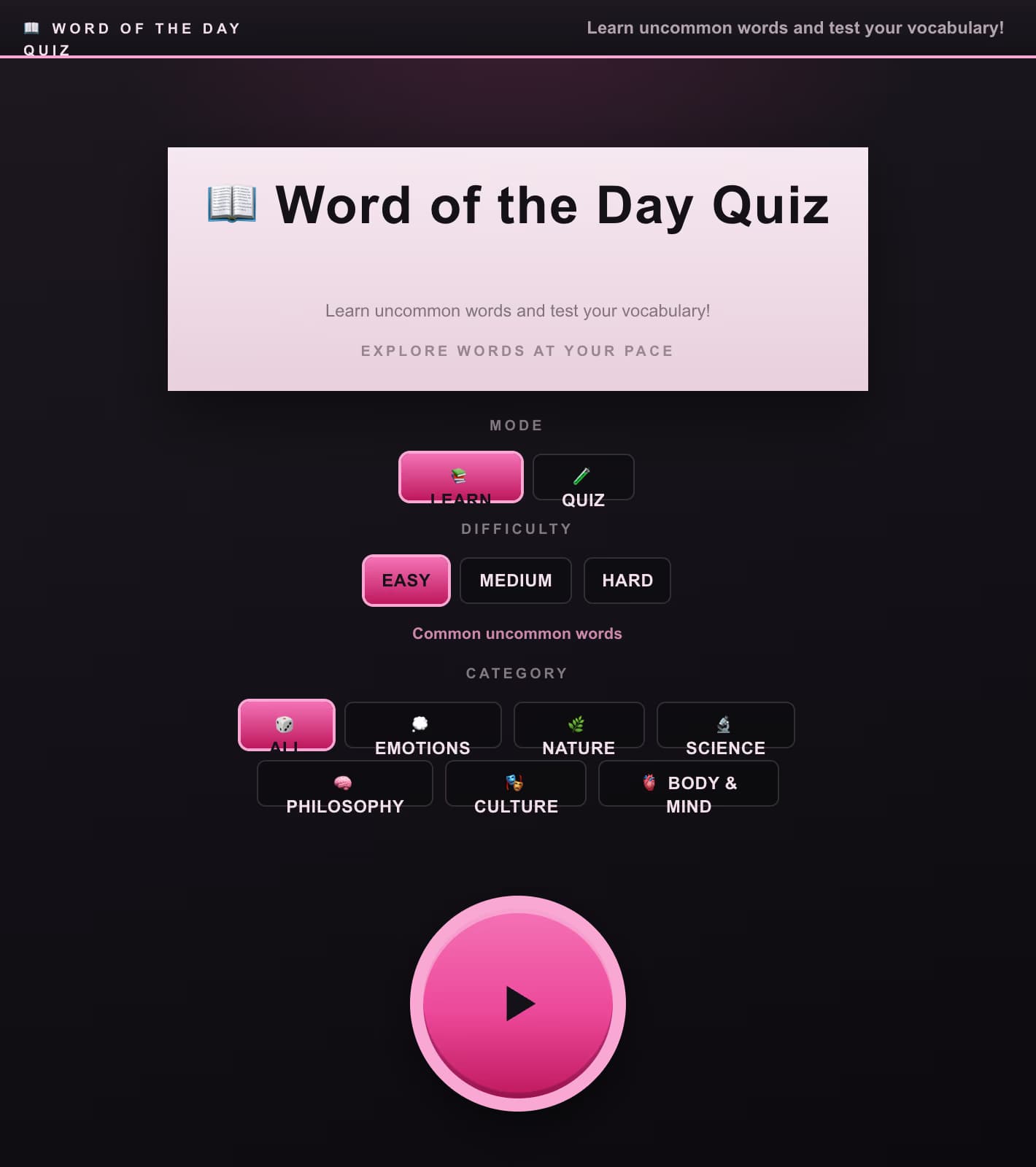
Learn Uncommon Words
Discover fascinating uncommon words every day! Learn definitions, origins, and examples, then test your knowledge with interactive quizzes. Choose from six categories and three difficulty levels.
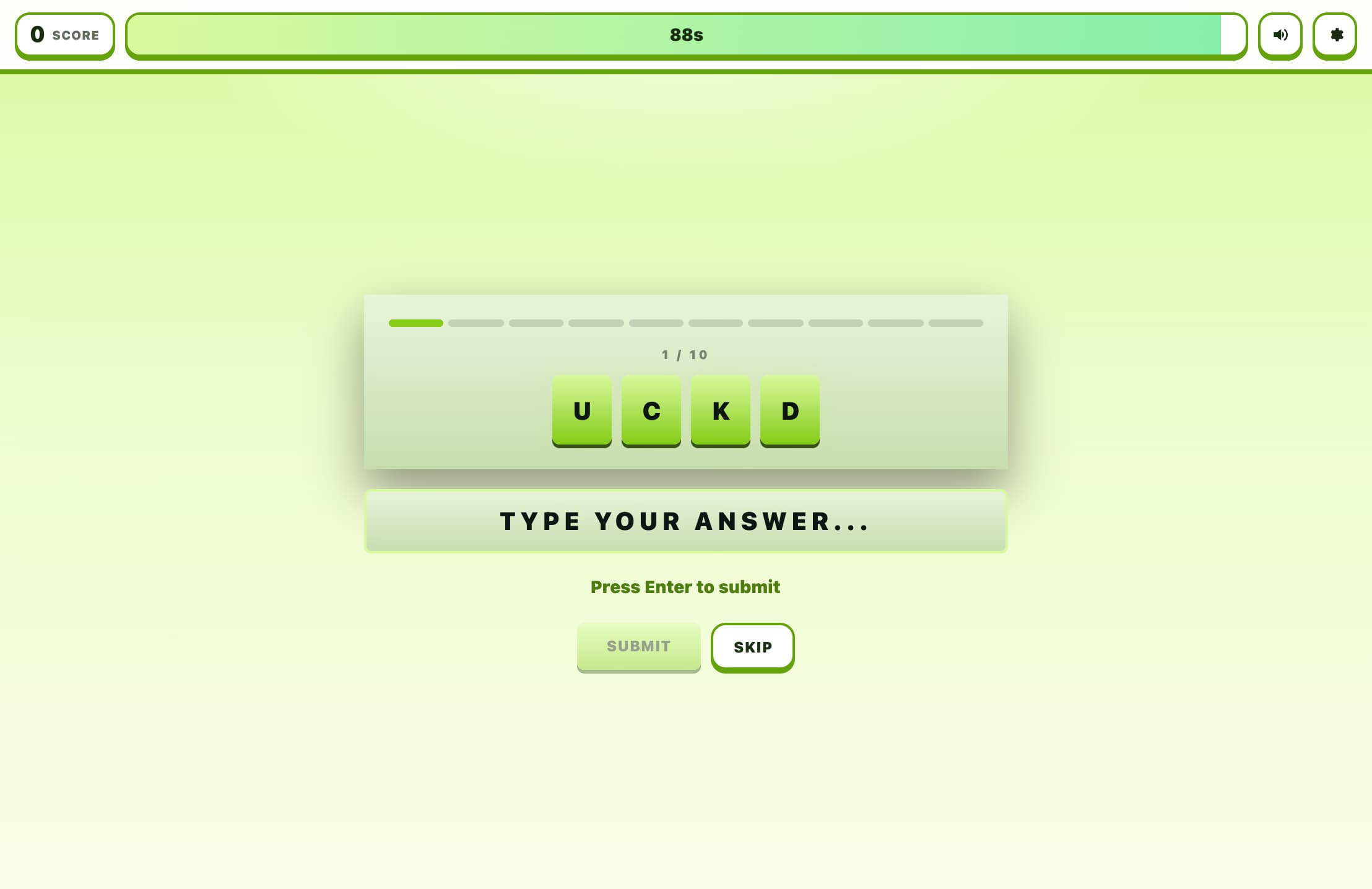
Race the Clock to Unscramble Words
Race against a timer to unscramble shuffled words! Type your answer, build combos for bonus points, and see how many words you can solve in 10 rounds. Choose from 7 categories and 3 difficulty levels.
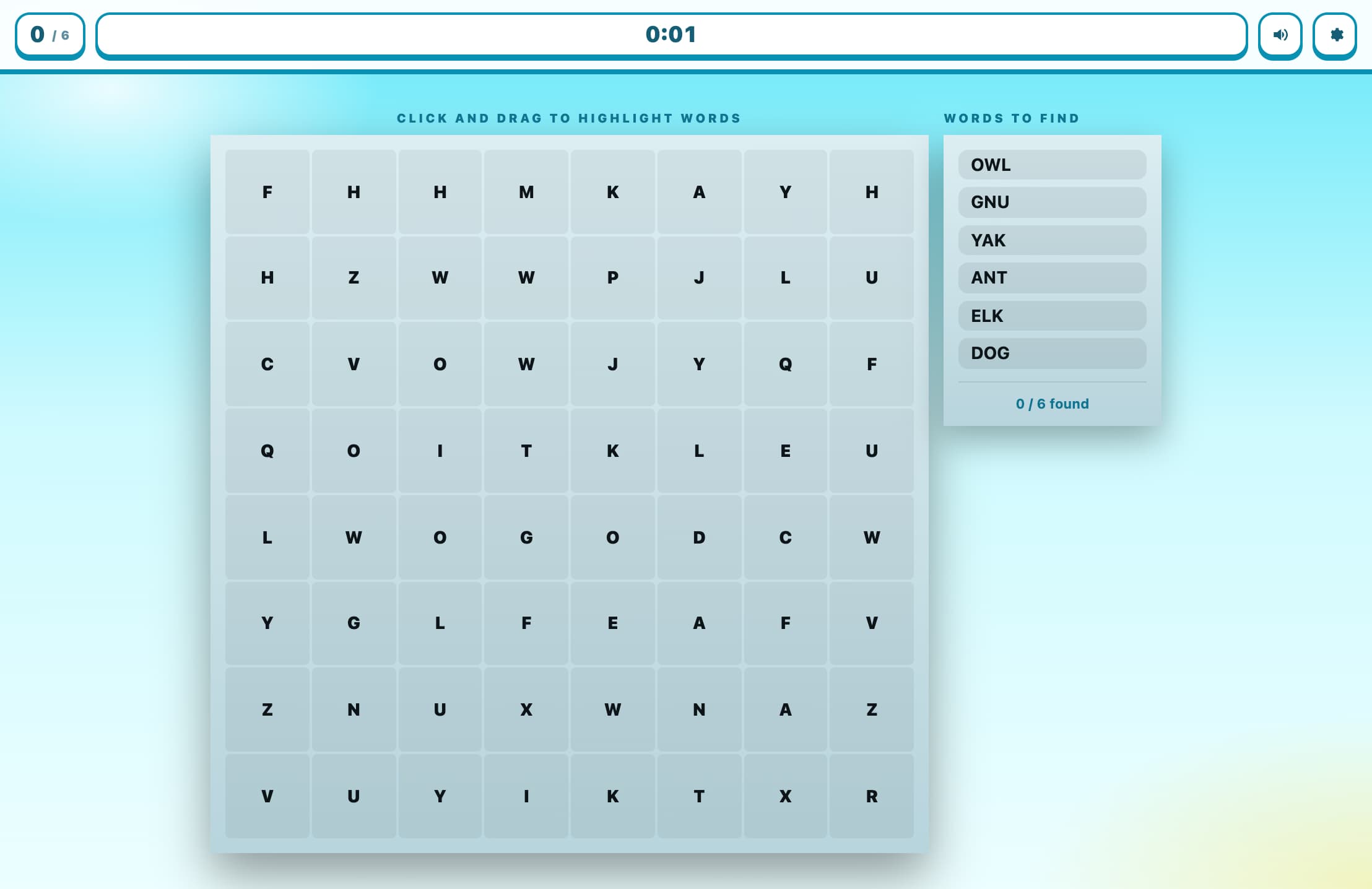
Word Search
Find all the hidden words in a grid of letters! Click and drag to highlight words hidden horizontally, vertically, and diagonally. Choose from animals, countries, food, space, sports, and nature categories across three difficulty levels.
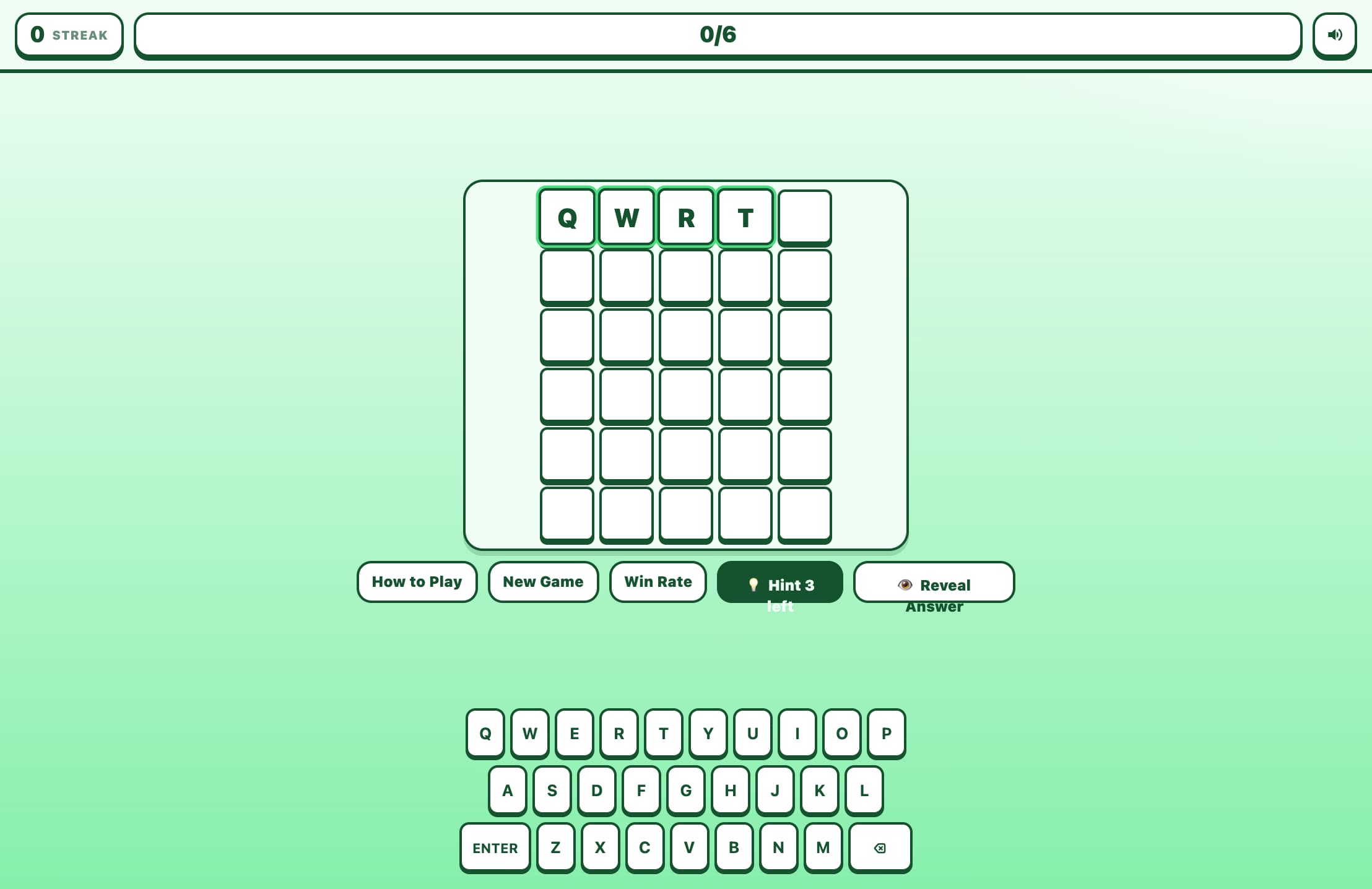
Free Daily Word Guessing
Guess the hidden 5-letter word in 6 tries! Get green, yellow, and gray clues after each guess. A free Wordle-style word game playable anytime with stats tracking.