Addition to 10 Bubble
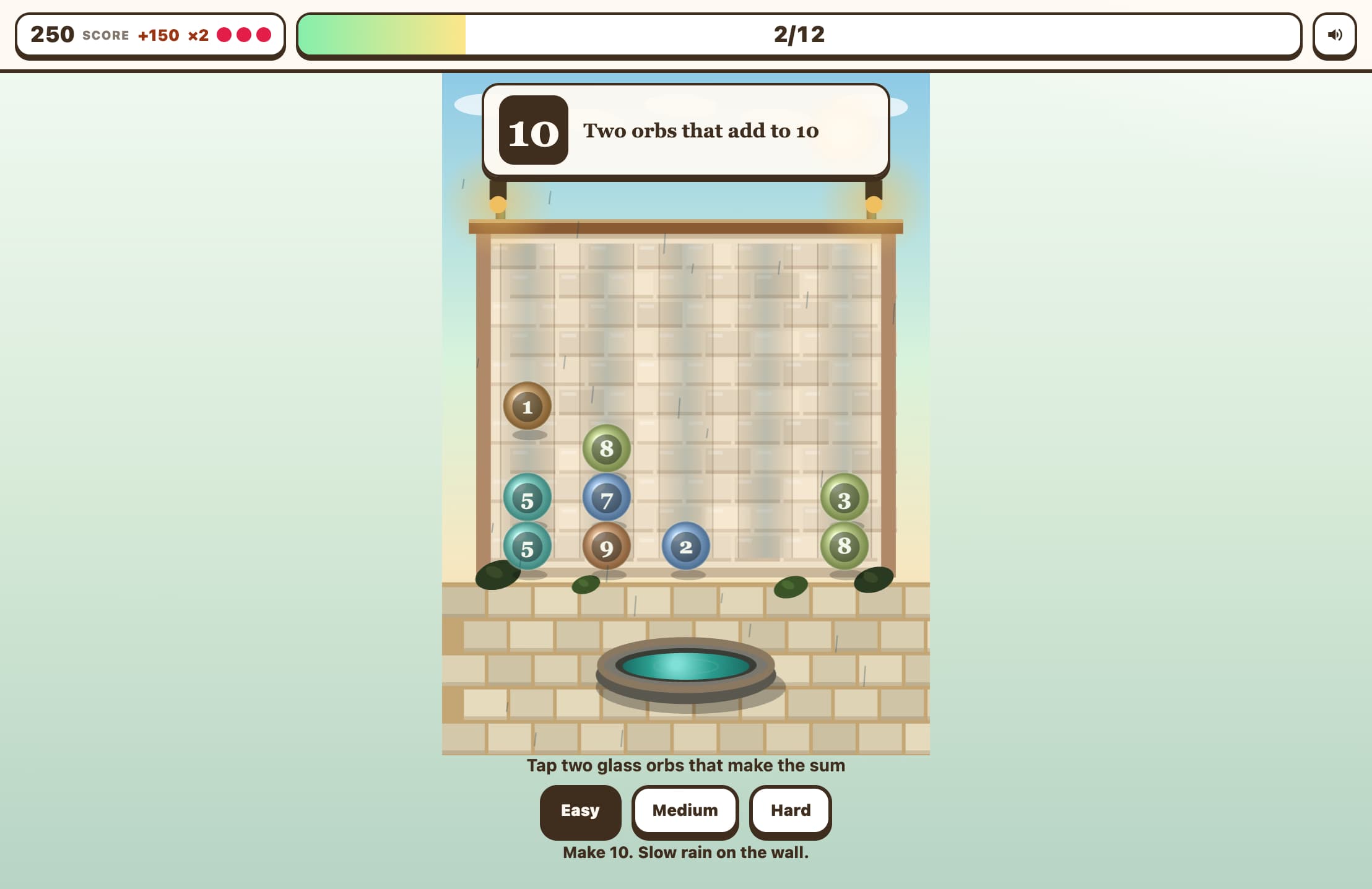
Tap two glowing lanterns whose numbers add to 10. They pop, the well settles, and a new row rises from below. Clear pairs fast before the lanterns overflow. Levels speed up the rise so addition facts have to stay automatic.
More like this
How to Play Lantern Tens
Choose a Rise Speed
Pick Easy, Medium, or Hard. The well always asks for pairs that make 10. Harder settings only change how fast new lanterns appear.
Find a Pair
Look for two numbers that add to 10, such as 1 and 9, 2 and 8, 3 and 7, 4 and 6, or 5 and 5.
Tap Both Lanterns
Tap the first lantern, then its partner. A correct pair pops. A miss shakes and you can try another pair right away.
Keep the Well Clear
New rows rise from below. Pop pairs before a column hits the glowing danger line at the top.
Key Features
Tap Two Lanterns That Make 10
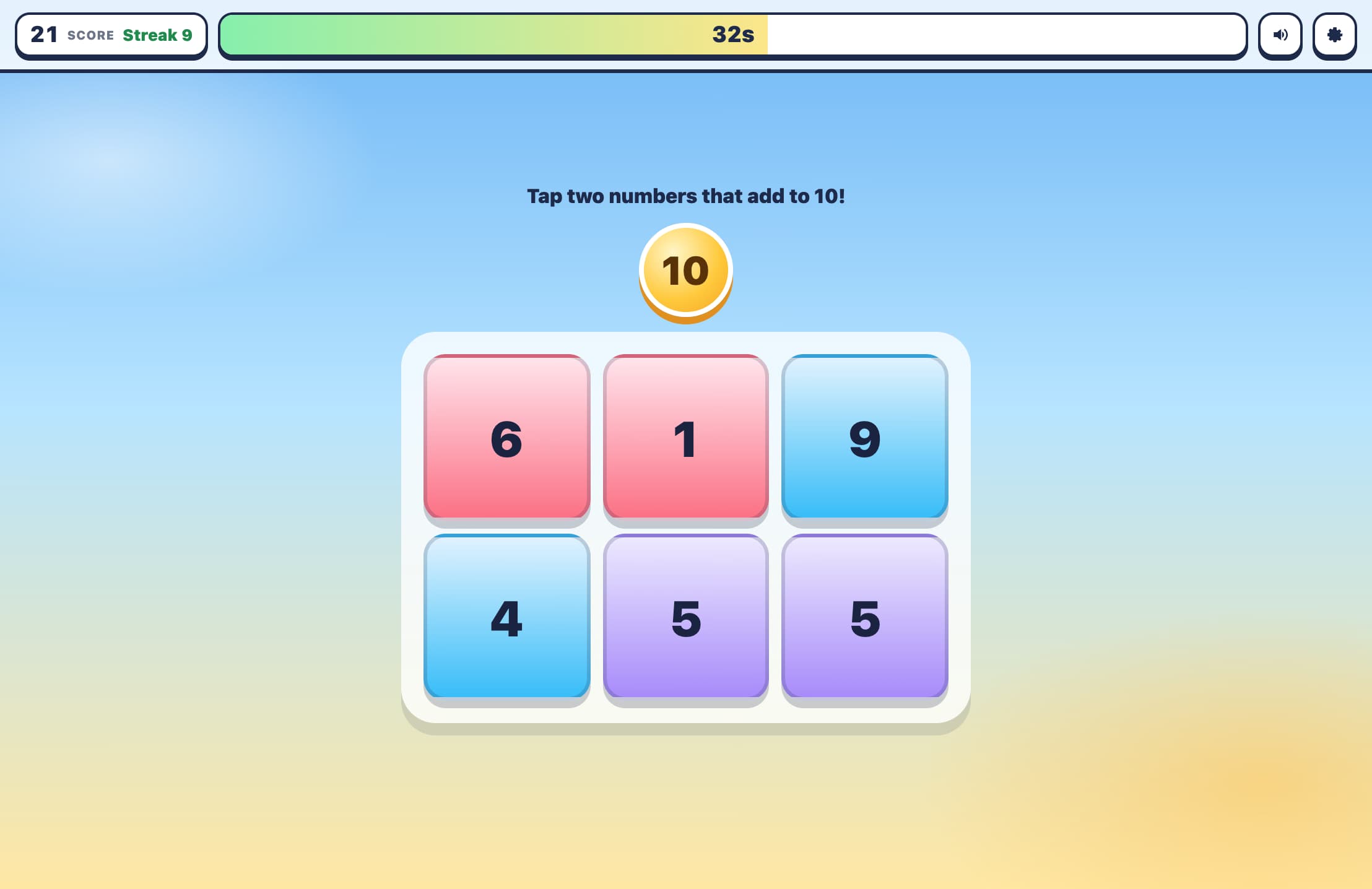
Every lantern holds a number from 1 to 9. Touch a pair that sums to 10 and both pop. Instant glow and pop feedback keeps the fact visible.
Rising Well Pressure
New lanterns climb from the bottom on a timer. If any column reaches the top, the festival goes dark. Speed is the second skill beside the sum.
Score, Pairs, and Levels
A pair is worth more when you find it quickly and keep a streak. Every eight pairs the rise speeds up.
Three Rise Speeds
Easy starts with three rows and a slow climb. Medium fills four rows. Hard crowds the well and shortens the gap between new rows.
What is Lantern Tens?
Lantern Tens is an addition-to-10 arcade game. Numbered lanterns stack in a five-column well. The player taps two lanterns that add to 10. Those lanterns pop and the stack settles. Fresh lanterns keep rising, so students must recall number bonds to 10 under light time pressure. The same target stays at 10 on every level; only the rise speed and starting fill change.
Why Play Lantern Tens?
Builds Friends-of-10 Fluency
Pairs that make 10 are a core first-grade fact set. Seeing 3 and immediately hunting for 7 is the habit this board trains.
Visible, Tappable Practice
No typing and no worksheets. Large lanterns work on touch screens, and a miss is obvious without a separate check step.
Pressure Without Changing the Math
The sum stays 10. Difficulty is how fast the well fills, so younger students can stay on Easy and still practice the same facts.
Rewards Speed and Streaks
Faster pairs and longer streaks score more. That pushes automatic recall instead of slow counting.
Frequently Asked Questions
Which pairs make 10?
1+9, 2+8, 3+7, 4+6, and 5+5. Two lanterns with 5 also count.
Does the target ever change?
No. Every level is addition to 10. Levels only make new lanterns rise faster.
How does the game end?
When a column of lanterns reaches the top of the well. Pop pairs to keep space at the top.
What do Easy, Medium, and Hard change?
Starting rows and how often a new row appears. Easy is slower with three rows. Hard starts fuller and climbs quickly.
What grade is this for?
Kindergarten through second grade (about ages 5–8), when students learn number bonds to 10. Older students can use Hard for fluency speed.