Kindergarten Games
Discover all games tagged with Kindergarten. Free to play — no download, no account.
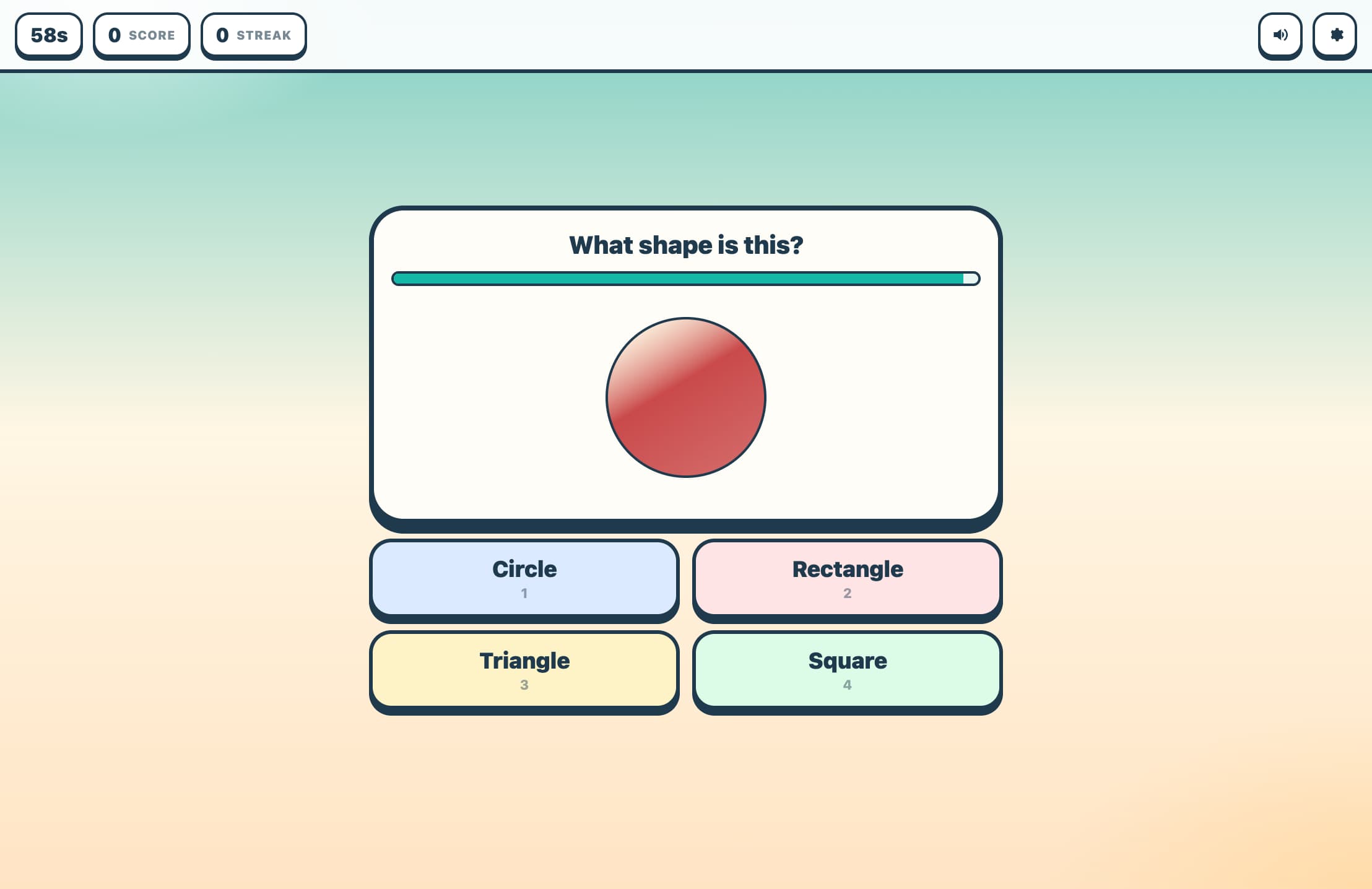
Identify Shapes by Sides & Corners
Identify 2D shapes like triangles, squares, pentagons, hexagons, and more by counting their sides and corners. Features colorful SVG shapes, multiple question types (name, sides count, corners count), and three difficulty levels.
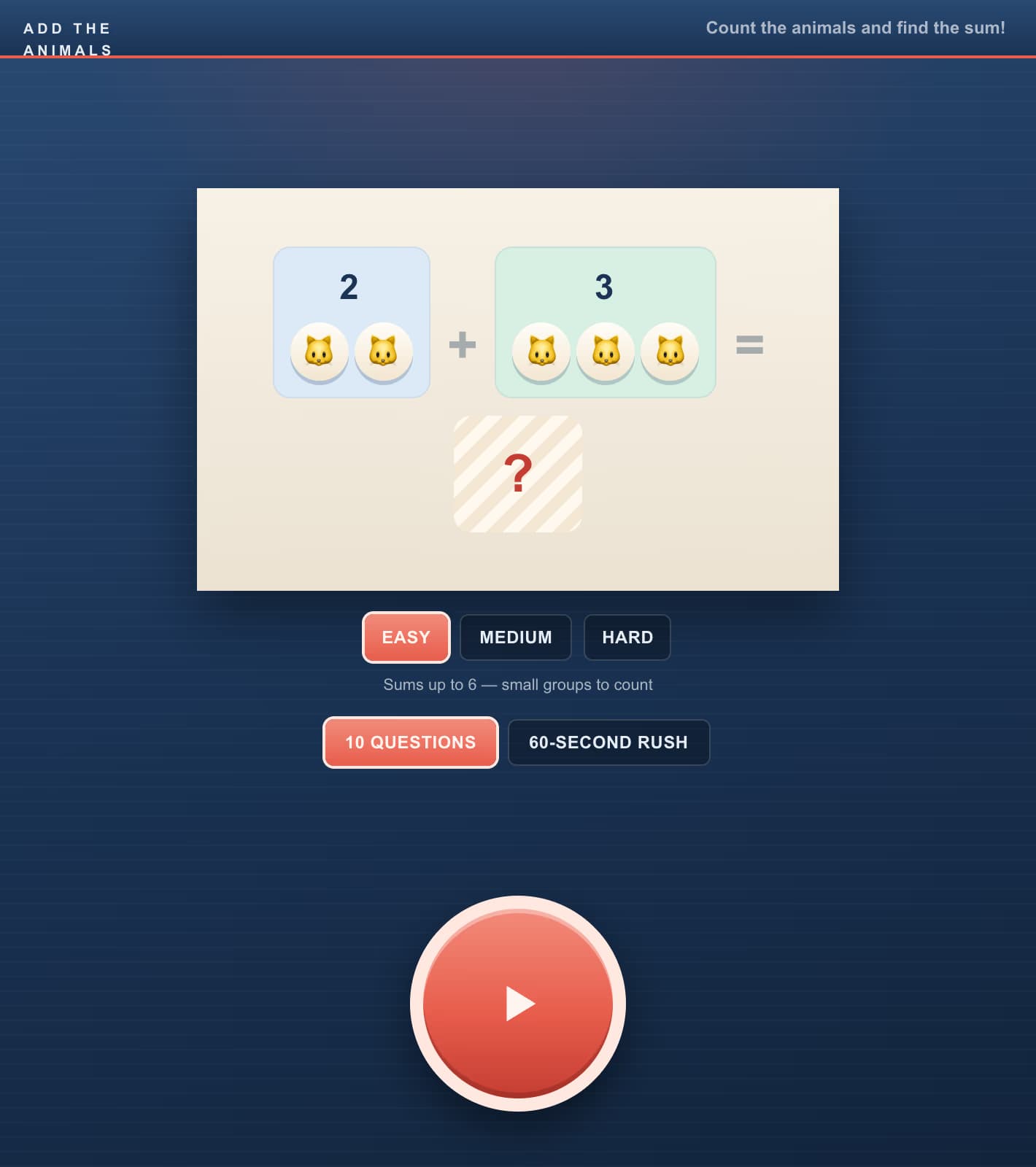
Count and Add Cute Animal Groups
2 cats + 3 cats = ? Count adorable animal emoji to solve addition problems up to 10. A visual and engaging way for young learners to practice adding numbers through counting.
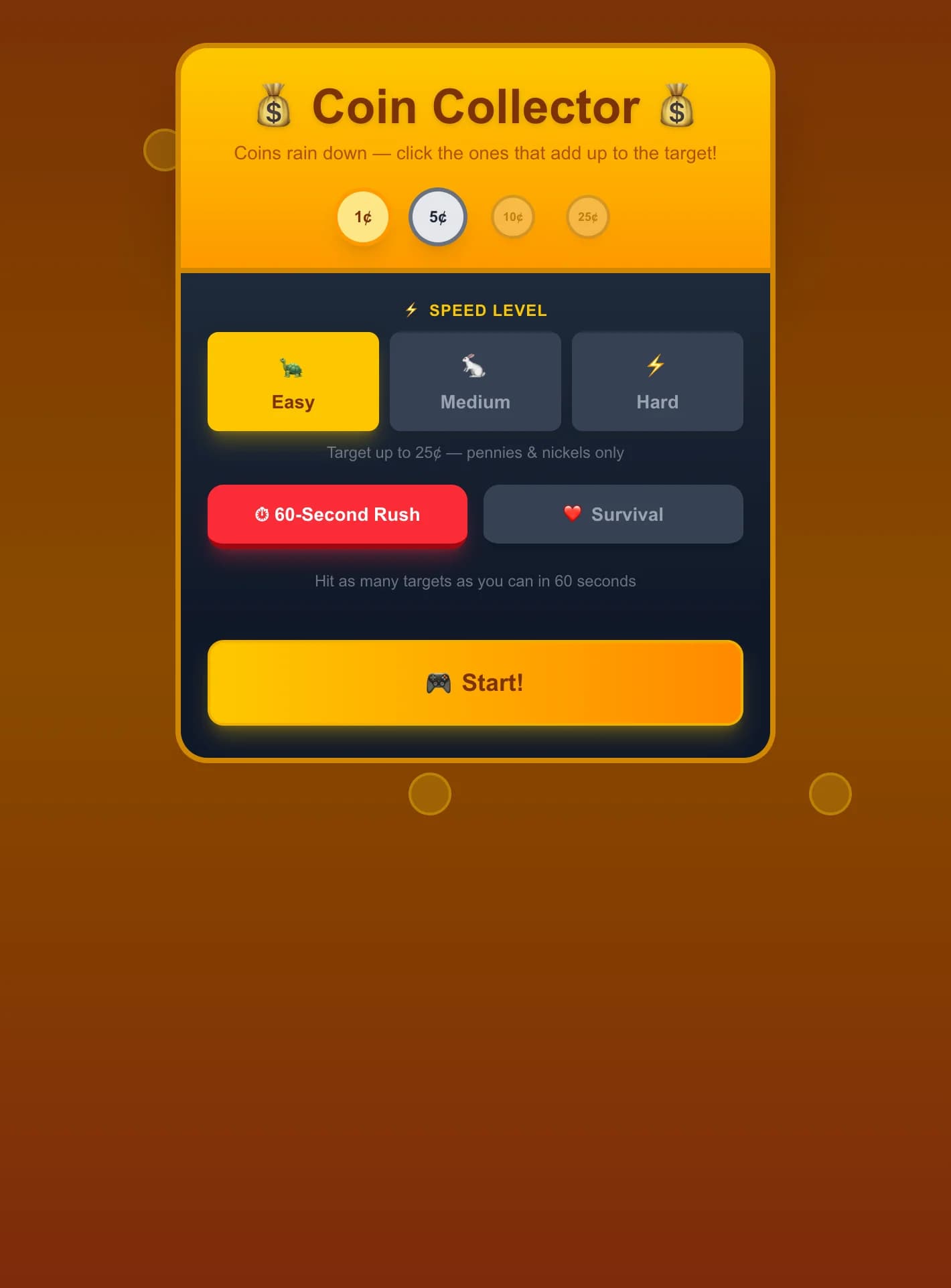
Click Falling Coins to Reach the Target Amount
Coins rain down from the top of the screen — click only the ones that add up to the target amount before time runs out. A fast-paced money math game that sharpens coin recognition and mental addition for all ages.
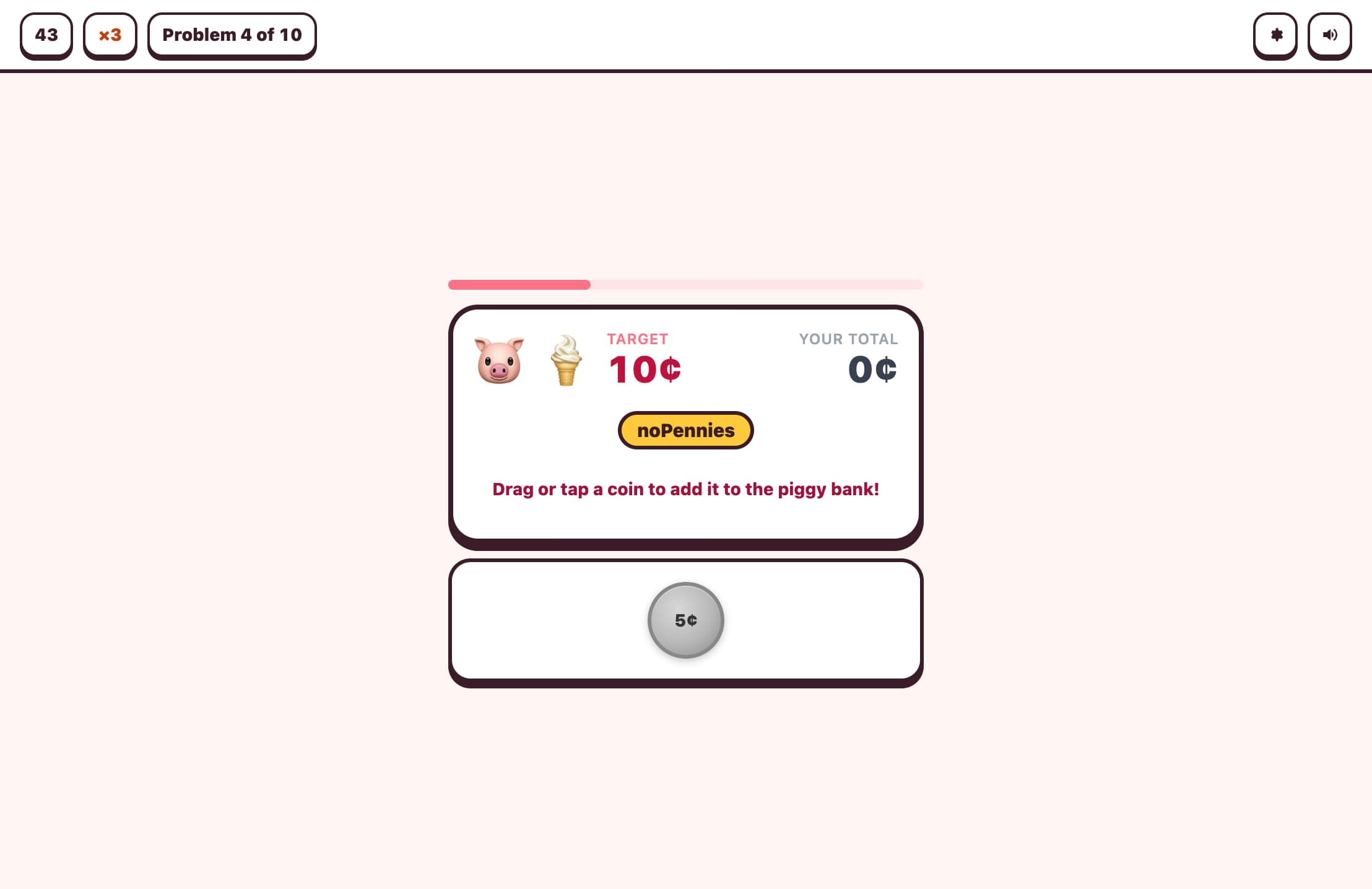
Drag Coins to Reach the Target Amount
Drag or tap pennies, nickels, dimes, and quarters into a piggy bank to make exact target amounts! Three difficulty levels introduce money concepts step by step — from 1–10¢ with just pennies and nickels, up to 50¢ with all four US coin types.
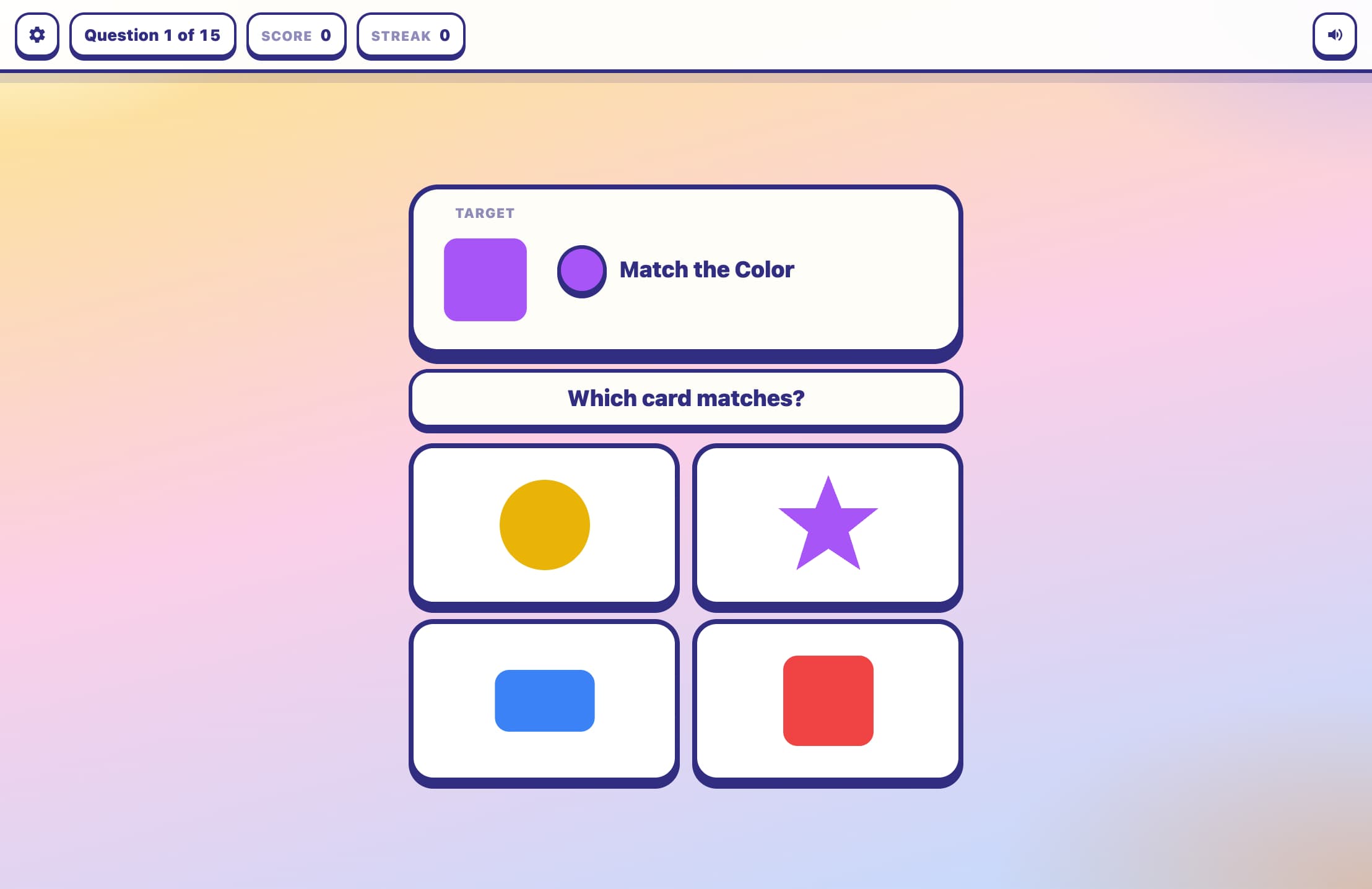
Classification and Sorting
A gentle introduction to classification and sorting! Match objects by color, shape, or both. Find the card that follows the rule — from easy single-attribute sorting to tricky two-attribute matching with near-miss distractors.
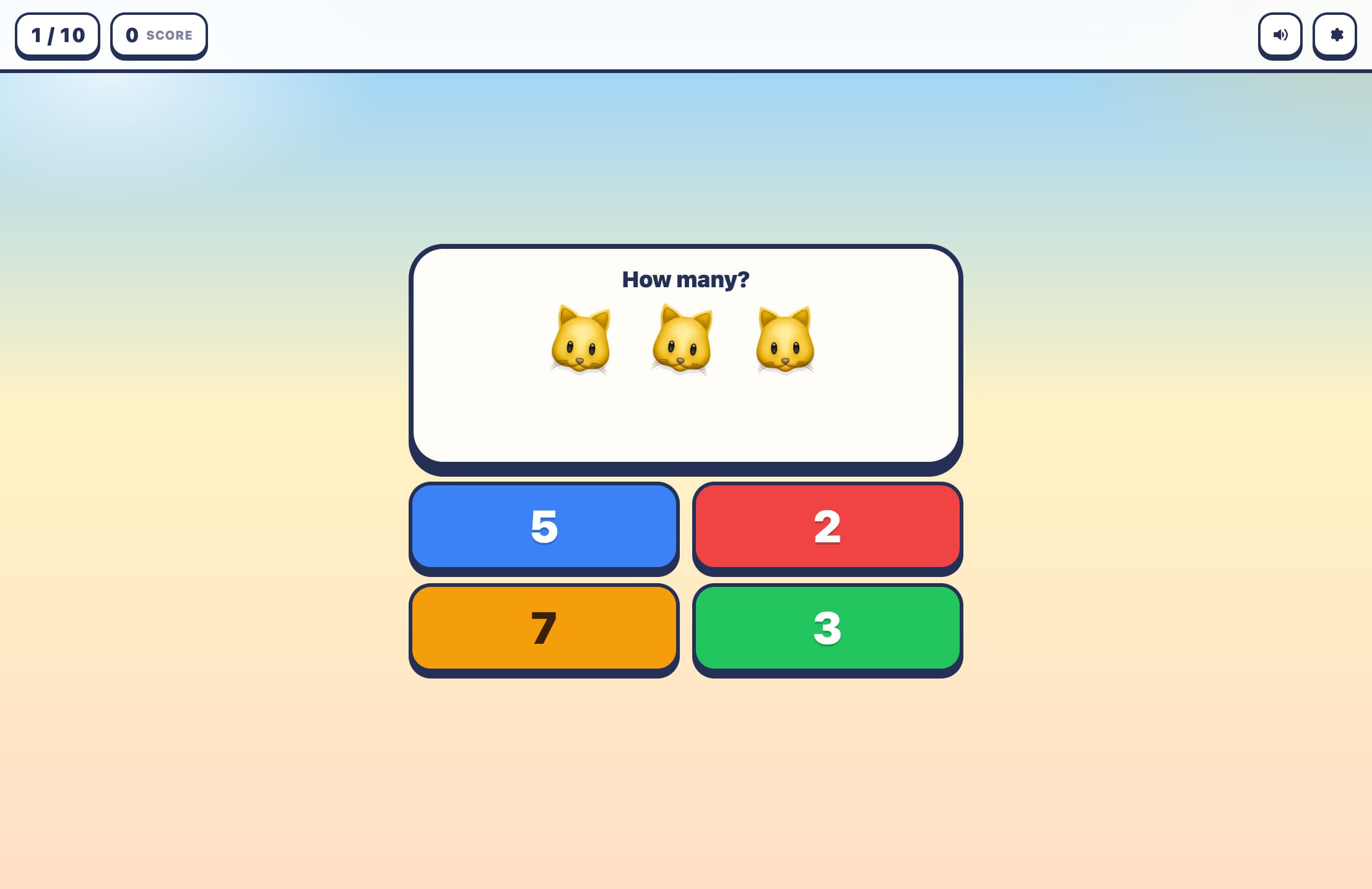
Kids Counting Game 1 to 20
A colorful counting game where you count cartoon emoji items and tap the right number. Perfect intro to counting 1–20 for young learners.
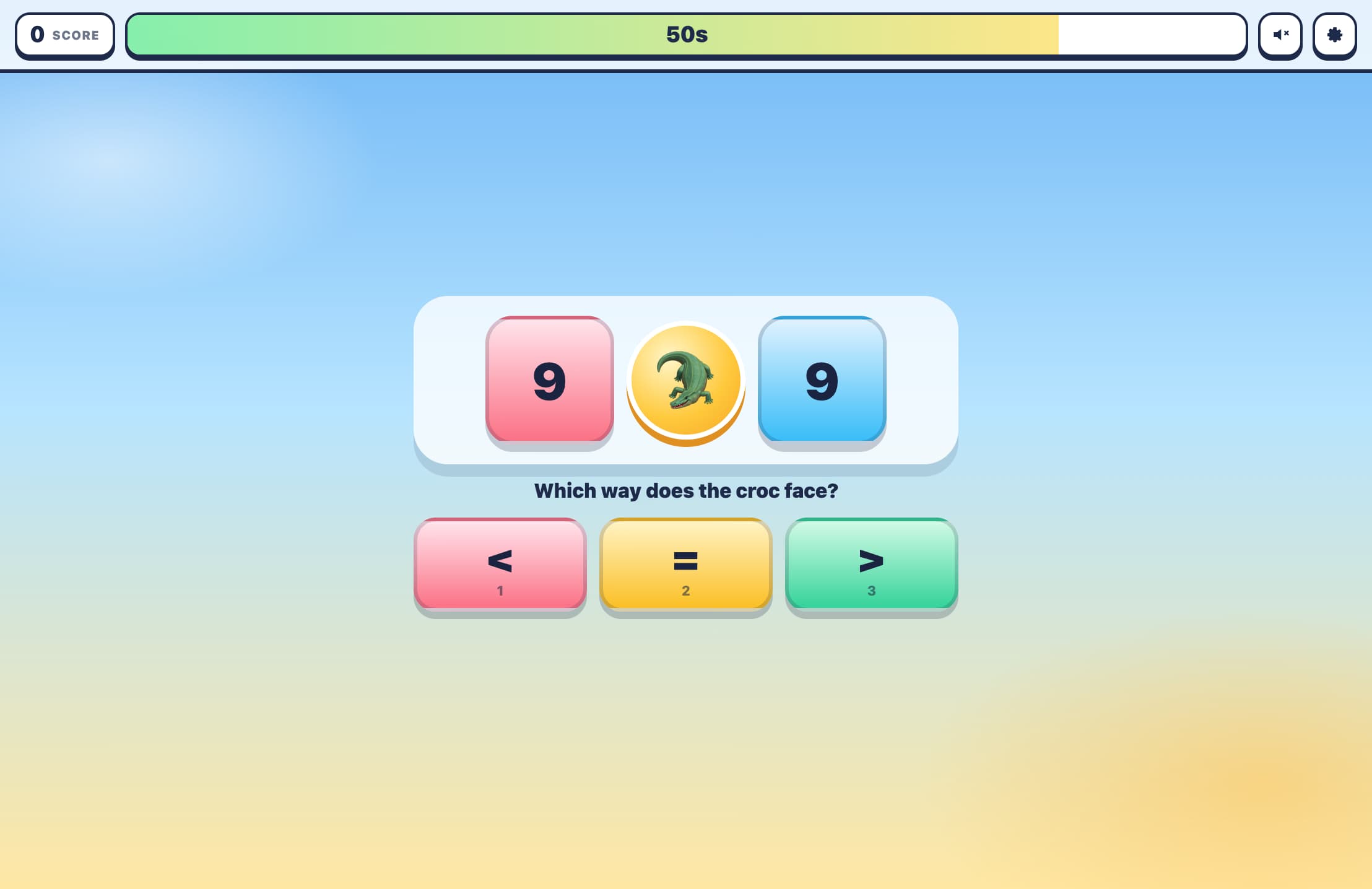
Greater Than Less Than
The hungry crocodile always eats the bigger number! Place the >, <, or = sign between two numbers up to 100. A fun animated crocodile turns to face the larger number after each answer.
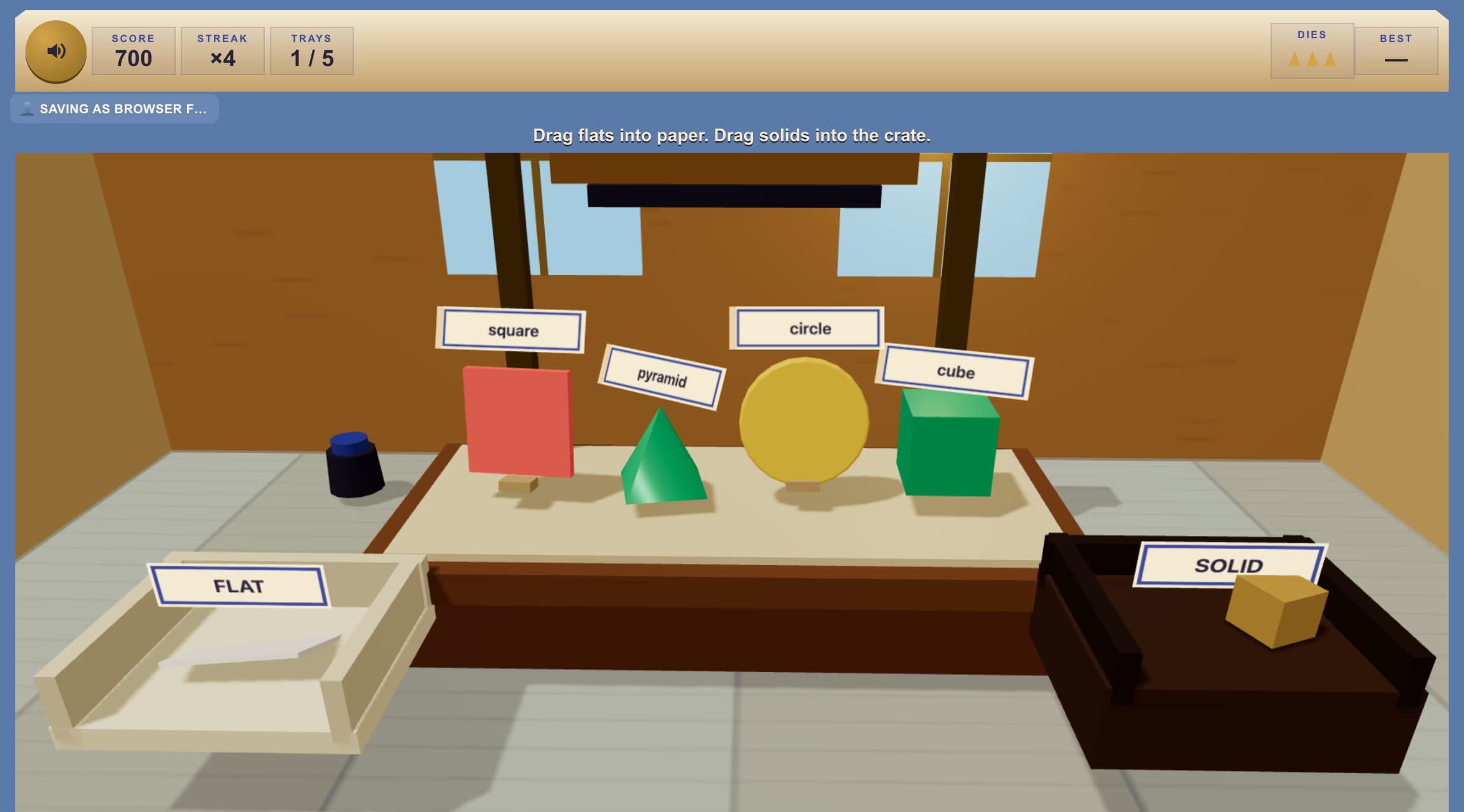
Flat or Solid
A kraft packing loft is waiting on the next tray. Drag paper-flat 2D shapes into the Flat bin and chunky 3D solids into the Solid crate. Kindergarten geometry practice: circles stay flat, cubes take up space. Clear five trays, keep three brass dies, and race the press on harder runs.
Doubles Facts
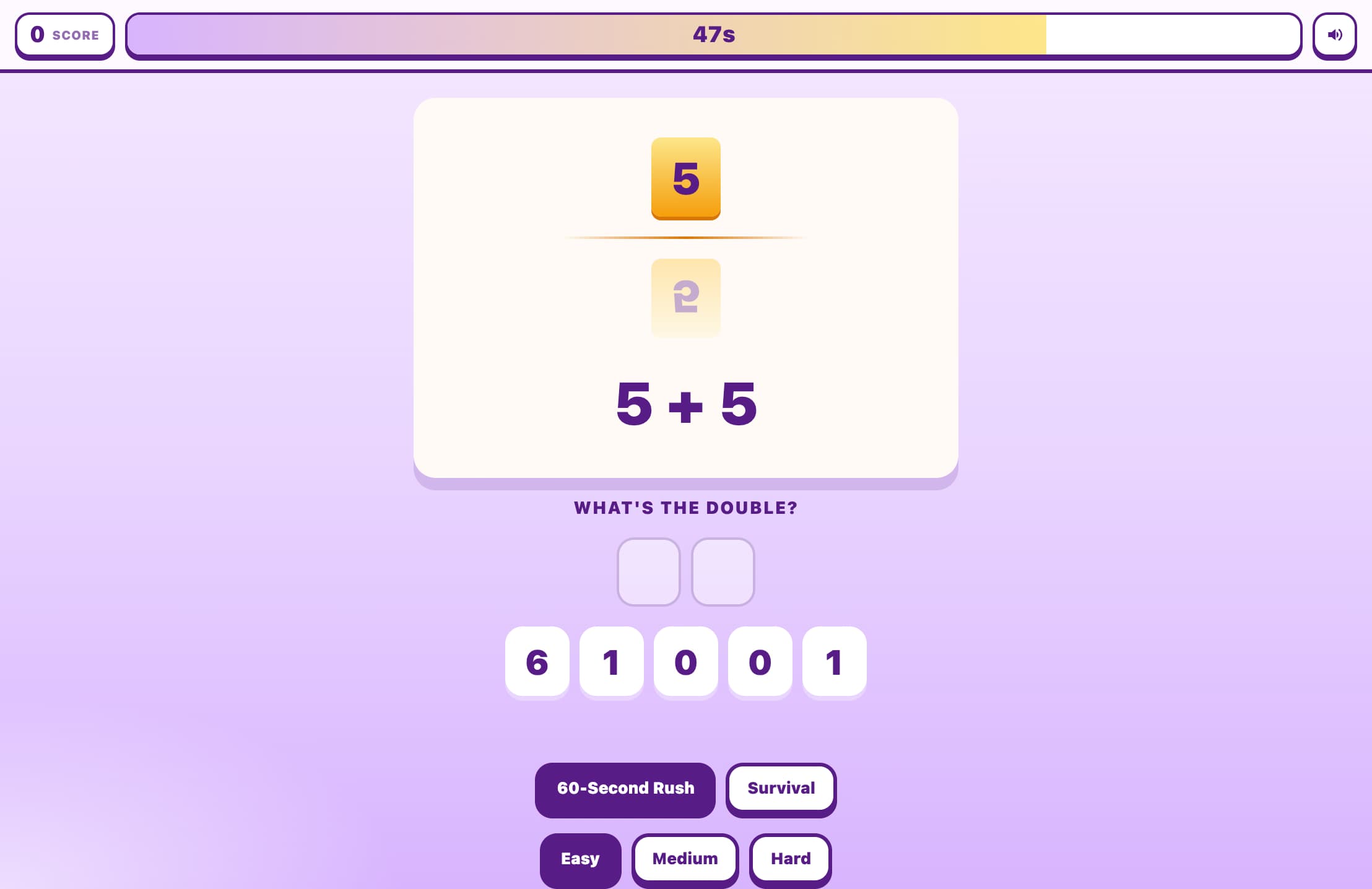
Practice doubles addition facts (1+1, 2+2, … 10+10) with a fun mirror/shadow visual theme. See the number and its reflection, then tap the correct double. Three difficulty levels including near-doubles.
Loud and Soft Drum Game for Early Childhood
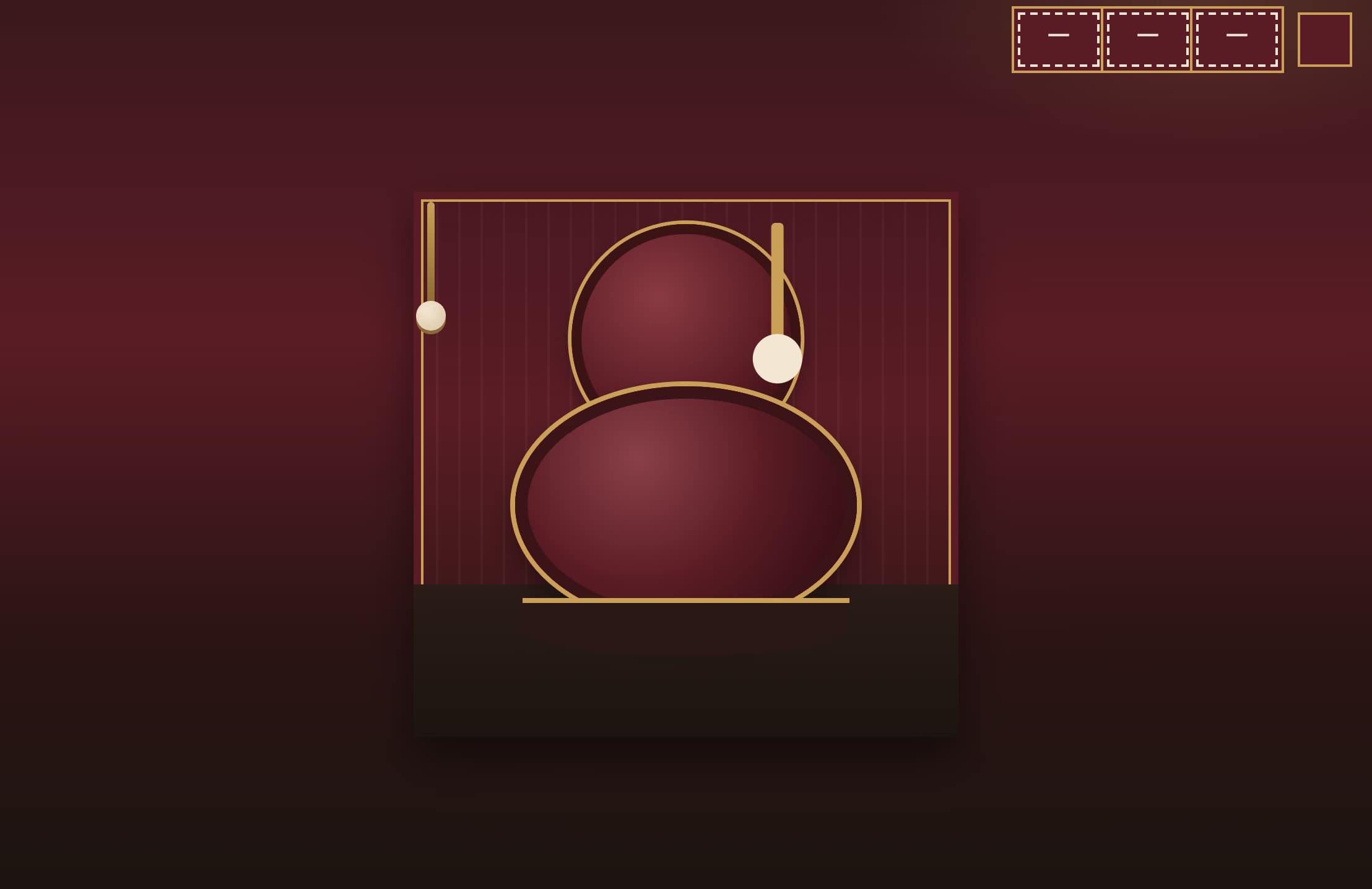
An oxblood felt percussion hall with cream stitch and brass studs. A leader mallet shows a big or small pulse on a display drum. Thump the large felt bass drum — loud or soft comes from how far and how fast the mallet travels, not from labeled buttons. A Nice thump! compresses the felt and grows Score and Streak. A Rim rattle! costs a life. Ten Thumps or three misses end the run. Easy is extreme loud versus soft. Medium adds mid. Hard keeps three levels with a faster leader.
Pack the Bag Before the Bus
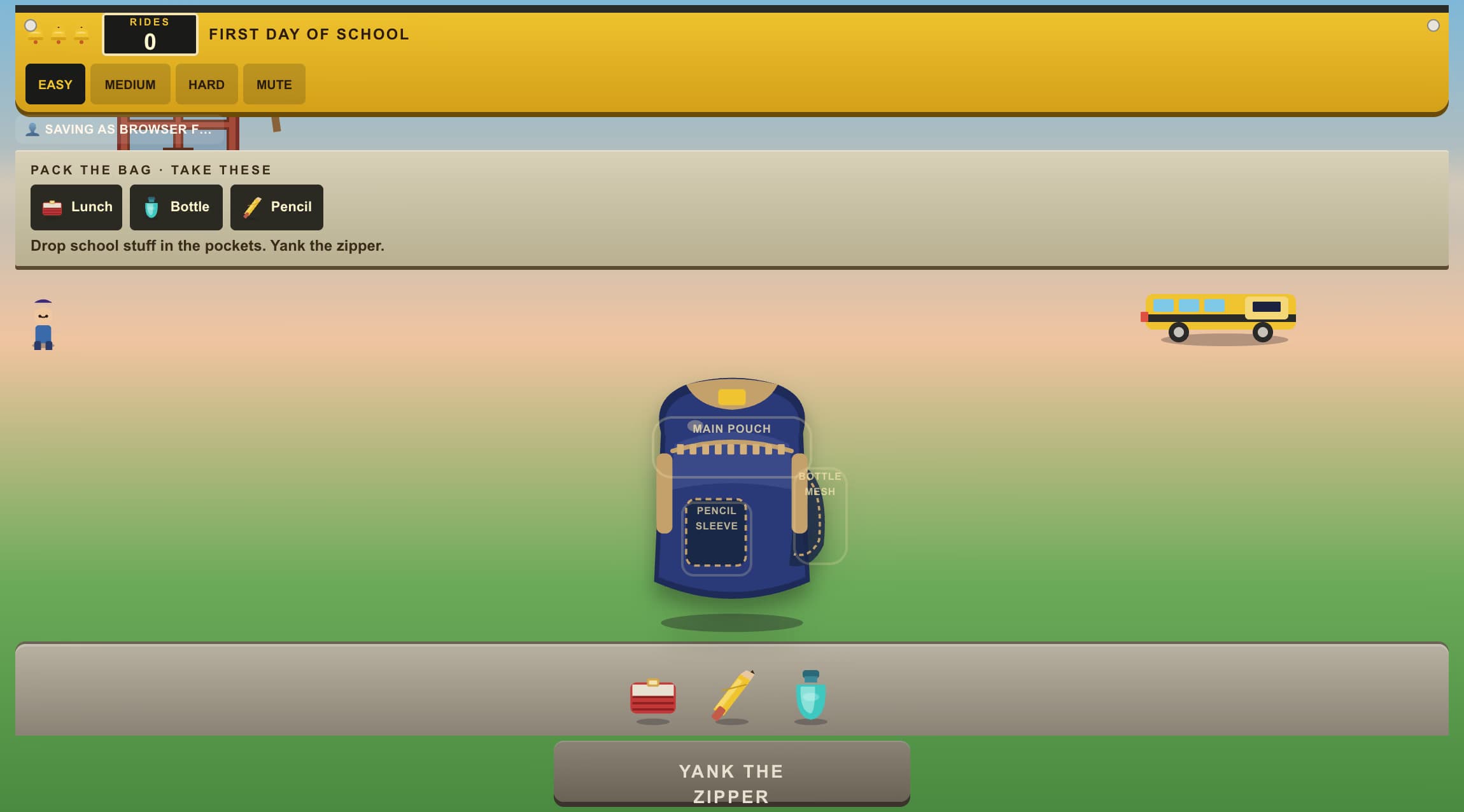
First Day of School starts on the curb at dawn. Pack the bag by dragging lunch, a bottle, and a pencil into the pockets, then Yank the zipper before the yellow bus rolls. A hit boards a Ride. A miss shakes the bag or lets the bus leave. Early-childhood practice for a morning school routine.
Hold the iPad for a First Day Photo
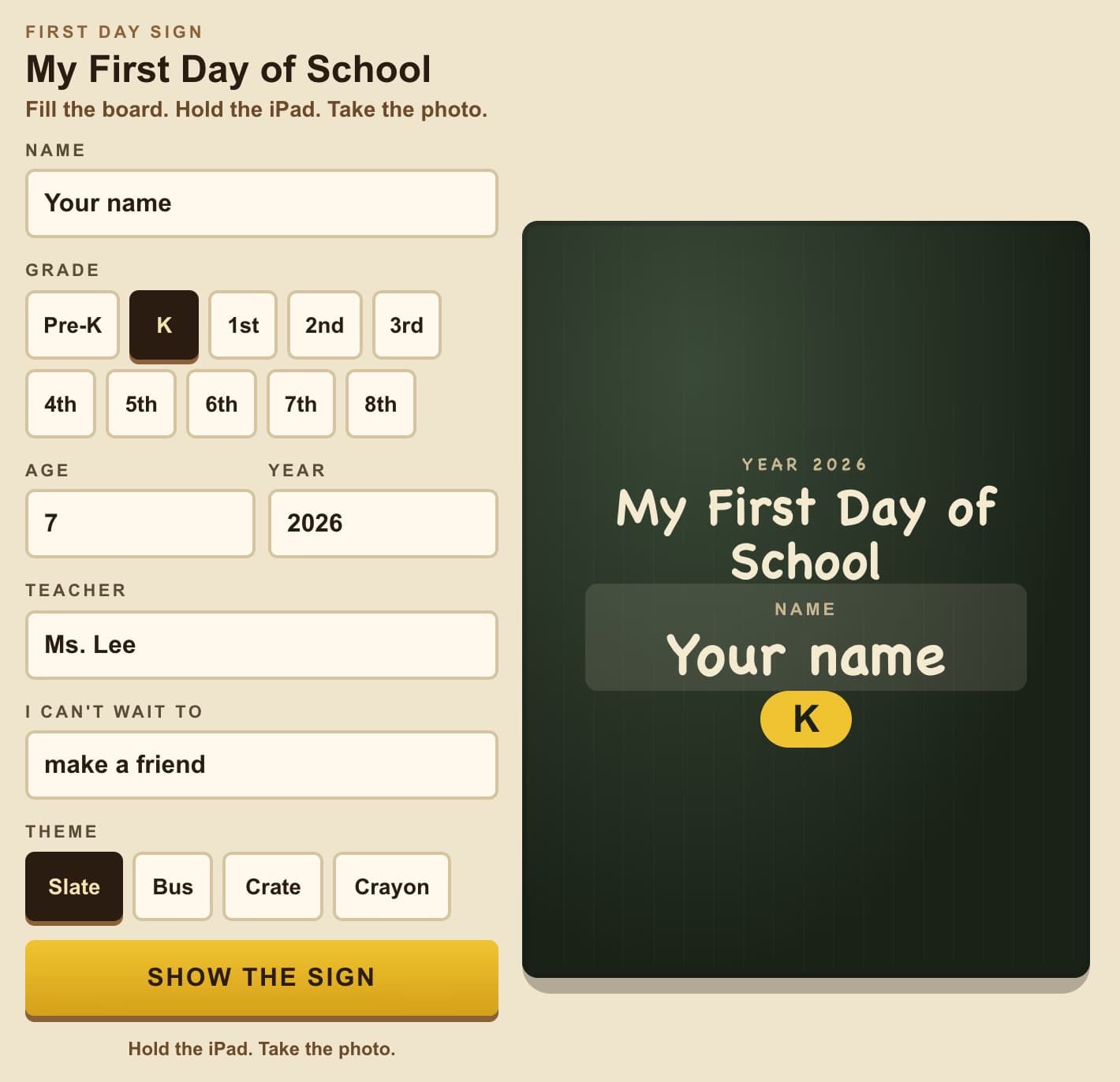
First Day Sign is a board kids hold on an iPad. Type a name, tap a grade, pick Slate, Bus, Crate, or Crayon, then Show the sign. The poster fills the screen so a parent can take the photo. Edit the sign to change a line and show it again.
Pop Balloons Numbers 0-10
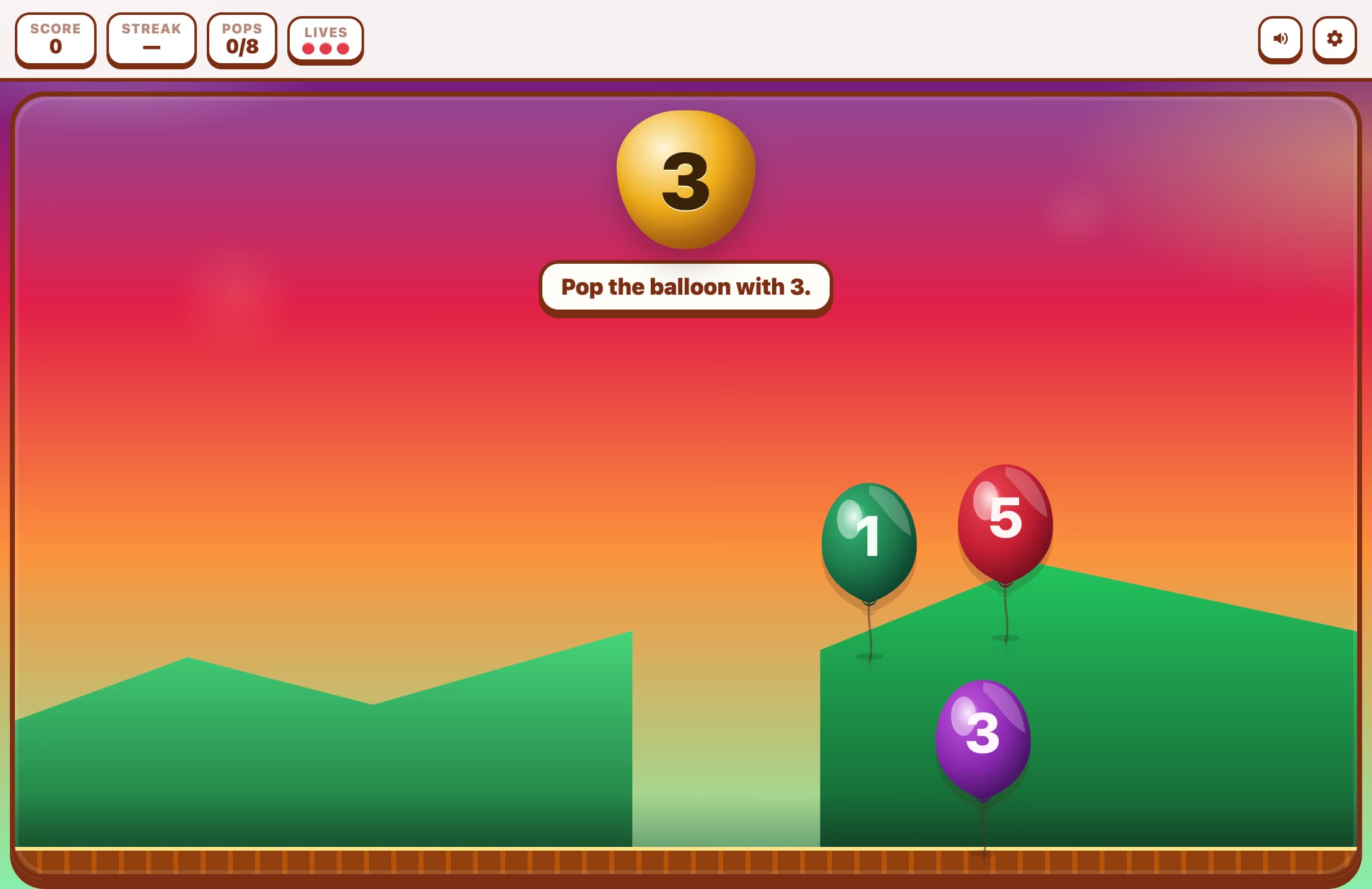
A dusk garden where glossy latex balloons rise on the warm air. Hear the call, watch the lift, and pop the balloon that shows the matching number before it floats away. Built for preschool and kindergarten number identification from 0 to 10.
Tricky Uppercase Letter
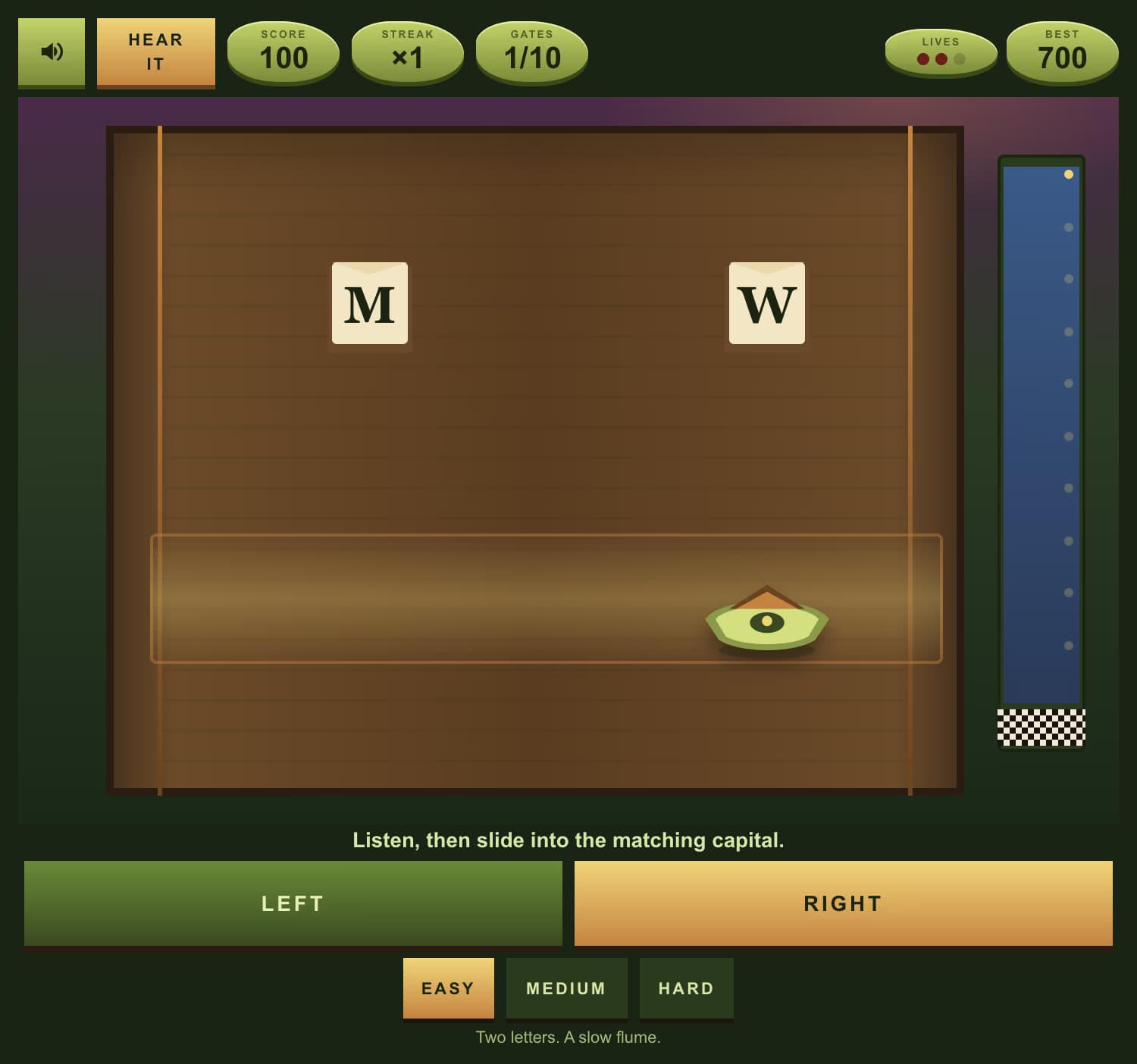
A dusk orchard flume. Hear the letter name, then steer a leaf-boat through the matching capital crate. Practice look-alike uppercase letters such as M, W, and N. Three lives, a streak bonus, and Easy / Medium / Hard for pre-K and kindergarten.
Balance Scale Measurement
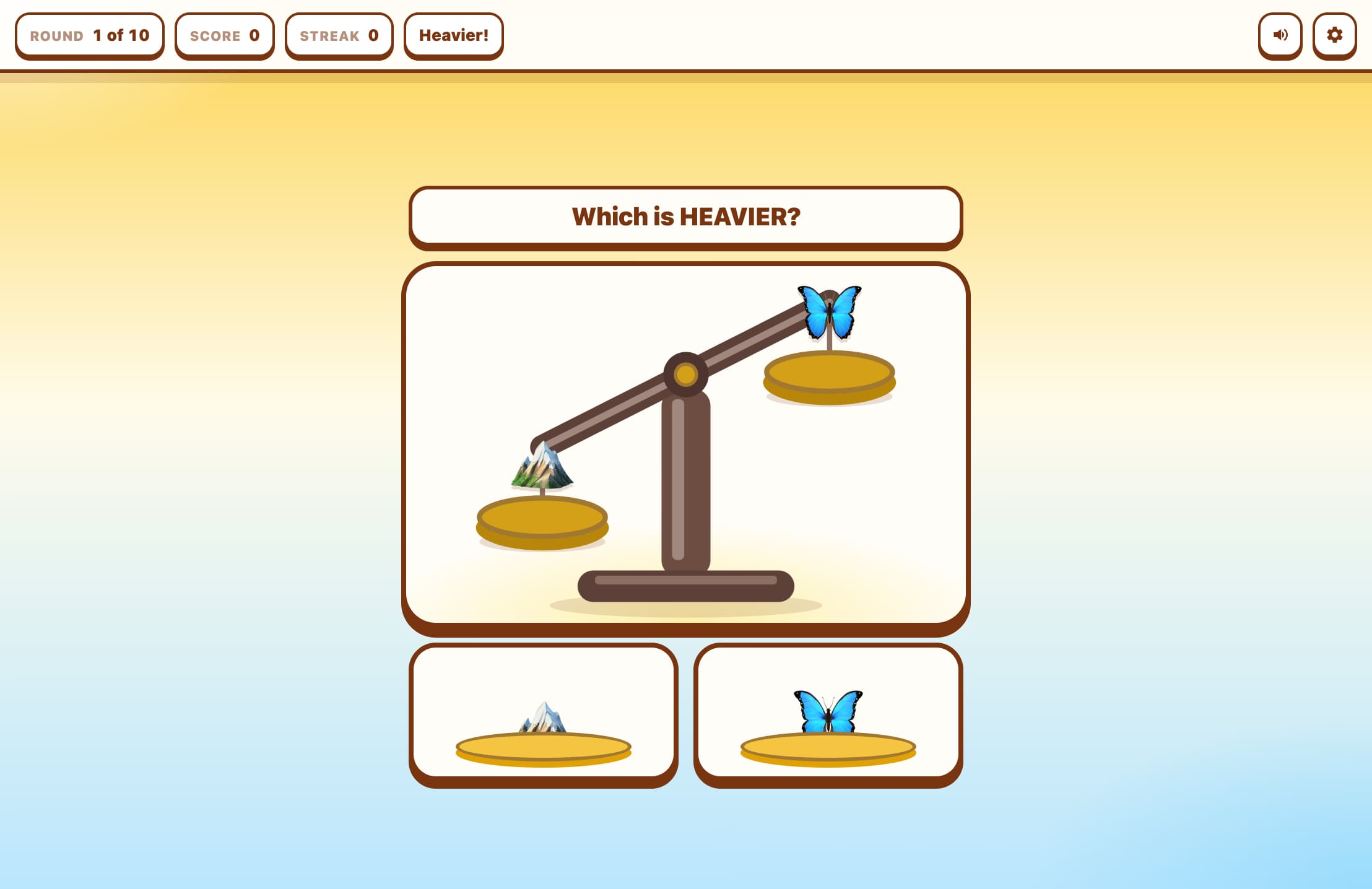
Watch a balance scale tip and decide which side is heavier or lighter! A rock vs a feather, an elephant vs a butterfly — learn about weight and measurement concepts through an interactive animated scale.
Drop Records That Rhyme
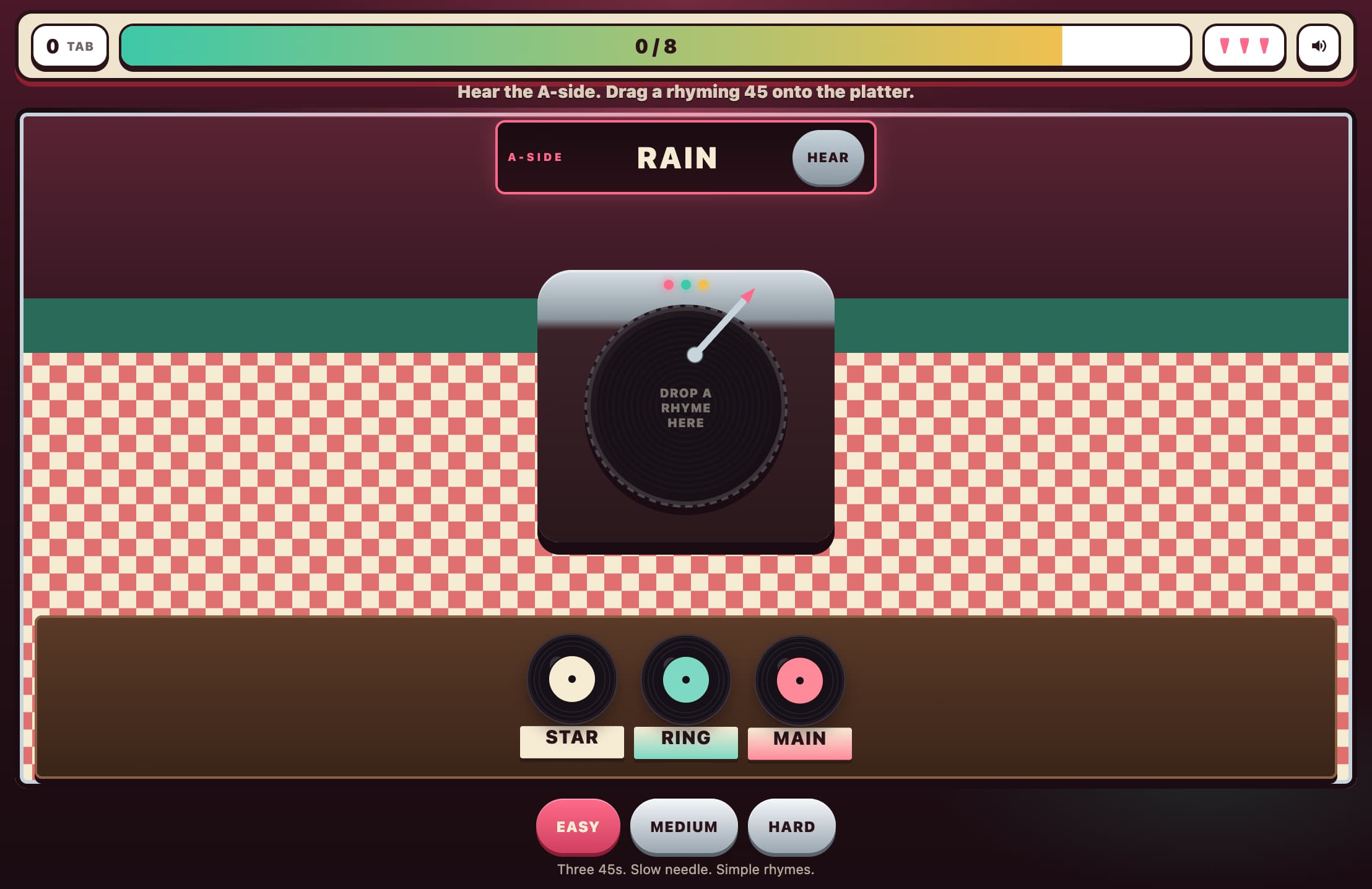
A diner jukebox is playing an A-side. Hear the English word, then drag a 45 from the crate onto the spinning platter before the needle reaches the label. Only a true rhyme cues the next song. Three difficulties, eight sides to win, and three needle lives.
Pitch Yank Game for High and Low Tones
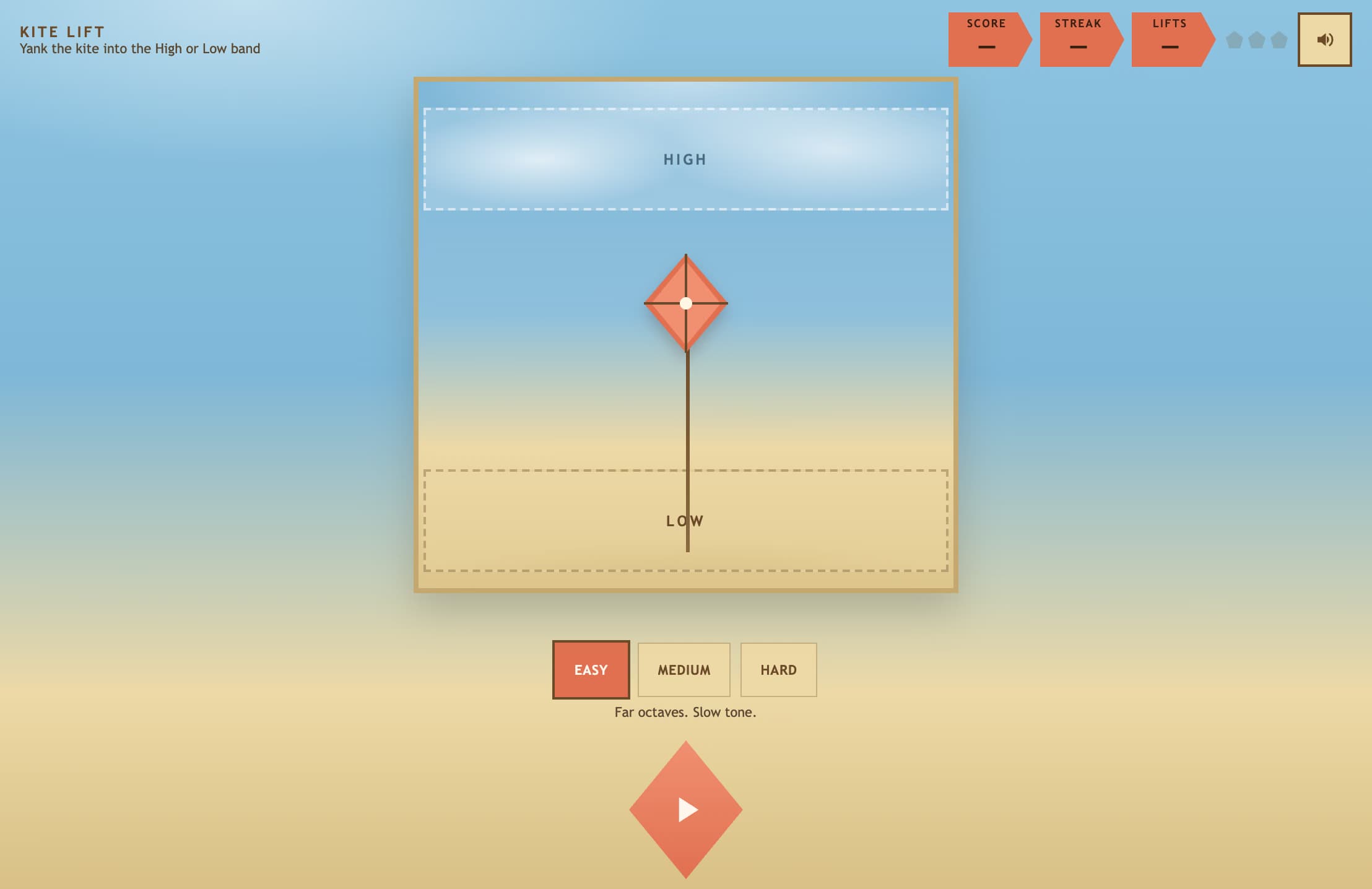
A bleached dune and a coral kite on twine. A tone plays High or Low. Yank the kite by dragging it, then release in the High cloud band or the Low dune band to match the tone. A Nice lift! snaps the kite into the band and grows Score and Streak. A Flutter! drops the kite and costs a life. Ten Lifts or three misses end the run. Easy uses far octaves and a slow tone. Medium is G3 vs D5. Hard is closer still with a short tone.
Catch Short A CVC Words
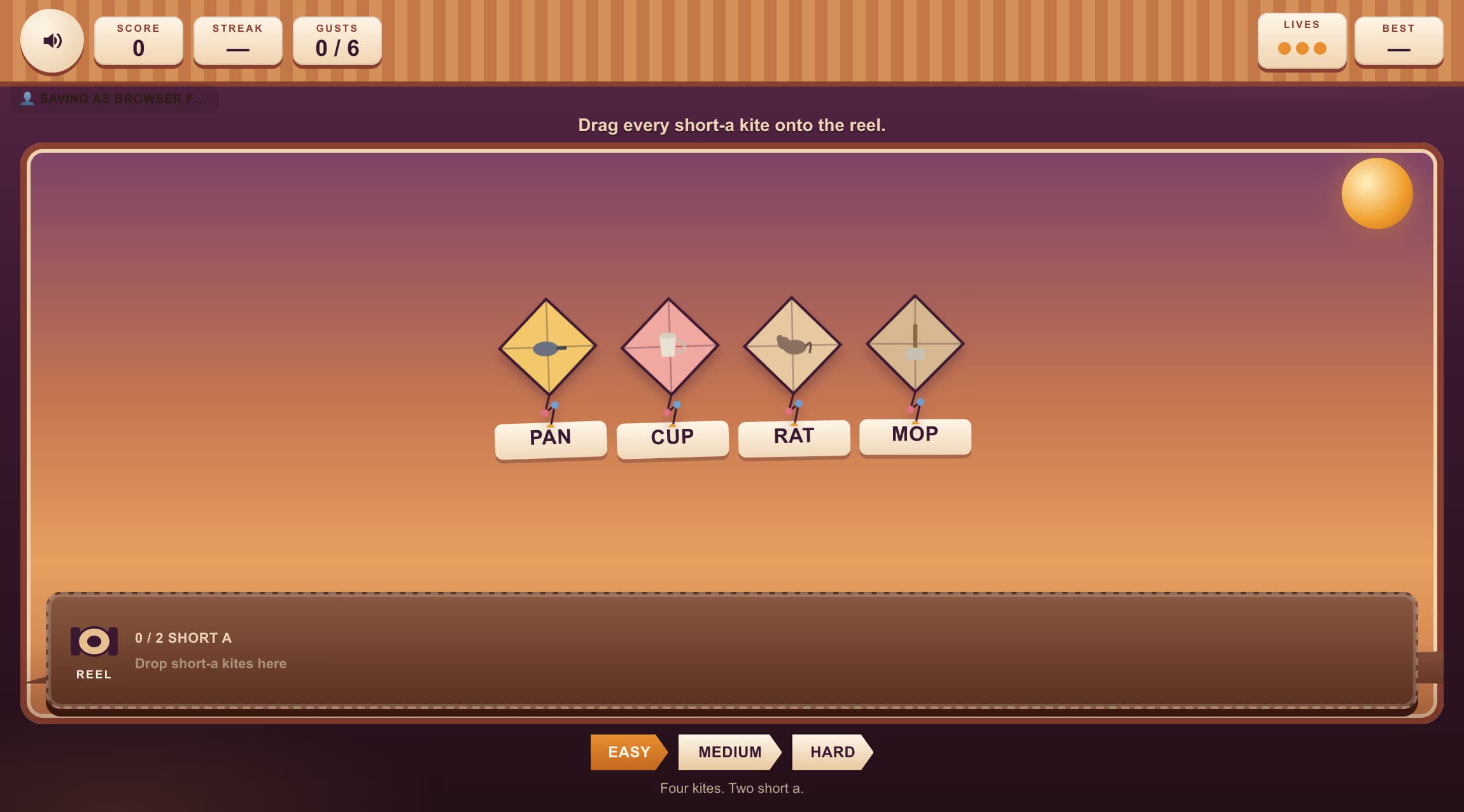
Paper kites drift over a dusk mesa. Each kite shows a picture and a CVC word. Reel every short-a kite onto the spool. Leave the rest in the wind. Six gusts win.
Hear Sight Words and Hop to Match
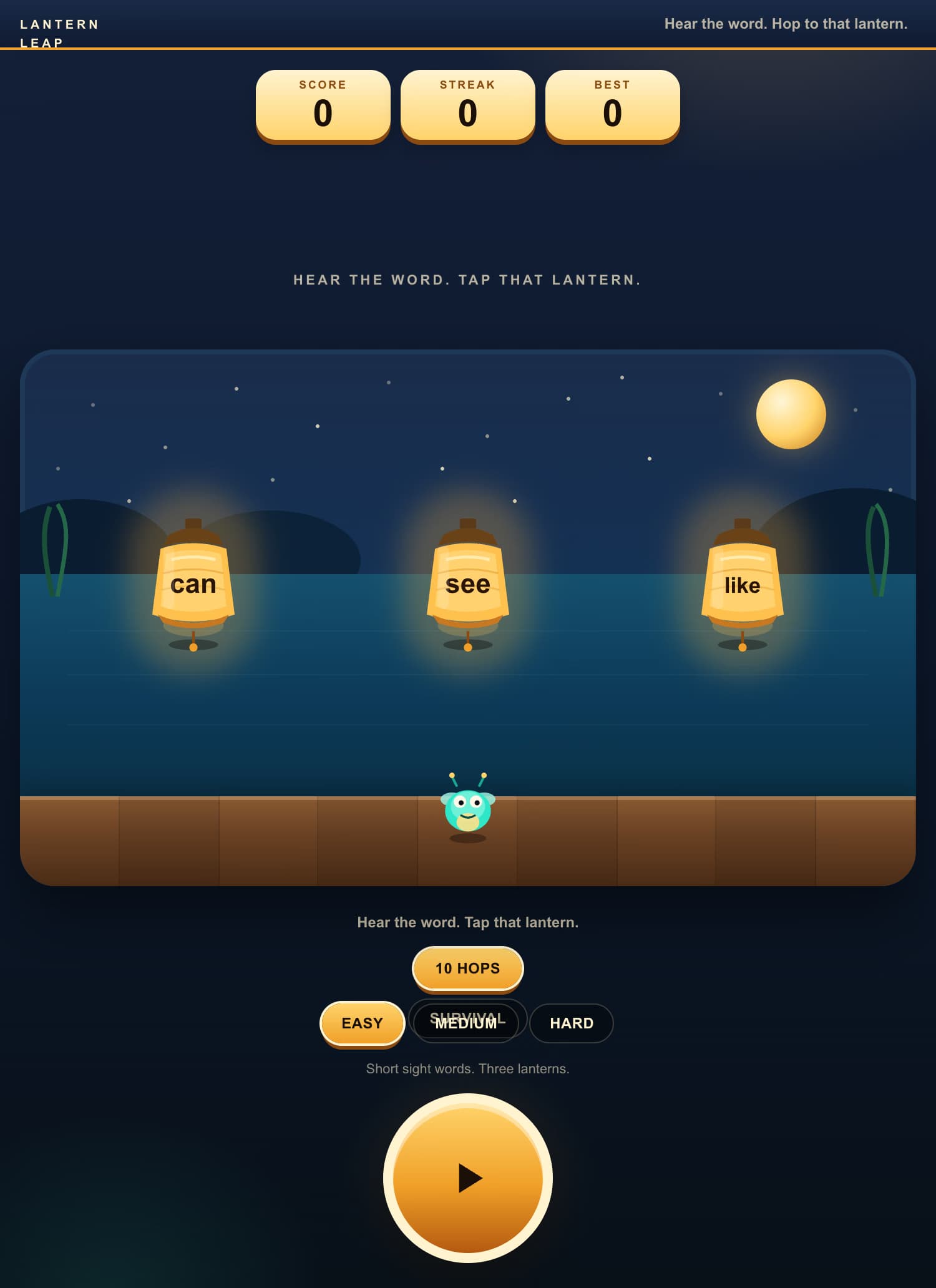
A night canal, amber paper lanterns, and a glowing firefly on the dock. A voice reads a sight word. Tap the lantern that matches. The firefly hops to that light. A clean hop scores. A miss slips into the water. Built for kindergarten and first-grade high-frequency words.
Addition to 10 Bubble
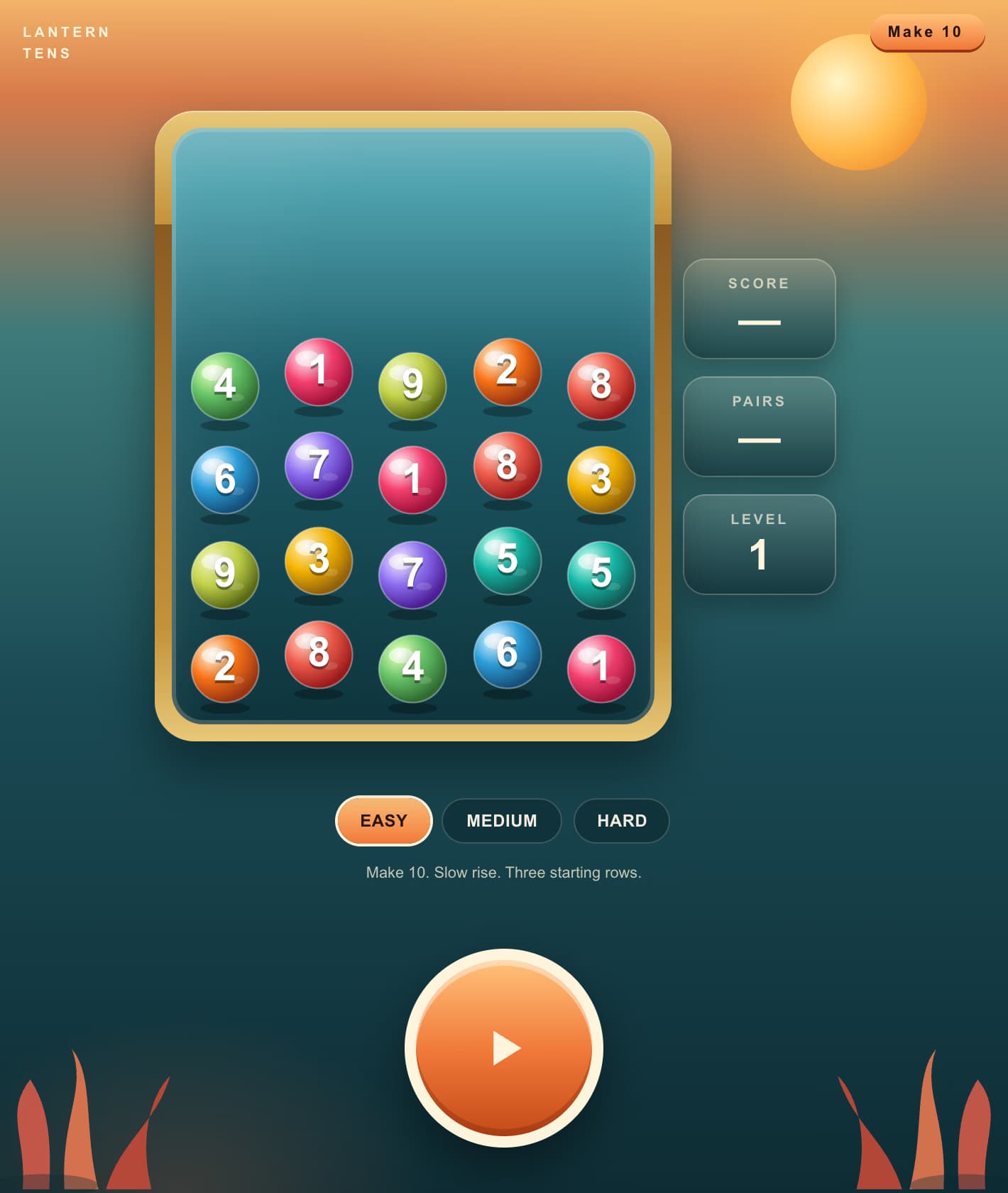
Tap two glowing lanterns whose numbers add to 10. They pop, the well settles, and a new row rises from below. Clear pairs fast before the lanterns overflow. Levels speed up the rise so addition facts have to stay automatic.
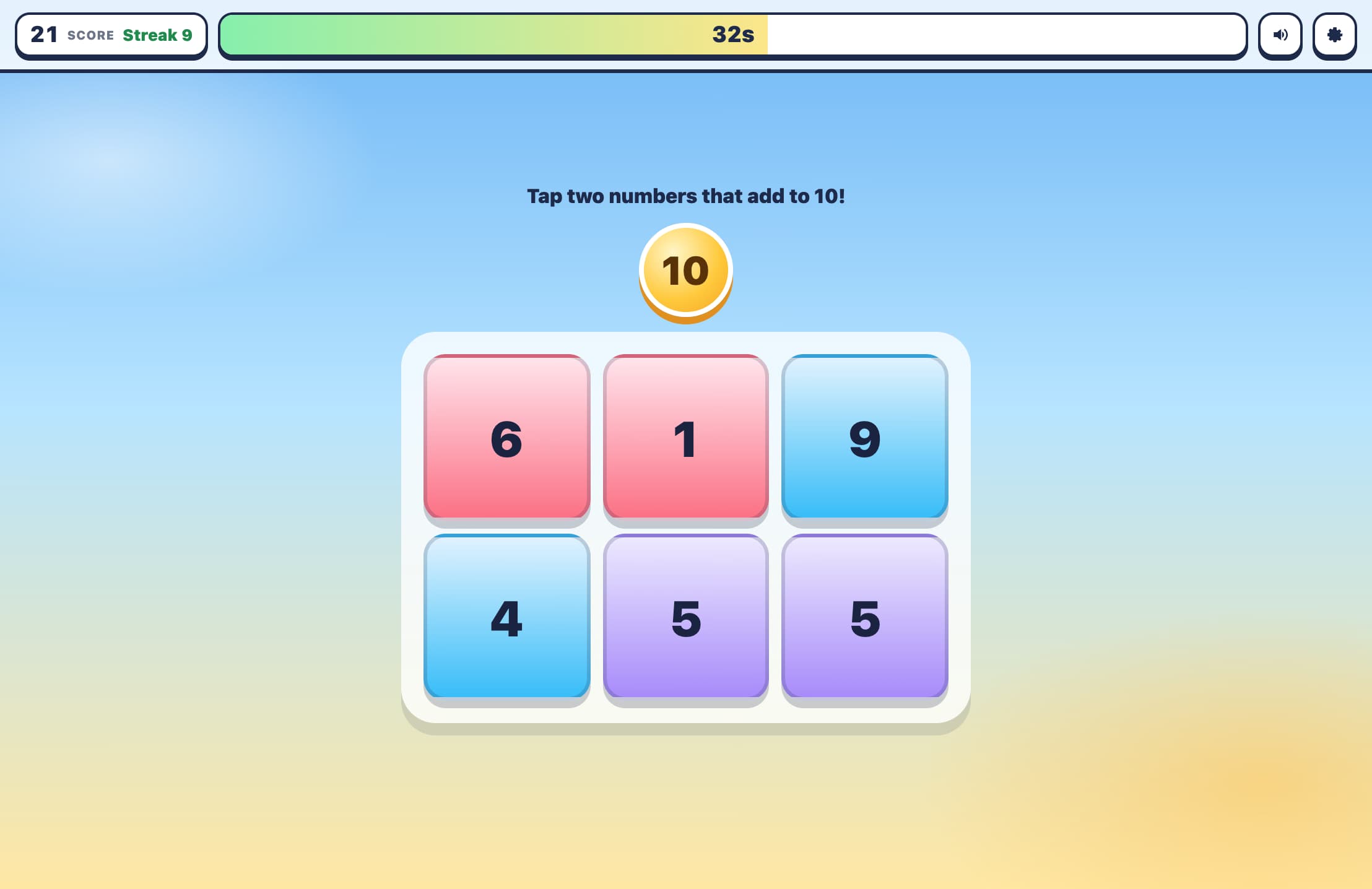
Pair Numbers That Add to 10
Tap number tiles to form pairs that sum to 10. Clear the board as fast as you can! Builds instant recall of addition facts. Three difficulty levels: bonds to 10, 20, or 50.
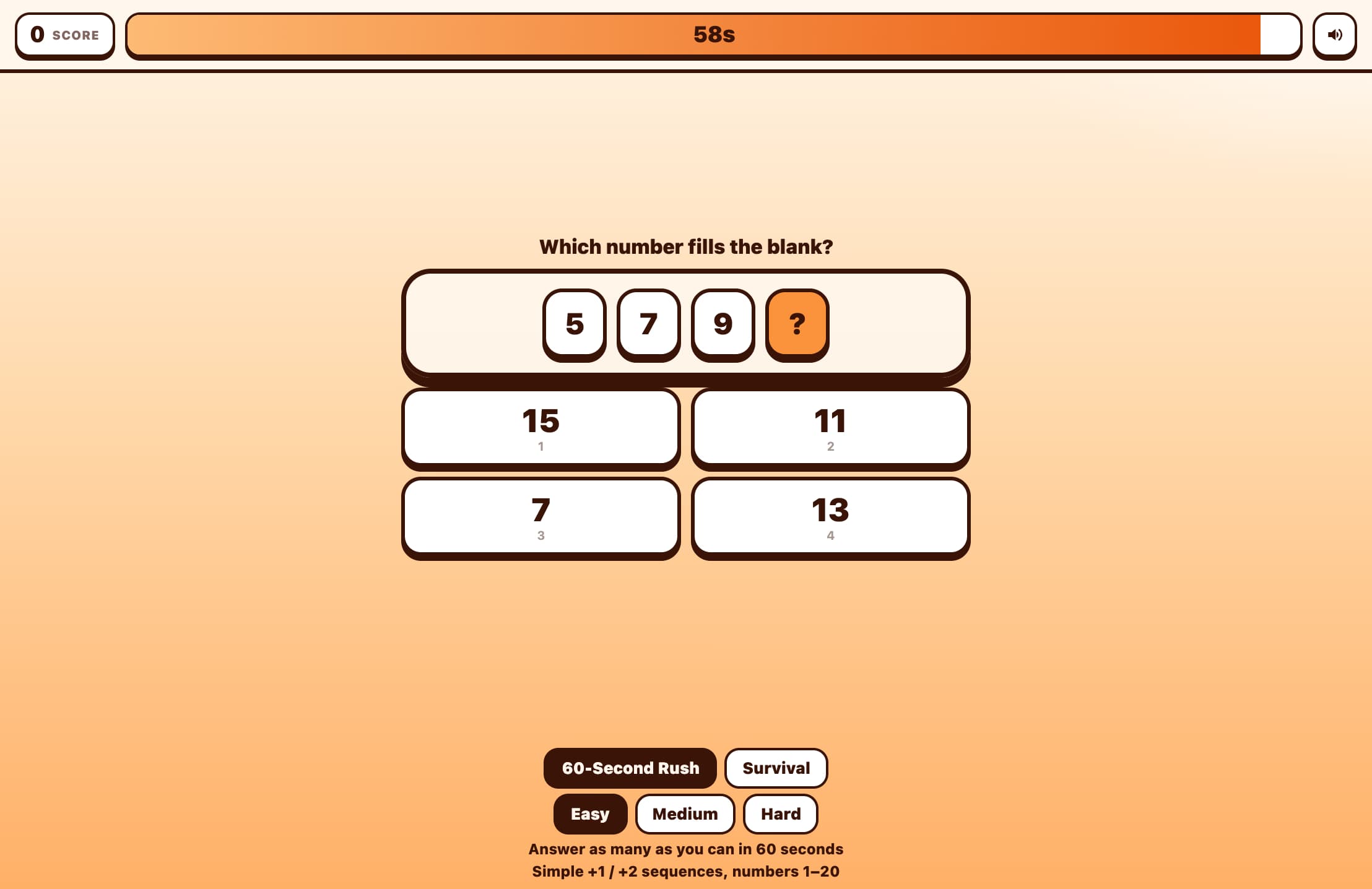
Fill the Blank in Number Sequences
Find the missing number in arithmetic sequences — 3, 4, __, 6. Tap one of four big colorful answer buttons. Race the clock in 60-second mode or survive on 3 lives. Easy, medium, and hard difficulty levels.
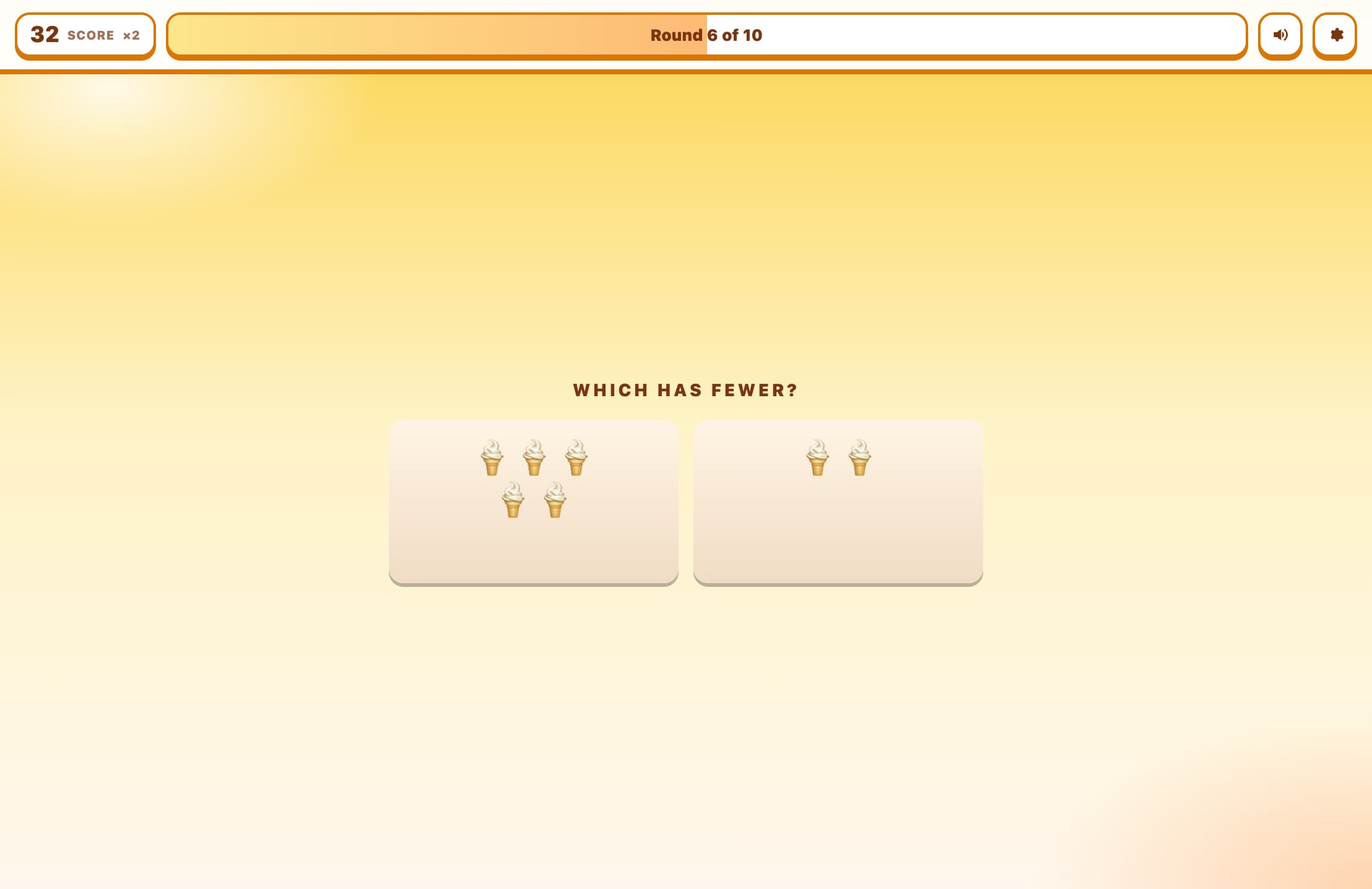
Compare Two Groups and Build Number Sense
Two groups of objects appear side by side — tap the one with more (or fewer)! A quick, visual way to build number sense and comparison skills for young learners.
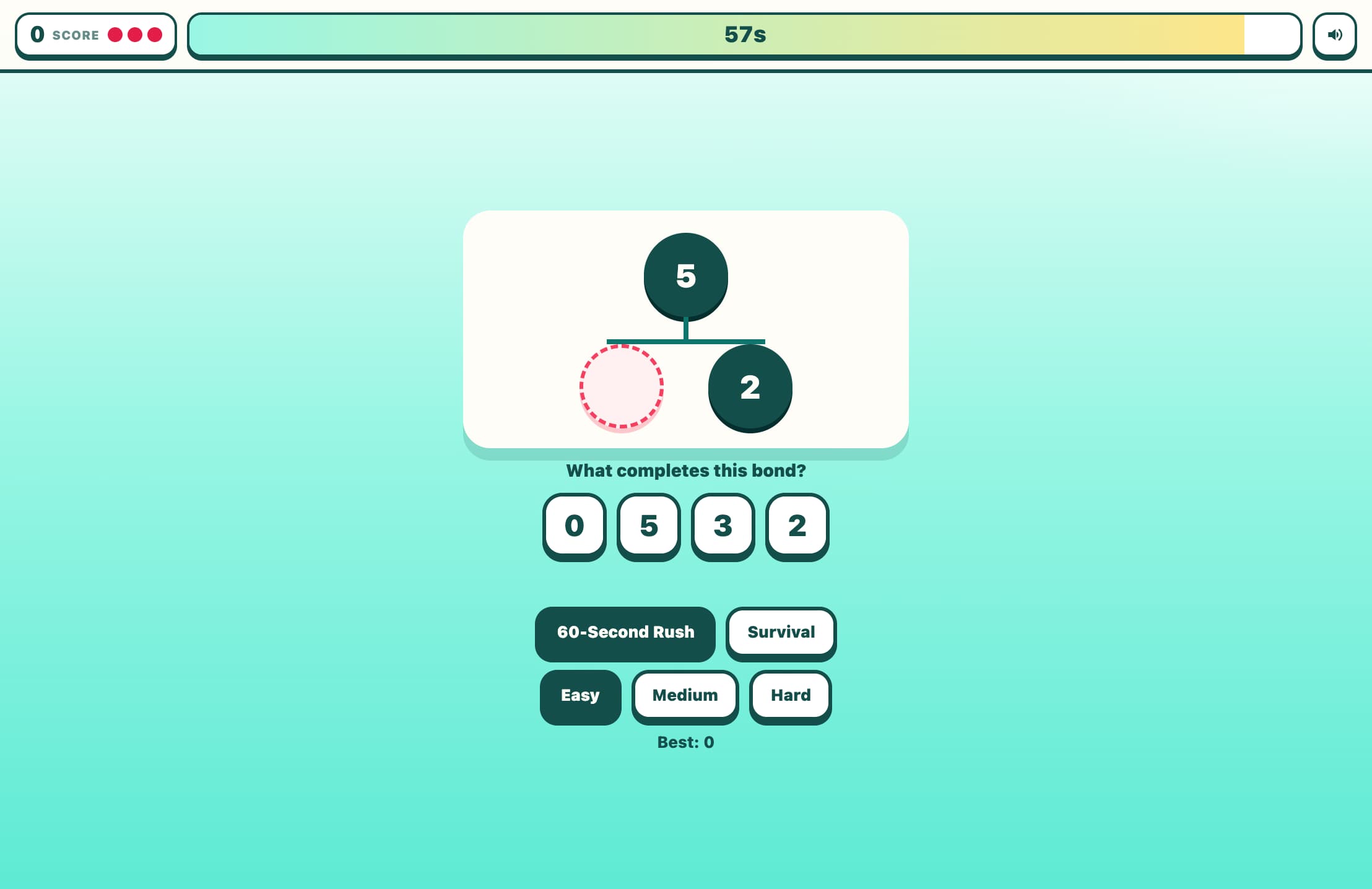
Fill the Missing Part
Complete number bonds by finding the missing part — 7 = 3 + ?. Visual circles and connecting lines show the whole and its parts. Race the clock in 60-second mode or survive on 3 lives. Easy, medium, and hard levels.
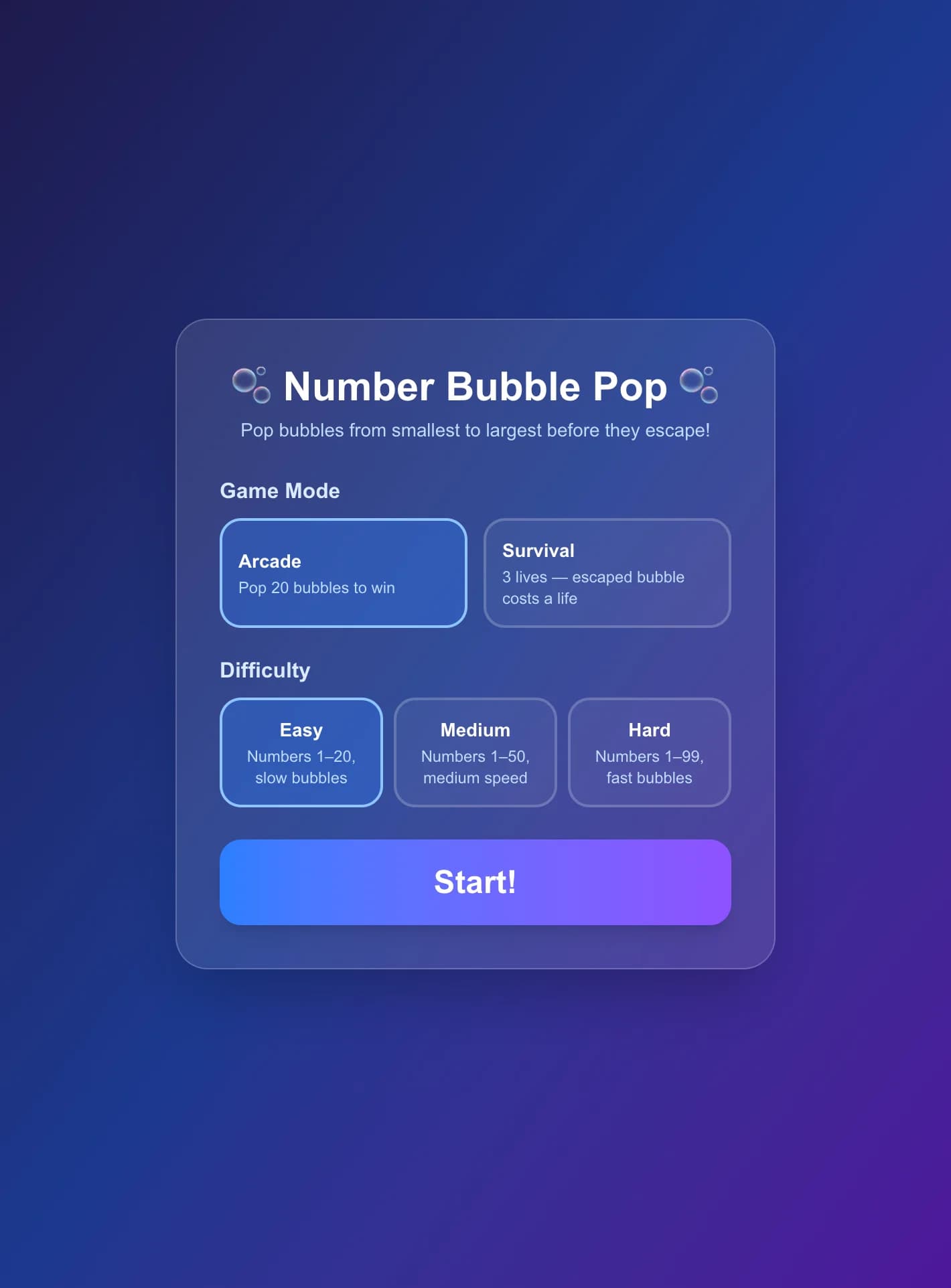
Ascending Order Sorting
Colorful numbered bubbles float upward — tap them in ascending order (smallest to largest) before they escape off the top of the screen. Miss one and lose a life!
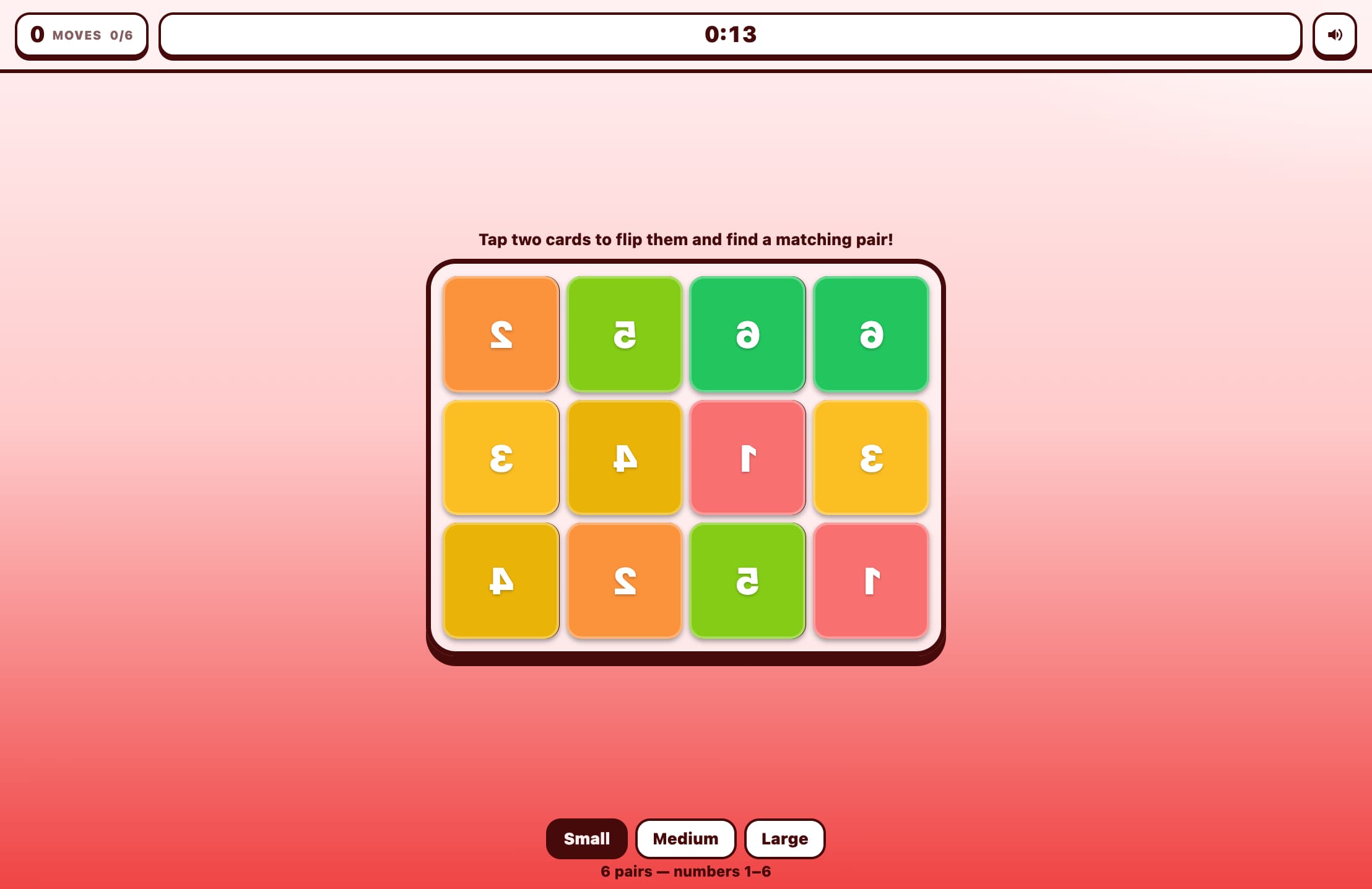
Classic Concentration Game with Numbers 1–20
Flip cards to find matching number pairs in this classic memory/concentration game! Three grid sizes — 6, 10, or 20 pairs — let young learners practice number recognition while exercising visual memory and concentration.
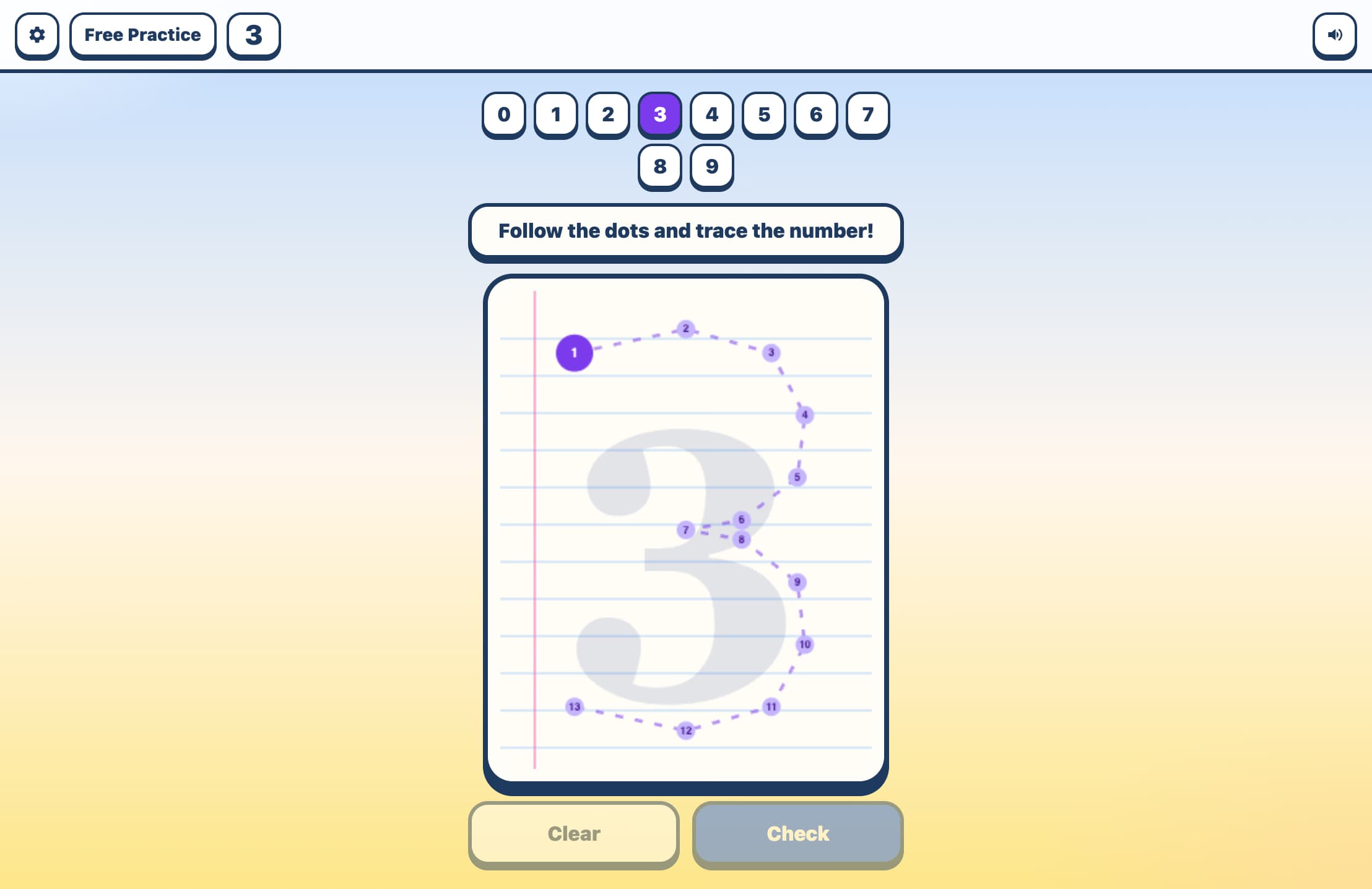
Practice Writing Digits 0-9
Trace the shape of digits 0–9 with your finger or mouse. Follow numbered guide dots, draw over the faint digit outline, then check your accuracy. Free Practice and 10-digit Challenge modes.
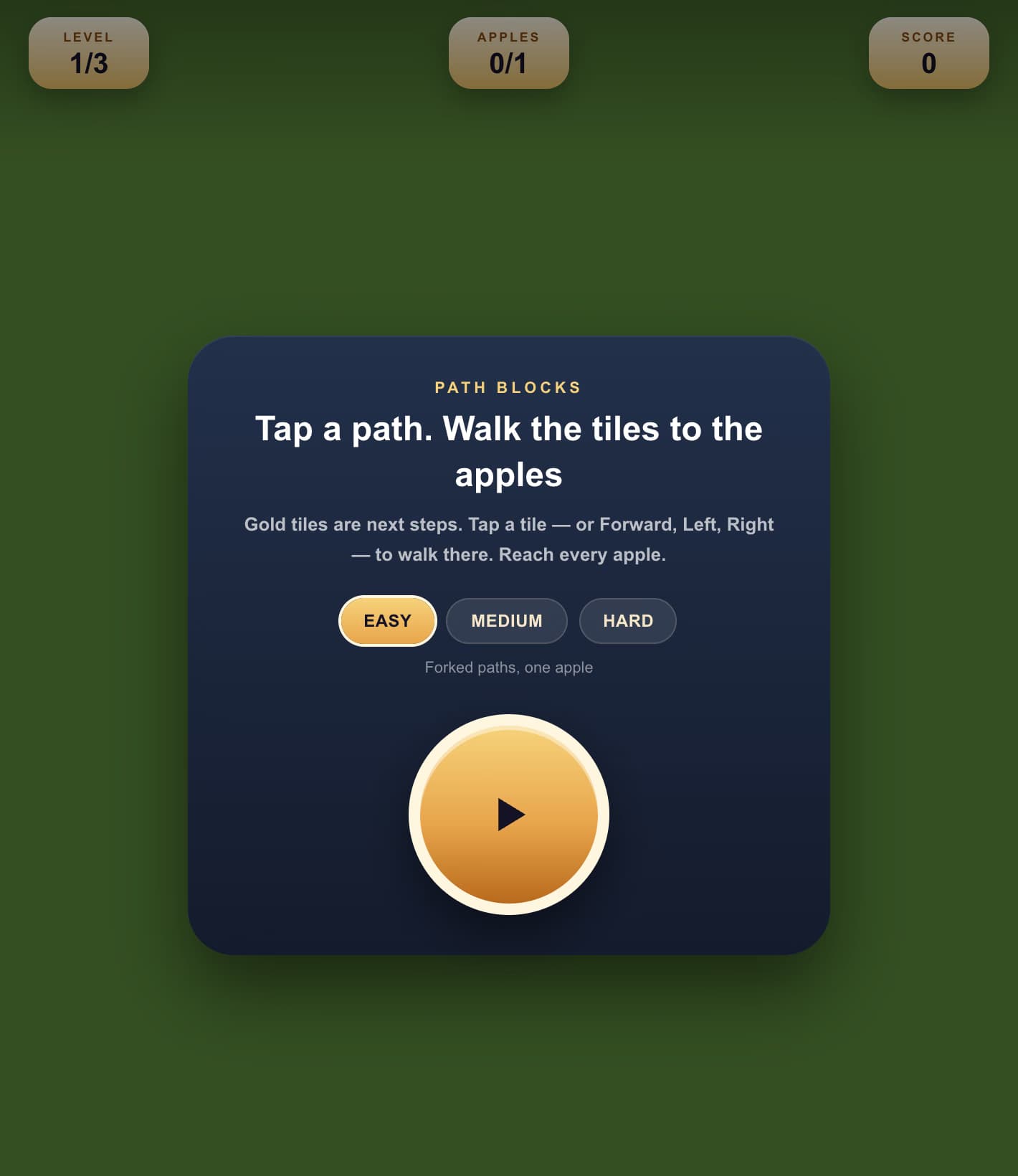
Coding Sequence
Build a short program with Forward, Turn Left, and Turn Right blocks, then run it so a beetle walks an isometric path and picks up every apple. Kids practice sequencing without typing code.
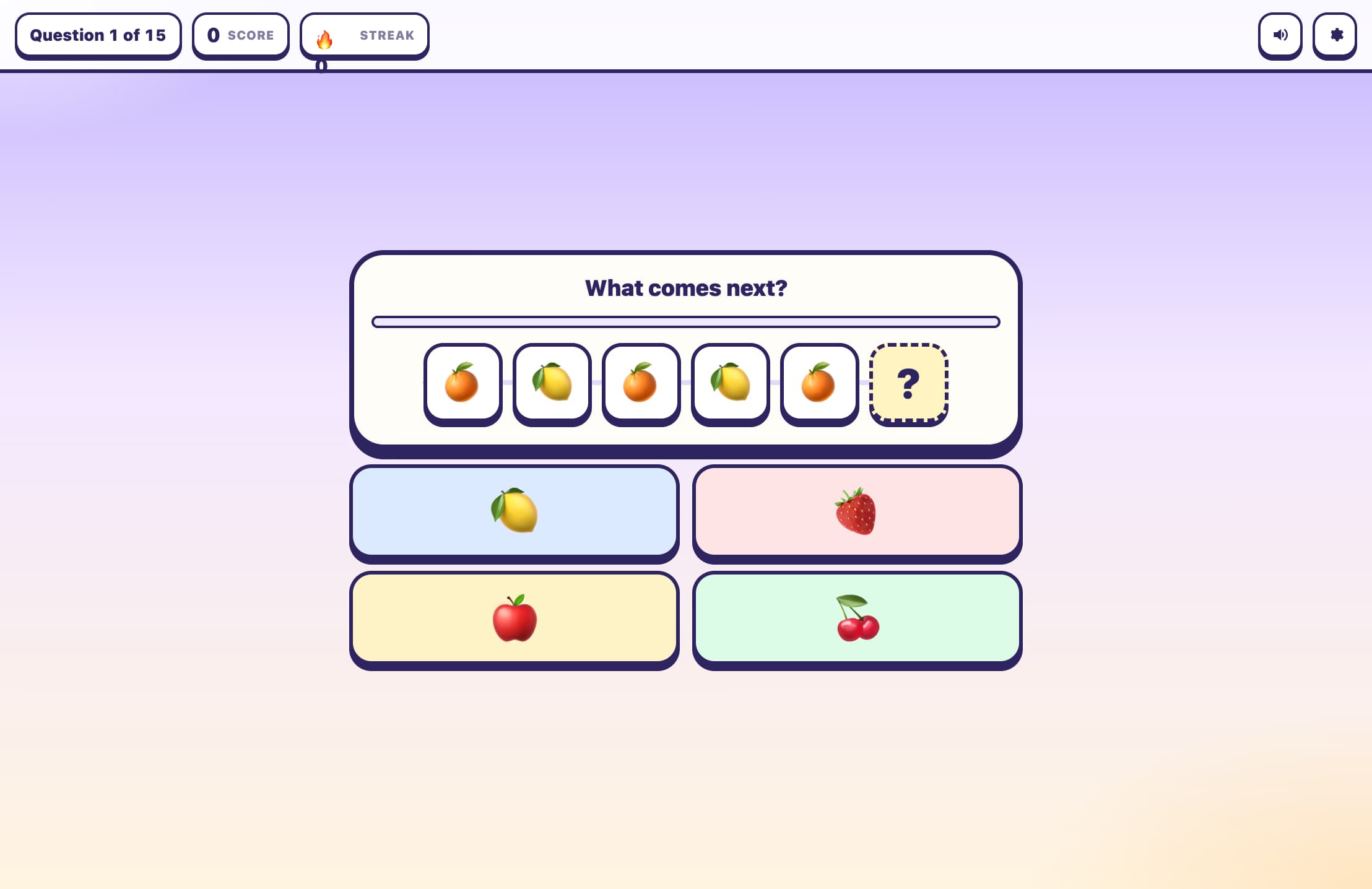
Complete the Repeating Pattern
What comes next? Complete repeating patterns made of emoji like 🔴🔵🔴🔵__? Choose from 4 options. From simple AB patterns to complex ABCD sequences — great for early math, logical reasoning, and pre-algebra thinking!
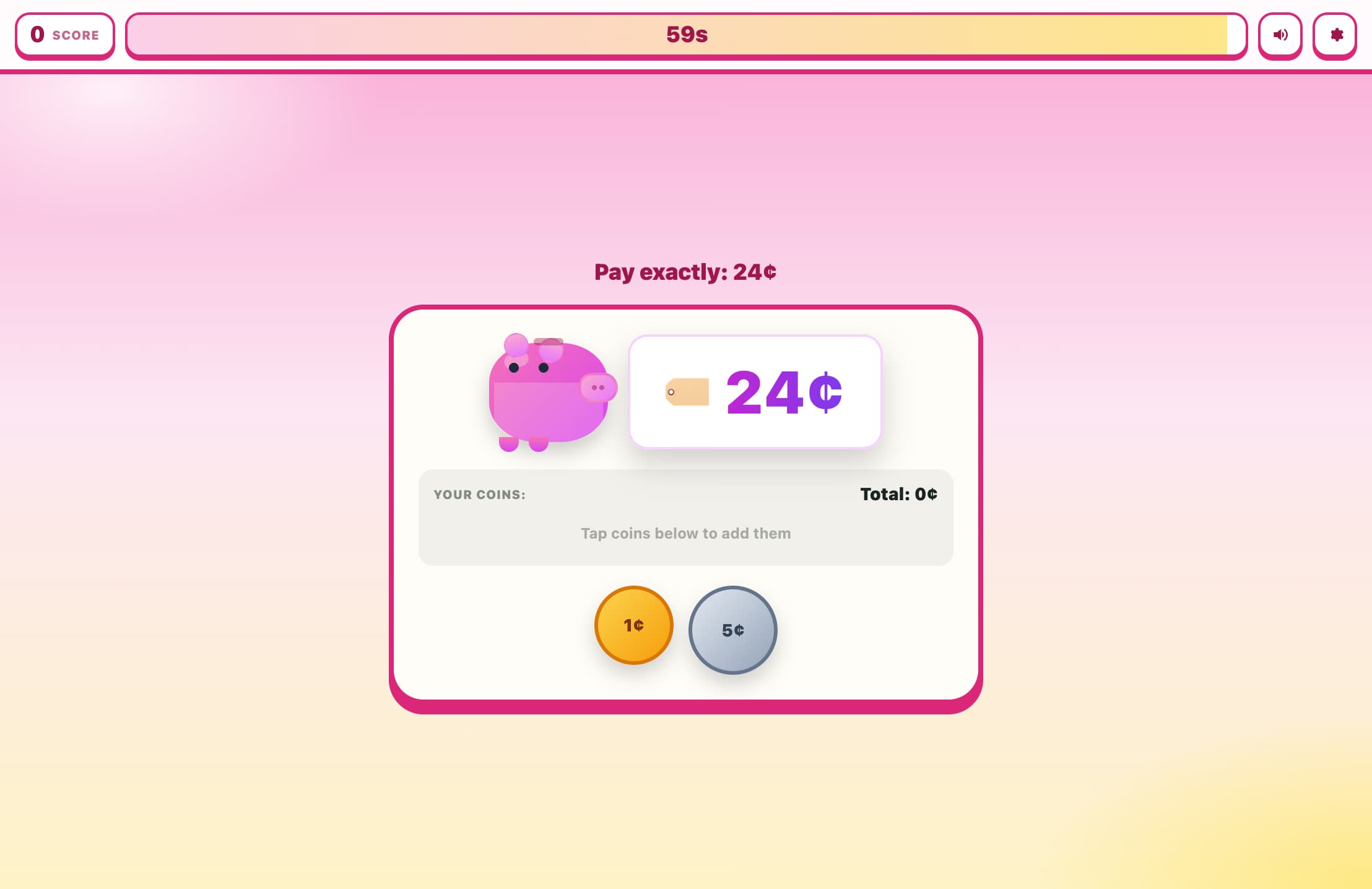
Coin Counting & Making Change
A price tag shows a small amount — tap the exact coins (pennies, nickels, dimes, quarters) to pay for it. Builds coin recognition, counting, and making-change skills with amounts up to $1.00.
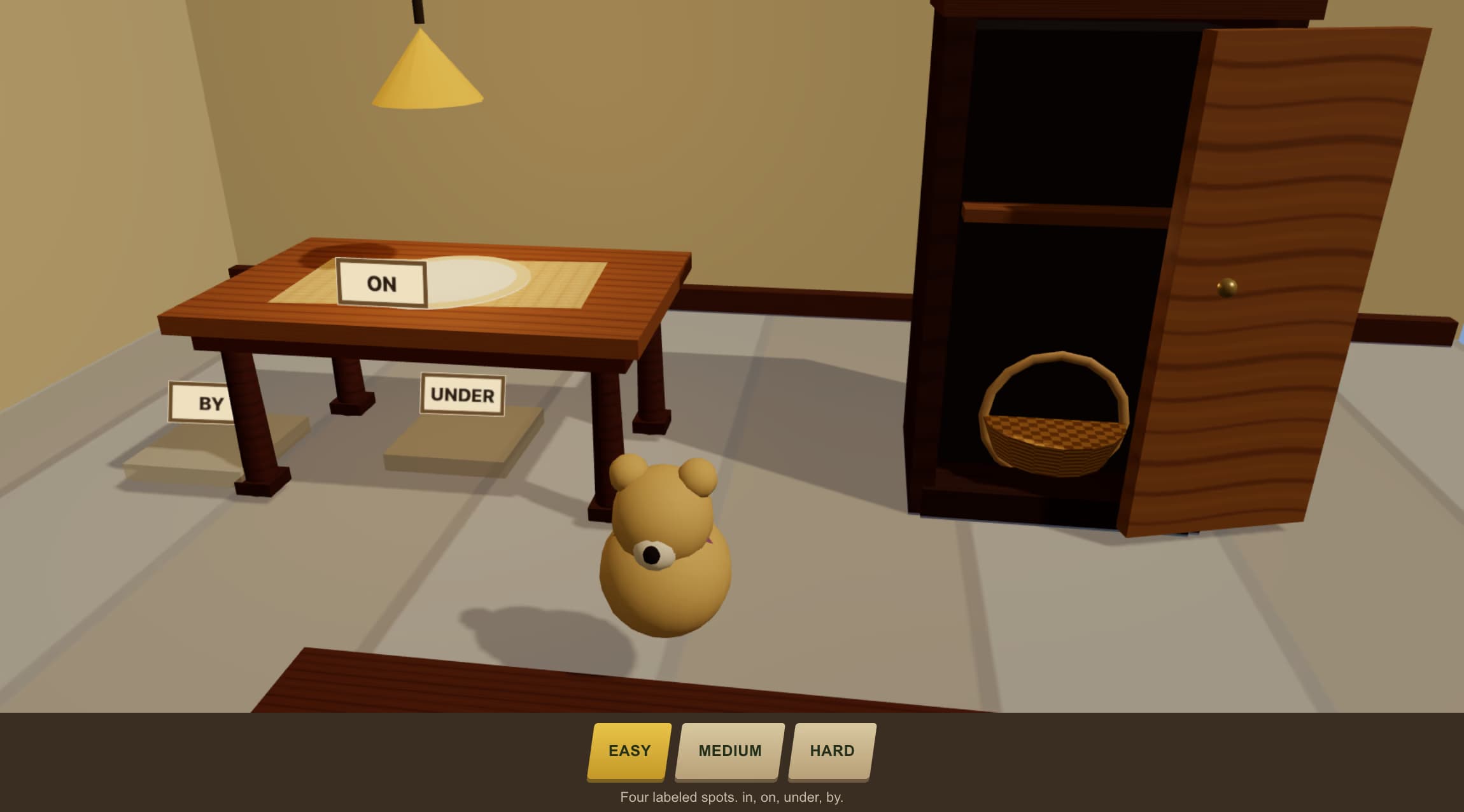
Place Bears With Positional Words
A late-afternoon screened porch holds wicker crates and a plush cub. Read a kindergarten position word — in, on, under, by — then drag the cub to that spot. Harder seats add above, behind, between, and look-alikes like under and beneath. Prepositions become places you can put a bear.
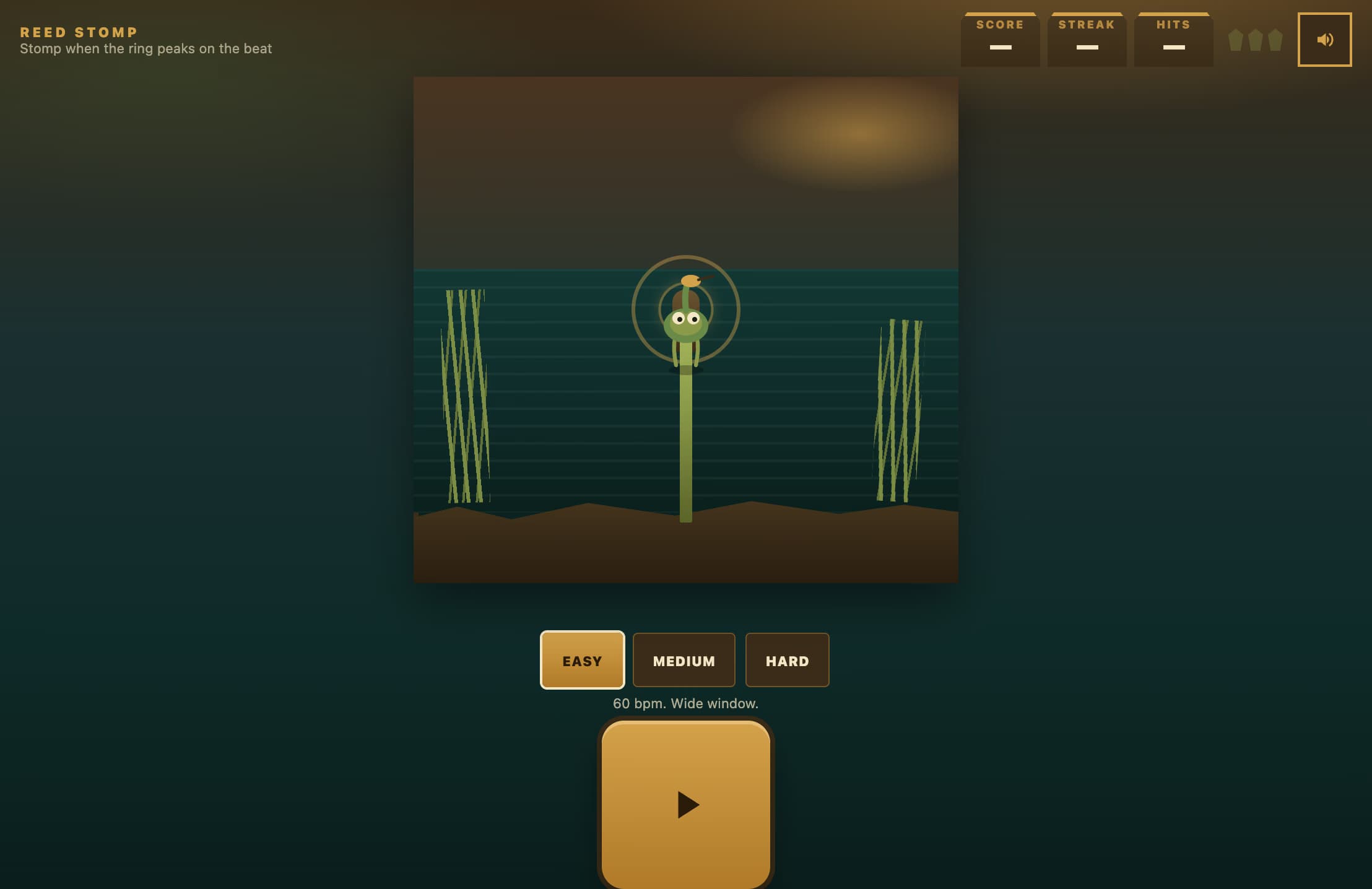
Rhythm Stomp Game for Early Childhood
A copper-teal dusk marsh. A heron-frog stands on a reed while a ring of light expands and peaks on the beat. Stomp when the ring is tight. A hit squashes the reed and grows your Score and Streak. A miss is a Splash! that resets the Streak and costs a life. Sixteen Hits or three misses end the run. Easy is 60 bpm with a wide window. Medium is 80 bpm. Hard is 100 bpm plus decoy off-beat flickers you must ignore.
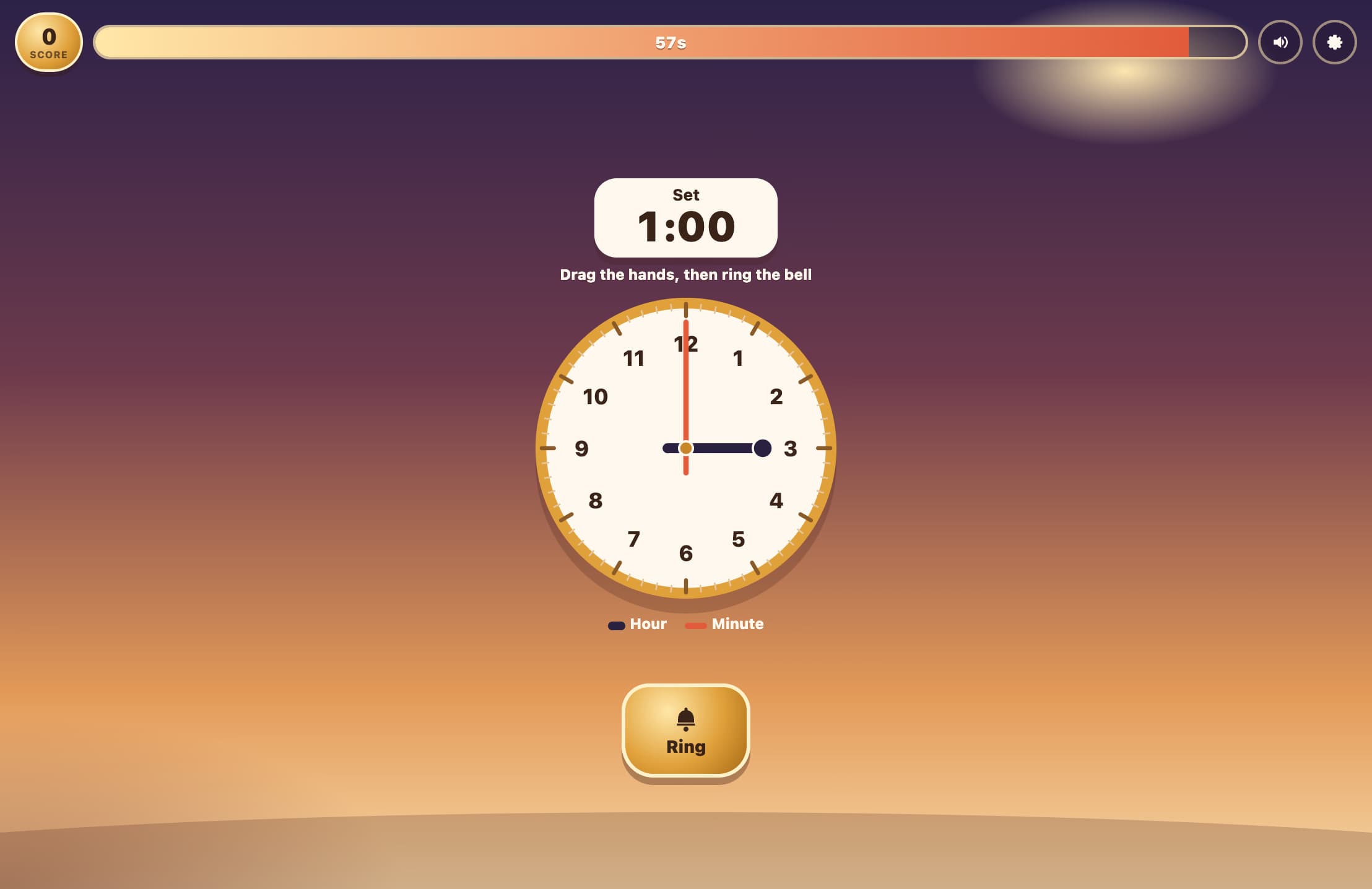
Drag the Hands and Tell Time
Drag the hour hand and minute hand so the clock shows the time, then ring the bell. Easy is whole hours, Medium adds half hours, and Hard uses every five minutes. Play a 60-Second Rush or Survival with three lives.
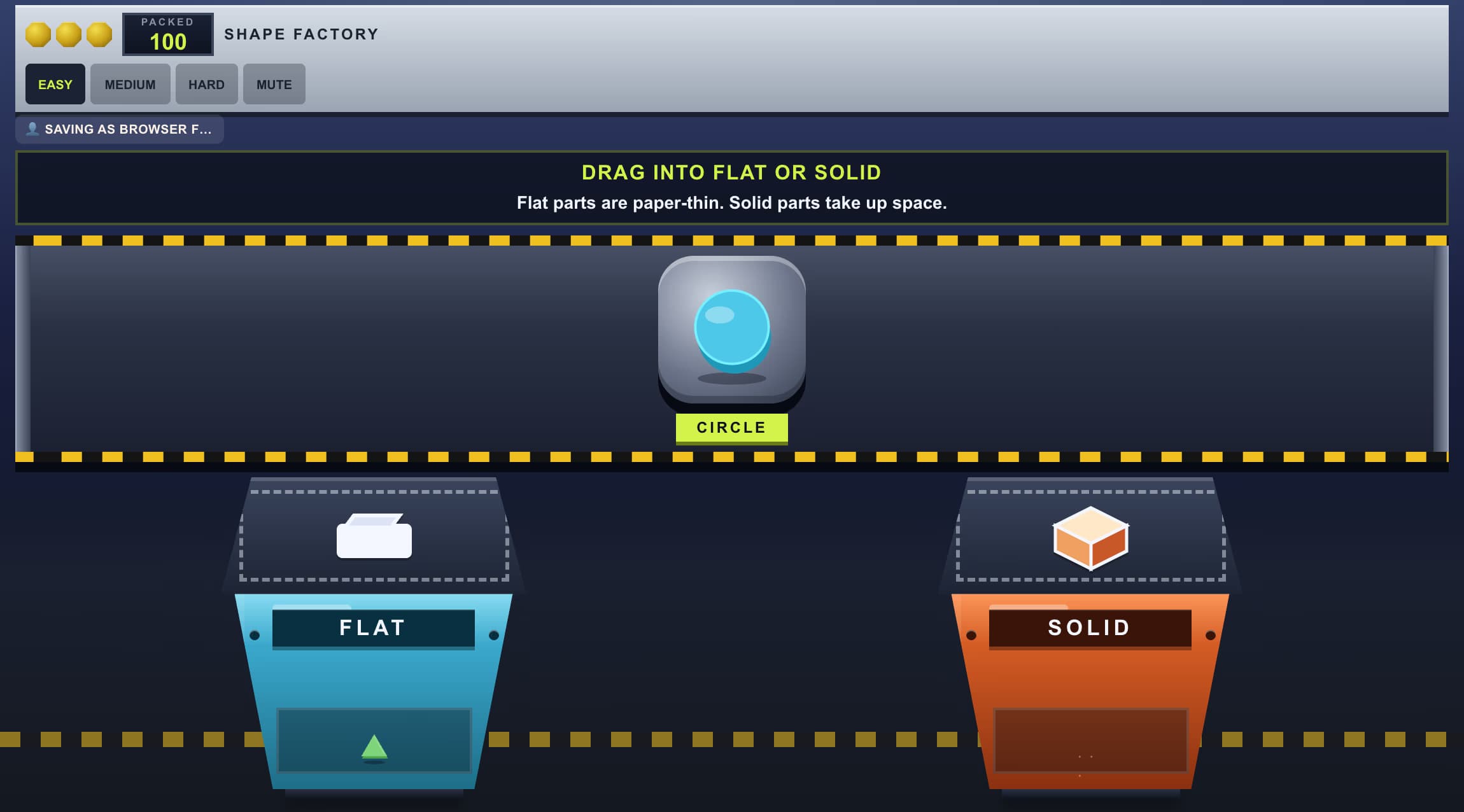
Sort Flat and Solid Shapes on the Packing Line
Help the night packing line in Shape Factory. Drag each part into Flat or Solid: circles, squares, and triangles are paper-thin, while cubes, cylinders, and pyramids take up space. Kindergarten geometry practice that feels like a real factory run.
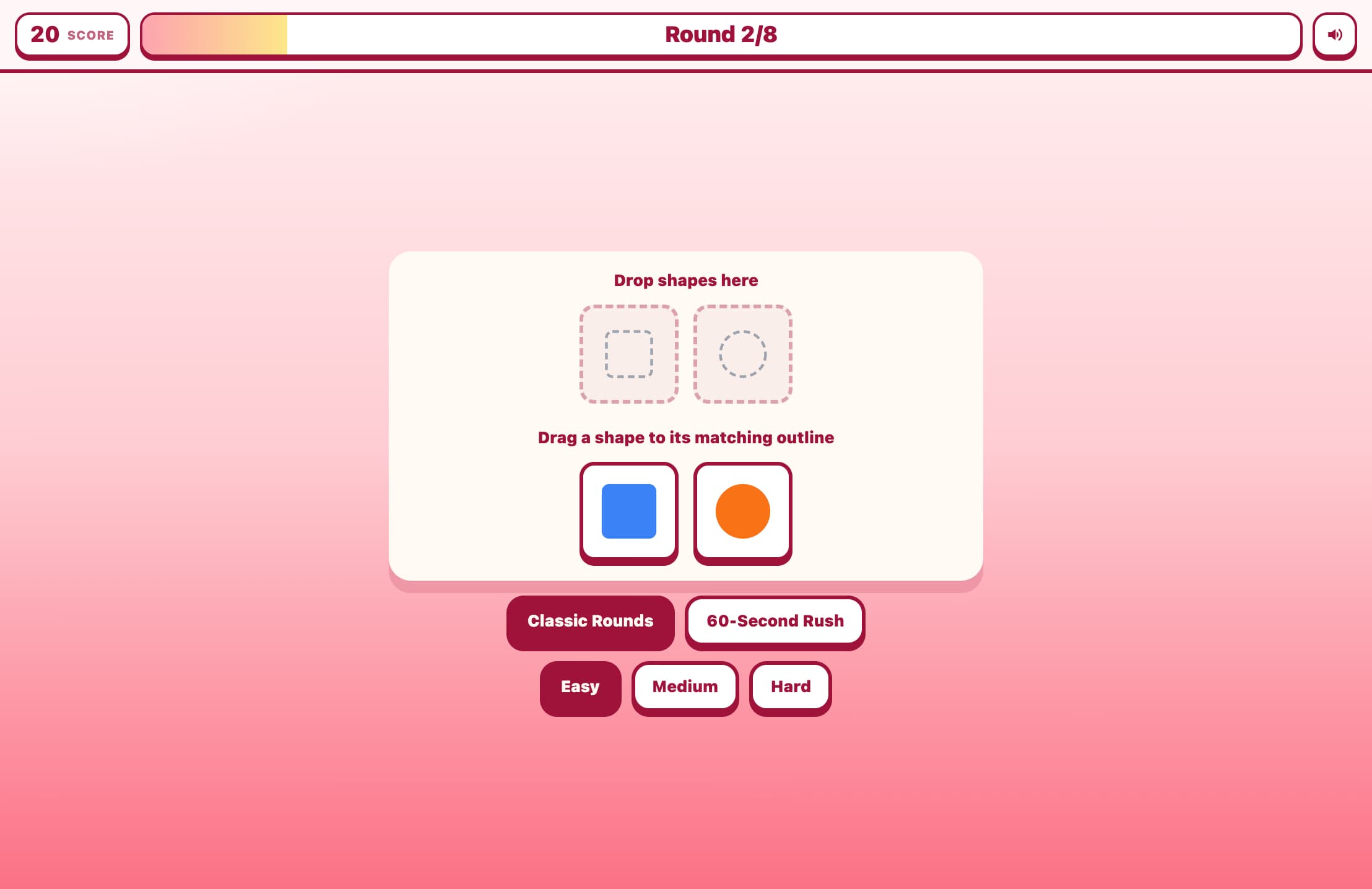
Drag and Drop Shapes Into Matching Slots
Drag circles, squares, triangles, and rectangles into their matching outline slots in this fun shape-sorting game. Race the clock or sort shapes across 8 classic rounds — great for early geometry and shape recognition!
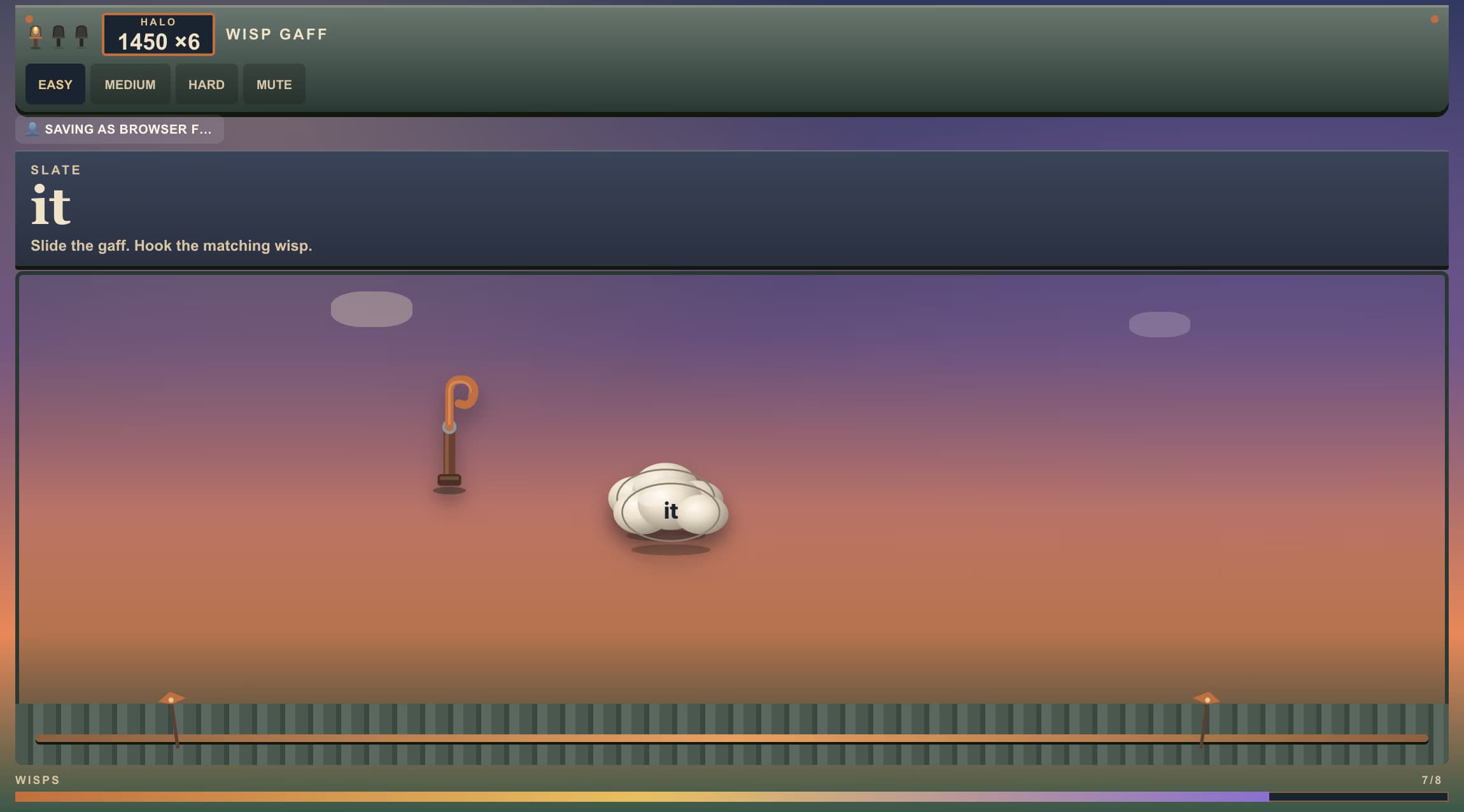
Wisp Gaff
A tin weather shed at copper sunset. Wool wisps drift over the roof, each stamped with an English sight word. Slide the copper gaff and hook the matching wisp on the Slate. A hit blooms a Halo. A miss is a Rain dump on the shed. Eight Wisps clear the sky. Kindergarten and first-grade sight words.
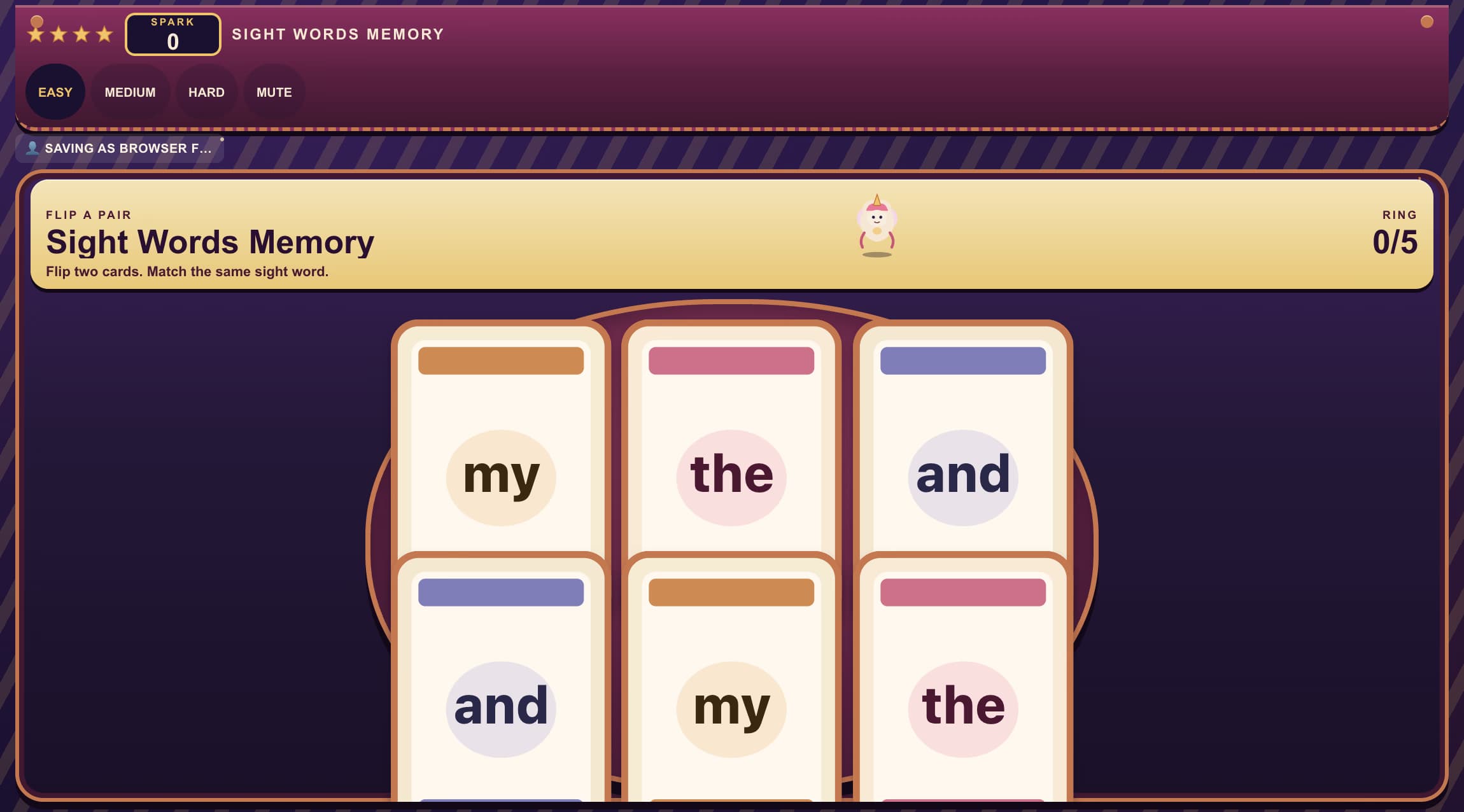
Kindergarten Flip-a-Pair Card
Penelope deals sight-word cards on a velvet ring in her star tent. Flip a pair. Match the same English sight word, light the pair, and clear the Ring. Kindergarten kids practice reading high-frequency words while they remember where each card sits. Spark points grow with a streak.
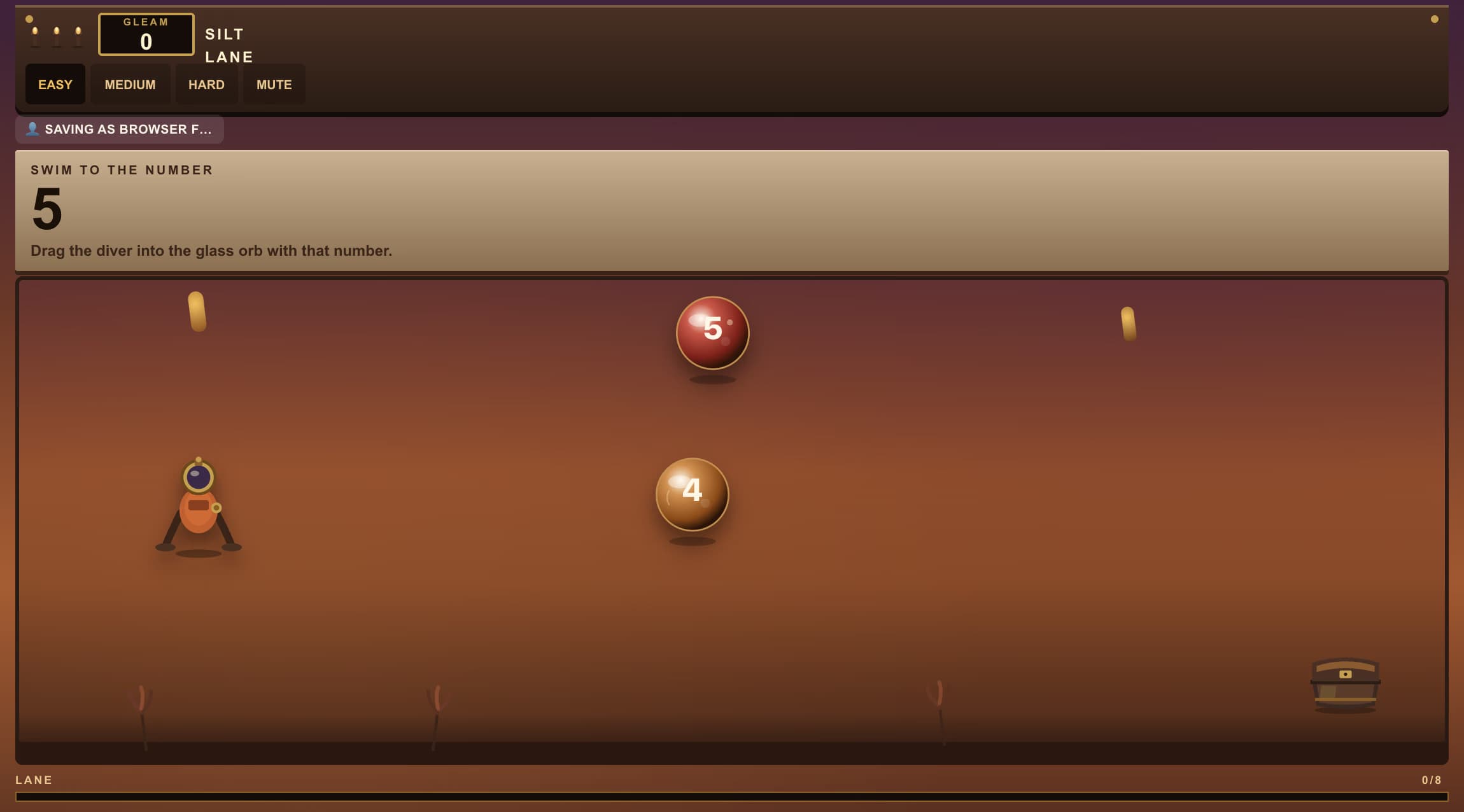
Treasure Diving: Numbers 1-10
Steer a lamp-helmet diver down Silt Lane. A barnacle plate shows a number from 0 to 10. Drag the diver into the glass orb with that number and kick toward the stone chest. Pre-K and kindergarten practice identifying numbers 0-10, with Gleam points for every clean swim.
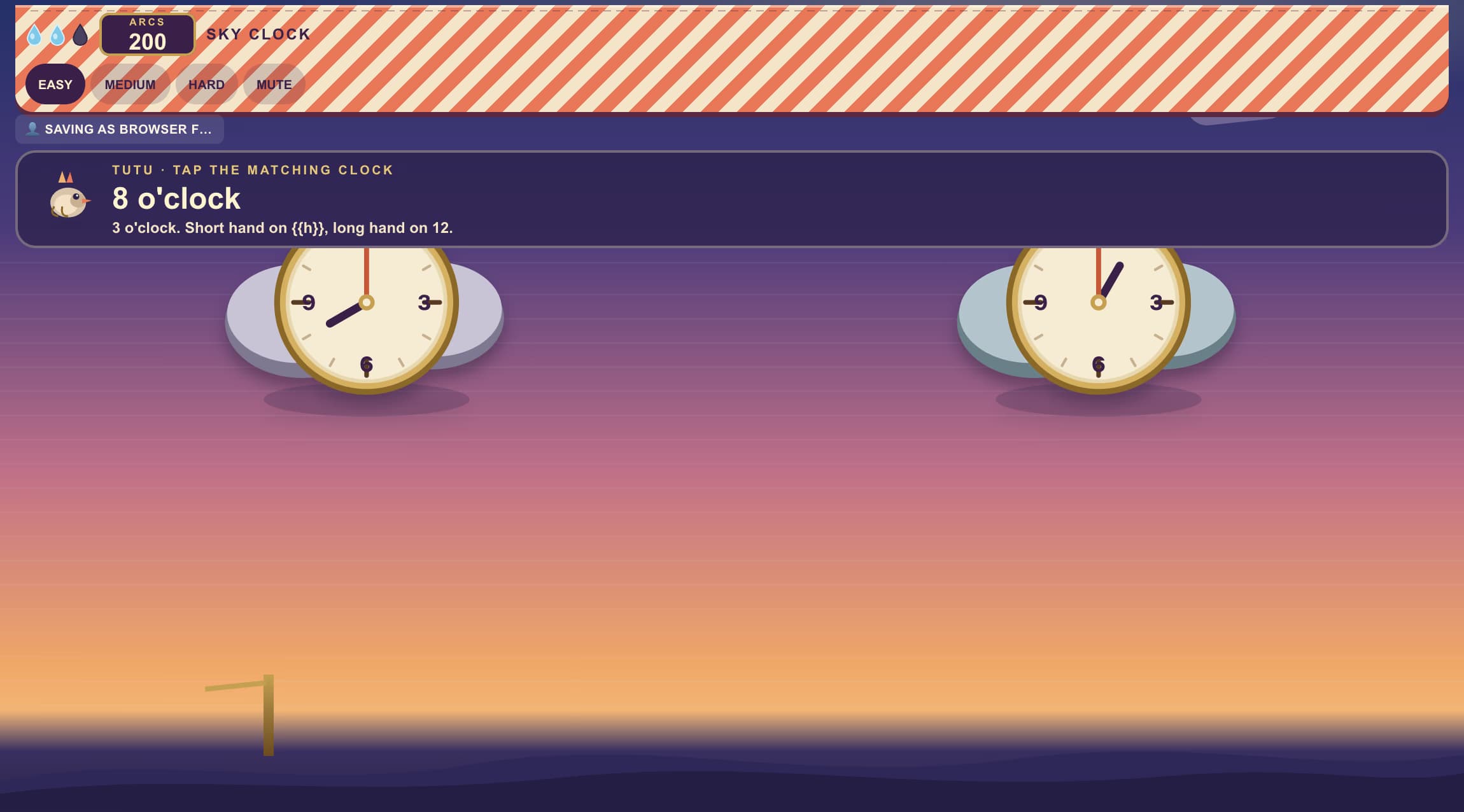
Telling Time in the Sky to the Hour and Half Hour
Help Tutu turn rain clouds into rainbows in Sky Clock. Listen for the time, scan the falling clouds, and tap the matching clock. First-grade practice telling time to the hour and half hour, with analog clocks that bloom into rainbows when you catch the right one.
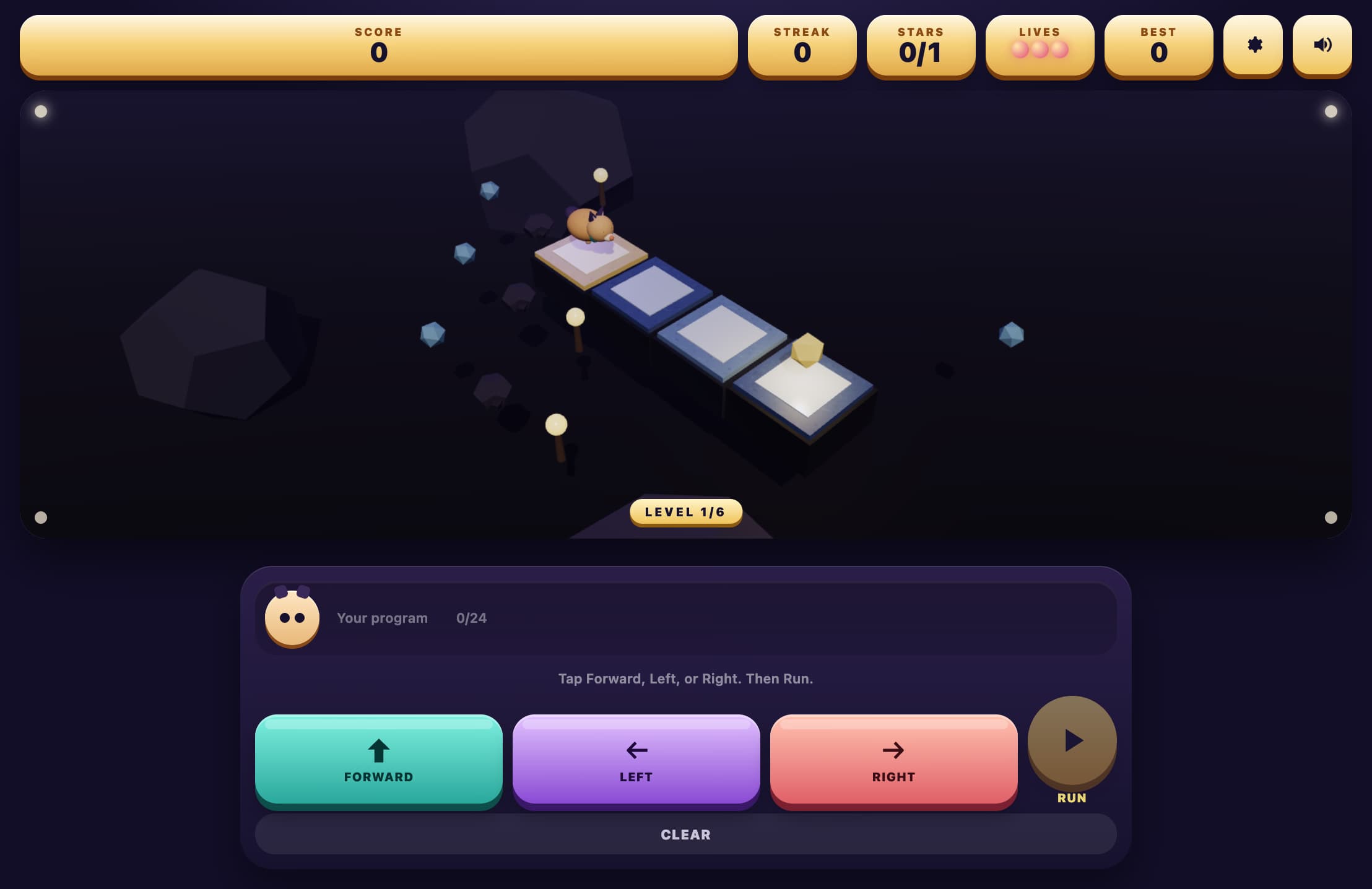
Block Coding
Line up Forward, Turn Left, and Turn Right blocks, then run the program so a fox walks a floating 3D path and gathers every star. Turns happen in place. Kids practice sequencing and facing without typing code.
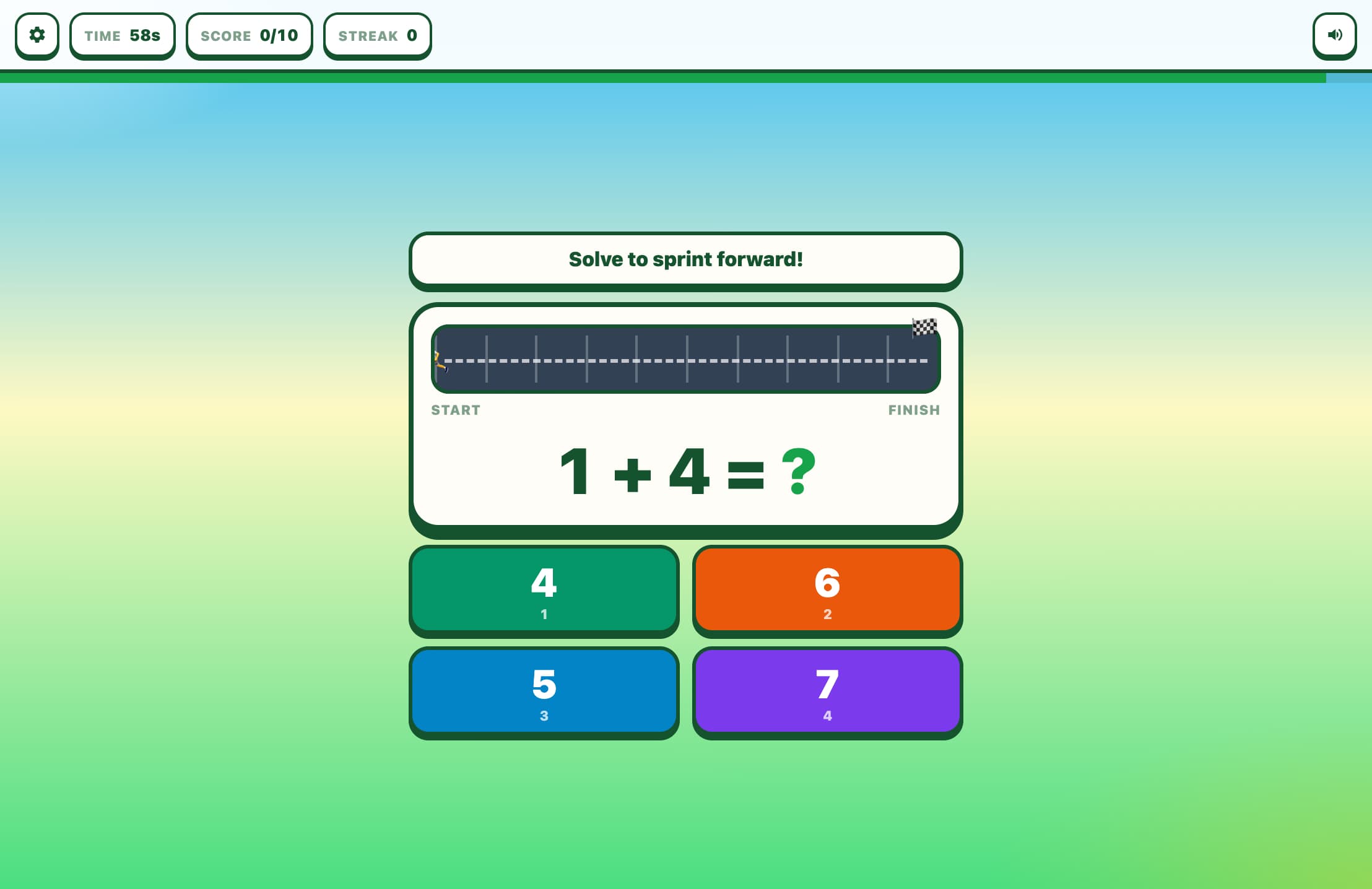
Race to the Finish Line Math
Answer addition and subtraction facts to move a runner along a track. Each correct answer sprints forward one step — race to the finish line before time runs out or you lose all lives.
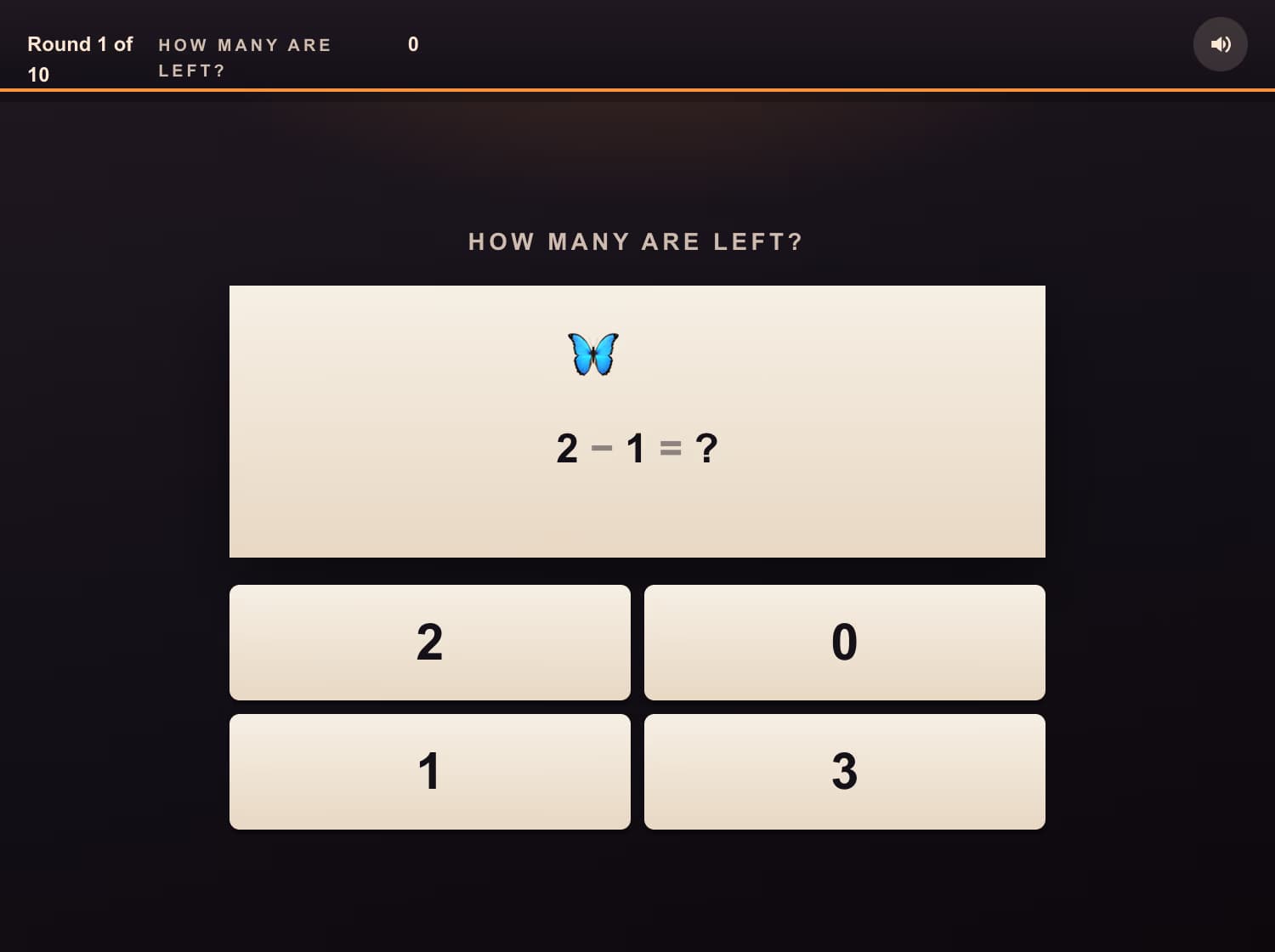
Visual Subtraction with Disappearing Objects
Watch objects disappear with animation and figure out how many are left! 5 cookies, eat 2 — how many remain? A visual, animated approach to learning subtraction for young children.
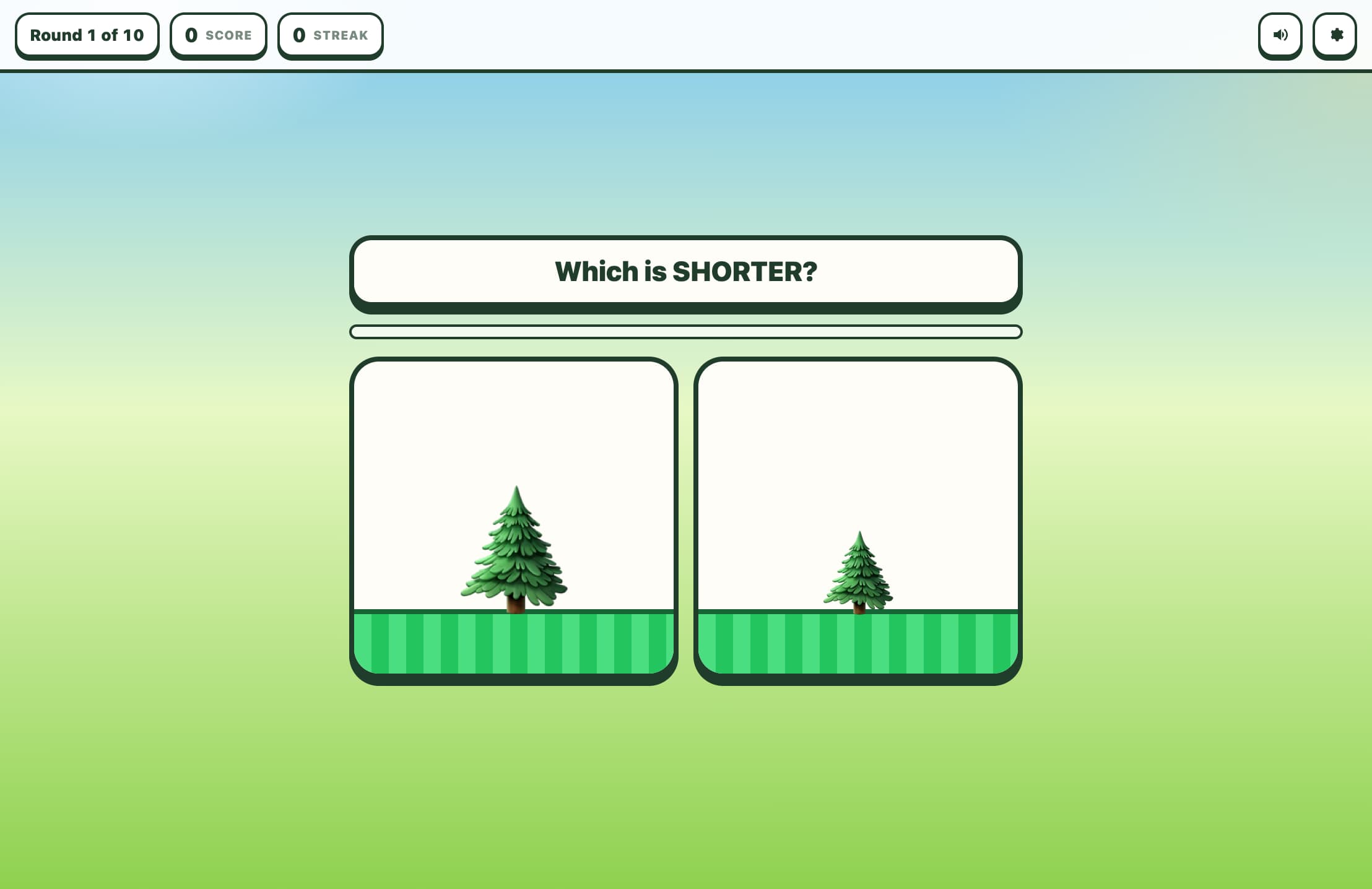
Compare Sizes and Build Measurement Concepts
Two illustrated objects appear at different sizes — tap the taller, shorter, bigger, or smaller one! A fun visual game that teaches measurement vocabulary and size comparison for young learners.
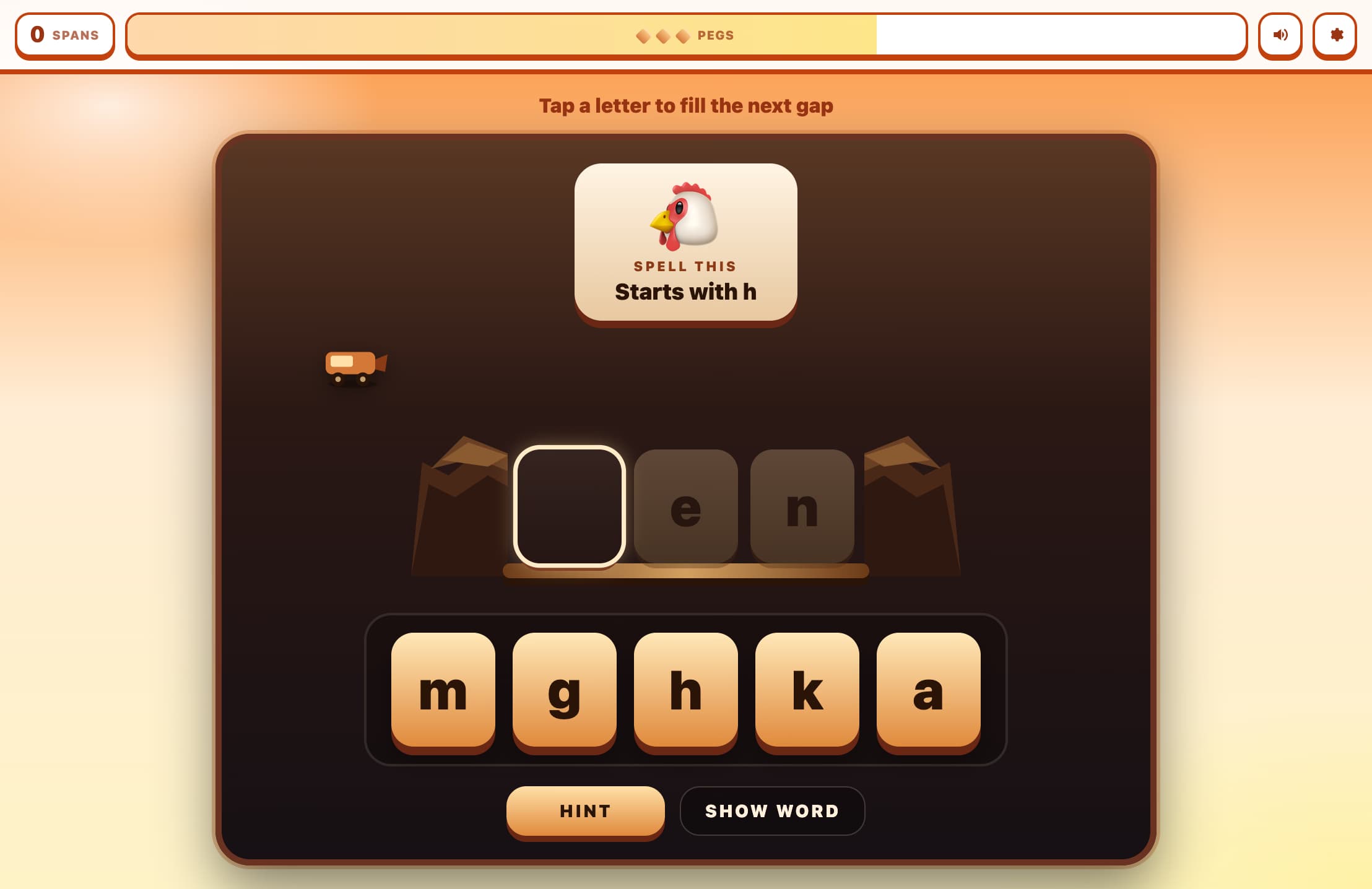
Spell Blend Words to Span the Ravine
A dusk ravine, copper timber beams, and a letter tray. A picture names the word. Some beams already hold a letter. Tap a tile, then tap an empty beam to seat it. Fill every gap. The right spelling locks the trestle and the cart rolls across. A wrong spelling costs a peg. Built for kindergarten and first-grade blends.
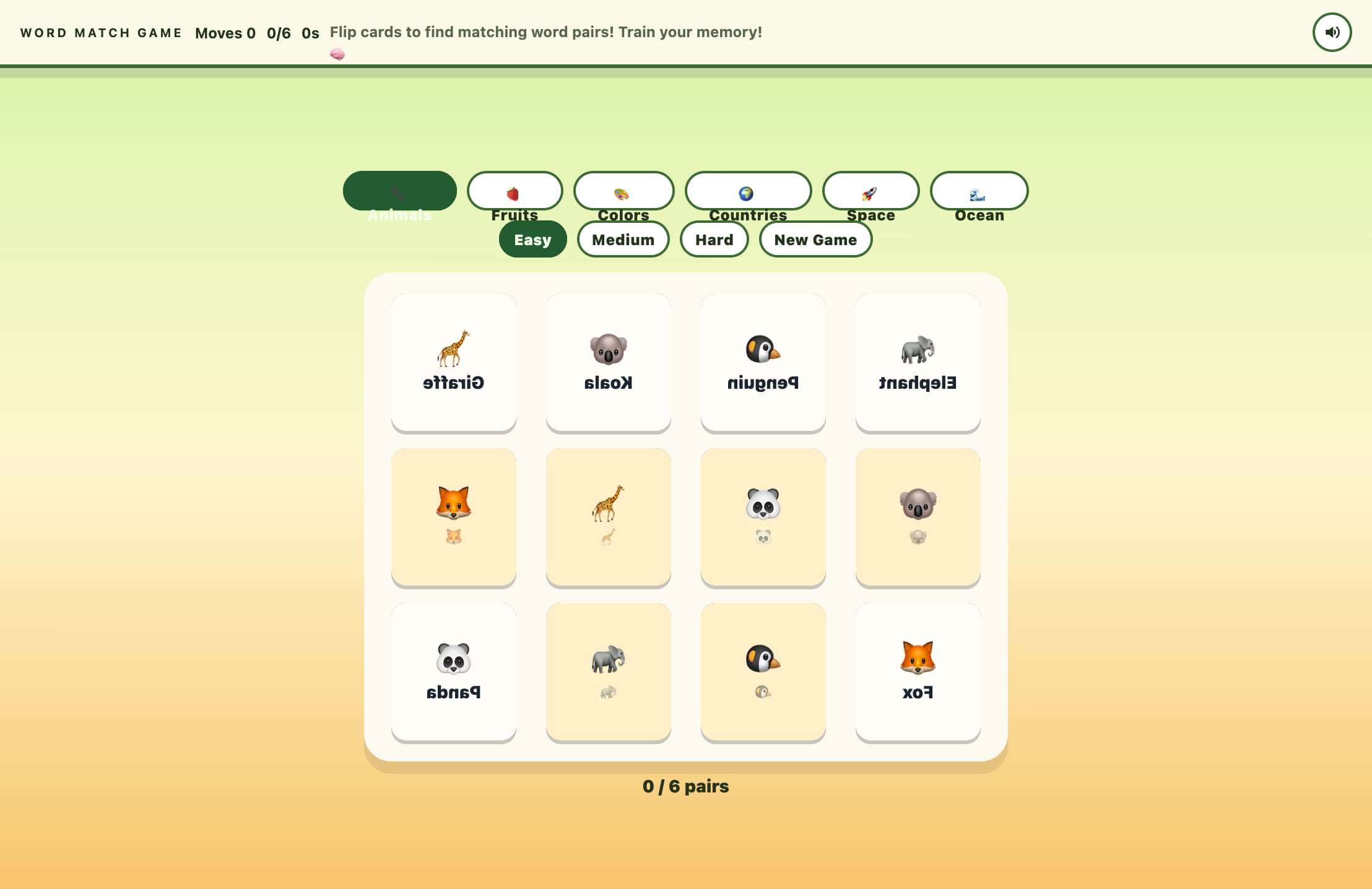
Fun Memory Card Matching
Flip cards to find matching word and emoji pairs! Choose from animals, fruits, colors, countries, space, and ocean themes. Train your memory with easy, medium, and hard difficulty levels.