Hot Sauces & Spice Levels Spinner Wheel
Spin the wheel to randomly land on one of 16 iconic hot sauces, chili peppers, and spice traditions! Discover each one's Scoville level, origin, and a fascinating piece of culinary fire history — from gentle Frank's RedHot to the nuclear Carolina Reaper.
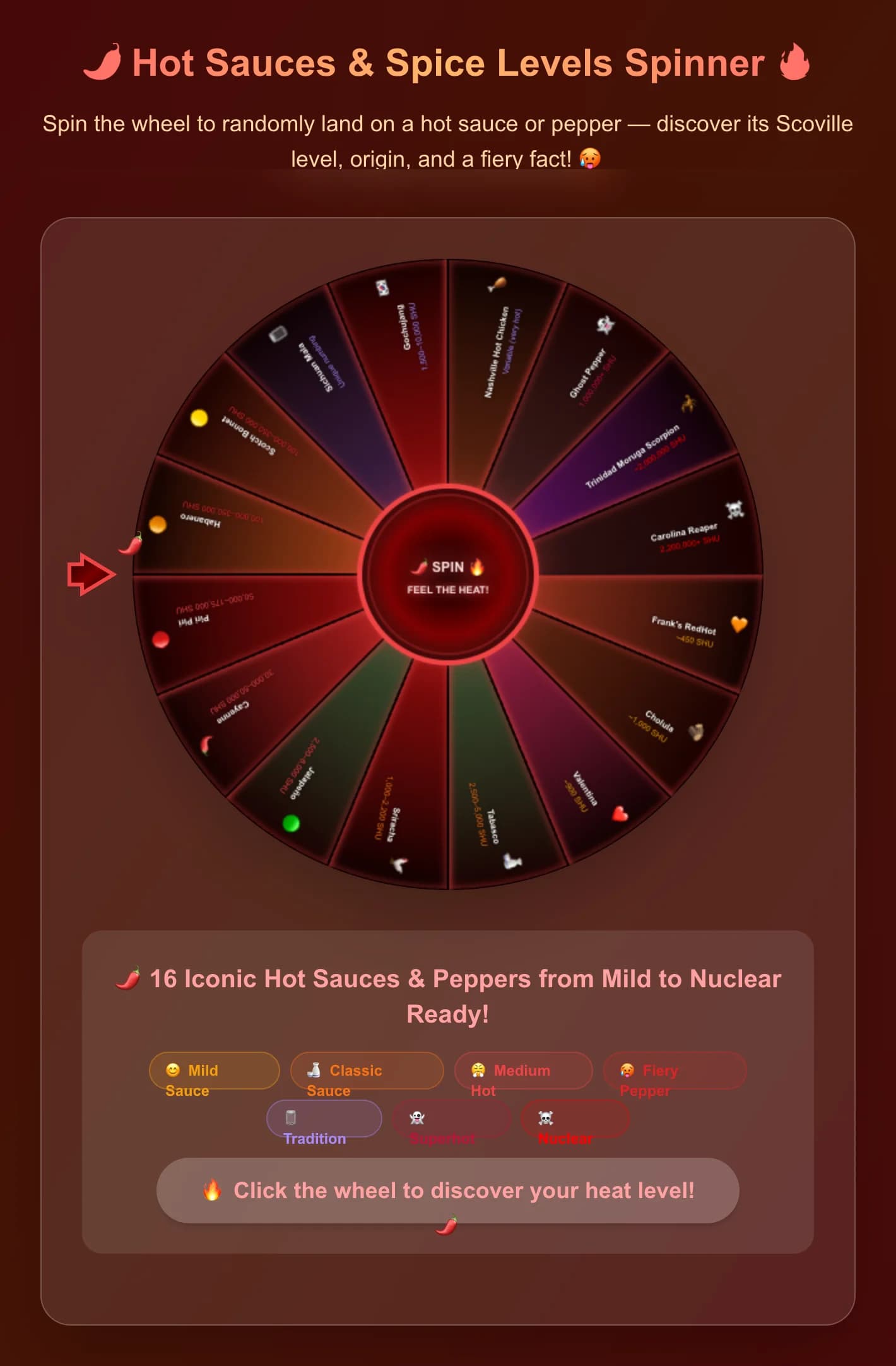
How To Use
Click or tap the spinning wheel to send it spinning. When it stops, you'll discover a randomly selected hot sauce, chili pepper, or spice tradition — complete with its Scoville heat level, geographic origin, and a fascinating fact about its history, science, or cultural impact.
Key Features
16 iconic hot sauces, peppers, and spice traditions
Scoville heat level for each entry
Geographic origin from Xalapa to Trinidad
Fascinating culinary and scientific facts
Ranges from gentle Frank's RedHot to record-breaking Carolina Reaper
Beautifully designed fiery-themed spinning wheel
What Is This?
The Hot Sauces & Spice Levels Spinner is an educational and entertaining tool that takes you on a journey through the world of heat — from mild crowd-pleasers like Cholula and Frank's RedHot, through classics like Tabasco and Sriracha, to legendary chilies like the Ghost Pepper and the record-holding Carolina Reaper. Includes regional traditions like Sichuan Mala, Korean Gochujang, and Nashville Hot Chicken.
Why Use This?
Whether you're a spice enthusiast exploring the Scoville scale, a food educator teaching about global cuisines, a party host looking for a fun icebreaker, or just curious about what makes things hot, this spinner delivers both entertainment and genuine education. Discover why Sriracha's creator never trademarked his sauce, how Ghost Pepper grenades became Indian military weapons, and the accidental revenge origin of Nashville Hot Chicken.
Frequently Asked Questions
What is the Scoville scale?
The Scoville scale, invented by pharmacist Wilbur Scoville in 1912, measures the pungency (spiciness) of chili peppers by quantifying the concentration of capsaicin compounds. A bell pepper scores 0 SHU (Scoville Heat Units), jalapeños range from 2,500-8,000 SHU, and the Carolina Reaper peaks above 2,200,000 SHU.
What makes chili peppers hot?
The heat in chili peppers comes from capsaicin, a chemical compound that binds to TRPV1 receptors in your mouth and throat — the same receptors that sense actual heat from temperature. This is why eating spicy food feels like burning; your brain is receiving the same signal it would from a hot surface.
What is the world's hottest pepper?
The Carolina Reaper, created by Ed 'Smokin' Ed' Curlin at PuckerButt Pepper Company in Fort Mill, South Carolina, currently holds the Guinness World Record at an average of 1,641,183 SHU with individual pods exceeding 2,200,000 SHU. Pepper X (also by Curlin) has been reported to exceed this, though its record status remains under review.
Is hot sauce good for you?
Capsaicin, the active compound in hot sauces and chili peppers, has been shown in studies to have anti-inflammatory properties, boost metabolism temporarily, act as a topical pain reliever (FDA-approved capsaicin creams exist for joint pain), and may have cardiovascular benefits. However, very spicy foods can irritate the digestive tract in sensitive individuals.
Why does milk help with spice more than water?
Capsaicin is fat-soluble and non-polar, meaning it doesn't dissolve in water (which is polar) — water actually spreads it around your mouth, making the burning worse. Milk contains casein, a fat-based protein that binds to capsaicin molecules and washes them away. Full-fat dairy works best; plant-based milks with less fat are less effective.
What is Sichuan Mala and why is the sensation different from regular spice?
Sichuan Mala combines two sensations: 'la' (辣), the burning heat from chili peppers, and 'ma' (麻), the numbing-tingling effect from Sichuan peppercorns. The numbing comes from hydroxy-alpha-sanshool, which activates touch receptors rather than pain receptors, creating an electric tingling sensation unlike any other spice. Sichuan peppercorns were actually banned from US import from 1968-2005.