Willekeurige Kosmische Objectkiezer
Draai aan het rad om willekeurig een van de 16 fascinerende ruimteobjecten te ontdekken! Ontdek het type, de schaal (Zonnestelsel of Universeel) en een verbluffend astronomisch feit van elk object.
Meer zoals dit
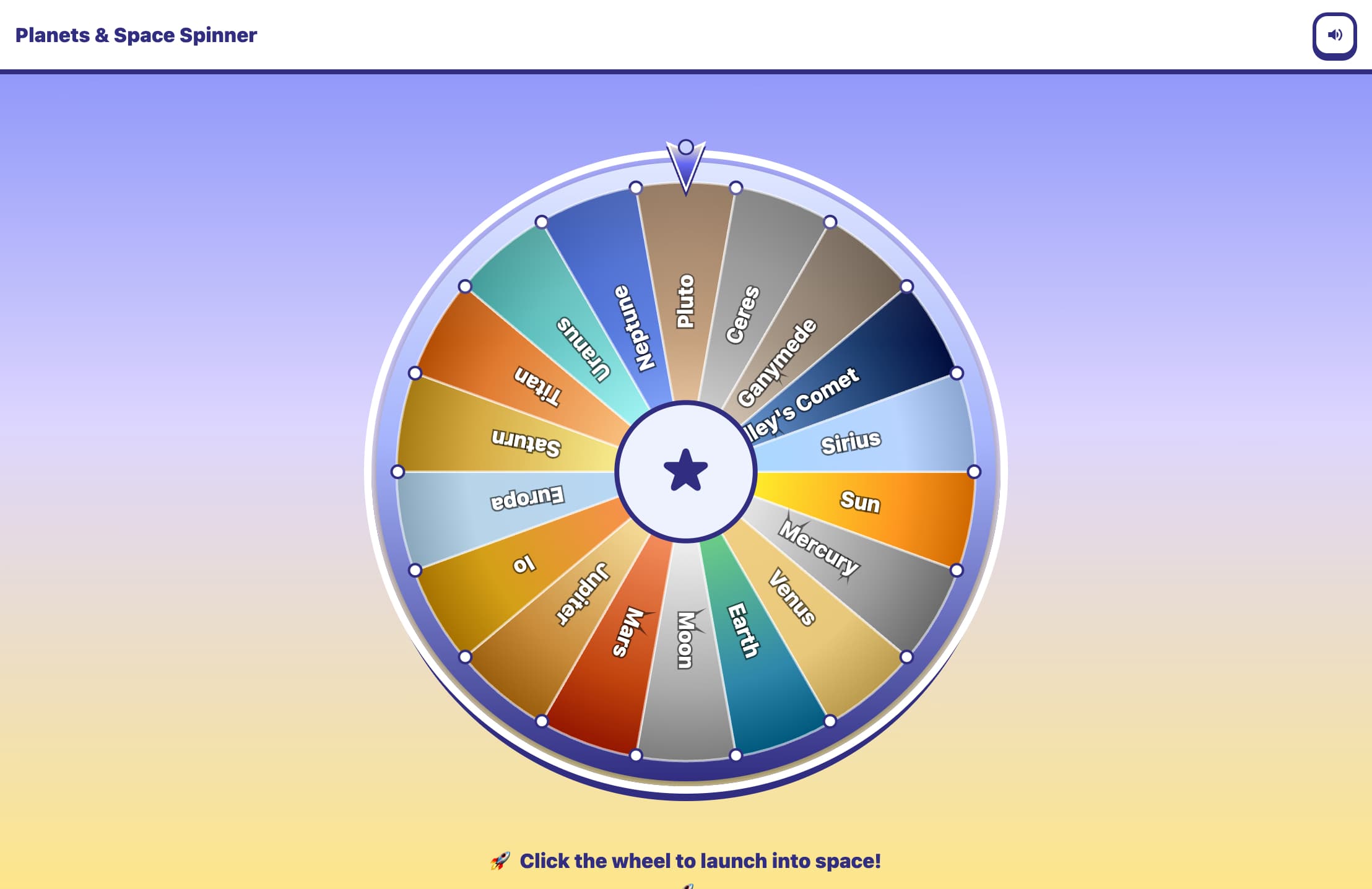
Klik op het draaiende rad in het midden van de pagina
Bekijk hoe het kosmische rad door 16 ruimteobjecten draait
Het rad vertraagt en landt op een willekeurig ruimteobject
Een sterrenkaart toont het objecttype, de schaal en een verrassend feit
Klik op 'Verbluffend!' om te sluiten en opnieuw te draaien
Belangrijkste Kenmerken
16 iconische ruimteobjecten verdeeld over 14 soorten: Sterren, Gasreuzen, Stellaire Restanten, Singulariteiten, Gaswolken, Planeten en meer
Schaal gelabeld als Zonnestelsel of Universeel voor elk object
Verbluffend astronomisch feit voor elk ruimteobject
Kleurgecodeerd op objecttype voor eenvoudige identificatie
Diepzwart thema van de ruimte met nevel gloei-effecten
Het Draairad Ruimteobjecten is een interactieve astronomie tool die willekeurig een van de 16 iconische objecten uit de kosmos selecteert. Van onze eigen Zon en Maan tot supermassieve Zwarte Gaten, de planeet-beschermende Jupiter en de exotische Magnetar — waarvan het magnetische veld een quadriljoen keer sterker is dan dat van de Aarde en elke creditcard zou kunnen wissen vanaf de afstand van de Maan — elke draai onthult het wetenschappelijke type van het object, of het nu in ons Zonnestelsel of in het bredere Universum bestaat, en een adembenemend astronomisch feit.
Veelgestelde Vragen
Welke ruimteobjecten zitten er op het rad?
Het rad bevat Zon, Zwart Gat, Neutronenster, Komeet, Saturnus, Nevel, Asteroïde, Pulsar, Supernova, Melkweg, Maan, Quasar, Witte Dwerg, Jupiter, Exoplaneet en Magnetar.
Wat is het verschil tussen een Neutronenster, Pulsar en Magnetar?
Alle drie zijn soorten neutronensterren — de ultradichte overblijfselen die achterblijven wanneer een massieve ster instort. Pulsars zijn neutronensterren die regelmatige radiostralen uitzenden terwijl ze snel draaien. Magnetars zijn neutronensterren met buitengewoon krachtige magnetische velden, quadriljoenen keren sterker dan die van de Aarde.
Wat is een Quasar?
Quasars zijn de briljant luminescente kernen van verre sterrenstelsels, aangedreven door supermassieve zwarte gaten die omringend materiaal in enorme hoeveelheden consumeren. De meest verre bekende quasar staat 13,1 miljard lichtjaar verderop — we zien het zoals het was slechts 700 miljoen jaar na de Oerknal.
Zal de Andromeda-melkweg echt botsen met de Melkweg?
Ja — Andromeda nadert met 110 km/s en zal over ongeveer 4,5 miljard jaar beginnen samen te smelten met de Melkweg. Ondanks de dramatische naam 'botsing', zullen bijna geen individuele sterren elkaar fysiek raken omdat sterren piepklein zijn vergeleken met de enorme lege ruimte ertussen.
Kan ik dit gebruiken voor een natuurkundeles?
Absoluut! Draai aan het rad en vraag studenten uit te leggen wat het object is, hoe het ontstaat, of wat het feit betekent. Het is een voorbereidingsvrije, zeer boeiende activiteit voor lessen astronomie, natuurkunde of algemene wetenschappen op elk niveau.