สำรวจระบบสุริยะแบบสุ่ม
หมุนวงล้อเพื่อสุ่มเลือกดาวเคราะห์ ดวงจันทร์ ดาวเคราะห์แคระ ดาวหาง หรือดาวฤกษ์! มีวัตถุอวกาศอันเป็นเอกลักษณ์ 18 ชนิดพร้อมเกร็ดความรู้สนุกๆ และธีมอวกาศอันตระการตา
เกมคล้ายกัน
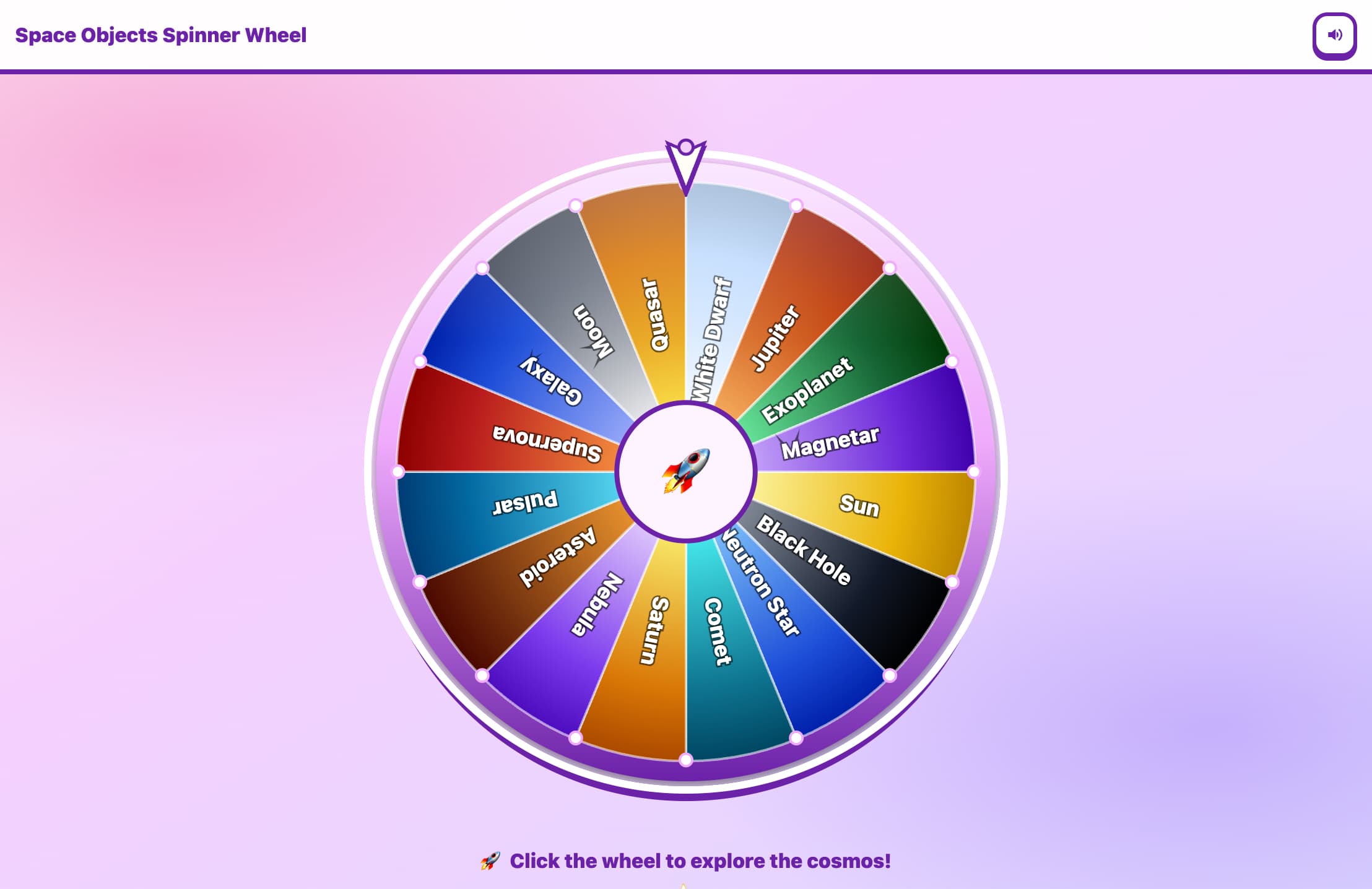
วิธีใช้ชุดสุ่มอวกาศ
คลิกที่วงล้อที่กำลังหมุน (หรือแตะบนมือถือ) เพื่อเริ่มต้นการเดินทางสู่จักรวาลของคุณ
เฝ้าดูวงล้อหมุนผ่านดาวเคราะห์ ดวงจันทร์ และอื่นๆ
ดูว่าคุณตกที่วัตถุอวกาศชิ้นใดในหน้าต่างป๊อปอัปที่ปรากฏขึ้น
อ่านเกร็ดความรู้ที่น่าสนใจเกี่ยวกับวัตถุอวกาศของคุณ
คลิก 'น่าทึ่ง!' เพื่อหมุนอีกครั้งและสำรวจวัตถุอื่นๆ
คุณสมบัติหลัก
วัตถุอวกาศอันเป็นเอกลักษณ์ 18 ชนิด ได้แก่ ดาวเคราะห์ทั้ง 8 ดวง ดวงอาทิตย์ ดวงจันทร์ ดวงจันทร์ที่มีชื่อเสียง ดาวเคราะห์แคระ ดาวหาง และดาวฤกษ์
เปิดเผยเกร็ดความรู้สนุกๆ เกี่ยวกับวัตถุอวกาศแต่ละชิ้นหลังจากการหมุน
ธีมอวกาศอันมืดมิดพร้อมสีสันของวัตถุท้องฟ้าที่สมจริง
แอนิเมชั่นจรวดพุ่งทะยานอย่างนุ่มนวล พร้อมภาพประกอบธีมอวกาศ
ป้ายประเภทวัตถุ: ดาวเคราะห์, ดาวเคราะห์แคระ, ดวงจันทร์, ดาวหาง, ดาวฤกษ์
ชุดสุ่มดาวเคราะห์และอวกาศคืออะไร?
ชุดสุ่มดาวเคราะห์และอวกาศเป็นวงล้อแบบโต้ตอบที่สุ่มเลือกจากวัตถุอวกาศอันเป็นเอกลักษณ์ 18 ชนิดในระบบสุริยะของเราและที่ไกลกว่านั้น เหมาะสำหรับผู้ที่ชื่นชอบอวกาศ นักเรียน นักการศึกษา และทุกคนที่อยากรู้อยากเห็นเกี่ยวกับจักรวาล ใช้เป็นเครื่องมือการเรียนรู้ที่สนุก กิจกรรมในห้องเรียน หรือเพียงเพื่อตอบสนองความอยากรู้อยากเห็นของคุณเกี่ยวกับสิ่งที่อยู่ข้างนอกนั้น
ทำไมต้องใช้ชุดสุ่มอวกาศ?
ไม่ว่าคุณจะเป็นนักดาราศาสตร์มือใหม่หรือเพียงแค่ชอบเรื่องความรู้รอบตัวเกี่ยวกับอวกาศ วงล้อสุ่มนี้จะเพิ่มองค์ประกอบของการค้นพบในการเรียนรู้เกี่ยวกับระบบสุริยะของเรา ใช้ในห้องเรียนเพื่อจุดประกายการสนทนาเกี่ยวกับวิทยาศาสตร์อวกาศ เล่นเป็นเกมปาร์ตี้ หรือใช้เพื่อเลือกหัวข้อสารคดีอวกาศเรื่องต่อไปของคุณ มันเป็นวิธีที่สมบูรณ์แบบในการทำให้ดาราศาสตร์เป็นเรื่องสนุกและโต้ตอบได้
คำถามที่พบบ่อย
วัตถุอวกาศใดบ้างที่รวมอยู่ในวงล้อสุ่ม?
วงล้อสุ่มประกอบด้วยดาวเคราะห์ทั้ง 8 ดวง (ดาวพุธ ดาวศุกร์ โลก ดาวอังคาร ดาวพฤหัสบดี ดาวเสาร์ ดาวยูเรนัส ดาวเนปจูน) ดวงอาทิตย์ ดวงจันทร์ ดวงจันทร์ที่มีชื่อเสียง (ไอโอ ยูโรปา แกนีมีด ไททัน) ดาวเคราะห์แคระ (พลูโต เซเรส) ดาวหางฮัลเลย์ และดาวฤกษ์ซีเรียส — รวม 18 วัตถุ
ข้อมูลใดจะแสดงเมื่อฉันสุ่มได้วัตถุหนึ่งๆ?
เมื่อคุณสุ่มได้วัตถุอวกาศ หน้าต่างป๊อปอัปจะแสดงชื่อ อีโมจิ ประเภท (ดาวเคราะห์ ดาวเคราะห์แคระ ดวงจันทร์ ดาวหาง หรือดาวฤกษ์) และเกร็ดความรู้ที่น่าสนใจเกี่ยวกับวัตถุนั้น
ฉันสามารถใช้วงล้อสุ่มนี้ในห้องเรียนได้หรือไม่?
แน่นอน! ชุดสุ่มดาวเคราะห์และอวกาศเหมาะอย่างยิ่งสำหรับกิจกรรมในห้องเรียน ใช้เพื่อสุ่มมอบหมายวัตถุอวกาศให้นักเรียนค้นคว้า จุดประกายการสนทนาเกี่ยวกับดาราศาสตร์ หรือทำให้บทเรียนวิทยาศาสตร์น่าสนใจและโต้ตอบได้มากขึ้น
วงล้อสุ่มนี้สุ่มจริงหรือไม่?
ใช่ การหมุนแต่ละครั้งจะใช้ความเร็วเริ่มต้นแบบสุ่ม ดังนั้นวัตถุทุกชิ้นจึงมีโอกาสเท่าเทียมกันที่จะถูกเลือก ผลลัพธ์จึงคาดเดาไม่ได้และยุติธรรมเสมอ