Probability Simulations
Cloudwatch Observatory
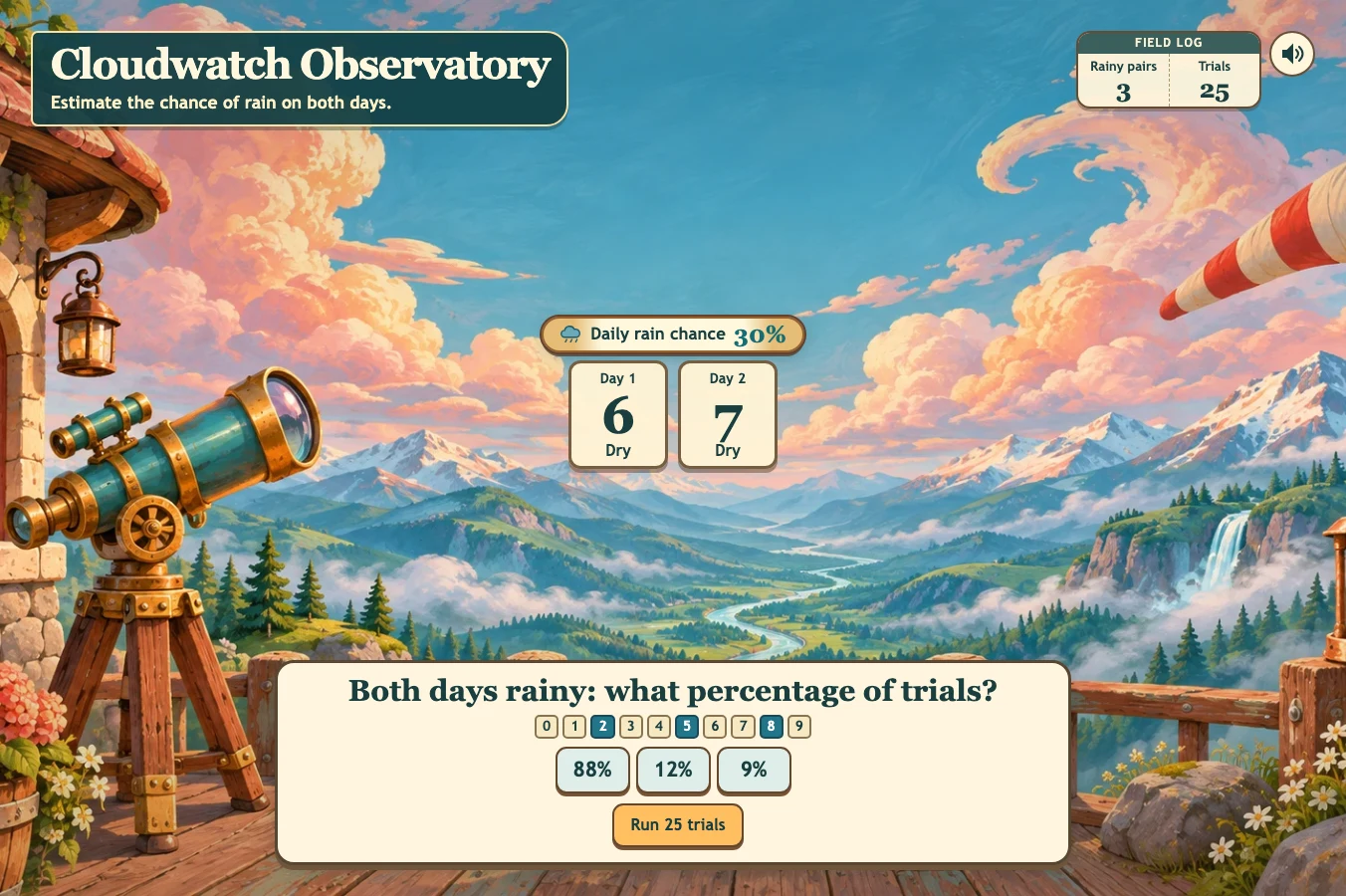
Build a random-digit weather model and use it to estimate the chance of two rainy days. Each trial samples two independent days at the observatory.
More like this




How to play Cloudwatch Observatory
- 1
Set rain digits
Read the daily chance. For 30%, mark any three digits from 0 through 9.
- 2
Run 25 trials
Run the model. Check each day's digit against your selection to see why the latest pair counts or misses.
- 3
Read the log
Divide rainy pairs by total pairs and convert to a percentage. Collect another batch if you want more data.
- 4
File the estimate
Select the observed percentage rounded to the nearest whole percent. Then try another forecast.
Key Features
Design the model
Assign rain to any of ten equally likely digits. Each selected digit contributes ten percentage points to the daily chance.
Watch paired draws
Each trial draws one digit for each day. Count a rainy pair only when both digits belong to your rain set.
Collect evidence
Run 25 trials per batch and inspect the latest pair and cumulative tally. Add more batches to grow the sample.
File a forecast
Choose the percentage supported by your observed pairs. Correct forecasts unlock a fresh daily chance.
What does the observatory simulate?
The observatory models two independent days with the same rain chance. For a 30% chance, digits 2, 5 and 8 could mean rain. A draw of 5 followed by 2 counts as a rainy pair. A draw of 5 followed by 4 does not. If 3 of 25 trials produce rainy pairs, your experimental estimate is 12%.
What can you practice?
- 1
Represent a probability
Turn a percentage into a set of equally likely outcomes.
- 2
Define a trial
Treat two draws as one observation of the compound event.
- 3
Interpret frequency
Use the full trial count as the denominator for your estimate.
- 4
Compare model and data
After a correct estimate, compare it with the theoretical chance obtained by multiplying the two daily chances.
Frequently Asked Questions
Which digits should represent rain?
Any set of the right size works because all ten digits are equally likely.
Can a digit appear twice in a pair?
Yes. Each day uses a fresh independent draw, so repeats can occur.
Does one rainy day count?
A trial succeeds only when both days show rain. Every pair still counts in the total.
What if I choose the wrong estimate?
Your tally stays available. Recheck the rainy-pair count and total, then try another percentage.
Why can two experiments disagree?
Independent draws produce different samples. More trials generally reduce sampling variation, but an individual batch can move the estimate in either direction.