Classic Concentration Game with Numbers 1–20
Flip cards to find matching number pairs in this classic memory/concentration game! Three grid sizes — 6, 10, or 20 pairs — let young learners practice number recognition while exercising visual memory and concentration.
Plus comme ça
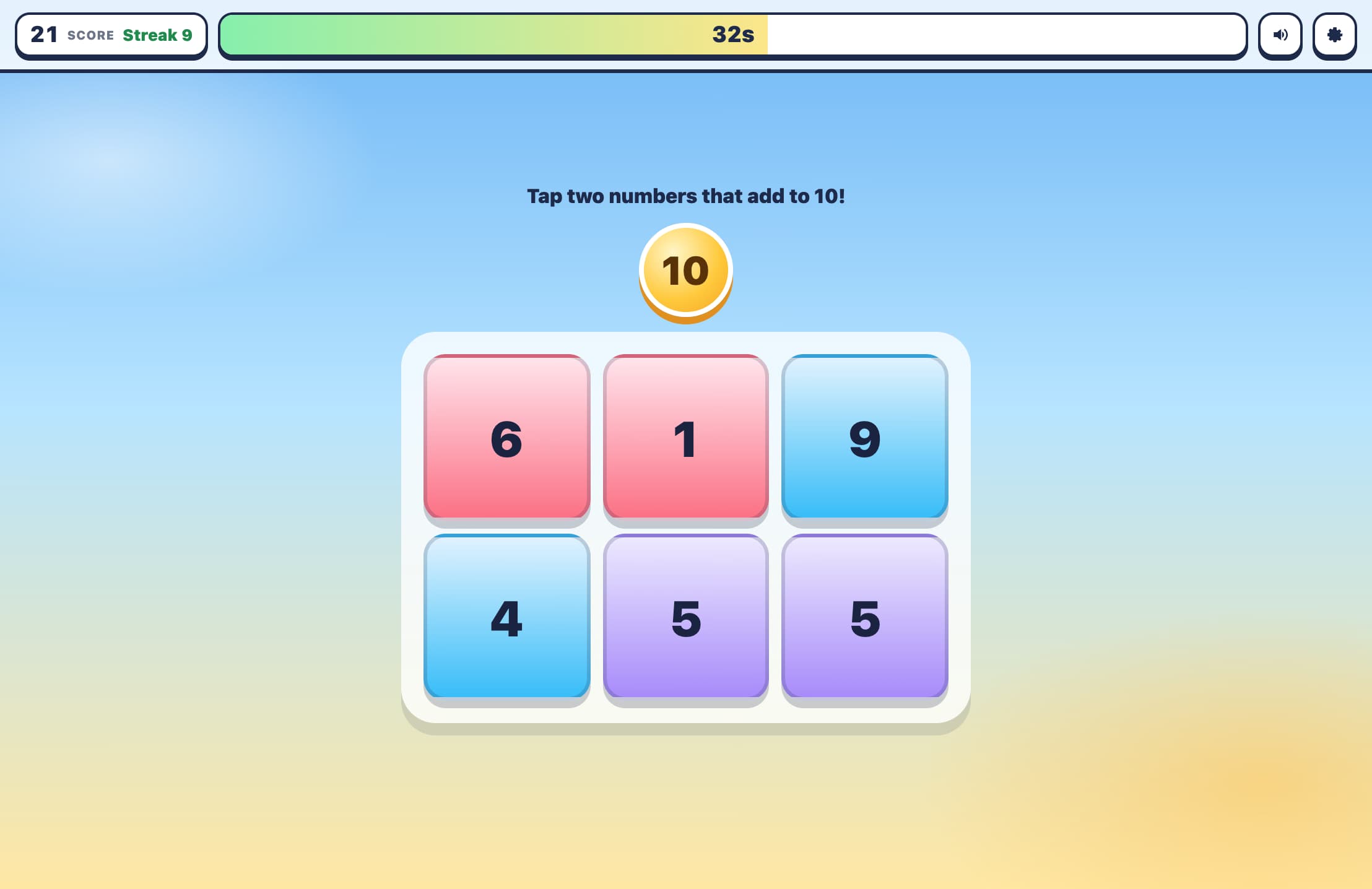
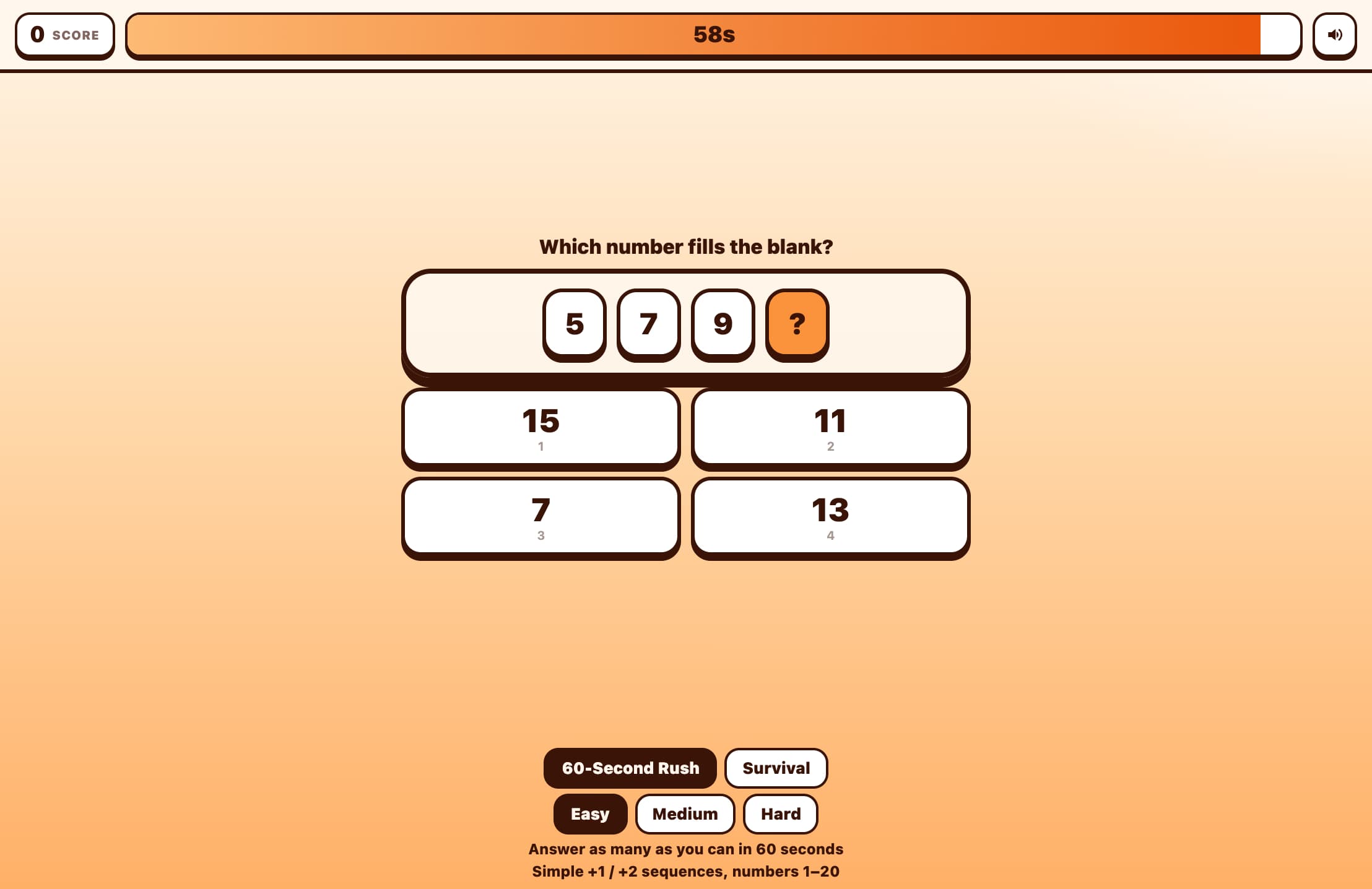
Mode d'emploi
Choose Small, Medium, or Large grid on the settings screen
Tap 'Start Matching!' to begin — all cards start face-down
Tap any card to flip it face-up and reveal its number
Tap a second card to try to find the match
If both cards show the same number — they stay face-up and turn green!
If they don't match — watch and remember where they were, then they flip back
Keep going until all pairs are matched — aim for as few moves as possible!
Fonctionnalités clés
Smooth 3D card-flip animation using CSS preserve-3d transforms
20 visually distinct color-coded numbers — each number (1–20) always appears in its own unique color for consistency
Three grid sizes: Small (12 cards, numbers 1–6), Medium (20 cards, numbers 1–10), Large (40 cards, numbers 1–20)
Non-matching pairs stay visible for 1 second before flipping back, giving players time to memorize positions
Live move counter and elapsed timer during play
Star rating at completion: 3 stars for near-perfect play, 2 stars for solid play, 1 star for completion
Best score per grid size saved locally (fewest moves wins, then fastest time as tiebreaker)
What Is Number Memory Match?
Number Memory Match is a classic concentration-style card game where players flip two cards at a time to find matching number pairs. With numbers 1–20 spread across a shuffled grid, each flip challenges both number recognition and spatial memory. Find all pairs in as few moves as possible!
Why Play Number Memory Match?
Reinforces Number Recognition
Repeated, motivated exposure to numbers 1–20 — every flip is a reason to look closely at a number — builds fast and accurate number recognition without rote drilling.
Builds Working Memory and Concentration
Remembering where cards are positioned exercises working memory and sustained attention — key cognitive skills for early learners that transfer to all academic subjects.
Develops Strategic Thinking
Players naturally learn to remember where numbers were seen previously to make matches faster, introducing basic memory strategy and planning.
Scales With the Learner
Three grid sizes let players start with 6 pairs (manageable even for ages 3–4) and work up to all 20 pairs as their memory improves.
Motivates Improvement
Best-score tracking (fewest moves and fastest time) gives players a personal benchmark to beat, encouraging repeated play and measurable progress.
Foire aux questions
What do the colors mean?
Each number always appears in the same color — number 1 is always red, 5 is always lime green, 10 is always sky blue, and so on. This color-number pairing is consistent every game, helping younger players associate colors with numbers as an additional visual cue.
How is the score calculated?
Your score is the number of moves (each pair of flips = 1 move). Fewer moves = better. The best-score system saves your lowest move count, using time as a tiebreaker. Stars at the end rate your performance: 3 stars if you found all pairs in about 1.5× the minimum, 2 stars up to 2.5×, 1 star otherwise.
Which grid size should beginners start with?
Start with Small (12 cards, 6 pairs, numbers 1–6). This is manageable even for ages 3–4. Once they can reliably find all 6 pairs, move to Medium (20 cards) and then Large (40 cards).
Why do unmatched cards stay visible for a second?
The 1-second delay lets players see and memorize both card positions before they flip back. This is the core learning mechanic — the brief visible window trains visual memory. Without this delay, the game would be too frustrating.
Does the order of numbers change each game?
Yes! The cards are freshly shuffled for every new game, so positions are never the same. This prevents memorizing card locations across sessions and keeps the game genuinely challenging.